downloadGroupGroupnoun_press release_995423_000000 copyGroupnoun_Feed_96767_000000Group 19noun_pictures_1817522_000000Member company iconResource item iconStore item iconGroup 19Group 19noun_Photo_2085192_000000 Copynoun_presentation_2096081_000000Group 19Group Copy 7noun_webinar_692730_000000Path
Skip to main content
Default Banner Image

microelectronics industry

As more than 400 speakers took the stages at SEMICON West 2024, sustainability and workforce development stood out as two major focus areas. The second day of this year’s CEO Summit keynote program, themed Seizing the Global Opportunities and Challenges Ahead, featured sessions on both topics. One of the first sessions of the day was the Chief Sustainability Officer (CSO) panel discussion, titled Bracing for the Evolving Global Risk for the Semiconductor Ecosystem, moderated by Vice President of SEMI Global Sustainability Programs, Dr. Mousumi Bhat. Later that morning, Shari Liss, Vice President of SEMI Global Workforce Development Programs and Executive Director of the SEMI Foundation, moderated a fireside chat, Advocating for Real Change: Why Inclusion and Belonging Need to be Everyone’s Concern, with Sandra Mahadwar from KLA Corporation. Bhat and Liss were later interviewed for a podcast by Francoise von Trapp of 3D InCites to share additional insights on sustainability and workforce development, respectively. Bhat was also joined by Paul Kelly, COO of the New York Center for Research, Economic Advancement, Technology, Engineering, and Science (NY CREATES). Creating a More Sustainable Semiconductor Industry During their interview, both Bhat and Kelly emphasized that the industry will need to reduce its use of per and polyfluoroalkyl substances (PFAS) to sustainably innovate at today’s nanometer pace. For this reason, Kelly highlighted the importance of learning to balance current production demands with the health of climate.To achieve this balance, they discussed the efforts of the Semiconductor Climate Consortium (SCC). Much of the SCC’s efforts, they said, will focus on driving the industry toward net zero emissions. SEMI and NY CREATES announced a memorandum of understanding (MOU) at SEMICON West 2024 to promote sustainable practices within the industry, with a focus on PFAS reduction. Kelly pointed to the ability of SCC members to test new materials, gases, and chemicals at NY CREATES’ R D facilities in upstate New York to work toward replacing PFAS with more sustainable alternatives. Bhat also shared that this collaboration helps facilitate prototyping, experimentation, and tests and measurements for newer, more sustainable substances.Dr. Mousumi Bhat of SEMI and Dave Anderson of NY CREATES celebrate their organizations’ sustainability MOU at SEMICON West 2024.“The thought leadership comes from the Consortium, and the support on infrastructure comes from NY CREATES,” said Bhat. “This should become a blueprint to solve some of the challenging problems that we have in our industry.” When it comes to reducing emissions, Bhat mentioned two key objectives. The first, she said, is access to clean energy, and the second is the reduction of greenhouse gases. Bhat cited these as the issues that will take the longest for the industry to solve and pointed to the importance of industry collaboration and partnerships to support the needed experimentation. But while partnerships will bring the industry closer to net zero, both Bhat and Kelly cautioned that it won’t be reached overnight. “Much more needs to be done in the industry to reach that net zero goal,” said Kelly. “New chip technologies, new chemicals, and new processes are very much large leaps to achieving that. But right now, even some of the most advanced will only reduce [emissions] by 70%.” To help bridge this gap, Bhat encouraged others to join and participate in the SCC. “Rather than everybody doing a one-to-one experimentation in their own space and spending those resources, I would like to invite anyone that's not part of the climate consortium,” she said. “And [I invite] those that are part of the climate consortium to engage more actively, so that we are all accelerating the journey toward net zero.” Addressing the Talent Shortage This year’s SEMICON West also featured five keynote sessions dedicated to workforce development, as well as a Workforce Development Pavilion that included several talks around diversity, equity, inclusion, and belonging (DEIB). With the estimated one million jobs the industry will need to fill by 2030, Liss shared that every role is needed – from entry level all the way to Ph.D. researchers. “We need to try and bring in as many people as we can over the next few years,” said Liss. “The talent shortage is a global issue, not just a U.S. one.” Shari Liss of SEMI moderated the fireside chat at SEMICON West 2024 with Sandra Mahadwar from KLA Corporation.To begin to close the talent gap, Liss stressed the importance of educating children about the semiconductor industry. “We are just invisible to kids,” she said. “In every part of the globe, they carry chips in their hands all day every day, and they don’t know. So to me, breaking that barrier and making sure kids know about our work as an industry is going to be so critical to making this successful.” Liss also highlighted differences in workforce development programs across the world, noting that what works in one region may not translate to another. For example, apprenticeships are widely embraced in Europe, she said, but they’re a fairly new practice in the U.S. Conversely, she shared that veteran-focused programs wouldn’t work for some regions, but they’re a “powerful win” in the U.S. Each SEMICON show across the world, she shared, includes similar workforce development and DEIB programming, in addition to targeted sessions for students and HR professionals. Companies can interview for open positions at SEMICON shows as well. To learn more about SEMI’s workforce development initiatives and programming, visit semi foundation.org, or check out this overview of DEIB content at SEMICON West 2024. Samer Bahou is director of Marketing Communications at SEMI.
Read More
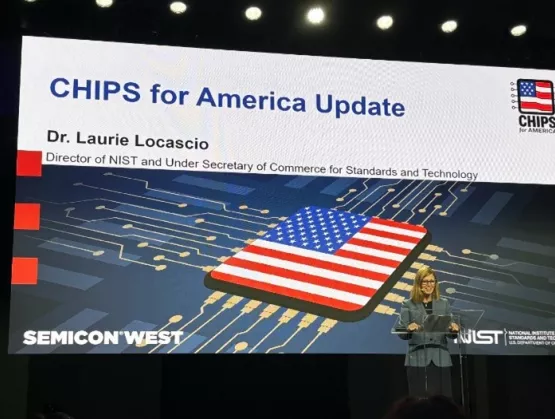
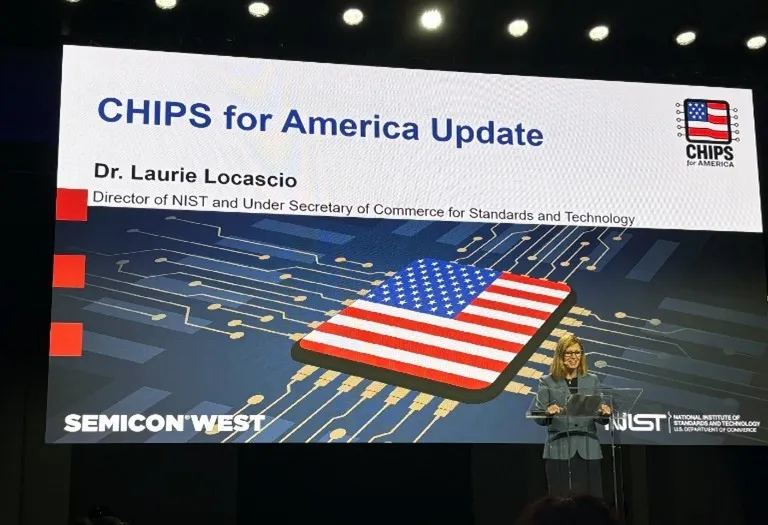
SEMI was honored to welcome U.S. Under Secretary of Commerce for Standards and Technology, Dr. Laurie E. Locascio, to the CEO Summit keynote stage at SEMICON West 2024 on Tuesday, July 9. Locascio, who also serves as the Director of the National Institute of Standards and Technology (NIST), delivered her morning CHIPS Act Update keynote address to a packed room of over 1,000 attendees at the Moscone Center in San Francisco.During her address, Locascio emphasized how far the U.S. chip industry has progressed since 2021. “Prior to 2022 and the passage of the CHIPS and Science Act, the U.S. produced 0% of the world's leading edge chips,” she said. “But now, after these proposed investments, we've changed the global landscape.”Industry Shifts from the CHIPS and Science ActDue to long delays and price increases resulting from supply chain vulnerabilities, Locascio shared that Congress began developing the CHIPS and Science Act with two key goals in mind. The first, she said, was to protect economic security, and the second, was to lower costs for American taxpayers. As part of the CHIPS and Science Act, CHIPS for America was established to advance semiconductor manufacturing in the U.S. CHIPS for America encompasses two offices: The CHIPS Research and Development Office, as well as the CHIPS Program Office - both of which are responsible for implementing CHIPS and Science Act law.CHIPS for America, said Locascio, couldn’t be another procurement program. Instead, it needed to be a purpose-driven approach to build domestic manufacturing capacity. Locascio highlighted that CHIPS for America galvanized several experts from the federal government, R D, and other core areas to work together to revitalize the U.S. semiconductor industry and increase capacity. To achieve this, Locascio pointed to CHIPS for America’s $30 billion in proposed direct funding and $25 billion in proposed direct loans.Locascio also noted diversity of technology as being essential for the American chip industry, citing how Intel, Micron, TSMC, and Samsung have recently expanded in the U.S., with SK Hynix planning to build a fab and R D facility in Indiana. No other economy in the world, she said, has more than two of these companies producing leading edge chips on its shores.“The total public and private investment from our four, leading-edge companies will equal roughly $300 billion between now and the end of the decade, far and away the most investment in new production in the history of the U.S. semiconductor industry,” said Locascio. Industry Investments on the HorizonTo further aid these efforts, Locascio mentioned CHIPS for America’s notice of intent to invest $1.6 billion in an open competition to accelerate advanced packaging domestically and encourage innovation. Funding will be directed toward five key R D areas, including equipment tools, power delivery, connector technology, chiplets, and Electronic Design Automation (EDA), she said. Additionally, Locascio shared that CHIPS for America recently announced its first preliminary memorandum of terms (PMT) to support the upstream supply chain, and shared plans to announce several more PMTs in the future. Lastly, Locascio revealed that CHIPS for America plans to release a model and process for bringing new facilities to life, in partnership with the National Semiconductor Technology Center (NSTC). NSTC members, she said, will gain access to partnership funds and state-of-the-art facilities to support the U.S. semiconductor industry. “Across all these efforts, from manufacturing incentives to research funding, to workforce development efforts, the U.S. must cultivate and build our competitive assets to protect and grow our technological leadership,” said Locascio.In a podcast with Francoise von Trapp of 3D InCites recorded at SEMICON West, Locascio discussed her career background, CHIPS Act investments and the path forward for the semiconductor industry in the U.S. To learn more, check out the podcast interview with 3D InCites. SEMI Global AdvocacyDiscover how SEMI Global Advocacy Public Policy supports the microelectronics industry across trade, taxes, talent, and R D.John Cooney is Vice President of Global Advocacy and Public Policy at SEMI.
Read More
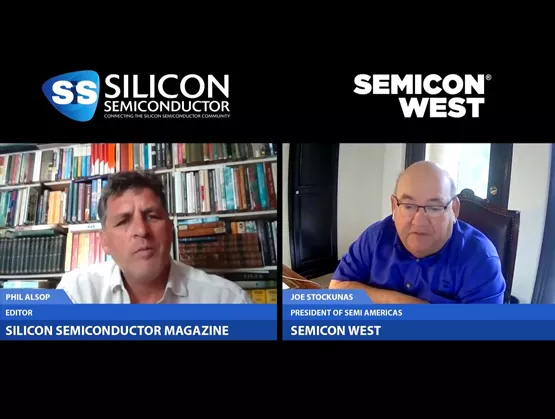
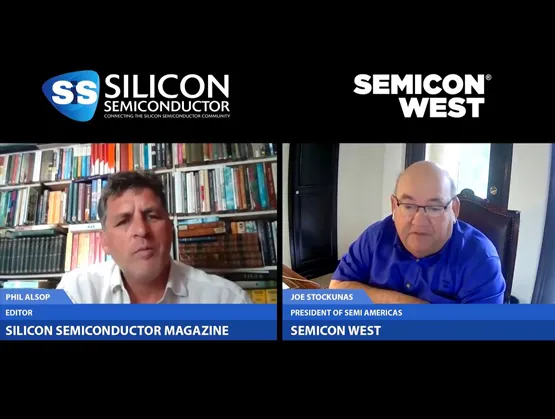
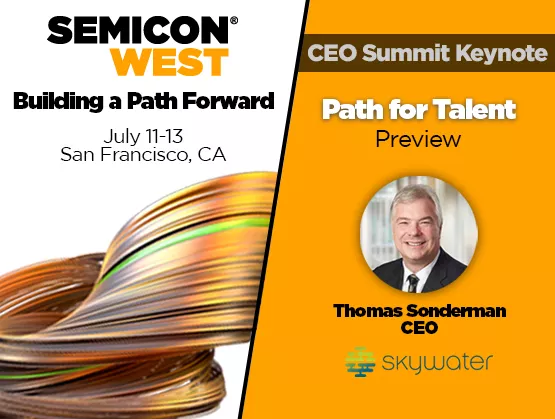
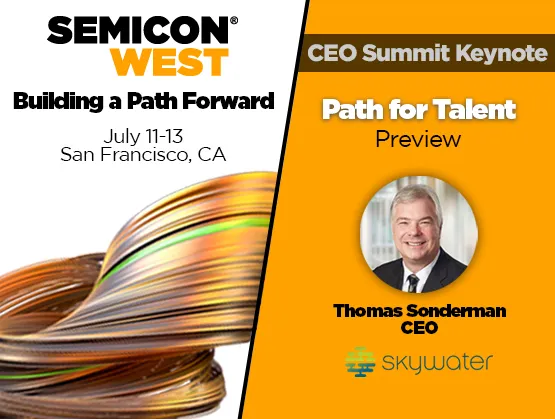
With technological advancements driving our digital era, the demand for semiconductors is skyrocketing. The chip industry is projected to reach unprecedented heights of around $1 trillion in annual revenue by 2030. However, amid this remarkable growth, a daunting challenge looms: the shortage of skilled workers for semiconductor design and manufacturing. As the industry strives to keep up with the escalating demand, the scarcity of qualified personnel has emerged as a critical obstacle. To help the industry overcome this and other key issues, SEMICON West 2023 will explore Building a Path Forward to its future in the event’s inaugural CEO Summit keynote program. A recent SEMI announcement provides an overview of the keynotes and programs at the July 11-13 exhibition and conference at the Moscone Center in San Francisco. The event on July 13 will kick off with Path for Talent session keynotes focused on cultivating a strong talent pipeline, creating a diverse and inclusive industry, and building a career in microelectronics. Tom Sonderman, President and CEO of SkyWater Technology, will present the Path for Talent keynote titled Building the Future: Workforce Development in the Semiconductor Manufacturing Industry. In a podcast with Francoise von Trapp of 3D InCites, Sonderman previews his presentation, highlighting the talent challenges facing the U.S. semiconductor industry and potential solutions. He also shares a glimpse of some of the SkyWater recruitment and training programs designed to fill critical roles from fab technicians to lead engineers. The interview with Sonderman is part of the SEMICON West Podcast Series in the runup to and at the event. It follows the opening SEMICON West preview episode with SEMI Americas President Joe Stockunas in which he highlights a slew of new features that span keynote and conference programming, networking opportunities and even dining options. The CEO Summit keynote program features two additional critical industry topics each of the first two days of the event: Path to $1T – Tuesday, July 11 Luminaries will share insights on the chip industry’s progress towards $1 trillion in annual revenue including the importance of CHIPS Act funding. New semiconductor technology advances and growth segments that promise to boost the global supply chain’s financial performance will also be hot focus topics. Path to Net Zero – Wednesday, July 12 CEOs will share sustainability strategies and insights on the U.S. microelectronics industry’s position on international sustainability and climate agreements and legislation. SEMI offers a comprehensive workforce development program to aid the chip industry in narrowing the talent gap and promoting diversity, equity and inclusion. The program will be on display at the SEMICON West Workforce Development Pavilion hosted by the SEMI Foundation. The pavilion will offer new strategies for recruiters, students and job seekers and spotlight why microelectronics is a smart career choice. Discussions on building a diverse and inclusive workforce, and an interactive day with high school students to help spark their interest in microelectronics careers will be key features of the program. Registration for SEMICON West 2023 is open. Samer Bahou is director of Marketing Communications at SEMI.

Read More