downloadGroupGroupnoun_press release_995423_000000 copyGroupnoun_Feed_96767_000000Group 19noun_pictures_1817522_000000Member company iconResource item iconStore item iconGroup 19Group 19noun_Photo_2085192_000000 Copynoun_presentation_2096081_000000Group 19Group Copy 7noun_webinar_692730_000000Path
Skip to main content
Default Banner Image

IHS Markit

The microelectronics industry entered 2020 with high hopes after a mixed 2019 that saw global semiconductor revenue fall 11 percent while innovators continued to drive impressive advances in 5G, IoT, artificial intelligence, quantum computing and other leading-edge technologies. Equipment sales were rebounding as the industry started to regain momentum. And then COVID-19 sent disruptions rippling throughout the global supply chain. Semiconductor manufacturing facilities scaled back operations. Parts shortages became a problem. Logistical challenges emerged. And, all the while, many workers retreated to their homes under lockdown.The virus forced the industry, en masse, to pivot like never before to ride out the pandemic. This is the most challenging situation that I have experienced in my nearly 40-year career. All of us in the microelectronics industry have dedicated ourselves to rise to the occasion and help others. Among our efforts, we are providing resources to support SEMI members and the industry. Today, we can take heart that manufacturing firms in China are restoring normal operations. SEMI hosted a webinar on March 26 where our colleagues at McKinsey Company shared insights on China as it begins its recovery as well as the broader impact of the pandemic on the microelectronics manufacturing and design supply chain. You can read about McKinsey’s insights in a recent SEMI blog.In my closing remarks at last month’s webinar, I asked the industry to donate masks, gloves and additional personal protective equipment (PPE) to support our overwhelmed healthcare systems. The battle against the virus rages on around the globe. These donations will help people, businesses and whole economies to heal and recover.I am proud of how generously the microelectronics industry has donated these supplies that, in ordinary times, contribute to the meticulously controlled environments of our industry’s manufacturing facilities, but today can help save lives and bring the pandemic to heel. I ask companies across the supply chain to please explore how you can contribute to this effort. Donation information is available on our Coronavirus Resources webpage under Medical Needs Supply Matching Sites. It’s great to see SEMI members help combat COVID-19, and we are highlighting some of their efforts in news stories and blogs on our Coronavirus News and Blog webpage. We encourage you to submit your story.We know our members are hungry for more COVID-19 insights to help guide their way as uncertainty persists. SEMI is offering a follow-up webinar with McKinsey Company – The Way Forward from COVID-19 – on Thursday, April 23rd from 7:30am to 8:45am Pacific Time. Then, on Thursday, April 30th from 8:30am to 10:30am Pacific Time, the SEMI Americas team will host the virtual forum Semiconductor Outlook—Navigating through Turbulent Times. Bank of America Merrill Lynch will provide an update on semiconductor stocks, IHS Markit a market outlook, and VLSI Research the latest on COVID-19’s impact on the semiconductor industry. The goal of these events is to help you, our members, make more informed business decisions. We look forward to your participation and ask that you please submit questions so that the events are more meaningful for you.We have also added more resources to our SEMI Responds webpage, which lists best practices for company policies, public communications and telecommuting from our Environment, Health and Safety (EHS) and Information Technology Leadership (ITL) groups. The page now includes member survey insights from our Fab Owners Alliance (FOA) and Electronic Materials Group (EMG) on COVID-19 impacts to those communities, along with steps members are taking to maintain business continuity and ensure that their facilities remain safe. A big thanks to members of these groups for participating and sharing learnings with the industry at large. Sustaining operations across the industry has been the focus of work by the SEMI Global Advocacy team the past few weeks. It has continued to lobby for the microelectronics industry to be classified as an essential business in the United States and for similar designations in other countries. Those efforts included a SEMI Americas request for the government of Mexico to designate the semiconductor manufacturing supply chain an essential business, consistent with U.S. guidelines, to help avoid disruptions to the North American semiconductor industry. SEMI Europe sent 22 letters to officials across the continent, three of them to the European Commission, urging governments to allow continuous operations of the semiconductor industry. SEMI Japan has been closely engaged with the central government and sent letters to many Japanese prefectures stressing the critical importance of continuing operations.I am truly proud of how the SEMI team has stepped up around the globe to proactively communicate and support our members with relevant information and best practices related to the pandemic. The outcome of our letters to governments around the globe to seek essential business status has generally been very positive.SEMI also continues to oppose unilateral U.S. export controls that will compromise the ability of the U.S. to export semiconductor manufacturing equipment and materials, as highlighted in a recent Reuters article.SEMI advocacy efforts epitomize our overarching approach to the pandemic: We remain squarely focused on supporting our members during these turbulent times while continuing to lay the groundwork for the industry’s prosperity. Ajit Manocha is President and CEO of SEMI.
Read More
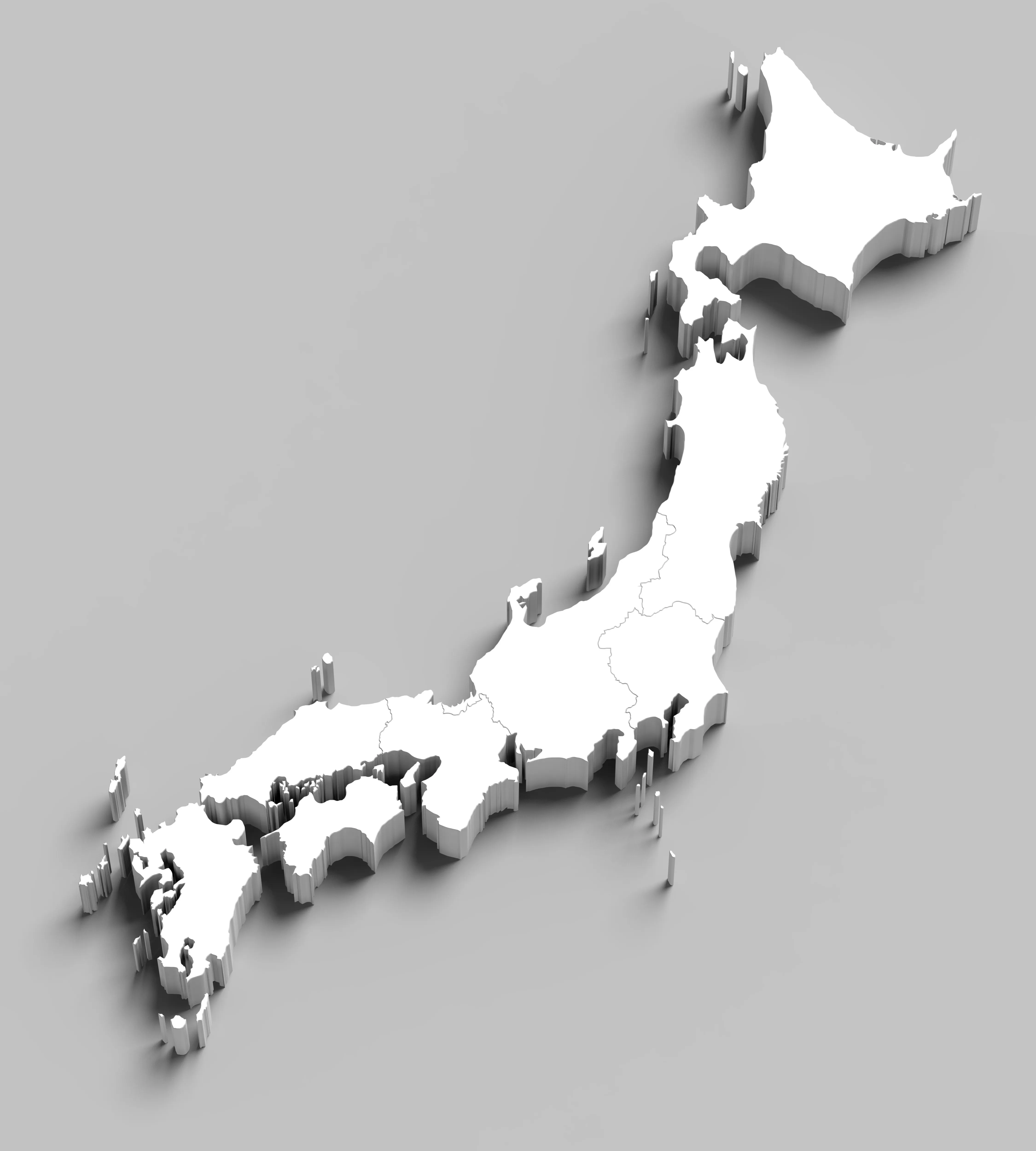
On June 1st, 2018, Toshiba sold Toshiba Memory, Toshiba’s memory business, to an investment group led by Bain Capital. Toshiba Memory was then owned by a consortium of American, Japanese and Korean companies.After the long and tough negotiations, Toshiba Memory moved forward at full throttle, holding a groundbreaking ceremony for its new 3D NAND fab (100,000 WPM) in Kitakami in July and, in September, celebrating the opening of Fab 6 Phase 1 (50,000 WPM). To be sure, NAND memory is a key feature of Japan’s semiconductor industry. But the sector’s reach extends well beyond memory with its rich and versatile product portfolio nourished by active investment.Born in the early 1950s, Japan’s semiconductor industry today boasts more than 30 companies with fabs. Many feature 200mm and smaller wafer lines with legacy technologies, form factors that account for the bulk of the world’s semiconductors and are the oxygen of Japan’s chip industry. Clearly, the world is not built only with the state-of-art 7nm processed chips on the latest generation 300mm lines. Japanese chipmakers are flourishing.Automotive SemiconductorsRenesas Electronics remains a giant in microcontrollers (MCU) and system on chip (SoC) devices for automotive applications. According to IHS Markit, Renesas automotive semiconductor revenue in 2017 reached $3.6 billion while Inineon Technologies and NXP Semiconductors revenues were $3.4 billion and $3.7 billion, respectively. The three companies dominate the global automotive MCU global market. The company recently acquired Integrated Device Technology (IDT), a U.S. fabless company specializing in analog/mixed signal chips, to strengthen its automotive semiconductor portfolio. Renesas operates four volume production fabs, according to the latest World Fab Forecast from SEMI. Renesas’s microcontrollers for automotive applications (Source: Renesas Electronics) Power SemiconductorsWith power semiconductors the chips of choice for boosting the efficiency and performance of motors and batteries used in equipment, demand for the devices is rapidly growing, especially for automotive applications. Power semiconductor companies in Japan are legion and include Denso, Fuji Electric, Fujitsu Semiconductor, Hitachi, Kyocera, Mitsubishi Electric, New Japan Radio, Origin Electric, Phenitec Semiconductor, Renesas, Rohm, Sanken Electric, Sansha Electric Manufacturing, Seiko NPC, Shindengen Electric Manufacturing, Sumitomo Electric Device Innovations, Toshiba and Toyota Industries. The companies account for 26% of global power semiconductor capacity and will spend $317 million for construction and equipping in 2018.CMOS SensorsSony dominates the CMOS image sensors market with 42% share in 2016, according to Yole Développment. To meet growing demand for high-end CMOS image sensors, Sony has acquired several legacy 300mm wafer fabs and retooled them for CMOS sensor manufacturing. What’s more, Sony’s May announcement of its mid-term corporate strategy includes a 1 trillion Japanese yen investment in CMOS image sensors targeted to automotive applications by March 2021.Sony’s 7.42 effective megapixel stacked CMOS image sensor for automotive cameras (Source: Sony Corporation) MEMSMEMS is perhaps the most wide-ranging device market: Every application requires different capabilities and functions. The latest World Fab Forecast report lists 17 MEMS companies in Japan, though three makers of fast-growing RF MEMS, typically known as surface acoustic wave (SAW) or bulk acoustic wave (BAW) filters, are coming to the attention of semiconductor manufacturers. All are familiar passive electronic components suppliers – Murata Manufacturing, Taiyo Yuden and TDK – and all acquired legacy semiconductor fabs to manufacture RF MEMS.Their high-performance radio wave filters make mobile phones usable around the world. Research companies like Yole expect the introduction of 5G cellular mobile communication systems to fuel another wave of growth of the RF MEMS market. Murata Manufacturing’s SAW filters for smart phones (source Murata Manufacturing) Japanese Supply Chain Meets All Different NeedsJapan’s semiconductor supply chain provides one third of the world’s semiconductor manufacturing equipment and more than half of the industry’s materials. But Japanese suppliers also work with small and midsize makers of highly versatile chips critical to enabling the explosion of smart applications.Meet these versatile Japanese suppliers at SEMICON Japan to find solutions to your unique needs and help the world get smarter. Themed “Dreams Start Here,” SEMICON Japan 2018 reflects the promise of AI (artificial intelligence), Internet of Things (IoT) and Smart technologies. Featuring more than 750 exhibitors from around the world, the event is the gathering place to connect the people, technologies and business across the electronics manufacturing supply chain, from semiconductor manufacturing to autonomous cars, robotics and other smart applications. For more information about SEMICON Japan, visit www.semiconjapan.org.Yoichiro Ando is a marketing director at SEMI Japan.
Read More