downloadGroupGroupnoun_press release_995423_000000 copyGroupnoun_Feed_96767_000000Group 19noun_pictures_1817522_000000Member company iconResource item iconStore item iconGroup 19Group 19noun_Photo_2085192_000000 Copynoun_presentation_2096081_000000Group 19Group Copy 7noun_webinar_692730_000000Path
Skip to main content
By many measures, South Korea is swiftly restoring life as usual after suffering a heavy COVID-19 caseload in March. The region has logged an average of about 10 new COVID-19 cases per day since mid-April, it enjoys an ample supply of facial masks and sanitizer, and the Korean government on May 6 lifted social distancing orders and now encourages routine distancing to keep the coronavirus at bay. South Korea is also making progress on the business front as regions including China, Vietnam, Poland, Hungary and Kuwait have started to crack open the doors for travel by Korean businesspeople. As of mid-May, more than 5,500 Korean workers had received permits to travel to the five nations. For several months, South Korea was subjected to international travel bans to stem the spread of the coronavirus. Then, as its COVID-19 case count dropped, other nations started to loosen their bans on business visits to South Korea. In mid-May, the Korean government won work-related travel privileges to Vietnam for 186 Samsung Display engineers, while some LG engineers were also granted the travel permits.Other steps forward for the Korean microelectronics supply chain include the following: About 1,150 workers from Samsung, LG group and affiliates subject to a 14-day quarantine were granted entry to Vietnam 340 employees from 143 small and midsize Korean companies traveled to Vietnam under a 14-days quarantine 252 LG Group workers won fast-track entry to Nanjing, China 215 Samsung Display, Samsung SDI and Samsung Electro-Mechanics engineers were permitted entry to Tianjin, China under the region’s fast-track program 170 LG Display workers with fast-track privileges flew to Guangzhou, China 300 Samsung Electronics workers arrived in Xian, China via fast track Shanghai, Tianjin, and Shandong are among 10 provinces in China that have implemented the fast-track entry program. South Korea businesspeople are required to follow a number of protocols to help ensure the safety of China’s citizens such as: Submitting to temperature checks at least 14 days before departure and COVID-19 tests within 24 hours of leaving South Korea Showing health certificates that they have tested negative for COVID-19 Undergoing COVID-19 testing once they arrive in China. Workers testing negative for the virus can start work within three days. Other regions are also weighing a loosening of travel restrictions to South Korea. For example, the Japan government is considering issuing business travel permits to 10 countries including Korea, China, and the United States. The start to re-opening international borders to business travel is a promising step toward restoring the global collaboration and connection at the heart of the microelectronics industry. Jaegwan Shim is a marketing specialist at SEMI Korea.
Read More
Gursharan Singh, Micron’s senior vice president of Global Assembly and Test, spoke with us about the progress of Micron’s new facility in Penang, the company’s smart manufacturing advancements, its ongoing initiatives to hire and develop talent, and its support of the greater Malaysian community during the COVID-19 pandemic. Micron to Open Center of Excellence in PenangMicron’s 52.6-acre Center of Excellence for SSD assembly and test in Batu Kawan Industrial Park in Penang is slated to open in early 2021. Micron is investing RM1.5 billion over the next five years and has committed to adding 1,000 team members.“In parallel to the building’s construction, we have built a temporary site in Seberang Prai where nearly 1,000 of our team members have already set up the production line for SSD,” Singh said. “Once the new plant is ready, this operation will be moved to Batu Kawan, giving us the advantage to ramp up production and hit the ground running without the lag of waiting for the operationalization of a new facility.”Malaysia to Gain From Micron’s Global Manufacturing NetworkMicron’s commitment to Malaysia extends beyond business investments. As an industry powerhouse, Micron’s Malaysia operations will tap into its global expertise and best practices.“Malaysia is in a unique position to benefit due to its close proximity with our NAND Center of Excellence in Singapore,” Singh said. “We are learning from our factory in Singapore, which implements the latest advances in smart manufacturing, as we develop the facility in Batu Kawan. Those lessons will be used to ensure that new technologies are deployed cost-effectively and push the envelope to get them to the next level.”On the talent front, Micron is creating a pipeline of local Malaysian talent from a young age. This means driving multiple STEM initiatives targeting local primary and secondary schools and includes a Women in Science and Engineering Program we’re offering at 39 of Penang’s secondary schools. We’re also creating internships for engineering degree holders through the company’s Industry Student Engagement Program (ISEP) and continuing a training program for young diploma holders held in conjunction with Penang Skills Development Centre (PSDC) to give them skills that are required by the industry.Our workforce development initiative also gives Micron an opportunity to work with young talent new to the industry so they can learn and undergo in-depth industry training from more experienced peers."We use our global network of expertise to train young workers and give them the opportunity to learn and participate in this start-up-like environment,” Singh said. “We have already hired nearly 40 new college graduates from Universiti Sains Malaysia (USM). Our game plan is to continue on this path by hiring a higher percentage of local graduates and giving them access to our facilities to learn our technology and advance our Malaysia facility. More than that, we hope our collaboration with local universities can extend further into high-impact research initiatives that benefit the wider community."Micron’s Commitment to Malaysia’s Communities During the COVID-19 PandemicMicron is investing in the greater Malaysian community as the country fights the current COVID-19 pandemic. Malaysia is one of five countries prioritized to receive grants from Micron’s $35 million global relief fund. The company recently announced a RM2.6 million donation from the Micron Foundation that will help the three groups most in need – front-line workers and hospitals, children and the elderly in charitable homes, and underprivileged families in Muar and Penang near its facilities. The goal is to quickly distribute aid such as medical and personal protective equipment, food and household items, and financial assistance.In addition, Micron is supporting its Malaysian employees by making a one-time assistance payment of RM1,300 to 94% of its workforce based in Muar and Penang. This is the percentage of the workforce meeting the eligibility criteria.Designated as an essential services provider by the Malaysian government, Micron continues to maintain its local operations. Micron products built in Malaysia are critical to helping the world effectively cope with COVID-19. Our technology enables advanced medical devices for treatment, data centers and supercomputers used by scientists to find new solutions, and e-learning and videoconferencing capabilities that connect the world during this period of restricted movement.Sangeeta Rajgopal is Head of Country Communications Marketing, Singapore Malaysia Global Communications Marketing, Micron
Read More
In many ways it feels like we’ve turned back the hands of time. We are staying at home, playing board games with the family. Outdoors, we can view mountains not seen in decades – air pollution has dropped nearly 20 percent. Neighbors we haven’t met are out walking, a lot. Traffic is relatively sparse.We’re staying up late, sometimes even getting up early, for calls with all regions. Some of us have temporarily suspended our use of cleanroom masks – but now wear them everywhere we go outside of the house. And through virtual meetings, I see I’m not the only one who let the beard grow. Who would’ve thought we’d be able to so quickly and completely change our habits?Clearly, the usual distractions that fill most of our lives have given way to a temporary pause. We have time to reflect, and perhaps gain even greater perspective. I hope that’s been a good thing for you.Through virtual meetings, we seem to be getting access to people not typically in our circle of influence – both up and down the organizational ladder. This pleasant surprise seems to be helping to create a valuable acceleration in how the industry community interacts and progresses.As a testament to the strategic importance of our industry, the fabs continue to produce. This is due in great part to the standards, technologies and their resulting applications that enable those operations. Many parts of our industry supply chain became officially designated as essential businesses. Whether or not we stayed home from the office, we’ve continued to work on our roadmaps for growth beyond the current lull.Empowered by 50 years of technology legacy, we are again demonstrating the capability to manage disruption through collaboration. This is the signature of our industry’s highly regarded business culture. Among what we have learned is that this pandemic has made all of us more vulnerable in a variety of ways, and in turn has accelerated our unity as an industry community like never before.This month, as I brainstormed with a set of industry execs during one of countless Zoom meetings, it was clear that when they gather, they want more than a repackaged version of everyone else’s usual messages about this unusual year.While this type of year certainly wasn’t what we had in mind when we began to construct ways to mark this 50th year of SEMICON West, we’ve taken the bull by the horns and begun to blaze a new trail. The consensus within the industry is that SEMI’s constant, measured communication is netting an increased, and growing, level of trust among our collective, global group that may serve as one of the silver linings of this irregular year.As a result, we’ll lay a new road with the first – and possibly not the last – Virtual SEMICON West. For this inaugural digital format, we’ve secured a set of visionaries offering both legendary and evolutionary talents alike to reveal what we can expect during the next few years. It’ll be unlike any other such gathering before, and there’ll be something for everyone.Despite the pause in time we’ve experienced during our isolation of these recent weeks, the timeless value of collaboration marches on. I look forward to joining you at Virtual SEMICON West, July 20-23.Dave Anderson is president of SEMI Americas.
Read More
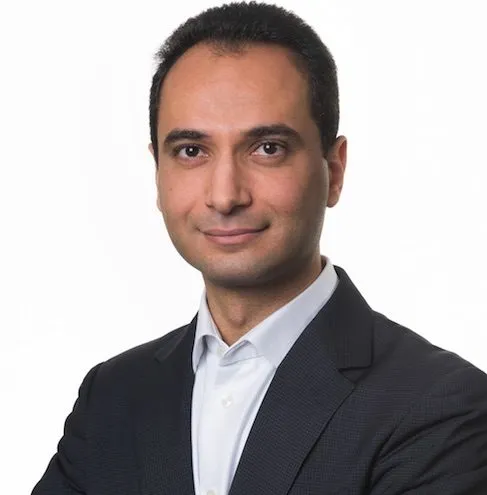
SOI News spoke with Philippe Berger, CEO of chip silicon IP design / power management specialist Dolphin Design. Here’s what he told us about the work they’re doing on FD-SOI.SOI News (SN): Dolphin Design has been offering IP solutions for bulk technologies since 1995. What is your specialty, and why are you expanding your offering to FD-SOI? Philippe Berger (PB): Low power is part of Dolphin’s DNA since its inception and we work hand-in-hand with our customers to offer IPs that enable design of Energy Efficient SoCs while allowing our customers to focus their design activity on their core competencies. Technology scaling is no longer the only answer for the next generation of Energy Efficient SoCs. FD-SOI is one of the attractive technologies to address the upcoming energy efficiency challenges of next SoC generations, be it for IoT or automotive among several other applications. FD-SOI offers the opportunity to deal with a complex SoC architecture, made of multiple power domains, including RF, including digital processing with AI, and sensor interfaces, all together with a complete power management on a single chip. [caption id="attachment_33090" align="alignright" width="175"] Philippe Berger, CEO, Dolphin Design.[/caption] This is a great opportunity for Dolphin Design. Adding the deep expertise of our engineers in this technology and our turnkey design platforms, we can really help companies targeting FD-SOI implement easily, quickly and safely an energy-efficient SoC. We have two complementary offerings for companies that want to leverage FD-SOI: A sensor-centric MCU subsystem as a configurable RTL design platform. This design platform, named Chameleon, allows achieving the best energy efficiency by turning the CPU off whenever possible and by eliminating latency and congestions on the memory bus. A power management design platform as a total solution to implement fast and safely a power management network that leverages low power techniques to meet the energy efficiency targets. This design platform, named Spider, combines a library of configurable power management IPs, including adaptive body biasing, with a scalable power controller enabling to control power and clock activity autonomously, even with the CPU off. We can intervene at a very early stage of our customers’ design cycles thanks to our system-level utilities rather than just IP bits and pieces. The figure below describes the components of our Spider power management design platform which is a key turnkey solution to leverage some unique capabilities of FD-SOI, such as the capability to operate at a very low voltage with a decent speed or the capability to support as high as 5V input voltage. ASN: What’s driving that business? PB: The emergence of new IoT and automotive markets is driving the business forcing IC design teams to pursue tough objectives: zero power consumption in off modes while maximizing the performance in active modes at minimal power consumptions. Unfortunately, scaling down to the next technology node makes it even harder to reduce power in off modes and is an expensive choice - too expensive - for many applications to achieve the energy efficiency targets in active modes. As a result, design teams must now pursue their gains by deploying increasingly complex power management techniques to meet the stringent requirements of the new IoT markets. This is particularly tricky in advanced IoT where near-sensor processing must be efficiently combined with RF connectivity, together with advanced power management. In addition, designers must confront the complexity of supporting high input voltage for interfacing with 4.2V/4.4V Li-Ion batteries or 5V USB charging mode that rely on 1.8V IO transistors. The need for solutions that enable to select fast and to implement safely the power management network which allows a seamless system-level integration while meeting power consumption targets in each SoC power mode -- that drives our business. SN: What do you see as the biggest benefits – and challenges – for designers moving to FD-SOI? PB: Its biggest benefit is its high integration capability. One of its key challenge is the ”so-far” relatively more complex design methodology that is required to take advantage of all FD-SOI characteristics, namely for example the biasing of the bulk to either reduce leakage or improve energy efficiency depending on working mode and technology centering. And ultimately, assuming the FD-SOI design flow is no longer a point of discussion, we need to get all designers “Thinking FD-SOI”. By that I mean to be aware of the breadth of FD-SOI advantages, so they are using it at every possible opportunity: in RF, in switches, in A/D converters (ADC) – in everything! FD-SOI’s double gate lets you think about more than decreasing noise and energy consumption. There are many opportunities for many blocks – especially analog. [bctt tweet="We need to get all designers “Thinking FD-SOI” so they’re using it at every possible opportunity: in RF, switches, ADC – in everything! Body biasing is usually thought of in the digital context, but it is also very useful in analog. – DolphinDesign CEO" username="soiconsortium"] SN: What does Dolphin Design offer designers moving to FD-SOI? PB: In order to ease these tasks, we developed the turnkey Spider platform based on power management IPs and system-level utilities. It speeds-up the design of energy efficient power management systems to weeks instead of months. Spider obviously exists in FD-SOI technology. It enables chip-architects to explore many power architectures and to select the best one to match the targeted PPA. It bridges the complexity gaps of designing fast and safely a power controller that can deal with numerous power domains and several operation modes for each domain and that can operate even when the CPU is off. Then, it bridges the gap between standard RTL and GDS flow, as it is able to generate the UPF backbone of the SoC. It offers a standardized and predictable power management flow, securing first silicon success. As an example, one of our key customers doing a ULP MCU shared that they have been able to design a complete power controller in less than one week instead of a couple of months. SN: You announced design kits with Adaptive Body Bias (ABB) solutions for GlobalFoundries’ 22FDX technology at the end of 2019. What challenges is that solving? PB: In the race for higher energy efficiency, digital designers face the impact of process variations. Chip designers have added margins all along their design to ensure the future chip will work fine whatever the technology centering after fabrication. Performance or size tradeoffs are necessary to cope with extreme variation cases (the so-called “corners”). At low voltage, SoC designers often use compensation techniques to limit the impact on the SoC energy efficiency. Through the control of transistor threshold voltage in FD-SOI technology, body biasing acts as a fantastic and automated control method to offset all variations. Designers can design their SoCs with reduced design corners for process, temperature and aging, boosting the PPA trade-off up to 10x at low voltage. We have been cooperating with GlobalFoundries over the last two years to provide the market with an Adaptive Body Bias (ABB) IP solution. The ABB feature allows designers to leverage forward and reverse body bias techniques to dynamically compensate for process, supply voltage, temperature (PVT) variations and aging effects. Our ABB IP embeds the body bias voltage regulation, PVT monitors and aging sensors, and a control loop. From standard-cell library to sign-off verification, our customers will continue to use their usual standard flow. For IoT on GF 22FDX, the design kits are available for production. For automotive, it will be in the next months. SN: Looking to the future, will there be a need for more application-specific FD-SOI IP? Where are the growth opportunities? Which ones will you be working on? PB: We anticipate new needs along the time as new applications will emerge in FD-SOI. We have a roadmap to enrich the catalog of power management IPs for addressing each market vertical with the most complete offering. But where we see the biggest growth for us is the growing adoption of power management IPs even by companies that were used to make voltage regulators on their own. Power management is no longer an issue of designing some good voltage regulators, like LDOs. Fabless companies face the challenge of dealing with the growing complexity of SoC power management network. It absorbs a significant portion of their design “energy”, in logic and in analog domains. They need to customize voltage regulators for each SoC and to maintain their design to keep them competitive. They also face the challenge of complex and sensitive power controller design. Finding the right design expertise to make such complex SoCs is a challenge in itself and in many cases power management complexity is the cause of a design respin. With the emergence of solutions such as Spider, that streamline and secure the selection and the implementation of the power management network, fabless companies start to question whether their core competency is power management IP design or if they can focus their design resources where they are the best at. The addition of body biasing into this picture makes it even more obvious for fabless companies that relying on a solid IP partner is a strong option. For Dolphin Design another opportunity for growth will mainly come from our capability to expand our offering for complementary design platforms for various FD flavors. We will communicate a lot in the coming months on our design platforms. We are also looking for diversification to other SoC functionalities. Processing is definitely an area in which we are significantly investing (MCU sub-systems and their associated DSPs), but energy harvesting and RF could also be good candidates in the future. SN: Dolphin Design is a member of the SOI Consortium. What do you see as the advantages of membership? PB: The 2019 Silicon Valley SOI Symposium was my first participation in an SOI Consortium event. [Note: you can get his full presentation here.] My first impression was good! I was positively surprised by the wide diversity of material shown. But really the key advantage was the opportunity to meet with so many different companies, all involved, from near or from far, with an FD-SOI tape out. It really helped me understand what I needed to put my teams to work on next!
Read More
Companies around the world are increasingly turning to mergers and acquisitions, research and development, and corporate venture capital (CVC) investment to sustain growth. For many years, global semiconductor companies including Intel, Qualcomm and Samsung have been active CVC investors. However, the economic fallout from the COVID-19 pandemic has forced many venture capital (VC) and CVC investors to rethink their investment strategies as they look to an uncertain future. To help provide SEMI members with the latest market trend information, SEMI Taiwan held the webinar Challenges and Opportunities in Corporate Venturing during the Global Pandemic Crisis on April 28th. Featured speaker James Mawson, founder and editor in chief of Global Corporate Venturing, provided an analysis of the pandemic’s impact on deal flow, capital movement, sentiment and strategies among CVCs. CVC takes larger role in past decadeCorporations have been increasingly active direct and indirect venture investors over the past decade. From 2011-2019, more than US$1.3 trillion of venture capital was invested globally, with corporations accounting for more than half that total, according to data from Pitchbook/GCV Analytics.Semiconductor companies that have been active in corporate venturing include Intel, Samsung, Nvidia, ARM, AMD, SK Hynix, Broadcom and Qualcomm. Pure-play semiconductor and chip companies tend to make few investments in their start-up counterparts because sector saturation of powerful incumbents leaves little opportunity for growth, James said. “While it is hard to find entrepreneurs wanting to be engaged in pure play S C, once they do, they can be very valuable and often be able to bring disruptive forces to the whole ecosystem,” James said.S C corporate investors focus on chip applicationsSemiconductor companies looking beyond pure-play S C start-ups for investment opportunities often target applications or developers that require the additional data, processing power, and memory their chips provide. “There is lots of interest by the big chip companies such as Intel, Qualcomm, and Samsung in developing some of those chip applications, getting them used more and creating a whole ecosystem,” James said.For example, Intel Capital, based on its data-centric theme, has focused on areas like autonomous vehicles, data centers and artificial intelligence (AI) because of the sheer amount of data and processing power they require. In another notable trend, non-traditional S C players such as Apple and Alibaba are leveraging investments in start-ups to develop their own chips for competitive advantage, James said.March deal flow down 20% With COVID-19 slowing the global economy, James expects semiconductor and chip companies to scale back direct investments this year due to rising pressure on their balance sheets. Deal flow in March was down roughly 20% from February.James is hopeful corporates will focus on investing in innovation over the long term rather than target share buybacks to boost near-term earnings. James pointed out that investors can uncover opportunities by identifying future problems to be solved in areas such as quantum computing, biotech, energy, healthcare, communications and ICT. Still, in the near term, where there is a crisis, there is opportunity. While the pandemic hit some sectors hard, it benefits start-ups in industries including gaming, education and telemedicine. This time is different?James said corporates need to rethink the investment model they want to follow. One option is the approach taken by General Electric, which divested its investment team and sold all its portfolio companies last year. Another is to focus on the long term. For example, Intel Capital has been dedicated to investments in innovation for nearly 30 years and continues to invest during downturns.Compared with the internet bubble and global financial crisis, today there are more experienced and mature CVCs that better know how to negotiate a crisis. James also pointed out investors are interested in backing CVCs with sector investing experience. There are now more than 600 CVCs with a 10-year-plus track record.James expects a variety of funding models to emerge over the next decade as pressure on corporate balance sheets encourages corporate investors to consider models that allow third-party capital to effectively leverage their CVC units. Corporate investors are also open to other ways to efficiently deliver financial returns.For more information about the SEMI Taiwan Corporate Growth and Innovation Community, please contact Irene Lin at [email protected]. For GCV’s latest news and event, visit its website.Jo-Ann Su is senior director of the Corporate Growth and Innovation Community at SEMI Taiwan.
Read More
In an important step toward resuming business as usual in Japan, Prime Minister Shinzo Abe on May 14 lifted the state of emergency originally scheduled to expire at the end of May for 39 of Japan’s 47 prefectures, marking “the real beginning of our efforts toward a new normal in the era of the coronavirus” as new cases continue to decline. But with Tokyo, Osaka and six other prefectures still under the state of emergency, Abe urged citizens to remain cautious as the nation and world continue to confront the COVID-19 threat. Among criteria the remaining prefectures must meet for a state of emergency suspension is a reduction in new infections to no more than 0.5 cases weekly for every 100,000 citizens. The eight prefectures account for nearly half of Japan’s population and GDP, with Tokyo and Osaka the two largest urban areas in the island nation. Japan expects to contain its economic losses to 38 trillion yen, 15 percent less than the 45 trillion yen hit originally projected. The Japan government has planned a May 21 progress review[1] in the eight prefectures, a timeline that Abe said could lead to the lifting of the state of emergency before the original cutoff at the end of the month, a move that would help stem the drain on the domestic economy.Strict Immigration Controls Restricts International Travel to and from Japan by Supplier EngineersAs I reported on April 21, the Japan Foreign Ministry on March 31 raised its travel advisory to level 3 for 49 regions around the world including the U.S., prohibiting travel from Japan for any purpose. SEMI Japan is urging government officials to exempt Japanese supply chain engineers from the travel ban to allow visits to semiconductor manufacturing facilities in those regions in order to install, start up and service equipment.Starting May 14, Japan blocked immigration of foreign nationals and permanent residents from 100 countries and regions worldwide, a ban applying to anyone who spent time in their home region within 14 days of their planned arrival in Japan. The areas include China, Singapore, South Korea, and Taiwan in Asia; Canada and the U.S.; and Germany, France, Italy, Netherlands, Switzerland and the U.K. in Europe. For the complete list, see the Japan Ministry of Justice’s website.Japan’s immigration ban mirrors restrictions now in place in many other regions around the world. The immigration controls are well-intended – to restrict the spread of COVID-19 – but hamstring the global microelectronics supply chain. For example, the curbs bar engineers from international travel to install new tools and software in fabs. SEMI Japan has stressed the potential chip industry impacts of the ban in ongoing talks with the Ministry of Economy, Trade and Industry and is facilitating discussions between government representatives and SEMI members to help clear the way for travel by critical supply chain workers to Japan. SEMI Supports Members with COVID-19 ResourcesSEMI international headquarters and regional offices are here to help you, our members. For more information on our webinars, surveys, best practices and other information designed to help you meet the challenges of the pandemic, please visit the SEMI Coronavirus Updates Resources page.[1] The May 21 review found three prefectures in western area – Hyogo, Kyoto and Osaka – met the criteria to lift the state of the emergency. Four other prefectures – Chiba, Hokkaido, Saitama and Tokyo – remain under the emergency order that will be reviewed again as early as May 25.Jim Hamajima is president of SEMI Japan.
Read More
Thanks to developments in science and technology, artificial intelligence (AI), cloud computing, big data and other technologies have been used to establish smart healthcare systems that helps societies respond more effectively to disease outbreaks. The spread of novel coronavirus starting in late 2019 has revealed how not only traditional medicine but also Smart MedTech applications can be instrumental on the anti-epidemic front lines.To give updates on the development of Smart MedTech and how it shines during the fight against COVID-19, SEMI invited Dr. Pei-Yuan Lee, Honorary Superintendent of Show Chwan Memorial Hospital, to share with MSIG (MEMS Sensors Industry Group) and Flex-Tech members how the international community and Taiwan are bringing their best in Smart MedTech to the table and how their collective efforts are helping tackle COVID-19 challenges.Taiwan’s COVID-19 rapid screening reagents and antibody testing help curb coronavirus transmissions Taiwan’s medical community has demonstrated its prowess in responding to the COVID-19 outbreak. Using its nucleic acid extraction reagent, Taiwan Advanced Nanotech Inc. tested 128 specimens from passengers aboard the SuperStar Aquarius cruise ship in only eight hours in early February. Taiwan’s leading research institute Academia Sinica successfully synthesized the first group of monoclonal antibodies capable of recognizing the new coronavirus protein on March 8, enabling testing to be completed in 15 minutes. The College of Medicine of National Taiwan University announced on March 27 that its 30-second screening device had helped identify asymptomatic carriers. The devices detect COVID-19 in people with no symptoms if they have pulmonary infiltration and edema. It took only 14 days for Academia Sinica to successfully synthesized the first group of monoclonal antibodies capable of recognizing the new coronavirus protein. On April 22, three biomedical companies in Taiwan launched a COVID-19 test that produces results from samples of patient mucus in less than 10 minutes to greatly enhance testing speed. Once the test method is approved by the Taiwan government, it will take Taiwan’s medical strategy against COVID-19 to the next level.Artificial Intelligence: the key to upgrading traditional healthcare practicesAI is a key enabler of the transition from traditional medical practice to Smart MedTech. To help fight the COVID-19 outbreak, a National Cheng Kung University medical team developed a 30-minute coronavirus testing procedure that uses AI to read pulmonary X-ray images and automate medical records. Taiwan AI Labs leveraged AI to simulate how drug molecules combine with viruses to reduce research time by three to four years. AI ​​diagnostic technology from the Alibaba DAMO Academy (Academy for Discovery, Adventure, Momentum and Outlook) and Alibaba Cloud interprets CT images of COVID-19 patients with 96 percent accuracy in 20 seconds. AI-powered algorithms improve diagnostic test accuracy, allowing clinicians to quickly analyze scans of pulmonary lesions and quantify the severity of lung damage.Startups have also joined the fight against COVID-19. Taiwan's Internet of Things (IoT) startup iWEECARE invented the world's smallest smart thermometer patch. Heroic-Faith Medical Science launched a device that uses IoT and AI to monitor lung sounds. With Smart MedTech expected to be fertile ground for future venture investments, enterprises must find their niches in establishing new technologies in a much more systemic way. Taiwan startup Health-Faith Medical Science developed a respiratory diagnostics device that uses IoT and AI technology to monitor chest sounds in real time. Anti-epidemic technology to help fulfill smart medtech vision Many AI and big data technologies previously deployed in hospitals and healthcare systems are helping regions around the world speed their pandemic response. The United States and China have started to develop facial mask recognition systems powered by AI, while a team in the Department of Bioinformatics and Medical Engineering at Asia University has devised a facial recognition system combining IoT and AI technology with infrared thermal imaging cameras. At Johns Hopkins University, the Center for Systems Science and Engineering is using AI to create big data models that track global cases, people and traffic flow, and other variables for real-time data analysis that enables epidemiologists to more accurately predict COVID-19 transmission paths. Graphen, Inc., a New York-based provider of next-generation AI platforms, launched the world's first AI COVID-19 genetic evolutionary path analysis systems to gauge the virus’s transmission route and accelerate pandemic response. Both the United States and China are also using robots and drones to improve epidemic research and patient treatment. For the first confirmed case in the United States, robots were used to assist with medical care. In China, robots facilitate deliveries of disinfectants to makeshift hospitals built to expand the nation’s capacity to treat COVID-19 patients. While Taiwan’s robots are traditionally used for hospitality, transportation and disinfection purposes, future robotics research and development will focus more on medical applications that shift more work from medical staff to technology. With abundant technological resources and expertise, Taiwan can join hands with the rest of the world to combat the COVID-19 pandemic. Emerging technologies are pointing the way toward a new paradigm for healthcare community. Biotech, artificial intelligence, and robotics have given rise to new applications that increase virus screening accuracy and efficiency. This growing wave of technological defenses against the pandemic will become a long-term force for stability and strength in healthcare systems across the world.To get involved in SEMI Taiwan Smart MedTech Community, please contact Helen Chen, Outreach Manager, at [email protected] Huang and Winnie Chang are marketing and public relations specialists at SEMI Taiwan.
Read More
What do you do when much of the U.S. is under lockdown and university students want insights into career opportunities in the microelectronics industry including how to secure jobs?Go virtual.More than 100 students from 30 universities hopped online recently to attend Find Your Future in Microelectronics, the SEMI Foundation’s first webinar. The students learned about the industry’s impact on the future of tech and available career paths and discovered how to take advantage of the Foundation’s university programs. They also submitted their resumes as part of joining SEMI’s student fellow network in hopes of engaging with employers and exploring available job opportunities.And if the students’ questions were a telling sign of their engagement, the event showed that they were fully tuned in. Tim Brosnihan, executive director of the MEMS Sensors Industry Group (MSIG), Erika Hansen, an Applied Materials process engineer, and Cristina Sandoval, the event coordinator and moderator, fielded a whopping 65 questions, many of them about job opportunities, career paths and suggested courses of study. A sample of the questions asked: Q: Is the industry still hiring during these uncertain times?A: Yes! The microelectronics industry is growing and will continue to grow over the next 10 years. There are many job opportunities to be had in the industry and many of our member companies are hiring.Q: What kind of degrees does the microelectronics industry look for?A: Generally, the industry primarily hires graduates with STEM degrees. Chemical, electrical, nano, mechanical, and materials engineering are some of the top majors the industry hires from along with chemistry, physics, and mathematic degrees. That being said, the industry needs talent from all majors. That includes business, finance, human resources and marketing.Q: How can I get connected to the opportunities provided by SEMI?A: You can sign up to connect to our employers and opportunities at www.semi.org/join-edu. Once you submit your information, you will be kept up to date on the latest events and opportunities offered by SEMI and our member companies.Q: Any advice on what to do if your offer has been rescinded?A: Don’t limit yourself when it comes to opportunities. If your offer has been rescinded, don’t give up! Share your situation with your LinkedIn network, an invaluable resource full of contacts that can help you learn about job opportunities. You never know what you will love once you enter the workforce, so keep yourself open and don’t limit the positions or fields that you interview for. Rescinding an offer is always a very difficult decision for an organization, so make sure that you exit the relationship positively. You never know who you will cross paths in the future.Erika delved into the day in the life of an engineer and advised students on ways to find jobs in our industry. Students interacted with Erika, eager to learn how she balanced customer needs with working in the lab. She said she enjoys that duality because it continues to challenge her, allowing her to grow her abilities as a professional.When it comes to breaking into the industry, working in college or through internships and direct-hire opportunities after graduating are good ways to do so. And the students can get their feet in the door with degrees at various levels and across a wide range of disciplines. There is no set formula for success. Learners, she said, will find a place in the industry.With workforce development a key industry initiative, the SEMI Foundation will be rolling out more virtual programs and events to help keep university students and the microelectronics industry connected. Look for details on a virtual job fair we’re planning.We look forward to seeing you online!Shari Liss is executive director of the SEMI Foundation. Shari can be reached at [email protected].
Read More
Cameron Burks, head of Global Security, Enterprise Business Resiliency and Health, Environment Safety with Adobe Systems, and a member of the White House Task Force for COVID-19 response, briefed members of SEMI’s IT Leadership (ITL) and Environment, Health Safety (EHS) groups on April 20, 2020, on enterprise resiliency principals specific to the current COVID-19 crisis. Burks has spent over 20 years in the global security, crisis management and business continuity fields for public and private global companies. In the meeting, he noted, “This is all new. No one has had to respond to a crisis of this magnitude and impact. Ever.” On top of all of the learning and responding that teams are doing in real-time, it is helpful to have a strong business continuity plan (BCP). The following is a recap of insights that Burks shared on best practices for business continuity with examples from Adobe’s BCP.The Long-Term Picture: How to Plan for Business ContinuityBurks emphasized that the first step in any crisis is identifying risks and ensuring the safety of all human life. Once human safety is assured, the next part of the plan must form a strong foundation for escalation, operation evaluation and response. A solid foundation also creates the business factors to restart operations efficiently. The foundation of the Adobe pandemic plan was laid during the summer of 2019 while the global team was updating their infectious disease plan and rehearsing with headquarters and regional offices. That plan includes six main sections:1. Crisis Management Plans – escalation, roles and responsibilities, team operations2. Crisis Communication Plans – internal and external stakeholder communications3. Incident Management Plans – site or regional management response4. Emergency Response Plans – immediate local response to events5. Business Recovery Plans – business and facility recovery6. Disaster Recovery Plans – IT and technology recoveryThis format has worked and scaled well over the past few months, and the company is now in the stage of evaluating how to help offices recover and repopulate. Response Team Structure – Global and LocalAlthough it is critical to have plans and leadership coming from headquarters when it comes to a crisis, LOCAL teams are on the front lines since most crises start and evolve quickly. In the planning process, the local teams need to know and be trained on plans for a wide range of incidents and events including: People- and product-related Security – both external and internal Operational (e.g. cyberattacks) Natural disasters Health-related, such as this pandemic The severity of the event will determine the corporate impact and activation of appropriate plans. Low-impact events include those where stability is quickly reached and response plans have effectively contained the incident. High-level events will cause severe disruption for employees and customers and require an efficient and coordinated response. Regardless of the severity level of the event, all response teams need to be prepared to quickly activate and then to thoroughly coordinate on crisis management and communications. It is critical to have established actions to implement based on the severity level of an event. Table 1 provides an example of Key Trigger Levels for implementing specific actions depending on the severity of an event. Table 1 – Key Trigger Levels X = phase to consider first implementing controls The team needs to understand what the staff requires to maintain business continuity. Burks recommended aligning with ISO 22301, the Business Continuity standard. The standard will lead a company to understand what redundancies need to be in place to keep essential operations running. In Adobe’s case, this includes keeping data centers running and providing essential gear to the 90+ members of the response and global security teams. Adobe tests the plans every month and addresses the bugs – every time.Repopulating Business Facilities During COVID-19 While COVID-19 infection and death rates are currently flattening in many locations, there remain a significant number of new infections, limiting the ability to repopulate business facilities without threatening the health of the workforce and their families. Adobe is using multiple indicators to calculate when the virus is contained, the threat is reduced, and employees can return to workplaces. For now, Burks recommended maintaining social distancing as much as possible while keeping operations running. He believes summer may see some abatement due to weather. However, most experts expect to stay hyper-aware and responsive well into 2021.Although Adobe tries to provide actual dates for return to their employees – and did early on with best estimates – they have had to change to a “until further notice” statement. Repopulating is going to be much more complicated than the original decisions to work from home. The Adobe operations team is providing much larger conference rooms, enhanced cleaning regimens, and new norms of interacting at the workplace for everyone. The goal is to bring people back in small groups on a site-by-site basis. The first group will be only 7-10% of the workforce. That group includes the cleaning and facilities crews to support the professional staff, who would return to reap the benefits of a collaborative environment. Many people want to come back to the office. They are suffering in isolation, and productivity is dropping in those cases.Adobe is planning to create a manual on interacting at the workplace and will require training and adherence to new social constructs. Security officers will be “ambassadors,” helping the workforce remember and adhere to the new rules. The company will use footprint stickers to provide visual clues to employees on walking single file and avoiding groups. Stickers will designate desks that can and cannot be used. To provide a more open office plan, they will remove desks and arrange movable white boards to accommodate the collaboration employees want.The situation is complex and dynamic and requires decision-making based on a definitive set of criteria. The following is a summary of information that Burks shared on Adobe’s criteria for returning to work after COVID-19: Indication of health and safety assurance utilizing risk assessment criteria – locally assessed and qualified for a minimum of six weeks. Travel prohibitions and local/external meeting guidelines to be modeled separately utilizing case-by-case risk assessment criteria. Assessment of the case fatality rate, infection peak and downside projections – curve must be flat. Management team decision on how much risk to assume, as this disease is durable Assessment of infection vector and prevalence vis-à-vis relaxation of nonpharmaceutical interventions; assessment of local healthcare capacity Government shelter-in-place restrictions fully (or partially) lifted; declarations by public leaders that the virus has been contained at some level (city, state, country) Assessment of facilities to physically distance employees and/or staggered shift schedule; assessment of security capability/resource availability Assessment of public transportation and infrastructure, including parking garage Assessment of school closures, childcare and/or adult-care Assessment of nonpharmaceutical intervention awareness campaign, medical surveillance program, and/or onsite medical or clinical support No visitor program until approved by global security staff when office repopulation program begins. Create exceptions list. Emergency plans formally in place Site capacity identified; Emergency Response Team (ERT) skeleton crew part of the repopulation Full plan in place to close offices for a period of no less than three weeks if one employee or vendor tested positive for COVID-19 during repopulation exercise; plan includes informing workforce within “return population” of circumstance and having the facilities team execute a deep clean. The plan would then activate communications for the crisis management remediation phase, which includes full workforce transparency via town halls, webinars, emails, etc. Burks noted that contact tracing has moved from an unthinkable invasion of privacy to a likelihood for most workplaces, taking into consideration privacy laws predominant in Europe and U.S. If anyone falls ill or tests positive for the virus, they will automatically be sent home and everyone who has been in contact with them will need to enter a 14-day quarantine before returning. Burks’ presentation, and his thoughtful approach to planning and the current situation with COVID-19, allowed the attendees to consider their positions and paths for bringing their workers back to the offices and facilities. A lively question and answer session enabled members to further clarify points and get immediate feedback on their plans and strategies. Burks finished with a request to industry members to continue the dialogue and send industry data for him to report back to the White House Task Force. For additional resources from SEMI, visit our COVID-19 response website, which provides best practices and the opportunity to submit company stories.About the AuthorHeidi Hoffman is Senior Director of Corporate Marketing for SEMI. She is currently serving on the SEMI COVID-19 Response Team, coordinating multiple inputs from across the industry to assist all SEMI members in responding to the crisis. To submit your company response story, visit our COVID-19 News and Blogs webpage and scroll down to the green submit bar below the news.
Read More