downloadGroupGroupnoun_press release_995423_000000 copyGroupnoun_Feed_96767_000000Group 19noun_pictures_1817522_000000Member company iconResource item iconStore item iconGroup 19Group 19noun_Photo_2085192_000000 Copynoun_presentation_2096081_000000Group 19Group Copy 7noun_webinar_692730_000000Path
Skip to main content
Default Banner Image

Michelle Williams

Nikki Zaahir joined SEMI last year as senior program administrator on the SEMI Works team after spending the last 15 years designing, coordinating and directing programs that help people develop job skills and find full-time employment. Her career includes roles at the Department of Defense, the National Security Agency, America Works and Vehicles for Change.I spoke with Nikki about her passion for workforce development as we celebrate Black History Month.Williams: What does Black History Month mean to you?Zaahir: Black History Month means to me an opportunity to highlight the overwhelming influence of the inventions that Black Americans contributed to this country. Of all the Black history shared this month, it’s the inventors that have always intrigued and excited me the most. I grew up in a home with parents that taught my siblings and me the history of our culture every day. However, each February I was allowed to research and share my own list of what we called “little known Black history facts.” A couple of my favorites from my childhood are Lonnie Johnson, who invented the Super Soaker water gun, and Alexander Miles, who developed automatic elevator doors in 1887. Frankly, Black History Month reminds me to be proud to be Black and to take a moment to pay homage to the excellence and fortitude of my people.Williams: Where are you from, and where did you go to school?Zaahir: I am from the suburbs of Maryland right outside of Washington, D.C. I grew up in a military family. My father was the first black 1st Sargent in his transportation company. His unit was responsible for transporting heavy artillery equipment around the world. I went to Meade Senior High School on the army base of Fort Meade.Williams: How did you get started in the semiconductor industry?Zaahir: While in the 11th grade, I was actively recruited by a semiconductor company that had recently won a National Security Agency government contract at Fort Meade to make semiconductors for the military.I excelled in English and Science and met the requirements for the work study, which allowed me to spend half of my day in school and the other half at a work study assignment. The company tested a couple of hundreds of students and I was one of the 34 chosen for the career development program. I worked as a technician responsible for the fabrication and processing of the semiconductor wafer. My favorite steps of this process were the spin on glass and gasses chambers in the fab. What lit a fire in me was the realization that there is a whole world of technology opportunities that people like me were unaware of.Nikki Zaahir, in her former role as National Director of Workforce Development and Training at Vehicles for Change, with interns training to be certified automotive technicians.Williams: Did you have any mentors or sponsors who were particularly meaningful as you developed your career?Zaahir: I’ve been very fortunate to be mentored and supported by many people on my professional journey. Peter Cove and Dr. Lee Bowes are a social activist couple who own America Works. They were instrumental in my understanding of workforce development by teaching me that self-sufficiency through gainful employment can change generational poverty. However, the most meaningful people to me are those whose lives I’ve had the absolute pleasure to help change. For example, at Vehicles for Change, I created a social enterprise designed to assist returning citizens (people formerly incarcerated) with training and job placement. In three years, we placed 200 men and women in the workforce with no one reoffending or returning to prison within three years. What made this group of individuals special is that I chose to focus on violent offenders that served 10 years or more in prison.Williams: What motivates you in your work?Zaahir: What drives me is helping people become aware of careers that could not only change their lives but the lives of their families, and waking up every day determined to be that conduit of information and job opportunities.Williams: What is wonderful and challenging about workforce development?Zaahir: Inspiring people to consider educations and careers that may have never been on their minds is the most rewarding aspect of workforce development. To see people who have felt left out of training and employment opportunities due to their backgrounds or lack of higher education take charge and pursue educations and careers that before were only a dream makes this work worth it. On the other side of that, convincing someone who has felt left behind or unworthy of a better life for themselves and their family can be challenging.Williams: Is there a particular story about someone you’ve worked with or helped that you’d like to tell?Zaahir: Eight-time Grammy award winning artist Lauryn Hill of the legendary hip hop group The Fugees once said “In my travels all over the world, I have come to realize that what distinguishes one child from another is not ability, but access. Access to education, access to opportunity, access to love.”I have been blessed beyond measure to work with and help so many people at this point in my career. What I’d like to share is while talent is abundant, access and opportunity are not. That is the story.Williams: What is something unusual about you that people might not know?Zaahir: I’ve studied at the Arthur Findlay College, the world’s foremost college for the Advancement of Spiritualism and Psychic Sciences. Oh! the ghost stories I could tell.Williams: What would you tell young people interested in working in the semiconductor industry?Zaahir: In this industry, you will develop transferable skills for almost any career in manufacturing or production and the ability to make a salary that will provide the opportunity to afford living in safe neighborhoods, reliable transportation and vacations! You can pursue a wide range of skills, training, education and other professional development opportunities in this industry – all while maintaining a healthy work-life balance.Michelle Williams is deputy director of the SEMI Foundation.
Read More
This February, the U.S. celebrates the 45th anniversary of Black History Month, which highlights the achievements and contributions of Black Americans to our country. It is an important celebration, since those contributions have been historically ignored, marginalized or simply unknown. Their stories, however, abound. Black Americans have contributed tremendously to the technology industry, from Garrett Morgan, who invented the gas masks that protected our soldiers in World War I, to James West, who co-invented microphone technology that is ubiquitous in our electronics.Black History Month is also a complicated celebration, and long criticized for its limited scale. Why would we highlight Black contributions for only one month a year, and why would we separate Black contributions from American contributions? As Morgan Freeman famously said, “Black history is American history.” As a country, we should be elevating the stories and achievements of Black people year-round and using those stories to move our country toward more equity and justice for Black Americans.The origins* of Black History Month are grounded in good intentions. It’s expression, however, can be divisive. But there are many ways we can counteract this.First, we can commit to elevating and celebrating the work, stories, and advancements of Black Americans year-round. Second, we can immerse ourselves in Black history and culture through the eyes of Black Americans. There are extraordinary writers to read – Colson Whitehead’s The Underground Railroad is a masterpiece. Poets like Amanda Gorman are top of mind. And consider artists like Kehinde Wiley, whose portraits hang in the Smithsonian. We can seek out Black voices on our social media feeds and look for Black writers and directors when we next binge on Netflix.We can also consider the experience of Black people within SEMI, and our industry. Black people comprise less than 5% of the U.S. tech workforce, and there are zero – yes, zero – Black CEOs of Fortune 500 tech companies. While this lack of Black representation and leadership undercuts our industry’s capacity for innovation, creativity, and productivity, it is, more importantly, unjust. We will explore the reasons behind this in future blogs.There are extraordinary Black leaders and others in our industry who are leading the charge to create greater diversity, equity and inclusion, but that work should be shouldered by the people who have benefitted from these inequities, not the people who have been held back by them.This February, for Black History Month, I invite you to discover and explore the work of Black creators and thinkers. I also invite you to consider the structures and systems that have led to the inequities in our own industry – and how you can be part of dismantling and rebuilding those systems to create a more just workplace and society.A great place to start is exploring the resources on the Crucial Conversations on the SEMI website. And then, I invite you to consider how we as individuals and how our industry can practice acknowledging and celebrating the contributions of Black Americans throughout the year.* Impactree.com has an excellent short version of the events:“In 1915, historian Carter G. Woodson was frustrated with the underrepresentation of Black Americans in university history classes. Woodson knew Black people had tremendous influence over the infrastructure, culture and history of America, yet their role was solely relegated to that of enslaved people. Along with Jesse E. Moorland, Woodson founded the Association for the Study of Negro Life and History – now called the Association for the Study of African America Life and History (ASALH) – to motivate the inclusion of Black Americans in historical textbooks and discussion. 11 years later, Woodson and the ASALH proposed the second week of February be declared Negro History Week, coinciding with the birthdates of Fredrick Douglass and Abraham Lincoln.50 years later, during the United States’ 1976 Bicentennial, President Gerald Ford recognized Black History Month as a nationally celebrated event to be observed every February. Growing from Negro History Week, Black History Month’s goals echo Woodson’s desire for a more inclusive version of history. In Woodson’s own words, ‘What we need is not a history of selected races or nations, but the history of the world void of national bias, race hate, and religious prejudice.’”Michelle Williams is deputy director of the SEMI Foundation.
Read More
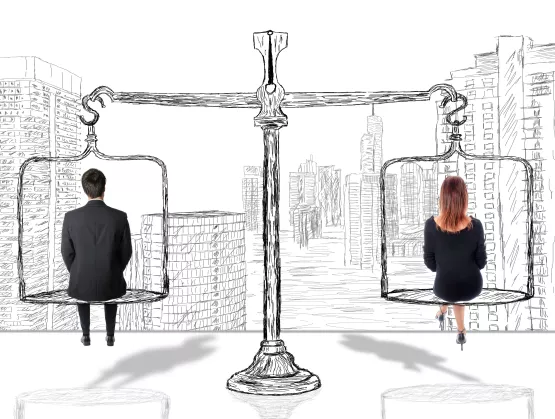
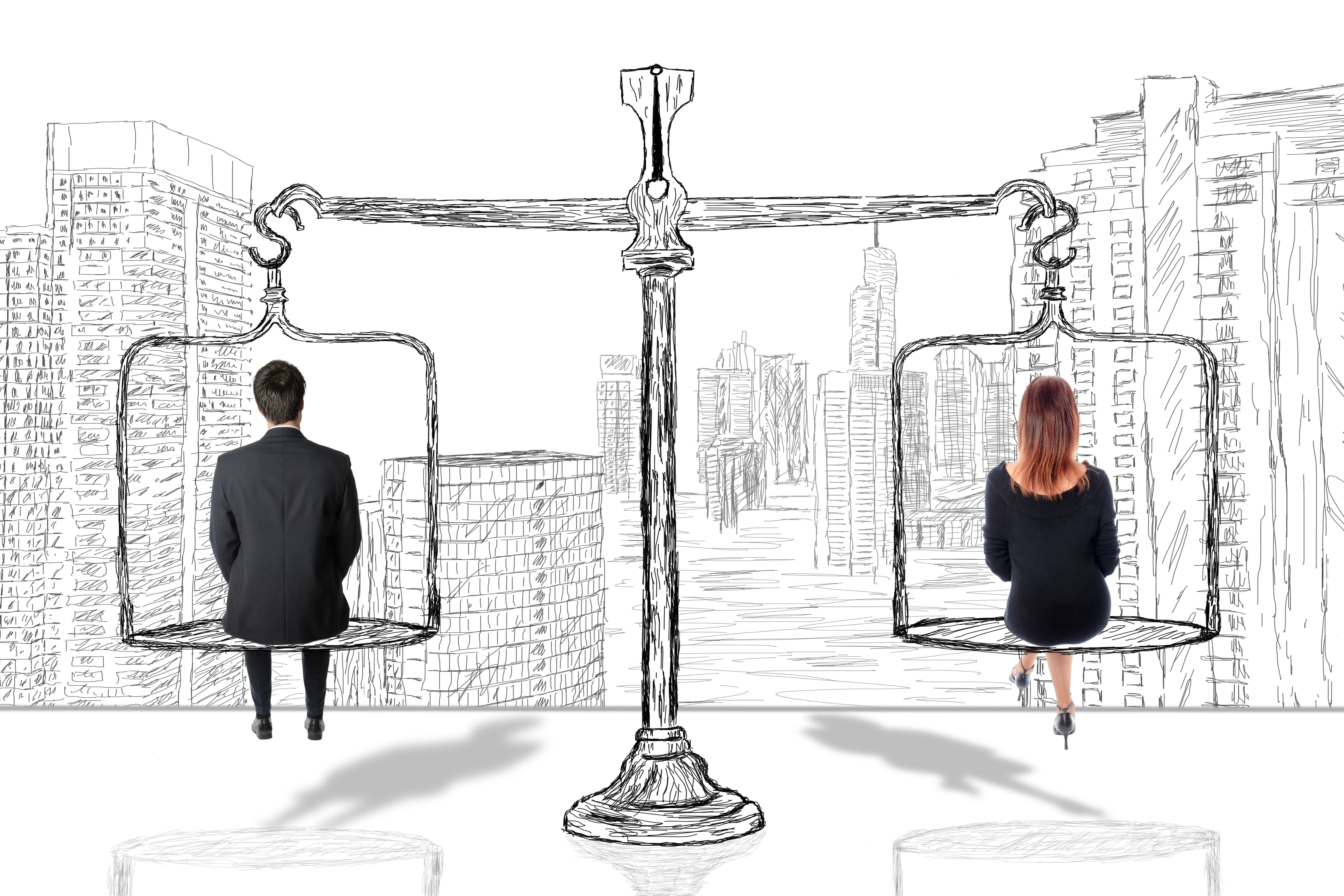
The next time you are on a Microsoft Teams call or write a group email that includes a female colleague, consider this: The next time you pick up the phone to contact her, she might be gone. According to the Women in the Workplace 2020 study by McKinsey Company and LeanIn.org, one in four women are considering leaving their workplaces or downshifting their careers due to work-life challenges stemming from COVID-19, leading to the potential loss of two million women from the American workforce. What is making work so untenable for many women?First, consider the overall U.S. workforce, across all sectors: The industries hardest hit by the pandemic are those dominated by women and people of color: healthcare, retail and hospitality, notably restaurants. These two demographics have been losing their jobs in staggering numbers. In December 2020 alone, according to the National Women’s Law Center, women accounted for 100% of the 156,000 jobs lost that month in the U.S. Second, the double whammy of the closure of daycares and the shift to remote schooling saddled mothers with overwhelming responsibilities. In the tech industry, women faced significant challenges before COVID-19 hit. Although women represent about 47% of entry-level workers in tech, that number dwindles to 20% in C-Suite jobs, with women of color accounting for just 2% of these executive roles. This leads to the challenges of being an “Only” – the only woman or person of color in a team, department or meeting. “Onlys” experience isolation, disengagement and pressure to out-perform male, white colleagues simply to be seen as equals. Women report feeling more exhausted, burned out and excluded than their male colleagues.Layer on the pressures of a pandemic and you’ve got a seriously overstressed female workforce at the breaking point. Fathers and partners are not taking on a fair share of the burden. Fully 40% of working mothers are spending 15+ more hours weekly on household duties than they did prior to the COVID-19 crisis and are more than twice as likely as fathers to worry that their performance at work is being negatively judged because of their caregiving responsibilities. And a survey by Chief, a private club for women executives, reports that, irrespective of added responsibilities at home, 70% of women report that they have taken on more duties at work since the COVID-19 crisis began. So, on top of the anxieties around keeping themselves and their families healthy during a worldwide pandemic, women are simultaneously working more, and doing more at home.Women are critically important in workplaces for a host of reasons. Women in senior-level roles have a profound effect on workplace culture. According to the McKinsey study, women are more likely to embrace and champion employee-friendly policies and programs and to take a stand for gender and racial equity at work. Women also mentor and sponsor other women more than men. If senior-level women leave the workforce, women at all levels will lose their strongest allies. Research also shows that gender-diverse teams – and companies – are more innovative, creative and productive. Inclusive workplaces tend to have higher retention rates and better recruitment rates. To sum up, companies where women are well-represented in leadership are 50% more likely to outperform their peers.As indicated by McKinsey, companies are at a critical crossroads. The choices managers, teams and companies make now will influence the workplace for decades to come. The authors of the study say it best: “If companies recognize the scale of these problems and do all they can to address them, they can help their employees get through this difficult time and even reinvent the way they work so it’s more flexible and sustainable for everyone. If not, the consequences could badly hurt women, business and the economy as a whole. This moment requires long-term thinking, creativity, strong leadership and a laser focus on the value of women to their organizations.”What can managers, teams and companies do? Women in the Workplace 2020 features an excellent Framework for Action, which includes everything from making work more sustainable, to minimizing gender biases, to strengthening employee communications. It is an important resource for any individual, team or company that wants to strengthen their support and retention of women. And – small steps can make a big difference. McKinsey encourages companies to ask a few important questions:Consider the workflow of your team: Is it flexible in a way that supports working parents and care-givers?Are performance expectations equitable across genders?Do the women on your team feel as though they can express difficulties or take PTO if they need to in order to take care of family obligations?Finally, simply acknowledging the realities women are facing is a great first step. For instance, if there are women on your team, you could forward them this article and say, “I didn’t realize how significant this issue was. If there are ways I can further help you navigate this time, please feel free to talk with me about it.” None of us want to find out what happens to our companies if we lose 25% of our female colleagues. We have the opportunity and obligation to reverse this troubling trend, if we act deliberately and intentionally to support the women around us. I invite you to dig into the Women in the Workplace 2020 study, to discuss it with your colleagues, and to determine how all of us can make our workplaces more supportive and inclusive for everyone, for the benefit of female workers and their employers everywhere.We encourage your company to participate in McKinsey’s 2021 Women in the Workplace study and make your voice heard. To enroll, visit Women in the Workplace.For information about the SEMI Foundation’s work in Diversity, Equity, and Inclusion, or if your team would like to support the industry in creating a more equitable workplace, please visit us at www.semifoundation.org, or contact Michelle at [email protected] Williams is deputy director of the SEMI Foundation.
Read More