

5월 12, 2026
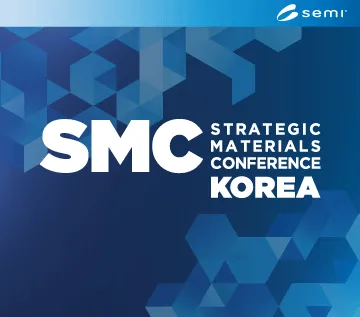
AI Enabled Materials Breakthroughs: From Molecules to Manufacturing
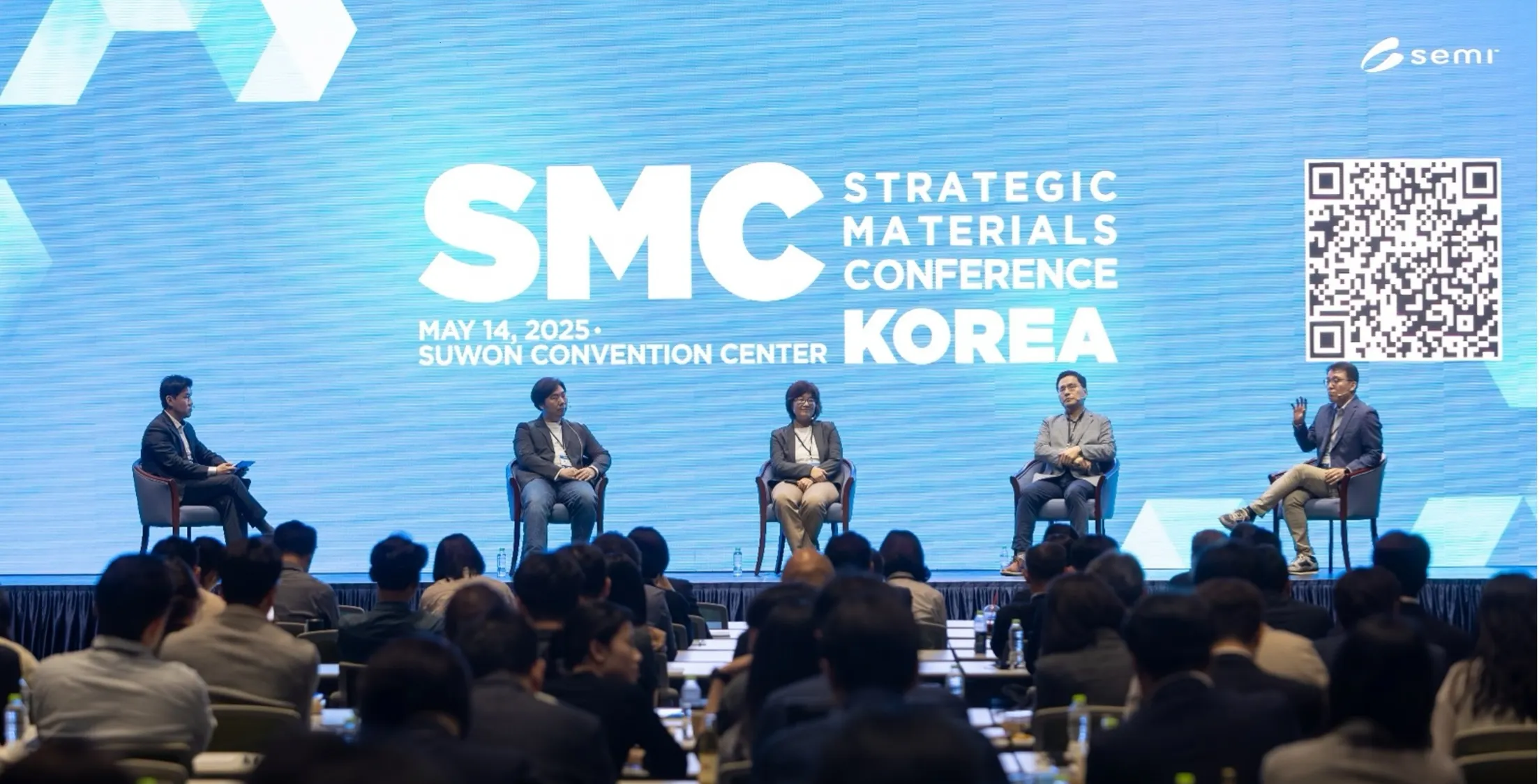
AI 중심의 기술 환경으로의 전환은 반도체 산업 전반에 걸쳐 소재 혁신의 새로운 패러다임을 요구하고 있습니다. 이에 SMC (Strategic Materials Conference) Korea는 AI 기반 기술 진화에 대응하는 차세대 반도체 소재 및 공정 혁신 전략을 집중적으로 조명합니다.
본 컨퍼런스에서는 글로벌 반도체 생태계를 대표하는 주요 기업이 참여하여, 소재 설계부터 실제 제조 공정에 이르기까지, 소재 혁신을 둘러싼 전략적 방향성과 공정 적용 기술을 심도 있게 공유합니다.
첫 번째 세션에서는 AI 시대에 요구되는 소재 전략을 중심으로, 시장 및 기술 트렌드와 AI 기반 개발 접근 방식을 통해 차세대 반도체를 위한 통합적 방향성을 다각도로 조망합니다. 이어지는 두 번째 세션에서는 첨단 반도체 제조를 가능하게 하는 핵심 소재를 중심으로, 실제 공정 적용 관점에서의 심층적인 논의를 전개합니다.
반도체 생태계를 대표하는 주요 플레이어들이 한자리에 모여, AI 시대를 이끄는 소재 혁신의 현재와 미래를 입체적으로 조망할 수 있는 본 컨퍼런스를 통해 깊이 있는 기술 인사이트와 함께, 산업 전반을 아우르는 협력과 연결의 가치를 경험하시기를 바랍니다.
시간
8:30 오전 - 4:30 오후 KST
위치
대한민국
수원컨벤션센터
OVERVIEW
- 일시: 2026년 5월 12일(화) 8:30-16:30
- 장소: 수원컨벤션센터 3층 컨벤션홀 2
- 언어: 한국어/영어 (동시통역 제공)
NOTICE
- 아젠다는 연사 사정에 의하여 임의로 변경될 수 있습니다.
- 발표자료는 연사의 배포 동의를 얻은 자료에 한하여 행사 종료 후 SEMI Korea 프로그램 등록사이트(https://semikrprogram.com)에 로그인하셔서 다운로드하실 수 있습니다.
- 주차비는 제공되지 않습니다.
SPONSORS
 |  |  |  |
 |  |  |  |
 |  |  |  |

CONTACT
- SEMI Korea 프로그램팀 ([email protected])
아젠다
Welcome Reception
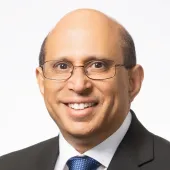
How Wafer Processing Is Reshaping the 3D Era for AI
AI is fueling unprecedented growth and accelerating demand for advanced devices. Its requirements for performance, power, and area scaling are driving memory and logic devices toward 3D architectures.
At the heart of this 3D transformation, processing steps must enable taller, perpendicular structures as well as smaller features. Meeting these requirements calls for new deposition and etch capabilities that did not exist before, leading to breakthroughs needed in areas such as atomic-level deposition and etch (ALD and ALE), high-aspect-ratio processing, dry resist EUV patterning, and the adoption of new materials like molybdenum (Mo). As a result, the transition to 3D devices will drive increased intensity of deposition and etch processing.
This presentation will explore how deposition and etch are critical to unlocking the future of 3D devices, with increasing velocity required to meet the demands of AI-driven innovation.

Integrated Materials Innovation in the AI Era
As the semiconductor industry navigates the challenges of dimensional and functional scaling in the artificial intelligence (AI) era, advanced materials science has emerged as a critical enabler for performance enhancement. Modern AI-centric architectures demand the integration of increasingly complex system-on-chip (SoC) designs with non-traditional material systems.
This work details a high-throughput methodology for the rapid down-selection and optimization of multi-element thin films, ensuring alignment with both physical and electrical key performance indicators (KPIs). Utilizing combinatorial physical vapor deposition (PVD) in conjunction with unit-cell electrical test vehicles, we systematically screen an expansive elemental compositional space to identify optimal candidates. Advanced machine learning (ML) algorithms are integrated into each phase of the development lifecycle—spanning precursor synthesis, process optimization, and heterogeneous integration—to satisfy the rigorous specifications of emerging device applications. The synergy between integrated materials engineering and AI-driven informatics significantly reduces the temporal gap between material discovery and device-level implementation.

AI for Scientific Discovery: EXAONE Discovery
Chemical and materials research faces increasing demands for data-driven automation and autonomous research systems due to vast exploration spaces and complex decision-making processes. In this talk, we introduce EXAONE Discovery as a Chemical Agentic AI system and present an integrated research framework designed to accelerate scientific discovery.
EXAONE Discovery is an agent-based system that tightly integrates property prediction, molecular generation, synthesis prediction, and literature/data extraction. Based on given research objectives, the system accumulates relevant data, generates candidate molecules using model-driven approaches, evaluates their properties, and derives feasible synthetic routes—automating the end-to-end discovery pipeline. Furthermore, it is designed to enable a closed-loop research paradigm by interfacing with autonomous laboratories, connecting design–prediction–synthesis–validation cycles. This allows hypotheses proposed by AI to be experimentally validated, with results continuously fed back into the system for iterative model improvement and optimization.
In this talk, we will demonstrate how this integrated approach enhances research productivity across various industrial use cases in materials discovery and optimization, and discuss future directions of Chemical Agentic AI.
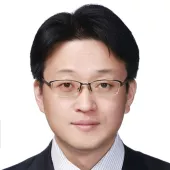
Global Memory Technology & Market Outlook

Materials Challenges and Path Forward for Future Memory Scaling
Networking Break
Panel Discussion
Networking Lunch
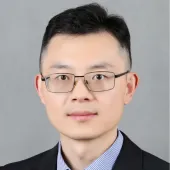
Emerging Etching Chemistry for Advanced Semiconductor Manufacturing
The rising technical demands for advanced semiconductor device manufacturing, and the industry’s ambitious net-zero commitments necessitate the development of novel etch chemistries that deliver both technical excellence and environmental sustainability. This talk will present an overview of the emerging etching chemistries developed by Air Liquide for variety-targeted applications. These innovative chemistries focus on delivering improved performance with unique technical merits to address current industry challenges. Exemplified by a novel low Global Warming Potential (GWP) designed for general dielectric etch, its synergistic integration with advanced abatement solutions, and a simplified Life Cycle Analysis (LCA) - from raw material extraction through processing, manufacturing, distribution, and use, this presentation aims to provide insights into a pathway towards more sustainable semiconductor manufacturing processes.

Enabling Advanced Metallization with Selective Deposition
As device architectures scale toward the angstrom era, metallization has emerged as one of the most critical bottlenecks to continued improvements in power and performance. Shrinking feature dimensions increase resistance, heighten reliability risks, and add complexity in interconnects and contacts. At these scales, traditional approaches which uniformly affect all wafer surfaces are increasingly ineffective. They rely heavily on lithography to define placement, and struggle to address tighter geometries and growing sensitivity to interfaces. Selective deposition is a solution which enables atomicscale control of where metals grow, placing material only where it is needed, without relying on patterning. It also enables monocrystalline metal growth, eliminating grain boundaries to minimize contact resistance.
This presentation will highlight how Applied Materials’ integrated materials solutions are enabling multiple inflections through area selective metallization. Selective Cobalt Capping technology encapsulates copper interconnects, improving adhesion, suppressing electromigration, and extending copper reliability to advanced nodes. Applied’s Selective Barrier eliminates a highly resistive interface at the interface of interconnect wiring. For contact fill, Applied developed Selective Tungsten (W) as a liner-less gap-fill solution that eliminates traditional liner/barrier layers and enables bottomup, seamfree metal fill. Finally, we introduce Selective Molybdenum (Mo) deposition that carries lowresistivity contact scaling forward as dimensions approach the fundamental scaling limits of W. Applied’s state-of-the-art atomic layer deposition tool for molybdenum delivers bottom-up, single-crystal Mo growth, enabling the next generation of contact scaling.
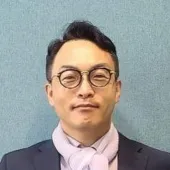
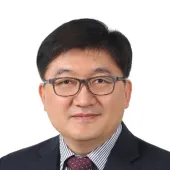
Next Generation Cleaning Processes and Materials
Cleaning processes originally relied on wet etch based patterning. However, dry etching now performs the majority of the patterning work, so wet etching is no longer needed for most pattern creation steps. Consequently, the focus of cleaning has shifted from patterning to the removal of contaminants. To obtain a clean surface, we must eliminate unwanted contaminants without any side effects such as pattern damage, collapse, material loss, or corrosion.
However, in the current era of 3 D structured devices such as V NAND, GAA, and 3 D DRAM, lateral wet etching is essential for patterning 3 D devices, and the proportion of wet etching in cleaning processes is increasing. Additionally, different kinds of selectivity such as concentration selectivity and area selectivity, have become important, in addition to conventional material selectivity. Sometimes we have to remove a film uniformly even though there are seams and voids. In addition, pattern loading has become a critical factor in lateral removal processes. We must solve these loading issues to achieve better performance and yield.
From time to time we must use more flexible, multi step processes; therefore, premixed chemistry is not enough to meet our purpose. Due to the flexibility of dry (gas phase) cleaning, the portion of dry cleaning has been increasing sharply. Area selectivity has also become another challenge. We must etch without corner rounding or climbing, and we want to perform anisotropic etching.
Conversely, based on the generic clean roadmap, high aspect ratio cleaning and low consumption cleaning will remain continuous challenges. Super critical CO2 drying is a solution for pattern collapse in HAR patterns, yet a dryer that is milder than CO2 but better than conventional IPA dryer technology is still required. In terms of chemical reduction, the puddle process may be a solution, but some side effects related to temperature consistency and cleanliness differences due to fluid dynamics must be resolved before implementation.
Networking Break
Panel Discussion
Adjourn
Registration

※ 사전등록 마감일: 2026년 5월 7일(목) 오전 10시
Registration Fee
- Early Bird
- SEMI Member: KRW 308,000
- Non-Member: KRW 363,000
- On site
- SEMI Member : KRW 385,000
- Non-Member: KRW 385,000
- Group
- SEMI Member : KRW 275,000
- Non-Member: KRW 330,000
※ 5인 이상 등록 시 단체등록비가 적용됩니다.
※ 단체등록은 SEMI Korea 프로그램팀([email protected])으로 문의 바랍니다.