downloadGroupGroupnoun_press release_995423_000000 copyGroupnoun_Feed_96767_000000Group 19noun_pictures_1817522_000000Member company iconResource item iconStore item iconGroup 19Group 19noun_Photo_2085192_000000 Copynoun_presentation_2096081_000000Group 19Group Copy 7noun_webinar_692730_000000Path
Skip to main content
Default Banner Image

Korea

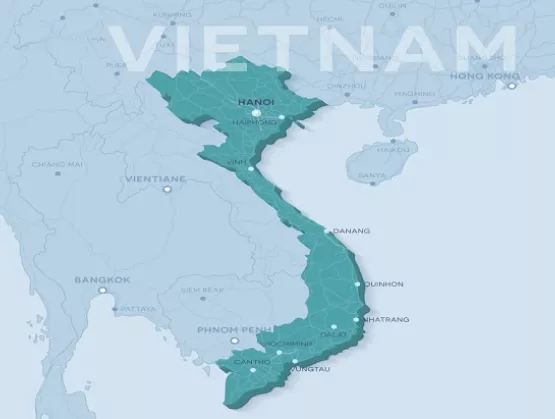
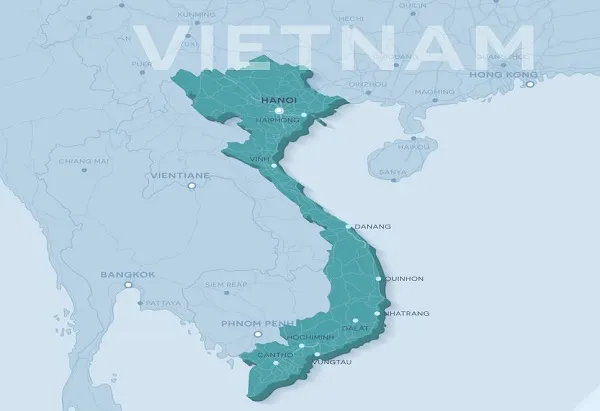
If you look at your clothes or shoes, there is a growing chance you will see the words Made in Vietnam printed on the tag. Since the United States lifted its trade embargo against Vietnam in 1994, the country has become the second largest exporter of apparel and shoes to the U.S. What may be less evident is the source of that new electronic gadget you received for Christmas, with its numerous parts, chips, and intricate supply chain. While light manufacturing has dominated Vietnam’s economic growth since the Đổi Mới economic reforms implemented in the 1980s, over the last decade the country has been repositioning itself to become a dominant player in the global microelectronics industry, a trend that has gained momentum in the wake of the U.S.-China trade war. In 2019, Vietnam ranked as the fourth largest exporter of electrical goods and components to the U.S. With exports doubling over the last four years and now exceeding $19 billion, surpassing Taiwan, Japan, and Korea (based on goods exported under chapter 85 of the Harmonized Tariff Schedule). Vietnam’s global electronics industry now accounts for about 40% of its exports, and the country seems to be just getting started. Early Entrants Though Vietnam owes its growing success in attracting foreign direct investment (FDI) in the semiconductor and microelectronics industries to the advent of China plus one – the business strategy to diversify business investments geographically – it was the few early entrants that gambled on this emerging market a decade ago that put Vietnam on the global stage. Of these early players, no other firm comes close to having the impact that Samsung has. It’s initial $670 million mobile phone manufacturing plant in the northern province of Bac Ninh in 2008 grew to a country-wide investment of $17.3 billion within a decade. Samsung is now Vietnam’s largest FDI contributor and accounts for more than 25 percent of its exports. Because of Samsung, Vietnam has become the second largest exporter of smartphones in the world. Around the same time, Intel opened its $1 billion semiconductor assembly and testing facility in Ho Chi Minh City, putting Vietnam firmly on the global technology map. More investors, like LG, Panasonic and Foxconn soon followed. Within a few years of these initial investments the industry was taking notice, illustrated by SEMI’s role in co-organizing the Vietnam Semiconductor Strategy Summits in 2013 and 2014. With SEMI SEA’s increased efforts to promote Vietnam as an important ecosystem in the electronics supply chain, more will be done to positively influence the growth and prosperity of its member companies in Vietnam. These early investors found Vietnam attractive for several reasons. Key among these are the country’s low wage rates combined with its favorable demographic structure – what the UN refers to as the golden population structure, which provides “Vietnam with a unique socio-economic development opportunity.” Companies are also attracted to the growing number of Free Trade Agreements (FTAs) that Vietnam belongs to, including the ASEAN Free Trade Area, CPTPP, the EU-Vietnam FTA, and, most recently, RCEP. Though the U.S. has yet to ink a trade agreement, the Singapore AmCham’s annual regional survey has consistently identified Vietnam as the most attractive country in ASEAN for a potential bilateral FTA partner with the U.S. Leveraging the Trade War If the plus one strategy was the catalyst that started this wave of electronics manufacturing in Vietnam, then the U.S.-China trade war was the enzyme that supercharged it. A common quip in Southeast Asia is that the U.S.-China trade war is over and Vietnam is the winner, and this is apparent in both trade and investment trends. According to the Asia Development Bank (ADB), the riff between the U.S. and China has caused a redirection in trade, as U.S. imports from the PRC fell by 12% in the first six months of 2019 while U.S. imports from Vietnam increased by 33%, with electronics and machinery accounting for the bulk of this jump. The ADB further reported that in a prolonged and intensified trade conflict, the worse-case scenario would result in Vietnam, Malaysia, and Thailand being the biggest winners, “in that order.” On the investment side, a March 2020 Gartner, Inc. survey of global supply chain leaders revealed that 33% had “moved sourcing and manufacturing activities out of China or plan to do so in the next two to three years.” While this survey did not mention specific winners, the ADB reported that “newly registered FDI in Vietnam from the PRC and Hong Kong rose by 200% year on year in the first seven months of 2019,” indicating the move of Chinese suppliers to Vietnam. Additionally, a review of recent press reports indicate firms like Apple, Nintendo and Dell are encouraging suppliers to move parts of their supply chains to Vietnam. These suppliers are complying, with Compal Electronics, GoerTek, HZO, Inventec, Luxshare Precision Industry, Pegatron, USI and Wistron all reportedly announcing plans for new investments in Vietnam. Manufacturing Hubs Within Vietnam, microelectronic facilities have concentrated in a few geographic hubs. In the south, the Saigon High Tech Park in Ho Chi Minh City attracted early entrants Intel and Samsung, with firms like Nidec and Jabil soon following. The largest investment capital, however, developed in the northern provinces that ring Hanoi. Bắc Ninh, an hour’s drive from Hanoi, was the site of Samsung’s first investment and has since attracted Foxconn and Canon. More recently, firms have been drawn to the port city of Hải Phòng, the country’s third largest city, which is already home to Samsung and LG. The city’s close proximity to other manufacturing clusters, its new deep-water port, and its expressway that provides a 12-hour trucking route to China’s electronics epicenter in Shenzhen are helping make the city Vietnam’s new high-tech production center. In 2019, LG Electronics moved its entire smartphone production line from South Korea to Hải Phòng, and in 2020 Pegatron reportedly chose the city for its $1 billion investment plan. Local phone manufacturer VinSmart is also producing the country’s first 5G smartphones in Hải Phòng. In November, USI, a subsidiary of Taiwan-based ASE Holding, broke ground on its first production base in Southeast Asia, a $200 million phase-one investment in the production and assembly of chips for wearable electronic devices. USI’s investment, which is moving into the internationally managed DEEP C Industrial Zones in Hải Phòng, is “intended to move us closer to our overseas customers and accommodate their ever-increasing demand,” according to Mr. Kuei Chun Chi, the firm’s Manufacturing Service Director. “North Vietnam, with its strategic geographical position and an extended infrastructure in place, offers USI an optimal way to facilitate fast and flexible response to customers' orders.” Though the Covid-19 pandemic has dampened the pace of new investments in Vietnam’s microelectronics industry, it has also amplified the country’s attractiveness to investors. Vietnam was successful in containing the outbreak through aggressive quarantine and contact tracing measures, and as a result its economy has the brightest outlook in the region. The ADB forecasts the country will be one of the fastest-growing economies in SEA in 2021, with GDP estimated at 6.8%. The Ministry of Industry and Trade is also reporting that several of the world's largest technology corporations plan to shift their production chains to Vietnam post-Covid-19, an indication that technology firms will accelerate relocation plans in 2021. Vietnam’s successful response to the pandemic, combined with its strategic location, low wage rates and foreign trade agreements, will ensure that the region continues to benefit from the shift in supply chains in Asia, making it the new destination for electronics manufacturing. About the Author Stuart Schaag is Principal at E-Ward Trade Consulting LLC, which assists firms that are expanding their presence in the global marketplace by creating strategies combining market analysis, business development, commercial diplomacy, and relationship building. He previously spent 25 years in various domestic and overseas positions in the U.S. Department of Commerce’s International Trade Administration. Stuart served as the Commercial Counselor at the U.S. Embassy in Hanoi from 2014-2018 and resided in Vietnam until 2020.
Read More
The SEMI Smart Manufacturing Americas Chapter, a key driver of the Global Smart Manufacturing Initiative, accelerates awareness of digital and data-driven strategies and implementations to help speed adoption of smart manufacturing. In 2021, the Chapter will focus on expanding its work across the industry to include academic and research initiatives. The semiconductor industry saw an unprecedented focus on improving digital monitoring of manufacturing activity in 2020, partially due to COVID-19. The Americas Chapter shared case studies on new tools and techniques for social distancing in fabs, aides for remote maintenance, and tips for remote workers. The Chapter also introduced its three pillars of Sensing, Connecting and Predicting and offered related programs. The Global Smart Manufacturing Conference (GSMC) highlighted the significance of universities and research institutions in the development of smart manufacturing with their focus on joint research for broad dissemination. To help drive smart manufacturing advances, at GSMC several offered non-proprietary tutorials on topic including the following: Integrating sensors for acquisition – CEA-Leti Applying new AI and ML tools and strategies to manufacturing – Binghamton University Digital tools for planning, qualifying and management and scheduling in fabs – MINES Saint-Étienne. Adding AI tools to robot work in a smart factory – KAIST Institutes By continuously highlighting the activities of these and other institutions through presentations, interviews, articles and blog posts, we will draw more attention to what is on the horizon for smart manufacturing in 2021. The SEMI Smart Manufacturing Americas Chapter also plans to elevate activities important to the Outsourced Semiconductor Assembly and Test (OSAT), Surface-Mount Technology (SMT) and Printed Circuit Board Assembly (PCBA) segments of the industry including programs on inspection, traceability and the SEMI SMT-ELS Standard for SMT automation. Thurston Taylor, marketing expert at Tokyo Electron and Vice Chair of the Americas Chapter, notes that “With increasingly more demanding requirements for bump, assembly and test, smart manufacturing and applied data science are necessary to achieve back-end goals now and in the future.” Also, many companies are implementing smart manufacturing applications and assessing various strategies to increase their smart manufacturing capabilities. Members of the Americas Chapter plan to review and develop self-assessment documents and maturity models that apply to front-end wafer fabs all the way through packaging and assembly facilities. “Moving forward it is imperative for all of us to up the intensity on specific ROI vectors such as quality, cost, productivity, sustainability and safety leveraging our smart manufacturing SEMI framework of Sensing, Connecting and Predicting,” said noted Bobby Mitra, worldwide director of Smart Manufacturing at Texas Instruments and Americas Chapter Chair. “By offering special flagship events, invited talks, ROI case-studies and ROI criteria in maturity models, we’ll bring high value to the smart manufacturing industry.” Chapter members also will begin mapping the skills needed to implement and support increasingly digital manufacturing capabilities, including any new skill sets, to help companies develop their hiring, training and management strategies. The mapping effort aims to support companies in building a strong pipeline of employees who can efficiently manage and operate smart manufacturing facilities. For its part, the Americas Chapter’s Go Green Subcommittee will focus on applying smart manufacturing technology to reducing the electronic industry’s carbon footprint by accurately tracking energy waste improving overall fab efficiency. Stay tuned for details on activities planned for our chapters in Europe, China, Japan, Korea, Southeast Asia and Taiwan. To learn more about each chapter and how to get involved, please visit the SEMI Smart Manufacturing Hub and sign up for our newsletter. Ayo Kajopaiye is senior project coordinator, Collaborative Technology Platforms, at SEMI.
Read More
Olivier Corvez, senior manager of Environment, Health, Safety and Sustainability at SEMI, sat down (virtually) with Todd Patterson, vice president of global EHS for Entegris Global Operations, to discuss how Entegris has responded to the global pandemic.Corvez manages and Patterson participates in the COVID-19 EHS Task Force currently meeting weekly to discuss industry response and share best practices. SEMI: Was Entegris prepared for the COVID-19 pandemic? How did the company respond?Patterson: Entegris has a strong risk management framework and a risk assessment team of senior leaders who meet at least once a quarter. This focus gives us early visibility into events that could destabilize our organization or threaten our operations. Such a framework helps ensure we have the information necessary to act as soon as possible when the need arises. However, our business continuity plans for a pandemic of this scale were far less than with other more commonly occurring catastrophic events such as earthquakes or hurricanes. The COVID-19 crisis was clearly unprecedented and as such, the necessary systems and procedures were not in place with the depth and detail needed. Our strong governance structure made it possible for us to hold steady even as the pandemic caused increasing uncertainty and disruption around the world. For example, despite major supply chain shutdowns across many industries, to date, our supply chain and manufacturing operations have only been modestly impacted by COVID-19. Our supply chain team was assessing daily the areas of risk with our suppliers and taking appropriate action as well as preemptive steps to ensure our critical supply lines remained open.Our sales team engaged in regular communications with our customers providing them updates about our Business Continuity Plans and our actions to mitigate the risk to any of their deliveries. In addition, we maintained current information about the continuity of our supply chain on the company’s intranet for the global sales team to access as they engaged with customers. Also, a proactive communication plan was implemented immediately to send weekly video messages from senior executives directly to employees’ emails. It was an effective way to communicate with our global teams, to keep them informed about the status of the company’s operations and maintain a common sense of purpose at a time when many colleagues worked from home. In these weekly messages, we also focused significant attention on the health and safety protocols established to protect our manufacturing and lab employees from the virus.Among the health and safety protocols we implemented immediately as the virus moved across different regions were those related to facility screenings, work-from-home policies, social distancing, self-quarantine requirements, contact tracing, increased disinfecting, and travel restrictions. With approximately 5,300 employees worldwide, we had teams in every region ready to implement these comprehensive protocols. We believe we were among the first companies to implement work-from-home policies and travel restrictions.Temperature screening stations at Entegris facilities in Jangan, Korea (left) and Kulim, Malaysia (right). In addition, our CEO led a COVID-19 Steering Committee comprised of senior executives and managers from operations, human resources and communications. The committee met several times a week during March and April to evaluate and formulate responses to the issues that emerged as the virus spread from region to region. The committee’s work created a strong partnership among senior executives and divisional and functional leaders, and the initial guidelines developed by the committee have formed the backbone of a global playbook to limit the spread of the virus to our other sites around the world.Recently, the committee has changed its focus to more strategic issues such as creating a framework for transitioning remote workers back into our office locations. Meanwhile, local leadership teams at each of our global sites have been empowered to address ongoing tactical issues consistent with our thoroughly documented health and safety protocols.Looking to the future, we are using our experience in responding to COVID-19 to develop a more comprehensive pandemic response plan. We have project teams working on better ways to: measure temperatures of personnel entering our sites facilitate social distancing in the workplace redesign common use areas to reduce the number of high touch points disinfect all spaces thoroughly and regularly, and manage emergency pandemic supplies. SEMI: From the SEMI EHS survey, we noted that all members had a Business Continuity Plan. How effective has it been for deploying resources and adapting quickly and minimizing the crisis? Why or why not? Patterson: Because we have operations in China, Entegris experienced the impact of the virus immediately. We quickly formed two task force teams for our two primary facilities in the region. These teams developed the means for communicating key information to employees and started working on prevention plans to protect employees and comply with local requirements for when operations resumed. They met the challenges head on and found quick solutions. An example was finding an effective way of communicating to the employees for each location. Group chats were established through social media. It was this work that led to their success in getting approvals from local authorities to resume operations. Those plans have laid the groundwork on which our other sites around the world could build their response plans.The effective management of our global supply chain also stands out as a key success of the company’s Business Continuity Plan. Entegris has a highly complex supply chain with approximately 6,500 suppliers and a $850 million annual spend, and we ship work-in-progress and finished goods from over 90 sites globally.As I mentioned earlier, despite the virus crippling supply chains across many industries, Entegris experienced very little disruption to its supply chain. The supply chain team was able to accomplish this despite a 90% reduction in global freight capacity. A key factor in keeping goods flowing to our factories was the intensive work the team had done earlier to develop an in-depth understanding of the company’s top suppliers and to mitigate sourcing risks. They had established alternate sources, balanced the sources geographically, and placed inventory across our supply chain to buffer risk.The team also had integrated statistical modeling into reporting tools, which made it possible to reset safety stocks and logistics lead times quickly as conditions changed. And a supply chain digitalization provided one aligned and integrated view via dashboards, giving the company the ability to respond rapidly and to communicate in real time with our suppliers. We essentially had a virtual war room where we monitored the daily impact of the spread of the virus and could address bottlenecks and other issues immediately.SEMI: What lessons have been learned, so far? How do you see changes in your company’s operations in the future?Patterson: Institutionalizing what we’ve learned has already begun. Whether the measures implemented during the pandemic are temporary or become permanent is still to be determined. Regardless, the learnings need to be documented and available as a playbook for if – or when – the next pandemic occurs.Entegris is already working on a more comprehensive pandemic plan that will be based on five levels of preparedness. Level 0 will cover annual training requirements and management of emergency inventory of pandemic supplies. Level 1 will include early recognition of an outbreak, and then Levels 2-4 will include requirements for when specific response measures are implemented. Entegris also has formed the “New Normal” task force, which consists of leaders representing a number of disciplines directing the project teams previously mentioned to create a more comprehensive pandemic response plan. One of the project teams is working on improving the facility screening process that performs temperature measurement for personnel entering Entegris sites. The team is looking at the best technology to scan body temperature. As to whether this technology is employed only while COVID-19 is still active or becomes a permanent way of doing business, this is still being discussed.SEMI: EHS is involved in both providing technical support to protect individuals but also in making organizational changes to favorize social distancing. Could you explain some of the successes and challenges while tackling these two fronts?Patterson: Very early in the pandemic, Entegris established a work-from-home policy for non-essential employees. This significantly reduced the number of personnel and the potential for contact at the Entegris locations. Significant facility changes also were required. These included the design of facility screening booths and modifications to common gathering areas such as canteens, meeting rooms, prayer rooms, and smoking points. Physical markings were used to designate 2 meters distancing, and the seating in canteens and meeting rooms was reduced and staggered to minimize the risk of exposure to the virus. Entegris also has a project team focused on developing design solutions for offices and workstations when space makes it difficult to maintain 2 meters social distancing. These changes turned out to be essential for some sites in meeting mandates by local authorities. Our sites in Hangzhou, China and Kulim, Malaysia both were allowed to resume partial operations after demonstrating to government authorities the effectiveness of the preventative measures put in place. One particular challenge we are facing is the range of personal differences and awareness levels within the workforce – including those that don’t understand the importance of the new guidelines. We are working closely in advising supervisory staff to be aware of the need for employees to follow all health and safety protocols we have put in place, including social distancing. That preventative measure is the most difficult to make part of our new behavior – it is unnatural and inconsistent with our human nature, but it is critical to preventing the further spread of the virus.SEMI: How do you envision the progressive steps in deescalating to bring back “normal” operations? Patterson: I don’t know whether Entegris will ever go back to the old “normal.” As previously mentioned, we are working on the “New Normal.” Our focus now is on bringing our work-from-home employees back to the workplace without adding risk of exposure to the virus. We are still exploring options, but we expect to do it in a phased approach so that we can adequately assess the preventive measures that are in place and determine whether adjustments need to be made to any of our health and safety protocols.We are starting to see a variety of different frameworks emerge for evaluating repopulation timing and procedures. We will assess them on an office-by-office, or site-by-site basis, utilizing consistent criteria to define the potential for exposure to the virus. This also applies to our field service workforce. However, I have not yet seen any governmental guidance that offers a recommended framework for returning employees to the workplace. I think this represents an opportunity for SEMI EHS and the Standards groups to work to establish that framework for our industry.SEMI: Anything else you would like to share that you have observed throughout this crisis?We have not discussed the challenges faced in procuring and acquiring pandemic supplies. Almost immediately after the outbreak occurred in Wuhan, it became increasingly difficult to find supplies. Even when confirmation was provided by suppliers and delivery dates confirmed, the majority of the dates were pushed out or canceled. We found that what worked best was to have purchasing teams at the local site work with their local contacts on obtaining smaller quantities while a corporate point person was also managing larger orders. In preparation for any future pandemics, Entegris will be maintaining an emergency inventory for masks, sanitizer, thermometers, and disinfectants.For 18 months, Todd Patterson has held the position of VP Global EHS for Entegris Global Operations. His experience with emergency management and BCP has become invaluable in the past three months. He is grateful to his global response teams around the world for coming together to support the Entegris team in this unprecedented situation. Todd is an active participant on the SEMI EHS COVID-19 response teams led by Olivier Corvez at SEMI. Olivier Corvez is senior manager of Environment, Health, Safety and Sustainability at SEMI.
Read More
In much of post-lockdown China, urban life is humming. The streets of Beijing and Shanghai are bustling with traffic, smog again shrouds city skylines with the resurgence of economic activity, property sales are bouncing back and a revival in consumer confidence is taking hold. Emerging from monthslong shelter-in-place orders, the nation has seized a large measure of control in containing COVID-19 as it breaks fertile new ground in pandemic response and recovery. In Wuhan, Hubei, the fountainhead of the novel coronavirus, one company offers a striking example of China’s muscular COVID-19 containment efforts, carefully continuing to operate through January and February as the virus set root, said Karel Eloot, a Shenzhen-based senior partner and Asia leader of Transformation and Operations practices at McKinsey Company, speaking at a recent webinar presented with SEMI. Soon, COVID-19 spread to eight other provinces that suffered serious outbreaks and forced the nationwide lockdown that sent China’s GDP plunging 7 percent, its first contraction in 28 years. An impressive array of safety protocols, many designed to reduce people density as a bulwark against the virus, animates China’s fight against COVID-19, a return-to-work movement that is laying a path forward for companies around the world. It is these measures, Eloot said, that have kept the Wuhan company afloat and helped other businesses across China restore operations with unusual speed. Community and Social Distancing – The Heart of China’s COVID-19 Response In establishing safeguards, many companies started by assessing staffing requirements, identifying workers essential to sustaining on-site operations while allowing others, such as white-collar staff, to work from home, though some have since returned to their offices. Seen as non-essential, some factory maintenance workers have been instructed to stay home. To fill staffing gaps, business have turned to multi-skilling practices, such as having on-site supervisors and engineers step out of their daily roles to handle lower-level operations activities. Much of the focus has been on community distancing, with businesses quickly identifying workers suffering even minor COVID-19 symptoms and using contact tracing to prevent sick or vulnerable employees from entering offices and factories and turning them into hot zones for community spread, Eloot said. Manufacturing facilities are staggering work shifts to reduce people density, closely monitoring workers’ body temperatures with an eye toward other symptoms, and following up with medical tests and quarantines as needs dictates. QR codes, long a staple of e-commerce, have been a particularly effective weapon in combatting COVID-19. Companies are deployed the scanning technology to identify workers by color code – green, yellow or red – and assign various levels of site access depending on who they’ve been in contact with. Some factory workstations are now walled off by transparent plastic sheeting to prevent COVID-19 infection through aerosol drift. In business meetings and lunchrooms, staffers sit spaced a safe distance apart and facing the same direction to avoid crosscurrents of the microscopic respiratory droplets that can carry the virus. Others eat in isolation. Meeting room windows are opened, weather permitting, to admit fresh air. And elevators – perfect petri dishes for contagion – are shuttered to ward off human clusters, shifting all floor-to-floor movement to staircases. Companies united by the common goal to keep goods flowing through supply chains are providing masks and other personal protective devices to smaller players most vulnerable to the economic shock of COVID-19. The aim: Shield the companies from the potentially crippling effects of the virus to avoid supply chain breakdowns that can undercut the performance of the whole. Even competitors have formed unexpected alliances, sharing parts and components that are in short supply. “Some sectors have maintained steady production throughout the crisis” thanks to these practices, Eloot said. “China has been able to create safe communities where people can operate as normal.” Executive Uncertainty Reigns, Hope Springs Eternal with Innovation The objective of China’s fast, forceful response to the COVID-19 outbreak is economic: A V-shaped rebound after the 7 percent wallop to its GDP in the first quarter of the year. The trajectory is among nine economic recovery scenarios McKinsey Company presented to more than 2,000 executives worldwide in a recent survey seeking their views on the likelihood of each. The business leaders coalesced around two – a full restoration of global GDP growth that could materialize this year or extend into next, or a two- to three-year recovery following the initial economic tsunami, Sven Smit, an Amsterdam-based senior partner with McKinsey and global leader of the McKinsey Global Institute and global COVID-19 response team, said at the webinar. The executives see the multi-year recovery as the most likely. The shorter rebound ranked second on a scale of probabilities. Notably, the business leaders found the V-shaped bounceback China is attempting – returning to GDP growth in one quarter – the least likely outcome. But the biggest surprise from the survey, Smit said, was executives’ view that of the two major global interventions for restoring GDP growth – viral and economic – one will be ineffective, reflecting their deep uncertainty about what lies ahead. A growing body of knowledge about COVID-19 tempers that doubt. It’s established fact that the virus is highly contagious, more lethal than the flu, and spread by means including aerosols and touching contaminated surfaces. But only recently has more insight emerged about human immunity. Broad-based blood testing in the Netherlands has discovered that only 3 percent to 4 percent of the people screened are immune to the coronavirus, leaving the vast majority of the population without natural biological protection – a sweeping vulnerability evident in Asian countries hit early by the virus only to see fresh flare-ups after initial containment. Smit warned of the pandemic’s potential resurgence. Testing has revealed that coronavirus cases are underreported by a staggering 10- to 15-fold, a clarion call that countries “need to be very careful about how they re-open economies.” That means in order to keep COVID-19 at bay until a vaccine is developed, the best defenses will remain temperature monitoring, contact tracing, quarantining, social distancing, mask wearing, frequent hand-washing and other proven protective measures. And while the relative contribution of each safeguard to slowing COVID-19’s spread is unknown, Japan, Korea, China, Taiwan and other Asian countries have shown that “if you apply them all, you are likely to keep this virus under control,” Smit said. It remains to be seen whether protections the U.S. and European countries have put in place will stave off the virus as effectively as the rigorous measures implemented by Asian countries and, if the Western regions deploy a different cocktail of safety protocols, how well they will work. The re-opening of their economies promises to reveal the answers – and the McKinsey recovery scenario they’ll face. These and other open questions help explain the uncertainty of the executives McKinsey polled. Pandemic Supercharges, Adds New Urgency to Long-Term Trends What is known is that, far from upending the way all organizations operate, COVID-19 is supercharging secular trends and showing that people can react with dizzying velocity when confronting global mortal threats. That speed, Smit said, “is not determined by the potential of technology, but by events." For decades, doctors and technologists have teamed to develop ways to examine and treat people from afar, yet telemedicine managed to eke out only small, incremental gains in adoption. Since the COVID-19 outbreak, patients have flocked online, with virtual doctor’s visits accounting for more than 70 percent of all physician-patient interactions. “People like it, and we can reach many more patients as a result. It happened in a few weeks,” Smit said. Similarly, teachers and unions have only inched toward digital communications for years, fearing job losses in education at the hands of technology. When schools closed recently under shelter-in-place orders, teachers quickly switched to online lessons. The transition, Smit said, took one weekend. Meanwhile, as office workers holed up at home, usage of teleconferencing applications skyrocketed. “We’re collectively learning at unprecedented speed,” Smit said. “We’re sharing. We’re learning about supply chains. We’re learning about collaboration. We’re learning about masks. We’re learning about contact tracing. We’re learning how to work more efficiently. We’re learning from real-time data about the behavior of people. And we’re investing collectively enormous sums in finding cures and treatments and expanding hospital capacity.” While the coronavirus’s blistering spread caught many countries off-guard, Smit expects scientists to spare no effort to innovate. Expressing hope that new medical interventions will be available by summer, Smit said the world needs to buttress its key lines of defense against the coronavirus until a vaccine is developed – a shield that will quicken the global economic recovery. “The race is on," he said. Related blog COVID-19: Economic and Microelectronics Industry Impacts – Insights from McKinsey Company For McKinsey’s latest insights on the coronavirus pandemic, visit its website, which is updated daily. For the latest COVID-19 information and SEMI event updates SEMI is providing members, visit Coronavirus Resources. Michael Hall is a marketing communications manager at SEMI.
Read More
The ESG MarketElectronic Gases represents the largest percentage of the spend on chemicals and materials by semiconductor producers. Taken altogether, the spend on Electronic Gases was almost $6 billion worldwide in 2018. Recent critical shortages of key gases have impacted the industry tremendously and, in some cases, has also limited output. The Electronic Specialty Gas (ESG) market, while a small segment of the global gas market, is one of the most complex and least understood market segments of the electronic chemicals and materials landscape. Linx Consulting estimates that the ESG market totaled nearly $3.4 billion in 2018, up from roughly $3.1 billion in 2017 with a growth rate of 10 percent last year. Growth was driven by rising demand and the increasing use of higher-value products in applications such as etch and specialized deposition. ESGs are used in the manufacture of electronic devices that are subsequently assembled in systems and in a variety of processes such as film deposition, film etching, substrate doping and chamber cleaning. The devices – semiconductors, LEDs, and displays – are processed on larger substrates, and then separated before assembly.Key differentiators for ESGs are not only the technical complexity of the gases and mixtures supplied, but the purity and consistency demands placed on the gas supply. Product purity and consistency, often at the limits of analytical capability, must go hand in hand with rigorous application of statistical process control in manufacturing and absolute delivery reliability. ESGs include fluorocarbons, hydrocarbons, deposition precursors, dopants, corrosives (halides/hydrates) and rare gas mixtures.The key end-use markets for ESGs include semiconductor wafer fabrication, flat panel display (FPD) manufacture, compound semiconductors / LEDs production and Photovoltaics cell manufacture, as illustrated below in Figure 1. Figure 1 - ESG Market by End-Use Applications Source: Linx Consulting The semiconductor industry is the largest user of ESGs and has the most diverse ESG requirements in terms of products, package sizes and purity requirements. The semiconductor industry uses all the different specialty gases produced. Purities are typically 4N and above and the packages can range from small cylinders to tonner/Y packages to tube trailers. The ESG market is global, with key demand centers in China, Europe, Japan, Korea, Southeast Asia, Taiwan and the United States. The Flat Panel Display (FPD) community is the second largest user group for ESGs. However, the breadth of ESG products used in FPD fabs is much more limited than in the semiconductor industry. Key product applications include silicon sources, dopants, oxidation and nitridation sources, chamber cleans, and etchants. ESG use has grown with the development of the FPD industry across both TFT-LCD segment and AMOLED segment, with many large end users in Korea, China, Taiwan, and Japan. Korea and China boast large ESG supply infrastructures geared towards serving the FPD industry. Early on, these countries targeted the development of the FPD industry and the associated value chain, so there has been large-scale development of required ESG products such as NF3 and silicon precursors. When we review the markets in aggregate, coupled with the geographic intensity of the electronics industry in Asia, it is unsurprising that a vast majority of the ESG market would be in Asia, as illustrated in Figure 2, below.Figure 2 - ESG Market by Key RegionSource: Linx Consulting Key ApplicationsThe applications for ESGs can be readily tied to major thin film fab processes that are commonly used in the microelectronics industry. The processes include dielectric and metal etch, dielectric deposition, metal deposition such as titanium or tungsten, deposition of non-silicon materials such as hard masks etc., dopants for thermal diffusion methods and ion implantation, reactor chamber cleaning; as well as some other specialty applications. This is illustrated in Figure 3 below. Figure 3 - Applications for ESGsSource: Linx Consulting Clearly there is a close tie-in for ESGs into thin film deposition (CVD and chamber cleaning) and etch processing. In the future, the industry will increase its use of ESGs with novel deposition and etch processes. New applications may include lower temperature deposition, high deposition rate processes, flowable CVD films for high aspect ratio structures, and high selectivity deep etching with greater uniformity. All these processes improve device performance and will rely on ESGs and rare gases as enablers. Outlook for ESGsOverall, we believe that the ESG market will grow at a compound rate of about 6 percent over the next five years. Currently the largest six suppliers – Versum Materials, SK Materials, MTG/TNS, Air Liquide, Linde/Praxair, and KDK – control about half of the overall market, with about 50 suppliers accounting for the other half of the market. We anticipate that as the industry continues to grow, we will continue to see changes in the supplier base with both continuing consolidation and new regional suppliers emerging as unique technologies and value-added capabilities enter the market.For More InformationThis article is based on insights and analysis from Linx Consulting’s Electronic Specialty Gas report. The annual report is considered the leading industry source for comprehensive information about demand for specialty gases used in the electronics industry. We track more than 60 different ESG products used across the global semiconductor, flat panel display, solar and compound semiconductor industries.For more information, please contact [email protected], or Mike Corbett at +1 973 698 2331, Mark Thirsk at +617 273 8837, or Andy Tuan + 886 952 111222, or visit Linx Consulting.Interested in engaging with the electronic materials supply chain? The Electronic Materials Group (EMG) is a SEMI technology community representing SEMI member companies that provide substrates, polymers, metals, organic and inorganic materials, chemicals, and gases developed for electronics manufacturing. Linx Consulting has been a longtime member and supporter of the SEMI Electronic Materials Group.Mike Corbett is managing partner and Andy Tuan is managing director, Asia, at Linx Consulting.
Read More
Korea is on track to top all other regions in fab investment, spending $63 billion between 2017 and 2020, with powerhouses Samsung Electronics Co. and SK Hynix leading the way, according to latest World Fab Forecast Report by SEMI. Samsung Electronics increased fab investments $770 million to $12 billion this year, and SK Hynix upped its spending a significant $2.8 billion to $7.25 billion in 2018.Korea's investment companies anticipate continued growth for both companies in the second half of 2018.Under this halo of extraordinary investment, nearly 380 SEMI Korea members and industry analysts gathered for 2018 SEMI Korea Members Day on September 13 to share insights on semiconductor market trends and new technologies that could help members bolster their competitiveness. Following are key takeaways from the event. Korea semiconductor market to grow 16% in 2018That’s according to IDC Korea VP Kim Soo-kyung, who noted that data center, memory and Internet of Things (IoT) are becoming key growth drivers for the semiconductor industry. He encouraged semiconductor companies to closely track development of automotive technology and the industry semiconductor market, both key growth areas. SEMI Korea president H.D. Cho opens SEMI Korea Members Day 2018 Continuing fab investment will lead to oversupply, but display will shineMarket entry by Chinese companies will also spur the oversupply, said Jeong Won-Seok, an analyst at HI Investment Corp. He noted that the oversupply will force Korea into stiffer competition with other regions. However, with OLED used for a wide variety of devices and the display industry seeing rapid growth, the sector will remain ripe for growth among Korean companies.Interconnecting various applications is a big semiconductor industry trendThe need for these interconnections will stand out in the mobility and high-performance computing (HPC) markets, said Park Sung-Soon, principal research fellow at Amkor Technology Korea, who addressed trends in packaging technology. He also emphasized interconnection cost efficiency as key to maximizing competitiveness.Smart Manufacturing is driving mass customizationAs semiconductor industry growth continues, production methods are shifting from ‘mass production’ to ‘mass customization,’ increasing the importance of Smart Manufacturing in driving greater production efficiency, noted BISTel VP Jeon Kyeong-Sik. Building a Smart Manufacturing platform to support large-scale production of specialized database and artificial intelligence (AI) chips will boost production efficiency, reduce costs and improve risk management. Virtual simulation will be a key enabling technology. SEMI analyst Clark Tseng presenting at SEMI Korea Members Day 2018 Surge in data volume and technology advances to drive long-term semiconductor industry growthThese key industry drivers will continue to power fab investment growth, with spending focused on 3D NAND, DRAM, and foundry, said Clark Tseng, director of Industry Research and Statistics at SEMI. China alone will see eye-watering growth with the region’s investments in domestic companies surging 46% from 2018 to 2019 and fab investment by Chinese domestic companies outpacing spending by foreign companies in China, Tseng predicted. SEMI membership rises with industry growthCulminating the event, SEMI Korea president H.D. Cho said, "With the growth of the semiconductor market, the number of SEMI members is gradually increasing, and we will help member companies grow with various activities such as Korea Members Day.”Jaegwan Shim is a marketing specialist at SEMI Korea.
Read More