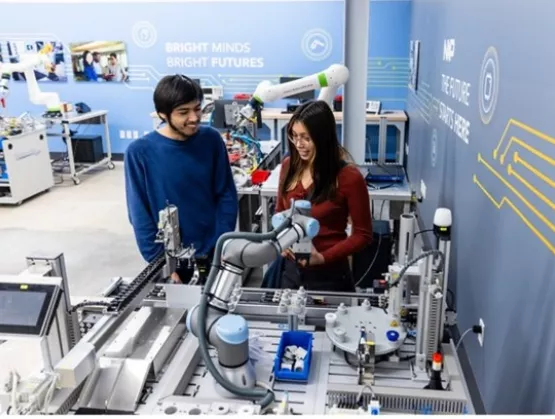
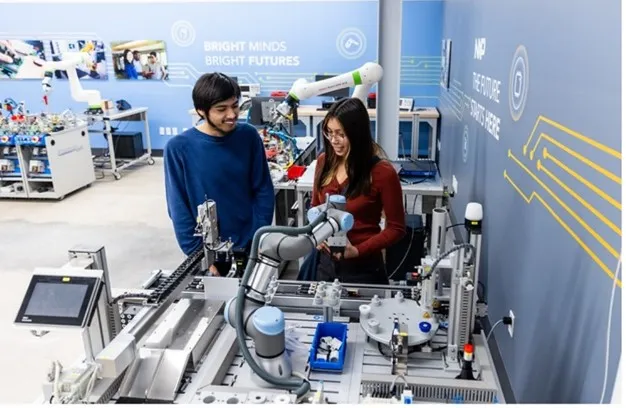
The semiconductor industry is a rapidly expanding sector in the United States with an anticipated 115,000 new jobs by 2030. A projected 67,000 of these in-demand roles will remain unfilled (SIA Workforce Blueprint, 2024), given the current training landscape. To address this workforce challenge, many strategies must be leveraged. One solution is to diversify the education and training needed to move workers into the semiconductor industry. Through semiconductor-specific programming at community colleges and universities, institutions can attract a wide array of learners, and by creating flexible credit, non-credit, degree, diploma, and certificate programs, education providers can meet hiring needs through many pathways. The SEMI Foundation, the workforce development arm of SEMI, is now offering Fundamental Semiconductor Knowledge Certification for high-quality programs that prepare entry-level workers for success in the growing semiconductor industry. SEMI’s Fundamental Semiconductor Knowledge Certification conveys that: Learners who are new to the semiconductor industry and successfully complete the program will be well-prepared for entry-level roles; Program completers have had exposure to fundamental semiconductor industry information and context, as well as introductory hands-on experience;Completers of these programs will have the specific knowledge and skills required for entry level positions; andProgrammatic design and content have been informed through input and feedback from local industry partners.Certified Programs: Spotlight on Austin Community CollegeAustin Community College District (ACC)—located in Austin, TX, was the inaugural recipient of the SEMI Foundation’s Fundamental Semiconductor Knowledge Certification for their Advanced Manufacturing Production (AMP) program. The strength of ACC’s programming is further illustrated by the College’s partnership with America’s Frontier Fund (AFF) Foundation, Merit America, and the Texas Institute for Electronics to expand the AMP program across the United States in 2025. This expansion will allow job seekers to access the SEMI Certified AMP program in a flexible, location-diverse capacity. ACC’s Dr. Laura Marmolejo, Dean of Advanced Manufacturing, and Laura Lucas, Director of Strategic Initiatives, spoke with SEMI Foundation to share the origin story of AMP and provide lessons learned and advice for others who are developing or expanding similar programs. Dr. Laura Marmolejo, Dean of Advanced Manufacturing, and Laura Lucas, Director of Strategic InitiativesKnowledge Sharing: Best Practices and StrategiesWhen asked what other schools can learn from ACC's experience, Dr. Marmolejo and Ms. Lucas focused on three key areas: direct engagement with industry, flexibility on programming and meeting local needs, and developing a pathway that can be clearly communicated to learners and industry alike. Dr. Marmolejo emphasized the importance of developing strong connections with industry. “Start by building these relationships with the company. They need to trust you,” said Dr. Marmolejo.” Ms. Lucas also spoke of how the program's origin and ultimate success emerged from direct engagement with companies. By understanding direct needs at each company, identifying consistent needs between the companies, and identifying ways that the College could support those needs, ACC was able to offer multiple solutions that appealed to both students and employers. Austin Community College offers several ways for learners or jobseekers to deepen their knowledge of the semiconductor industry and advanced manufacturing sector. Learners can begin their journey with the College’s 8-week Advanced Manufacturing Production (AMP) program, upskill with the Core Automation Semiconductor Training (CAST) program, or pursue a bachelor's or associate degree.Another benefit of the close collaboration between ACC and industry is that the College "is understanding where the regional hiring demand is at any given time,” said Ms. Lucas. This awareness, coupled with a mindset of flexibility and adaptability among the instructors and administrators, allows ACC to align programming with local needs, ensuring that jobseekers experience success once they complete their programs. For example, recently in Austin, employers have been focused on upskilling existing employees, so ACC has been able to open more sections of the Semiconductor Technician Advanced Rapid Start (STARS) program for incumbent workers within the local workforce ecosystem. When hiring gaps require more new additions to the industry, ACC will be able to pivot to increased AMP and CAST programming. This awareness of industry needs and the flexibility allows ACC to think about its offerings holistically.Advanced manufacturing students at ACCAnother consideration that schools and faculty can keep in mind when developing programs is how they scaffold programming and communicate the pathways and differences between offerings to external audiences. Internally, the distinctions between programs may feel obvious, but learning how to promote each pathway to learners, and how to differentiate them when seeking employer input is critical. Whether it's AMP, CAST, or STARS, "the topics are the same; what’s different is the level of depth,” explained Dr. Marmolejo. Ensuring learners enroll in the right program for their individual needs and career path will help the College build the right pathways for students from education to career. Clear communication about programming will also inform the industry about the best ways to get and stay involved in course development and iteration. Dr. Marmolejo with advanced manufacturing students at ACCACC’s success in building pathways for students into industry at the local level is evident in the more than 2,800 students enrolled across all advanced manufacturing programs, as well as its upcoming national program expansion for AMP. Other educational institutions and training providers can learn from the best practices and experiences of ACC, and can similarly have their work reviewed and certified by the SEMI Foundation.Press event at ACC in November 2024 to announce the expansion of AMP program nationwide and the awarding of the SEMI Certification.SEMI Certification: Next Steps for Training and Education PartnersSEMI Certification for training programs communicates to learners, jobseekers, and employers that the awarded programs have achieved the highest standards of program excellence in preparing entry-level workers to succeed in the growing semiconductor industry. Through 2025, the SEMI Foundation plans to expand program and course certification to include technician training programs. If you are a training or education partner looking to submit a program for consideration, please complete the SEMI Certificate Screening form. For more information about existing and future SEMI Certification efforts, please contact Anissa Hamdon-Morison at [email protected] or visit SEMI Certified Programs Courses | SCAN.Anissa Hamdon-Morison is the Curriculum and Training Manager at the SEMI Foundation.