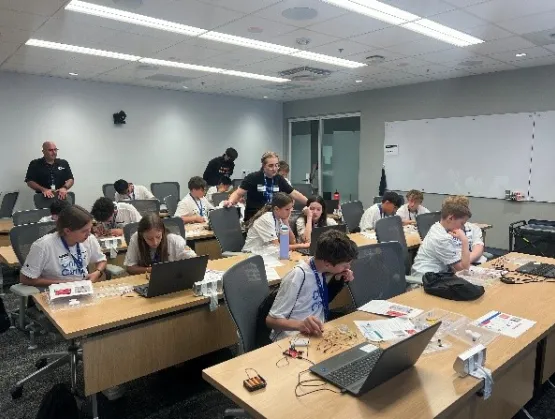
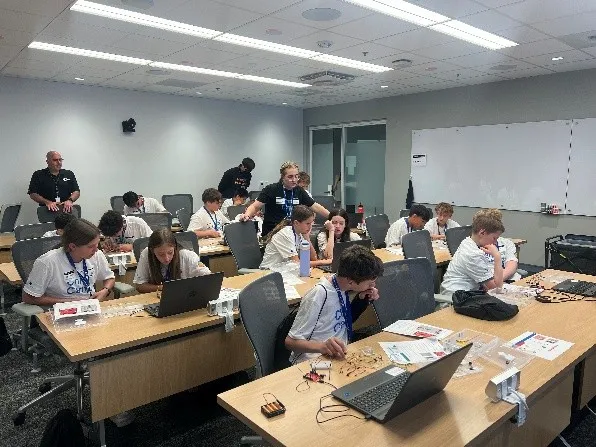
The semiconductor industry is grappling with a critical talent shortage, both globally and within the United States. At the same time, the workplace landscape for high school and college graduates is changing. These dual pressures present an opportunity: to cultivate early career awareness by introducing K–12 students to dynamic, real-world learning experiences that open their eyes to emerging industries—like semiconductors—and the meaningful roles they could play in them.Investing in this early exposure strengthens the long-term talent pipeline for the semiconductor industry and prepares students to meet the demands of a rapidly evolving workforce. However, realizing this vision requires intentional, cross-sector collaboration among educators, industry leaders, workforce boards, and policymakers.One example of this type of collaboration is the ChipWorks Series in Idaho. Boise State University partnered with Micron, the Idaho Workforce Development Council, and the Idaho Digital Learning Alliance to design, develop, and launch the learning experience for middle and high school students in 2024. The ChipWorks Series consists of three courses: Chip, Chip, Hooray!; Introduction to Electrical and Computer Engineering; and Materials Science and Engineering. With the first course launching in Fall 2024, the program has already reached over 220 learners across Idaho – and it’s just getting started. Camille Platts-McPharlin is the Project Manager at the Microelectronics Education and Research Center helping Boise State prepare to expand their programming to a national audience in 2025.The origin of the ChipWorks Series began through a grant with the Idaho Workforce Development Council. “The Council and Boise State University saw an opportunity to address the growing workforce gap by building a pipeline that begins in middle school and goes through adulthood,” said Platts-McPharlin. Development began in 2023 and was shaped by more than 300 voices from industry, academia, and K–12 education. This cross-sector group of stakeholders worked collaboratively to ensure that the lessons were responsive to real-world industry needs and compatible with classroom delivery best practices. Furthermore, the courses are aligned with State and National learning standards as well as ABET standards. Overcoming logistics challenges around open-source resources and existing structures in formal education led to two of the programs being dual credit, setting high school students up for early success in post-secondary. There has been an enthusiastic response from learners across Idaho, and more learners are expected to engage this year, as the third and final course is launched in the fall. Students enroll at their home school, have the support of local teachers, and receive online instruction synchronously from a dedicated teacher through the Idaho Digital Learning Alliance. This model enables a broader group of learners to access the training, regardless of educator understanding of the content. Students learning ChipWorks Series lessons at Micron Chip Camp.The ChipWorks Series is now expanding its reach beyond Idaho. In collaboration with Micron, Platts-McPharlin and the MERC team are working to bring the courses to students in New York. Educators from Syracuse and surrounding districts participated in a week-long professional development event to learn the curriculum and begin the work of bringing it into their local school districts. Teacher training for educators from Idaho and New York. Platts-McPharlin offered words of wisdom for other educators, training providers, or partners who are trying to create industry awareness opportunities earlier in the learning journey. “The key to success is listening closely to stakeholders and balancing the various perspectives. This will result in a quality product,” she said. Her other suggestion: trust the process. While it was challenging to build entirely new programs, the impact it is having on students, their teachers and their families to make them aware of their potential is immense. Programs like ChipWorks offer a powerful solution to the semiconductor industry’s workforce crisis, but they cannot stand alone. For sustained progress, industry leaders, workforce development councils, and educational institutions must work together to co-design scalable, inclusive solutions. This means sharing expertise, investing in infrastructure, and championing long-term talent development—starting in the earliest years of education. For more information on the ChipWorks Series, or to learn how to bring it to your students, please contact Camille Platts-McPharlin: [email protected]. To learn about what the SEMI Foundation is doing to bring together cross-sectoral groups for similar projects, contact Anissa Hamdon-Morison: [email protected] Hamdon-Morison is Training and Curriculum Manager at SEMI Foundation.