downloadGroupGroupnoun_press release_995423_000000 copyGroupnoun_Feed_96767_000000Group 19noun_pictures_1817522_000000Member company iconResource item iconStore item iconGroup 19Group 19noun_Photo_2085192_000000 Copynoun_presentation_2096081_000000Group 19Group Copy 7noun_webinar_692730_000000Path
Skip to main content
Default Banner Image

SEMI Foundation

The semiconductor industry is expanding at an unprecedented pace. Global semiconductor revenues are now forecast to exceed $1 trillion annually by 2030, yet recruitment is struggling to keep pace with the demand for new workers. This is why talent development is a critical focus for SEMI and the SEMI Foundation.Young professionals and students are crucial stakeholders of future talent. Held during SEMICON Europa, Building the Talent Pipeline event provided a showcase for some of Europe’s most enthusiastic promoters of careers in the industry: the Student Ambassadors of the European Chip Skills Academy (ECSA). The session opened with Andra Bornea, a Master’s student of electrical engineering at the Technical University of Cluj-Napoca in Romania, who shared the inspiring story of her journey towards a career in electronics. “For me, it started when I attended the ECS Summer School in 2023 along with 39 other students. It was a life-changing experience,” Bornea shared.The Summer School is a week-long programme jointly organised by AENEAS, ECSA, EPoSS and Inside, bringing together lectures, demonstrations and interactive sessions that give students a first-hand glimpse into what a career in semiconductors can look like. For Bornea, the impact was immediate and decisive. “Attending the Summer School convinced me to shift the focus of my studies from telecommunications and pursue a Master’s in electrical engineering,” she added. Today, Bornea is one of 70 students across Europe who form the ECSA Student Ambassador Programme, a community she describes as “a vibrant network of motivated students working towards the goal of keeping Europe at the forefront of the global semiconductor industry.”Andra Bornea, Technical University of Cluj-Napoca The event also featured other ECSA student ambassadors who are actively promoting the semiconductor industry within their own academic communities. One of them was András Bálint Mészáros, an electrical engineering student at the Budapest University of Technology and Economics, who spoke about his determination to build a student electronics club despite facing administrative hurdles along the way. Reflecting on the process, Mészáros said, “ECSA provided good opportunities to start a community of students interested in observing how the microelectronics industry works.”András Mészáros, Budapest University of Technology and Economics A similar spirit of initiative was shared by Nassim Beladel, a Master’s student at ETH Zurich, who described founding Young Neuromorphs which is a student association focused on computational hardware design inspired by the structure of the human brain. Beladel outlined ambitious plans for the group, including an FPGA hackathon in 2026 supported by the Edge AI Foundation, as well as a proposal to present the association’s work at an IEEE event in Shanghai. Nassim Beladel, ETH Zürich These new initiatives supplement a vibrant network of clubs and events around Europe. Octavian-Constantin Axinte, a Master’s student at the Technical University of Cluj-Napoca, told the forum of a Romanian competition for electronics students which has its roots way back in 1992. The Technologies of Interconnections in Electronics (TIE) contest attracted 1,500 students to its final stage in 2025. Axinte said that the benefits of participation included “hands-on experience of professional work, interaction with teachers, and, if all goes well, a job offer!” Octavian Axinte, Technical University of Cluj-Napoca Pioneering Research Efforts of the Next Generation of Students The Building the Talent Pipeline event also gave ECSA student ambassadors an opportunity to describe the findings of research projects that they have undertaken. Laura Sondakh, a Master’s student at Ghent University, presented her research into the environmental and social impacts of tantalum and cobalt which are critical minerals used in electronic components such as capacitors. “These minerals mostly come from the Democratic Republic of Congo, a country which ranks very low on development indices,” she explained, noting that many mines are located in conflict-affected regions in the east of the country. Laura Sondakh, Ghent University Vuk Vulević, a Bachelor’s student of telecommunications and IT at the University of Belgrade, shared his work on the applications of quantum computing, highlighting its potential beyond classic engineering uses such as machine learning. He explained how quantum technologies could also be applied “in pharmacology, for simulating complex molecules and testing compounds virtually, and in finance, for performing risk analyses and Monte Carlo simulations at high speed.” Vuk Vulević, University of Belgrade Z Zainab, a Research Assistant at Hochschule Anhalt, shared insights from her research into how mechanical strain can be introduced during the wafer saw-dicing process which is a critical step in turning wafers into individual chips. Using Raman spectroscopy, her work helps identify how key process parameters influence wafer integrity, enabling manufacturers to better optimise dicing conditions and reduce hidden damage that can affect chip reliability and manufacturing efficiency.Z Zainab, Research Assistant, Hochschule Anhalt Future Plans for Building the Talent Pipeline The event concluded by looking ahead at how SEMI and its partners are scaling up programmes to support talent development worldwide. Victoria Cummings, Senior Manager for Workforce Development and EU Projects at SEMI Europe, introduced Reinforcing Skills in Chips Design for Europe (RESCHIP4EU), a Master’s program for training the next generation of semiconductor designers supported by SEMI Europe and STMicroelectronics. Outlining the project’s ambition, Cummings said, “The program has a broad curriculum, covering everything from silicon chips and SoCs to safety-critical software, how to run a team, and how to start a semiconductor business.” Victoria Cummings, Senior Manager, Workforce Development and EU Projects, SEMI Europe The focus then shifted towards engaging younger learners. Marco van Schagen and Tijl Bouman, co-founders of JuniorIOT, unveiled their newest workshop, Chips in Schools, which builds on their work to spark interest in electronics among younger students. During a hands-on demonstration, audience members of all ages were invited to examine LEDs under a microscope, learning how different chips can be identified and classified by function.The Chips in Schools workshop will soon be available on the ECSA e-learning platform as part of the ongoing collaboration between ECSA and JuniorIOT. Reflecting on the importance of early engagement, van Schagen noted: “When we talk about the talent pipeline, we need to ask where this pipeline really begins. For us, it’s so important that we reach out to children early to foster their sense of curiosity and discovery.”Marco van Schagen, Co-founder of JuniorIOT, demonstrating the Chips in Schools workshop with Victoria Cummings.Rounding off the session, Mike Glavin, Program Director for Workforce Development at the SEMI Foundation, spoke about efforts to significantly scale the foundation’s impact. He described how, despite hundreds of individual microelectronics education initiatives across schools and colleges in the United States, their collective impact has often been limited by fragmentation and a lack of coordinated promotion. To address this, Glavin introduced the National Network for Microelectronics Education (NNME), an initiative designed to unify and amplify existing programmes by connecting educators, students and regional partners. The goal, he explained, is to build scalable, sustainable talent pipelines: “We want to answer the questions, how do we train teachers to educate students about semiconductors? How do we connect to networks through which we can train educators at scale? And how do we develop resources so that a university can host its own semiconductor day, rather than requiring the SEMI Foundation to put it on?” Mike Glavin, Program Director for Workforce Development, SEMI Foundation From university labs to industry-aligned Master’s programs, the message at SEMICON Europa 2025 was clear: talent development is critical to sustaining Europe’s semiconductor ambitions. SEMI would like to thank its partners across academia and industry, as well as the vibrant community of ECSA Student Ambassadors, whose collaboration, commitment and creativity are helping to build a diverse, resilient talent pipeline and shaping the future of the global microelectronics ecosystem.SEMI Contact Jatin Mendiratta, Communications Coordinator, European Projects Email: [email protected]
Read More
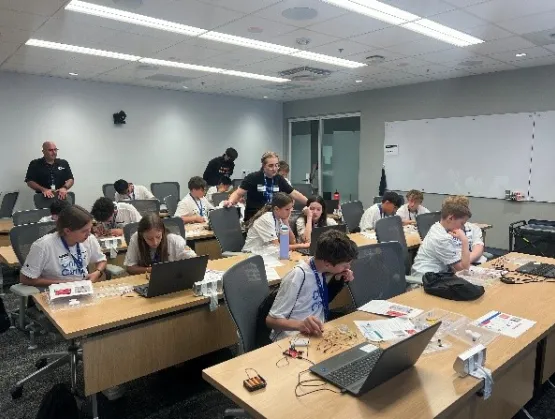
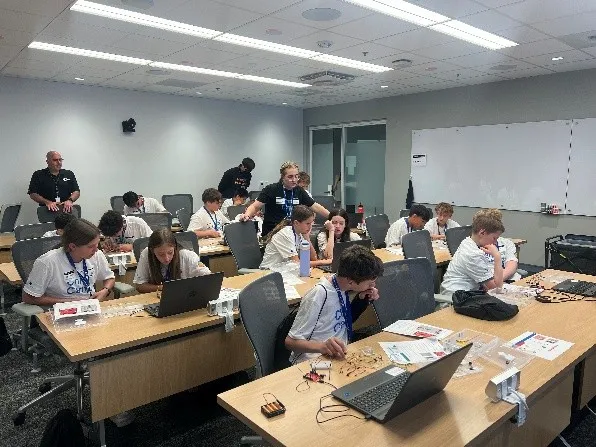
The semiconductor industry is grappling with a critical talent shortage, both globally and within the United States. At the same time, the workplace landscape for high school and college graduates is changing. These dual pressures present an opportunity: to cultivate early career awareness by introducing K–12 students to dynamic, real-world learning experiences that open their eyes to emerging industries—like semiconductors—and the meaningful roles they could play in them.Investing in this early exposure strengthens the long-term talent pipeline for the semiconductor industry and prepares students to meet the demands of a rapidly evolving workforce. However, realizing this vision requires intentional, cross-sector collaboration among educators, industry leaders, workforce boards, and policymakers.One example of this type of collaboration is the ChipWorks Series in Idaho. Boise State University partnered with Micron, the Idaho Workforce Development Council, and the Idaho Digital Learning Alliance to design, develop, and launch the learning experience for middle and high school students in 2024. The ChipWorks Series consists of three courses: Chip, Chip, Hooray!; Introduction to Electrical and Computer Engineering; and Materials Science and Engineering. With the first course launching in Fall 2024, the program has already reached over 220 learners across Idaho – and it’s just getting started. Camille Platts-McPharlin is the Project Manager at the Microelectronics Education and Research Center helping Boise State prepare to expand their programming to a national audience in 2025.The origin of the ChipWorks Series began through a grant with the Idaho Workforce Development Council. “The Council and Boise State University saw an opportunity to address the growing workforce gap by building a pipeline that begins in middle school and goes through adulthood,” said Platts-McPharlin. Development began in 2023 and was shaped by more than 300 voices from industry, academia, and K–12 education. This cross-sector group of stakeholders worked collaboratively to ensure that the lessons were responsive to real-world industry needs and compatible with classroom delivery best practices. Furthermore, the courses are aligned with State and National learning standards as well as ABET standards. Overcoming logistics challenges around open-source resources and existing structures in formal education led to two of the programs being dual credit, setting high school students up for early success in post-secondary. There has been an enthusiastic response from learners across Idaho, and more learners are expected to engage this year, as the third and final course is launched in the fall. Students enroll at their home school, have the support of local teachers, and receive online instruction synchronously from a dedicated teacher through the Idaho Digital Learning Alliance. This model enables a broader group of learners to access the training, regardless of educator understanding of the content. Students learning ChipWorks Series lessons at Micron Chip Camp.The ChipWorks Series is now expanding its reach beyond Idaho. In collaboration with Micron, Platts-McPharlin and the MERC team are working to bring the courses to students in New York. Educators from Syracuse and surrounding districts participated in a week-long professional development event to learn the curriculum and begin the work of bringing it into their local school districts. Teacher training for educators from Idaho and New York. Platts-McPharlin offered words of wisdom for other educators, training providers, or partners who are trying to create industry awareness opportunities earlier in the learning journey. “The key to success is listening closely to stakeholders and balancing the various perspectives. This will result in a quality product,” she said. Her other suggestion: trust the process. While it was challenging to build entirely new programs, the impact it is having on students, their teachers and their families to make them aware of their potential is immense. Programs like ChipWorks offer a powerful solution to the semiconductor industry’s workforce crisis, but they cannot stand alone. For sustained progress, industry leaders, workforce development councils, and educational institutions must work together to co-design scalable, inclusive solutions. This means sharing expertise, investing in infrastructure, and championing long-term talent development—starting in the earliest years of education. For more information on the ChipWorks Series, or to learn how to bring it to your students, please contact Camille Platts-McPharlin: [email protected]. To learn about what the SEMI Foundation is doing to bring together cross-sectoral groups for similar projects, contact Anissa Hamdon-Morison: [email protected] Hamdon-Morison is Training and Curriculum Manager at SEMI Foundation.
Read More
May is Military Appreciation Month, a time to honor the service and sacrifice of those who’ve worn the uniform — and their families who’ve served alongside them. At SEMI, we believe this recognition must extend beyond appreciation. It should be a commitment to opportunity, support, and action.Through the SEMI VetWorks program, we help transitioning service members, veterans, and military spouses access high-growth careers in the semiconductor and microelectronics industry. We also provide our member companies with the tools and resources they need to successfully recruit, hire, and retain military-connected talent. This Military Appreciation Month, we’re calling on SEMI members to take action — not just in May, but year-round.What SEMI VetWorks OffersVetWorks is more than a program — it’s a network of opportunity that helps bridge the transition from military service to civilian careers. Here’s how we support both job seekers and employers:SEMI VetWorks Guide for EmployersThis guide helps companies understand military experience, translate skills, and develop inclusive hiring strategies that resonate with veterans and military spouses.Monthly Military Resume ReleasesEach month, SEMI VetWorks distributes a curated list of resumes from transitioning service members and military spouses to participating member companies. This direct pipeline provides early access to mission-ready talent.Perla DeBaggis and Melinda Gomez of the SEMI Foundation at Luke AFB Military Hiring EventMilitary Engagement EventsVetWorks hosts and joins industry-specific hiring events, career fairs, and workforce development briefings that connect member companies directly with military-affiliated candidates.careers.semi.org/militaryThis dedicated career portal is designed for veterans and spouses exploring semiconductor industry jobs. It features training resources, employer spotlights, and a streamlined job search experience tailored to the military community.Our Strategic PartnershipsVetWorks also partners with organizations that share our mission to support veterans and military spouses. Together, we provide critical services, from career coaching to job placement and certification programs. These include:Department of Labor’s Employment Navigator Partnership Program (ENPP)We work closely with DOL Navigators who refer transitioning service members to SEMI for career coaching and connection to job opportunities.Marvin Branch of Heroes MAKE America, Melinda Gomez of SEMI VetWorks and Eric Putt of Hiring Our Heroes at Ft Cavazos Semiconductor Information Session Hiring Our Heroes (U.S. Chamber of Commerce Foundation)A national initiative that SEMI VetWorks supports through event participation and career pathway promotion in the semiconductor industry.Heroes MAKE America (Manufacturing Institute)Prepares veterans for advanced manufacturing roles with hands-on training, certifications, and job placement support.NYCREATES Vet S.T.E.P.A New York-based program offering veterans specialized training and certifications for semiconductor manufacturing roles.DOD Military Spouse Employment Partnership (MSEP)Connects military spouses with employment opportunities that offer flexibility and long-term career growth.What SEMI Members Can Do NowSupporting the military community is not only the right thing to do — it’s a strategic investment in a dedicated, adaptable, and highly skilled workforce. Here are five actionable ways your company can get involved:Use the VetWorks Guide to educate HR and hiring managers on how to evaluate military experience.Sign up for our Monthly Resume Release to receive vetted candidates directly from our pipeline.Participate in Military Engagement Events to connect with transitioning service members and spouses.Establish internal support systems, such as military-affiliated Employee Resource Groups (ERGs) or mentorship programs.Review and adjust your benefits policies to better support reservists, National Guard members, and military families (e.g., flexible leave, relocation support, remote work options).These actions not only improve veteran and spouse recruitment — they strengthen your organization’s culture, resilience, and brand reputation.Join Us in Building the FutureThis Military Appreciation Month, we honor those who have served by building pathways for them to thrive in our industry. Through SEMI VetWorks, we’re proud to create those pathways — but we can’t do it without you.Get started today:Visit semi.org/veteransExplore our military to semi careers portalReach out to Melinda Gomez ([email protected]) with the SEMI VetWorks team to learn how your company can get involvedLet’s turn appreciation into action — and build a stronger, more inclusive industry together.Melinda Gomez is Program Manager, Veteran Initiatives at the SEMI Foundation.
Read More