downloadGroupGroupnoun_press release_995423_000000 copyGroupnoun_Feed_96767_000000Group 19noun_pictures_1817522_000000Member company iconResource item iconStore item iconGroup 19Group 19noun_Photo_2085192_000000 Copynoun_presentation_2096081_000000Group 19Group Copy 7noun_webinar_692730_000000Path
Skip to main content
Default Banner Image

SoC

AEM Holdings Ltd, a Singapore-based multinational corporation, is listed in Forbes Asia’s 200 Best Under A Billion 2019 and 2020 spotlighting small and midsized companies in the Asia-Pacific region with sales under $1 billion. AEM clinched the Singapore Business Review Technology Excellence Award 2020 for Analytics-Semiconductor and the Singapore Business Awards Enterprise Award 2019/2020. These achievements are testament to AEM’s vision and innovation and the company’s contributions to the increasingly complex testing of chips in a rapidly evolving technological world. I spoke with AEM CEO Chandran Nair, a new Regional Advisory Board (RAB) member of SEMI Southeast Asia, about the company’s intelligent test and handling solutions, its role in digital transformation, the company’s key role in the smart manufacturing movement and the growth prospects for Singapore’s electronics sector. SEMI: AEM’s application-specific, intelligent system test and handling solutions for semiconductor and electronics companies serve the advanced computing, 5G and AI markets. How do you differentiate your solutions from those offered by competitors? Nair: A key differentiation for AEM is that we work closely with our customers to develop application-specific integrated test and handling solutions that meet their needs in a scalable manner from lab to production. We offer our customers customized, full-stack test and handling solutions that give them the agility to accelerate their delivery cycles and enhance product quality. Over the years, AEM has developed and acquired world-class technologies in instrumentation, test, automation, robotics, optical inspection, high-end thermal control, and software. These technology pillars, along with our deep know-how to customize test and handling solutions using the technology pillars as a platform, enable AEM to meet the fast-changing needs of our customers faced with the challenges of testing heterogeneous and complex devices. In addition to investing in technology, AEM has also invested in delivering application-specific solutions to meet customer demand. Our recently announced acquisition of CEI with its manufacturing capabilities in Vietnam and its specialization in low-volume, high-mix manufacturing increases our geographical reach and our ability to quickly turn application-specific test and handling solutions to be deployed. We have a unique and differentiated approach that enables our customers to test high-performance computing devices, automotive devices, and mobility devices with maximum test coverage, cost-effectively, in a manufacturing environment. Our experience in serving the high-performance computing market that traditionally drives advancements in thermal control also puts us at the forefront of delivering comprehensive thermal management, vision, and deep automation and test solutions for the computing, automotive, and mobility markets. AEM also has a strong instrumentation portfolio, including high-density digital instruments and mixed-signal and protocol-aware instrumentation that is well-suited for ATE solutions for SoC, high-power devices, and CMOS image sensors. Over the last few years, we have also established leadership positions in developing and deploying application-specific test solutions for MEMS devices and offering wafer and frame probing stations suitable for R D, wafer sort, and final test. We form strong partnerships with our customers, provide them with end-to-end support in product development, and take them through the entire life cycle process from concept to mass production. Chandran Nair and Goh Meng Klang, vice president of operations, at the AEM manufacturing site in Singapore. (Photo credit: AEM) SEMI: Digital transformation is powering strong growth of advanced computing, 5G and AI. Will AEM be expanding its AEM manufacturing plants in China, Malaysia and Singapore to meet rising demand for these technologies in the coming years? Nair: In regards to manufacturing, AEM currently has manufacturing facilities in Singapore, Malaysia, the U.S., Finland, and China. With our recently announced acquisition of CEI, we will add manufacturing capability in Vietnam and Indonesia. AEM will continue to expand manufacturing appropriately to give our customers cost-effective solutions while maintaining our proven track record of delivering on time and scaling rapidly in times of crises like the pandemic or geopolitical disruptions. As for advanced technologies, the three key factors that will bring the full potential of 5G to fruition are 1) cost-effective, high-powered processing devices at the edge, 2) easy access to high-bandwidth communications, and 3) cost-effective sensor technology. Semiconductors are the primary drivers of these three key success factors. As devices become more complex and our reliance on semiconductor-powered devices in all aspects of our lives deepens exponentially to include mission-critical applications, AEM’s role is to ensure that our customers' electronic and semiconductor devices are shipped thoroughly tested, safe to use, and highly reliable. It is imperative that, as a testing company, we find innovative ways to help our customers test their products with maximum coverage and minimum cost. To do this, we are focusing our R D efforts and investments to continue building on our key technology pillars to ensure that we stay ahead of the curve when it comes to test and handling solutions. We prepare our customers to test increasingly complex devices manufactured on the latest process node. SEMI: During your career you’ve driven projects in test and automation and more recently robotics solutions for ports, logistics warehouses and transport. With robotics and automation a key part of Industry 4.0, what role do AEM solutions play in powering the smart manufacturing movement? Nair: The smart manufacturing movement is powered by semiconductors, software and increasingly by artificial intelligence (AI). Test is at the heart of the process of ensuring that semiconductor and electronics devices reach the consumer well-tested for reliability. With our vision of enabling A Zero Failure World, AEM addresses the necessity for safe, highly reliable devices. The semiconductor companies themselves are adopting smart manufacturing methods. AEM’s tools are Industry 4.0-ready, and we continue to invest in machine learning and data analytics, which are integral to the future of test. Our tools are automated and feature embedded sensors to provide our customers with data about tool usage, the state of a machine’s health, and more. Our tools are connected to our customers’ manufacturing automation platforms. Additionally, we continue to invest in our ability to better slice and dice test data to understand trends and patterns to help our customers analyze data and make decisions faster. SEMI: You also have experience heading autonomous vehicle projects. With the COVID-19 pandemic hastening digital transformation, do you see an acceleration in the development of fully autonomous vehicles and smart manufacturing? Research and development efforts for autonomous vehicles (AV) continue at a fast pace worldwide. With shutdowns and restricted movement rules globally, the pandemic has hastened digital transformation in many ways. The delivery of goods and services is transforming, and AV will surely play a part, especially in secure environments for autonomous transport. The pandemic has accelerated the development of autonomous vehicles and smart manufacturing technology in automation-friendly environments like factories and ports. SEMI: At the recent Global Technology Summit hosted by SEMI, you spoke about testing innovations to meet the demands of highly complex devices. Please elaborate on innovative testing solutions versus traditional testing? Nair: AEM offers a disruptive and differentiated solution, one that is driving a paradigm shift to asynchronous, modular, highly parallel, smart testing solutions. ​ The traditional approach of ATEs to test increasingly complex devices on advanced nodes has reached a point of diminishing returns as it gets exponentially more expensive to increase test coverage to acceptable levels. Additionally, as devices get more complex and companies are rapidly adopting heterogeneous packaging technologies, the realization that System Level Test (SLT) is necessary is forcing a rethink of the entire test process. AEM’s provides asynchronous, modular, highly parallel test cell solutions that enable each test cell to run SLT, final test, or burn-in all in one system and its ability to handle hundreds of test cells independently with each test cell testing multiple devices. Our solutions suddenly make comprehensive testing of every complex device cost-effective. Freeing us from legacy ATE allows AEM to provide these innovative solutions to our customers. AEM engineering and manufacturing teams in Singapore at work on semiconductor test and handling systems for global deployment at world-class semiconductor facilities. (Photo credit: AEM) SEMI: Singapore seems to be in the sweet spot of digital transformation. Singapore’s industrial production grew 8.6% year-over-year in January 2021, an expansion driven mainly by a surge in sectors including electronics, and more growth is seen in the year ahead. Digital technologies such as 5G technology and cloud computing together with continued demand for work-from-home equipment is behind this growth. What are the growth prospects for the region’s electronics sector? Nair: Singapore is well-poised to benefit from the current digital transformation accelerated by the adoption of these technologies during the pandemic. Being a safe, well-governed country with strong IP protection, excellent infrastructure, and the rule of law, Singapore is in a great position to play a central role in cloud-based services, 5G, and the semiconductor industry. Singapore’s semiconductor sector output is at a record high, and the prospects for renewed growth in the region are very good. SEMI: As a new Regional Advisory Board member of SEMI Southeast Asia, how is your industry experience relevant to the scope of this role? What opportunities lie ahead for the region? Nair: I am honored to represent AEM in the SEMI’s Southeast Asia RAB. The SEMI RAB can influence policymakers with ideas and information on the current and future needs of the industry. I also believe that SEMI Southeast Asia can cultivate a strong innovative semiconductor ecosystem that helps regional and global growth. I look forward to working with other very experienced and accomplished board members. Bee Bee Ng is president of SEMI Southeast Asia.
Read More
Dolphin Integration, a partner in the ENIAC THINGS2DO European FD-SOI project, showcased its achievements with PowerStudio™ during the project final review. Power Studio is Dolphin's cutting-edge EDA tool for safe Power Regulation Networks implementation. THINGS2DO, which stands for THIN but Great Silicon to Design Objects, was a 4-year, €120 million EU project (85% industry-funded) with over 40 partners that just finished up at the end of 2017. The goal was to build a design development ecosystem for FD-SOI. The project funded and supported the development of major FD SOI-based IPs and ASICs as well as EDA tools. (Another recent THINGS2DO announcement was Dream Chips’ ADAS SoC fabbed in GlobalFoundries’ 22FDX technology -- read about that here.) “Being involved in the THINGS2DO project was an opportunity for Dolphin Integration to start introducing FD-SOI in its automatic design methodologies,” said Frederic Poullet, Dolphin Integration’s CTO (read the press release here). “Dolphin Integration plans to offer a full suite of tools allowing its customers to implement right-on-first-pass Power Regulation Networks.” The company notes that THINGS2DO also proved that low power consumption makes FD-SOI a perfect fit for IoT and automotive applications. For instance, dynamic control of threshold voltage can be used to compensate for temperature variations, and to drive speed improvements by 200% in ultra-low voltage applications. Dolphin Integration provides energy efficient IPs and ASIC services dedicated to the low-power application market and supports its internal teams with tailor-made software tools. To address the specific needs of its customers in low-power design, Dolphin developed PowerStudio™, a global solution for the optimization of Power Regulation Networks (PRNet) to be used at an early stage of the SoC design process. In particular, it addresses new design challenges in noise and power supply integrity. The first module of PowerStudio™ will also embed architecture optimization features at the schematic level, in terms of FoM-based cost optimization, mode management, margin cuts and integrability rate-based risk optimization. Btw, Dolphin Integration Director Frederic Renoux gave an excellent great presentation at an SOI Consortium event in Nanjing, China last year, entitled Embedding power regulation activity control networks for best SoC PPA. Dolphin Integration joined Global foundries’ FDXcelerator™ Program last year (read the press release here) to streamline design in 22FDX®. "Our comprehensive and robust library of voltage regulators, power gating cells and logic modules, enables to deal cost-effectively and securely with power distribution, power gating, power monitoring and power control of any SoC design in 22FDX," Michel Depeyrot, Dolphin Integration's Chairman, said at the time. "As connected devices sleep most of their time, users of 22FDX also benefit from our ultra-low power and accurate oscillators to design an always-on RTC which consumes as little as 60 nA." See the Dolphin Integration website for the full catalog of their IP, EDA and ASIC/SoC service offerings, including for GF's 22FDX.
Read More
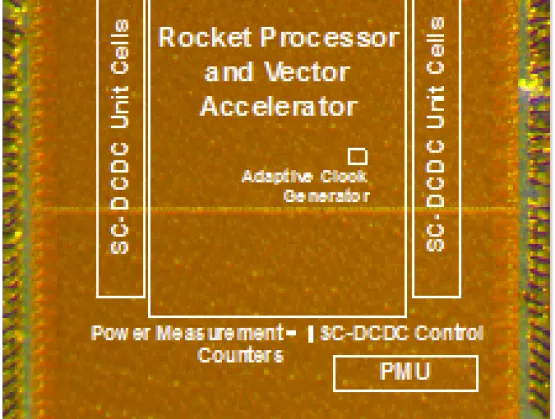
ST Fellow Dr. Andreia Cathelin gave a terrific presentation at the recent CMP Annual Meeting. Now posted and freely available, Performance of Recent Outstanding 28nm FD-SOI Circuits Taped Out Through CMP highlighted eight examples – though she told ASN that she had easily over 50 from which to choose.CMP is a Multi-Project Wafer (MPW) service organization in ICs, Photonic ICs and MEMS. They’ve been organizing prototyping and low volume production in cooperation with foundries for over 37 years. In partnership with ST since 1994, in the fall of 2012 they opened access to MPW runs in the 28nm FD-SOI process. More than 180 tape-outs have been fabricated since then using the process.As Dr. Cathelin said, this lets ST show their industrial clients just how good the technology is. The chips she chose to cover in her presentation get “spectacular performance”, she said, especially for low-power or power-sensitive SoCs.Here’s a quick recap of what she presented (some of which she co-authored), followed by some other SOI-related updates from the CMP meeting.8 (of Many) Great ChipsFD-SOI, said Dr. Cathelin, “...is unmatched for cost-sensitive markets requiring digital and Mixed Signal SoC integration and performance.” In the first dozen slides of her presentation, she gave the technical details on the advantages of FD-SOI in analog, RF/millimeter wave, Analog/Mixed-Signal and digital design. If you're a designer, you'll want to check those out.Then she ran through eight great chips – all manufactured by ST on 28nm FD-SOI through CMP's MPW services. Here they are. (You can click on the illustrations to see them in full screen.)1. A digital delay line with coarse/fine tuning through gate/body biasing in 28nm FDSOI [caption id="attachment_11559" align="alignnone" width="768"] (Courtesy: CMP, ST, ISEN)[/caption] This chip was presented at ESSCIRC '16 by a team from ISEN Lille, Professors Andreas Kaiser and Antoine Frappé (you can get the complete paper by I.Sourikopoulos et al on IEEE Xplore – click here.) As noted in the abstract, “Delay controllability has always been the major concern for the reliable implementation of circuits whose purpose is timing.” By leveraging body biasing in FD-SOI, this novel low-power design architecture for 60GHz receivers enables very high bandwidth together with fine-grain wide range delay flexibility, for implementing Delay Feedback Equalizer techniques in the Intermediate Frequency (IF) reception path. The results are state-of-the-art: ultra wide range, linear control, fs/mV sensitivity and energy efficient controllable delay cells. 2. 28FD-SOI Distributed Oscillator at 134 GHz and 202GHz [caption id="attachment_11560" align="alignnone" width="768"] (Courtesy: CMP, ST, ims)[/caption] Presented at RFIC '17 by a team from the IMS Bordeaux lab, Professor Yann Deval and STMicroelectronics, this chip demonstrates the highest oscillation frequency attainable so far at the 28nm node, be it planar bulk or FD-SOI. (Click here to get the full paper by R. Guillaume et al from IEEE Xplore.) As noted in the abstract, solutions on silicon for mmW and sub-mmW applications have been demonstrated for high-speed wireless communications, compact medical and security imaging. The main challenges are for the signal generation at high frequencies, and this implementation demonstrates spectacular oscillation frequencies close to the transistor’s transition frequency (fT). In this chip, they used body bias tuning to optimize the phase noise, demonstrated very low on-wafer variability, and simulation methods that permit measurement prediction precision within 0.1%.3. A 128 kb Single-Bitline 8.4 fJ/bit 90MHz at 0.3V 7T Sense-Amplifier-less SRAM in 28nm FD-SOI [caption id="attachment_11561" align="alignnone" width="768"] (Courtesy: CMP, ST, Lund U.)[/caption] Extremely energy efficient SoCs are key for the IoT era – but SRAM gets very tricky at ultra-low voltages (ULV). Presented at ESSCIRC '16 by B. Mohammadi et al (on IEEE Xplore here) from Professor Joachim Rodrigues' team at the Lund University, this is a 128 kb ULV SRAM, based on a 7T bitcell. The minimum operating voltage VMIN is measured as just 240mV and the retention voltage is as low as 200mV. FD-SOI enabled them to overcome ULV performance and reliability challenges by letting the Lund U.-lead team selectively overdrive the bitline and wordline with a new single-cycle charge-pump. Plus they came up with a new scheme so it doesn't need a sense amplifier, yet delivered 90MHz read speed at 300mV, dissipating 8.4 fJ/bit-access.4. Matched Ultrasound Receiver in 28FDSOI [caption id="attachment_11562" align="alignnone" width="768"] (Courtesy: CMP, ST, Stanford U.)[/caption] Presented at ISSCC '17 (with an extended relative paper at JSSC '17) by M-C Chen et al with Professor Boris Murmann's team at Stanford, the full title of the paper about this chip is A Pixel Pitch-Matched Ultrasound Receiver for 3-D Photoacoustic Imaging With Integrated Delta-Sigma Beamformer in 28-nm UTBB FD-SOI. (Click here to get it on IEEE Xplore.) It's a a proof-of-concept for a big ultrasound receiver: a “pixel pitch-matched readout chip for 3-D photoacoustic (PA) imaging.” PA is “...an emerging medical imaging modality based on optical excitation and acoustic detection.” It's used in studying cancer progression in clinical research, for example. As noted in the paper abstract, “The overall subarray beamforming approach improves the area per channel by 7.4 times and the single-channel SNR by 8 dB compared to prior art with similar delay resolution and power dissipation.” One of the (many) advantages of FD-SOI in this context is for front-end signal conditioning in each pixel. This unique type of pixel pitch-matched architecture implementation is possible only in a 28nm (or less) node of an FD-SOI technology, as it is matched with the pitch sizing needed for the ultrasound transducers in order to generate signals for a 3-D reading.5. SleepTalker - 28nm FDSOI ULV WSN Transmitter: RF-mixed signal-digital SoC [caption id="attachment_11563" align="alignnone" width="768"] (Courtesy: CMP, ST, UCL)[/caption] Presented at VLSI '16 and JSSC '17 by G. de Streel et al from Professor David Bol’s team at Université Catholique de Louvain la Neuve, the full title of the paper about this chip is SleepTalker: A ULV 802.15.4a IR-UWB Transmitter SoC in 28-nm FDSOI Achieving 14 pJ/b at 27 Mb/s With Channel Selection Based on Adaptive FBB and Digitally Programmable Pulse Shaping (get it on IEEE Xplore here). This chip tackles the IoT requirement for sensing functions that can operate in the ULV context. That means creating wireless sensor nodes (WSN) that can be powered on an energy harvesting power budget – and that's a real challenge if you want to incorporate an RF component that can handle medium data rates (5-30 Mb/s) for vision or large distributed WSN networks. The energy efficiency has to be better than 100 pJ/b. To get there, the UCL-lead team used wide-range on-chip adaptive forward back biasing for “...threshold voltage reduction, PVT compensation, and tuning of both the carrier frequency and the output power. [...] Operated at 0.55 V, it achieves a record energy efficiency of 14 pJ/b for the transmitter (TX) alone and 24 pJ/b for the complete SoC with embedded power management. The TX SoC occupies a core area of 0.93 mm2.”6. A 128x8 Massive MIMO Precoder-Detector in 28FDSOI [caption id="attachment_11564" align="alignnone" width="768"] (Courtesy: CMP, ST, Lund U.)[/caption] This massive MIMO chip was presented at ISSCC '17 by a team from Professors Liang Liu and Ove Edforss at the Lund University in a paper entitled 3.6 A 60pJ/b 300Mb/s 128×8 Massive MIMO precoder-detector in 28nm FD-SOI (H. Prabhu, et al; get it from IEEEE Xplore here). While Massive MIMO (MaMi) will be needed for next-gen communications, it can't be achieved by just scaling MIMO – that would be too costly in terms of flexibility, area and power. As noted in the Lund U. team's intro, “Algorithm optimizations and a highly flexible framework were evaluated on real measured channels. Extensive hardware time multiplexing lowered area cost, and leveraging on flexible FD-SOI body bias and clock gating resulted in an energy efficiency of 6.56nJ/QRD and 60pJ/b at 300Mb/s detection rate.”7. ENVISION: A 0.26-to-10TOPS/W Subword-Parallel Dynamic-Voltage-Accuracy-Frequency-Scalable Convolutional Neural Network Processor in 28nm FDSOI [caption id="attachment_11565" align="alignnone" width="768"] (Courtesy: CMP, ST, KU Leuven)[/caption] Today's solutions for always-on visual recognition apps are an order of magnitude too power hungry for wearables. Running at 10's to several 1OO's of GOPS/W, they use classification algorithms called ConvNets, or Convolutional Neural Networks (CNN). The paper about this chip was presented at ISSCC '17 by a team from professor Marian Verhelst at Katoliek Universiteit Leuven (B. Moons, et al, get it from IEEE Xplore here), and it changes everything. Leveraging FD-SOI and body-biasing, the KU Leuven team solved the power challenge with, “...the concept of hierarchical recognition processing, combined with the Envision platform: an energy-scalable ConvNet processor achieving efficiencies up to 10TOPS/W, while maintaining recognition rate and throughput. Envision hereby enables always-on visual recognition in wearable devices.”8. Fine-Grained AVS in 28nm FDSOI Processor SoC [caption id="attachment_11566" align="alignnone" width="768"] (Courtesy: CMP, ST, UC Berkeley)[/caption] As we learned at SOI Consortium FD-SOI Tutorial Day in SiValley last year, Professor Borivoje “Bora” Nikolic of UC Berkeley is known as one of the world's top experts in body-biasing for digital logic (he and his team have designed more than ten chips in ST’s 28nm FD-SOI!) They presented the RISC-V chip here at ESSCIRC '16 and JSSC '17, in a paper entitled Sub-microsecond adaptive voltage scaling in a 28nm FD-SOI processor SoC (B.Keller, et al, on IEEE Xplore here). As they noted in the intro, a major challenge for mobile and IoT devices is that their workloads are highly variable, but they operate under very tight power budgets. If you apply adaptive voltage scaling (AVS), you can improve energy efficiency by scaling the voltage to match the workload. But in the current gen of SoCs, the AVS timescales of hundreds of microseconds is too slow. The chip the Berkeley team presented brought that down to sub-microseconds by aggressively applying body-biasing throughout the chip, including to workload measurement circuits and integrated power management units. The result is “... extremely fine-grained ( 1μs) adaptive voltage scaling for mobile devices.” (BTW, they expand on some of the details in another paper published in 2017.) These design techniques are now taught at UC Berkeley, as this kind of implementation is the subject of a course in SoC design (including the RF part of transceivers); a first educational chip has already been taped-out and successfully measured. (BTW, Professor Nikolic will once again join Dr. Cathelin and other luminaries in teaching at the SOI Consortium's FD-SOI Training Day in Silicon Valley, 27 April 2018 - click here for sign-up information.)More SOI Through CMPAt the meeting, CMP also made a presentation on all their MPW offerings – you can get it here. On ST's SOI (in addition to 28nm FD-SOI, of course), that includes the new 160nm SOIBCD8s: Bipolar-CMOS-DMOS Smart Power (for automotive sensor interface ICs, 3D ultrasound, MEMS micro-mirror drivers); and 130nm H9-SOI-FEM: Front-End Module (for radio receiver/transceiver, cellular, WiFi, and automotive keyless systems).CMP also provides tutorials that are used by institutions across the globe. A new update to the tutorial, RTL to GDS Digital Design Flow in 28nm FD-SOI Process is now available – you can see the presentation they did about that here. (It now includes LVS and DRC steps with Mentor/Calibre or Cadence/PVS.) Other services, like the 2-day, hands-on THINGS2DO FD-SOI training days at the end of March are always fully booked almost immediately, but don't hesitate to inquire, as they'll be adding more. For some more examples of 28nm FD-SOI chips run through CMP over the years, see their website pages on Examples of Manufactured ICs. There are also some nice examples on pages 21 and 23 of their most recent annual report. For those in the photonics world, CMP has teamed up with Leti to offer Si-310 PHMP2M, a 200mm CMOS SOI platform. CMP is cooperating with Tyndall for the photonics packaging – see that presentation here. Training kits and tutorials will be available in Q3 of this year. And in partnership with MEMSCAP, CMP offers Multi-User MEMS Processes (aka MUMPs) for SOI-MEMS.So lots of terrific SOI resources for CMP – check it out!~ ~ ~Note: special thanks to Andreia Cathelin of ST and Kholdoun Torki of CMP for their help on this piece.
Read More
They've got initial silicon of Dream Chips' ADAS SoC fabbed in GlobalFoundries' 22FDX (FD-SOI) technology, and it's got record power efficiency (read the full press release here). The chip offers high performance image acquisition and processing capabilities and supports AI / Neural Network (NN) vision operation with a total of 1 TOPS at 500 MHz on 4 parallel engines. With all functions including quad-core Arm® Cortex®-A53, Tensilica DSPs, and INVECAS’ LPDDR4-Interfaces activated, the SoC shows single digit power dissipation without the need for forced cooling, which is of significant importance for embedding in automotive environments. [caption id="attachment_11538" align="alignleft" width="277"] Courtesy: Dream Chips Technologies[/caption] Targeting automotive computer vision applications, the SoC was created in close cooperation with Arm, ArterisIP, Cadence, GF, and INVECAS as part of the European Commission’s ENIAC THINGS2DO reference development platform, where about 40 partners in Europe cooperated to propel the FDSOI-Design Ecosystem. Of particular importance is the new and reduced power footprint of this SoC in 22FDX-technology from GF. AI/NN-operation for image recognition is available today, but most of the solutions need active cooling. Implementation of Dream Chip Technologies’ SoC on GF’s 22FDX platform demonstrated single digit Watt and cooling targets for designers managing power dissipation. If needed, the SoC bears the potential to increase the performance even further up to 2 TOPS at 1.0 GHz by applying GLOBALFOUNDRIES’s forward body-bias capabilities and other optimization techniques. The jointly developed ADAS SoC platform from Dream Chip Technologies is available now. Part of GF’s FDXcelerator™ Partner Program, Dream Chip is the largest independent German Design Service company specialized in the development of large ASICs, FPGAs, embedded software and systems with a strong application focus on automotive vision systems (ADAS).
Read More