downloadGroupGroupnoun_press release_995423_000000 copyGroupnoun_Feed_96767_000000Group 19noun_pictures_1817522_000000Member company iconResource item iconStore item iconGroup 19Group 19noun_Photo_2085192_000000 Copynoun_presentation_2096081_000000Group 19Group Copy 7noun_webinar_692730_000000Path
Skip to main content
Default Banner Image

remote work

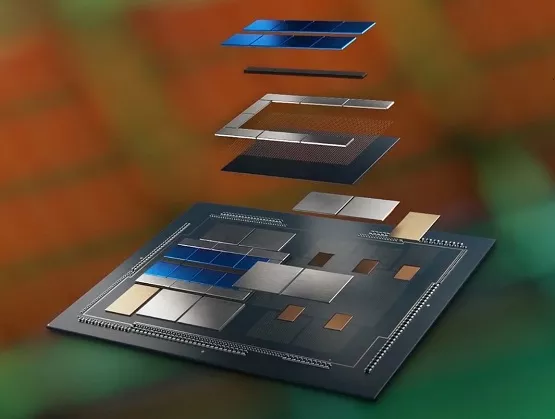
As monolithic scaling slows down, the semiconductor industry is increasingly relying on advanced packaging technologies to extend Moore’s law through heterogeneous integration. Higher on-package bandwidth, improved yield resiliency and the need to integrate diverse IP from multiple foundries are driving demand for advanced packaging technologies that address these issues but introduce challenges of their own such as efficient power delivery to all the different domains in a heterogeneous system. SEMI spoke with Kaladhar Radhakrishnan, Intel Fellow at Intel, about heterogeneous system integration trends and new developments in the semiconductor industry. Radhakrishnan shared his views ahead of his keynote at the SEMI Connecting Heterogeneous Systems Summit, 1-3 September 2021, an online event. Join the summit to meet experts from Intel and other key industry influencers. Registration is open. SEMI: What is driving the adoption of electronics and semiconductor devices nowadays and why is the development of new and innovative technologies important? Radhakrishnan: We are living in an increasingly data-driven world where devices have become an integral part of our lives. A recent study estimated that in the United States alone, 13.6 connected devices per capita consume an average of 300 gigabytes worth of data every month. In the workplace, COVID-19 has driven fundamental business changes that has sped up the adoption of digital technologies such as virtual conferencing, remote work, and e-commerce. Organizations are realizing that a high-quality video conference can be an adequate substitute for many in-person meetings. As a result, businesses are accelerating the digital transformation in order to adapt and thrive in this new environment. Five decades of sustained exponential growth in semiconductor performance has conditioned the average digital consumer to expect more from their devices. However, there are some headwinds ahead as traditional scaling slows down and power density rises. Because consumers and businesses are now generating data at a faster rate than they can consume it, technologists need to scale compute, storage, and bandwidth even faster to keep pace. Without investments in research and development of new and innovative technologies to address these challenges, the full potential of this data will go unrealized. SEMI: What forces are heightening the importance of heterogeneous system integration? What are the implications for increased on-package bandwidth, improved yield resiliency and the need to integrate diverse IP from multiple foundries? Radhakrishnan: The semiconductor industry increased transistor density and scaled performance through classical Dennard scaling until the turn of the century. By then, the gate oxide thickness had scaled down to atomic dimensions and the exponential increase in sub-threshold leakage signaled the end of scaling through traditional methods. Since that time, the chip industry has been relying on innovations in transistor materials and structures such as high-k metal gate, strained silicon, and FinFETs to keep pace with Moore’s law. However, this alone will not be sufficient to continue scaling and the industry needs to explore other vectors to augment improvements in transistor technology. Heterogeneous integration through advanced packaging is one key technology that can help drive these gains. Technologies like Foveros can enable device density scaling by creating a 3D stack of multiple die using high-density interconnects. Heterogeneous integration enables chipmakers to move from a monolithic system designed on a single large chip to a heterogeneous system comprised of a number of smaller chiplets. The main benefit of using smaller chiplets is that they improve yield and enable application based customization of the foundry processes. However, if the disaggregation to smaller chiplets is not accompanied by an increase in on-package bandwidth, the power and performance penalties associated with chiplet-to-chiplet communication will hobble system performance. This is why advanced packaging technologies that improve die-to-die communication are key enablers for heterogeneous integration. SEMI: What are some of the key technology challenges in developing heterogeneous systems? Radhakrishnan: The obvious challenge that most people focus on is the need for improved on-package bandwidth. However, as we rely on 3D stacking to continue device scaling at the package level, it is important to comprehend power delivery and thermal challenges as well. Power to the top die has to be delivered through TSVs on the bottom die, which not only adds resistance but also reduces the useful area available on the bottom die. This problem is further exacerbated when we stack more than two die. Excessive noise on the power delivery network can cause timing issues that limit the maximum operating frequency of the transistor. Similarly, when we stack multiple die, we must take into account associated thermal challenges. For example, each interface of the multi-die stack adds thermal resistance, which makes it harder to cool the chips at the bottom. SEMI: What are some of the key global market trends that driving demand for heterogeneous and system-level integration? Radhakrishnan: The number of artificial intelligence (AI) and machine learning applications have grown dramatically due to their ability to solve highly complex problems across a wide range of segments. AI and machine learning models require more memory bandwidth and compute capabilities that are difficult to achieve without some form of heterogeneous integration. Another market trend driving demand for heterogeneous integration is the increasing reliance on custom hardware accelerators. To combat the slowdown in frequency scaling and single-core performance, we have moved to multi-core architectures by tackling the inherent parallelism in our workloads. However, Amdahl’s law tells us that such an approach will hit a bottleneck when we reach the limits of the serial portion of the workload. As these constraints slow the performance of general-purpose processors, the reliance on custom hardware accelerators to boost performance for specific workloads is growing. Heterogeneous integration at the system level with a combination of CPUs, GPUs, FPGAs and other accelerators can optimize system power and performance. SEMI: What solutions is Intel developing to address these market needs? Radhakrishnan: Intel is actively involved in the development of the industry ecosystem for heterogeneous integration. We have developed a number of innovative advanced packaging solutions such as the EMIB and Foveros that are used in products today. Intel is also developing the next generation of advanced packaging technologies, Foveros Omni and Foveros Direct, which will dramatically scale the IO density by using direct Cu-Cu bonding technology. Foveros Omni is a crucial building block technology to enable high-voltage power conversion on the package for efficient power delivery. Intel is uniquely positioned to predict the design needs for future systems and deploy its resources to develop the technology building blocks needed to continue performance scaling. Our IDM 2.0 strategy enables us to leverage our leadership in packaging technologies to design the best products and use the best IP to deliver leading products across a broad range of categories. SEMI: What do you expect from your participation at SEMI Connecting Heterogeneous Systems Summit? Radhakrishnan: I’m hoping to shed some light on some of the new technologies we have been developing at Intel to enable heterogeneous system integration. I also want to bring awareness to the power-related challenges we are facing with heterogeneous systems. I also look forward to listening to what other industry leaders have to say on the topic. Kaladhar Radhakrishnan is an Intel Fellow and a Power Delivery Architect with the Technology Development group at Intel. He plays a significant role in shaping and driving power delivery technologies for Intel microprocessors. His areas of expertise include integrated voltage regulators, advanced packaging and passives technologies. Kaladhar is a two-time recipient of the Intel Achievement Award, the highest Intel honor an individual or small team can receive. He has authored four book chapters, over 40 technical papers in peer-reviewed journals, and has been awarded 35 U.S. patents. He has also served as an adjunct professor at Arizona State University. Kaladhar joined Intel in 2000 soon after receiving his Ph.D. in Electrical Engineering from the University of Illinois at Urbana-Champaign. Serena Brischetto is senior manager of marketing and communications at SEMI Europe.
Read More
When COVID-19 hit the semiconductor industry, SEMI members were confronted with new hurdles to keeping their employees safe and their operations running uninterrupted. We quickly assisted our global membership around the globe by providing a forum for collecting member insights on best practices for operating and safety procedures, supply chain issues and sentiments on business impact and recovery. That forum took the form of surveys we launched in March 2020. We shared the results with the larger SEMI member community to help them cope with the evolving impacts of the pandemic on their businesses. Following is a summary of our 4th survey, issued last month. Regional and Sector Representation Nearly 40% of our respondents represented companies headquartered in North America. Of the respondents, 10% each were from companies headquartered in Taiwan and China; 5% from Korea, 13% from Japan and 20% from European and Middle Eastern members. The largest share of respondents – 40% – develop equipment for semiconductor fabrication, assembly, and test; 21% supply materials to the microelectronics industry; 14% are device makers; 6% supply software and design services; and 3% are OSATs, EMS suppliers or ODMs. Measures Member Are Taking to Continue Operations The May survey found that almost no companies ceased production for any significant length of time. In order to continue operations, companies instituted social distancing and masking requirements, temperature checks, schedule changes, and some contact tracing, all to varying degrees, as shown in Figure 1. In addition, several companies implemented some combination of mandatory testing, bump sensors, air purification and site capacity limits and sequestered foreign workers in separate housing for required quarantines after travelling. Figure 1 All of these measures are routinely discussed during the regular SEMI EHSS COVID-19 Working Group calls. That group consists of facilities, HR managers and others tasked with ensuring safety monitoring and compliance at member companies. Company Vaccination Policies With the pace of vaccine rollouts varying widely around the world, only 5% of respondents are requiring all workers to be vaccinated before returning to the office, and 12% have not yet considered a vaccine policy. The majority of companies are encouraging but not requiring employee vaccinations, and 26% leave the decision to the individual employees. Figure 2 North American companies constituted the majority of the required and encouraged vaccination categories. In Europe, companies fall into the employee decision or encouraged categories but none require vaccinations. Japanese companies primarily leave the vaccination decision to employees, while Chinese companies are split among the required, encouraged and employee decision categories. Clearly, these guidelines are not required by law in each region, but instead fall to employers and local policymakers. Member Readiness for Digital Transformation A solid majority of members reported they have invested in the adoption of digital transformation technologies and practices, though only about 14% expect to continue their digital investments in the coming year. Many respondents have deployed virtual meeting software and have implemented or plan to put in place virtual reality tools for remote diagnostics and predictive modeling for semiconductor manufacturing. Figure 3 Location by Functional Group in Returning Employees to Sites Not surprisingly, manufacturing and distribution staff that could work from home during the pandemic are back on site, and respondents signaled that R D and engineering groups will soon end their remote work, following by finance and procurement. Sales and marketing show the highest percentage of staff working remotely, with sales having the highest number remaining remote for some time to come. Figure 4 Resilience to Further Economic Uncertainty Of the 274 companies responding, 229, or 84%, feel more resilient in the face of further economic uncertainty after their response to COVID-19, though continuing supply chain issues and raw materials shortages ranked among their top concerns, as did rising customer demands, their ability to increase capacity utilization rates, and the increasing demands on employees and facilities overall. Figure 5 Many thanks to all survey respondents over the past year! We’ll keep you up to date on results of future surveys. For more details on the SEMI EHSS COVID-19 Working Group calls, visit the SEMI COVID Response Site. To watch the recording of our most recent CEO Webinar – Surging Chip Demand, Digital Transformation, and the Pandemic – What’s Next? – click here. More than 750 people attended the June 2nd webinar sponsored by SEMI members Brooks Automation, Hitachi, JCET, KLA and TEL. Heidi Hoffman is senior director of Technology Communities marketing at SEMI.
Read More
Now, more than ever, semiconductor companies are relying on their human resources departments to ensure employee safety, support facility access and hygiene measures, cope with staffing demands and incorporate the rapidly evolving guidelines from Centers for Disease Control and Prevention (CDC) and the local state and city mandates. SEMI spoke with Crystal Reich, HR manager at X-FAB Texas, about her participation in the Fab Owners Alliance (FOA) human resources group and the value of collaborating with industry peers on a broad spectrum of topics: from focusing on specific areas such as ensuring employee safety and managing the workforce during a pandemic, to addressing broader organizational challenges such as benchmarking activities and identifying compensation and staffing best practices. SEMI: How did you learn about the FOA human resources group? Reich: I have been part of the FOA HR group since its inception in 2012. Lloyd Whetzel, the CEO at X-FAB Texas, has been very involved with the FOA for several years. When this group was being formed, he let me know about it. I came to the first meeting and have been a part of it ever since. SEMI: What does your participation in the FOA human resources group allow you and your company to do differently? Reich: I am also involved with the Society for Human Resource Management (SHRM), but the FOA HR group provides an excellent opportunity for semiconductor industry HR professionals to collaborate. The group not only covers topics that are specific to the semiconductor industry but also discusses broader topics related to preserving employee well-being during unprecedented challenging times, managing negative emotions, establishing appropriate political expression policies, and creating safe spaces for dialogue. Also, the benchmarking has been fantastic, especially from a compensation and staffing standpoint. It allows us to identify best-in-class recruitment strategies, determine any shortfalls and use this information to improve employee onboarding and development. In addition to discussing these types of issues and trends, we compare and benchmark other HR issues such as policy deployment and legislative trends with colleagues in the industry. SEMI: What are some of the key topics and activities that the FOA HR group has helped you focus on? Reich: X-FAB has been involved in a variety of activities at SEMI. Through the SEMI High Tech U program, we have been able to help college-bound high school students in our community access STEM curriculum and explore careers in technology. We have devised more robust military outreach strategies with the help of the Veterans Program at SEMI, allowing us to recruit and retain excellent technicians from the military. Additionally, benchmarking activities within the FOA HR group have helped us improve our talent acquisition process - especially for positions which are challenging to fill. SEMI: The pandemic brought many significant and unprecedented challenges that affected business continuity. How did your company's participation in the FOA help you navigate these changes? Reich: The FOA has been a great help in addressing the challenges of the global pandemic across several operational collaborative teams. In the early days of the pandemic, as employees moved to remote work, FOA organized a forum that allowed members to share how they dealt with this transition. Constantly changing guidelines and protocols meant that FOA members leaned on each other more than ever to share best practices and lessons from new safety process implementations. FOA offered survey and area-specific team activities, cross-functional operational sessions, and round table discussions at its 2020 Q4 meeting, where members exchanged ideas on how business processes changed during this period and shared what they were doing to ensure business continuity. This provided another excellent opportunity for FOA members to benchmark best practices within the semiconductor industry. SEMI: Would you recommend your peers to join the FOA HR group? Reich: I would highly recommend HR colleagues in the semiconductor industry join this collaborative group. It is a great platform to share ideas, learn from each other, and benchmark with other colleagues in the same industry. The FOA HR Metrics survey is a comprehensive survey covering several different areas within the HR discipline such as compensation, learning and development, tool training, corporate social responsibility, and many others. True to the nature of the FOA, the survey is a result of the collaboration between several HR professionals from Device Maker member companies. Please contact Shilpa Talwalkar at [email protected] if you would like to participate. X-FAB is a member of the SEMI Fab Owners Alliance, an international group of semiconductor and MEMS fab managers and industry suppliers that meet regularly to solve common non-competitive manufacturing issues and improve their business results. Nishita Rao is senior product marketing manager at SEMI.
Read More
As we pass the work-from-home one-year mark, most of us still work remotely and will do so for the foreseeable future. As live trade shows and technical conferences were cancelled one after the other, virtual events became the norm. And, teleconferencing became a way of life. While possibly overstating our role, we have the semiconductor industry – from system design through manufacturing and system integration – to thank for a long history of achievement that made the transition to working remotely relatively seamless and straightforward. The shift, in some cases, took some time to sort out as we set up a workable home office, moved to video conferencing with intermittent connections and settled into a routine. Nonetheless, many of us became more productive and, in some cases, even too productive. Each spoke in the global electronic products hub contributed through creativity and innovation with a pinch of ingenuity and grit. Of course, we could have worked remotely 10 years ago, but not nearly as efficiently. Over the last 10 years, the economy moved to the cloud, producing new opportunities across the global market. Many of these opportunities were made possible by the electronic system supply chain and combination of semiconductor technology, electronic product innovation and people who figured how to leverage it with software platforms to tie it together. Zoom, one of our teleconferencing lifelines, is a good example, as are Netflix, our ongoing source of entertainment, and Roblox, a platform to build games. Facebook, Twitter, LinkedIn and the like sourced the news for us and kept us in touch. Amazon delivered our online purchases and GrubHub brought us our takeout dinners. All rely on cloud computing with thanks to the semiconductor industry. Another great example are data centers powered by semiconductors and the amount of data they processed last year. According to International Data Corporation (IDC), 64.2 zettabyte (ZB) of data was created or replicated due to the dramatic increase in the number of people working, learning and entertaining themselves from home. (Its revised model for global data creation and replication predicts the CAGR will grow to 23% over the 2020-2025 forecast period, a sure bet that the semiconductor industry will address ways to manage the growth, possibly through new AI chips.) Our connectivity is driven by smartphones optimized for low power and the performance of more complex chips. Over the last 10 years, design tools have been enhanced and new methodologies have been introduced to respond to the needs of the increasing complex chips for applications that demand high bandwidth, low latency and reduced power consumption and area. Manufacturing is retooling for higher automation under smart manufacturing initiatives and packaging is even more sophisticated with increasing integration and the 2.5D and 3D packaging rollouts. Let’s take stock of our success. The semiconductor industry has a storied tradition of breakthrough technology since its inception. The consumer electronic product craze started when the first PCs were rolled out in 1971, notes the Computer History Museum. Primitive laptops that followed in 1986 gave way to notebooks in 2007 and the ubiquitous smartphone in 2002 – and the rocket fuel for much of this was the buildout of computer networks, hyperscale datacenters and the cloud. Nothing’s been the same since. The next time we turn on our laptop, click on the link for the latest teleconference from our remote home office in comfortable sweats sitting in our ergonomic chair, let’s take a minute to acknowledge our industry’s grand achievement. And, thank one and all for their contribution and consider what’s coming next. About the Author Robert (Bob) Smith is Executive Director of the ESD Alliance, a SEMI Strategic Association Partner. He is responsible for the management and operations of the ESD Alliance, an international association of companies providing goods and services throughout the semiconductor design ecosystem.
Read More