downloadGroupGroupnoun_press release_995423_000000 copyGroupnoun_Feed_96767_000000Group 19noun_pictures_1817522_000000Member company iconResource item iconStore item iconGroup 19Group 19noun_Photo_2085192_000000 Copynoun_presentation_2096081_000000Group 19Group Copy 7noun_webinar_692730_000000Path
Skip to main content
Default Banner Image

Napa

Automobiles have become an even more important segment for MEMS and sensors as carmakers integrate more chips for propulsion, navigation, and control into their designs. However, these advanced functions and their crisp rate of adoption have fragmented the sourcing of automotive chips. IHS Markit’s Jérémie Bouchaud provided a closer look at and outlook for this key market at the MEMS and Sensors Executive Congress in late October in Napa. Following are key takeaways from his presentation.Autonomous and Electric/Hybrid Vehicles to Drive MEMS Market GrowthThe automotive market, approaching 100 million vehicles produced annually, is approaching $6 billion, dominated by MEMS and silicon magnetic sensors for chassis and safety, and powertrain applications. Going forward, the market growth will be in autonomous vehicles and electric/hybrid vehicles. Because the penetration of electric and hybrid vehicles is much higher than that of autonomous vehicles, it has a larger available market, particularly for sensors. Each of these markets has its own dynamics.For example, the electric and hybrid market has historically relied on a significant number of traditional, or non-semiconductor sensors, but new sensor technologies are vying to address multiple sensing needs. The most important limitation on demand of autonomous vehicles is the overall market penetration: IHS Markit expects autonomous vehicle production to reach 10 million at most by 2030.Production of Electric and Hybrid Automobiles Now Growing at Fast ClipProduction of electric and hybrid vehicles is in a rapid growth phase, and IHS Markit expects penetration of such vehicles to reach 50% of the automotive market by 2030, up from 3% in 2016. The core functions of charging and power inversion require, among other capabilities, current, temperature and position sensing. Historically, many of these functions have been handled by non-semiconductor devices, for example negative temperature coefficient (NTC) thermistors for temperature sensing, devices that appear to be strongly positioned. In other areas, semiconductor sensors are competing with traditional devices.For example, silicon magnetoresistive devices are going head-to-head with inductive devices for position and Hall effect sensing. Sensing requirements are also likely to evolve over time, particularly as battery systems become more reliable and robust. While some automakers are looking to sensors to monitor pressure or gas leaks from batteries, battery makers are more focused on maturing the systems and reducing the need for monitoring.Autonomous Vehicles Drive New Source of Demand for MEMS and SensorsThe movement towards automated driving has created a new source of demand for MEMS and sensors, with advanced driver assistance systems driving faster growth than the historical powertrain applications. Currently available vehicles are at Level 2 (partial automation), with multiple cameras and radars. Level 3 vehicles (conditional automation) are likely to enter the market next year, adding driver monitoring cameras, LIDAR systems and, potentially, microbolometers or other night-vision systems. Level 4 and 5 (high and full automation, respectively) will add vehicle-to-vehicle communications and other systems, but are not likely to be widely available for several years.The autonomous vehicle market, while smaller overall compared to electric/hybrid vehicles, provides a more attractive opportunity for MEMS devices, particularly in LIDAR systems. LIDAR and other sensing/surveying systems are at the heart of autonomous vehicles, and MEMS devices are in demand for the critical beam-steering function. However, demand for image and other sensors will accelerate as the higher levels of autonomy are rolled out.Automotive Drives Extremely Diverse Set of Applications for MEMS and Sensor MakersThe automotive market presents an extremely diverse set of applications for MEMS and sensor makers. Some companies have developed broad product portfolios and compete in multiple applications. For example, TDK offers NTC thermistors as well as MEMS and silicon-based sensors. Semiconductor companies such as Infineon are competing in MEMS and with silicon-based sensors such as magnetoresitive and Hall effect.The growth in demand for image and radar sensors used in ADAS, as well as magnetoresistive and Hall sensors in EVs, means that the center of gravity in automotive markets is likely to shift from MEMS over the next several years – a fundamental change, Bouchaud cautioned, that will put automotive sensor suppliers focusing solely on MEMS at risk.Paul Semenza is a consultant in SEMI Industry Research and Statistics.
Read More
Marcellino Gemelli, director of global business development at Bosch Sensortec, will present at the upcoming MEMS Sensors Executive Congress on October 29-30, 2018 in Napa, Calif. SEMI’s Maria Vetrano caught up with Gemelli to give MSEC attendees a preview of Gemelli’s feature presentation.Sensor fusion — the integration of different types of sensors through software algorithms to increase overall system performance and/or reduce power consumption— has come a long way since its inception. In those early days, sensor fusion generally involved MEMS inertial sensors only. The advent of new sensor varieties, including environmental sensors, is making new use cases a reality. Gemelli will explore the ways in which the next generation of sensor fusion is improving autonomous mobility devices. SEMI: Why are environmental sensors important to autonomous mobility devices?Gemelli: When most of us think of autonomous systems, we think that they are driven by motion sensors and proximity sensors (e.g., radar, Lidar). When vertical location comes into play, however, in applications such as drones or asset tracking, pressure sensors become an integral part of flight control, navigation and positioning in GPS-challenged areas.While not commonly considered an electronically enabled sense, the ability to “smell” the environment opens new opportunities. The quality of a user’s experience with personal cleaning robots and robo-taxis are good examples of where we might want to enable scent detection.SEMI: I’ve never thought much about using sensors to detect smell. How would a robo-taxi or a cleaning robot benefit from scent detection?Gemelli: Fully autonomous cars will inevitably give rise to robo-taxis. In fact, last month Volvo announced its fully electric robo-taxi, and in March 2018 Waymo announced that Jaguar Land Rover’s SUV would join Fiat Chrysler’s Chrysler Pacifica minivans in its planned fleet of robo-taxis, so we may see robo-taxis in the U.S. within the next five years.With robo-taxis fast-approaching, we need technologies that provide the same level of oversight that a taxi driver once fulfilled. Gas sensors would function like an electronic nose (e-nose) in a robo-taxi to inform the taxi’s owner of prohibited passenger behavior, such as eating, drinking or smoking in the vehicle, which could potentially damage the vehicle’s interior. Camera sensors could record the act as proof of the offense.Cleaning robots would be more sophisticated than they are today. In addition to leveraging image and range-finding sensors to more accurately map the rooms in your house, they could also detect scents from spilled red wine, pet urine or other foreign materials. When the cleaning robot, such as a vacuum, detects the foreign substance, it would navigate around the substance instead of going through it and spreading it all over the carpet.In addition to robo-taxis and cleaning robots, I will also discuss asset tracking and drones.SEMI: What role does sensor fusion play in autonomous mobility devices?Gemelli: Combining sensor fusion with artificial intelligence (AI) will generate new use cases and therefore new markets for sensor suppliers.There is another major benefit as well. With so many connected devices in our lives — including those with cameras, location awareness and always-listening capabilities — we are seeing growing concern about user privacy. Sensor fusion and AI can help to alleviate this concern: By supporting more local processing, they allow for greater control of data, safeguarding personal privacy.SEMI: Who is responsible for the AI part of the sensor-fusion equation?Gemelli: AI is a new frontier for MEMS and sensors suppliers. It benefits us and our customers to embrace AI algorithms through in-house development and/or partnerships.SEMI: What would you like MEMS Sensors Executive Congress attendees to take away from your presentation?Gemelli: I plan to issue a call to action to increase research in hybrid sensor-fusion software architectures, including AI, as suppliers’ collaboration will benefit the industry at large.Marcellino Gemelli is currently based in Palo Alto (CA) responsible for business development of Bosch Sensortec's MEMS product portfolio. He received the ‘Laurea’ degree in Electronic Engineering at the University of Pavia, Italy while in the Italian Army and an MBA from MIP, the Milano (Italy) Polytechnic business school. He previously held various engineering and product management positions at STMicroelectronics from 1995 to 2011 in the fields of MEMS, electronic design automation and data storage. He was contract professor for the Microelectronics course at the Milano (Italy) Polytechnic from 2000 to 2002.Marcellino Gemelli will present Environmental Sensors Systems Enabling Autonomous Mobility on Tuesday, October 30 at MEMS Sensors Executive Congress in Napa Valley, Calif.Register today to learn more about the connection between sensor fusion, AI and next-generation autonomous mobility devices.Maria Vetrano is a public relations consultant at SEMI.
Read More
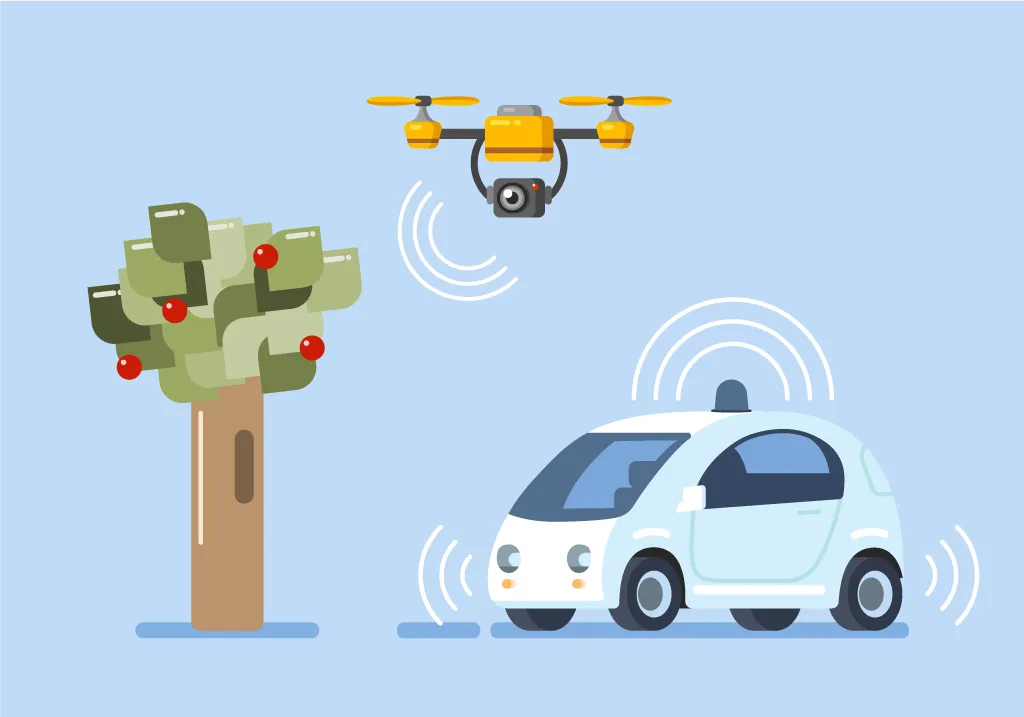
Nicolas Sauvage, senior director of Ecosystem at TDK InvenSense, will present at the fast-approaching MEMS Sensors Executive Congress on October 29-30, 2018 in Napa, Calif. SEMI’s Nishita Rao spoke with Sauvage to offer MSEC attendees advance insights on Sauvage’s feature presentation.SEMI: What is “autonomy value” and why is it important?Sauvage: How do you increase the perceived value of an electronic device? If it’s an autonomous car, its value is closely tied to the autonomy level — i.e., the independence — that it offers people. Higher autonomy value for a self-driving car, for example, means that even a blind person could use it. It’s been almost two years since Waymo demonstrated this, and here’s the video that shows it.Countless other sensor-based electronic products have their own “autonomy value.” Imagine the need to get medicine to people during a humanitarian health crisis. Drones could be your best option because they can deliver to inaccessible or remote locations. Unlike older drones, which require active piloting by a person, a drone with higher autonomy value could deliver medicine to Doctors Without Borders without ongoing human intervention.This drone could navigate objects, such as trees and birds, and would have excellent location-awareness. It could fly through any landscape in bright sunlight or during the night. To increase the drone’s autonomy value, you would need better sensors, including those sensors that can enable sensing in sunny conditions or in pitch-black night, as well as better machine learning.SEMI: In this example, what types of sensors would the drone manufacturer need?Sauvage: The manufacturer would need a “surrounding-sensing” solution that includes ultrasonic and pressure sensors as well as image sensors. Start with high-quality image sensors combined with ultrasonic range-finding sensors — high-accuracy devices that function in all lighting conditions and can detect objects of any color. Add motion sensors and a pressure sensor, which would capture the height of the drone to make known the drone’s location in space. The drone would need this combination of sensors, plus smart sensor fusion, because GPS alone cannot avoid obstacles: its signal can be sporadic in certain parts of the world or in certain terrain, making it unreliable.A key attribute of all these sensors would be low power consumption since the drone would run on battery.SEMI: To what extent might autonomy value cause manufacturers to consider multi-vendor solutions?Sauvage: I would like to see it inspire the MEMS and sensors ecosystem to work together, to arrive at multi-vendor solutions that will benefit humanity through greater autonomy value. Whether we’re looking at autonomous cars, drones, robotics or other applications, there are cases where we need to prioritize safety and security over industry competition. SEMI: Where are we today in terms of achieving true autonomy value – and where are we going?Sauvage: The sky is the limit, literally. Machine learning and surrounding-sensing solutions applied to cars, drones and robots will increase autonomy value to the point where we can justifiably call it artificial intelligence.SEMI: What would you like MEMS Sensors Executive Congress attendees to take away from your presentation?Sauvage: I hope that attendees will recognize the value of ecosystem solutions in increasing autonomy value. Together we can expand the variety of sensor types that address novel use-cases and jobs-to-be-done. Instead of waiting for customers to ask for ecosystem-level solutions, we need to articulate a complete MEMS and sensors supply-chain ecosystem if we want the Internet of Things (IoT) and Industrial IoT (IIoT) to grow more quickly. As senior director of Ecosystem, Nicholas Sauvage is responsible for all strategic relationships, including Google and Qualcomm, and other HW/SW/System companies. He is also responsible for strategic and market-driven goal-setting of our SensorStudio developer program, and driving select partnerships with SoC sensor hub platforms. Prior to joining InvenSense, Nicolas was part of NXP Software management team, responsible for worldwide sales, as well as for P L and product management of their OEM Business Line. Nicolas is an alumnus of Institut supérieur d’électronique et du numérique, London Business School and INSEAD. Register today to connect with Nicolas Sauvage at the event. You can also connect with him on LinkedIn.Nishita Rao is a marketing manager at SEMI.
Read More
You’re super busy. We know - it’s hard to take time away from work. So an industry conference must offer compelling value to justify your time. Whether you are brand new to MEMS Sensors Executive Congress (MSEC) or a veteran of the event, you’re sure to find a unique convergence of networking, learning, and fun in a single venue. This year’s theme is “Sensor Systems Enabling Autonomous Mobility” and we’re gearing up to make this event bigger and better than ever.Taking place on October 28-30, 2018 in Napa, Calif., this event is the most relevant, timely and authentic event of the year. Don’t just take our word for it. Look at what last year’s attendees said about MSEC.Here are the top three reasons we think MSEC is a must-see.Elevate Your NetworkWhere else but MSEC can you spend 2 days with industry executives from a broad spectrum of industries including automotive, communications, consumer goods, environmental, industrial, Internet of Things and biomedical. At this event, you’ll get many opportunities to mix and mingle with influential leaders who drive their company’s technology roadmaps and industry growth. Who knows, at a breakout session, you may find yourself sitting next to your future employer/employee, business lead for a new project or mentor.Stay Sharp with Powerful ContentThere's a wide range of sessions on the agenda with insightful topics such as the analysis of megatrends, production work flows and privacy challenges in the MEMS sensors business. You will get an inside view into what’s possible in this industry, so you can shape innovative solutions and drive early adoption. This is your chance to examine the enabling role of MEMS and sensors in diverse intelligent applications and gain actionable insights to advance your business.Encounter Emerging ApplicationsDiscovering unique applications for your business is necessary to thrive as technology changes at an unprecedented pace to drive rapid development of new products and applications. Our Technology Showcase session will feature 5 finalists who will be displaying a compelling and diverse set of demos. You’ll get the chance to interact with the newest MEMS/sensors-enabled applications and cast your vote for the winner. You will witness firsthand the edge of innovation in your field that will remind you why you love doing what you do.Jump ahead of the pack and register today!Nishita Rao is a marketing manager at SEMI.
Read More
ULVAC Technologies’ David Mount is working with The CIA. Is he the Jack Reacher of the MEMS and sensors industry, jetting around the world to secret meetings, you wonder? While David isn’t quite the super-spy that you might have imagined, he is doing some fascinating work on behalf of ULVAC Technologies, the world leader in vacuum technology.ULVAC has been collaborating with The Culinary Institute of America (CIA) on Menus of Change, “a ground-breaking initiative from The Culinary Institute of America and Harvard T.H. Chan School of Public Health that works to realize a long-term, practical vision integrating optimal nutrition and public health, environmental stewardship and restoration, and social responsibility concerns within the food service industry and the culinary profession.”ULVAC also partners with Menus of Change (MOC) University Research Collaborative, a group of elite universities and food-service executives working together to “accelerate efforts to move Americans toward healthier, more sustainable, plant-forward diets.” MEMS Sensors Industry Group’s Nishita Rao caught up with David, a featured speaker at MEMS Sensors Executive Congress on October 29-30, 2018, in Napa, Calif. to give MSEC attendees a preview of David’s talk. SEMI: How did ULVAC get involved with The CIA on Menus of Change?Mount: People in the MEMS sensors industry may not know that ULVAC started as an equipment supplier to the food industry. In 1952 ULVAC began supplying freeze-drying equipment – which relies on vacuum technology — to food companies tasked with providing long-lasting foods and beverages for the U.S. military under the Marshall Plan. Think instant soup, ramen noodles and Tang. While ULVAC’s technology portfolio is now very broad — spanning deposition equipment for the semiconductor industry, vacuum brazing for automotive, and even vacuum freeze-drying of vaccines that can be shipped dry but combined with distilled water for administration — the company has kept a hand in food technology. ULVAC’s vacuum cooling equipment rapidly and safely cools foods, dramatically increasing shelf life.The CIA is at the forefront of innovation in food technology, so we worked with them to test a vacuum cooling system that can also be used in the kitchen or in the field. In the Central Valley of California, for example, it can be 104ºF in the fields where lettuce is picked; our vacuum cooling system can cool that lettuce down to 47ºF in minutes.The CIA is also developing prepared foods for industrial settings such as university cafeterias and airlines. A prepared chicken dish, for example, might be cooked at 350ºF and then cooled to refrigeration temperatures. The potential problem is that bacteria can grow when you cool that food for storage. Some of The CIA test kitchens in California are using ULVAC’s vacuum cooling system to quickly and safely cool prepared foods.Vacuum-cooling is just one stage in food production, of course. Sensors are also widely used in food production and safety.SEMI: How do The CIA test kitchens use sensors?Mount: Nearly all aspects of production, processing and management in agricultural and food systems involve measurement of product and resource attributes. Sensors are a natural fit here as they can provide inspection capabilities that are accurate, fast and consistent. I plan to dive into some specific examples of the ways that The CIA and the MOC Research Collaborative are employing sensors to increase the safety of food and agricultural production.SEMI: What would you like MSEC attendees to take away from your presentation?Mount: I love knowing that the work that we do in this industry can benefit humanity. Applying our various technologies to food and agricultural production is just one way to do that. I encourage MSEC attendees to explore those markets that improve human quality of life – as well as the life and health of our planet and its other inhabitants. ULVAC Technologies senior advisor David Mount is a 35-year veteran of the vacuum and thin film equipment industry. He tried to retire from ULVAC but they would not let him go! David consults with ULVAC on strategic projects such as the company’s collaboration with the CIA.He will present Sensors in Food and Agriculture on Tuesday, October 30 at the MEMS Sensors Executive Congress.Register today to learn more about how sensors are transforming the food industry.Nishita Rao is a marketing manager at SEMI.
Read More
Cynthia Wright, a retired military officer with over 25 years of experience in national security and cyber strategy and policy, now Principal Cyber Security Engineer at The MITRE Corporation, will give the opening keynote at the upcoming MEMS Sensors Executive Congress, October 29-30, 2018 in Napa, Calif. SEMI’s Maria Vetrano interviewed Wright to give MSEC attendees an advance look at Wright’s highly anticipated presentation.SEMI: MEMS and sensors suppliers provide intelligent sensing and actuation to hundreds of billions of autonomous mobility devices – but historically, our community has not been at the forefront of cybersecurity. Why is now a good time for us to get involved?Wright: From wearables, smartphones, refrigerators and agriculture to medical devices and military hardware, autonomous mobility devices pervade our lives. At the same time, Internet of Things (IoT) botnet attacks like Mirai — and other demonstrated cyberattacks on home devices, vehicles and infrastructure — highlight the increasingly urgent need to address cybersecurity and privacy in MEMS/sensors-enabled devices.As building-block players in autonomous devices, MEMS and sensors suppliers have several good reasons to get involved.The number of IoT cyber security bills before state and federal legislatures suggest that regulation is coming, and it is in everyone’s best interest to prepare. While original equipment manufacturers (OEMs) would generally be held liable in cases of component malfunction or data breach, if insecurity stems from a microelectromechanical component, OEMs would most likely choose component suppliers with secure products.Beyond legislation and competitive advantage, we must consider that people’s well-being, even lives, could be at stake. Imagine what could happen if someone hacks into an insulin pump, the accelerometer on a train, or the LIDAR of an autonomous car. Intrusions of this sort could prove catastrophic.SEMI: Where do you perceive the biggest potential threats to consumers, industry, government?Wright: In good military fashion, I would say that it depends. If a person is a consumer of medical implants, that’s a big threat. On the government side, we could be talking about networked devices involved in military situational awareness. In industry, it could be sensors governing critical manufacturing or safety processes.I am not saying that every sensor must be secure. In every sector, there are areas of greater or lesser vulnerability, depending on context. SEMI: What is security or privacy by design?Wright: Addressing security flaws is cheaper and more easily accomplished at the design stage and not after the vulnerabilities are discovered. At MITRE, we practice systems- and design-oriented thinking as we consult with people doing development. We help them to develop security standards and approaches that are broadly applicable, rather than focusing on a specific product.For example, MITRE looks at the ways that a person might hack into a car to steal location and life history data — or alter its functions — to facilitate general standards and approaches that will help manufacturers better ensure the privacy and security of autonomous vehicles. Hackers have demonstrated that they can interfere with vehicle transmissions and brakes. Ignition, steering and other critical systems are theoretically accessible through the same types of attacks. To what degree can MEMS/sensors suppliers help automotive manufacturers ensure the privacy and security of autonomous cars, and the safety of their drivers? SEMI: What would you like MSEC attendees to take away from your presentation?Wright: MEMS/sensors suppliers are on the leading edge of computing and should take some responsibility for considering cybersecurity and privacy, for the safety of their customers and their own competitive advantage. Recognize which devices should be secure and act accordingly. Get involved at the design stage. The market for secure microelectronics is only going to grow, and this will benefit suppliers who take secure design seriously.Cynthia Wright will present Cyber Security and Privacy in the Age of Autonomous Sensing on Monday, October 29 at MEMS Sensors Executive Congress in Napa, Calif.Register today to connect with her at the event. Maria Vetrano is a public relations consultant at SEMI.
Read More