downloadGroupGroupnoun_press release_995423_000000 copyGroupnoun_Feed_96767_000000Group 19noun_pictures_1817522_000000Member company iconResource item iconStore item iconGroup 19Group 19noun_Photo_2085192_000000 Copynoun_presentation_2096081_000000Group 19Group Copy 7noun_webinar_692730_000000Path
Skip to main content
Default Banner Image

sensor nodes

MEMS technology has changed human interaction with electronic devices. Introduced in the 1990s, the first mass-market MEMS devices were used for inkjet printheads and automotive airbag crash sensors. Today, MEMS are ubiquitous, with billions of the tiny devices adding intelligence and interactivity to smartphones, smart speakers, wearables, automobiles, biomedical devices, remote monitoring and event detection systems, and countless other applications. Integrating MEMS with Flexible Hybrid Electronics (FHE) is an important step in the evolution of this miniaturized intelligent sensing technology, paving the way for its use in new classes of flexible, conformal devices.The integration of the two technologies promises to breed new applications in small form factors but also presents challenges inherent to FHE design and fabrication processes. SEMI’s Nishita Rao caught up with Nathan Pretorius, prototyping and automation engineer, NextFlex, to discuss MEMS-FHE device integration challenges and opportunities ahead of his February 26 presentation, Integrating MEMS Devices in FHE, at FLEX|MEMS Sensors Technical Congress (MSTC) 2020, February 24-27, 2020, at the DoubleTree by Hilton in San Jose, California.Join us at FLEX|MSTC to meet Nathan and other industry influencers advancing innovation in FHE and MEMS sensors. Register now to connect with him at FLEX|MSTC or visit him on LinkedIn.SEMI: Why is integrating MEMS devices into FHE systems important? What new use cases might it enable?Pretorius: The main value proposition of integrating MEMS devices into FHE is that it allows MEMS devices to exist in a different form factor than was possible previously, giving us high-quality MEMS sensors on the flexible and conformable platform of FHE.Ease of application, flexibility, lower cost and rapid iteration on a design are just some of the benefits of FHE devices. And because there are few robust FHE sensors that overlap with MEMS’ capabilities, when you combine the two, you get a lot of compelling uses. That’s why NextFlex is working with agencies and companies to evaluate MEMS’ integration, including using bare MEMS die with microfluidics and promoting new ways of attaching and packaging MEMS die for use with FHE. SEMI: Why is FHE an ideal platform for integrating various types of sensors?Pretorius: MEMS integrated with FHE devices are ideal for rapid design and deployment of data-gathering sensor nodes — which we can iterate for specific applications. A few examples include on-body health monitoring devices for bio-fluids analysis, medical pressure sensors for monitoring blood pressure, and peel-and-stick sensors nodes for infrastructure monitoring. In terms of design and production, FHE devices support rapid prototyping, allowing for instantaneous design-iteration cycles. This speeds design-to-production over traditional rigid PCBs and copper flex because the feedback cycle time between design, manufacturing and testing is shorter, accelerating time to market. What’s exciting about FHE technology is that a variety of sensors or components, including MEMS, can be designed into the base system to easily customize it for a specific application. In addition, our experience shows that when compared to a traditional rigid PCB, an FHE board reduces manufacturing steps and device weight by two-thirds and, perhaps most importantly, converts the device to a thin, conformal shape that makes possible products in new form factors. SEMI: What are the primary challenges to integrating MEMS with FHE? What is NextFlex doing to help device manufacturers address these challenges? Pretorius: There are a few challenges, some of which are device-specific. Most recently, I’ve been focusing on inertial and timing devices, including accelerometers, gyroscopes and resonators. There are a few technical challenges involved in the process of getting the devices from the wafer to an FHE substrate. The wafer processing is very important, especially the dicing and thinning steps. After thinning and dicing, the die is placed onto the FHE substrate. The stresses caused by bonding to the substrate have to be understood and characterized. After placing the die, you then have a calibration step, which is normally performed after the device is packaged. With a MEMS die placed onto directly onto an FHE substrate, calibration then must be done.Finally, the device encapsulation is important, since on an FHE substrate the hard-to-soft material transition is very important to mitigate stresses to rigid component interfaces. We have also been looking at how to work with devices that have damping vents. Flexible encapsulants are inherently more permeable to gases and water vapor than hard encapsulants, so studying the encapsulation of MEMS devices on FHE is another area of interest. NextFlex has been working in a supporting role to evaluate best design practices and best attach and integration methods. In addition to our ongoing collaborative programs, NextFlex is developing the FHE manufacturing ecosystem to include system and component manufacturers and designers, product developers, and materials and equipment providers.SEMI: How do we facilitate closer collaboration between the FHE manufacturing ecosystem and MEMS suppliers such as MEMS device manufacturers, product developers, and materials and equipment providers?Pretorius: It’s important to include manufacturers early in the design process so we can identify challenges up front. That’s why NextFlex spearheads technology road-mapping efforts that include representatives from across the manufacturing ecosystem. We use the roadmaps to prioritize challenges that we can address effectively through collaboration, focusing the industry on solving problems through Project Calls that reveal integration challenges and results from real devices and that tell us how the materials and equipment actually perform with a real device.NextFlex keeps the information flowing, holding quarterly project update webinars to share results. As current devices are optimized for the process in which they will be used, we learn a lot from the project performers who make FHE system demonstrators — and we share that information with the member community. SEMI: Can you point to an example of a successful MEMS-FHE device integration?Pretorius: MEMS-FHE integration is still in the early stages, but we are working on several projects including a DARPA Seedling project for which we have integrated MEMS sensors into FHE systems for testing and evaluation. We plan to continue this work by integrating MEMS and FHE devices using methods that support mass production.SEMI: What would you like FLEX|MSTC attendees to take away from your presentation?Pretorius: We would like to see the FHE community work more closely with MEMS device manufacturers. For example, NextFlex often works with manufacturers to gain access to bare die, which is still a significant hurdle in making devices.The best way to speed things along is to get involved. We encourage FLEX|MSTC attendees to join NextFlex. As a prototyping and automation engineer at NextFlex, Nathan Pretorius explores new print methods for prototyping and automation using novel materials and processes. Pretorius currently focuses on how best to apply software scripting and machine learning to streamline FHE processes. Prior to joining NextFlex, he researched the strengths of roll to roll and screen printing on printed electronics designs, including capacitive touch interfaces, FHE passive component design, and antennas. Nathan holds a Bachelor of Science degree in Graphic Communications from Clemson University. FLEX|MSTC is organized MEMS Sensors Industry Group (MSIG) and FlexTech, SEMI technology communities focused on the growth of MEMS sensors and the flexible electronics supply chain, respectively.Nishita Rao is marketing manager for technology communities at SEMI.
Read More
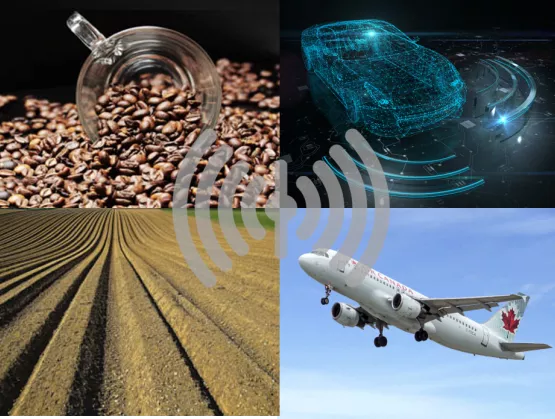
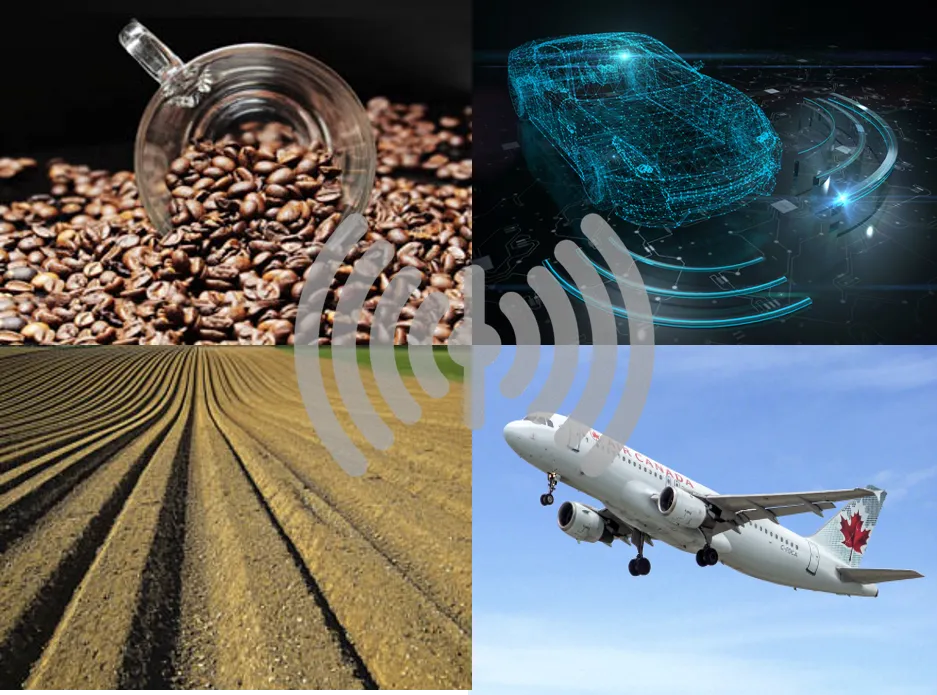
Part of 1 of 2-part series on MSEC 2019 highlights. Read Part 2. MEMS and sensors are proliferating across consumer, automotive, biomedical/healthcare, robotics, industrial and agriculture applications to harvest sensory data in a hyper-connected world and meet demand from consumers and organizations alike as they clamor for more intelligence in electronics.Take the ubiquitous iPhone. Shipped in 2007, Apple’s first iPhone sported five sensors. By contrast, the most feature-packed smartphones will embed up to 20 sensors by 2021, according to Yole Développement’s Jérôme Azémar. He estimates that the devices will feature four MEMS microphones, four CMOS image sensors (CIS), a RGB color sensor, a laser rangefinder, an infrared sensor, a gas sensor, a heart rate monitor and a fingerprint sensor, not to mention the MEMS inertial sensors that device users have come to know and trust.The MEMS market is expected to reach $18.5 billion in 2024 [1], up a whopping 60 percent from $11.6 billion in 2018, according to Azémar, who presented at MEMS Sensors Industry Group’s 15th annual MEMS Sensors Executive Congress (MSEC) in late October in Coronado, Calif. Add other types of sensors to the mix – CIS, environmental sensors, LiDARs, radars, ultrasonics, and fingerprint sensors – and the market will mushroom to $93 billion by 2024, said Azémar.Since MEMS Sensors Industry Group (MSIG) joined SEMI as a Strategic Association Partner three years ago, SEMI has expanded its MEMS and sensors programs to Europe and Asia while continuing to grow its U.S. conferences. “SEMI is continually investing in MEMS and sensors innovation across the supply chain,” said Dave Anderson, president of SEMI Americas and host of MSEC. “For example, MSIG is contributing to the development of the Heterogeneous Integration Roadmap, an initiative designed to drive heterogeneous integration technology development and accelerate electronics innovation. The roadmap spans device design, test and fabrication, ecosystem development, R D, equipment and materials. “At MSEC, executives and other speakers explored how AI and blockchain are remaking the food supply chain, air transportation and other sectors as MEMS and sensors improve the quality of our lives,” said Anderson.Sensing at the EdgeThe concept of artificial intelligence (AI), that a machine can harness intelligence that rivals or outperforms humans – and act without human intervention – has been a feature of the human imagination since at least the 1968 film 2001: A Space Odyssey. MEMS and sensors facilitate intelligence in a wide range of electronics such as smartphones, healthcare wearables, robots, industrial predictive maintenance systems, and cars. AI is sure to augment that functionality.MEMS and sensors are now in their third wave of evolution, a focus on edge AI, Bosch Sensortec CEO and General Manager Stefan Finkbeiner told MSEC attendees. For its part, Bosch is working to add AI to MEMS devices. The first wave integrated software with MEMS sensors, and the second, sensor fusion, enabled designers to allocate performance and power strategically to tune MEMS for resource-constrained devices. The third wave is “an active-learning phase in which MEMS facilitates real-time learning at the edge to promote greater personalization, environmental feedback, privacy of user data and improved battery life,” said Finkbeiner.Small sensor nodes with edge AI exemplify third-wave applications. Integrating low-power environmental sensors (e.g., gas, temperature, pressure, humidity and air-flow sensors), the nodes could be deployed in fire-prone forests to assess fire risk and support early detection. Access to this real-time environmental information could prove invaluable to residents and public-safety personnel alike.Google takes another tack, applying machine learning to resource-constrained devices, said Nick Kreeger, a senior software engineer at the Internet giant. The company’s Google Brain creates machine learning models that can run on inexpensive, low-power microcontrollers using Google’s TensorFlow Lite, an open-source machine learning tool that’s been deployed on a multitude of mobile devices. Inferencing is done at the device’s edge, rather than transmitted to the cloud.Meeting the power constraints of battery-powered sensing devices is another matter that starts with minimizing energy and data waste. “Deep learning is compute-bound and runs well on existing microcontrollers,” Kreeger said. “Because it’s all arithmetic, it’s low-power compared to storage access.”Already Google has worked with Plant Village, a research unit at Penn State University, and the International Institute of Tropical Agriculture (IITA) to help farmers improve food production by using machine learning and cheap sensors to spot and manage planet diseases in developing countries. And that production chain is in dire need of a boost, according to Rajendra Rao, general manager of IBM Food Trust, an enterprise-class blockchain solution.“We are on the cusp of complete failure of the food system,” Rao said. “One out of 10 people gets sick each year from foodborne illness, 420,000 die from this annually, 80 percent of companies in the food supply chain have not digitized, one-third of all fresh food in the US is thrown away, and one in five seafood samples worldwide is mislabeled.”IBM Food Trust’s work with Sucafina, which manages a global green coffee supply chain, shows how sensors can trace food from the farm to the processing plant to the consumer. With the IBM Food Trust platform, Sucafina can track the origin of the beans used in a cup of coffee – a competitive differentiator to coffee drinkers eager to support fair-trade coffee roasters.ripe.io, one of Forbes’ 25 most innovative AgTech startups, is also tackling the challenges and complexities of the food supply chain.“Our secure blockchain platform creates a digital twin of food items, transparently aggregating foods’ journey in real-time, to provide a harmonized trustworthy platform for multiple stakeholders,” said Rachel Gabato, the company’s COO. The ripe.io blockchain-based platform collects data from various sensors – temperature, pressure, light, humidity and inertial MEMS sensors. Growers, distributors and end customers including sweetgreen – a U.S. restaurant chain that depends on fresh produce – use the information to trace the origin and quality of food.MSEC 2020Mark your calendar for next year’s MSEC, October 12-14, at Coronado Island Marriott Resort Spa in Coronado, Calif. Get updates from MSIG on MSEC and other upcoming events including MSTC 2020.Stay in Touch with MSIGMEMS Sensors Industry Group (MSIG), a SEMI Strategic Association Partner, is the industry association representing the global MEMS and sensors supply chain. To learn how MSIG enables professionals in the MEMS and sensors industry to innovate, address common challenges and accelerate business results, visit us today.Connect with MSIG on Twitter and LinkedIn. Subscribe to SEMI Blog: Technology and Trends.[1] Source: Status of the MEMS Industry report, Yole Développement, 2019Maria Vetrano is a public relations consultant at SEMI.
Read More