downloadGroupGroupnoun_press release_995423_000000 copyGroupnoun_Feed_96767_000000Group 19noun_pictures_1817522_000000Member company iconResource item iconStore item iconGroup 19Group 19noun_Photo_2085192_000000 Copynoun_presentation_2096081_000000Group 19Group Copy 7noun_webinar_692730_000000Path
Skip to main content
Default Banner Image

MEMS manufacturing

Now, more than ever, semiconductor companies are relying on their human resources departments to ensure employee safety, support facility access and hygiene measures, cope with staffing demands and incorporate the rapidly evolving guidelines from Centers for Disease Control and Prevention (CDC) and the local state and city mandates. SEMI spoke with Crystal Reich, HR manager at X-FAB Texas, about her participation in the Fab Owners Alliance (FOA) human resources group and the value of collaborating with industry peers on a broad spectrum of topics: from focusing on specific areas such as ensuring employee safety and managing the workforce during a pandemic, to addressing broader organizational challenges such as benchmarking activities and identifying compensation and staffing best practices. SEMI: How did you learn about the FOA human resources group? Reich: I have been part of the FOA HR group since its inception in 2012. Lloyd Whetzel, the CEO at X-FAB Texas, has been very involved with the FOA for several years. When this group was being formed, he let me know about it. I came to the first meeting and have been a part of it ever since. SEMI: What does your participation in the FOA human resources group allow you and your company to do differently? Reich: I am also involved with the Society for Human Resource Management (SHRM), but the FOA HR group provides an excellent opportunity for semiconductor industry HR professionals to collaborate. The group not only covers topics that are specific to the semiconductor industry but also discusses broader topics related to preserving employee well-being during unprecedented challenging times, managing negative emotions, establishing appropriate political expression policies, and creating safe spaces for dialogue. Also, the benchmarking has been fantastic, especially from a compensation and staffing standpoint. It allows us to identify best-in-class recruitment strategies, determine any shortfalls and use this information to improve employee onboarding and development. In addition to discussing these types of issues and trends, we compare and benchmark other HR issues such as policy deployment and legislative trends with colleagues in the industry. SEMI: What are some of the key topics and activities that the FOA HR group has helped you focus on? Reich: X-FAB has been involved in a variety of activities at SEMI. Through the SEMI High Tech U program, we have been able to help college-bound high school students in our community access STEM curriculum and explore careers in technology. We have devised more robust military outreach strategies with the help of the Veterans Program at SEMI, allowing us to recruit and retain excellent technicians from the military. Additionally, benchmarking activities within the FOA HR group have helped us improve our talent acquisition process - especially for positions which are challenging to fill. SEMI: The pandemic brought many significant and unprecedented challenges that affected business continuity. How did your company's participation in the FOA help you navigate these changes? Reich: The FOA has been a great help in addressing the challenges of the global pandemic across several operational collaborative teams. In the early days of the pandemic, as employees moved to remote work, FOA organized a forum that allowed members to share how they dealt with this transition. Constantly changing guidelines and protocols meant that FOA members leaned on each other more than ever to share best practices and lessons from new safety process implementations. FOA offered survey and area-specific team activities, cross-functional operational sessions, and round table discussions at its 2020 Q4 meeting, where members exchanged ideas on how business processes changed during this period and shared what they were doing to ensure business continuity. This provided another excellent opportunity for FOA members to benchmark best practices within the semiconductor industry. SEMI: Would you recommend your peers to join the FOA HR group? Reich: I would highly recommend HR colleagues in the semiconductor industry join this collaborative group. It is a great platform to share ideas, learn from each other, and benchmark with other colleagues in the same industry. The FOA HR Metrics survey is a comprehensive survey covering several different areas within the HR discipline such as compensation, learning and development, tool training, corporate social responsibility, and many others. True to the nature of the FOA, the survey is a result of the collaboration between several HR professionals from Device Maker member companies. Please contact Shilpa Talwalkar at [email protected] if you would like to participate. X-FAB is a member of the SEMI Fab Owners Alliance, an international group of semiconductor and MEMS fab managers and industry suppliers that meet regularly to solve common non-competitive manufacturing issues and improve their business results. Nishita Rao is senior product marketing manager at SEMI.
Read More
As the world confronts the health crisis of a generation in the form of the fast-spreading coronavirus, the microelectronics industry remains firmly in the spotlight. Aware of the central role they play in the fight against the COVID-19 pandemic, a growing number of companies are joining efforts to combat the virus by developing technologies for coronavirus detection, contact tracing and predicting its spread.SkyWater Technology, a U.S.-based foundry and prestigious member of SEMI-Fab Owners Alliance, is on the front lines in supplying an essential microfluidic MEMS component used in COVID-19 testing and research to identify mutations of the virus. This component is instrumental for the sequencing kit in the DNBSEQ-T7 system, an ultra-high-throughput sequencing system manufactured by MGI, a subsidiary of global genomics leader BGI Group.SEMI had the pleasure to catch up with Thomas Sonderman, president of SkyWater Technology, to talk about the company’s valuable contribution to the detection of COVID-19. He also gave us a peek into its business continuity plan and the safety measures it is taking to resiliently run a 24/7 chip-making operation amid these unprecedented times.SEMI: Tell us about SkyWater's contribution to the detection of COVID-19 and your partnership with MGI?Sonderman: SkyWater has been working with genomics sequencing leader MGI for several years to supply a critical component used in MGI's DNBSEQ-T7, an ultra-high-throughput sequencing system. The component we supply to MGI is a microfluidic MEMS device that uses microscopic channels to help perform very small-scale chemical reactions in the genetic sequencing platform. MGI's DNBSEQ-T7 identifies and monitors possible mutations of viruses, which is important for epidemiologists when tracking how viral illnesses such as COVID-19 spread through human populations.MGI’s sequencing system is used in parallel with its sister company BGI Genomics’ RT-PCR test kit, which is typically used more broadly as an initial screening agent due to its ability to return virus detection results within a matter of hours. Sequencing with the DNBSEQ-T7 can be used to confirm results of the RT-PCR tests that have indicated positive for the presence of the virus and then to perform a full DNA sequence of these positive specimens, which can help track mutations in the virus.DNBSEQ-T7 is important in the fight against COVID-19 as it tracks how the virus changes and enables scientists to look at its genetic sequence like a fingerprint at a crime scene. Their focus is on finding sudden changes in the sequence over time — a mutation. When they analyze available genomes from infected patients in several countries, they can see if inevitable virus mutations are causing associated illnesses that may have different incubation periods, contagiousness or deadliness – all critical dynamics that must be tracked by public health officials during an outbreak such as this.SEMI: What was the path that brought your company to the forefront of this testing?Sonderman: MGI’s DNBSEQ-T7 sequencing system and BGI’s RT-PCR rapid testing kit were among the first officially approved products by the National Medical Products Administration (NMPA – essentially China’s version of the FDA) – to fight the outbreak. MGI’s manufacturing plant, based in Wuhan, was able to fast-track its response, producing and delivering test kits very quickly to many hospitals and disease control centers in Wuhan and other cities in China.As concerns continue to rise about COVID-19 and we strive to flatten the curve, the pressure is on to enable even faster, more accessible testing. On March 27th, BGI’s RT-PCR virus detection test received FDA Emergency Use Authorization (EUA) for use in the U.S. The test works in just three hours. MGI’s DNBSEQ™ T7 sequencers are being used in China and other countries now and will be available in the U.S. starting in Q3. Products from BGI/MGI and affiliates are currently being distributed to more than 70 countries and regions worldwide to assist the global efforts in fighting the pandemic.SkyWater is certified to the ISO 13485 Quality Standard for Medical Devices to support the design, development and fabrication of DNA sequencing and other biochip applications in a wide range of emerging biomedical market segments. This allows us to provide this type of cutting-edge technology solution that is making an important contribution to coronavirus detection.SEMI: Given the challenges COVID-19 has placed on workforce and supply chain, what steps are being taken by your company to mitigate disruptions? Sonderman: SkyWater has been identified as Essential Critical Infrastructure per the U.S. Dept. of Homeland Security in several categories including Healthcare/Public Health Sector, Defense Industrial Base Sector, Information Technology Sector, and Critical Manufacturing Sector. To maintain continuity of operations, we contacted our close market partners as we need their support to continue supply of their starting and manufacturing support materials necessary for us to maintain operations. We asked these organizations to make every reasonable effort to fulfill our order requirements while also following recommended protective measures and are actively monitoring these relationships for possible developments that could be disruptive. By means of their partnership with us, these suppliers, too, are a part of the Essential Critical Infrastructure. Currently, there has been no change in wafer operations or fab utilization during this time of COVID-19.In addition to our sustained operations, our fab expansion is well underway as construction continues. The over 60,000-square-foot facility expansion adds clean room area and infrastructure to support the Department of Defense’s investment in SkyWater to broaden our production capabilities for Strategic Rad-Hard electronics and other complementary technologies. A fab technician in SkyWater’s SkyTech Center, an expansion of its operations to enhance advanced processing capabilities at its U.S.-based and U.S.-owned manufacturing facility. SEMI: What advice would you give to other companies seeking to keep their operations running amid COVID-19?Sonderman: First and foremost, creating a Pandemic Response Team (PRT) was critical for us in planning how to operate and communicate during this crisis. Our PRT updates our leadership team multiple times per week to enact procedures and ensure alignment throughout the organization. We follow CDC alerts and other local, state, and federal government guidelines on how to deal with home and work environments while communicating with all company stakeholders. This is important in providing reassurance of the company’s continued business and details on any potential change in operations.Increasing the frequency of communication with the organization’s supply chain to anticipate any disruptions in service is vital. Also, keeping in contact with customers is imperative to take the pulse of their continued operations during COVID-19. We recommend being flexible and pursuing new paradigms in getting business accomplished, such as telecommuting. In addition, if a company is deemed an essential business, we suggest drafting a letter in advance for employees should they need to prove why they are in transit (to and from work) if transportation becomes severely limited and monitored.Communicating with employees on how operations are changing is crucial. Ensure there is an intranet site that employees can access remotely via laptops or mobile devices that allows for ongoing updates and a way to communicate to all employees as things continue to evolve.We also put several safety measures in place, including: A screening process was set up to take the temperature of everyone entering the building. Site access is restricted for vendors, contractors, customers and other visitors as a default policy. Employee travel is restricted. All employees who can do their jobs from home can stay home. For essential on-site workers, we allow flexible schedules so people can move shifts if needed. Shifts have been staggered so people are not congested at lockers, gowning areas and other places. Physical distancing is required everywhere inside and outside the building. Video conferencing is being used even for participants inside the building. The number of people allowed in conference rooms is limited to comply with physical distancing; some chairs were removed and maximum occupancy signs were posted. Hand-sanitizing stations have been set up. We are providing employees access to masks, gloves and cleaning wipes. Safety measures are posted around the building and cleaning frequency of hard surfaces has been ramped significantly. These safety measures are among several other modifications we’ve made to daily operating procedures. SEMI: Please share some examples of how the SEMI Fab Owners Alliance (FOA) has helped support your business?Sonderman: Our Pandemic Response Team has leveraged the FOA recently by participating in its webinars on COVID-19 to ensure we are using industry best practices. We also use FOA surveys to provide and request information pertaining to COVID-19 practices.We have implemented building entrance protocols (i.e. temperature scanning, restricting access for non-employees) and expanded building cleaning procedures, including increasing the cleaning frequency of specific high-touch items. We have adjusted shift start times to minimize the number of personnel in the change room at the same time and we store each fab worker’s hood in the sleeve of the suit. These last two items resulted from a conversation with another FOA member.Outside of the pandemic, we have leveraged the FOA by participating in its industry-wide maintenance best practices and learning group that meets monthly on maintenance needs, issues and concerns within the industry. This allows us to learn from each other within the semiconductor industry. We have also leveraged this group in sourcing parts and/or parts sharing on tools no longer supported by OEMs.We greatly value the type of cross-organizational sharing and learning the FOA facilitates. It has been beneficial in a number of ways over the years. At this time, the FOA is especially useful when best practices are crucial to enable us and our peers to minimize disruptions, operate with the utmost safety, and quickly adapt to this new environment.SkyWater is a member of the SEMI Fab Owners Alliance, an international group of semiconductor and MEMS fab managers and industry suppliers that meets regularly to solve common non-competitive manufacturing issues and improve their business results. Nishita Rao is a product marketing manager at SEMI.
Read More
Sandia National Laboratories just finished updating equipment in its microelectronics fab, marking the completion of the first phase of a 3-year fab upgrade program. The transition from 6-inch to 8-inch wafer sizes will align the Department of Energy national lab with industry standards to ensure easier access to tools, spare parts and raw materials.Sandia is a prestigious member of the SEMI Fab Owners Alliance (SEMI FOA), an international group of semiconductor and MEMS fab managers and industry suppliers that meet regularly to solve common non-competitive manufacturing issues and improve their business results. SEMI spoke with Michael Holmes, senior manager of microfabrication at Sandia, about its approach to revitalizing the fab while developing new production processes and technologies.SEMI: What were the main challenges in moving into production with 8-inch wafers?Holmes: The goal of the conversion is to reestablish our 6-inch production processes on 8-inch wafers including our radiation hardened 350nm CMOS and MEMS technologies. This requires tuning hundreds of interrelated parameters to get the same end result as before but with different equipment and at a larger scale. In addition, during the conversion we are developing a new 180nm radiation hardened CMOS production process and re-establishing research work on 8” in our silicon photonics and ion trap technologies. Modifications to the facility have also been required including raising the ceiling to install the new implanter and relocating our gowning area to facilitate installation of new CMP tools. In addition to converting our Silicon fabrication facility, we are also converting select equipment in our compound semiconductor facility. We are one large team working toward these goals.SEMI: Were there any roadblocks in sustaining production of the 6-inch wafers while planning and implementing processes for the upgrade to 8-inch?Holmes: Six years of planning ensured the conversion would not affect production of components needed for national defense. This planning window was required to ensure production commitments were completed in advance of conversion start in August of 2018 and return to production for commitments starting in July 2021. This period provides time to complete the hardware conversion and steps review and requalify the production line to ensure products made using the new equipment are identical to ones produced by the old equipment. The hardware conversion phase completed on schedule and the fabrication of prototype and research components on 8-inch started in November of 2018.SEMI: Can you shed some light on the development of gold antennas that promise to improve the thermal infrared radiation capabilities in systems?Holmes: Sandia developed a new infrared detector design that breaks away from relying on thick layers of detector material and instead uses a subwavelength nanoantenna – a patterned array of gold square or cross shapes – to concentrate light on a thinner layer of material. This design uses just a fraction of a micron of detector material, whereas traditional thermal infrared detectors have a thickness of 5 to 10 microns. The nanoantenna-enhanced design increases the amount of an infrared radiation a detector can see while also reducing image distortion caused by background noise. It also allows for the invention of new detector concepts.SEMI: Sandia is known for producing high-reliability components. Several SEMI FOA members have customers in the automotive domain, where reliability is critical. Do you have any advice for them on their path to high-reliability, zero-defect systems?Holmes: High-reliability microdevices at Sandia’s MESA facility are paramount. A structured quality program is rigorously realized in each facet of the production process. Our processes and design rules are constructed around reliability, and we extensively leverage in-line metrology and electrical test to validate devices throughout production. SEMI: Are there any examples of how the FOA peer-to-peer dialogue and knowledge sharing helped in your upgrade from 6-inch to 8-inch?Holmes: Sandia is new to the FOA. Our initial interactions have been very valuable, and members have shared insights into metrics and process improvements that will benefit MESA moving forward. Relative to the 6-inch to 8-inch conversion, as part of our planning process, we did engage other foundries within the FOA to solicit feedback and lessons learned.The mission of the Fab Owners Alliance is to provide value to the fab management and operations community through collaborative platforms for device makers and solution providers.Nishita Rao is marketing manager for technology communities at SEMI.
Read More
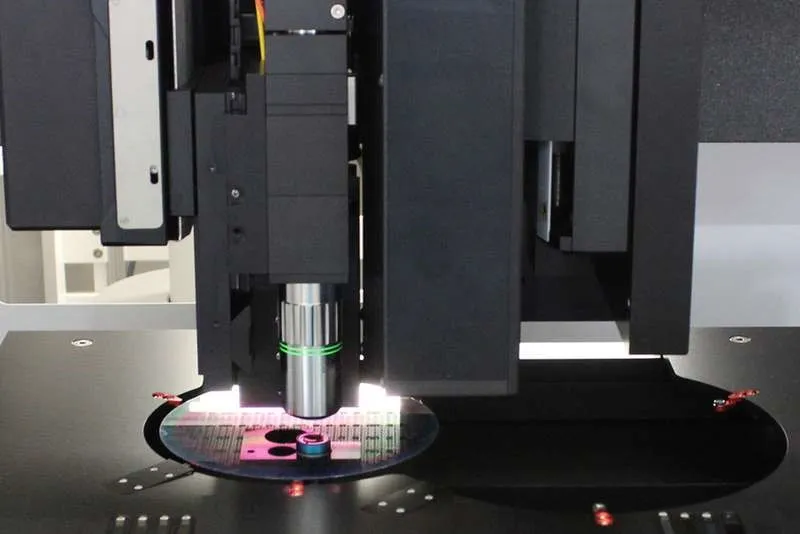
SEMI spoke with Thomas Fries, founder and CEO of FRT GmbH, about how hybrid metrology is shaping multi-sensor metrology tools to enhance measurement precision as the industry moves away from a single-sensor approach.Fries offered his views ahead of the SEMI MEMS Imaging Sensors Summit, 25 to 27 September 2019 in Grenoble, France. Join us at the event to meet experts from FRT Metrology and many other MEMS, imaging and sensors companies. Registration is open. SEMI: Metrology in front-end used to be straightforward. But then, as the number of tasks to be implemented increased, we moved to a multi-sensors approach. What drove this transition?Fries: I believe it´s more about software than about sensors. But of course the basis is the hardware. So, most metrology tools were designed around a specific sensor, e.g. a white light interferometer.A rigid frame, wafer fixtures, scanning tables etc. were then added to develop a complete system. In manufacturing more machinery was added, like handling systems, cleanroom equipment and more sensors, mainly for additive functions such as reading IDs or measuring temperature. The center was still the one and only sensor, being pimped more and more by some hardware features and a lot of software.SEMI: How are sensors and software shaping the way metrology is applied today?Fries: Today a huge number of optical sensors are available to provide various measurement options. But sometimes there are only very slight differences from one sensor to the other. A tiny variation may determine whether we solve a problem or end up fishing in troubled waters.And of course using different machines with those sensors requires high budgets for capital investment, used floor space, measuring time, etc. A multi-sensor platform solves all these problems. But again, it is the software that makes the real difference.SEMI: What lead to those advancements in metrology? What problems did they set out to solve?Fries: Metrology has been evolving ever since the measurement standards were established. The first challenge was to create a flexible mechanical platform that was also reliable and stable. All components were designed to be integrated into one system, mechanically, electrically and of course in the software.This level of integration requires not only an appropriate user interface, but also data formats and evaluation algorithms that leverage multi-sensor hardware. Today every metrology tool in the fab is justified by the application, not by specific sensors or specs. Of course the application leads to a set of specs, but the solution for the metrology task is realized within the software.New developments in metrology combine expertise in system design, physical knowledge in metrology and materials, mechanical engineering and also mathematical and software skills.The last step was the implementation of hybrid metrology functionality into a multi-sensor system that opens totally new doors in metrology. Before multi-sensors development, quite a few hitches could not be properly solved. SEMI: This is especially true when we consider applications in advanced packaging and MEMS manufacturing. What is in your opinion the main challenge?Fries: Specifically, in MEMS and advanced packaging we face multiple metrology challenges, as various processes run in one step and conditions on the wafer may vary quite often. In this case, a high degree of flexibility, up to the option to upgrade the metrology tool at any time or place, is a priceless advantage. Besides, cost effects for footprint, throughput and investment play a key role.A central task for nearly every customer application is to combine global measurements (complete wafer) and local measurements (per die) within one recipe. This is a perfect case for a multi-sensor platform. Measuring step heights and film thickness in one take is also an everyday routine. Combining those characteristics to measure hidden structures (hybrid metrology) is unique.SEMI: How will hybrid metrology enhance measurement precision and where do you expect the multi-sensor approach to be more applicable?Fries: The first advantage is the ability to measure properties that you cannot access directly. On top of that, all the previously mentioned features such as facing multiple metrology tasks, the combination of complete wafer and per die measurement are playing key roles. The precision of specific measuring tasks can be optimized by calibrating sensors against each other or combining results to get rid of noise or artefacts.MEMS and advanced packaging are natural playgrounds for hybrid metrology. But already today we see applications in high volume manufacturing in the 300mm fabs. As structures on wafers shrink, wafers are getting thinner and the whole process is becoming more and more complex. The classic one-sensor metrology tool is running out of gas. SEMI: What are your expectations regarding the summit in Grenoble, and for the future of the MEMS Sensors technology?Fries: FRT has always been very strong in MEMS and sensors and we have attended and exhibited at the SEMI MEMS Imaging Sensors Summit from the very beginning. The summit is always a very good meeting point for the community, and a perfect training session that gives participants extended updates in all fields. And of course, it grows our network and gives us the opportunity to show our latest products and applications.If you really want to know how the future of MEMS and sensors will look like, join the summit and don´t miss the chance to pass by the exhibition to meet FRT and many other industry leaders.Dr. Thomas Fries lives with his family close to Cologne. He is engaged in a variety of activities: as technical advisor to various ministries, supervisory board of PlanOptik AG, board and advisory board of IVAM, board member of COPT.NRW e. V., just to name a few. FRT supports many social projects as well as kindergartens and schools. Motorcycles and cars are still a great passion alongside his family.Serena Brischetto is senior marketing and communications manager at SEMI Europe.
Read More
According to market research and strategy consulting firm Yole Développement (Yole), the total market size of MEMS, sensors and actuators will double from $48 billion in 2018 to $93 billion in 2024.[i] The consumer market will continue to drive volume, with applications such as smartphones making up for in volume what they lack in average selling price (ASP). Stronger demand in automotive, biomedical/health, industrial, and voice-first applications (such as smart speakers) will support this upward trajectory. With so much growth ahead of us, how will the design and manufacture of MEMS keep pace with industry demand for higher levels of innovation and integration, lower cost and lower power, smaller footprints, and faster design cycles — all while meeting acceptable price points?We turned to a handful of MEMS manufacturing experts from SEMI-MSIG who will join us at SEMICON West 2019, July 9-11 at the Moscone Center in San Francisco, to explore the complexities of keeping pace with market demand for MEMS over the next decade.Address the Design GapMentor GM, ICDS Division Greg Lebsack and SoftMEMS President Mary Ann Maher see tremendous progress in the manufacturing supply chain for MEMS. At the same time, they acknowledge the significant gap that still exists in design capability for creating the billions of interconnected sensors required for future applications. Greg and Mary Ann will dive into the standards, ecosystem requirements and collaborative design solutions that will allow the micro-sensors industry to meet demand for next-generation wearables, Internet of Things (IoT) products and medical devices.Get Collaborative with Greg and Mary Ann: Addressing the Design Gap to Enable Next Generation Sensor-Based Products, SEMICON West, TechTALKS South, Thursday, July 11, 2019, 10:35-11:00 a.m. Register today.Get to a Really Big NumberFrom thousands of sensors and actuators in a single airplane to hundreds in a single car or a piece of factory equipment to the twenty-plus that ship in each of the hundreds of millions of the world’s smartphones, we aren’t even close to reaching the saturation point for these intelligent devices. SPTS Technologies EVP GM David Butler isn’t living on the Spaceship Enterprise (or the Millenium Falcon, come to think of it) when he says that we are going to get to a trillion sensors. It is going to happen. The questions are: how and when?Connect with David: Enabling the Age of a Trillion Sensors, SEMICON West, TechTALKS South, Thursday, July 11, 2019, 11:00-11:25 a.m. Register today.Shift to Automotive-GradeDemand for optical sensing technologies such as LIDAR is shifting sensor manufacturing requirements from consumer- to automotive-grade, with its enhanced lifetimes, temperature cycling and higher performance specifications. To meet demand, manufacturers are turning to wafer-level processing, since it complies with the hermetic sealing and dew-point control required for the more rigorous automotive-grade applications. EV Group Business Development Director Thomas Uhrmann, Ph.D., will provide an overview of the steps for manufacturing optical elements, including integration with CMOS circuitry, as he offers a window into the future of automotive packaging for sensors.Tune in with Thomas: Future Manufacturing Requirements for Automotive and Photonics Sensing, SEMICON West, TechTALKS South, Thursday, July 11, 2019, 11:25-11:50 a.m. Register today. Measure Twice, Cut OnceFaster time-to-market, improved device yield, and greater productivity in high-volume manufacturing are increasingly critical requirements for MEMS manufacturers. When a single manufacturing error can cost hundreds of thousands if not a million or more dollars — as well as months of development time — designers can save both time and cost by employing an integrated approach to MEMS design. Lam Research Sr. Director of Strategic Marketing David Haynes will explain how simulation, verification and process modeling can address MEMS-specific engineering challenges such as multi-physics interactions, process variations, MEMS + IC integration, and MEMS + package interaction. Using the right tools before committing to actual fabrication can make or break a project.Get Conceptual (and Practical) with David: Enabling Better MEMS from Concept to High-Volume Production, SEMICON West, TechTALKS South, Thursday, July 11, 2019, 11:50 a.m.-12:15 p.m. Register today.Navigate a Dynamic Foundry LandscapeWe’re still living in a one product-one process world when it comes to MEMS manufacturing. This makes bringing a new device to market both time-consuming and expensive. These challenges aside, the functional capabilities of MEMS, combined with small-footprint and low-power options, have made MEMS increasingly popular. How are market dynamics in MEMS manufacturing evolving to accommodate both demand for high-volume, lower-cost products such as MEMS microphones as well as high-value, lower-volume products such as biomedical devices, IoT products and industrial sensors? Rogue Valley Microdevices Founder CEO Jessica Gomez will explain how foundry consolidation through acquisition, collaboration with other ecosystem players, and specialization in vertical markets such as biomedical or optical are some of the approaches that are transforming the MEMS foundry landscape.Join the Evolution with Jessica: Consolidation, Collaboration, Specialization: How Will MEMS Fabs Manage Changing Dynamics, TechTALKS Stage South, Thursday, July 11, 2019, 12:15-12:40 p.m. Register today.i“Status of the MEMS Industry report,” Yole Développement (Yole), 2019 Edition.Maria Vetrano is a public relations consultant at SEMI.
Read More
Imagine a world where there are chips in about everything we touch on a daily basis. It is not hard to do with semiconductors already at the core of many leading-edge electronic devices. These sophisticated chips are hidden from sight, but their functions are vitally significant to our daily lives.Manufactured in multibillion-dollar facilities, the production process of chips is one of the riskiest, costliest, and most technically complex feats in business. Consider the difficulties of managing contaminants during device manufacturing: A single speck of dust on a lens could cause the entire output of the plant to be scrapped.For years, these exotic fabrication facilities, called fabs, have been packing more efficiency into ever smaller chips. As new technologies continue to emerge, chip manufacturers face constant pressure to continually refine and improve their operations to meet the challenge of rising device performance and yield goals. Fab managers must optimize tool performance, improve fabrication techniques, safely handle toxic materials and design better integration flows. Layer on top of those requirements customer demand for greater innovation and quality of service, it can be difficult for manufacturers to handle everything on their own while consistently meeting necessary requirements.Align for CollaborationWith the help of the Fab Owners Alliance (FOA), a SEMI technology community, manufacturers and their suppliers don’t have to travel this road alone. Membership in this international group allows semiconductor and MEMS fab managers and industry suppliers to come together to solve common non-competitive manufacturing issues and improve business results.Founded in 2004, the group consists of 25+ device manufacturers (DMs) with over 120 semiconductor manufacturing facilities and 60+ solution providers (SPs) who supply equipment and services. Through quarterly meetings, study teams, benchmarking surveys, case studies and online forums, FOA successfully provides a collaborative, non-competitive platform to the fab management and operations community. FOA members enjoying an engaging discussion and networking event during the recent Q1 2019 Collaborative Forum at the Double Tree Resort in Scottsdale, Arizona One of the most popular FOA platforms is the annual Collaborative Forum early in the year. The goal is to bring together DMs and SPs from around the world for an open dialogue under one roof. For two days, they share success stories and discuss issues facing their fabs and the industry in general and develop collective strategies to address them.The success stories are particularly engaging as they accentuate the value and benefits of FOA membership. Presented as case studies, these stories outline how the DMs and SPs work together to improve fab efficiency and increase yields. Often, the ideas for the case studies are conceived during networking events, fab tours and programs organized by the FOA.The case studies shared at the 2019 Collaborative Forum, held at the Double Tree Resort in Scottsdale, Arizona, February 13-14, 2019, illustrate the power of collaboration within the FOA. Following are a few examples.Scheduling System Implementation Broadcom was facing a steep ramp when it decided to engage with FPS, an INFICON product line. In addition, the manual decision making, and limited real-time visibility of factory data was negatively impacting their production in its 150mm and 200mm environment. By deploying an integrated Smart Manufacturing software solution and its digital twin, FPS was able to retrofit Broadcom’s manual factory with automated decision-making capabilities.This solution offered many benefits. Constraint tool utilization increased by more than 15 percent. The automated WIP management system also eliminated many manual wafer handling issues such as lost lots, WIP storage constraints, building transfers, and time spent looking for lots. Pushing Tool Performance BoundariesAs tools in the 200mm space are hard to find, GLOBALFOUNDRIES is always looking to squeeze every wafer out of its existing resources. To drive continuous improvement and increase equipment throughput, GLOBALFOUNDRIES leveraged MAX’s knowledge with Machine Rate Models. Together, they were able to employ a modelling technique that helped them model key toolsets and develop actions to increase intrinsic machine rate performance.Based on this knowledge, 10 capacity constraints were selected, and speed models were developed for all of them. This win-win collaboration allowed GLOBALFOUNDRIES to find some real opportunities that translated into CAPEX and cost savings. On average, the companies identified a 12 percent potential improvement opportunity per toolset and created engineering task force teams to prioritize and drive the improvements.Simplifying the Chamber Matching Process Using Trace AnalyticsThe collaboration between NXP and BISTel resulted from a shared vision of achieving Smart Manufacturing using analytic solutions enabled by artificial intelligence and other advanced technologies. Chamber matching is critical in identifying process variation to ensure manufacturing quality. Traditional tools like Fault Detection Classification (FDC) often do not provide clear enough insights to pinpoint the issues and require extensive time to collect data from each chamber.Through several use cases, NXP and BISTel successfully illustrated the effectiveness of using a trace analytic solution to quickly and accurately quantify and monitor chamber-to-chamber mismatches as well as changes within a chamber over time. The full trace analyses of all parameters allowed NXP to generate better FDC models to more quickly detect similar issues in the future. In addition, NXP was able to identify the cause of a parametric shift by comparing performance of the same chamber between two different time periods. All in all, the trace analytics solution brought together and analyzed the process data efficiently, thereby reducing analysis time from days to minutes.Eagleview Inspection of SiC and Transparent Wafers X-FAB challenged Microtronic to develop a new capability for its high-throughput recipe-less macro defect inspection systems. Microtronic’s EagleView machine vision macro defect inspection system is well known for its versatility in the semiconductor industry due to its wide deployment as well as its recognition as winner of the 2017 Best of West Award at SEMICON West. But X-FAB’s requirements to inspect and image transparent wafer substrates were novel. After working closely to understand X-FAB’s needs, Microtronic made extensive hardware and software enhancements to enable high-throughput macro inspection of Silicon Carbide (SiC) and other transparent wafer substrates.Get InvolvedThe FOA meetings are held at device manufacturing sites twice a year. The next meeting will be graciously hosted by MACOM in Lowell, Massachusetts, May 22-23, 2019. The DMs and SPs will meet again at SEMICON West at the Moscone Center in San Francisco on July 11, 2019.To attend these meeting and be part of this high-impact group, please email us at [email protected]. For more information about FOA, please visit our website.Nishita Rao is a marketing manager at SEMI.
Read More