downloadGroupGroupnoun_press release_995423_000000 copyGroupnoun_Feed_96767_000000Group 19noun_pictures_1817522_000000Member company iconResource item iconStore item iconGroup 19Group 19noun_Photo_2085192_000000 Copynoun_presentation_2096081_000000Group 19Group Copy 7noun_webinar_692730_000000Path
Skip to main content
Default Banner Image

TDK InvenSense

The air we breathe is precious yet neglected as anthropogenic pollutants continue to pour into the earth’s atmosphere. Still, there’s hope that greenhouse gas emissions – and the human behavior behind them – can be brought under control for the good of the planet with the help of gas sensors that gauge pollutant levels.Of the many air pollutants, some are more detrimental to our health than others. Figure 1 lists the top seven pollutants, their chief sources and health effects. The Air Quality Index is calculated by combining values from particles and four gases (carbon monoxide, ozone, sulfur dioxide, nitrogen dioxide). The good news is that gas sensors are available in the market that can monitor each of those pollutants.Figure 1 – Top seven pollutants and their health effects. Source: EPA Air Sensor Guidebook The challenge is that many gas sensor end users today have little understanding of how to compare the performance characteristics of sensors offered by various vendors. SEMI is working to help end users clear that hurdle. SEMI-MSIG this year created a group within its Device Working Group focused on developing gas sensor standards aimed at growing the market and defining guidelines affecting areas including testing methods, reliability requirements, packaging and communication interfaces. Importantly, the standards will also make it easier for end users to make a clear choice among rival products.The SEMI-MSIG Device Working Group comprises devoted experts from leading gas sensor companies as well as OEMs. We welcome companies involved in deploying gas sensors to join this fast-growing group to improve air quality standards in sectors including residential construction, factory automation, automotive, consumer electronics and healthcare. One potential market is consumer electronics such as smart phones since concerns about air quality is growing among device users.The MEMS Sensors Industry Group (MSIG) Device Working group was formed in early 2019. Its mission is to develop a series of technical specifications, industry standards and best practices for MEMS and Sensor devices and platforms. The goal is to advance the use and expansion of MEMS and sensors worldwide.Table 1 – Top seven pollutants and their health effects. Source: EPA Air Sensor Guidebook In the past, we focused on inertial sensors (See IEEE2700 standard for inertial sensors as an example of an output of this team). In 2020, our focus shifted to gas sensors and we plan to expand our work to include other types of sensors in the near feature. Industry leaders such as Bosch, TDK Invensense, Renesas, Infineon, Analog devices, STMicroelectronics, GE and Intel meet every month to strategize on a series of initiatives.If you’re interested in joining the SEMI-MSIG Device Working Group, please contact Carmelo Sansone, Director of MEMS Sensors Industry Group.The MEMS Sensors Industry Group (MSIG) is a SEMI technology community that enables the MEMS and sensor industry to address common challenges, innovate and accelerate business results.Carmelo Sansone is director of the SEMI-MSIG. He has focused his career on building products and system solutions that have large impact in the marketplace. Sansone launched several sensor processor platforms for low-power applications, including the first microcontrollers with DSP capabilities, the core of today’s portable devices intelligence. Sansone has led the successful integration of the MSIG organization into SEMI by expanding its services and global reach. Carmelo holds a master’s degree in Electronic Engineering with a specialization in Biomedical from the University of Pisa and an MBA from Golden Gate University, San Francisco.
Read More
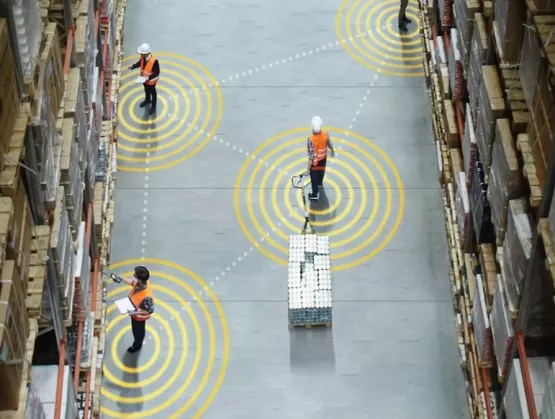
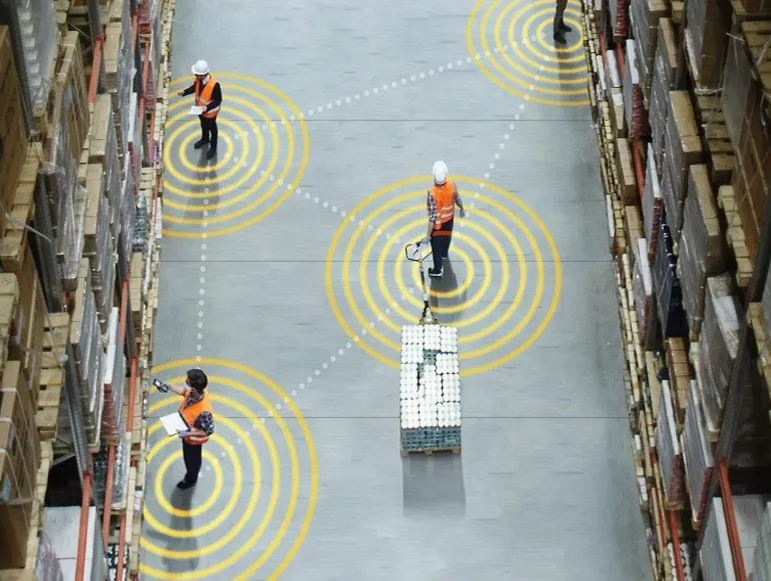
Earlier this year when the novel coronavirus, SARS-CoV-2, began sprinting around the world, public health officials told us that social distancing was the most effective way to slow its spread. We’re now many months into the pandemic, and social distancing, combined with mask-wearing, is still the best way to prevent new cases of the disease.On March 20, 2020, governors on opposite coasts, Gavin Newsom in California and Andrew Cuomo in New York, shut down their states, and other states soon followed. Only essential businesses, such as select retailers – grocery and hardware stores as well as pharmacies, for example – were allowed to remain open. Depending on location, however, it was days or weeks before strict social distancing measures were in place. Tape stuck six feet apart on store floors has helped shoppers keep their distance. But shouldn’t there be a more exact and reliable way to gauge social distances in retail stores, gyms, workplaces and other settings?David Horsley, founder and CTO of Chirp Microsystems, a TDK Group company, believes so, and the company is developing technology that does just that. Horsley will share the details in his keynote A Wearable Social Distancing Solution Based on Ultrasonic Time-of-Flight Sensors October 14 at MSEC 2020, SEMI’s first virtual MEMS Sensors Executive. The event is October 6-8 and 13-15, 2020. Register now for MSEC 2020.I spoke with Horsley to learn more about the sensors.SEMI: What was the inspiration for providing Chirp’s ultrasonic Time-of-Flight (ToF) sensors for social distancing?Horsley: Companies actually started contacting Chirp about six months ago to inquire about social distance tags to measure distance between people. They already knew about us because we’ve been supplying MEMS ultrasonic ToF sensors for virtual reality and robotics for several years, so they knew we could provide the same kind of low-power range-finding accuracy for resource-constrained devices. SEMI: How are your customers using Chirp-based social distance tags?Horsley: They’re designing Chirp’s ultrasonic ToF sensors into wearable tags worn by workers in distribution centers, in factories, and in oil and gas production, to name a few areas. The tags alert workers when they’re closer than two meters from another worker to ensure social distancing. Chirp’s ToF sensors also support contact tracing without recording any personal information, which is a major advantage over contact-tracing applications from companies like Google and Apple. Because those apps use Bluetooth Low Energy (BLE), which is already in your smartphone, the user has to enable location services. This records your GPS location, a privacy concern.BLE is problematic on some other levels as well. It only provides one-meter accuracy while Chirp’s ToF solution for social distancing delivers one-centimeter accuracy. Because BLE is only accurate within one meter, it can’t alert you in real-time that you’ve crossed that two-meter boundary to another person. Imagine you’re in the checkout line at the supermarket. BLE can tell you that other people are in your general vicinity, but it doesn’t have enough resolution to tell you whether the next shopper is two meters away from you or only one-and-a-half meters away. And because it doesn’t use the air as a medium, it registers a lot of false positives. If, for example, you’re separated from a person by a partition or a wall, and you’re within two or three meters of each other, your phone’s social-distance app will register a false positive.SEMI: Are you talking with customers in other environments, such as college campuses and theme parks?Horsley: There’s great deal of potential in those markets. For example, Professor Prabal Dutta’s group at UC Berkeley is working on a system that uses our sensors. His work also made us aware of some of the privacy concerns around contact tracing because universities are much more uneasy about student privacy than some private-sector companies are today. SEMI: What would you like MSEC attendees to take away from your presentation?Horsley: From the beginning, we believed that MEMS ultrasound was very versatile. We expected it to find a home in different types of applications because of its low power, small size and ease of use, particularly since we provide the enabling software that makes it all work. With design wins in four to five vertical markets, we’re experiencing significant marketplace validation. We’re all hoping that COVID-19 will wind down in the first half of 2021. As the focus on social distancing begins to fade, we’re looking forward to building out our customer base in the markets we’re in today as well as gearing up to explore new markets.Chirp Microsystems and TDK InvenSense are longtime members of MEMS Sensors Industry Group® (MSIG), a SEMI technology community that connects the MEMS and sensors supply network in established and emerging markets, enabling members to grow and prosper. Visit us today to learn how MSIG membership can make a difference in your business.David A. Horsley, Ph.D., is co-founder and CTO of Chirp Microsystems Inc., a TDK Group company. Horsley is also a professor of Mechanical and Aerospace Engineering at the University of California, Davis, and is adjunct professor of Mechanical Engineering at the University of California, Berkeley. Since 2004, he has been co-director of the Berkeley Sensor and Actuator Center (BSAC), the National Science Foundation’s Industrial/University Collaborative Research Center (I/UCRC) focused on MEMS research. Horsley is also a recipient of the National Science Foundation’s CAREER Award, and has authored or co-authored over 150 scientific papers and holds over 20 patents.Maria Vetrano is a public relations consultant for MSIG, a SEMI technology community.
Read More
Part 2 of 2-part series on MSEC 2019 highlights. Read Part 1. Neural Networks on ChipTo be sure, low power is king when bringing machine learning to the sensor edge. Battery-powered, always-on sensing devices require it since frequent recharging is the death knell of any electronic product. That’s why semiconductor companies are offering new ways to conserve power.“MEMS sensor suppliers have made significant strides in the power, size and performance of their devices,” said Aspinity CEO Tom Doyle. “Yet these gains deliver only incremental power improvements to the system.”Doyle advocates a new architectural model that uses an analog neuromorphic processor to analyze all sensor data at the start of the signal chain instead of sending it downstream so power-hungry chips such as DSPs can digitize it before analysis.“The technology industry wants to take advantage of the many benefits of always-on sensing applications,” said Doyle. “Before we can reach mass proliferation, however, we need to resolve the power issues that are deal-breakers for some applications. We believe the answer to this challenge is architectural. All the data gathered by always-on sensing systems is analog in nature, yet as soon as it’s captured, it’s digitized immediately for analysis. Determining which data is important up front eliminates the digitization and processing of irrelevant data so that voice-first devices such as smart speakers and wearables/hearables can run for long periods of time without requiring battery recharge.”Syntiant CTO Jeremy Holleman agreed that on-device intelligence is the future.“Did you just fall? Is your heartrate a bit off? Deep learning provides a toolset that yields vastly superior decisions,” said Holleman. “The problem is that deep learning is computationally intensive. The answer is a neural network that performs on-device edge inferencing.”Holleman added that Syntiant’s neural decision processor was recently certified as Amazon Voice Service (AVS)-compliant for wake-word detection, making it easier to design voice control in battery-powered devices such as earbuds and wearables.MSEC Technology Showcase WinnerWith the groundswell of interest in intelligence at the edge, it was no surprise that Cartesiam won top honors among all competitors in the MSEC Technology Showcase for its NanoEdge AI, software that brings AI to the edge of the signal chain, making it easier for designers to create intelligent objects that can learn and understand.“Unlike other AI algorithmic technologies for sensing devices, NanoEdge enables both learning and inference at the edge, providing accurate and adaptive intelligence,” said Cartesiam Managing Director and Co-founder Marc Dupaquier, who accepted the award. “It’s also the only tool of its kind that does not require data scientists on board for implementation, which saves a tremendous amount of money. Our clients can build a machine learning library and embed it into their own code within weeks to realize the same caliber of unsupervised neural network that was once the exclusive domain of AI cloud vendors.”MSIG 2019 Hall of FameAt this year’s conference, MSIG Director Carmelo Sansone recognized two longtime contributors to the commercialization of MEMS and sensors: Peter G. Hartwell, Ph.D., chief technology officer at InvenSense, a TDK group company; and Thomas Kenny, professor and senior associate dean of engineering at Stanford University.Hartwell leads technology strategy and the InvenSense advanced technology research group. He has more than 25 years’ experience commercializing silicon MEMS products, including advanced sensors and actuators, and developing MEMS testing techniques.Kenny’s academic accomplishments include authoring or co-authoring more than 250 scientific papers and holding 50 issued patents. He has also advised more than 50 graduated Ph.D. students from Stanford.MSEC 2020Mark your calendar for next year’s MSEC, October 12-14, at Coronado Island Marriott Resort Spa in Coronado, Calif. Get updates from MSIG on MSEC and other upcoming events including MSTC 2020.Stay in Touch with MSIGMEMS Sensors Industry Group (MSIG), a SEMI Strategic Association Partner, is the industry association representing the global MEMS and sensors supply chain. To learn how MSIG enables professionals in the MEMS and sensors industry to innovate, address common challenges and accelerate business results, visit us today.Connect with MSIG on Twitter and LinkedIn. Subscribe to SEMI Blog: Technology and Trends.Maria Vetrano is a public relations consultant at SEMI.
Read More
Part of 1 of 2-part series on MSEC 2019 highlights. Read Part 2. MEMS and sensors are proliferating across consumer, automotive, biomedical/healthcare, robotics, industrial and agriculture applications to harvest sensory data in a hyper-connected world and meet demand from consumers and organizations alike as they clamor for more intelligence in electronics.Take the ubiquitous iPhone. Shipped in 2007, Apple’s first iPhone sported five sensors. By contrast, the most feature-packed smartphones will embed up to 20 sensors by 2021, according to Yole Développement’s Jérôme Azémar. He estimates that the devices will feature four MEMS microphones, four CMOS image sensors (CIS), a RGB color sensor, a laser rangefinder, an infrared sensor, a gas sensor, a heart rate monitor and a fingerprint sensor, not to mention the MEMS inertial sensors that device users have come to know and trust.The MEMS market is expected to reach $18.5 billion in 2024 [1], up a whopping 60 percent from $11.6 billion in 2018, according to Azémar, who presented at MEMS Sensors Industry Group’s 15th annual MEMS Sensors Executive Congress (MSEC) in late October in Coronado, Calif. Add other types of sensors to the mix – CIS, environmental sensors, LiDARs, radars, ultrasonics, and fingerprint sensors – and the market will mushroom to $93 billion by 2024, said Azémar.Since MEMS Sensors Industry Group (MSIG) joined SEMI as a Strategic Association Partner three years ago, SEMI has expanded its MEMS and sensors programs to Europe and Asia while continuing to grow its U.S. conferences. “SEMI is continually investing in MEMS and sensors innovation across the supply chain,” said Dave Anderson, president of SEMI Americas and host of MSEC. “For example, MSIG is contributing to the development of the Heterogeneous Integration Roadmap, an initiative designed to drive heterogeneous integration technology development and accelerate electronics innovation. The roadmap spans device design, test and fabrication, ecosystem development, R D, equipment and materials. “At MSEC, executives and other speakers explored how AI and blockchain are remaking the food supply chain, air transportation and other sectors as MEMS and sensors improve the quality of our lives,” said Anderson.Sensing at the EdgeThe concept of artificial intelligence (AI), that a machine can harness intelligence that rivals or outperforms humans – and act without human intervention – has been a feature of the human imagination since at least the 1968 film 2001: A Space Odyssey. MEMS and sensors facilitate intelligence in a wide range of electronics such as smartphones, healthcare wearables, robots, industrial predictive maintenance systems, and cars. AI is sure to augment that functionality.MEMS and sensors are now in their third wave of evolution, a focus on edge AI, Bosch Sensortec CEO and General Manager Stefan Finkbeiner told MSEC attendees. For its part, Bosch is working to add AI to MEMS devices. The first wave integrated software with MEMS sensors, and the second, sensor fusion, enabled designers to allocate performance and power strategically to tune MEMS for resource-constrained devices. The third wave is “an active-learning phase in which MEMS facilitates real-time learning at the edge to promote greater personalization, environmental feedback, privacy of user data and improved battery life,” said Finkbeiner.Small sensor nodes with edge AI exemplify third-wave applications. Integrating low-power environmental sensors (e.g., gas, temperature, pressure, humidity and air-flow sensors), the nodes could be deployed in fire-prone forests to assess fire risk and support early detection. Access to this real-time environmental information could prove invaluable to residents and public-safety personnel alike.Google takes another tack, applying machine learning to resource-constrained devices, said Nick Kreeger, a senior software engineer at the Internet giant. The company’s Google Brain creates machine learning models that can run on inexpensive, low-power microcontrollers using Google’s TensorFlow Lite, an open-source machine learning tool that’s been deployed on a multitude of mobile devices. Inferencing is done at the device’s edge, rather than transmitted to the cloud.Meeting the power constraints of battery-powered sensing devices is another matter that starts with minimizing energy and data waste. “Deep learning is compute-bound and runs well on existing microcontrollers,” Kreeger said. “Because it’s all arithmetic, it’s low-power compared to storage access.”Already Google has worked with Plant Village, a research unit at Penn State University, and the International Institute of Tropical Agriculture (IITA) to help farmers improve food production by using machine learning and cheap sensors to spot and manage planet diseases in developing countries. And that production chain is in dire need of a boost, according to Rajendra Rao, general manager of IBM Food Trust, an enterprise-class blockchain solution.“We are on the cusp of complete failure of the food system,” Rao said. “One out of 10 people gets sick each year from foodborne illness, 420,000 die from this annually, 80 percent of companies in the food supply chain have not digitized, one-third of all fresh food in the US is thrown away, and one in five seafood samples worldwide is mislabeled.”IBM Food Trust’s work with Sucafina, which manages a global green coffee supply chain, shows how sensors can trace food from the farm to the processing plant to the consumer. With the IBM Food Trust platform, Sucafina can track the origin of the beans used in a cup of coffee – a competitive differentiator to coffee drinkers eager to support fair-trade coffee roasters.ripe.io, one of Forbes’ 25 most innovative AgTech startups, is also tackling the challenges and complexities of the food supply chain.“Our secure blockchain platform creates a digital twin of food items, transparently aggregating foods’ journey in real-time, to provide a harmonized trustworthy platform for multiple stakeholders,” said Rachel Gabato, the company’s COO. The ripe.io blockchain-based platform collects data from various sensors – temperature, pressure, light, humidity and inertial MEMS sensors. Growers, distributors and end customers including sweetgreen – a U.S. restaurant chain that depends on fresh produce – use the information to trace the origin and quality of food.MSEC 2020Mark your calendar for next year’s MSEC, October 12-14, at Coronado Island Marriott Resort Spa in Coronado, Calif. Get updates from MSIG on MSEC and other upcoming events including MSTC 2020.Stay in Touch with MSIGMEMS Sensors Industry Group (MSIG), a SEMI Strategic Association Partner, is the industry association representing the global MEMS and sensors supply chain. To learn how MSIG enables professionals in the MEMS and sensors industry to innovate, address common challenges and accelerate business results, visit us today.Connect with MSIG on Twitter and LinkedIn. Subscribe to SEMI Blog: Technology and Trends.[1] Source: Status of the MEMS Industry report, Yole Développement, 2019Maria Vetrano is a public relations consultant at SEMI.
Read More
Stefano Zanella, Head of Automotive, Industrial and Location Businesses, TDK InvenSense will present at next month’s SEMICON Taiwan (September 18-20, 2019 in Taipei City, Taiwan). SEMI Taiwan’s Emmy Yi spoke with Stefano for a preview of his talk.SEMI: What macro market trends are driving automotive manufacturers to increase the variety and volume of MEMS sensors in cars?Zanella: The car world is changing. Consumers increasingly view car ownership as less desirable, yet the number of miles traveled and of hours spent in a car are rising steadily. At the same time, cars are changing profoundly, and the pace of change is rapid. To thrive in this new world, automakers are becoming transportation enablers and providers.Many vehicles today autonomously interact with humans and the world around them, operate with less or no human control, and are powered by electric batteries. MEMS sensors – which mimic and augment the five human senses – are front and center in these advancements.Unlike other types of sensors – such as cameras, radar and GNSS/GPSS – MEMS gyroscopes are functional in every environment. Gyroscopes, as well as accelerometers, can supplement those other sensors when they are not available and boost the accuracy of their outputs when they are available. Both camera stabilization and dead reckoning when GNSS is unavailable are good examples of the latter. Other prevalent sensors include MEMS microphones, used to capture voice commands, ultrasonic sensors, which can be leveraged for parking and gesture recognition, and fingerprint sensors, which can improve car security.SEMI: How can automakers stay competitive in this changing landscape?Zanella: Automakers can future-proof their relevance in the transportation market in several ways. By embracing consumer migration toward ride-sharing over car ownership, many are transforming from manufacturers to mobility providers. Carmakers that invest in ride-sharing and other modes of transportation (e.g., scooters) can sustain their profitability, even if the number of vehicles sold eventually shrinks or simply doesn’t grow as much as anticipated.Automakers will need to pursue new avenues of product differentiation. Traditionally, automakers have kept performance and aesthetics to themselves by owning the engine and the body design of the car, leaving nearly everything else to suppliers. Autonomous driving and electrification, however, are pushing automakers to own the battery pack and the autonomous driving software stack.While we are just beginning to see standardization in battery packs, automakers are likely to own the autonomous driving stack for many years to come. Automakers that offer cars with highly functional and efficient batteries and driving stacks stand to gain market share.Automotive infotainment systems will become increasingly crucial as autonomous driving turns everyone into a passenger. Audio subsystem providers such as Harman Kardon, Bose, and Bang Olufsen, for example, jockeyed for attention at the most recent Geneva Motor Show, demonstrating sophisticated surround-sound systems that rival premium-quality home audio setups.With more and more consumers using voice interfaces to interact with devices in the home, drivers are less willing to accept spotty accuracy in the car. Hence, automakers are using more higher-performing MEMS microphones to accurately capture voice commands. This will come as a relief to those of us who routinely yell at our steering wheels while using voice command to try to call home. Demand for higher quality infotainment systems has prompted some automotive OEMs to own the entire infotainment system and work directly with sensor and chipmakers, a level of intimacy that gives automakers a chance to tune sensor and chip development to their own needs. This tighter relationship also positions device suppliers to forge more direct links with drivers.SEMI: Which MEMS sensors are particularly important to tomorrow’s automobiles and why?Zanella: For many years the automotive industry has been integrating more electronics into cars to improve safety, advance the driver and passenger experience, and, more recently, power the car. As vehicles rely less on human control, automakers must replace the senses of the driver with something else. That something else is a bunch of sensors, microphones, cameras, radar and LIDAR to replace vision and hearing.Since MEMS sensors such as accelerometers, gyroscopes and pressure sensors are much more robust than other types of sensors to operate in snow, rain and darkness and other imperfect environments, automakers use them to ensure that the vehicle never gets lost when other sensors and/or the GPS/GNSS signal become unavailable in tunnels or urban canyons. Gyros help determine direction, accelerometers velocity and distance driven, and pressure sensors height, such as when taking a fork on a multi-level highway. At the same time, fingerprint sensors, ultrasonic parking sensors, and temperature sensors are improving convenience, safety and security for the car’s occupants. Automakers increasingly use inertial and environmental sensors, MEMS microphones, fingerprint sensors, and vision/imaging sensors to augment or replace the five human senses on which car drivers have relied for over 100 years. Source: TDK InvenSense SEMI: To what degree can MEMS sensors enable automotive security?Zanella: MEMS sensors are used widely to enhance security today. Some of their mechanisms are easy to understand while some are unexpected. For instance, ultrasonic fingerprint sensors can authenticate the driver of a vehicle to prevent car theft or something less onerous, like a teenage driver taking the car out without permission.Accelerometers and gyroscopes can prevent a new type of spoof on keyless entry systems. Imagine that you are very close to your vehicle. Your car senses the remote control in your pocket and automatically opens the doors when you pull the handle. Now suppose that your car is parked on the street, not far from your house. You leave the remote control home, and the car doesn’t sense the proximity of the remote control. Great! No one can enter your car, unless ... a thief has a big signal amplifier that makes your car think that the keyless entry device is next to the car. In this case, what can an automaker do? Add an accelerometer that restricts the keyless device from broadcasting the entry signal unless you are walking to the car with the device on your person.SEMI: What would you like SEMICON Taiwan attendees to take away from your presentation?Zanella: I would like them to embrace the transformations afoot in the automotive market as well as their associated design challenges since, by overcoming these hurdles, they can offer significant societal benefits such as safer and cleaner transportation. At the same time, these transformations mean significant opportunities for semiconductor industry revenue growth. And while design-to-delivery cycles in automotive are longer than in consumer and mobile, the automotive market supports higher-value devices as well as the chance to fold dozens of MEMS sensors into a single model.To paraphrase Lord Kelvin: If you can’t sense it, you can’t manage it. As suppliers of many key technologies that make intelligent transportation possible, the MEMS sensors industry is in an excellent position to help automakers manage the many challenges ahead.Stefano Zanella, Ph.D., is Head of Automotive, Industrial and Location Businesses at TDK InvenSense, where he brings MEMS sensors (including accelerometers, gyroscopes and microphones) and location solutions to the automotive and industrial markets. Zanella holds an MS and a Ph.D. in Electrical Engineering from the University of Padova, Padova, Italy as well as MBAs from both the UC Berkeley Haas School of Business and from Columbia University.He will present MEMS Sensors Enabling the Smart Car Revolution on Wednesday, September 18, 2019, at SEMICON Taiwan at 1F 4F, Taipei Nangang Exhibition Center, Taipei City, Taiwan. Register today and save 20% to learn how MEMS sensors are transforming the human experience with cars.Connect with Stefano Zanella at SEMICON Taiwan or via LinkedIn. You can also get more information on TDK’s automotive solutions and application guides online.Interested in engaging with the MEMS sensors supply chain? SEMI MEMS Sensors Industry Group is a technology community that enables professionals in the MEMS and sensors industry to innovate, address common challenges and accelerate business results.Emmy Yi is a marketing specialist at SEMI Taiwan.
Read More
A short trip to Monterey, California provided an exciting glimpse into what is in store for the future. Along with 550 attendees and 60 exhibitors, I took a quick visit through the aisles and conference venue to find several exciting developments this year!So many exciting new products are on the horizon. Dr. Peter G. Hartwell, CTO of InvenSense, A TDK Group Company, provided a view future of the way sensors including optical, audio, balance, direction, location, and chemical will provide improvements over human capabilities. A glimpse into our future experiences with a 360-view winter wonderland experience of riding a snow mobile using two 180°C fisheye lens cameras with his presentation “Sensors: Where Reality Meets Virtual.” The only warning was that with so many cameras and social media privacy is lost!Dr. Hans Stork, CTO, ON Semiconductor discussed some of the recent investigations his company has made on the many LiDAR sensors. He enlightened listeners with more details of the optical/LiDAR Fusion with FUSE ONE that was unveiled at CES 2019. Future cars will have a combination of cameras, LiDAR, radar, and ultrasonics. No one sensor has it all. There are many companies offering LiDAR for automotive applications, but the products are still too expensive and the market will shake out over the next few years. Douglas Hackler, CEO, American Semiconductor presented the company’s achievement in flip chip on flex circuit assembly for a variety of applications, including pharmaceuticals, wearable wristbands, and IoT communications. Interconnects supported include ACA, ACF, advanced z-axis materials, and low temperature solder. He also described flexible hybrid electronics using printed electronics and a wafer CSP assembly for sensors. With this operation located in Idaho, products can be assembled in the U.S. Jean-Charles Souriau from CEA-Leti described the organization’s detailed research in developing in flip chip assembly on a flexible label with a thin die. A gold stud bump flip chip and thermo-compression bonding with glue is used to attach the die to a flex substrate. A polymer fabricated on thin glass was also demonstrated. Clearly, much progress has been made in flexible printed electronics in the last year with many presentations describing progress. Results of a benchmark study conducted at Cal Poly examined some of the key developments in bump materials and interconnect methods. Key areas such as antennas, batteries, PV and energy harvesting, a variety of sensors, and audio technology were investigated. Dr. Pradeep Lall presented work examining developments in conductive inks for 3D printed electronics.Dr. Subu Iyer and his student, Arsalan Alam, of UCLA presented some exciting research on heterogeneously integrated foldable display on elastomeric substrate, FlexTrate™, using vertically corrugated interconnects. This can be considered fan-out wafer level packaging. The work holds much promise for applications including foldable displays, wireless powered systems and surface electromyography systems. Fine pitch ≤40 micron interconnects bendable to 1 mm bending radius passed more than 6,000 bending cycles. Dr. Mark Poliks of Binghamton University described their work on the development of a wearable flexible hybrid electronics ECG monitor. While the work is in the early stages, human trials will soon begin and the results look promising. New materials will be key in the future products. Reliability test data was also presented on aerosol-jet printed traces on Upilex-S, including tensile, peel and bend testing, as well as “healing” of the damage. New product introductions included U.K’s Peratech’s EDGE force-sensing solution targeted form smartphones, wearables, and tablets. In this HMI solution, Peratech’s thin sensors are mechanically integrated into key areas of the smartphone to capture a user’s natural single-handed grip, ergonomic finger movements, intuitive pressure sand squeezes to control key functions. It even works with the users has wet hands or is wearing gloves! This eliminates the need for physical button openings and allows the implementation of a thinner, more contoured device with a rigid-metal chassis. Next year’s event will be in San Jose during the last week of February. Stay tuned to SEMI’s website for more details.Jan Vardaman is president and founder of TechSearch International, Inc., which has provided market research and technology trend analysis in semiconductor packaging since 1987. She is the co-author of How to Make IC Packages (by Nikkan Kogyo Shinbunsha), a columnist with Printed Circuit Design Fab/Circuits Assembly, and the author of numerous publications on emerging trends in semiconductor packaging and assembly. She is a senior member of IEEE EPS and is an IEEE EPS Distinguished Lecturer as well as a member of SEMI, SMTA, IMAPS, and MEPTEC.
Read More
When developing industry forecasts, market analysts gather data from hundreds of companies to provide actionable insights on established technologies and to identify near-term business opportunities. As a developer of new MEMS and sensor technologies for a range of commercial applications, clients often ask us, “What’s going to be hot?” Gauging the promise of emerging technologies that are five to 10 years from commercialization requires taking a different tack.History tells us that most of today’s blockbuster MEMS products were born as academic research projects. Years of hard work by entrepreneurs, funded by millions of dollars, have turned proof-of-concept research into new commercial products. To identify up-and-coming technologies, we gather information straight from the source: academic conferences and articles.Chirp Microsystems is a good proof point of our research methodology: In my 2012 report on emerging technologies, I highlighted research from UC Berkeley and UC Davis on “In-Air Ultrasonic Rangefinding and Angle Estimation Using an Array of AlN Micromachined Transducers.” Soon after publication, the authors incorporated Chirp Microsystems to commercialize their technology for gesture- and fingerprint-recognition applications.After five years of development work, Chirp’s products are entering the marketplace. In February 2018, the global supplier TDK InvenSense acquired Chirp, underscoring the company’s commercial potential. At October’s SEMI-MSIG MEMS Sensors Executive Congress in Napa, Calif., Chirp’s CEO, Dr. Michelle Kiang, held attendees rapt as she described her company’s journey from startup to wholly owned subsidiary.There’s a methodThis year, I reviewed over 100 papers from top researchers presenting noteworthy technologies at the Hilton Head Workshop on Solid-State Sensors, Actuators and Microsystems. My criteria for selection were: commercial relevance; offers a solution to a known or anticipated problem; and technology game-changers. The following caught my eye: Event-driven sensors: Cleverly designed silicon MEMS that consume no power while standing by. A triggering mechanical or thermal event closes a contact within the sensor to activate its circuitry and telemetry. These sensors leverage existing fabrication methods, so they could become commercial products within five years for event monitoring and security applications. (UT Dallas, Northeastern University). Figure: 5-bit accelerometer having zero standby power. The device is open circuit until a threshold acceleration closes a mechanical contact. Source: University of Texas at Dallas. Thin film piezoelectric resonators: Advances in PZT deposition methods and process integration with CMOS were used to create monolithic acoustic waveguides for RF filtering in 5G applications. This new filter design, using existing scalable processes, is ripe for commercialization. (Purdue University, Texas Instruments) Intra-body communications: MEMS ultrasound transceivers, made from aluminum nitride, can send data directly through flesh at Mbit/s data rate. With trends toward networks of multiple implanted or wearable medical devices, this innovation would enable medically safe, secure, intra-body wireless communication. This early-stage work still needs in vivo validation and would likely require 10 or more years for development and regulatory approval. (Northeastern University) Screen- and 3D-printed sensors: One example of many exciting innovations using screen- and 3D-printing are potentiometric nitrate soil sensors. Low-cost and biodegradable, these sensors could be spread over huge areas to monitor a farm’s soil quality. Table-top and hobbyist tools are currently used to make screen- and 3D-printed devices, so new manufacturing equipment and infrastructure must be developed before commercial production could occur. (Purdue University) Biodegradable batteries: A paper-based battery that can deliver 0.5 uW of power, ingeniously using bacterial metabolism as the electrolyte. These batteries dissolve in water and could one day be used to power temporary medical implants or biodegradable sensors. This exciting proof-of-concept prototype will require significant process development and new manufacturing infrastructure for commercialization. (SUNY Binghamton) Figure: Paper-based battery dissolves in 60 minutes after immersion in water. Source: SUNY Binghamton To read more about these technologies, please download my presentation from SEMI-MSIG’s MEMS Sensors TechXpot at SEMICON West 2018.Alissa M. Fitzgerald, Ph.D., is the founder and managing member of A.M. Fitzgerald Associates, LLC, a MEMS and sensors development company in Burlingame, CA. She has over 20 years of engineering experience in MEMS design, fabrication and product development and now advises clients on the entire cycle of product development, from business and IP strategy to manufacturing operations. She is a frequent speaker at industry conferences and currently serves as a director of the Transducer Research Foundation, sponsor of the Hilton Head Workshop. She received her bachelor’s and master’s degrees from MIT and her doctorate from Stanford University in Aeronautics and Astronautics.For more information, visit: www.amfitzgerald.com
Read More
SEMI-MEMS Sensors Industry Group (MSIG) welcomed a global group of industry executives to its 14th annual MEMS Sensors Executive Congress (MSEC), October 29-30, 2018 in Napa, Calif. MEMS and sensors represent a robust sector of the electronic industry. Analyst firm Yole Développement expects the global market for MEMS and sensors to double in the next five years, reaching $100B by 2023, spurred by growth of autonomous mobility products such as Internet of Things (IoT) devices, autonomous cars, fitness and healthcare wearables, and agricultural sensors.“From drones that navigate any terrain in all lighting conditions, robo-taxis that ‘smell’ cigarette smoke, and sensors that monitor animal welfare and food safety, MSEC speakers shared inventive use cases representing new opportunities for MEMS and sensors suppliers,” said Carmelo Sansone, director, MEMS Sensors Industry Group. “Our keynote speakers spurred attendees to collaborate for the greater good. MITRE Corp. cybersecurity expert Cynthia Wright exhorted attendees to proactively address cybersecurity. DARPA Microsystems Technology Office (MTO) program manager Ron Polcawich invited participation in a rapid innovation and production concept that could dramatically speed design cycles for new MEMS. They exemplify the cross-pollination among commercial industry, government and academia that will continue to advance MEMS and sensors.”Getting serious about cybersecurityMITRE cybersecurity expert Cynthia Wright opened MSEC 2018 with a keynote on cybersecurity, alerting attendees to a topic that few in the industry have explored in-depth — but to which they need to pay attention.“Billions of connected mobile devices democratize knowledge, diversity and boost economies, and accelerate innovation by connecting humans to one another and to our environments,” said Wright. “At the same time, they easily create huge networks that carry operationally and personally sensitive data.”Because MEMS and sensors are deeply embedded into this vast array of connected devices, industry needs to get involved now or risk potentially grave consequences, claimed Wright. “From the destruction of critical infrastructure, cyberattacks on life-critical medical devices such as insulin pumps and heart monitors, and intrusions on autonomous vehicle safety systems, MEMS and sensors suppliers have a responsibility to help improve cybersecurity of connected devices,” she added.Allaying the potential fears of a roomful of suppliers envisioning complete redesigns of their products, Wright said that not every device requires the same level of security, and suppliers can make a difference with even “minor tweaks.” Wright suggested encryption at the edge and process authentication. She also gave MSEC attendees a list of design precepts: Build it in. Don’t bolt it on — Design your device with security in mind instead of retrofitting it after-the-fact to realize the most elegant design. Beware of shadow IT — You can’t protect what you don’t know about. Consider physical asset security; software/sensor-guided decision-making; personal or operational data collection; and key process control. Realize your points of vulnerability — because MEMS and sensors are susceptible to spoofing. Learn from cyberattacks of the past — even if they have not been tied directly to MEMS/sensors. Understand IoT software — Realizing that IoT software acts on what the hardware tells it, pay attention to altered sensor data that can lead to altered system performance. When asked about the role of US government regulation on the security of connected devices, Wright acknowledged that Europe has more restrictive cybersecurity guidelines than the US.“At the same time, it does not make sense to have two different approaches to cybersecurity of devices. US suppliers who implement more security measures can sell to both markets and to other parts of the world.”If she could leave MSEC attendees with a closing thought, it might be that companies “don’t need to put a firewall on a toaster.”“Not every chip has to be secure-foundry secure, but it would be nice if even 10% could hit that mark,” added Wright.Rapid Innovation through CollaborationIC designers typically enjoy three to four design cycles in a calendar year, leading to swift advancement of electronics over subsequent years.Designers in the MEMS community, however, generally have access to one design cycle or less per year, and typical time-to-market is four years for a new product. That slow fabrication pace has hindered deployment of innovative MEMS designs — and it’s something that MSEC closing keynote speaker, Ron Polcawich, program manager, DARPA MTO, would like to change.Polcawich’s vision of government collaboration with industry and academia spawned the investigational Rapid Innovation through Production MEMS (RIPM) Workshop, which Polcawich and his team held in May 2018. During his keynote, Polcawich shared lessons learned from the workshop while inviting MSEC attendees to get involved.Before RIPM can become a program, Polcawich knows it will require definition. What would a program concept look like? What is the best way to articulate the potential benefits to the MEMS community, and what additional inputs would be needed?“This is a daunting challenge from a program planning perspective,” said Polcawich. “In developing RIPM, we realized that we needed representatives from the entire MEMS ecosystem – integrated device manufacturers, or IDMs, equipment suppliers, foundries, and materials’ providers — to literally come to the table to tackle a common goal. Given the potential for the MEMS industry at large to benefit from rapid innovation and production, we hoped that competitors would realize that leveraging established MEMS processes could deliver significant benefits over the historically entrenched approach: one product, one process.”Polcawich believes that MEMS suppliers might relinquish the one product, one process paradigm if they knew that their IP were secure.“While technical challenges to realizing RIPM abound, we knew that we could tap the MEMS industry’s vast knowledge base to address them,” he said. “IP protection is an equally complex issue, and one that may bear a range of approaches. One model could ensure that each IDM owns their IP while the foundry owns the process technology, which it licenses to other companies through process development kits. In addition to speeding innovation, it also provides new revenue sources for the industry.”Polcawich sees RIPM as a win-win for both commercial industry and for the DoD. Speeding design-to-deployment of new MEMS devices could open new and larger markets to MEMS suppliers. It could also support greater product-line diversification and new revenue streams for foundries and other ecosystem members. The DoD could tap new MEMS devices for strategically important applications like tactical radios, unmanned aircraft systems such as drones, and image autofocus for cameras. Polcawich encouraged SEMI-MSIG members to get involved by emailing his group: [email protected] Hall of Fame MembersThree new industry leaders joined the SEMI-MSIG Hall of Fame, first established in 2011 as a means of honoring those who have made a substantial contribution to SEMI-MSIG. Selected by members of the Governing Council, 2018 Hall of Fame inductees include: Michelle Bourke, strategic marketing director, Customer Support Business Group, Lam Research Eric Pabo, business development manager, MEMS, EV Group Yoshio Sekiguchi, senior strategic advisor, TDK InvenSense Technology Showcase WinnerMSEC recognizes the latest advancements in applications enabled by MEMS and sensors — including those demonstrated by entrepreneurs competing in the Technology Showcase. Selected by a committee of industry experts, five finalists did their best to impress attendees with their technical approach and go-to-market strategies. The 2018 Technology Showcase winner, Alertgy, presented a biosensor-based wristband device that provides non-invasive, real-time blood glucose monitoring for people with type 2 diabetes, which affects more than 20 million Americans and hundreds of millions more worldwide. MSEC 2018 Sponsors MSEC 2019 Location and DatesMSEC 2019 will take place October 22-24, 2019, at the Coronado Island Marriott Resort Spa in Coronado, Calif., just minutes from downtown San Diego.For more information on MSEC 2019 and other SEMI-MSIG events and programs, please follow @MEMSgroup on Twitter, visit MSIG at SEMI and subscribe to SEMI’s weekly newsletter, SEMI Global Update.Maria Vetrano is a public relations consultant at SEMI.

Read More
Nicolas Sauvage, senior director of Ecosystem at TDK InvenSense, will present at the fast-approaching MEMS Sensors Executive Congress on October 29-30, 2018 in Napa, Calif. SEMI’s Nishita Rao spoke with Sauvage to offer MSEC attendees advance insights on Sauvage’s feature presentation.SEMI: What is “autonomy value” and why is it important?Sauvage: How do you increase the perceived value of an electronic device? If it’s an autonomous car, its value is closely tied to the autonomy level — i.e., the independence — that it offers people. Higher autonomy value for a self-driving car, for example, means that even a blind person could use it. It’s been almost two years since Waymo demonstrated this, and here’s the video that shows it.Countless other sensor-based electronic products have their own “autonomy value.” Imagine the need to get medicine to people during a humanitarian health crisis. Drones could be your best option because they can deliver to inaccessible or remote locations. Unlike older drones, which require active piloting by a person, a drone with higher autonomy value could deliver medicine to Doctors Without Borders without ongoing human intervention.This drone could navigate objects, such as trees and birds, and would have excellent location-awareness. It could fly through any landscape in bright sunlight or during the night. To increase the drone’s autonomy value, you would need better sensors, including those sensors that can enable sensing in sunny conditions or in pitch-black night, as well as better machine learning.SEMI: In this example, what types of sensors would the drone manufacturer need?Sauvage: The manufacturer would need a “surrounding-sensing” solution that includes ultrasonic and pressure sensors as well as image sensors. Start with high-quality image sensors combined with ultrasonic range-finding sensors — high-accuracy devices that function in all lighting conditions and can detect objects of any color. Add motion sensors and a pressure sensor, which would capture the height of the drone to make known the drone’s location in space. The drone would need this combination of sensors, plus smart sensor fusion, because GPS alone cannot avoid obstacles: its signal can be sporadic in certain parts of the world or in certain terrain, making it unreliable.A key attribute of all these sensors would be low power consumption since the drone would run on battery.SEMI: To what extent might autonomy value cause manufacturers to consider multi-vendor solutions?Sauvage: I would like to see it inspire the MEMS and sensors ecosystem to work together, to arrive at multi-vendor solutions that will benefit humanity through greater autonomy value. Whether we’re looking at autonomous cars, drones, robotics or other applications, there are cases where we need to prioritize safety and security over industry competition. SEMI: Where are we today in terms of achieving true autonomy value – and where are we going?Sauvage: The sky is the limit, literally. Machine learning and surrounding-sensing solutions applied to cars, drones and robots will increase autonomy value to the point where we can justifiably call it artificial intelligence.SEMI: What would you like MEMS Sensors Executive Congress attendees to take away from your presentation?Sauvage: I hope that attendees will recognize the value of ecosystem solutions in increasing autonomy value. Together we can expand the variety of sensor types that address novel use-cases and jobs-to-be-done. Instead of waiting for customers to ask for ecosystem-level solutions, we need to articulate a complete MEMS and sensors supply-chain ecosystem if we want the Internet of Things (IoT) and Industrial IoT (IIoT) to grow more quickly. As senior director of Ecosystem, Nicholas Sauvage is responsible for all strategic relationships, including Google and Qualcomm, and other HW/SW/System companies. He is also responsible for strategic and market-driven goal-setting of our SensorStudio developer program, and driving select partnerships with SoC sensor hub platforms. Prior to joining InvenSense, Nicolas was part of NXP Software management team, responsible for worldwide sales, as well as for P L and product management of their OEM Business Line. Nicolas is an alumnus of Institut supérieur d’électronique et du numérique, London Business School and INSEAD. Register today to connect with Nicolas Sauvage at the event. You can also connect with him on LinkedIn.Nishita Rao is a marketing manager at SEMI.
Read More
Sensors are inextricably linked to the future requirements of partially and fully autonomous vehicles. From highly granular dead-reckoning subsystems that rely on industrial-strength gyroscopes for superior navigation to more intelligent and personalized cockpits featuring intuitive human machine interfaces (HMIs) and smart seats, new generations of partially and fully autonomous cars will use sensors to enable dramatically better customer experiences.Dead reckoning, or, where am I, exactly? Dead reckoning is the process of calculating one’s current position by using a previously determined position, and advancing that position based upon known speeds over a time slice. As a highly useful process, dead reckoning is the basis for inertial navigation systems in aerospace navigation and missile guidance, not to mention your smartphone.Today’s best-in-class MEMS gyroscopes can offer 30-50 cm resolution (this is the yaw rate drift) over a distance of 200 meters — a typical tunnel length where a GPS signal is lost. For semi-autonomous (L3) or autonomous (L4, L5), the locational accuracy is well below 10 centimeters; that’s an accuracy usually reserved for high-end industrial or aerospace gyroscopes with a raw bias instability ranging from 1°/h and down to 0.01°/h. These heavy-duty gyros command prices from $100s up to $1000s. Current performance levels of different gyroscopes by application and performance measure in terms of bias drift (IHS Markit). This poses an interesting potential opportunity for both industrial-performance MEMS-based gyroscope sensor-makers, such as Silicon Sensing Systems, Analog Devices, Murata, Epson Toyocom and TDK InvenSense, and for broader-based sensor component-makers such as Bosch, Panasonic, STMicroelectronics, and TDK (InvenSense and Tronics).While MEMS can master performance, size and low weight, cost remains the challenge. The fail-operational mode requirement for autonomous driving will accommodate higher prices, at least in the beginning, probably in the $100+ range at first, even for the relatively low volumes of self-driving cars anticipated by 2030. Nonetheless, automotive volumes are very attractive compared to industrial applications and offer a lucrative future market for dead-reckoning sensors.Your cockpit will get smarter Automakers are banking on the idea that people like to control their own physical environment. Interiors already feature force and pressure sensors that provide more personalized seating experiences and advanced two-stage airbags for improved safety. In some vehicles, automakers are using pairs of MEMS microphones for noise reduction and image or MEMS infrared sensors for detection of driver presence. Eventually, we might see gas sensors that monitor in-cabin CO2 levels, triggering a warning when they detect dangerous levels that could cause drowsiness. These smart sensors would then “tell” the driver to open the window or activate an air-scrubbing system in a more complex solution. While today’s CO2 sensors are still relatively expensive, we may see them designed-in as lower-cost versions come to market.Future cockpits will need to go beyond such concepts in the lead-up to fully automated driving. Seats could contain sensitive acceleration sensors that measure heart and respiration rates as well as body movement and activity. Other devices could monitor body humidity and temperature.We need look no further than Murata, a supplier initially targeting hospital beds with a MEMS accelerometer as a replacement for pulse oximeters. That same Murata accelerometer could be placed potentially in a car seat to detect heart rate. It’s not the only way to do this: another sensing approach for heart-rate measurement comprises millimeter wave radiation, a method that can even look through objects such as books and magazines.Augmenting sensor-based body monitoring, automotive designers will use cameras to fuse information such as gaze direction, rate of blinking and eye closure, head tilt, and seat data with data gathered by sensors to provide valuable information on the driver’s physical condition, awareness and even mood. Faurecia’s Active Wellness concept—unveiled at the 2016 Paris Motor Show—proves that this technology might be coming sooner than we think. Active Wellness collects and analyzes biological data and stores the driver’s behavior and preferences. This prototype provides data to predict driver comfort based on physical condition, time of day, and traveling conditions, as well as car operating modes: L3, L4 or L5. Other features such as event-triggered massage, seat ventilation and even changes in ambient lighting or audio environment are possible. Faurecia’s “cockpit of the future,” announced at CES 2018. (Faurecia) Meanwhile, there are other commercial expressions of more advanced HMI as well as plenty of prototypes. Visteon’s Horizon cockpit can use voice activation and hand gestures to open and adjust HVAC. Capacitive sensors are already widely used for touch applications, and touchless possibilities range from simple infrared diodes for proximity measurement to sophisticated 3D time-of-flight measurements for gesture control.Clearly, automotive designers will have a lot more freedom with HMI in the cabin space, providing a level of differentiation that manufacturers think customers will appreciate—and for which they will pay a premium.Managing sensor proliferationResearchers are investigating ways to solve the issue of high-functionality vehicles containing myriad sensing inputs, i.e., when we have so many sensing inputs, designers must address wiring complexity and unwanted harness weight. Faurecia, for example, is considering ways to convert wood, aluminum, fabric or plastic into smart surfaces that can be functionalized via touch-sensitive capacitive switches integrated into the surface. These smart surfaces could reduce the explosion of sensing inputs, thereby diminishing wiring complexity. With availability from 2020, Faurecia’s solutions are approaching the market soon.Beyond functionalized switches, flexible electronics and wireless power sources, and even energy harvesting (to mitigate power sources), could provide some answers. Indeed, recent research has shown that graphene-based Hall-effect devices can be embedded in large-area flexible Kapton films, and eventually integrated into panels. OEMs such as Jaguar Land Rover are interested in such approaches to address the downsides of electronics and sensor proliferation, especially in luxury vehicles. While smart surfaces would represent a big change in sensor packaging and a disruption in current semiconductor processes, they remain a long way from commercial introduction.By 2030 or thereabouts, fully autonomous cars that detect our mood, vital signs and activity level could well be available. Cabins could signal us to open the window if CO2 levels become dangerous. HVAC systems could increase seat ventilation or turn up the air conditioning (or the heat) based on our body temperature. Feeling too hot or too cold in the cabin could become a thing of the past, at least for the driver, whose comfort level is the most important! We could feasibly feel more comfortable in the car than in our office, our home or at the movies. Perhaps our car will become our office, our entertainment center and our home away from home as we take long road trips with the family, without a single passenger uttering, “Are we there yet?” Bio: Richard Dixon, Ph.D., is a senior principal analyst for MEMS research at IHS Markit and author of more than 50 MEMS-related consulting and market research studies. He is a renowned expert on automotive MEMS and magnetic sensors used in safety, powertrain and body applications. Along with supporting the overall activities of the MEMS and sensors group, his responsibilities include the development of databases that forecast the markets for more than 20 types of silicon-based sensors in more than 100 automotive applications. In addition, he has supported organizations with future scenarios for sensors in cars and has supported many custom projects for companies in the automotive supply chain.In his prior post at Wicht Technologie Consulting (WTC), Dixon was a senior MEMS analyst where he led research on physical sensors and was the co-author of the NEXUS Task Force Report for MEMS and Microsystems 2005-2009. He has also led commercialization and road-mapping activities on European Commission-funded technology projects, including detailed MEMS chip cost analysis studies.Dixon worked previously as a journalist in the compound semiconductor industry and has five years of experience as a technology transfer professional at RTI International, where he provided business and market intelligence for early-stage technologies.Dixon graduated from University of Greenwich with a degree in materials science and earned a doctorate from Surrey University in semiconductor characterization. He speaks English and German.For more information, visit https://technology.ihs.com/Categories/450486/mems-sensors. ___________________________________________________________________________________________________ Want to hear more from IHS Markit on MEMS and sensors devices and their applications? Top thinkers from IHS Markit will be speaking at upcoming SEMI events. Register today!Disruption in the authentication sensor market Manuel Tagliavini, Principal Analyst, MEMS Sensors, IHS Markit Autonomous and Electric Cars: What's in for Conventional MEMS SensorsJeremie Bouchaud, Director and Senior Principal, MEMS Sensors, IHS Markit
Read More