downloadGroupGroupnoun_press release_995423_000000 copyGroupnoun_Feed_96767_000000Group 19noun_pictures_1817522_000000Member company iconResource item iconStore item iconGroup 19Group 19noun_Photo_2085192_000000 Copynoun_presentation_2096081_000000Group 19Group Copy 7noun_webinar_692730_000000Path
Skip to main content
Default Banner Image

smart devices

MEMS actuators transform electronic signals into something that can be sensed or touched by the end user of an electronics device. A case in point: MEMS actuators such as print heads in inkjet printers transform electronic files into text or beautiful images. In 3D printers, actuators can produce real objects. Inside smart glasses, tiny MEMS mirrors can create virtual objects. Little surprise, then, that integrating these powerful devices into the end products is a multidisciplinary enterprise. STMicroelectronics has been successfully leading the deployment of dedicated MEMS actuator solutions with customer products in various market segments. SEMI spoke with Anton Hofmeister, group vice president and general manager of the MEMS Actuator Division at STMicroelectronics, about MEMS actuator trends. Hofmeister shared his views at the SEMI MEMS Imaging Sensors Forum as part of the virtual SEMI Technology Unites Global Summit. Watch the STMicroelectronics’ presentation on-demand until March 26, 2021. Registration is open. SEMI: What is the difference between MEMS devices that sense and MEMS devices that actuate? Hofmeister: MEMS sensors gather data from the world around us including motion, pressure and air temperature and transform them into an electrical signal. Actuators work the other way round. They receive an electrical signal and transform it into some well-controlled actuation such as ejecting a fluid, moving a membrane or deflecting a laser beam. SEMI: How can MEMS actuators’ integration be simplified to be embedded in new applications so they appeal to consumers? Hofmeister: The challenge of integrating MEMS sensors into devices has been simplified by demo kits and evaluation boards, which customers use to embed the sensor into a system. MEMS actuators are more difficult to integrate. They often power the core function of a system and therefore require deep system understanding. Reference designs are a big step forward in simplifying integration. My presentation at the SEMI MEMS Imaging Sensors Forum showcased some examples. MEMS micro-mirror projection for augmented reality (AR) glasses is an example of a complex system that requires multiple types of components to function. Together with several partners, STMicroelectronics recently announced the LaSAR Alliance, which will develop reference designs to enable the AR glasses market. SEMI: MEMS sensors and actuators are considered the backbone of many consumer products. Are MEMS actuators also mostly used in automotive? Hofmeister: The widest use of MEMS actuators has so far been in print heads for inkjet printers. In recent years, we have seen actuators adopted in emerging applications ranging from piezo heads for 3D printers to MEMS mirrors for laser beam scanning systems or 3D sensing solutions for consumer applications. The first high-volume application in automotive will likely be MEMS mirrors for LIDAR systems. SEMI: What market growth trends do you see for MEMS sensors and actuators? Hofmeister: The sensorization trend, which aims to collect data from homes, cities, factories, cars and personal devices, continues to drive the adoption of sensors and actuators for a wide variety of applications. While the last wave of MEMS growth was triggered by one end product – the smartphone – the next wave will be driven by multiple applications and use cases in industrial, medical, automotive and personal electronics. SEMI: How can technology unite us? Hofmeister: In recent months, we have all experienced vividly how vital technology has become. MEMS, and semiconductors in general, are an integral part of many products and services that make our lives easier. Communications technologies have been particularly important during this pandemic, whether using the personal devices as our interface to the digital world or the complex infrastructure that they operate through. I hope that my participation at the summit helped increase awareness of the new possibilities and opportunities that technologies like MEMS actuators have to offer to create products and services that further improve people’s lives. Anton Hofmeister is group vice president at STMicroelectronics, general manager of the company’s MEMS Actuator Division and managing director of its German subsidiaries. Hofmeister has been with STMicroelectronics for more than 30 years, working in Germany, France, the U.S. and Italy. He has held managerial positions in key account management, product and strategic marketing, advanced R D and general management. For the past 10 years, he has managed various product divisions in the MEMS sector. Hofmeister has also served as a board member of the Singapore-based molecular diagnostics company Veredus Laboratories. Serena Brischetto is senior manager of Marketing and Digital Engagement at SEMI Europe.
Read More
SEMI spoke with Tom Doyle, founder and CEO of Aspinity, about the challenges of packing more localized intelligence into portable Internet of Things (IoT) devices without draining their batteries. Doyle shared his views on Aspinity’s system-level approach – solve the power problems by performing machine learning in analog – ahead of his presentation at the SEMI MEMS Imaging Sensors Technology Showcase, 18 February, as part of the SEMI Technology Unites Global Summit, 15-19 February 2021, online event. Join us to meet experts from Aspinity and other key industry influencers. Registration is open. SEMI: Why is power efficiency so important for IoT devices? Doyle: Hundreds of millions of IoT devices are improving our lives at home and at work. Always on and always sensing the environment for data, these smart devices have traditionally been wall-powered and have relied on the cloud for their data processing needs, but clogged networks, as well as privacy and performance issues, have necessitated the migration to edge processing.Spanning consumer, medical and industrial, these IoT devices are becoming smaller and more portable. And a portion of them is operating remotely in hard-to-access locations. So now we are packing more functionality into the device and we are moving to battery power and the batteries need to last a long time. That is a big challenge before us, and to answer it, we need to find the most power-efficient ways to integrate always-on sensing capability into IoT devices because we cannot afford to have short battery life limit market adoption.SEMI: Why is it so challenging to deliver low-power, always-on solutions and how can sensors suppliers achieve improvements in system power? Doyle: In today’s always-on IoT devices, all sensor data – which are naturally analog – is immediately digitized at high resolution, and then it’s analyzed to determine whether a wake word has been spoken, a specific motion has been made, or some other anomaly has occurred. But since most of the data collected will not contain the information for which the device is waiting, this digitize-first approach wastes significant battery life by continuously running irrelevant data through the ADC and the digital processor.Sensors suppliers have some options to consider for reducing power. If they are satisfied achieving incremental improvements in battery life, both sensors and digital processor suppliers can continue to drive down the power of each individual component in the system. But to achieve revolutionary power savings, we must look at a more holistic system solution.The fundamental problem is that moving data through a system costs power. That is why the most efficient way to save power is to reduce the amount of data down to what’s actually important as early as possible, right at the start of the signal chain, where the physical world becomes data. If we can minimize the amount of data that require downstream processing, then we can maximize battery life.SEMI: Aspinity aims to solve the battery-life problem in IoT devices by introducing a new system architecture. Could you explain how your approach differs from digitize-first?Doyle: Aspinity’s solution, called the Reconfigurable Analog Modular Processor (RAMP), is an analog processing technology that combines analog machine learning (analogML™) and analog compression to enable accurate, ultra-low-power analog event detection and system wake-up. RAMP technology enables a new system architecture, which we call analyze-first, that allows an always-on system to spend just a little bit of analog power up front at the sensor to determine whether sensed data are relevant to the task at hand before waking the digital system for further processing. The analyze-first architecture can extend battery life by months or years over digitize-first architectures because it keeps the higher-power digital components asleep unless important data require digitization and analysis, which in some applications – such as voice-first or acoustic event detection – may occur very rarely. Aspinity RAMP voice activity detection with preroll from Aspinity on Vimeo. SEMI: Can you give us an example?Doyle: Here is a practical example of how this works: For most voice-enabled systems, such as smart speakers, voice-activated TV remotes and hearables, voice is only present 10%-20% of the time – but the digitize-first architecture on which these devices are traditionally based is digitizing 100% of the sound data captured by the microphone, even when most of that data are irrelevant and could not possibly contain a wake word.In contrast, the RAMP-based analyze-first architecture is highly efficient since it uses feature extraction and a neural network to analyze the sound at the microphone, right where it enters the device, to determine if the sound contains voice before waking the digital wake word engine. Additionally, the accuracy of most wake word engines relies not just on waking up and analyzing the wake word, but also on analyzing the 500ms of sound prior to the wake word (preroll). To support wake word engine performance, the RAMP also continuously compresses 500ms of preroll that can be stored in just 2k of memory and delivered to the wake word engine along with the voice data. So, this new analyze-first approach using RAMP technology can extend battery life by 10 times over older digitize-first designs, without sacrificing performance and accuracy.SEMI: What solutions can Aspinity bring to address the current market needs? Doyle: Aspinity offers the only analogML chip for always-on IoT devices that run on battery: the RAMP chip.The RAMP is trainable and programmable to detect many different types of sensor events directly from the raw analog sensor data. One application that benefits from a RAMP chip are devices that are always-listening for voice, for glass break or alarms, or for some other type of sound. Other examples include vibration sensors that monitor industrial equipment for predictive and preventative maintenance, and heartrate sensors that are used to detect anomalies in wearables and other biomedical applications.Aspinity just recently introduced our voice-first evaluation kit – which we will be demonstrating during the Technology Showcase at Technology Unites – to enable our customers to get first-hand experience with our RAMP-based analog voice wake-up solution. With this complete hardware and software kit, customers can experience all of the benefits of analogML and analog data compression – 10x power savings without a reduction in wake word detection accuracy –for their next generation of voice-enabled devices.SEMI: How can technology unite us? What do you expect from your participation at SEMI Technology Unites Global Summit?Doyle: I think this past year has shown us that when time gets tough – and for many of us, the COVID-19 pandemic has been one of the most difficult challenges we have faced – that innovation is critical to solving major problems. The microelectronics industry has played an important role in providing critical components for COVID-19 testing, ventilators, air-purification systems, and other equipment used in healthcare settings. COVID-19 has also accelerated the move to voice as a preferred interface to many devices in an effort to stem the spread of germs on surfaces.The biotech industry is gearing up to provide the vaccines that we hope will restore more normalcy to our daily lives. We can thank the successful collaborations between R D innovators and established companies in many different markets for the new devices and drugs now going into production.With traditional in-person conferences still on hold until the pandemic eases up, attending industry conferences with exceptional speakers presenting interesting content is more important than ever. SEMI Technology Unites Global Summit provides that opportunity, and I’m genuinely looking forward to participating.Tom Doyle, Founder and CEO of Aspinity, brings over 30 years of experience in operational excellence and executive leadership in analog and mixed-signal semiconductor technology to Aspinity. Prior to Aspinity, Tom was group director of Cadence Design Systems’ analog and mixed-signal IC business unit, where he managed the deployment of the company’s technology to the world’s foremost semiconductor companies. Previously, Tom was founder and president of the analog/mixed-signal software firm, Paragon IC solutions, where he was responsible for all operational facets of the company including sales and marketing, global partners/distributors, and engineering teams in the US and Asia. Tom holds a B.S. in Electrical Engineering from West Virginia University and an MBA from California State University, Long Beach.Serena Brischetto is senior manager of Marketing and Communications at SEMI Europe.
Read More
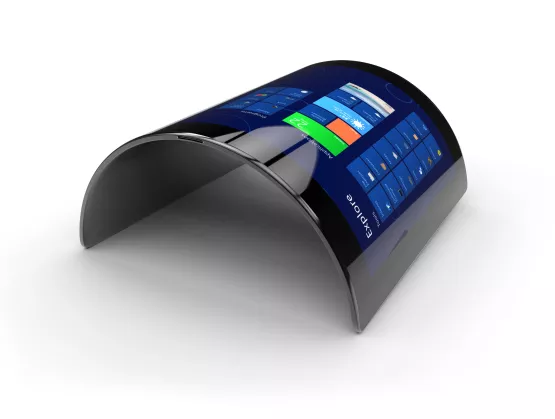
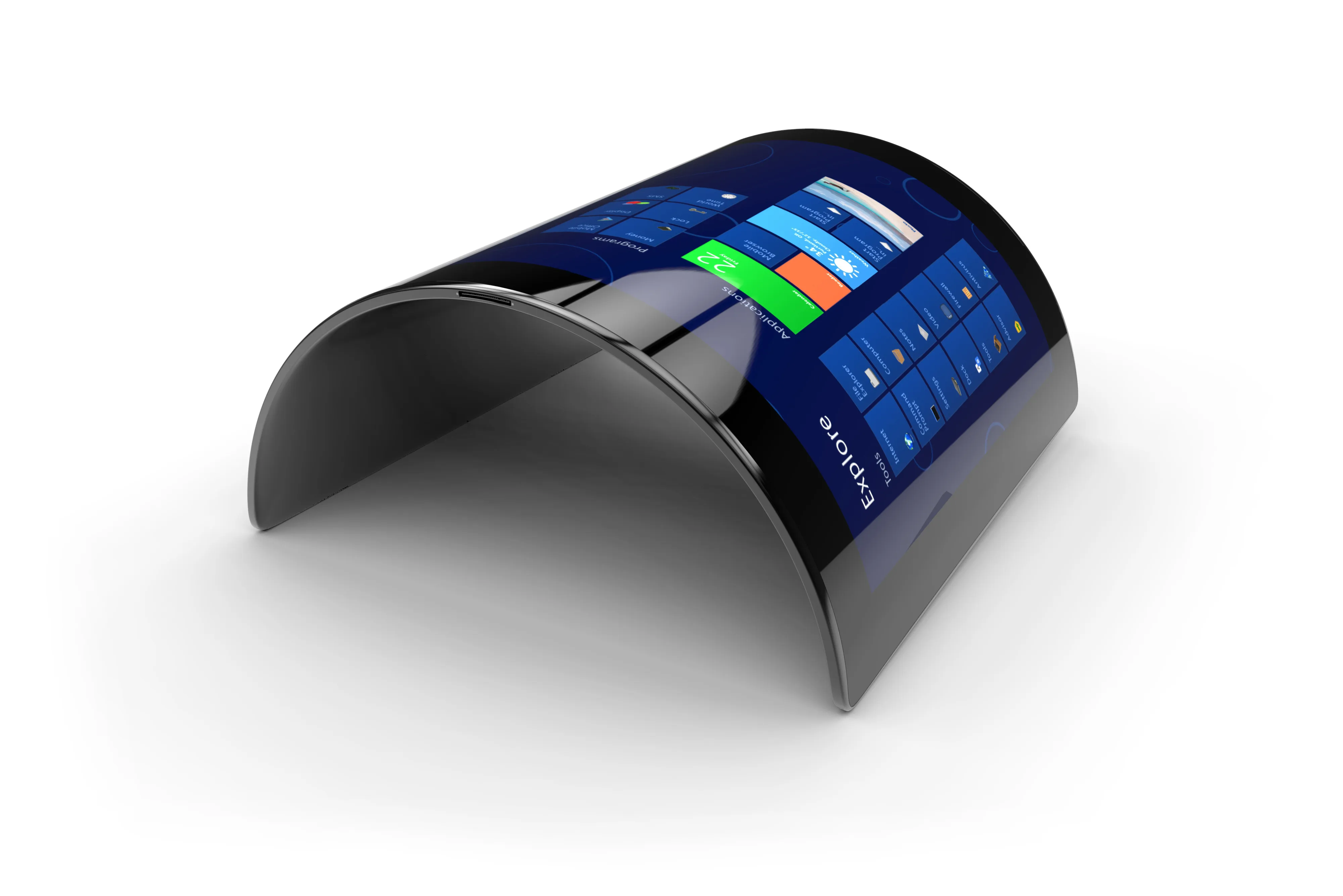
Technology advancements seem to be coming at us fast and furiously. Every time you turn around, another company is introducing a breakthrough product with claims of far-reaching implications on how we live and work. But how often do consumers really experience disruptive innovation, like the kind that smartphones and cloud computing have had on our lives? Instead of astounding people, many new products that hit the market today are merely upgraded versions of their predecessor – perhaps offering smaller footprints with faster processors, more attractive packaging, or add-on features. These upgrades tend to underwhelm customers, offering no compelling reason to justify their accompanying price hikes.What consumers want is disruptive technology that truly enhances their lives, whether at work, at home or at play. And that’s exactly what product manufacturers want to deliver. So what’s holding them back?The Limits of Traditional BatteriesThe challenge doesn’t lie in envisioning exciting new offerings. Vendors are great at that. Rather, when it comes to consumer-focused, electronics-based products, the culprit is often conventional, rigid and thick batteries that limit what can be designed around them.But it doesn’t have to be this way.Advances in flexible and thin batteries can spark a whole new level of product differentiation. Even though such batteries have been available now for a few years, they are still a foreign concept to many product designers accustomed to conventional off-the-shelf energy storage that is fixed in rigidity and shape. It’s hard for some people to believe that batteries can fold and flex while maintaining their performance and safety. As a result, they design products around rigid battery parameters. The Promise of FlexibilityFortunately, flexible battery technology is available today, even for high-volume production.While the allure of flexible battery technology is strong, we find ourselves having to reassure manufacturers that flexible batteries are every bit as dependable as their rigid progenitors. Our testing shows that performance-integrity in flexible batteries is strong. They can be flexed, bent and even rolled in any direction without deteriorating performance. For instance, we tested a flexible battery by bending it 10,000 times to prove that it has essentially the same capacity as a non-bent battery. This flexibility gives designers and engineers a new level of freedom in hardware design: Manufacturers can now place batteries in spaces not possible or practical before. Take smartwatches, for instance. Instead of locating batteries in only the head case, engineers can embed a flexible, thin battery in the strap band to increase accessible energy or lengthen battery life. As market demand grows for wearables and hearables, smart apparel and other personal battery-powered products, consumers want more natural-feeling experiences. Unlike fixed off-the-shelf energy solutions offered in a limited range of form factors and capacities, flexible batteries can support customization by size, thickness and capacity, enabling development of products that are smaller, lighter and more comfortable.Rigid batteries are problematic on a whole other level, and that’s safety. Electrolyte advancements ensure flexible batteries are safer. The latest gel-polymer electrolyte is safer than liquid electrolyte because it does not contain liquid that would leak if the battery is pierced or penetrated – yet it still delivers the same high level of ionic conductivity. This is a great advantage for manufacturers of wearables in medical devices, sports equipment and fabrics, industrial applications, and consumer electronics. Knowing that their devices contain safer components not only brings peace of mind to manufacturers and consumers but also increases both adoption and usage rates. Staying competitive in any technology-driven market requires a steady stream of innovation. To rise above the pack, companies must fearlessly embrace advancements that will differentiate them in the marketplace. Your choice of battery is critical to your hardware design – especially if consumers will be in direct contact with the battery. The performance and enhanced safety inherent in next-generation flexible batteries can free you to create disruptive products that deliver a compelling user experience. To learn more about flexible batteries, visit Jenax.EJ Shin delivered an engaging presentation at 2019FLEX Japan (May 22-23, 2019, in Shinagawa, Tokyo), where she discussed Jenax’s flexible and customizable rechargeable battery, a technology that allows batteries to integrate seamlessly into a new generation of medical devices.FLEX Japan is a hosted by FlexTech and MEMS Sensors Industry Group, SEMI technology communities.EJ Shin is Global Director at Jenax Inc., a company that pioneered the next-generation flexible, thin battery that can be bent and rolled in any direction. She has been with Jenax since the company initiated its battery development. EJ helps device and wearable companies leverage Jenax’s customized battery solution for their innovative products. Earlier, she held communications consulting positions at Fleishman Hillard and G20 Summit in Korea. EJ holds an MBA from Yonsei University, South Korea, and a B.A. in International Relations from Tufts University, U.S.
Read More
Smart cities of the digital future will employ systems enabled by MEMS and sensors in wide-ranging ways. From wearable sensors that monitor personal health and wellness and environmental sensors that assess air quality to autonomous micro-transit systems that are efficient and environmentally sustainable, MEMS and sensors are critically important to living in smart societies.SEMI’s Nishita Rao spoke with Albert P. Pisano, Professor and Dean at UC San Diego Jacobs School of Engineering ahead of his October 24 closing keynote presentation, MEMS and Systems in the Digital Future, at MEMS Sensors Executive Congress, October 22-24, 2019, at Coronado Island Marriott Resort Spa in Coronado, Calif.Join us at MSEC to meet Albert Pisano and other industry influencers driving MEMS and sensors innovations. Registration is open.SEMI: What are some of the most important large-scale system needs of the digital future – and why is MEMS so important in meeting these needs?Pisano: My vision of the digital future is an optimistic one, in which technology is used to assist people in their pursuit of health and happiness. In that digital future, I expect disruption in several key industries that depend on large-scale systems enabled by MEMS – healthcare, retail, transportation and education.Driving these disruptive forces across all four industries is the demand for more relevant real-time information, collected via inconspicuous technologies. Small in size and weight and low in power consumption, what technology other than MEMS delivers these combined attributes?SEMI: How do you envision MEMS in smart cities? What applications and devices will change the human experience in cities?Pisano: Smart cities, by my definition, are cities in which the four basic industries – healthcare, retail, transportation, and education – are implemented in their disrupted form.Take healthcare, for example. The adoption of MEMS chemical sensors in a wearable format will revolutionize human health monitoring. These sensors will not only improve individual health but also mitigate the spread of disease.In transportation, the coming of semi- or fully autonomous vehicles (as well as the general upgrading of all mass-transit vehicles) will give commuters additional time to pursue their interests while en route. A coming revolution of data connectivity to all vehicles will spur the rise of work, study and entertainment options available to people in transit. MEMS in the communication channels as well as in the vehicles will play an essential role in streaming personal data to travelers.SEMI: Could you help us visualize a disruptive application in one of these industries, say healthcare? Pisano: Healthcare is a particularly compelling area because MEMS offers life-enhancing, even life-saving, functionality that will significantly improve the quality of life of some people. MEMS allows us to design consumable wearable sensors that allow individuals to unobtrusively and non-invasively obtain biochemical data, such as potassium, sodium and sugar levels in the body fluid, as well as metabolic indicators such as lactic acid. Further, MEMS-based devices can perform EKG and EEG functions as well as monitor blood pressure in deep body veins in non-medical settings. This higher level of medical-grade data (not just casual data such as an approximate number of steps taken) will allow departments of public health to identify the early onset of individual disease.SEMI: What new forms of wireless communications will affect MEMS-enabled systems in the digital future?Pisano: Most visions of a digital future include wireless communication, but as the spectrum becomes ever more crowded, and as the need for unregulated, negotiated spectrum access increases, we will experience greater pressure to consider other forms of communication, such as inductive, optical and sonic. MEMS sensors are the only technical alternative to these other forms of communication in that they provide acceptable SWAP (size, weight and power). This will spawn battery-powered solutions with significant operational time. A good example is wireless telemetry of human physiological data from the skin. Only MEMS technology can reduce sensor-consumed power to below one microwatt. At this low level, energy harvest from the skin itself is sufficient to power the sensor!SEMI: How is the UCSD campus a living laboratory for intelligent sensing devices and systems?Pisano: Progressive universities, such as the University of California San Diego, understand that they are microcosms of small cities. They have populations during the day of approximately 65,000 people, a myriad of vehicles and a concentrated group of people.Many functions on campus mirror that of a small city. Lecture halls are similar to movie theatres. Student stores and centers are similar to shopping malls. Student residence halls are similar to apartment houses. Many campuses have medical centers, with their own emergency health services and hospitals. As a microcosm of a small city, it is only natural to think of the university as a wonderful living laboratory that allows us to test out new technologies at scale.Clearly, autonomous transit and wearable sensors have potential for uptake in this community. And that’s just scratching the surface. Package delivery (dinner to a dorm room, perhaps?), parking-spot location assistance, and even location-independent data streaming for classroom lectures are just a few possible examples of applications that we can test in a university environment.SEMI: How can the MEMS and sensors industry help researchers and innovators realize the digital future?Pisano: As a MEMS practitioner for almost 30 years, I fully understand the need to focus at the device level to ensure that the MEMS design meets SWAP and other requirements. But I truly believe that MEMS designers must learn to think more about subsystem and system issues, since the future of MEMS will be won by those who cannot only design the device right, but who can design the right device. By taking a much more market- and system-oriented approach to MEMS design thinking, companies in this industry will realize greater success.Register now to connect with Albert Pisano at MSEC and visit his UCSD page for more information.Albert P. Pisano, Ph.D., began his service as Dean of the Jacobs School of Engineering in 2013. He holds the Walter J. Zable Chair in Engineering and serves on the faculty of the departments of mechanical and aerospace engineering and of electrical and computer engineering. Pisano is an elected member of the National Academy of Engineering for contributions to the design, fabrication, commercialization, and educational aspects of MEMS, and is a Fellow of the ASME.Prior to his appointment at UCSD, Pisano served on the UC Berkeley faculty for 30 years, where he held the FANUC Endowed Chair of Mechanical Systems. Pisano was the senior co-director of the Berkeley Sensor Actuator Center (an NSF Industry-University Cooperative Research Center), director of the Electronics Research Laboratory (UC Berkeley’s largest organized research unit), and faculty head of the Program Office for Operational Excellence, among other leadership positions. From 1997 to 1999, Pisano was a program manager for the MEMS Program at the Defense Advanced Research Projects Agency (DARPA). Pisano held several research positions prior to joining academia.Pisano is a co-inventor listed on more than 36 patents in MEMS and has co-authored more than 400 archival publications. Pisano also is a co-founder of 10 startup companies in the areas of transdermal drug delivery, transvascular drug delivery, sensorized catheters, MEMS manufacturing equipment, MEMS RF devices and MEMS motion sensors. Visit his faculty page to learn more about his research interests.MEMS Sensors Industry Group, a SEMI technology community representing the global MEMS and sensors supply chain, hosts the annual MEMS Sensors Executive Congress. To learn how MSIG enables professionals in the MEMS and sensors industry to innovate, address common challenges and accelerate business results, visit us today.Nishita Rao is marketing manager for technology communities at SEMI.
Read More
Software for sensors has evolved from simply reading out and evaluating sensor data to making intelligent decisions based on that data, a transformation enabled by new software synthesis and artificial intelligence (AI) technologies. Together, they make consumer devices smarter, dramatically improving the user experience through greater interactivity and higher levels of automated personalization.SEMI’s Nishita Rao spoke with Stefan Finkbeiner, CEO and General Manager at Bosch Sensortec, who will explore the topic in his October 23 keynote, How Software Makes MEMS Sensors into Smart Systems, at MEMS Sensors Executive Congress (MSEC), October 22-24, 2019, at the Coronado Island Marriott Resort Spa in Coronado, Calif.Join us at MSEC to meet Bosch Sensortec and other industry influencers driving MEMS and sensors innovations. Registration is open.SEMI: What is the relationship between MEMS sensors suppliers and specialized software synthesis providers?Finkbeiner: Collaboration is a key driver for innovation in sensor software. There are already several fruitful collaborations between MEMS sensors suppliers and specialized software providers, which are mostly startups. Collaborations with providers of simulation and evaluation tools as well as with well-known universities in the field of AI are starting to show positive results.Domain expertise is also critical for developing smart sensor software, making it essential to future sensing solutions.SEMI: How does software synthesis relate to sensor fusion?Finkbeiner: Put simply, software synthesis refers to ways of automatically generating code based on domain knowledge and given constraints for specific product versions. Sensor fusion combines sensor data from different kinds of sources in order to improve the results.Software synthesis techniques enable a level of automation that creates new opportunities for more complex sensor fusion, which was formerly out of reach when using traditional approaches that involved, for example, big data and a large number of potential data sources.The traditional sensor fusion toolset can now be further extended by machine learning techniques that help to determine which sources are more reliable than others and how to combine data streams. This topic and others are still active areas of research. A wearable device with motion detection is a case in point. With unsupervised learning, the device could identify short versus long cyclically repeating motions and treat them differently from other types of motion. SEMI: How is the new software synthesis-AI approach different from previous approaches? To what degree will the new approach open up new applications?Finkbeiner: Traditionally, technology companies have used cloud computing for data storage and machine learning on aggregated user data. In that model, MEMS sensors generate large amounts of data that power-hungry hardware (such as digital signal processors) must process. In addition, machine learning generally requires lots of power-hungry cloud nodes with GPUs. This model, however, is not the best option for many users. Just think for a moment about all the scenarios in battery-powered devices where frequent battery charging frustrates users.Leveraging both software synthesis and AI techniques in MEMS sensors is therefore a very promising approach because it supports improved recognition and learning inside the sensor. This means that user-specific data isn’t transferred to the cloud. Instead, it remains private inside the sensor. This improves existing applications that learn all the time and opens up new opportunities for applications such as smart clothing, predicting a product’s lifespan, detecting whether a window or door is open or closed – all without server connectivity.SEMI: How will such software adapt to the individual user?Finkbeiner: Devices will offer much more personalized information to users. For example, optimizing a step counter to match the height, age or Body Mass Index (BMI) of a user – or to adapt to a user’s environment (is the person running on a beach, hiking up a mountain or strolling in a park?) – will provide more accurate information on calories burned. Not every step is created equal, and both pre-loaded personal data as well as real-world environmental data will prove that some steps consume a lot more energy than others.SEMI: What would you like MSEC attendees to take away from your presentation?Finkbeiner: I want to introduce the journey of software development by illustrating specific use case examples. I would also like to offer my outlook on the role of software and AI in MEMS sensors to help increase their adoption in current and new applications. Ultimately, I think it’s important to raise awareness in our industry on why we should embrace the use of software and AI.Connect with Stefan Finkbeiner at MSEC or via LinkedIn. Get more information on Bosch Sensortec products and solutions online.Stefan Finkbeiner, Ph.D., CEO and General Manager, Bosch Sensortec, was appointed CEO of Bosch Sensortec in 2012. He joined the Robert Bosch GmbH in 1995 and has been working in different positions related to the research, development, manufacturing, and marketing of sensors for more than 20 years. His senior positions at Bosch have included director of marketing for sensors, director of corporate research in microsystems technology, and vice president of engineering for sensors.Finkbeiner received his Diploma in Physics from the University of Karlsruhe in 1992 before studying at the Max-Planck-Institute in Stuttgart, where he earned his Ph.D. in Physics in 1995. In 2015, Finkbeiner received the prestigious lifetime achievement award from the MEMS Sensors Industry Group (MSIG), a SEMI technology community.Bosch Sensortec is a member of MEMS Sensors Industry Group, the industry association representing the global MEMS and sensors supply chain. To learn more about how MSIG enables professionals in the MEMS and sensors industry to innovate, address common challenges and accelerate business results, visit us today.Nishita Rao is marketing manager for technology communities at SEMI.

Read More