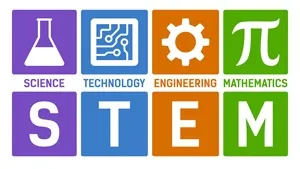
In my first six months at SEMI, I’ve visited with many member companies and industry leaders. One theme I hear repeatedly is a concern about our most fundamental source of innovation and productivity – people.Our industry has a significant need for additional workers and several trends are working against us.For one, only 11 percent of elementary students in the U.S. indicate an interest in science, technology, engineering, and mathematics (STEM) education according to the National Science Foundation. In other regions, recruiting and retaining high-skilled workers remains a constant challenge.Ironically, the incredible electronics manufacturing technology that we create has enabled many of the new-tech industries in software, social media, internet services and applications that now directly compete for the best and brightest technical talent. Young engineers have other choices and many are lured to newer growth industries with familiar internet brands.Today, due to continued industry advancement and robust growth, capital equipment companies, device makers and materials companies collectively have thousands to tens-of-thousands of open unfilled positions. Furthermore, the representation of women in the high-tech workplace remains disproportionately low.We have long been aware of the need to support a diverse pipeline for high-skilled workers. In 2001, the SEMI Foundation was established to encourage STEM education and stimulate interest in high-tech careers. SEMI and its Foundation launched the High-Tech U (HTU) program to engage and excite high school students. HTU enlists industry volunteers to work with local high school students in a three-day interactive hands-on curriculum. Young people get a fun and inspirational exposure to binary logic, circuit making, a fab or electronics manufacturing setting and other aspects of professional development.To date, we’ve delivered 216 HTU programs and reached nearly 7,000 students in 12 states and nine countries. The results are compelling. Our 2016 survey of HTU alumni shows that they enter college at five times the national rates and 70 percent that graduated college are employed in a STEM field. By any measure, the initiative is successful and worthwhile.However, the talent problem statement has grown. Industry needs are greater and the time has come to redouble our effort to attract and retain talent for our high-skilled manufacturing sector. Therefore, SEMI is elevating workforce development as a top strategic priority.The SEMI HTU team is already engaged with key member companies to develop our enhanced roadmap for workforce development including a comprehensive study with Deloitte Consulting to underpin the key problems and solutions in areas of focus for decisive and systematic SEMI action.Belle Wei, SEMI Foundation Board member and the Carolyn Guidry Chair in Engineering Education and Innovative Learning at San Jose State University said, "It is critical that we work to prepare the future workforce. This requires a high level of collaboration between industry and higher education. We appreciate SEMI's leadership role in this collaboration to further develop the workforce pipeline."We have launched a HTU Certified Partner Program (CPP) with the goal of reaching more students through industry partners who commit to long-term participation and independent delivery of High Tech U. In addition, we are expanding outreach to universities and community colleges and preparing to launch an industry image campaign to better tell the remarkable story of opportunity in our industry.The capacity to innovate and the skills to manage complex design, engineering and manufacturing processes are essential factors that sustains our high-tech industry – and they are dependent on people.Finally, as mentioned above, we have already started some new initiatives to enhance our HTU. A SEMI workforce development roadmap and execution plan will be detailed in a future SEMI Global Update article following the upcoming SEMI International Board Meeting. SEMI welcomes any inputs in addition to your continued support.This endeavor is increasingly urgent and recruiting the industry’s future innovators is well-aligned with SEMI’s mantra to connect, collaborate, innovate, grow and prosper.