downloadGroupGroupnoun_press release_995423_000000 copyGroupnoun_Feed_96767_000000Group 19noun_pictures_1817522_000000Member company iconResource item iconStore item iconGroup 19Group 19noun_Photo_2085192_000000 Copynoun_presentation_2096081_000000Group 19Group Copy 7noun_webinar_692730_000000Path
Skip to main content
Default Banner Image

TechSearch International

Despite the pandemic lock-down, demand for electronic products and services remains strong. Work-from-home, video conferencing, and remote learning are driving data center growth and laptop and tablet demand. 5G infrastructure rollout is underway and smartphone sales are returning to normal levels. Automotive sales are increasing. At the same time, the industry is experiencing acute shortages of substrates. The October 2020 fire at Unimicron’s IC package substrate plant in Taiwan exposed the serious nature of the capacity shortage for IC package substrates. Substrate makers have been reluctant to make large investments in capacity over the last few years due to the fear that demand could decline and they would have excess capacity. Relentless price pressures by customers and the resulting low margins have weakened the finances of substrate suppliers. With tight capacity, substrate prices have increased and lead times are 14 weeks or more. The most critical shortage is for flip chip ball grid array (FC-BGA) substrates. In addition to increased demand in units, applications such as servers and networking products are seeing requirements for larger body sizes and increased layer counts. Shortages will not improve very soon because it takes time to build a new plant. And equip it. Key equipment for substrate production has lead times of up to a year. SEMI and TechSearch International detailed the substrate makers and provide projections for the substrate market, trends, and a list of suppliers and their plant locations in the Global Semiconductor Packaging Materials Outlook report. The report also highlights the market and suppliers for leadframes, bonding wire, encapsulation materials, underfill, die attach, solder balls, wafer level package dielectrics, and wafer-level plating chemicals. In times of shortages the report is an important indicator of suppliers in the industry and trends. Jan Vardaman is President at TechSearch International Inc.
Read More
A short trip to Monterey, California provided an exciting glimpse into what is in store for the future. Along with 550 attendees and 60 exhibitors, I took a quick visit through the aisles and conference venue to find several exciting developments this year!So many exciting new products are on the horizon. Dr. Peter G. Hartwell, CTO of InvenSense, A TDK Group Company, provided a view future of the way sensors including optical, audio, balance, direction, location, and chemical will provide improvements over human capabilities. A glimpse into our future experiences with a 360-view winter wonderland experience of riding a snow mobile using two 180°C fisheye lens cameras with his presentation “Sensors: Where Reality Meets Virtual.” The only warning was that with so many cameras and social media privacy is lost!Dr. Hans Stork, CTO, ON Semiconductor discussed some of the recent investigations his company has made on the many LiDAR sensors. He enlightened listeners with more details of the optical/LiDAR Fusion with FUSE ONE that was unveiled at CES 2019. Future cars will have a combination of cameras, LiDAR, radar, and ultrasonics. No one sensor has it all. There are many companies offering LiDAR for automotive applications, but the products are still too expensive and the market will shake out over the next few years. Douglas Hackler, CEO, American Semiconductor presented the company’s achievement in flip chip on flex circuit assembly for a variety of applications, including pharmaceuticals, wearable wristbands, and IoT communications. Interconnects supported include ACA, ACF, advanced z-axis materials, and low temperature solder. He also described flexible hybrid electronics using printed electronics and a wafer CSP assembly for sensors. With this operation located in Idaho, products can be assembled in the U.S. Jean-Charles Souriau from CEA-Leti described the organization’s detailed research in developing in flip chip assembly on a flexible label with a thin die. A gold stud bump flip chip and thermo-compression bonding with glue is used to attach the die to a flex substrate. A polymer fabricated on thin glass was also demonstrated. Clearly, much progress has been made in flexible printed electronics in the last year with many presentations describing progress. Results of a benchmark study conducted at Cal Poly examined some of the key developments in bump materials and interconnect methods. Key areas such as antennas, batteries, PV and energy harvesting, a variety of sensors, and audio technology were investigated. Dr. Pradeep Lall presented work examining developments in conductive inks for 3D printed electronics.Dr. Subu Iyer and his student, Arsalan Alam, of UCLA presented some exciting research on heterogeneously integrated foldable display on elastomeric substrate, FlexTrate™, using vertically corrugated interconnects. This can be considered fan-out wafer level packaging. The work holds much promise for applications including foldable displays, wireless powered systems and surface electromyography systems. Fine pitch ≤40 micron interconnects bendable to 1 mm bending radius passed more than 6,000 bending cycles. Dr. Mark Poliks of Binghamton University described their work on the development of a wearable flexible hybrid electronics ECG monitor. While the work is in the early stages, human trials will soon begin and the results look promising. New materials will be key in the future products. Reliability test data was also presented on aerosol-jet printed traces on Upilex-S, including tensile, peel and bend testing, as well as “healing” of the damage. New product introductions included U.K’s Peratech’s EDGE force-sensing solution targeted form smartphones, wearables, and tablets. In this HMI solution, Peratech’s thin sensors are mechanically integrated into key areas of the smartphone to capture a user’s natural single-handed grip, ergonomic finger movements, intuitive pressure sand squeezes to control key functions. It even works with the users has wet hands or is wearing gloves! This eliminates the need for physical button openings and allows the implementation of a thinner, more contoured device with a rigid-metal chassis. Next year’s event will be in San Jose during the last week of February. Stay tuned to SEMI’s website for more details.Jan Vardaman is president and founder of TechSearch International, Inc., which has provided market research and technology trend analysis in semiconductor packaging since 1987. She is the co-author of How to Make IC Packages (by Nikkan Kogyo Shinbunsha), a columnist with Printed Circuit Design Fab/Circuits Assembly, and the author of numerous publications on emerging trends in semiconductor packaging and assembly. She is a senior member of IEEE EPS and is an IEEE EPS Distinguished Lecturer as well as a member of SEMI, SMTA, IMAPS, and MEPTEC.
Read More
Outsourced Semiconductor Assembly and Test (OSAT) service providers experienced strong growth in 2017, but will this growth continue? In the last few years, OSAT growth has been driven by shipments for packages found in smartphones, but this market is slowing. What will replace it? Growth in power devices is strong and electronic content in vehicles is increasing. Will OSATs participate in this growth? Many OSATs have plants dedicated to automotive package assembly and will see continued growth. Growing demand for connectivity everywhere, called IoT, is generating large amounts of data, creating the need for more servers and datacenters. The adoption of Artificial Intelligence (AI) across a broad range of applications is driving demand for high-performance packages, but will this assembly take place at the OSATs or foundries? In the third and fourth quarters of 2017, growth in cryptocurrency provided unanticipated revenue for a number of OSATs. Given that the most well-known crypto mining companies and the biggest mining pools are all based in China, several OSATs, including major Taiwanese and Chinese service providers, experienced revenue growth in 2017 directly attributed to the assembly of ASICs in flip chip scale packages (FC-CSPs) and GPUs in flip chip ball grid arrays (FC-BGAs) for the cryptocurrency market. However, the first and second quarter of this year has seen decreased demand for GPUs and ASICs for this application. The assembly of packages for cryptocurrency slowed considerably in the first half of the year and therefore can’t be counted on to add as much to the revenue base as in the previous year. Going into the latter half of the year, the demand for Crypto ASICs is expected to pick up as new generation of 7nm chips will drive new investment and replacement cycle while crypto-mining GPU will see a further decline. Three of the top 10 OSATs, Jiangsu Changjiang Electronics Technology (JCET), Tianshui Huatian Technology (Huatian), and Tongfu Microelectronics (TFME), are based in China. China’s share of the top 10 OSATs’ revenue increased from slightly less than 23 percent in 2016 to more than 25 percent in 2017, and this trend is expected to continue. Crypto-related packaging and test business has certainly contributed a big portion of the share gain. Major OSATs such as TFME and Tianshui Huatian plan expansion in their plants and they expect to fill this added capacity in a broad range of packages. Huatian’s new Nanjing plant will include assembly for memory packages. TFME plans to set up a plant in Xiamen, Fujian Province to provide bumping, wafer level packaging, and system-in-packaging (SiP) services. Tracking the capabilities of OSATs is increasingly important. SEMI and TechSearch International have introduced a new Worldwide OSAT Manufacturing Site Database that provides listings of OSAT facility locations and package and test options in each factory. This database indicates the specific packages offered at each location. Finding plants that offer automotive qualified assembly is also possible with the database. Companies that offer bumping and wafer level packaging are identified. Over 120 companies and 300 facilities are tracked in this database covering both OSAT packaging and test facilities. For additional information about this informative database, please visit https://discover.semi.org/osat-database-registration.html E. Jan Vardaman is president of TechSearch International, Inc., and Clark Tseng is director of Industry Research and Statistics at SEMI.
Read More
The fast-growing automotive semiconductor market means big change for the IC supply chain. Beyond the obvious demands for reliability and traceability, the sector is moving towards simpler and lower-cost solutions while facing the daunting challenge of automating driving in a complex world. The need for simpler and cheaper automotive intelligence will likely drive acquisitions to build complete platform solutions that are easier to integrate. This demand has already spawned a market for pre-configured test cars to save developers time and money, and is driving LiDAR (Light Detection And RADAR) towards lower-cost, solid state solutions. “The growth of the automotive electronics market provides a great opportunity for the IC supply chain to differentiate on specialty processes and quality for the high-volume automotive business with its long design cycles,” says Scott Jones, principal, strategy, at KPMG, who will speak in the automotive program at SEMICON West. “This differentiation is a chance to reduce chip suppliers’ dependence on scaling volume for the mobile phone world with its short-cycle volatility of winning and losing sockets.” He notes that increasing demand for automotive ICs is also reinvigorating the eight-inch supply chain and spurring opportunity for specialty products such as compound semiconductor devices for power efficiency. Supplying the automotive market also means addressing automotive reliability requirements, which can be 10 times more stringent than for consumer devices. At the same time, the industry must sustain fast-paced development cycles required for the volume and diversity of low-cost IoT devices, manage the segmented supply chain for both those markets, and still spread development costs. Another big challenge for the supply chain will be to automate testing and update vast amounts of embedded software in these automotive devices. “The more complete solution a company can put together, the more the automakers will gravitate to it. They want simplicity,” Jones suggests. Smaller players will need to differentiate with IP and acquire other IP provider to build a broader platform, or be acquired and folded into an all-in-one solution.AutonomouStuff helps accelerate and simplify development of autonomous driving solutionsAutonomouStuff is helping to speed development of these platforms. The company has grown from a sensor distributor into a supplier in the emerging niche of vehicles preconfigured with key interfaces for sensors and controls. These interfaces can then be customized by integrating different components for developers to test their applications. AutonomouStuff offers developers a lineup of vehicle models pre-configured with the interfaces needed to add desired chips, sensors and software to develop their autonomous vehicle systems. Source: AutonomouStuff.“Whether they’re major chipmakers or AI software startups, they don’t have a year to build their own vehicle platforms themselves for developing autonomous vehicle systems,” says Wolfgang Juchmann, VP sales and business development at AutonomouStuff. Juchmann, a SEMICON West speaker, will bring a demonstration vehicle to the show. “In four to six weeks we can prepare a custom test car with selected sensors, enabling users to start testing their computer platforms and software. It’s faster and more cost-effective for us to supply the car with the needed interfaces.” He notes that developers are using some 300 AutonomouStuff vehicles in the field. AutonomouStuff customers are starting to transition from testing on a single car or two to testing on mini-fleets with 50 to 100 vehicles. Beyond sensors and pre-configured vehicles, the next step will be to add more data intelligence services to help with capabilities like tagging the data for training, Juchmann says. AutonomouStuff already offers hardware to support Baidu’s Apollo open-source software stack and data set. The company was recently acquired by the Swedish holding company Hexagon to help support expansion.CMOS silicon LiDAR nears automotive qualificationInnovations in the hyper-competitive LiDAR market, where burgeoning demand is driving the race to develop various types of solid-state devices, may also help reduce the cost of autonomous vehicles. Among the roughly 40 LiDAR suppliers, at least one – Quanergy – is taking advantage of 45nm and 32nm foundry CMOS volume production. The company uses voltage through the semiconductor stack to change the refractive index, controlling the phases of optical beams and the resulting interference patterns of light exiting the chip to quickly steer the laser beam without the need for moving parts, much like the phased array radar its team developed earlier. Solid state LiDAR image with object recognition software. Source: QuanergySo far, most of the small LiDAR units have shipped to the security, industrial automation, drone, robots and 3D mapping markets. However, Quanergy CEO Louay Eldada, another SEMICON speaker, says the company is also winning automotive designs and expects automotive shipments to take off early next year, once automotive certification testing is completed. “We can get design wins because standard CMOS production at TSMC makes us a known entity,” says Eldada. To prevent component misalignment, the company produces its own specialized packaging to secure the laser, phase control ASIC, optical phased-array emitter, detector array, and receiver readout ASIC at its plant in Silicon Valley or the facility of its automotive partner Sensata. Through its software business, Quanergy offers an artificial intelligence (AI) perception program for object recognition and LiDAR tracking. The solution uses the people-tracker software the company acquired from Raytheon.SEMICON West this year expands to three full days of automotive electronics programming and features a Smart Transportation Pavilion. Other companies with experts who will speak as part of the program include XPT/NIO, Infineon, McKinsey, Voyage, GM Cruise, Bosch, Deepen AI, Airbus A3, Nvidia, Excelfore, Byton, Macronix, SK Hynix, SAP, Xilinx, Achronics, California Fuel Cell Partnership, Velodyne, Lam Research, KLA-Tencor, SCREEN, Rockwell, Versum Materials, TechSearch International, Entegris, ASE, Amazon, Continental and Wind River. www.semiconwest.orgPaul Doe, SEMI
Read More
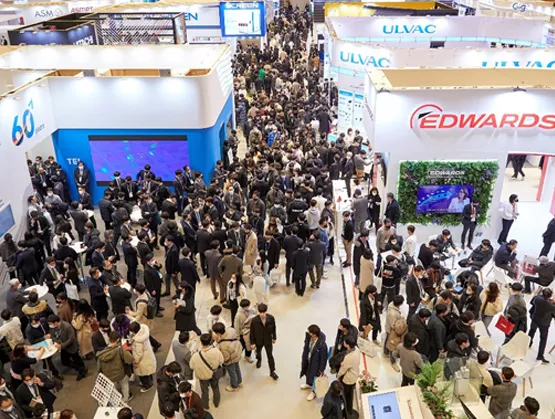
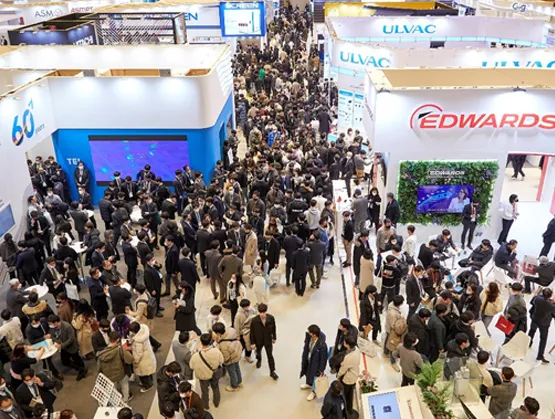
With Southeast Asia’s semiconductor industry expected to grow up to 12 percent this year, the stakes at SEMICON Southeast Asia were high. The challenge: to drive industry connection, collaboration and innovation across a broad range of technologies to accelerate growth in the electronics manufacturing supply chain.SEMICON Southeast Asia 2018 delivered.The region's premier gathering of the global electronics manufacturing supply chain, SEMICON Southeast Asia drew an event record of more than 7,500 visitors and over 300 exhibitors to its debut at the Malaysia International Trade and Exhibition Centre (MITEC) in Kuala Lumpur. The Market Trends Briefing, an event favourite, offered insights into the latest trends and developments on forward-thinking topics as diverse as the machine as an integral part of human society (NXP Semiconductors Singapore) and intelligent robots (Festo Robotics). Key industry topics including semiconductor fab investments (SEMI) and drivers and applications for Fan-Out Wafer-Level Packaging (TechSearch International) also highlighted the briefing. 2018 Year to Date Statistics from the Market Trends Briefing For the first time, SEMICON Southeast Asia convened policy makers and industry leaders in a panel – the CXO Speaks session – that provided insights into how the region can strengthen its manufacturing ecosystem, capture new opportunities in IoT, and build a resilient and growing electronics industry. The panelists agreed that the Southeast Asia semiconductor market will continue to grow exponentially in the digital era, and that regional players must not only collaborate to sustain this growth momentum but build a strong talent pipeline to continue to drive IoT innovation.With connection clearly critical to the industry’s growth, the event’s Business-Matching sessions and industry VIP networking brought business leaders together to find new partners and opportunities.Themed ‘Think Smart, Make Smart,’ SEMICON Southeast Asia featured few devices smarter and more innovative than Festo’s AirJelly, a radio-controlled airborne jellyfish. The first indoor flying object with peristaltic drive mimics the movement of a real jellyfish – except in the air. The device’s eight tentacles adapt to its environment, just like its 500-million-year-old sea-roaming cousin. A lithium-ion battery, an electric motor and a bit of helium are its wings, allowing it to take flight.The ‘World of IoT,’ a show-within-a-show, highlighted enabling applications and technologies for the IoT revolution. This interactive experience was helmed by seven Malaysian technology start-ups that showcased present and near-future consumer technologies such as autonomous vehicles, smart AI devices and virtual reality applications enabled by semiconductor innovations.In an effort to attract STEM talent to the industry, SEMICON Southeast Asia for the first time staged a panel with 11 experts from the public sector and seven from the private sector to discuss strategies for encouraging young graduates to pursue engineering careers and building a talent pipeline. For their part, the SEMICON Southeast Asia university programme and the Electronics Talent Career Fair focused on helping to build the global semiconductor industry as it faces a worker shortage.At SEMICON Southeast Asia’s Technology Innovation Forum, thought leaders from across the industry answered the question: What does Smart Manufacturing mean to the electronics manufacturing supply chain? While presenters from GLOBALFOUNDRIES, Amkor, PricewaterhouseCoopers, Infineon, Lam, IBM, Omron, and OSRAM looked at Smart Manufacturing from very different positions in the supply chain, they shared common issues with data sharing and data protection, and decision-making methodologies when monitoring a huge influx of sensor data. Samivel Krishnamoorthy, Director of Digital Manufacturing Industrialization at OSRAM, closed the session with a real-world look at the work necessary to transition a cluster of production lines with different systems to Smart Manufacturing capable lines following common systems and data handling techniques. OSRAM embraces SEMI Standards for use in conventional silicon front-end manufacturing in for Osram’s LED production. Krishnamoorthy detailed an exceptional analysis process to benchmark and adapt best practices to complex, multi-stakeholder technology production environments.Those looking for a highly influential audience from every segment of the global microelectronics manufacturing supply chain found it as SEMICON Southeast Asia. Technology and business leaders from segments including semiconductors, LEDs, MEMS, printed/flexible electronics, and other adjacent industries were a powerful presence at the event.Held for the first time in Kuala Lumpur, the event remained true to its mission to connect electronics industry innovators and thought leaders from business, academia and research from both region and all over the world. SEMICON Southeast Asia 2019 will once again be held at MITEC.Kai Fai Ng is President, SEMI Southeast Asia.
Read More