downloadGroupGroupnoun_press release_995423_000000 copyGroupnoun_Feed_96767_000000Group 19noun_pictures_1817522_000000Member company iconResource item iconStore item iconGroup 19Group 19noun_Photo_2085192_000000 Copynoun_presentation_2096081_000000Group 19Group Copy 7noun_webinar_692730_000000Path
Skip to main content
Default Banner Image

IBM

Adnan Hamid, CEO, founder and visionary of Breker Verification Systems, an ESD Alliance member based in San Jose, Calif., once described his job in chip design verification at AMD as “breaking things.” When it came to naming his startup, Breaker was a natural choice. After some consideration, the “a” was dropped and the company became Breker. Now Hamid is breaking the most complex semiconductor designs and Breker, moving from a startup to a scale-up company, is a noted part of the functional verification space. Smith: Why does verification continue to take the most amount of time in a project cycle? Hamid: The project cycle for semiconductor design has changed. Design abstraction has been raised to a much higher level than the days when developers were connecting logic gates. Today’s developers are typing functions that don’t include lower-level implementation details. Designs incorporate more blocks of reusable IP. Both reduce design time. Meanwhile, designs are getting bigger with more blocks of IP stitched together, all in need of testing. As design complexity grows, the amount of testing and verification increases as a square of design effort. One block requires one functional verification effort. Four blocks of IP mean up to 16 functional interactions require verification. While design is moving up the abstraction level, that’s not the case for verification, where plenty of detail must be reimplemented. Verification has certainly evolved, but engineers still think at the level of independent stimulus, response and coverage, driving the need to allocate so much time for verification. Smith: Are chips targeting artificial intelligence and machine learning applications more difficult to verify? If so, why? Hamid: Yes, absolutely and it’s an interesting challenge, especially given that machine learning is based on massively connected processing element arrays. Attempting to verify the individual processing elements and the critical interconnects is complex. AI device arrays and, interestingly, verification test content operation may both be thought of as a mathematical graph of processing elements and interconnect. Their operation involves walking through the graph form to generate a result. Finding the optimum path through these arrays is key. To understand how these systems may be effectively verified, it is worth investigating planning algorithms. Originally proposed by IBM, these hold the key to this type of verification process. The AI- style algorithm starts backward at the end of the processing element array and tracks down the most optimal and likely paths through it. At Breker, we have used these planning algorithms extensively to drive our graph-based test content synthesis process. Smith: Does system integration require verification? Hamid: Yes, it does. In the past, most functional verification has been performed at the block level. However, with the increase in more specialized SoCs, functionality is spread across multiple blocks, as well as the software running on the processors, driving full system-on-chip (SoC) functional verification. In addition, new requirements such as security and safety must be validated. A system-level infrastructure such as cache coherency and power domain execution has become more complex and these must also be tested. The new frontier in verification is ensuring a fully operational SoC. Of course, given the size of these SoCs, hardware-assisted verification such as emulation is essential, and porting tests from block simulations to SoC emulations has become a requirement. This porting process is problematic and this in turn has driven portable tests, giving rise to the idea behind Accellera’s Portable Stimulus Standard (PSS), of which Breker was a major participant. Indeed, some companies are taking this to the next level by composing their system-level testbench at the same time as they commence SoC architectural design, and then developing the hardware design, software design and test content all in parallel, in the so-called “shift-left” manner. Smith: Is “shift-left” a growing trend that are you seeing in verification? Hamid: Yes. Shift-left is taking hold in hardware and software design, giving way to an increase in early test content composition. Then as individual blocks are finished and connected, their verification is driven from this same test content, saving a significant amount of time and effort. This is a huge verification and test generation change that was inevitable given the increased time-to-market constraints and SoC complexity. Figure 1: Shift-left is ushering in the next generation of SoC verification. Source: Breker Smith: As an entrepreneur, what advice would you give someone founding a startup or thinking about starting one? Hamid: Do not take the attitude “Build it and they will come.” My best advice for an entrepreneur or fledgling entrepreneur is to solve a specific customer problem, however narrow it might seem. Including services as part of a product offering and developing partnerships with other vendors helps with this and turns your company into a solution provider not a product developer. This is essential for getting the right products to market on time and within budget, and then ultimately scaling them across the market. The ESD Alliance and Accellera are hosting a two-part webcast series on the work-from-home experience titled Remote Work, Remote Chip Design: Building Chips During a Pandemic. The first panel, Wednesday, June 9, at 9:00am PDT, will feature a discussion led by Tom Fitzpatrick, strategic verification architect from Siemens EDA verification engineers through their experiences converting their home offices into verification test labs. The second panel in July will explore how executives managed a remote workforce and explain how they plan to bring employees back to physical offices. About Bob Smith Robert (Bob) Smith is executive director of the ESD Alliance, a SEMI Technology Community. He is responsible for the management and operations of the ESD Alliance, an international association of companies providing goods and services throughout the semiconductor design ecosystem.
Read More
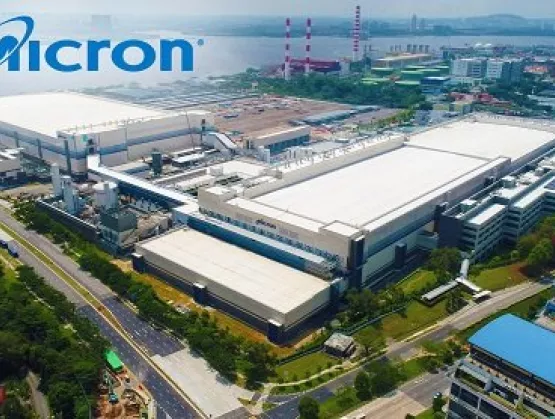
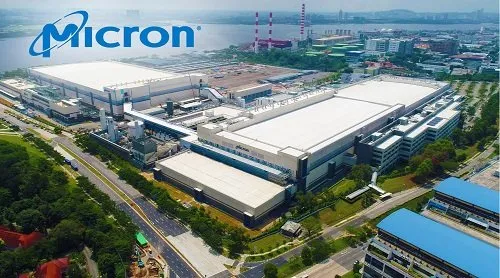
Making Strides TogetherKnowledge is power – especially when it is shared. This principle formed the foundation for Micron’s Go and See virtual visit of its Singapore manufacturing plant on 26 August 2020 as 27 companies including GLOBALFOUNDRIES, ST Microelectronics, Infineon, TEL, ViTrox , IBM, HP and UTAC joined the first-of-a-kind virtual factory visit. The chip industry powerhouses gathered to see how Micron’s Lighthouse frontend wafer fabrication facility leverages Fourth Industrial Revolution technologies to drive new production and cost efficiencies.They saw clear markers of a transformed organisation and spoke with working-level staff, managers and front-line employees. Company representatives also met virtually with Micron management teams from organisations that led its digital transformation – from pilot programs to integration at scale – to realise significant financial and operational benefits. The mix of technologies they deployed to make it all happen included artificial intelligence (AI), big data analytics and the Industrial Internet-of-Things (IIoT).Micron’s Singapore-based fab facility earned Lighthouse certification earlier this year from the World Economic Forum’s Global Lighthouse Network. The Go and See tour was co-sponsored by SEMI Southeast Asia and McKinsey Company.Transformation is CrucialBy embracing Lighthouse principles, semiconductor sectors and companies can accelerate their digital transformation to boost operational and financial efficiency while helping increase productivity across the electronics supply chain. It will take time for Southeast Asia semiconductor manufacturers to transform to digital operations, though we’re seeing growing interest in Industry 4.0 practices as they begin to understand that the deployment of new technologies and applications will help them better understand real-world benefits of smart manufacturing use cases and solutions. SEMI believes shining the spotlight on companies like Micron can illuminate the way forward for other companies to help drive the industry’s digital transformation. We look forward to seeing companies build on this momentum as they start to leverage leading-edge technologies to improve efficiencies and promote sustainability.Bee Bee Ng is president of SEMI Southeast Asia.
Read More
No, that wasn’t a fancy chandelier on the periphery of ES Design West’s exhibit area, the co-located event at SEMICON West. It was IBM’s Q quantum computer, a striking bit of industrial design that looks like a chandelier from a stately ballroom.While it resembled an ornate lighting fixture, IBM Q does much more than illuminate a room. The Q contains 20-quantum bits (20 qubits), equivalent to 2**20 or two to the 20th power classic bits. Impressively, IBM is currently readying (or may already have) a 50-qubit computer.During ES Design West, IBM demonstrated the Q Experience quantum cloud services platform and Qiskit, an open source quantum software framework. IBM’s booth staff showed how Q can solve problems beyond the practical reach of even today’s conventional supercomputers. Examples include the Traveling Salesman Problem (TSP) of finding the shortest route to enable the salesman to visit every city once and return to the starting point. Other examples are chemistry, drug and medicine discovery, weather and climate modeling, and security and advanced cryptography.The demos did even more, highlighting just how far semiconductor design and manufacturing advances have come to make quantum computing architecture possible.We have Dr. Jeffrey Welser, vice president of IBM Research–Almaden, to thank for bringing Q to SEMICON West and ES Design. During his keynote, The Future of Computing: Bits + Neurons + Qbits, he noted that Quantum computing holds the potential to solve problems even the most powerful classical computers cannot and challenges our community to drive innovation from materials to devices to systems. Both he and the booth staffers made the point out that Q will not replace conventional computing but augment it to solve complex problems beyond computational limits and/or the storage capacity of conventional computers.Challenges of Quantum Computing are not insignificant, however, and start with coherence time or the time interval over which the qbit is in a quantum state. The 20-qbit Q shown at ES Design West has a coherence time of 90 microseconds. Noise and variance are other challenges. The IBM booth staff said that a typical program must be run at least 1,000 times. Results are filtered with the extremes removed to get the most consistent result.Fault tolerance is high on the list of challenges as well because a solution for fault tolerance in quantum computing has yet to be discovered. Users like us take fault tolerance for granted in modern classical computers, addressed in hardware and firmware. Programmers don’t need to be concerned about it because the computer takes care of it through error correction.Finally, Q and most other quantum computers require near 0 Kelvin temperatures to operate. The refrigeration systems are large, expensive and not easily portable. Research is ongoing to find materials, such as carbon nanospheres, that will allow quantum computing at room temperature.Most experts agree that we are years away from practical deployment of large quantum computer systems. IBM’s open system for users around the world to access a Q computer to run programs is helping drive the way forward.Robert (Bob) Smith is Executive Director of the ESD Alliance, a SEMI Strategic Association Partner. He is responsible for the management and operations of the ESD Alliance, an international association of companies providing goods and services throughout the semiconductor design ecosystem.
Read More
Would you buy your next hotdog in parts, from un-coordinated suppliers? For example: Get the bun from a baker, the sausage from a butcher, mustard and/or ketchup and veggies from the nearest supermarket? If yes, you may find the sausage being too small, the veggies too big for the bun, and, when you finally finished adding mustard/ketchup and start eating, you may “enjoy” a cold sausage on a soggy bun!This “hotdog example” is just a very simple way to highlight the advantages of a well-coordinated semiconductor supply chain. What may be a few dollars and cents wasted in this hotdog purchase, can become millions of dollars lost to delays and inefficiencies during the roll-out of a new electronic system.Complexity is Increasing the ChallengeThe very innovative semiconductor industry is continuing to develop more complete and complex building blocks for electronic system solutions, with the intent of making our customers’ lives easier. However, every new technology takes increasingly more time for technical and business interfaces to mature before all the semiconductor supply chain members can serve customers in a smooth, efficient and cost-effective manner. In particular, coordination between design and manufacturing has always turned out to be in the critical path.SEMI, the manufacturers’ trade organization, and the Electronic System Design (ESD) Alliance, representing electronic design automation (EDA) tools vendors, developers of intellectual property (IP = ready-made building blocks for ICs) and IC design service providers, both recognized these challenges. Late in 2018, these two industry organizations decided to jointly address this painful, costly and often a very frustrating, yet critical path and became Strategic Association Partners, The goal is to establish a well-coordinated semiconductor supply chain.To make the value propositions of this partnership highly visible and demonstrate the first joint accomplishments, SEMI’s well-known SEMICON West conference and, in its first year, ES Design West, will be conveniently co-located in San Francisco’s Moscone Center from July 9 to 11, 2019. The synchronized schedules and geographic proximity of these events not only outlines the multi-faceted interdependence of manufacturing and design but encourages and enables conference attendees to do, what previously would have been viewed as “forming cross-border relationships.” It’s a new word now — please join the path to success and expand your network!Navigating SEMICON West and ES Design WestJust in case you are not yet planning to come to San Francisco early July, please check the Agendas-at-a-Glance for SEMICON West and ES Design West, to see how broad and valuable these parallel conferences are for your business. In addition, every customer, partner and semiconductor industry supplier can, from July 9 –11, walk from one conference section to the other, arrange face-to-face meetings, in dedicated meeting rooms, with representatives from both camps and discuss, from the first project planning step to the final production ramp-up, the many topics that need to be coordinated across parts or the entire supply chain to minimize delays and/or cost over-runs.Who Will Lead the Discussions?Conference attendees can, in addition to meeting many important supply chain partners face-to-face, hear about the latest technologies and market trends from key executives in our industry. Featured speakers are: David Pellerin, Head of Global Business Development, Amazon Web Services Lisa Su, President, and CEO, AMD Gary Dickerson, President, and CEO, Applied Materials Laurent Le Faucheur, Principal Engineer, Digital Signal Processing and Machine Learning, Arm, Ltd. Renee St. Amant, Ph.D., Research Engineer in Emerging Technologies and US Innovator of the Year, ARM Dean Kamen, President DEKA Research Development, Founder First and First Global Jeffrey Welser, Ph.D., Vice President and Lab Director, IBM Research-Almaden Dean Drako, President and CEO, IC Manage, Inc. Oreste Donzella, Sr. VP Chief Marketing Officer, KLA Corporation Prakash Narain, President, and CEO, Real Intent, Inc. Aart de Geus, Chairman, and Co-CEO, Synopsys, Inc. Manish Pandy, Fellow, Synopsys, Inc. Nate Baxter, General Manager, Development and Production Group, TEL US Like in previous years, SEMICON West and ES Design West offer a range of special features, addressing Smart Manufacturing, Smart Transportation, Smart MedTech and Smart Workforce development in dedicated pavilions as well as an AI Design Forum. Also, the many exhibitors from both camps will give conference attendees convenient opportunities to get to know new supply chain partners and/or refresh long-term business relationships. Search for the exhibitors you want to meet early July here. Questions to Ask for a Well-Coordinated Semiconductor Supply ChainIf I may, I would like to ask my many friends in the manufacturing camp to spend some time in the ES Design West section and ask the exhibitors a few questions, like: What can you do to get me to profit faster? To reduce development and unit cost? To improve yield, product quality, and reliability? When can you visit my team to discuss how your company can contribute to our goals?Vice versa, I would like to encourage my friends in the design camp to spend time in the SEMICON West section and ask exhibitors what their companies offer. When talking to manufacturers of IC, passive components or circuit boards, assembly and test houses, please ask very specific questions like: How can we help you reduce iterations between you and your customers? How can we help to improve IC test programs? How can we increase the throughput of your manufacturing equipment? How can we apply machine learning (ML) and Artificial Intelligence (AI) to minimize equipment downtime, improve yields and/or shorten production ramp-up?I can assure you that you’ll not only win great friends “across the border” but will be very impressed by the expertise you’ll find in the other camp and the willingness for and benefits of cross-border cooperation.I look forward to meeting you at SEMICON West and ES Design West. Also, if your schedule allows, mark your calendars for the June 12 MEPTEC Luncheon at SEMI in Milpitas, June 18 for the GSA’s Silicon Summit in Santa Clara and June 25 to 27 for the IMAPS SiP Conference in Monterey, CA. Hope to see you at one or all of these important events!Article originally published in 3D InCites. Herb Reiter is president of eda 2 asic Consulting.
Read More
How are flexible electronics impacting the automotive sector? How will medical diagnostics and life sciences be changing with the advent of flexible, conformable electronics? How does space exploration intersect with the continued development of flexible sensors and Internet of Things (IoT) systems? The upcoming 2019FLEX Japan / MEMS SENSORS FORUM in Shinagawa, Tokyo, May 22-23, 2019, will explore these questions and more. The event, the third FLEX Japan, is expected to gather 300 designers, technologists, researchers, analyst and product developers to hear presentations, discuss their approaches, and create connections. The transformation of the automotive industry will receive special attention with speakers from Yole Développement and a deep exploration of the new sensor form factors and capabilities. Professor Shoji Kawahito of Shizuoka University will discuss the impact of image sensors on automotive LIDAR, night vision and monitors for the driver and passengers. Dr. Yoshifumi Sakamoto of IBM Japan will share his views on key trends in smart transportation and what they mean for the supply chain. Beck Oh, president and CEO of PNI Sensor, will share how parking sensors are transforming our driving – and parking – experience. Hideo Fukunaga, project manager for Velodyne LiDAR, will discuss his work using LIDAR, often seen as the most promising and the most difficult and expensive component of autonomous driving. Jerome Joimel, CTO of ISORG, will discuss integration of organic image sensor behind display.Medical and home electronics devices are moving out of their boxes and hospitals, and flexible electronics, new sensor designs and new power options are playing a major role in that transformation. Jenax, Kobe University, Toyo University, Osaka University, and Daiwa House are just some of the presenters in this area. Researchers are steadily overcoming key technology hurdles, such as electronic interconnects between soft and rigid surfaces, and energy harvesting techniques for no-power devices, as well as ultra-thin RF components, and advanced microfluidic systems. Space, the final frontier, will be the backdrop for the general keynote talk of Mayya Mayyappan, chief scientist for exploration technology at NASA’s Ames Research Center. His team is investigating new printed and flexible sensors and electronics that can be printed in zero-gravity and how these devices will enable IoT.The only event in Japan focused on flexible and printed electronics, with special focus on the complementary areas of sensors and MEMS, 2019FLEX Japan / MEMS SENSORS FORUM provides an excellent opportunity to meet with industry players considering integration and application of new form factor electronics. More than 20 exhibitors will showcase the building blocks for conceptualizing and designing new products immediately.Register now!
Read More
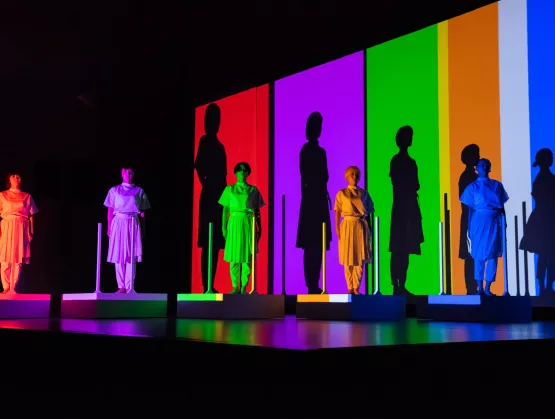
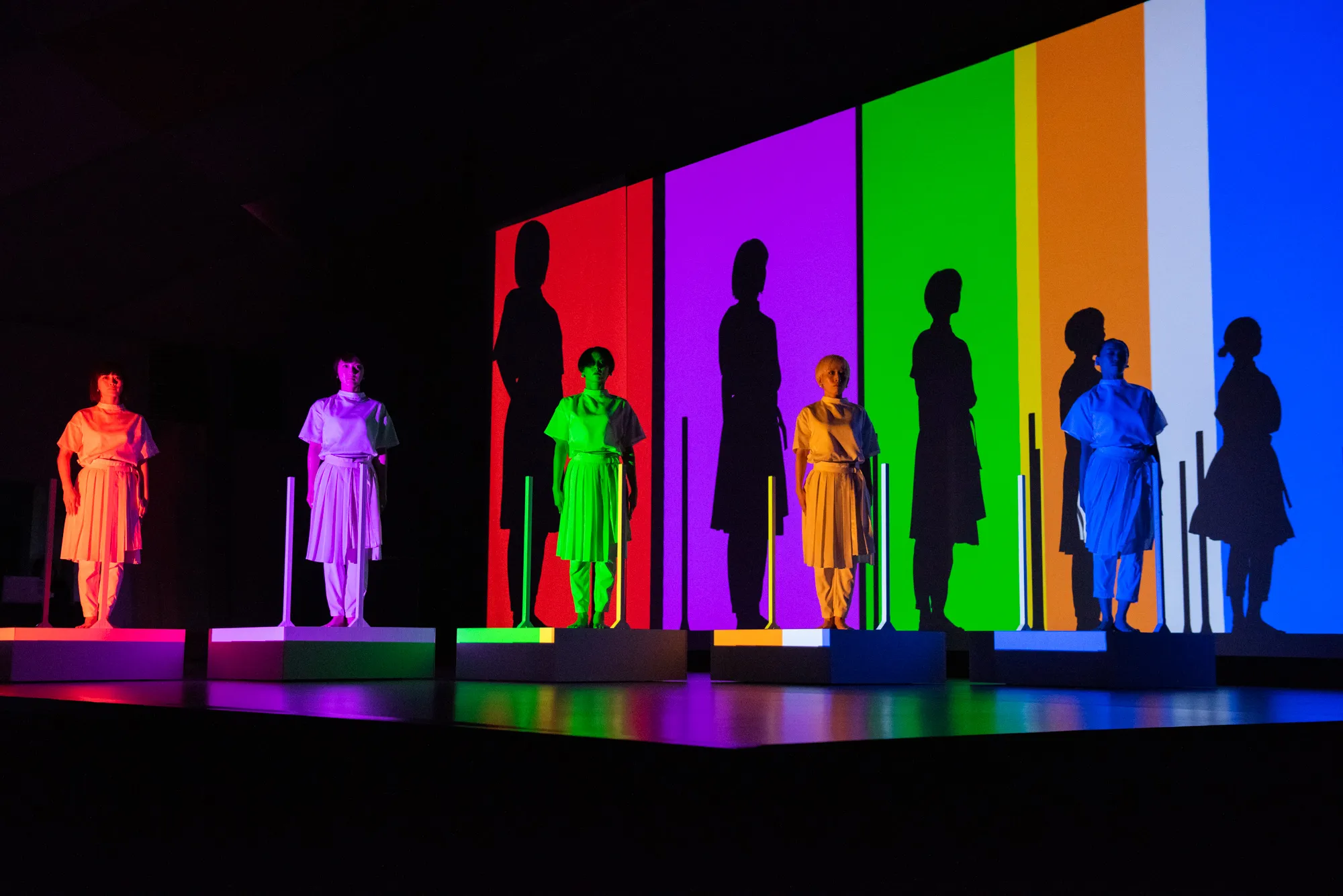
Five young dancers bathed in a striking rainbow of colors with their silhouettes cast in the background dazzled SEMICON Japan 2018 attendees at the opening ceremony in mid-December. Gone were the standard opening keynotes and ribbon cutting, replaced by live performance and media art set against a dramatic black backdrop. There was no mistaking the wide-eyed looks of wonder in the audience.In its sheer vibrance, the opening ceremony thrilled with an excitement that seemed to embody the extraordinary growth expectations for the global semiconductor supply chain over the next five years, with the industry poised to double sales from $2 trillion to a staggering $4 trillion – a phenomena SEMI president and CEO Ajit Manocha has called The Rebirth of the Semiconductor Industry. Driving this unprecedented growth will be SMART applications that are transforming industries and applications worldwide, powered by artificial intelligence (AI) and Internet of Things (IoT) technologies.The dramatic scene at SEMICON Japan 2018 was staged by Rhizomatiks, a media arts company that produced the Rio Olympic Games closing ceremony and is famous for its pop music spectacles. The company’s CTO, Motoi Ishibashi, the event’s first keynote speaker, described his team’s development of drones and vehicles guided by motion and precision-control technologies. It was some of these SMART vehicles that maneuvered the opening ceremony performers from the dance company Elevenplay onstage. Only Rhizomatiks, Ishibashi said, has this capability. In its mission to enrich people’s lives through new media arts, Rhizomatiks uses the latest virtual and mixed-reality technologies to orchestrate not only dance performances but music videos, commercials, fashion shows and festivals.Toru Nishikawa, the second keynote speaker and CEO at Preferred Networks, a leading Japan-based developer of deep learning software programs, surprised the SEMICON Japan audience with his discussion of his company’s work to develop a specialized chip for deep learning processing, joining technology giants Apple, Google, Alibaba and Microsoft in chip design. As more IT and software companies develop specialized, differentiated chips, the devices are quickly becoming the heartbeat of SMART technologies. The company’s approach has taken hold. Only four years old, Preferred Networks is enjoying rapid growth by working with global powerhouses including Toyota, NTT, Panasonic, Fanuc, NVIDIA, Intel and Microsoft. Ishibashi’s and Nishikawa’s fresh visions and the media arts extravaganza reflected the success of SEMICON Japan, held again at Tokyo Big Sight: The event’s 1,881 booths – filled by 727 exhibitors from 14 regions – was the highest count in six years. With Japan home to companies that supply about 40 percent of semiconductor equipment and materials worldwide, top suppliers historically have occupied the largest spaces on the SEMICON Japan show floor.According to IDC, personal computers and smartphones, long the largest revenue sources for the semiconductor industry, will remain top revenue drivers in the coming years. But revenue from new SMART technologies for applications such as automotive and factory automation is growing, a trend expected to continue with a 2018-2022 CAGR of 9.5 percent for automotive and 5.2 percent for manufacturing, compared to 1.1 percent for PCs and 2.9 percent for smartphones.SEMICON Japan’s new SMART Applications zone highlighted these and other new market opportunities for semiconductor growth with product and technology exhibits from companies including Bosch, IBM, Microsoft, NEC, Preferred Networks, Sony, SAS, Siemens, Tesla and Toyota. But the zone wasn’t all work and no play. The ROBOT SQUARE and SPORTS x IOT robot exhibits took visitors back to their school days, with robot anime – from Astro Boy to Gundam and Evangelion – that they could ride and control! As the World Gets Smarter, So Must SEMICON and the IndustryWe all agree the world is getting smarter at a fast pace. New cars are easier to drive – some models are almost fully autonomous on highways and streets. Your SMART speaker has gone well beyond an audio playback device and is more like a home AI platform. Almost all storefronts are equipped with video cameras. Your workplace, whether an office or a factory, is driven by automation. The reliance of these environments and devices on semiconductors is driving exponential chip and changing the world. Businesses need to adapt and so do SEMICON events. We’re doing just that as SEMICON Japan 2018 demonstrated – from an opening ceremony enabled by technology innovation to new faces of the industry to the SMART Application zone. As the SEMICON Japan presidents’ reception concluded the first day of the show, a robot from the ROBOT SQUARE suddenly appeared in the reception hall in front of about 250 executives from the global industry. Everyone at the reception was impressed and stepped forward to the stage, reflecting the overall excitement about SEMICON Japan, which for many years showcased only chip manufacturing equipment and materials. This year, to keep pace with the changing world, it was much more than that.SEMICON Japan 2019 will again take place in December at Tokyo Big Sight. However, organizers of the Tokyo Olympics will be using the East Exhibit Hall usually occupied by SEMICON Japan to prepare for the games. As a result, SEMICON Japan will be held in the West and South Halls instead. Look for more changes to the event. I hope to see you next year!Jim Hamajima is president of SEMI Japan.
Read More
The Japan semiconductor manufacturing supply chain is a global semiconductor industry workhorse, producing about one third of world’s chip equipment and more than half of its semiconductor materials. In contributing the vast majority of these products, SEMI Japan member companies hold the high distinction of enabling continuous development of the worldwide semiconductor industry. Aptly, then, technology powerhouses IBM, Nissan Motors and Toshiba offered insights into the latest trends and innovations in computing and smart cars at the late-May SEMI Japan Members Days in Tokyo with 133 technologists from member companies in attendance. As the audience discovered, chip innovation never sleeps and, as futuristic as it can be, invariably gives rise to possibilities beyond the human imagination. That was the message of kickoff presentation “Computing Reimagined – AI/Quantum/IoT” – by Dr. Shintaro Yamamichi, Senior Manager, Science Technology at IBM Research-Tokyo. Dr. Yamamichi cited three examples of how semiconductors uncover new technology frontiers. Computational materials discovery, a novel methodology, is the application of theory and computation to unearthing new materials and the key to enabling an ongoing stream of semiconductor innovation. In particular, using cognitive technology to mine huge volumes of literature reveal new insights into materials that uncover even more functionality such as greater conductivity and heat resistance. With new materials the oxygen of ever more advanced semiconductor chip manufacturing, the semiconductor industry will surely benefit from this methodology. The opportunity to accelerate quantum computing innovation is now. Launched in May 2016, the IBM Quantum Experience gives students, researchers and general science enthusiasts hands-on access to IBM’s experimental cloud-enabled quantum computing platform. The online platform features a forum for discussing quantum computing topics, tutorials on how to program IBM Q devices, and other educational material about quantum computing. Dr. Yamamichi encouraged the audience to join the program. The world’s tiniest computer, unveiled by IBM at the company’s Think 2018 conference in Las Vegas, packs several hundred thousand transistors and, IBM claims, the equivalent power of a 1990s x86 chip into a package smaller than a grain of salt. The computer’s small form factor (less than 1mm x 1mm) and low manufacturing cost means it can be embedded in product price tags and packages as an anti-fraud device using blockchain technology. Vehicles need to be both electric and intelligent as countries become more populous and traffic density increases. More drivers extend average drive time, boost greenhouse emissions, devour precious energy resources and lead to more traffic congestion and accidents. Dr. Haruyoshi Kumura, fellow at Nissan Motor, highlighted these issues in stressing the importance of a new era of intelligent mobility. To mitigate these problems, Nissan is focusing on the electrification and intelligence of its vehicles: Nissan’s electric vehicle, Leaf, reduces accidents with electric intelligence systems such as e-Pedal, which uses an accelerator pedal only for both acceleration and deceleration, and ProPILOT Park, a feature that automatically parks the car by using multiple cameras and ultrasonic sonars to detect pedestrians and other objects around the vehicle. With more than 90 percent of traffic accidents caused by driver error, Nissan plans to introduce autonomous driving on multi-lane highways by the end of 2018 and on city streets by 2020. By 2022, the company plans to roll out full autonomous driving to reduce traffic accidents caused by inattentive drivers. For full autonomous driving to materialize, sensor fusion technology must incorporate a combination of technologies – radar systems, light detection and ranging (LiDAR) systems and cameras – to identify the shapes and locations of nearby moving objects and measure their speed. Sensed information is then processed by a 3D graphic analyzer to make electric throttle, braking and steering decisions. The outlook for automotive industry includes car sharing and more electrification – both insights from Yoshiki Hayakashi, general manager, automotive solution strategic planning division at Toshiba Electronic Devices Storage, who offered his perspectives on trends in Japan’s automotive industry and beyond. To meet the requirements of the COP21 Paris agreement, the global automotive industry is shifting to electrification. Toshiba estimates 60 percent of new cars will be electric vehicles by 2040 to meet the International Energy Agency’s global EV outlook. In Japan, autonomous driving or advanced driver assistance systems (ADAS) will be offered in certain areas by 2020, the year of the Tokyo Olympic games. Growth of these advanced driving systems hinges on infrastructure development. Supporting data centers, intelligent transport systems, vehicle-to-everything connections, and smart city are all necessary components. Car ownership will begin to cede ground to car sharing with technology elites such as Tesla, Apple and Google leading the way. To expand the car-sharing industry, new alliances will take shape between new and old-guard automotive companies and electronics manufacturing services (EMS) providers. Autonomous driving requires precise 3D renderings of actual roadways using sensors for route mapping. While sensor fusion must be deployed for these capabilities, LiDAR offers better sensing range and space resolution precision than ultrasonic sonars, radars, and cameras. The next SEMI Japan members day is scheduled for October 30 in Tokyo. SEMI holds similar events in most regions where SEMI and its members operate. For the members events in your region, contact the SEMI office nearest you. Yoichiro Ando is a marketing director in SEMI Japan.
Read More
Standing-room only keynote speeches. A future awash in data amassed by transformative technologies and applications, with semiconductors at their core. Smart everything: Cars, medicine, manufacturing, workforce, you name it. The sheer numbers impressed as a record lineup of SEMICON West keynote speakers offered a glowing portrait of the future: The semiconductor industry stands on the cusp of a breakout expansion. Standing and seated shoulder-to-shoulder in the packed-to-gills opening keynote, the audience learned, indeed, that the best was yet to come: “This is the best SEMICON West, ever,” observed SEMI CEO Ajit Manocha. Here’s a glimpse of the keynotes by the numbers, starting with the luckiest of all. 7 – The number of keynotes – among the brightest lights in technology – sharing their visions of the future through the lens of breakthrough technologies that are nearly ready to make their indelible mark. Dozens of expert panelists also weighed in at SEMICON West, the annual U.S. flagship microelectronics gathering in San Francisco. 90 – The percentage of all data ever generated has been created in just the past two years as the cloud mushrooms with tweets, texts, emails, Facebook posts, YouTube videos, medical records and all manner of business information, noted Bill Bottoms, president and CEO of Third Millennium Test Solutions. In the years ahead, an almost unimaginable wealth of data will require analysis by artificial intelligence (AI) embedded in semiconductors to enable applications that go well beyond smart. 12-18 – That’s how many months it will take for data volume to double, predicted John Kelly III, IBM’s Senior VP, Cognitive Solutions. And it will double again and again, every 12-18 months. Kelly foresees a scale of growth “that will dwarf previous eras of computing … the number of opportunities is enormous.” Kelly’s four decades in computing gave considerable weight to his point that “in the industry, there has never been a more exciting point in time than today.” First – Technology is being re-born. Using baseball lingo, several speakers noted that we are just in “the first inning,” “the top half of the first inning” or “the beginning of the first inning” to make clear in the most emphatic terms the duration of prosperity that lies ahead for the industry. AI embedded in chips and demand for real-time analysis of AI data will be its fuel. As SEMI Americas president Dave Anderson observed with a smile, “We all know how long baseball games can go.” Third – That’s the current wave of machine learning the world is now experiencing, according to Sandia National Laboratories’ Principal Member Conrad James. Computers are now capable of solving many increasingly complex problems on their own, with no human intervention necessarily required, he said. 1000x – As spectacularly fast as computing power already is today, the industry will need to double that the rate of performance in the years ahead, predicted Applied Materials president and CEO Gary Dickerson. Demand for this herculean processing capacity will spur a “tremendous focus on innovation” among SEMI members, their customers and their customers’ customers. 5 to 15 – The remarkable amount of silicon that power today’s mobile devices will be overshadowed by the chips – equivalent in computing capacity to 5 to 15 cell phones – that will be the engine of self-driving and other features in future automobiles, predicted Pierre Ferragu, New Street Research Managing Partner, during the SEMI Bulls and Bears session. Automobiles with this souped-up computing capacity will sell in the millions worldwide in the years ahead, generating never-before-seen opportunities for the chip industry, he noted. 10,000 – It’s not just cars. Ten thousand is the number of sensors that will be built just into the wings of new Airbus A380-1000 aircraft, AMD CTO Mark Papermaster explained during his keynote. 10 terabits – The staggering amount of Facebook data uploaded daily in to the cloud, Papermaster noted. 1 Trillion – SEMI’s 2020 forecast that the industry will reach $500 billion in revenues by 2020 was eclipsed by one analyst, speaking at the SEMI Market Symposium on the first day of the event, predicted that the industry would top $1 trillion in the foreseeable future. SEMI’s Manocha later added that $1 trillion in industry revenue is possible by 2030, “maybe sooner.” 1 (sexy) coda – Coders are hip and software applications are the apple of the world’s eye. Even the most casual mobile device user knows that software apps makes it whirl. But “hardware is becoming sexy again,” said Applied Materials’ Dickerson, adding that equipment and other semiconductor hardware developed by SEMI members will enable the next great wave of global economic growth. Scott Stevens, SEMI
Read More
With Southeast Asia’s semiconductor industry expected to grow up to 12 percent this year, the stakes at SEMICON Southeast Asia were high. The challenge: to drive industry connection, collaboration and innovation across a broad range of technologies to accelerate growth in the electronics manufacturing supply chain.SEMICON Southeast Asia 2018 delivered.The region's premier gathering of the global electronics manufacturing supply chain, SEMICON Southeast Asia drew an event record of more than 7,500 visitors and over 300 exhibitors to its debut at the Malaysia International Trade and Exhibition Centre (MITEC) in Kuala Lumpur. The Market Trends Briefing, an event favourite, offered insights into the latest trends and developments on forward-thinking topics as diverse as the machine as an integral part of human society (NXP Semiconductors Singapore) and intelligent robots (Festo Robotics). Key industry topics including semiconductor fab investments (SEMI) and drivers and applications for Fan-Out Wafer-Level Packaging (TechSearch International) also highlighted the briefing. 2018 Year to Date Statistics from the Market Trends Briefing For the first time, SEMICON Southeast Asia convened policy makers and industry leaders in a panel – the CXO Speaks session – that provided insights into how the region can strengthen its manufacturing ecosystem, capture new opportunities in IoT, and build a resilient and growing electronics industry. The panelists agreed that the Southeast Asia semiconductor market will continue to grow exponentially in the digital era, and that regional players must not only collaborate to sustain this growth momentum but build a strong talent pipeline to continue to drive IoT innovation.With connection clearly critical to the industry’s growth, the event’s Business-Matching sessions and industry VIP networking brought business leaders together to find new partners and opportunities.Themed ‘Think Smart, Make Smart,’ SEMICON Southeast Asia featured few devices smarter and more innovative than Festo’s AirJelly, a radio-controlled airborne jellyfish. The first indoor flying object with peristaltic drive mimics the movement of a real jellyfish – except in the air. The device’s eight tentacles adapt to its environment, just like its 500-million-year-old sea-roaming cousin. A lithium-ion battery, an electric motor and a bit of helium are its wings, allowing it to take flight.The ‘World of IoT,’ a show-within-a-show, highlighted enabling applications and technologies for the IoT revolution. This interactive experience was helmed by seven Malaysian technology start-ups that showcased present and near-future consumer technologies such as autonomous vehicles, smart AI devices and virtual reality applications enabled by semiconductor innovations.In an effort to attract STEM talent to the industry, SEMICON Southeast Asia for the first time staged a panel with 11 experts from the public sector and seven from the private sector to discuss strategies for encouraging young graduates to pursue engineering careers and building a talent pipeline. For their part, the SEMICON Southeast Asia university programme and the Electronics Talent Career Fair focused on helping to build the global semiconductor industry as it faces a worker shortage.At SEMICON Southeast Asia’s Technology Innovation Forum, thought leaders from across the industry answered the question: What does Smart Manufacturing mean to the electronics manufacturing supply chain? While presenters from GLOBALFOUNDRIES, Amkor, PricewaterhouseCoopers, Infineon, Lam, IBM, Omron, and OSRAM looked at Smart Manufacturing from very different positions in the supply chain, they shared common issues with data sharing and data protection, and decision-making methodologies when monitoring a huge influx of sensor data. Samivel Krishnamoorthy, Director of Digital Manufacturing Industrialization at OSRAM, closed the session with a real-world look at the work necessary to transition a cluster of production lines with different systems to Smart Manufacturing capable lines following common systems and data handling techniques. OSRAM embraces SEMI Standards for use in conventional silicon front-end manufacturing in for Osram’s LED production. Krishnamoorthy detailed an exceptional analysis process to benchmark and adapt best practices to complex, multi-stakeholder technology production environments.Those looking for a highly influential audience from every segment of the global microelectronics manufacturing supply chain found it as SEMICON Southeast Asia. Technology and business leaders from segments including semiconductors, LEDs, MEMS, printed/flexible electronics, and other adjacent industries were a powerful presence at the event.Held for the first time in Kuala Lumpur, the event remained true to its mission to connect electronics industry innovators and thought leaders from business, academia and research from both region and all over the world. SEMICON Southeast Asia 2019 will once again be held at MITEC.Kai Fai Ng is President, SEMI Southeast Asia.
Read More