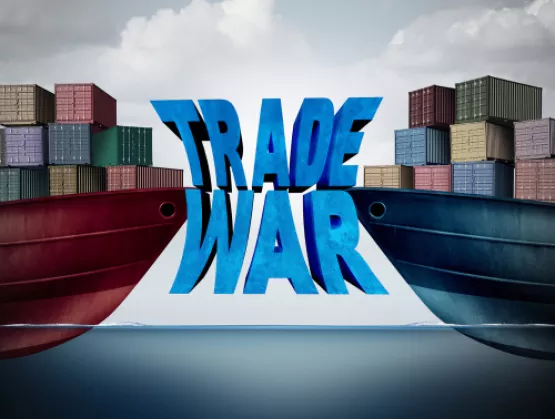
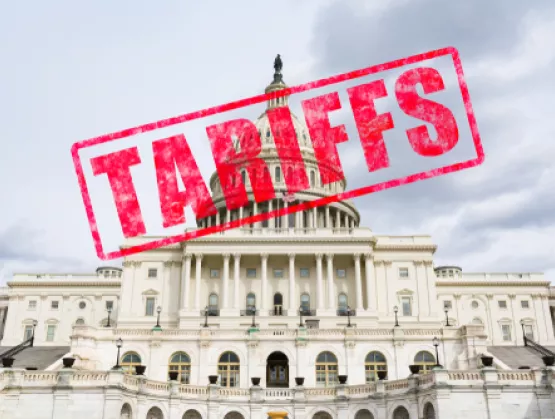
Tensions between the United States and China have reached fever pitch. Ongoing trade negotiations between the U.S. and China broke down earlier this month over reported backpedaling by China on key concessions in a proposed Trump administration deal. Over the past year, the U.S. has raised tariffs on more than $250 billion worth of Chinese goods to 25 percent, and last week the administration proposed tariff hikes on an additional $300 billion in imports – moves that have drawn retaliatory tariffs from China, many squarely hitting the semiconductor industry. Based on SEMI member feedback, the tariff increases will cost the semiconductor industry more than $750 million annually.At the same time, the Trump Administration is taking other steps to ratchet up pressure on China. Last week, seven months after placing Fujian Jinhua on the Entity List, which effectively blocks the sale of and export of goods to China, the U.S. Department of Commerce added Huawei (and nearly 70 affiliates) to the list. While the U.S. is taking this action for security reasons, it is also seen as a move to create leverage at the trade table. The U.S. is also intensifying efforts to reform the export control regime, focusing first on enhancing controls on emerging technologies and then on foundational technologies. The rising pressure has prompted China to contemplate and launch a counteroffensive that goes well beyond tariffs and export controls. The reprisals include China’s promotion of heightened Chinese nationalism by domestic consumers, a tactical slowdown of administrative processes required to conduct business in China, and the imposition of direct or indirect limits to market access. China is also using U.S. actions to justify larger state investments in its domestic industry and is ramping up efforts to give other regions greater access to its markets as it works to strengthen those relations ahead of next month’s G-20 summit in Osaka, Japan. The U.S. is also maneuvering to bolster its negotiating hand through its own agreements with Japan and the European Union.Unintended consequences of Trump administration actionsThe Trump administration’s moves to rectify the trade imbalance with China are also well-intentioned in seeking to protect the IP of U.S. technology companies and ensure continued U.S. leadership in technology development and innovation. However, its tactics can encourage long-term, perverse shifts in the globally integrated electronics manufacturing supply chain that risk upending market-driven investments in the semiconductor industry and weakening natural market forces that nourish competition among companies based on service, quality and product offerings.It is critical for SEMI, in working with government officials, to shed light on the potentially deep, unintended damage its trade actions can wreak on global supply chains and markets. We will continue to promote global standards governing trade, IP and market access through our Global Trade Principles and focus on sustaining a global order that assures the electronics manufacturing supply chain remains cohesive and vibrant.SEMI continues efforts to influence trade policyWe continue to meet with government policymakers around the world to educate them on near- and long-term impacts and risks of their evolving trade practices, conducting approximately 220 meetings with government officials globally in the past year. We also facilitate individual and group member meetings to give SEMI members direct contact to key government decision-makers. For example, on May 22nd during the SEMI Spring Washington Forum, or “fly-in,” more than 30 semiconductor industry executives from across the supply chain met with administration officials and Congressional offices to discuss issues including trade, export controls and immigration reform and impacts on their businesses. The executives represented a cross-section of small, medium, large and global companies based in the U.S. or providing support for U.S. organizations. Their aim: influence policy development. SEMI is in a unique position as a representative of the end-to-end, global electronics manufacturing supply chain and is a valuable “one-stop-shop” that represents members on policy while providing opportunities to collaborate in one of our Technology Communities. SEMI members can also leverage our strategic partnerships, our market research or leadership in industry standards. With this breadth and depth of member engagement and industry expertise, SEMI leads in providing industry insights to governments at this critical time. There is no doubt that the current situation is complicated and it is impossible to predict when or how the trade issues will be settled. As the U.S. and China work to settle the trade dispute, SEMI will continue to lead efforts to ensure that the voices of SEMI members and the electronics industry supply chain are heard.Mike Russo is vice president of Global Industry Advocacy at SEMI.