downloadGroupGroupnoun_press release_995423_000000 copyGroupnoun_Feed_96767_000000Group 19noun_pictures_1817522_000000Member company iconResource item iconStore item iconGroup 19Group 19noun_Photo_2085192_000000 Copynoun_presentation_2096081_000000Group 19Group Copy 7noun_webinar_692730_000000Path
Skip to main content
Default Banner Image

Renesas

Alameda, Calif.-based Verific Design Automation, a member of the ESD Alliance, made its name in the electronic system design and semiconductor industry supporting companies ranging from startups to billion-dollar industry leaders such as Synopsys, Cadence, Siemens EDA, Xilinx, Microchip, NVidia, Infineon, Qualcomm, Renesas and Samsung. Its software is used as the front end to design automation tools such as synthesis, simulation, debug, and formal verification. I spoke with Verific president and COO Michiel Ligthart about homegrown and open-source EDA tools and other recent trends in chip design. Smith: What trends are you seeing in chip design? Ligthart: Semiconductor companies are starting to build a portfolio of intellectual property, including homegrown electronic design automation (EDA) tools, that they want to keep secure and differentiated from their competitors. The increased interest in internally developed and supported EDA tools is a trend we started to see about two years ago. It’s not simulation, synthesis or place and route (P R). Instead, it’s pieces of a chip design flow optimized for a company’s specific needs. In the past, a semiconductor company would either standardize on one EDA company’s chip design flow or mix and match best-in-class tools from different vendors. The common denominator was that they used off-the-shelf products. If they had a specific requirement, they went to the EDA provider for assistance. In today’s competitive landscape, semiconductor companies are figuring out ways to diversify themselves and their design flow became a way to do so. They may not build their own P R tool, but they will look at building their own power domain approach, for example. Is this a widespread trend? It could be. We hear about it within end-user applications ranging from 5G and AI to data center processors and there are probably others we don’t hear about. Power optimization is an example of the kind of specific internal need being addressed. Smith: What are your thoughts about open-source EDA tools? Ligthart: Our industry supports open source already with language reference manuals (LRMs) for VHDL, SystemVerilog, Unified Power Format (UPF) and the RISC-V Instruction Set. The LRMs and the instruction set are free. Moving to the development of actual tools becomes a question of who will implement, support and maintain the tools. Implementation is expensive. The Big Three (Cadence, Siemens EDA and Synopsys) invest about 35 to 40% of top-line revenue into R D. For smaller EDA companies, this number is even higher. The industry may come up with a business model that will have open-source components as well as a way to fairly reimburse companies that make these tools freely available. I have not seen it yet. Smith: Business Insider reports that Verilog HDL is among the top 10 tech skills that companies are desperate for their employees to learn right. Does Verific get asked about Verilog training? Ligthart: No. Our customers are experienced users. Nonetheless, it was great to read that article and it suggests the semiconductor industry is healthy, growing and hiring talented engineers. Smith: If an entrepreneur asked you for advice about starting an EDA or IP company, what advice would you provide? Ligthart: I would tell the entrepreneur to focus on the problem the startup is solving. Stick to the company’s core competency and try not to build in-house what can be purchased from a reputable supplier. In the end, it will save time and jump-start the development effort, and the engineering budget can be allocated to the startup’s core competency. The external supplier presumably has years of product validation, which brings a major QA gain. About Michiel Ligthart Michiel Ligthart, president and COO of Verific Design Automation, has an extensive background in engineering, product marketing and general management. Prior to joining Verific, Ligthart was vice president and general manager of West Coast operations for Theseus Logic, a startup in asynchronous logic. Before that, he spent eight years with Exemplar Logic in engineering and marketing roles. Ligthart started his career with Philips Research Labs in California and was a visiting scholar at the Center for Integrated Systems at Stanford University. He has a Master of Science degree in Electrical Engineering from Delft University of Technology, the Netherlands. Robert (Bob) Smith is executive director of the ESD Alliance, a SEMI Technology Community.
Read More
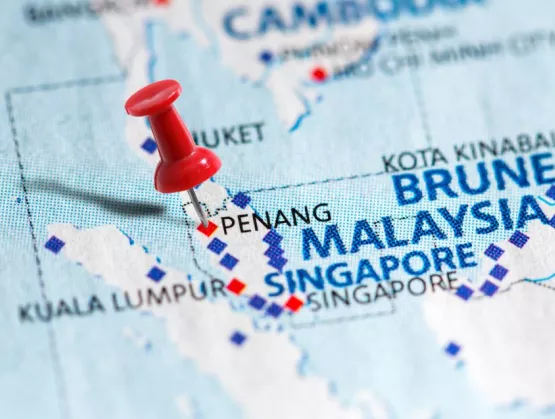
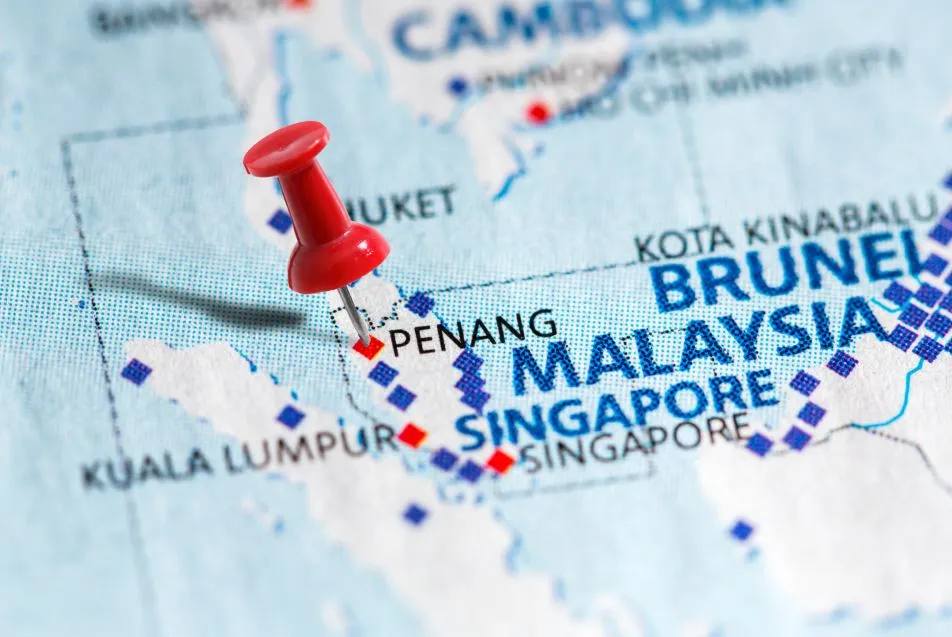
The state of Penang, nestled along the northwest coast of Peninsular Malaysia, needs no introduction in the global electronics manufacturing sector. Despite its diminutive stature with just over 1,000 square kilometers of land area and a 1.8 million-strong population, Penang commanded an estimated 5% of global semiconductor exports in 2019, according to data compiled from the Department of Statistics Malaysia (DOSM) and UN Comtrade. The State’s transformation, from a traditional seaport economy into the Silicon Valley of the East, began in the 1970s, when the establishment of Malaysia’s first free trade zone in the State drew key investments from eight Multinational Corporations (MNCs). These pioneering investors – Intel Corporation, Hewlett Packard (now Keysight Technologies and Agilent Technologies), Robert Bosch, AMD, Litronix (now Osram Opto Semiconductors), Hitachi (now Renesas), Clarion and National Semiconductor[1] – sparked the development of a robust ecosystem of ancillary industries, which formed a foundation for the State’s rise as a prominent, offsite manufacturing hub. Today, Penang houses more than 350 MNCs that are supported by over 3,000 manufacturing-related SMEs. As Penang flourished as a vibrant, regional E E manufacturing hub, the local talent pool steadily accumulated a wealth of business intelligence and technical experience, enabling the robust supply chain to evolve in tandem with technology megatrends. This, in turn, enabled the State to focus on pursuing investments that have propelled the industry up the value chain, away from its beginnings as a low-cost manufacturing hub. Consequently, Penang has seen a proliferation of upstream technology-related investments in high value-added functions in recent years, ranging from research and development (R D), design and knowledge-based solutions, and downstream advanced manufacturing and testing to global business service (GBS) and Centre of Excellence (CoE) activities. Penang’s growing significance in the global E E value chain is demonstrated by its steady and resilient export performance in recent years. From 2014 to 2019, the State’s E E exports grew at a compounded annual rate (CAGR) of 12% to reach RM210 billion (US$51 billion). It has emerged as a hub for professional, scientific and controlling instruments (including medical technology), with exports of these products growing at a 5-year CAGR of 15% to reach RM23 billion (US$6 billion) in 2019. E E products, alongside professional, scientific and controlling instruments, collectively contributed between 77% and 82% of Penang’s total annual exports since 2014, and accounted for 50% of Malaysia’s exports in these two segments during the period. More impressively, despite the disruptions from the COVID-19 pandemic, Penang’s total exports continued to rise in 2020, growing 7% year-on-year to RM310 billion (US$75 billion), and a further 14% year-on-year in January and February 2021, driven by strong global demand for semiconductors. Shaping up as the destination of choice for advanced manufacturing investments As part of efforts to move Penang’s industry up the value chain, the State government has placed emphasis on attracting companies with strong commitments in implementing Industry 4.0 and sustainable investing. These efforts have yielded positive results, with the state having gained traction as a hub for advanced manufacturing investments. This is evidenced by the rising trend in investments per new job creation, which saw a six-fold jump from 2012 to 2020, as well as the number of global heavyweights announcing new investments as well as expansions of existing facilities in the State in 2019 and 2020. Penang attracted RM31 billion (US$7.5 billion) in approved direct manufacturing investment inflows in 2019 and 2020, 88% of which involved investments into the E E, equipment and medical technology industries. Prominent new investments included those from Lam Research, Bosch Group, Ultra Clean Holdings, Dexcom as well as Smith+Nephew. Together with planned expansions by a number of existing MNCs in Penang, these new investments, which are on track to commence operations between 2021 and 2023, are poised to bring Penang’s industry to greater heights and further integrate the State into the global value chain. Recent Notable Direct Manufacturing Investments in Penang Source: InvestPenang and respective companies Penang’s conducive business environment nurtures successful homegrown technology companies Penang’s conducive business environment has not only proven successful in attracting foreign direct investments (FDIs), but also successfully nurtured local E E success stories of locally employed engineers turned technopreneurs, who have founded and built companies that have successfully grown to become internationally renowned in their own right. These homegrown E E companies play crucial roles in the ecosystem, particularly in the areas of automated test equipment (ATE), automation, outsourced semiconductor assembly and testing (OSAT) services, electronics manufacturing services (EMS), precision engineering and tooling. The past five years have also seen the emergence of young, fast-growing Penang-based companies such as Experior, Oppstar Technology and Skyechip, which provide IC design and IC test design services to MNC clients globally. Public-private partnerships cultivate Penang’s talent development roadmap The state is cognisant that the development of a robust and skilled talent pool is imperative to support the growth of strategic industries in Penang. Strong public-private partnerships with concerted efforts in supporting talent development are key to Penang’s continued success. Toward this end, the State government has backed Penang Skills Development Centre’s (PSDC) industry-led training and education efforts, which have helped train over 200,000 of workers to support the industry’s needs since 1989. The State has also coordinated collaboration for industries to provide input to local institutions of higher learning on the relevance of the institutions’ courses, and rallied the industry to support State-run scholarships (Penang Future Foundation) and STEM initiatives. Holistic initiatives to make Penang a world-class investment destination for global frontier companies The dynamics of the global value chain, especially for the technology sector, have evolved rapidly since 2018, particularly amid the complex confluence of trade protectionism, COVID-19 pandemic-driven issues and disruptive technologies. The State government believes that strong, geographically localised industry clusters could help companies mitigate the risks of supply chain disruptions, in addition to improving companies’ time-to-market at a lower cost. To further increase Penang’s attractiveness for high quality investments, the State is focusing on three key strategies: Extending its competitive edge in advanced manufacturing, further strengthening Penang’s industry clusters, which include expediting SMEs’ Industry 4.0 transformation journey, and nurturing more homegrown companies to penetrate the global supply chain Embarking on a continuous drive to develop and recruit talent to the State, as well as cultivate the younger generation’s interest in STEM Enhancing Penang’s liveability with a strong focus on making Penang a smart and green city The State government is committed to continue developing Penang in a holistic manner, with the aim of creating a vibrant business and investment destination with a robust and sustainable economy and high standard of living, creating a conducive environment to “work, live, learn, play and invest.” About InvestPenang InvestPenang is the Penang State Government’s principal agency for promotion of investment. Its objectives are to develop and sustain Penang’s economy by enhancing and continuously supporting business activities in the State through foreign and local investments, including spawning viable new growth centres. To realize its objectives, InvestPenang also runs initiatives like the SMART Penang Centre (providing assistance to SMEs), Penang CAT Centre (for talent attraction and retention) and i4.0 seed fund (a catalyst for the start-up ecosystem). For more information, contact [email protected]. InvestPenang also works closely with various industry associations, including SEMI, to promote Penang’s supply chain and E E ecosystem. InvestPenang is delighted to have collaborated with SEMI on numerous occasions since 2015 and endeavours to sustain the partnership in the years to come, including for the SEMICON SEA 2022 exposition to be held in Penang. [1] No longer present in Penang following a corporate M A exercise.
Read More
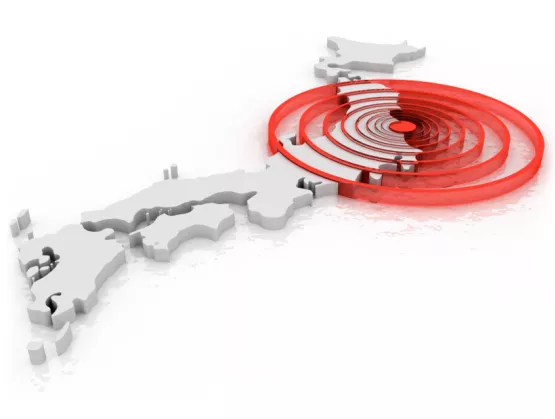
Wedged among four major tectonic plates, Japan is at the mercy of their abrupt herculean shifts and the earthquakes and tsunamis they can trigger. The fallout can be devastating. The magnitude 9 Great East Japan (Tohoku) temblor in 2011 and ensuing tsunami took nearly 20,000 lives, destroyed 138,000 buildings and cost $360 billion in economic damage.Factories including silicon wafer production facilities owned by Shin-Etsu Chemical and MEMC Electronic Materials – together accounting for 25 percent of the global silicon wafer production – sustained heavy damage. Operations were suspended. The Kumamoto earthquake in 2016 also caused significant damage. The economic cost: as much as $7.5 billion.With disaster risk rising on a global scale, these calamities offer valuable lessons in disaster preparedness and how companies can draw from their experiences to strengthen business continuity planning (BCP).Earthquake experiences and lessons in BCP were the focus of the recent SEMI Japan Members Day as speakers from five semiconductor device and equipment manufacturers offered their BCP strategies to about 150 SEMI members. Following are key takeaways from their presentations. Renesas: Create a robust production plant that is hard to break and easy to fixRenesas Semiconductor Manufacturing’s Naka plant took about 80 days to resume production while its ability to deliver semiconductors was delayed even longer as it recovered from damage caused by the Tohoku earthquake, said Yoshiyuki Miyamoto, Representative Director and President at Renesas. Operations at the company’s Kawajiri plant were disrupted by the Kumamoto earthquake.A key lesson from both earthquakes: The company needed to promote risk visualization from top-to-bottom in the supply chain. With the goal of making its plants easy to repair but hard to break down, Renesas implemented a risk management plan for earthquake preparedness plan to ensure stronger production line resistance and a stable supply to customers. The company ran simulations of multiple earthquake scenarios including aftershocks, enabling it to develop new BCP training and preparedness measures. Sony: Staying transparent about the disaster, sharing and interacting with related companiesYukihide Keigo, a representative from the Sony Semiconductor Manufacturing, showed footage taken the day the Kumamoto earthquake damaged a production line at its Kumamoto Technology Center. Sony is the top manufacturer of imaging sensors worldwide, and the Kumamoto plant is the backbone of that production. The magnitude of the foreshock fell within levels Sony had accounted for in its BCP at that time, and the line was expected to return to full production within a week. However, the magnitude of the earthquake that followed outstripped expectations, and the company’s BCP didn’t hold up. Three and a half months later, the plant had finally fully recovered. The protracted recovery prompted Sony to develop an earthquake preparedness plan using a model that assumed double the magnitude of expectations. For full restoration, the company identified challenges to returning to full operation at each stage of the production line. Then it went even further, developing in-house diagnostics, implementing critical path methods and strengthening earthquake resistance of equipment that manages bottlenecks for the restart of the plant. The revision of its BCP plan led to the establishment of a system to shorten the resumption of production after a major earthquake to just two months.Sony shared the contents of its BCP review with other companies to solicit help identifying any gaps and highlighted its partnership with Renesas in the Semiconductor Industry Association in Japan (JSIA), a committee of the Japan Electronics and Information Technology Industries Association (JEITA), to share materials procurement resources for the purposes of disaster preparedness and business continuity. HORIBA STEC: Steady daily practices protect hundreds of millions of yen worth of products HORIBA STEC’s Aso plant, near the epicenter of the Kumamoto earthquake, suffered heavy damage that cut off electricity and the water supply, yet production in its clean room resumed in just 10 days, said Hiroyuki Koyama, a factory manager at the plant. The plant’s quick recovery stemmed from daily preventive measures implemented before the quake such as connecting freestanding shelves for greater stability, applying thick rubber bands as rails to prevent manufactured goods from falling to the floor, and placing equipment on rolling carriages instead of fixed shelves.The practices saved the Aso plant hundreds of millions of yen in products and materials that otherwise could have been lost in the earthquake. Koyama also offered the reminder that, with regulations governing factory layout and construction differing widely depending on factors such as a building’s age, companies need to tailor their BCPs to the unique characteristics of each building. THK: The key point of dampening earthquakesTHK’s ACE Division develops earthquake dampening and vibration control devices designed to absorb the vibrational energy of an earthquake, though the devices must also be designed for precise analysis of that energy, said Hidemi Murao. Murao provided an overview of the latest technologies and products for dampening earthquake vibrations and shared test results from experimental devices.Murao described how THK’s recently introduced Linear Motion (LM) Guide, an earthquake vibration dampening technology, can significantly reduce building vibrations during a temblor. In a video Murao showed to demonstrate how the guide works, a shelf loaded with equipment rests on a platform equipped with THK’s LM Guide equipment. Simulating an earthquake, the platform shakes vigorously in every direction but the shelf remains steady as the LM Guide dampens the vibrations. The platforms can be installed on floors or underground in buildings or factories to prevent shelves from toppling. Tokyo Electron: The ideal BCP management systemOne risk associated with BCP training is that it can become overly routine, dulling the response of employees in actual disasters, said Tokyo Electron Vice President Tatsuya Aso. To help keep its workers’ skills sharp, TEL held surprise drills with employees assigned to particular BCP roles to test their ability to adapt quickly to when disaster strikes. In addition, TEL has launched surveys in more than 70 overseas locations to optimize safety in these high-hazard facilities.The SEMI Japan Members Day presentations made clear that the issue of BCP transcends boundaries between individuals, manufacturers, regions, and sectors within the global electronics supply chain. Disaster preparedness requires problem-solving across the entire supply chain, with companies sharing technical knowledge, offering mutual aid, and striving for continual improvement. Collaborative is essential. At SEMICON Japan 2019, SEMI will continue to bring companies together to address BCP initiatives and share their technical knowledge with members. Jim Hamajima is president of SEMI Japan.
Read More
Christian G. Dieseldorff, Industry Research Statistics Group, SEMI (June 12, 2018)The semiconductor industry is nearing a third consecutive year of record equipment spending with projected growth of 14 percent (YOY) in 2018 and 9 percent in 2019, a mark that would extend the streak to a historic fourth consecutive growth year, according to the latest update of the World Fab Forecast report published by SEMI. The industry last saw four consecutive years of equipment spending growth in the mid 1990s.Korea and China are leading the growth, with Samsung dominating global spending and ascendant China on a fast, steep rise, surging ahead of all other markets. See figure 1.Figure 1: equipment spending by region (includes new and refurbished)Samsung is expected to reduce equipment investments in 2018. Despite the ebb, the company still accounts for a dominant 70 percent of all investment in Korea. At the same time, SK Hynix is increasing its equipment spending in Korea.China’s equipment spending is forecast to jump a whopping 65 percent in 2018 and 57 percent in 2019. Notably, 58 percent of investments in China in 2018 and 56 percent in 2019 stem from companies with headquarters in other regions such as Intel, SK Hynix, TSMC, Samsung, and GLOBALFOUNDRIES. Domestic, Chinese-owned companies – backed by large government initiatives – are building an impressive number of new fabs that will start equipping in 2018. The companies will double their equipment investments in 2018 and again in 2019.Meanwhile, other regions are also ramping up investments. Japan is beefing up equipment spending by 60 percent in 2018, with the largest increases by Toshiba, Sony, Renesas and Micron.The Europe and Mideastern region will boost investments by 12 percent in 2018, with Intel, GLOBALFOUNDRIES, Infineon and ST Microelectronics as the largest contributors. Southeast Asia will increase investments by more than 30 percent in 2018, although total spending is proportionately smaller than in other regions owing to its size. The main contributors are Micron, Infineon and GLOBALFOUNDRIES, though companies including OSRAM and ams are also increasing investments.The SEMI World Fab Forecast, which also includes information on other companies, covers data and predictions through the end of 2019, including milestones, detailed investments by quarter, product types, technology nodes and capacities down to fab and project level.Learn more about the SEMI fab databases at:www.semi.org/en/MarketInfo/FabDatabase and www.youtube.com/user/SEMImktstats.
Read More
Emboldened by advances in self-driving and Internet of Vehicles (IoV) technologies, Taiwan’s microelectronics sector is investing heavily in manufacturing processes and equipment as engines of innovation and growth for autonomous driving, the world’s next market goldmine. But breaking into the self-driving vehicle industry can be a steep uphill climb. Semiconductor players hungry to secure their piece of the potentially massive market must know how to navigate the automotive industry’s unique ecosystem of suppliers, not to mention its lofty standards for safety and reliability.To explore opportunities and challenges in the automotive semiconductor market, SEMI recently organized Mobility Tech Talk – a gathering of experts from Strategy Analysis, Yole Développement, Renesas, X-FAB and IHS Markit who examined the evolution of sensors for autonomous cars, advanced driver-assisted system (ADAS) applications, and new energy vehicles (NEVs) in China. Nearly 200 participants exchanged in-depth, forward-looking insights and perspectives as the event helped forge stronger relations among various market segments. Here are four key takeaways from the conference. Lidar: The Hottest Sensing Technology for Smart AutomotiveLidar, mmWave radar, cameras and inertial measurement units (IMUs) are critical sensing devices for autonomous cars. With sensor and high-speed computing technologies maturing at their current pace, some 350,000 self-driving vehicles are expected to hit the road by 2027. But before a single autonomous vehicle takes to the roadways, self-driving technology must become expert at monitoring a vehicle’s environment.That’s where Lidar, the hottest of all sensing technologies and the key to the holy grail of safe self-driving, comes into the picture. Lidar’s versatility supports multiple essential functions such as mapping, object detection and object movement. The problem is that mass production is still impossible due to the technology's high costs. What’s more, technical issues must still be sorted out with solid-state lidar, mechanical lidar and MEMS. Both startups and traditional tier-1 semiconductor manufacturers are aggressively investing in related research and development in hopes of fulfilling lidar's promise and seizing the market opportunity. Smart Automotive Sets New Quality and Safety StandardsAs cars become smarter, so too must silicon. Chips must support vastly more data generated by in-vehicle connectivity, ADAS, electrification, autonomous driving and an array of other functions that rely on advanced automotive electronics components. With demand for smarter silicon surging, Taiwan semiconductor companies are turning to the automotive chip industry for expertise and serving as OEMs for major automakers.Quality and safety for automotive applications is paramount. In-vehicle semiconductors must meet strict requirements for vehicle control, robustness, liability, cost and quality management to meet the automotive specifications necessary to securing certifications. Smart silicon must also pass all AEC-Q liability standards promoted by North America automakers and score “zero defect” for the ISO/TS 16949 Automotive Quality Management System.China’s New Energy Vehicles To Fuel Semiconductor GrowthTo promote NEVs and reduce fuel consumption of cars with internal combustion engines (ICEs), late last year the Chinese government introduced the Measures for the Parallel Administration of the Average Fuel Consumption and New Energy Vehicle Credits of Passenger Vehicle Enterprises. With China the world’s largest market for NEVs, the policy is forcing automakers in Japan, the U.S. and Europe to accelerate moves towards NEVs that, in turn, will fuel growth in the semiconductor and automotive battery industries. NEVs in China are expected to number 2 million by 2020 before more than doubling to 4.9 million by 2025. Today, most cars still run on ICEs as environmentally friendly motor drives are still under development. In unit shipments, motor drives are expected to surpass ICEs by 2025.Cross-field Collaboration is KeyThe rise of smarter, fully autonomous vehicles – a disruptive Car 2.0 – is unlikely to happen overnight. Rapid growth of the global automotive semiconductor market will continue, with safety and powertrain applications driving the strongest chip demand. Meanwhile, automakers are focusing more on innovations from startups and non-traditional suppliers, and some have even started to develop their own IP and solutions. These paradigm industry shifts are diversifying the automotive supply chain into a cross-domain collaborative network of suppliers, pushing the closed, one-way automotive supply chain into lesser relevance. In the near future, rivals and partners may become indistinguishable as traditional turf wars begin to wane. As ADAS and autonomous cars evolve, and the era of electric cars nears, automotive semiconductors are emerging as the engine of growth for the global semiconductor industry. The automotive semiconductor market is expected to grow at a CAGR of 5.8 percent, reaching US$48.78 billion by 2022.For its part, the SEMI Smart Automotive special interest group connects professionals from the microelectronics and automotive industries. The group promotes the semiconductor industry's development of automotive technologies and cross-domain collaboration to help drive autonomous vehicle innovation.
Read More