downloadGroupGroupnoun_press release_995423_000000 copyGroupnoun_Feed_96767_000000Group 19noun_pictures_1817522_000000Member company iconResource item iconStore item iconGroup 19Group 19noun_Photo_2085192_000000 Copynoun_presentation_2096081_000000Group 19Group Copy 7noun_webinar_692730_000000Path
Skip to main content
Default Banner Image

SEMICON Korea

The SEMI Standards team hit the ground running in 2026, starting this year with an important milestone to our Flexible Hybrid Electronics (FHE) standardization efforts. As FHE technology continues to evolve into a scalable and manufacturable class of systems, we’re excited to share the upcoming release of SEMI 7242, Guide for Reliability of Flexible Hybrid Electronics. This is the first time a comprehensive framework for reliability assurance in FHE systems has been created, closing a critical gap within the industry landscape. Published as SEMI FH5, the standard is now available online via the SEMI Store or through a SEMIViews license.We’d also like to highlight a pending revision for SEMI E142, Specification for Substrate Mapping. While SEMI E142 is currently designed to work with other SEMI data exchange Standards, SEMI Draft Document 7381 proposes a subordinate standard to define maps to and from non-E142 wafer coordinate systems. Meanwhile, the Information Control Japan Technical Committee (TC) announced its new Maintenance Robot Communication (MRC) Task Force for standardizing communications for robotic maintenance systems to improve production efficiency and workloads in fabs. This quarter also included key developments from both SEMICON Korea and SEMICON China. At SEMICON Korea, members of the Semiconductor Manufacturing Cybersecurity Consortium (SMCC) discussed a unified, standards-based approach for strengthening cybersecurity amidst evolving digital threats. A month later, SEMICON China served as the backdrop for the EHS TC Chapter Formation Group Meeting, where attendees discussed critical safety, material usage, and energy efficiency standards. The North America (NA) Winter Meetings, held virtually in February 2026, also brought several TCs together to revise standards for MEMS, advanced packaging, EH S, Facilities, Gases Liquid Chemicals, factory automation, and more. For more than 50 years, the SEMI Standards International Program has worked to advance manufacturing processes, lower costs, and support key industry growth markets. To get involved in future developments, become a member of the SEMI Standards Program. Membership is free.With so much underway in Q1, we look forward to an incredible year ahead. Q1 2026 Highlights A New Standard for Flexible Hybrid Electronics As the first consensus-driven framework for reliability assurance in FHE systems, SEMI 7242, Guide for Reliability of Flexible Hybrid Electronics, was created to ease roadblocks for transitioning and commercializing FHEs. It aims to speed design cycles, improve comparability of test results, reduce the risk of integrating FHE into operations, and instill confidence for scaling FHEs from prototypes to high-volume production. Document 7242 was drafted by the FHE Reliability and Testing Task Force, with added participation from industry, academia, and government laboratories.The elevation of Document 7242 to a formal SEMI Standard reflects the field’s progression to a stage where consistent approaches to reliability are both feasible and necessary. As FHE adoption grows across medical, industrial, consumer, and defense applications, Document 7242 will support systems that offer dependable performance and sustained durability over time. Document 7242 also joins the recently published SEMI FH6 Standard on FHE Terminology.Revisions to SEMI E142SEMI E142, Specification for Substrate Mapping, defines data items required for reporting, storing, and transmitting map data for substrates. It was developed to work alongside other SEMI Standards to exchange data through a SECS/GEM interface. Identifying failure points requires a two-dimensional XY coordinate map generated for substrates. However, because some steps in the semiconductor manufacturing process may use their own XY coordinate systems, a revision is currently needed to define an infrastructure for mapping a non-E142 wafer XY coordinate system to and from the E142 Standard XY coordinate system.The Advanced Backend Factory Integration (ABFI) Task Force will ballot this potential subordinate standard from August 19 to September 18. It will be adjudicated during SEMICON West from October 13-15, 2026 in San Francisco, California.Introducing the Maintenance Robot Communication Task Force As the industry moves toward smart manufacturing, integrating robot-based maintenance solutions is becoming increasingly important for enhancing production efficiency, reducing workload, and ensuring consistent work quality in automated environments. The Maintenance Robot Communication TF was formed to address the critical need to standardize operational communications for robotic maintenance systems. A dedicated community page is now available on the Connect@SEMI platform for members to exchange ideas. This activity joins the recently established Mobile Maintenance Robot Safety Task Force which aims to develop new safety guidelines that are deemed necessary to fill the gaps between existing industry standards including SEMI Safety Guidelines with regard to safe operation of mobile maintenance robots.Standards Activities from Europe Spring MeetingThe Compound Semiconductor Materials Europe TC Chapter held its annual virtual Spring Meeting on April 14, 2026. The meeting drew robust participation from China, Japan, Europe, North America, and other regions. The TC Chapter successfully adjudicated document 7111, Revision of SEMI M81-0418, Guide for Defects Found in Monocrystalline Silicon Carbide Substrates. The major update provides significant guidance on defects in silicon carbide substrates. This document has been forwarded to SEMI Publications for final processing. The Europe TC Chapter will reconvene November 10–13, 2026, during SEMICON Europa in Munich, Germany.Underscoring the Need for Cybersecurity Standards at SEMICON Korea SEMICON Korea featured more than 200 speakers who shared insights and presented solutions that are shaping the modern AI era. From February 11-13 in Seoul, the conference also served as a meeting point for the next generation of SEMI Standards. Most notably, leaders from the Semiconductor Manufacturing Cybersecurity Consortium (SMCC) highlighted the strategies and operational frameworks needed to modernize cybersecurity protocols. SEMICON Korea Highlights:Applied Materials’ Suk Won Kang discussed SMCC Working Group (WG) 9 – a new group for addressing cybersecurity challenges unique to South Korea’s semiconductor ecosystem. WG9 was formed to better understand Korean cybersecurity risks, align with global standards, and operationalize compliance with existing SEMI frameworks. Alan Weber from PDF Solutions presented on cybersecurity as it relates to industry standards. He offered an overview of today’s technical challenges, highlighting how independently developed and secure data exchange frameworks can complement existing standard interface capabilities. SEMICON China: EHS TC Chapter Formation Group Meeting Following SEMICON Korea, SEMICON China convened thousands of attendees from March 25-27 to discuss the most important technology trends driving innovation. Alongside the event, the EHS TC Chapter Formation Group Meeting took place on March 25 to review global EH S standards overview, SEMI Regulations for forming China TC Chapter, and issues including Safety Management System, Product Safety System, and Semiconductor RobotsProgress from SEMI Standards 2026 North America Winter Meetings The Standards team hosted its SEMI Standards NA Winter Meetings virtually from February 9-12. With a packed agenda, the meetings convened several TCs, including MEMS/NEMS, Facilities Gases, Liquid Chemicals, Information Controls, and more. Over a dozen new documents were submitted for approval.The NA 3D Packaging Integration Inspection Metrology TF proposed a new standard in Document 7331, Guide for Peel Testing of RDLs and Other Traces Used Within Advanced Packages and Structures. This document was approved by the 3DP I NA TC Chapter during the NA Winter Meetings in February and recently passed procedural review by the ISC Audit Review Subcommittee. Current peel testing test methods are designed for and limited to 10 mm and wider traces, which are mainly used for PCBs.iNEMI has been investigating potential re-distribution layers (RDLs) adhesion measurement methods for RDL trace widths 20 microns and smaller to determine the actual adhesion properties associated with these smaller structures. The adhesion properties of the smaller structures are important for HDI, WLP and PLP designs, and modeling. This standard provides guidance for peel testing of small trace structures used in WLPs, PLPs, and other advanced packages based on knowledge gained during the iNEMI RDL Adhesion project. Available soon at the SEMI store, this Standard can be used to determine the adhesion properties of the structure (trace bond to substrate).Other key developments from the NA Winter Meetings include:Document 7370 – Reapproval of SEMI MS13-0221, Guide for Use of Test Patterns for Characterizing a Deep Reactive Ion Etching (DRIE) Process, introduced by the MEMS/NEMS TC. Document 7436 - Reapproval of SEMI E180-1220, Test Method for Measuring Surface Metal Contamination Through ICP-MS of Critical Chamber Components Used in Semiconductor Wafer Processing, introduced by the Metrics TC. Document 7428 - Revision to add a new subordinate Standard, Specification for Secure High-Speed SECS Message Service, to SEMI E37-0222 Specification for High-Speed SECS Message Services (HSMS) Generic Services. This was introduced by the Information Control TC. Document 7371A – Revision of SEMI S1-0824, Safety Guideline for Equipment Safety Labels. The revision was intended to add numerous safety symbols including finger pinch, entrapment, shear hazard, inhalation hazard and many others.Document R67346C - Revision to SEMI E95-1101, Specification for Human Interface for Semiconductor Manufacturing Equipment. This was introduced by the Information Control TC.New and Revised Standards Released in Q1January 2026February 2026 March 2026 Get InvolvedSEMI Standards development activities take place throughout the year in all major manufacturing regions. To participate, join the SEMI International Standards Program.SEMI Standards are available through individual download purchases or online via SEMIViews. Watch this video to learn more about how SEMIViews offers a cost-effective and streamlined way to access 1,110+ SEMI Standards. Sign up for a 30-day SEMIViews trial.For more information, please visit the Standards website and events page. For any questions regarding SEMI Standards activities, please contact your local SEMI Standards staff.Paul Trio is Director of Standards at SEMI.
Read More
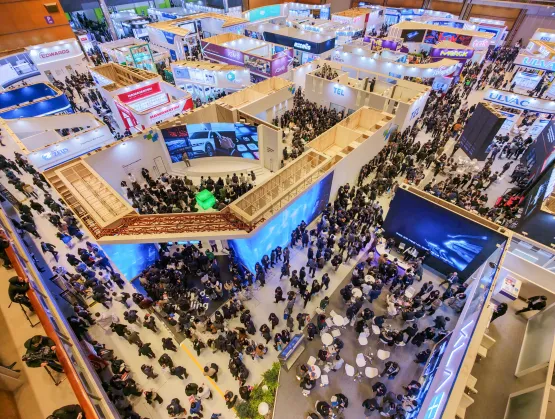
As the global semiconductor industry enters a decisive new phase shaped by artificial intelligence, SEMICON Korea 2026 convened the ecosystem from February 11–13 in Seoul, bringing together the companies, technologies, and talent required to sustain momentum on both sides of the AI equation: using AI to transform semiconductor operations, and advancing semiconductor innovation to enable the next generation of AI systems.At the SEMICON Korea press conference, Hyun Cha, President, SEMI Korea stated that with nearly 550 exhibiting companies and over 2,400 booths, the event underscored how progress now depends on a virtuous cycle of collaboration across the entire value chain—from materials and equipment to design, manufacturing, packaging, and systems integration.Opening Perspectives: Collaboration as the Catalyst In the opening ceremony, Ajit Manocha, President and CEO of SEMI, framed the opportunity and challenge ahead: AI is accelerating the industry’s trajectory toward a trillion-dollar market, but sustaining that growth will require deeper collaboration across an increasingly complex ecosystem.That message was reinforced by YH Lee, Chairman of Wonik, who emphasized the need for alignment across the value chain, “looking side to side, not only forward,” as scaling semiconductor technologies grows more difficult. From a policy perspective, Shinhak Moon, Vice Minister of Korea’s Ministry of Trade, Industry Resources (MOTIR), highlighted the importance of the full ecosystem, including parts, materials, and equipment, while cautioning that resilience will be critical amid economic cycles. Together, these perspectives set the stage for a keynote program focused on how AI and semiconductors are now co-evolving.Opening Keynote: Samsung Electronics on Architecting the Future of AI SystemsThe keynote program opened with Jaihyuk Song, Corporate President and CTO of Samsung Electronics, who examined what comes next for AI systems as compute and memory demands rise exponentially. He described a widening gap between compute performance and memory bandwidth, positioning advanced packaging and architectural innovation as central to closing that gap.Song outlined Samsung’s focus on next-generation memory technologies, including high-bandwidth memory and compute-in-memory approaches, as well as the transition beyond traditional Moore’s Law scaling toward planar, vertical, and stacked architectures. His message was clear: sustaining AI performance gains will depend on tight integration across design, process technology, packaging, and system architecture, reinforcing the need for ecosystem-wide coordination. ASE: From Chip Integration to System OptimizationTien Wu, CEO of ASE, expanded the discussion from devices to systems, arguing that advanced packaging has become a primary driver of system-level performance and efficiency. As AI workloads push power, thermal, and bandwidth limits, Wu described a shift from single-chip packages toward heterogeneous integration, 2.5D and 3D architectures, and co-packaged optics.Wu emphasized that productivity, yield, and throughput will increasingly determine competitiveness as packages grow larger and more complex. His perspective reinforced a central theme of SEMICON Korea 2026: AI-driven demand is forcing tighter coupling between design, manufacturing, and packaging, making collaboration not optional, but essential.Cadence: AI-Enabled Design Across the Value ChainBoyd Phelps, Senior Vice President and General Manager of Silicon Solutions at Cadence Design Systems, highlighted how AI is already reshaping semiconductor design and development. As process scaling slows and cost per transistor rises, Phelps described disaggregation and chiplets as a new abstraction layer that enables continued innovation through customization and configurability.He also pointed to the growing role of AI-driven design automation, noting that a significant portion of recent designs leveraged AI-enabled tools. Cadence’s end-to-end portfolio—from IP and tools to packaging and test—illustrated how AI is becoming both a design accelerant and a necessary response to rising system complexity, reinforcing the industry’s virtuous cycle.Lam Research: Velocity Through AI and AutomationThe theme of operational transformation took center stage with Tim Archer, President and CEO of Lam Research, who introduced “velocity” as the defining imperative of the AI era. As AI-driven demand accelerates product cycles and increases complexity, Archer argued that speed must be matched with direction—enabled by AI, automation, and digital twins.Archer detailed Lam’s progress toward autonomous fabs, equipment intelligence, and collaborative virtual development environments that reduce variability and accelerate process development. These capabilities, he explained, allow the industry to respond faster while preserving quality and resilience—another example of AI improving semiconductor operations even as semiconductor innovation enables AI growth.SK hynix: AI as a Tool for Memory InnovationLooking further into the future, Sunghoon Lee, Senior Vice President and Head of R D Process at SK hynix, addressed the mounting difficulty of sustaining memory technology cadence. As stacking, bonding, and material challenges intensify, Lee described a shift toward AI-based R D models that dramatically accelerate material discovery and optimization.By integrating AI into material exploration and process development, SK hynix is shortening development cycles and enabling new memory architectures. Lee emphasized that realizing the full potential of AI-driven R D will require greater data sharing and collaboration across partners—reinforcing the ecosystem-wide virtuous cycle.NVIDIA: From Chips to AI InfrastructureThe final keynote, delivered by Soyoung Jeong, Head of Korea Business at NVIDIA, framed the transformation of NVIDIA from a GPU company into an AI infrastructure provider. He described how accelerated computing and AI factories are reshaping chip design, manufacturing, packaging, and system integration.From AI-assisted design and simulation to system-level optimization and physical AI, NVIDIA’s approach illustrated how semiconductors and AI are now inseparable, each advancing through the other. Partnerships across memory, equipment, and software ecosystems were highlighted as critical to sustaining this momentum.A Program Aligned Around the Same ThemeBeyond the keynotes, SEMICON Korea 2026 reinforced these messages through technology symposia, AI and smart manufacturing forums, cybersecurity discussions, and workforce development initiatives—all focused on enabling AI-powered innovation across the semiconductor lifecycle.Additional Program Highlights: Extending the Virtuous Cycle Across the EcosystemBeyond the keynote stage, SEMICON Korea 2026 reinforced the same virtuous cycle of AI and semiconductor innovation through a wide range of technical, business, and workforce programs designed to engage every layer of the value chain.AI Summit: Translating Strategy into Industrial ImpactThe AI Summit, co‑hosted by SEMI and KAIST, served as a focal point for aligning academic research, device manufacturers, and equipment leaders around AI-powered industrial innovation. Featuring faculty from KAIST alongside representatives from Samsung Electronics, SK hynix, and global equipment companies, the summit explored technology strategies and future roadmaps aimed at accelerating AI adoption across semiconductor manufacturing and design.The discussions reinforced a central theme of SEMICON Korea 2026: AI is no longer an isolated software layer, but a system-level capability that must be embedded across processes, tools, and infrastructure to unlock its full value.Smart Manufacturing Forum: Advancing the Autonomous FabThe Smart Manufacturing Forum highlighted how AI, digital twins, and real-time data are transforming semiconductor fabs toward more autonomous, resilient operations. Speakers shared trends and success cases demonstrating how advanced analytics and AI-driven decision-making are improving yield, productivity, and operational agility.This forum echoed themes raised by equipment and manufacturing leaders in the keynote program, underscoring how AI-driven manufacturing excellence is becoming a prerequisite for meeting the speed, scale, and quality demands of next-generation AI chips.Startup Summit: Fueling Innovation from the Ground UpThe Startup Summit showcased emerging semiconductor and display startups focused on applying AI to improve chip performance, energy efficiency, and manufacturing processes. By connecting startups with industry leaders and venture capital firms—including Applied Ventures, Intel Capital, Samsung Ventures, and SK hynix—the summit emphasized the importance of nurturing innovation across the ecosystem.These early-stage technologies represent the next wave of ideas feeding into the virtuous cycle, where AI-enabled innovation at the startup level can scale rapidly through collaboration with established players.Cybersecurity Forum: Securing the AI-Driven Semiconductor FutureAs AI becomes deeply embedded in semiconductor operations and data flows, the Cybersecurity Forum addressed the growing need for digital trust across the ecosystem. Global experts examined cybersecurity challenges related to compliance, fab security, and AI data governance, highlighting the importance of collaboration to protect sensitive data and intellectual property.The forum reinforced that secure, trusted infrastructure is a foundational requirement for the AI-driven transformation discussed throughout SEMICON Korea 2026.Conclusion: Advancing TogetherSEMICON Korea 2026 made clear that the next phase of industry growth will not be driven by isolated breakthroughs, but by a virtuous cycle of alignment across the full semiconductor value chain. By integrating AI into design, manufacturing, and operations—and by advancing semiconductor technologies that power AI—the industry is building a foundation for sustained innovation. As the event demonstrated, progress will be fastest when the ecosystem moves forward together.Samer Bahou is Director, Corporate Communications at SEMI. Jaegwan Shim is Senior Specialist, Marketing at SEMI Korea.
Read More
Hello SEMI members:First and foremost, I hope this finds you all healthy and safe. With new developments emerging every day on the COVID-19 coronavirus outbreak, we want to make sure you’re aware of the resources that SEMI is making available to your business, and many others in the electronics manufacturing and design supply chain, to help you navigate through these tumultuous times. Our SEMI Responds webpage lists best practices for company policies, communications and working from home, based on recent calls with members led by our Environmental Health and Safety (EHS) and Information Technology Leadership (ITL) groups. The EHS section provides tips on facilities and meetings, employee policies, business travel and communications, while the ITL section lists insights on computing hardware for staff, licensing, networks, security and employee policies. SEMI greatly appreciates the invaluable member input. Our goal is to help our member companies make informed business decisions during these highly challenging and uncertain conditions, and your contributions to this effort will benefit the industry as a whole. I am pleased to announce that SEMI has partnered with McKinsey Company to provide an additional source of information: a joint-webinar – COVID-19 Insights: Microelectronics Industry Impact and Best Practices – on Thursday, March 26 at 4pm PT. We will present insights gathered through SEMI member surveys and other industry outreach along with the latest expert data from McKinsey Company to help guide your business continuity plans. Click here to register.The SEMI Global Advocacy team has been evaluating how government responses to the outbreak will impact the industry. In the U.S., the team sent letters to 16 state governors last week to request the classification of the semiconductor industry as an “essential business” so that operations can continue if states institute “shelter-in-place” orders. The letters note that SEMI members are “employing all measures necessary to maintain the health and safety of their employees as they maintain continuous operations critical to the industry” based on the input of participating companies.As for SEMI events, I want to reassure you that SEMI continues to make the safety of our members, exhibitors, visitors and employees our top priority. We continue to track COVID-19 developments worldwide and advisories from the World Health Organization (WHO) and the U.S. Centers for Disease Control and Prevention (CDC). We are also working with our regional offices to engage with industry contacts for inputs, and SEMI has postponed or cancelled several of our major events including: Canceling SEMICON Korea 2020, which was scheduled for February 5-7 Postponing SEMICON China 2020 from March 18-20 to June 27-29 Postponing ISS Europe 2020 from April 1-3 to September 1-3 Postponing ASMC 2020 from May 4-7 to the week of August 23 (still finalizing) Postponing SEMICON Southeast Asia from May 12-14 to August 11-13 If plans for any other upcoming events change, SEMI will immediately notify event exhibitors, visitors and speakers. You can find the latest information on changes to our event schedule on our Coronavirus Status Updates webpage. SEMI is working to help our members continue to connect and do business in the interim. For example, our Standards team is hosting virtual meetings for task forces, and we are exploring other virtual events and ways to keep the lines of communication open. I have challenged the SEMI team to think outside the box and will keep you posted as we make new services available.In the meantime, SEMI continues preparations for later events with laser-sharp focus and determined intent to help spark the industry to reignite business growth and meet pent-up demand. The first major rescheduled event is our largest, SEMICON China in Shanghai. You have probably heard news on some of the positive signs coming out of China. You can read about some of these developments in this blog post from the SEMI China team, which has been in close contact with key exhibitors, domestic suppliers and large multi-national corporations that have confirmed that they will participate in SEMICON China based on the current outlook. We are determined to help the industry return to growth. For the first time we will feature an IC Design Pavilion at SEMICON China to help our traditional semiconductor manufacturing members form more connections across the microelectronics supply chain.In the U.S., this year is proving how quickly everything can change. While the immediate future is steeped in uncertainty, we are diligently assessing current conditions while planning for SEMICON West 2020 in San Francisco from July 20-23, though the event dates are subject to change. SEMI is monitoring the COVID-19 containment efforts closely, and we will keep you informed of any changes in plans.In closing, I want to provide a brief reminder that SEMI members should be proud of the roles your companies have played in enabling the technology that will beat the COVID-19 coronavirus. The most powerful supercomputers in the world are helping in the push to develop a vaccine, and these machines would not exist without countless innovations from SEMI members over our 50-year history. The team at SEMI is proud to serve you all and is absolutely committed to doing all that we can to help the industry rise to meet this newest challenge. Sincerely yours,Ajit ManochaPresident and CEO, SEMI
Read More
Once an unpopular career destination for university graduates in Korea, the semiconductor industry has been a plum target since the rise of Samsung Electronics and SK Hynix as global leaders and key growth engines for the Korean economy. The industry’s outsize role in innovation of cutting-edge technologies and applications such as artificial intelligence (AI), Internet of Things (IoT), 5G and autonomous driving has added to the appeal.The draw of a career in chip manufacturing is even stronger when new graduates from Korean universities consider the semiconductor industry’s rapid growth of 22.2% in 2017 and 15.5% in 2018, according to VLSI Research. Yet, even before earning their degrees, many students are unclear about steps they need to take to prepare for a career in the industry and the type of work available to them.These questions and concerns were on the top of the minds of 250 students who gathered at COEX in Seoul in mid-November for SEMI Campus Outreach, a half day of career insights from global chip companies including Lam Research, Applied Materials, Tokyo Electron, and KLA along with leading semiconductor companies in Korea such as SEMES, EO technics, JUSUNG ENGINEERING, DONGJIN SEMICHEM, PSK and Wonik IPS. Keynote - Inhak Harry Suh, CEO, Lam Research Korea 250 students gathered at Campus Outreach Campus Outreach keynote speaker Inhak Harry Suh, CEO of Lam Research Korea, stressed that talented new graduates hold the key to leading the semiconductor industry into the Industry 4.0 era and the next phase of growth. He urged the students to look for a company that treats its employees with respect and fairness and to enjoy their work. Joining the executives in inspiring the students, field and service engineers highlighted the semiconductor industry’s strong growth potential, described their job responsibilities and the skills students need to develop to thrive, and offered guidance on subjects to study in school to best prepare students for jobs in the industry. On the recruiting side, human resources representatives at the event provided overviews of their companies and skills they’re looking for as they court talent. Campus Outreach sponsors At SEMICON Korea 2020 – Feb. 5-7 at COEX in Seoul – SEMI will continue to cultivate industry talent at the Workforce Development Pavilion. To help the industry solve its critical talent shortage, the pavilion will offer university students interviews with industry experts and tutorials on semiconductor production as the students explore career paths and are mentored by engineers during the Meet the Experts program. And with a diverse workforce recognized as a competitive advantage, the Women-in-Technology session will gather leaders to discuss how the industry can improve diversity.Jaegwan Shim is a marketing specialist at SEMI Korea.
Read More
The more than 53,000 people who flocked to SEMICON Korea last month were treated to a motherlode of insight into the future of the semiconductor industry as 470 companies exhibited innovative technologies in more than 2,000 booths. But the annual event’s most arresting numbers came in keynotes and other presentations pointing to the extraordinary industry growth that lies ahead.“It is no exaggeration to say that 90 percent of the world’s data has been generated in the last few years,” said Jim Feldhan, president of Semico Research. “This explosive growth of data is expected to continue. That's why server shipments will grow by 20.3 percent, or 30 million units, this year alone.”Feldhan said that the Internet of Things (IoT) will be a chief driver of semiconductor industry growth, with IoT expected to be applied in areas as varied as automotive, smart cities, edge computers, finance, architecture, agriculture and healthcare. For its part, artificial intelligence (AI) will start to exercise human-like judgment. Feldhan noted that in many instances in these fields, “it is more accurate to apply AI and vision systems than to rely on traditional decision-making.”Yoon Jong Lee, senior vice president of DB HiTek, predicted that the Internet, AI and 5G will drive market growth. “Looking back over the past 30 years, semiconductor market growth was powered by PCs, the Internet and cell phones, yet last year memory accounted for 35 percent of total semiconductor sales, more than double the figure in 2016,” he said. He predicted that, in 2019, the foundry sector will outstrip the semiconductor market in growth, noting that the average growth rate of the semiconductor industry is expected to be 4.1 percent, compared to 7.1 percent for the foundry market. Clark Tseng, director of SEMI, reported that the strong semiconductor growth in 2018 is unlikely to continue in 2019 due to the decline in memory pricing, as well as mobile and PC demand. “Demand for semiconductors is likely to decline in the first half as the industry is still digesting inventory and rebound in the second,” Tseng said. Semiconductor industry growth headwinds include decreases in high-end smartphone purchases, PC demand and demand for DRAMs for servers in data centers, Tseng said. Declines in economic growth and consumption in China and the U.S.-China trade war will also contribute to a slowdown. However, Tseng noted that, over the long term, technology innovation will continue and that the semiconductor industry’s prospects remain bright.One key innovation will be the elimination of AI’s reliance on Internet connections in the future. In his opening day keynote, Eunsoo Shim, senior vice president at Samsung Electronics, emphasized that AI technology that operates without the Internet in the future is essential. “We are developing 'on-device AI' technology that incorporates AI algorithms in products such as smartphones and autonomous vehicles,” he said. "When on-device AI technology is implemented, it reduces reliance on the Internet, battery consumption, and data latency.” Reducing latency will significantly improve device response time.Walden C. Rhines, CEO Emeritus of Mentor, a Siemens business, predicted that AI will fuel rapid memory growth. The memory semiconductor (DRAM, NAND flash) market is expected to see a temporary slowdown this year, with the market expected to rebound in 2020. Rhines said that memory could be seen as an early market with rapid future growth, citing memory market super-booms in 1995 and 2000.“Memory production has not decreased since 1995 or 2000,” he said. “Although memory prices will temporarily fall this year after significant market growth in 2017 to 2018, the market will continue to grow as memory production increases,” he said. Rhines added that “although memory prices will drop by about 10 percent this year, he believes prices will increase 6 percent next year.” He also predicted the steady growth of the non-memory semiconductor market as AI technology matures and China’s investment in fabless companies continues.Indeed, SEMICON Korea speakers made it clear that concerns about the growth of the semiconductor industry are expected to be short-lived. While overall growth is likely to slow in 2019, the industry is expected to rebound steadily – powered by the semiconductor industry paradigm shift led by AI, IOT, and autonomous driving – and reach a new high of nearly $541 billion in 2020.Jaegwan Shim is a marketing specialist at SEMI Korea.
Read More