downloadGroupGroupnoun_press release_995423_000000 copyGroupnoun_Feed_96767_000000Group 19noun_pictures_1817522_000000Member company iconResource item iconStore item iconGroup 19Group 19noun_Photo_2085192_000000 Copynoun_presentation_2096081_000000Group 19Group Copy 7noun_webinar_692730_000000Path
Skip to main content
Default Banner Image

supply chain

The CxO Summit at SEMICON Europa 2025 spotlighted Europe’s ongoing efforts to build a resilient and globally competitive semiconductor industry, while calling for greater ambition, speed, and unity in execution. Following global disruptions with the automotive supply chain crisis, the European Union launched a continent-wide strategy through the EU Chips Act. While the Act has already spurred significant developments, including construction of the new ESMC fab in Dresden, Europe remains far from its goal of achieving a 20% share of global semiconductor production by 2030. The CxO Summit, part of the SEMICON Europa event in Munich, provided an opportunity for industry leaders to share ideas about how to catalyze the next phase of the European industry’s growth.Ajit Manocha, President and CEO of SEMI opened the summit by describing today’s industry landscape with one word: “unprecedented.” Manocha said, “The global growth of the industry is unprecedented, with 107 new fabs set to come online by 2028, but the uncertainties are unprecedented, from geopolitics to the talent shortage to environmental concerns. So we need unprecedented solutions.” Ajit Manocha, President and CEO, SEMILaith Altimime, President of SEMI Europe echoed the mood of uncertainty, describing Europe as caught “in a perfect storm.” Altimime said, “As we face a combination of internal challenges and intensifying external competition, collaboration is not optional — it is mission critical.” Laith Altimime, President, SEMI EuropePierre Chastenet, Head of the Unit for Microelectronics and Photonics, European Commission, highlighted the tangible progress made under the EU Chips Act. “We now have a proper toolbox to handle a future crisis in the supply chain. The Chips for Europe initiative has led to the creation of five pilot lines for advanced technologies such as FD-SOI and wide bandgap semiconductors.” Chastenet added, “Europe must now capitalize on its strengths, from materials and equipment to design tools and cutting-edge research emerging from our RTOs.”Pierre Chastanet, Head of the Unit for Microelectronics and Photonics, European CommissionEchoing the call for action, Oliver Schenk, Member of the European Parliament, urged stronger regional unity. “Europe must act together, act faster, and act with much bigger ambition,” Schenk said, reinforcing the need for cross-border commitment to strengthen the continent’s semiconductor position.Oliver Schenk, Member of the European Parliament, European ParliamentHighlighting Europe’s most critical technology gap, Luc Van den hove, President and CEO of imec, unveiled plans for a new advanced fab backed by €2.5 billion in investment from the EU, the Flemish government, and ASML. Van den hove urged Europe to commit wholeheartedly to advanced technologies: “We must be more ambitious, and focus on disruptive breakthroughs rather than incremental change if we want to ensure a prosperous future.”Luc Van den hove, President CEO, imecAt the CxO Summit, CEA-Leti and ASML signed a memorandum of understanding (MoU) to deepen their collaboration and accelerate innovation in mainstream semiconductor technologies. Building on promising results in hybrid bonding, the partnership will now target 'More-than-Moore' innovations, including heterogeneous integration and novel substrates like SiC and GaN. “We aim to combine ASML’s world-class lithography expertise with CEA-Leti’s system-level innovation,” said Sébastien Dauvé, CEO of CEA-Leti. The collaboration is set to strengthen Europe’s ecosystem by shortening the path from early research to industrial impact.Left: Anne Hidma, Senior Vice President EUR US, ASML; Right: Sébastien Dauvé, CEO, CEA-LetiTurning to Europe’s industrial base, Christian Senger, CEO of Volkswagen Autonomous Mobility, emphasized the need to shift from risk-aversion to opportunity. While the region’s automotive sector faces intense global competition, particularly from China, Senger highlighted that Europe has the potential to lead in new mobility markets. “The market for autonomous roboshuttles for people transport in large cities is forecast to be worth €400 billion in the US and Europe alone,” he said. With American firms like Waymo and Uber leading the robotaxi space, Senger stressed that Europe must “act swiftly to create an environment that supports an autonomous mobility industry here.”Christian Senger, Member of the Board for Fully Autonomous Mobility and Transport CEO of ADMT GmbH, VolkswagenEurope’s Potential to Create Advanced TechnologyOne of these RTOs, CEA-Leti, is responsible for the FAMES pilot line for FD-SOI technology. Sébastien Dauvé, CEO of CEA-Leti, agreed with Pierre Chastenet that the pilot lines show great promise. He said, “FD-SOI is a big trend in semiconductors, because it enables very low power consumption in embedded devices. We think that adoption of the technology will grow in the coming years, and that is good, because most of the technology is produced in Europe.”Sébastien Dauvé, CEO, CEA-LetiEurope is also widely recognized to be the leading global voice on sustainability – a huge issue of concern to the semiconductor industry. Henri Berthe, President of the Semiconductor and Battery Segment at Scheider Electric, told the summit that 500 million tonnes of CO2 emissions per year are attributable to the semiconductor industry – “more than the whole of Mexico emits!” he said. “We need to make fabs more efficient, and that is why Schneider Electric has launched a new playbook with Applied Materials for sustainable energy abundance for the industry.”Henri Berthe, President of the Semiconductor Segment, Schneider ElectricAnother aspect of Europe’s playbook is support for new fabs. The flagship is ESMC, the joint venture between TSMC, NXP Semiconductors, Bosch, and Infineon. Christian Koitzsch, president and managing director of ESMC, reported to the summit that the project to build in Dresden a 12nm FinFET foundry and a 28nm CMOS line, requiring a total investment of €10bn, is on schedule. “We are now developing local supply chains, hosting a series of ESMC Supplier Days which are open not only to German but generally to European suppliers,” said Koitzsch.Christian Koitzsch, President and Managing Director, European Semiconductor Manufacturing Company (ESMC)As Manfred Horstmann, General Manager and Senior Vice President of Global Foundries, pointed out, the building of the ESMC fab means that Dresden is established as the center of a cluster of semiconductor industry companies. “Global Foundries has its Fab 1 and a mask center in Dresden. In fact, one-third of the chips produced throughout the whole of Europe now comes from Dresden.”Manfred Horstmann, General Manager and Senior Vice President, GlobalFoundriesAn example of ambition was given by Terence Gan, Executive Director of the Institute of Microelectronics of Singapore. Gan told the summit how Singapore has used pilot lines to stimulate research and development in new technologies. He said: “We started research into advanced packaging as long ago as 2011. Most people thought we were mad! But today, there is strong demand for our advanced packaging capabilities because of the rise of AI and its need for high-performance computing.”Terence Gan, Executive Director, Institute of MicroelectronicsBreaking Barriers to ProgressDespite momentum, bureaucratic inefficiencies continue to hamper progress. Narjiss Haddaoui, Managing Director of European Economics called for faster decision-making: “In global competition, speed is a decisive factor. To act fast enough, the EU must change its ‘software’ - the processes by which it considers and makes decisions.” Narjiss Haddaoui, Managing Director, European economicsThe stifling character of European bureaucracy is reflected in the region’s approach to building fabs. Herbert Blaschitz, Executive Vice President of Advanced Technology Facilities at Exyte, compared fab construction timelines: 20 months in Taiwan, 34 in Europe, and 38 in the U.S., attributing delays in Europe to paperwork bottlenecks.Herbert Blaschitz, Executive VP of Advanced Technology Facilities, ExyteFabio Gualandris, President for Quality, Manufacturing and Technology at STMicroelectronics raised another concern — 100% of raw materials used in European fabs come from outside the region. Christophe Frey, Vice-President for EU Engagements at Arm France, added that geopolitical tensions are clouding the path forward: “We are a bit lost in the smoke from the big fire in the world’s semiconductor industry.” Fabio Gualandris, President Quality, Manufacturing Technology, STMicroelectronics Christophe Frey, Vice-President of EU Engagements, Arm FrancePlaybooks For Future SuccessSo amid the uncertainty and global tension, what lessons can the industry learn from successful regional examples? Tuomas Korpela, Business Development Senior Manager at Nokia, credited Finland’s strategic procurement and policy tools with enabling a vibrant semiconductor ecosystem: “Finland creates demand for advanced chips using industrial policy tools, alongside strategic procurement in sectors such as defense and aerospace, and connectivity.” Tuomas Korpela, Business Development Senior Manager - Corporate Development Organization, NokiaAt a regional level, Joerg Schulze, Director of the Bavarian Chips Alliance, said that his organization was supported by the Bavarian State Ministry of Economic Affairs, as well as by companies and universities. “We help semiconductor companies to establish themselves and grow here through help with site searches, networking and contacts, funding and support, and talent acquisition,” said Schulze.Joerg Schulze, Spokesperson for the Bavarian Chips Alliance, Director of the Fraunhofer IISB, Bayern Innovativ GmbHCompanies in the European semiconductor supply chain also provided the summit with their insights into the roots of global success. André Grede, Chief Technology Officer of Comet, described how his company’s strategy is not to wait for customers to tell it what they need, but to be “ahead of the curve.” Grede said: “Is staying in sync with the customer enough? Not for us - we are deeply embedded with our customers, and constantly looking to broaden our relevance to them.”André Grede, CTO, CometChristophe Maleville, Chief Technology Officer of Soitec, provided a real-world example of how this is done. He said: “Our engineered substrates using RF-SOI technology reduce the drain on a mobile phone’s battery power, and cut our customers’ board footprint thanks to RF front end integration. As a result, our products are now in 100% of 5G smartphones.”Christophe Maleville, CTO, SoitecAnne Hidma, Senior Vice-President for Europe and the US at ASML, shared the company’s success formula: “The reasons for ASML’s success include customer focus – decide which markets you are going to be in, and which you are not. We are also all-in on innovation. We nurture an ecosystem, which for us includes imec and CEA-Leti, as well as partnerships with academia. And lastly, we have a strong supply base, which is a core strength of Europe.” In a time marked by both uncertainty and opportunity, the example of ASML shows how the European semiconductor supply chain can survive and thrive.Anne Hidma, Senior Vice President EUR US, ASMLEurope’s Path ForwardThe CxO Summit made one thing clear: Europe has world-class innovation, policy momentum, and industrial commitment. What’s needed now is faster execution, deeper collaboration, and the courage to invest in the technologies of tomorrow. As the industry heads toward the $1 trillion milestone, the decisions made today will shape Europe’s place in the semiconductor world for decades to come.On behalf of SEMI, the SEMI Europe team would like to express appreciation to the industry leaders for sharing their visions and readiness to collaborate during the CxO Summit.SEMI ContactLaith Altimime, President SEMI [email protected]
Read More
This year’s SEMICON West brought together industry experts from around the world to share insights on three of today’s most pressing topics: geopolitics, sustainability, and the semiconductor supply chain. From October 7-8, leaders from each field offered updates during SEMICON West’s Executive Panel Series, with each topic explored in its own hour-long session.Strategic Silicon: Geopolitics Shaping the Future of Semiconductors SEMICON West’s Executive Panel Series began on Tuesday, October 7, with a discussion on today’s geopolitical ecosystem and its impact on the semiconductor industry. Speakers compared the U.S. semiconductor landscape with China’s, highlighted supply chain strategies to mitigate disruption, and defined what it means to “win” the AI race. Mackenzie Hawkins from Bloomberg News moderated the panel, which featured Vince Jesaitis from Arm, Frank Heemskerk from ASML, Olivier Blachier from Entegris, Sarah Kemp from Intel, and Rich Ashooh from Lam Research.First, the panelists mentioned the U.S. CHIPS Act and the legislation’s attempt to diversify the semiconductor supply chain. Jesaitis added that countries are prioritizing supply chain resiliency, to which Kemp pointed to rising customer willingness to pay premiums for stronger supply chains. But what does it take to strengthen a supply chain? According to the panelists, a prevailing approach has been to regionalize operations. More regionalized supply chains can better withstand policy changes overall, but Ashooh noted that government regulations often can’t keep pace with innovation demands. China, in particular, may have key advantages in this respect. “The U.S. remains the most innovative environment in the world,” said Ashooh. “But if the Chinese government declared something a priority, the support will be there for it.” He also mentioned this arrangement allows China to advance in spurts.Kemp also stated that even with U.S. innovation and government incentives, the country faces longer construction times and greater policy complexity. Meanwhile, China is doubling down on its industry with resources and clear intent. Ashooh also added that China has more leverage in 2025 than it did during the first Trump administration. To address this, the panel recommended policy refinement to make U.S. trade relations more seamless. Furthermore, Heemskerk stated that the best government policies are often boring, advising governments to be predictable and reliable.The discussion concluded with mention of the AI race. Amidst discussion about what it means to “win,” Ashooh offered a simple explanation. Winning, he said, is seeing only customers in front of you instead of competitors. Sustainability Panel: Path to Success—The Semiconductor Industry Leads the WayAfter the Geopolitics panel, the stage swiftly transitioned to a new discussion centered on sustainability. Speakers included Elena Kocherovsky from Applied Materials, Beth Elroy from Micron, Joshua Kang from Qualcomm, and Sanchali Bhattacharjee from Google. SEMI’s Mousumi Bhat moderated this session.It may come as no surprise to learn that sustainability is reaching a critical juncture. According to the Climate Clock, the world has just under four years to address climate change before it becomes irreversible. Bhat pointed to this figure, emphasizing the mounting importance of industry-wide collaboration to make a tangible difference. With such a tight window for change, the panelists explained what’s being done to address these issues. Using AI to strengthen climate data, for example, came up several times. For instance, Sanchali mentioned that AI can bring in new data parameters to solve issues much faster. “We’re sitting at an inflection point where we have to harness the power of data,” she said.Elroy also shared opportunities to replace aging infrastructure with more sustainable equipment, as well as creating products that consume less energy from the start. However, distraction from climate goals is still a significant risk. Kocherovsky highlighted the industry’s limited resources, underscoring the importance of allocating them to efforts that move the needle. She cited clean energy adoption, noting that 80% of the industry’s emissions come from electricity. Fortunately, mitigation efforts are underway. Kang pointed to Qualcomm’s sponsorship of AI-powered air quality monitoring devices in Thailand, while Kocherovsky also touched on Applied Materials’ new sustainability projects. These efforts, while substantial, are nowhere near exhaustive. Tangible work is being done across the entire semiconductor ecosystem to make its solutions more sustainable, but it’s only the beginning. Charting the Course: Futureproofing Your Supply ChainsAs supply chain security has risen in priority, Wednesday’s panel detailed the industry’s efforts to strengthen it. Although COVID-19 exposed the urgent need for more resilient semiconductor supply chains, core issues have existed long before then. To explore this topic, I engaged speakers from across the value chain, including EMD’s Steven Johnston, AltaScient’s Rekha Menon-Varma, GlobalFoundries’ Roger Kao, Polar Semiconductor’s Surya Iyer, and Cisco’s Aman Aflaki. Today’s supply chain risks are enormous. From geopolitical tensions to natural disasters and cybersecurity threats, the semiconductor supply chain must withstand several intense and ongoing conditions. Because of this, the panel stressed the importance of early warning awareness and building buffers to counter setbacks. Creating buffers, Aflaki said, leads to necessary redundancies like using digital twins when feasible or engaging with second-and third-tier suppliers. Today’s customers, he said, also tend to be more focused on resilience and risk management rather than cost. Another emerging risk management solution is to use AI to build scenario models before incidents happen. As AI technology advances, companies that adopt it sooner rather than later could gain a competitive advantage. Johnston also added that AI could lead to more efficient R D and material sourcing. In addition, the panel pointed to the growing worldwide shift to regionalize supply chains. Menon-Varma highlighted that each country is approaching this in its own way, with many new global partnerships arising due to U.S. tariffs and export controls. Kao also reinforced today’s “local-for-local” supply chain trend.Finally, the panel ended with a discussion on collaboration. Although most leaders cite collaboration as crucial for the industry’s future, Johnston noted that working together is often halted by IP concerns. To address this, Iyer pointed to organizations like SEMI that unite key players to solve industry-wide problems.SEMI would like to thank all speakers, sponsors, and attendees for the success of this year’s Executive Panel Series. Bettina Weiss is Chief of Staff Corporate Strategy at SEMI.
Read More
As the Department of Commerce explores options to adjust patent fees, these changes will have important implications for the semiconductor industry, where thousands of patents are filed each year to protect groundbreaking technologies. At SEMI, we understand the complexity of getting this right for our member companies. The fee proposal is not only about rates, but also about how fees are structured, applied across different types of filers, and administered in practice. Designing a system that is fair and workable is a significant challenge and one that requires close collaboration between government and industry. The SEMI Global Advocacy team is consistently engaged with the Trump Administration and Congress as a resource. We want to ensure the unique needs of the semiconductor sector are understood and that any adjustments to the fee schedule strengthen U.S. innovation without creating unintended barriers. By working together, SEMI members with U.S. operations can help shape an approach that supports the U.S. Patent and Trademark Office's mission and U.S. competitiveness. Next Steps: SEMI will continue to provide technical insight from across our membership as this process develops and looks forward to partnering with policymakers. We will also share updates as information on new patent fees become available beyond the initial reporting by the Wall Street Journal and other news outlets.Visit SEMI Global Advocacy to learn more about public policy efforts and developments as well as how your company or organization can get involved.Scarlett Bickerton, Manager, Federal State Affairs at SEMI.
Read More
On July 7, President Trump issued an executive order (EO) extending the ten percent baseline tariff rate through August 1, 2025. In addition, the EO suspends the variable "reciprocal" tariffs imposed under the International Emergency Economic Powers Act (IEEPA) until August 1. The order applies to nearly all countries except Mexico, Canada, and China. These changes do not impact separate reciprocal tariff actions on China or alter existing Section 232 measures on steel, aluminum, autos, and their derivative products. At the time of this posting, letters had been sent to 20 trading partners outlining expected tariff rates if no agreement is reached by August 1; bilateral negotiations are ongoing. Eleven of the 21 countries received rate cuts compared to the "Liberation Day" announcements on April 2, ranging from one to 13 percent. President Trump indicated rates could rise around 25 percent if trading partners retaliate. Next Steps: The extension offers short-term stability for SEMI member companies to assess supply chain exposure. SEMI continues to monitor bilateral trade and tariff policy negotiations, including for discussion related to the semiconductor supply chain. We aim to keep member companies informed of relevant tariff escalations. If your company is directly impacted by a country-specific rate shift, please reach out to your region’s SEMI Global Advocacy contact with any feedback on how these tariffs are affecting your operations.Visit SEMI Global Advocacy to learn more about public policy efforts and developments as well as how your company or organization can get involved.Scarlett Bickerton, Manager, Federal State Affairs at SEMI.
Read More
In a letter sent to the United States Congress, SEMI, the leading industry association serving the global electronics design and manufacturing supply chain, and 16 member companies urged Congress include in reconciliation an expansion and extension of the Advanced Manufacturing Investment Tax Credit. The letter calls for the expansion of eligibility for the federal investment tax credit (ITC) to make the entire semiconductor manufacturing supply chain, as well as R D and design expenditures eligible for the ITC and extend the credit beyond the current 2026 expiration date—to allow sufficient time to plan and execute investments. The U.S. semiconductor market is growing to meet the needs of critical technology applications like artificial intelligence (AI), telecommunications, and bioengineering that rely on semiconductors. That growth requires increased investment for upstream materials, chemicals, and electronic design automation (EDA), which are currently excluded from receiving the tax credit (also known as Sec. 48D). Excluding these critical manufacturing and R D projects undermines domestic investment efforts potentially ceding U.S. leadership and competitiveness. Semiconductor infrastructure requires billions of dollars in upfront investment, and tax incentives are essential to help offset these exorbitant costs. A competitive tax environment encourages semiconductor companies to invest in the U.S., strengthening domestic manufacturing and innovation while helping the U.S. meet its goals of maintaining global leadership with lower-cost regions also providing incentives.Also, the credit expires at the end of 2026, leaving insufficient planning and implementation time for the billions in upfront investment required to support semiconductor infrastructure in the United States. To support the success, growth, and innovation of the U.S. semiconductor ecosystem, SEMI and its members urge Congress to include in the reconciliation package:Expansion of the Sec. 48D tax credit for the entire supply chain—as included in the SEMI Investment Act (S. 1642)Extension of the credit to allow enough time for businesses to plan and execute needed investments as included in the BASIC Act (H.R. 3204)Recognition of R D and design expenditures as eligible Sec. 48D projects as included in the STAR Act (H.R. 802)These inclusions are crucial to maintain U.S. competitiveness in attracting global semiconductor industry investments.The letter was signed by CEOs or presidents of the following leading companies: SEMI; ASML; ASM; Advantest America, Inc.; Axcelis Technologies Inc.; Brewer Science; Chemours; Dupont’s Electronics business, and Qnity™; Entegris; Evatec NA, Inc.; EFC Gases Advanced Materials; GlobalWafers Co., Ltd.; Lam Research Corporation; Micron Technology; Tokyo Electron America, Inc. TEL Manufacturing and Engineering of America, Inc.; SACHEM, Inc.; SkyWater Technology.Visit SEMI Global Advocacy to learn more about public policy efforts and developments as well as how your company or organization can get involved.Christina Banoub, Senior Manager, Federal Affairs at SEMI.
Read More
The new Administration in the United States has been aggressively focusing on trade measures to establish more balanced relationships with its trading partners, according to the White House.Over the last several weeks, President Trump declared a U.S. economic emergency and announced a universal 10% tariff on all countries, which went into effect on April 5, 2025. There are also levies that Trump has called “reciprocal,” including a 34% tariff on Chinese goods and a 20% tariff on European Union imports, that started on April 9.Previously announced 25% tariffs on foreign-made autos and certain auto parts are also now in effect.Presently, finished semiconductors are exempt from these tariffs, however, a Federal Register notice provided the following update:On April 1, the Secretary of Commerce initiated an investigation under section 232 of the Trade Expansion Act (19 U.S.C. 1862) to determine the effects on national security of imports of semiconductors, semiconductor manufacturing equipment (SME), and their derivative products. This includes, among other things, semiconductor substrates and bare wafers, legacy chips, leading-edge chips, microelectronics, and SME components. Derivative products include downstream products that contain semiconductors, such as those that make up the electronics supply chain. The SEMI Advocacy team is working side by side with member companies in the U.S. to prepare industry’s response for the public comment period tied to the 232 investigation. Comments are due May 7. (Update: SEMI comments submitted.)SEMI has been tirelessly working to educate new policymakers and regulators about the negative impacts the proposed tariffs have on the semiconductor industry. Ajit Manocha, President and CEO of SEMI, and Joe Stockunas, President of SEMI Americas, have been to Washington, D.C. for a series of meetings with administration officials and on Capitol Hill. Clarity on the recent tariff announcements — and guidance on what could come next — has been at the top of the agenda. Additionally, many member company executives recently attended the SEMI Washington Fly-In to advocate for policies that support the global supply chain on Capitol Hill, and the topic of tariffs was of the highest priority for congressional staff.Considering the complexities of the semiconductor industry supply chain, U.S. companies must rely on highly specialized materials, equipment, and components sourced from multiple countries. Strategically deployed and comprehensively assessed trade actions ensure that U.S. businesses maintain market access to critical supplies and remain globally competitive.Additionally, SEMI has highlighted that through fair and reciprocal trade practices, the U.S. can avoid unintended cost increases, supply chain disruptions, and ultimately any risks to American competitiveness in the global marketplace. Coordinating trade policies with allies prevents retaliatory tariffs for industries critical for national security, such as the semiconductor industry, and keeps costs competitive for consumers and industries, all while fostering a more resilient domestic manufacturing ecosystem. Semiconductor companies make substantial investments in building new facilities, and policy stability and predictability are key factors in site selections. With governments around the world putting incentives in place to bolster their semiconductor ecosystems, and to attract industry investments and good-paying jobs, public-private synchronization on trade policies is crucial to help the U.S. meet its technology innovation goals.Visit SEMI Global Advocacy to learn more about public policy efforts and developments as well as how your company or organization can get involved.John Cooney is VP, Global Advocacy Public Policy at SEMI.
Read More
On April 8-9, 2025, bees on cherry blossoms lining the streets of Washington D.C. were not the only things buzzing. The word “tariffs” floated in the air from TVs and conversations throughout Capitol Hill, as people eagerly awaited the implementation and response to United States President Donald Trump’s latest round of far-reaching trade policy. This was the backdrop for this year’s SEMI Washington Fly-In, hosted annually by the SEMI North America Advisory Board (NAAB), which gathered representatives from member companies to meet with government officials and advocate for policy changes vital to the semiconductor industry’s continued growth and innovation.SEMI executives and more than 50 representatives from member companies across the end-to-end semiconductor supply chain participated in the Fly-In. SEMI President and CEO Ajit Manocha, SEMI Americas President Joe Stockunas, and SEMI Vice President of Global Advocacy and Public Policy John Cooney met with Trump administration officials from the Department of Commerce. Reflecting the global reach of SEMI, Manocha traveled from Washington to Brussels for meetings with the European Commission. On April 8, Stockunas presided over a NAAB meeting, followed by a dinner and prep session for meetings with Congressional members and their staff the following day. Building on the priorities outlined in the briefing book prepared by Cooney’s Advocacy team in Washington, participants discussed priority messages to convey tailored to the specific officials.Focus topics included:Tariffs and Trade – Address the buzz of the day’s news cycle by spotlighting the challenges of multiple layers of tariffs facing U.S. operations due to the industry’s global supply chain.Export Control Policy – Revise export control rules to be narrow and focused with increased transparency to minimize uncertainty for companies contributing to the world’s most complex manufacturing processes.Tax Policy and Investment Incentives – Extend tax credits set to expire and expand them to include semiconductor material suppliers and packaging facilities to bolster the full semiconductor ecosystem.CHIPS Act Implementation – Streamline implementation and ensure that the full intended scope of the CHIPS Act is maintained to meet the goals of the bipartisan legislation.Workforce Development and Immigration – Highlight the need for multi-layered programs – from education to apprenticeships through career development – required to provide the skilled workforce that will underpin domestic industry expansion.Energy and Environment – Showcase the need for strong R D programs, industry-led standards, and permitting reforms to help the semiconductor industry address booming energy requirements to power Artificial Intelligence and meet the resource needs of the growing domestic chipmaking ecosystem.PFAS Regulation and R D Needs – Prioritize regulatory actions that take a risk-based approach to PFAS and other chemicals critical to semiconductor manufacturing, as well as R D to improve environmental controls and identify potential alternative substances.SEMI organized four groups by U.S. region – East, Midwest/South, Southwest and West – comprised of representatives from member companies with operations in the respective states of the Senate and House of Representative offices scheduled for meetings at Capitol Hill. On April 9, the groups met with Members of Congress and their staff from 20 of the nation’s states, including Arizona, Arkansas, California, Colorado, Delaware, Idaho, Kentucky, Louisiana, Massachusetts, Michigan, Minnesota, New Mexico, North Carolina, Ohio, Oregon, Texas, Utah, Virgina, Washington and West Virginia. The groups shared powerful perspectives, data and anecdotes on the impact of policies on their companies’ operations. While the groups for the SEMI Washington Fly-In included representatives from companies that are fierce business rivals, the focus of the discussions successfully presented a unified industry voice highlighting shared challenges, policy recommendations, and request for support – in true SEMI “Stronger Together” spirit.News of a 90-day pause on most tariffs broke while the groups were conducting their meetings. The intense difficulties of tracking changes on tariffs and other policies permeated throughout the conversations on the impact on business decision-making. While influencing policy changes will not occur instantaneously, the SEMI Washington Fly-In bolstered the SEMI Global Advocacy team’s ongoing efforts to educate officials on the nuances and critical importance of the complete semiconductor supply chain. Additionally, the discussions emphasized the policy modifications that will have the greatest impact in helping the industry continue its lasting legacy of innovation that improves the quality of life for people in the U.S. and around the world.On April 11, the Customs and Border Patrol issued an addendum to the tariff exemption list that did not result in a complete exemption for the semiconductor supply chain. President Trump posted afterward on social media: "We are taking a look at Semiconductors and the WHOLE ELECTRONICS SUPPLY CHAIN in the upcoming National Security Tariff Investigations."Traditionally, such investigations have been conducted over a prolonged period of time for the government to collect data directly from companies and solicit feedback from industry. If past precedent remains, this will represent the first formal opportunity for industry to engage on the Administration's tariffs. The President has stated that his plans for tariffs on semiconductors will be unveiled this week.Visit SEMI Global Advocacy to learn more about public policy efforts and developments, and SEMI Workforce Development for more information on efforts to address the microelectronics industry’s talent needs.Samer Bahou is Director of Marketing Communications at SEMI.
Read More
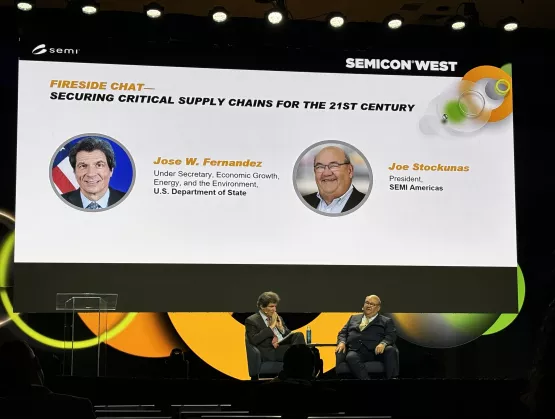
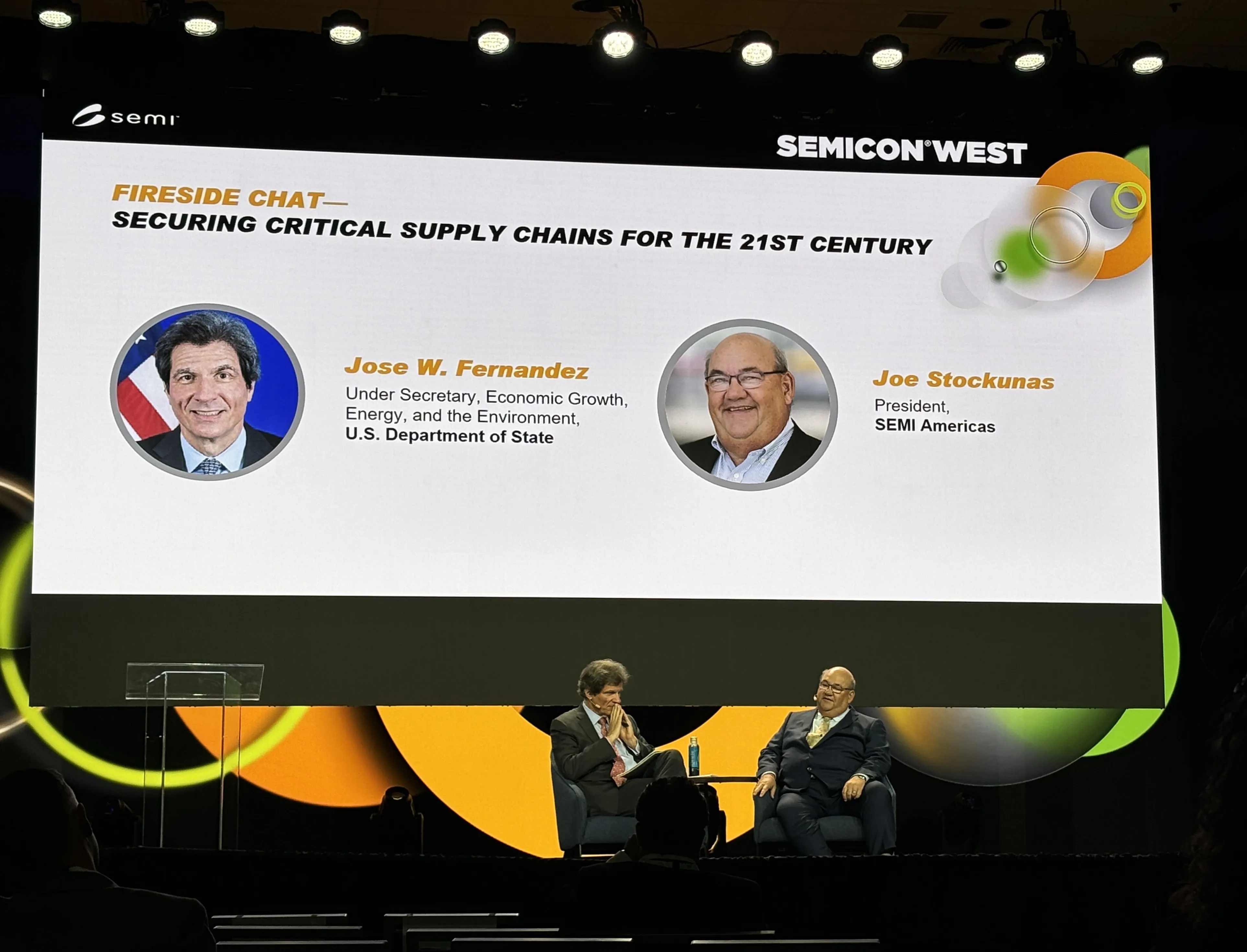
Jose Fernandez, U.S. Under Secretary of State for Economic Growth, Energy, and the Environment, sat down with Joe Stockunas, President of SEMI Americas, for a fireside chat on the CEO Summit keynote stage at SEMICON West 2024. In the Securing Critical Supply Chains for the 21st Century discussion, Fernandez emphasized the need to form partnerships to address vulnerabilities as the key to creating stable supply chains. It’s important to band together, he said, to protect our standards, values, and democracy. Diversifying the Global Mineral Supply ChainBecause chip fabricators depend on minerals like germanium, gallium, arsenic, indium, and rare earth elements, he highlighted how imperative it is for the industry to access them sustainably. To accomplish this, he stressed the importance of protection against supply chain bottlenecks in the mineral market. “According to a number of experts, we’re going to need 42x the amount of lithium by 2050, 25x the amount of manganese, and 25x the amount of cobalt,” he said. “Those minerals are basically controlled by one country, and that's a vulnerability.”To address these concerns, he shared that the State Department is working to strengthen the upstream and downstream portions of the semiconductor value chain, with the goal of supporting economic security across the globe. Foreign export controls, he said, have led to supply chain disruptions of key minerals, and bans on rare earth elements, processing equipment, and other technologies. As evidence of the State Department’s efforts to diversify, he highlighted the Minerals Security Partnership (MSP) and its work to seek mineral alternatives. Led by the U.S., it currently includes 13 other countries plus the European Union. Partnership and Investment Opportunities To further secure the industry's supply chain, Fernandez discussed the State Department’s efforts to partner with mining countries with untapped semiconductor resources. These countries, he said, also want alternate options for securing critical minerals. Fernandez highlighted Latin America as a key nearshoring focus area, pointing to the Americas Partnership for Economic Prosperity (APEP) as a solution for addressing obstacles to investment in the region. Obstacles, he said, include education levels, insecurity, and rule of law.To overcome such hurdles, he stressed the importance of fostering economic conditions that will attract investments, emphasizing the importance of workforce development initiatives and private sector involvement. “We don’t have enough trained workers in the U.S., and we certainly don’t have enough trained workers abroad,” he said. Fernandez shared that workforce development programs are being established through the U.S. Department of State International Technology Security and Innovation (ITSI) Fund, as well as private sector efforts and university partnerships. Currently, seven countries have been selected for ITSI funding, he said. “We’ve partnered with a number of universities to address the workforce gaps we see in our ITSI partners,” he said. “We’ve created workforce seminars, and we’re going to spend more time training the labor force.” These efforts supplement the work of the SEMI Foundation to develop a holistic workforce development program for the global semiconductor industry.Preventing Chips From Entering RussiaWith U.S. chips crossing into Russia through third parties, Stockunas asked Fernandez how the semiconductor industry could help address this. Despite existing sanctions against Russia, Fernandez shared that Russia still managed to import $1.7 billion worth of microchips from both the U.S. and Europe in 2023. To help slow this down, he highlighted additional due diligence for companies whose products often make their way into the country. The federal government, he said, speaks with these companies about complying beyond what the law requires.Fernandez shared that private sector cooperation with more stringent standards has been positive, noting that some companies have cut hundreds of distributors to further aid in prevention. In addition, he mentioned that sanctions have made a promising impact overall.“[Russia] has had to use outdated equipment, they’re engaging in counterfeiting, and they’re getting help from other countries,” he said. ​​Official SEMICON West Podcast In a podcast with Francoise von Trapp of 3D InCites recorded at SEMICON West, Fernandez discussed critical mineral partnerships, benefits and setbacks of regional supply chains, and chip sanctions against Russia. To learn more, check out the podcast interview with 3D InCites. SEMI Global AdvocacyDiscover how SEMI Global Advocacy Public Policy supports the microelectronics industry across trade, taxes, talent, and R D.John Cooney is Vice President of Global Advocacy and Public Policy at SEMI.
Read More
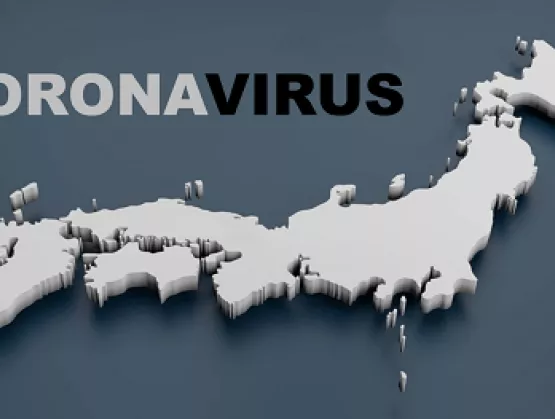
In an important step toward resuming business as usual in Japan, Prime Minister Shinzo Abe on May 14 lifted the state of emergency originally scheduled to expire at the end of May for 39 of Japan’s 47 prefectures, marking “the real beginning of our efforts toward a new normal in the era of the coronavirus” as new cases continue to decline. But with Tokyo, Osaka and six other prefectures still under the state of emergency, Abe urged citizens to remain cautious as the nation and world continue to confront the COVID-19 threat. Among criteria the remaining prefectures must meet for a state of emergency suspension is a reduction in new infections to no more than 0.5 cases weekly for every 100,000 citizens. The eight prefectures account for nearly half of Japan’s population and GDP, with Tokyo and Osaka the two largest urban areas in the island nation. Japan expects to contain its economic losses to 38 trillion yen, 15 percent less than the 45 trillion yen hit originally projected. The Japan government has planned a May 21 progress review[1] in the eight prefectures, a timeline that Abe said could lead to the lifting of the state of emergency before the original cutoff at the end of the month, a move that would help stem the drain on the domestic economy.Strict Immigration Controls Restricts International Travel to and from Japan by Supplier EngineersAs I reported on April 21, the Japan Foreign Ministry on March 31 raised its travel advisory to level 3 for 49 regions around the world including the U.S., prohibiting travel from Japan for any purpose. SEMI Japan is urging government officials to exempt Japanese supply chain engineers from the travel ban to allow visits to semiconductor manufacturing facilities in those regions in order to install, start up and service equipment.Starting May 14, Japan blocked immigration of foreign nationals and permanent residents from 100 countries and regions worldwide, a ban applying to anyone who spent time in their home region within 14 days of their planned arrival in Japan. The areas include China, Singapore, South Korea, and Taiwan in Asia; Canada and the U.S.; and Germany, France, Italy, Netherlands, Switzerland and the U.K. in Europe. For the complete list, see the Japan Ministry of Justice’s website.Japan’s immigration ban mirrors restrictions now in place in many other regions around the world. The immigration controls are well-intended – to restrict the spread of COVID-19 – but hamstring the global microelectronics supply chain. For example, the curbs bar engineers from international travel to install new tools and software in fabs. SEMI Japan has stressed the potential chip industry impacts of the ban in ongoing talks with the Ministry of Economy, Trade and Industry and is facilitating discussions between government representatives and SEMI members to help clear the way for travel by critical supply chain workers to Japan. SEMI Supports Members with COVID-19 ResourcesSEMI international headquarters and regional offices are here to help you, our members. For more information on our webinars, surveys, best practices and other information designed to help you meet the challenges of the pandemic, please visit the SEMI Coronavirus Updates Resources page.[1] The May 21 review found three prefectures in western area – Hyogo, Kyoto and Osaka – met the criteria to lift the state of the emergency. Four other prefectures – Chiba, Hokkaido, Saitama and Tokyo – remain under the emergency order that will be reviewed again as early as May 25.Jim Hamajima is president of SEMI Japan.
Read More