downloadGroupGroupnoun_press release_995423_000000 copyGroupnoun_Feed_96767_000000Group 19noun_pictures_1817522_000000Member company iconResource item iconStore item iconGroup 19Group 19noun_Photo_2085192_000000 Copynoun_presentation_2096081_000000Group 19Group Copy 7noun_webinar_692730_000000Path
Skip to main content
Default Banner Image

IEEE

SEMI is excited to recognize Elizabeth Lee of X-Fab as the SEMI Spotlight on Women Honoree for Q2 2019!Spotlight on SEMI Women celebrates the many accomplished women who work in the global microelectronics industry. Nominees in the quarterly spotlight include women who are beacons of knowledge, leaders of organizations and initiatives, hidden heroes and innovators in our industry. They are volunteers, protectors, intellectual disruptors and activists. Learn how you can nominate a woman for Spotlight on SEMI Women.Elizabeth Lee has loved technology from a young age. As a child, Elizabeth once took apart a broken VHS player and managed to repair the device, armed with nothing but a few simple tools and a strong sense of curiosity. After her more than 15 years in the microelectronics industry, it’s clear that this love – along with Elizabeth’s drive, curiosity, and tenacity – has allowed her to thrive in her career and have a significant impact as a leader not only as a quality systems engineer at X-Fab but in her community.Growing up in a rural Texas town of fewer than 200 people, Elizabeth found opportunities to learn about STEM extremely limited. Although Elizabeth’s interest in technology started at a young age, her first real learning opportunity came during a high-school computer science class. Fascinated by the physics of how computers work, Elizabeth became inspired to pursue electrical engineering at Texas Tech University after graduation.Elizabeth’s transition to university life was difficult. She struggled to balance life as a young mother with her studies and became frustrated when she saw no career path to electrical engineering. During her junior year at Texas Tech, Elizabeth was ready to move into a different field and requested a transfer into civil engineering. Looking back, Elizabeth sees this moment as a crucial turning point in her life that would eventually propel her into the semiconductor industry. Her academic advisor, also a woman, denied the transfer request and pushed Elizabeth to remain in electrical engineering. The advisor also urged Elizabeth to expand her focus outside of academics and get hands-on experience through undergraduate research.Elizabeth acted on the advice and found herself performing research at the Texas Tech nanotech center. She also began volunteering with West Texas BEST – a high-school robotics program that engages students in STEM and semiconductor technologies.Elizabeth has now volunteered for BEST for more than 18 years. She has served on its computer game development board, helping to design games and create rules, and contributed as an author. Elizabeth also served on the South Plains chapter of IEEE as secretary of the board, vice chair, chair, and is now an advisor for the TTU IEEE student brand of WiE (Women in Engineering).She is also a member of the Industrial Advisory Board of the Electrical and Computer Engineering department at Texas Tech University and the Faculty/Staff committee chair. More recently, Elizabeth participated in SEMI High Tech U (HTU), a STEM immersion program for high-school students, and will serve as an emcee for the third time in an upcoming HTU program. Elizabeth graduated with a master’s from Texas Tech after her research in MEMS biomedical lab-on-a-chip and quantum mechanics evaluation of AIO2 tunnel junctions. In 2004, she began her journey with X-Fab, where her responsibilities have included sustaining legacy node silicon technologies and developing yield improvement analysis techniques in the areas of silicon and silicon carbide. She was awarded the Technical Ladder distinction of Principal Engineer in 2015.Today, Elizabeth has more than 15 years of experience in quality, yield improvement, and process integration, all areas that support X-Fab foundry customers with yield and failure investigations. In addition to her technical accomplishments, she represented X-Fab as a Value Promoter, introducing new X-Fab employees to its core values. Over the course of Elizabeth’s career at X-Fab, she has continued to lead key improvement initiatives and dedicate herself to her community.Cristina Sandoval is manager of Workforce Development at SEMI.
Read More
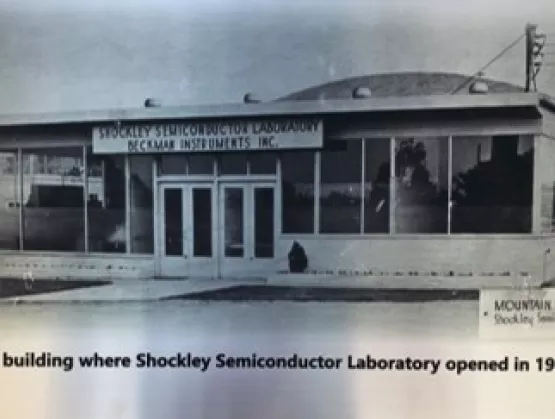
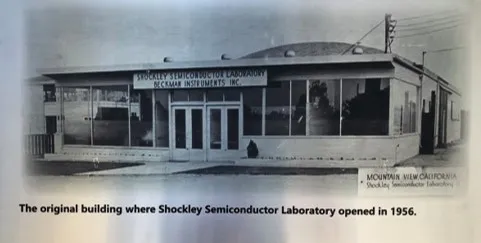
Adapted from the Computer History Museum’s “Celebrating the Birthplace of Silicon Valley” invitation. Work that sowed the seeds of the digital, hyper-connected world we know today all started in a squat, unremarkable building in Mountain View, California. Long before the structure’s foundation was laid, Santa Clara County flourished with orchards, not chips. Between the 1880s and 1940s, eight million fruit trees carpeted Silicon Valley. By 1939, San Jose, with a population of 57,651, was the largest canning and dried-fruit packing center in the world, with 18 canneries, 13 dried-fruit packing houses, and 12 fresh-fruit and vegetable shipping firms*.In 1956, silicon sprouted from new fertile ground.That’s when startup Shockley Semiconductor Laboratory, employing some of the most brilliant young minds in the business, produced Northern California’s first silicon transistor prototypes and formed the technological and cultural bedrock for today’s Silicon Valley.Fed up with William Shockley’s hard-nosed management style, eight Shockley employees – including Gordon Moore, Robert Noyce, Julius Blank, Victor Grinich, Jean Hoerni, Eugene Kleiner, Jay Last, and Sheldon Roberts – resigned in September 1957 and founded Fairchild Semiconductor Corporation. Fairchild was the seedling from which companies valued at over $2 trillion have grown and the source of the integrated circuit “computer chip” that has revolutionized our world.Now, more than 60 years later, the site of Shockley Labs, already an IEEE Historical Milestone, is being formally recognized by the IEEE and the City of Mountain View for its historical significance in a special dedication ceremony on August 15. Thanks to the efforts of many, especially developer Merlone Geier Partners, newly commissioned public sculptures – in the likeness of two early semiconductor devices and a mammoth silicon crystal monument that symbolize the work to come out of the lab – now permanently mark the site, along with various plaques that describe and commemorate the site’s history. The event’s featured speaker is Professor James F. Gibbons, former dean of engineering at Stanford University. Professor Gibbons’ first task at Stanford in 1957 was to work with Shockley and his team to transfer their knowledge of silicon fabrication to Stanford, which could in turn train future engineers for the coming boom in the semiconductor industry. He will share his personal experiences and memories of those early days. Join early semiconductor pioneers, the president of the IEEE, SEMI president and CEO Ajit Manocha and local officials on August 15 to commemorate this legendary Silicon Valley landmark. Guests are invited to enjoy a series of presentations and exhibits and view the stunning sculptures and plaques.The event is free to attend and open to the public. Space is limited so please sign up here to guarantee a seat.Location: 391 San Antonio Road, Palo Alto, California (Phase II of San Antonio Village). Parking is free.*National Park Service, Santa Clara County: California’s Historic Silicon ValleyAriana Raftopoulos is a marketing manager at SEMI.
Read More