downloadGroupGroupnoun_press release_995423_000000 copyGroupnoun_Feed_96767_000000Group 19noun_pictures_1817522_000000Member company iconResource item iconStore item iconGroup 19Group 19noun_Photo_2085192_000000 Copynoun_presentation_2096081_000000Group 19Group Copy 7noun_webinar_692730_000000Path
Skip to main content
Default Banner Image

virtual reality

MedTech, autonomous driving and other disruptive technologies will be in focus at the SEMI Industry Strategy Symposium (ISS Europe), 31 March - 2 April 2019 in Milan, Italy, as top European executives, researchers and academics gather to explore solutions to the region’s most pressing strategic, economic and social challenges. Ahead of ISS Europe, SEMI spoke with Mark Purdy, managing director and chief economist at Accenture Research, about Accenture’s Business Futures – four different future worlds set in 2025 based on the collision of trends across demographics, geopolitics, technology, and economics – and what these futures will mean for markets, workforces, operating models and industry value chains. SEMI: At ISS Europe in Milan, you will kick off the symposium highlighting market opportunities of the digital economy and how companies must adapt to competitive challenges. What inspired Accenture’s Business Futures four world scenarios?Purdy: The impetus for our Business Futures really stemmed from a certain dissatisfaction with current approaches to thinking about the future. We were struck by the following puzzle. First, there is no shortage of techniques for looking at the future, from forecasting to trends analysis to conventional scenarios. Second, most decision-makers have more or less the same access to information on global trends. Yet, time and again, we hear stories of businesses going bust or facing major challenges precisely because they failed to anticipate major changes in their industry.The paradox is that we have so much information, but so little real understanding of how the future actually unfolds. So that set us thinking about how to develop a new approach, based on a combination of detailed trend analysis, expert input and creative storytelling – which is what we call “Business Futures.” SEMI: Of demographics, geopolitics, technology, and economics, which trend do you see as particularly critical?Purdy: Actually, the essence of our Business Futures thinking is that it is the collision or combination of different trends – across economics, technology, demography, etc. – that shapes future outcomes, rather than individual trends per se. To a certain extent we tend to become fixated on specific trends and this can lead us astray or cause bad decision-making. For example, in the early 2000s many people saw very favorable trends in the U.S. economy – strong capital inflows, rapidly rising consumer spending, surging stock markets, and rising home ownership rates. Each trend in isolation looked strong and sustainable. But we failed to see how the combination of these trends was fueling risky financial innovation that would eventually lead to the financial crisis and great recession.Technology of course is a key trend. We are seeing tremendous advances in next-wave technologies such as robotics, machine learning, intelligent objects, 5G and virtualization. But we can only truly understand the impact of the technologies – and the business opportunities and challenges they create – by viewing them against a wider backdrop of changes in society, demography, geopolitics and economics. That is what Business Futures strives to do.SEMI: What will these different futures mean for markets, workforce, operating models and industry value chains?Purdy: There will be profound changes in how we think about all of these areas. Markets will become much more personalized and interactive. Technology will be increasingly integrated with humans, fueling innovation in areas such as personalized healthcare and preventative medicine. Our notions of distance and capacity will be upended, as new virtualized services enable new ways of reaching underserved customers. Consumers will become increasingly involved in the creation and design of products and services. New methods of innovation, powered by AI and virtualization, will come to the fore. New entrants will come from unexpected quarters, enabled by new technology. The upshot will be massive disruption and disintermediation of value chains across many sectors.SEMI: What can Europe do to prepare?Purdy: There are no simple answers, and the correct course will vary by country, but there are some basic things to get right. First, different countries need to understand their comparative advantage – for example, whether it is in services, new technologies, advanced manufacturing or resources – and work with the grain of these different futures. Second, countries need to ensure that they have the basic conditions – regulation, organizational adaptability, workforce flexibility, skills, and innovation infrastructure – to capitalize on the productive potential of new technologies such as AI, virtual reality, and the Internet of Things (IoT). Third, we need to create educational systems and workforce learning methods that emphasize creativity, problem solving and innovation – precisely the skills that will be most needed in an age of intelligent machines. SEMI: What are your expectations for the summit in Milan and for the future?Purdy: I’m very much looking forward to the ISS Europe Summit in Milan. As an economist, I believe we are at a pivotal moment in the semi-conductor industry, driven by waves of technological change and rising geopolitical frictions and uncertainty. With so many industry leaders and experts coming together at the Summit, I’m confident that our discussions will help point a way forward!Mark Purdy is managing director of economic research at Accenture Research. His research examines issues at the intersection of economics, technology and business. He has published widely in tier-1 media and specialised publications on topics such as China’s economy, emerging-market geographic strategy, inclusive economic growth, business futures and the economic impact of new technologies such as the Internet of Things and artificial intelligence. A graduate of Trinity College Dublin, he speaks on these topics at conferences and seminars around the world.Serena Brischetto is a marketing and communications manager at SEMI Europe.
Read More
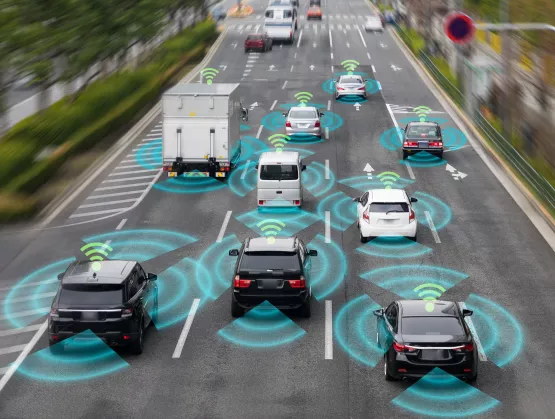
As group vice president of the Analog MEMS Group and general manager of the MEMS Sensor division at STMicroelectronics, Andrea Onetti brings nearly three decades of experience in MEMS, sensors and audio systems to his leadership role at one of the world’s most successful electronics and semiconductor manufacturers. During his keynote at FLEX and MEMS Sensors Technical Congress 2019, February 18-21 in Monterey, Calif., Onetti will address the criticality of sensor accuracy in advancing automotive, industrial and consumer applications. SEMI’s Maria Vetrano spoke with Onetti recently to give FLEX/MSTC attendees a preview of his presentation. SEMI: What are some promising advancements in sensors for autonomous cars? Onetti: The avionics industry is already successfully applying sensors for autonomous operationl. Inertial navigation systems (INS) support the operation of planes during flight, both after takeoff and before landing. Unfortunately, the technology in these navigation systems is expensive and not scalable, and they are hampered by reliability limitations in an automotive environment.Following the steady progress that we have made with MEMS inertial sensors in consumer applications, we are on the cusp of realizing greater accuracy in temperature and time – finally delivering the performance required for autonomous driving. Because we can scale in production – we’re now manufacturing more than a billion units a year – we can select the cream of this production crop for adoption in cars. Consequently, we should see Level 3 and Level 4 autonomous driving for consumers very soon.SEMI: How are companies using sensors to monitor and track their assets in industrial applications? Onetti: Predictive maintenance and asset tracking are the two main verticals in Smart Industry. The adoption of multiple sensors for condition monitoring is helping to detect the faulty operation of equipment and to detect early signs of issues that are otherwise difficult to capture. Ultrasonic microphones can detect leaks in a pipe at an early stage, accelerometers with high bandwidth can act as micrometers, and accurate temperature sensors can catch overheating. Similarly, in asset tracking, we use temperature monitoring in combination with inertial sensors to detect problems during the transport of goods. Shock sensors with extremely high full scale (up to 8000g) can tell whether a lightweight envelop has been dropped. Pressure sensors can switch off a radio system when a cargo plane takes off and can mute smart trackers in compliance with flight regulations. We really can do almost anything! A full slate of ST sensors and microcontroller units (MCUs) enable WEG’s small but powerful motor sensor, which listens to a motor, feels its pain, and shares that information with engineers, operators and others to diagnose problems before they happen. Image courtesy of STMicroelectronics. High-accuracy motion, environmental and proximity sensors are crucial to VR/AR. Image courtesy of STMicroelectronics. SEMI: How will sensors advance user experiences in consumer electronics, such as VR/AR systems?Onetti: Virtual reality (VR) and augmented reality (AR) are great examples of promising consumer technologies that will become pervasive as performance of inertial sensors improves. First, we need super accuracy in time and temperature to provide the right experience to users. To achieve this level of accuracy, we need a major step forward in performance, and that includes power consumption and miniaturization. Fortunately, we are constantly making progress in the high-accuracy motion, environmental and proximity sensors that are critical to these systems. While the scale is vastly different between VR/AR and automotive, the requirements for AR/VR systems are pretty similar to those that will enable autonomous cars. A growing variety of sensors (environmental, microphone, proximity, motion) – combined with a sensor hub in an MCU – are central to VR controllers (above) and VR head mounted displays (below). Images courtesy of STMicroelectronics. SEMI: We don’t hear much about the criticality of higher accuracy in sensors. Why is improving accuracy in sensors especially important – and what role do calibration routines play in achieving higher accuracy?Onetti: A sensor is more than just the performance of the relevant function. It is also the intrinsic accuracy that it brings. This accuracy is tuned by calibration, which is typically an expensive process done at the end of product manufacturing or – better still – during earlier stages of manufacturing.Today more applications require sensors with higher accuracy, which necessitates investing more time in calibration, leading to higher cost.MEMS technology can help by offering solutions with intrinsic higher accuracy, which reduces the cost of calibration for product manufacturers. This naturally delivers major benefits to OEMs and, ultimately, their customers.SEMI: What would you like FLEX and MSTC attendees to take away from your presentation?Onetti: As attendees explore the wide variety of available sensor solutions for their end products, I would ask them to prioritize the role of accuracy in sensor selection – because improved accuracy means higher quality data, and higher quality data means better decisions with reduced need for data processing.While designers understand the role of calibration routines in qualifying individual components for specific applications, it is the continuous evolution of MEMS technology that offers the best possibility of breakthrough reductions in time and cost of these calibration routines. This makes MEMS sensors more attractive and affordable than similar sensor components based on different technologies. Andrea Onetti will present Accuracy Enables MEMS Sensor Pervasion at FLEX/MSTC on Tuesday, February 19 at 11:00 am.Register today to connect with him at the event. To learn more about STMicroelectronics, click here. Maria Vetrano is a public relations consultant at SEMI.MSTC FLEX 2019 is organized by MEMS Sensors Industry Group (MSIG) and FlexTech.Maria Vetrano is a public relations consultant at SEMI.
Read More
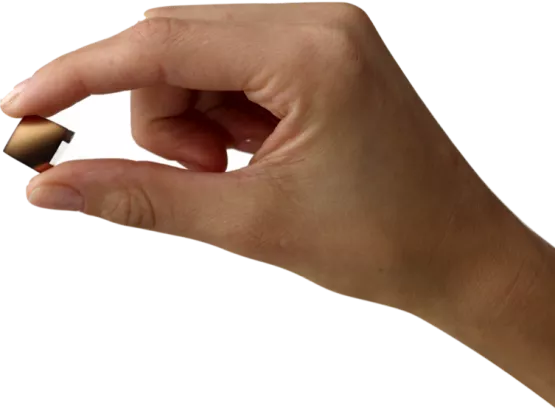
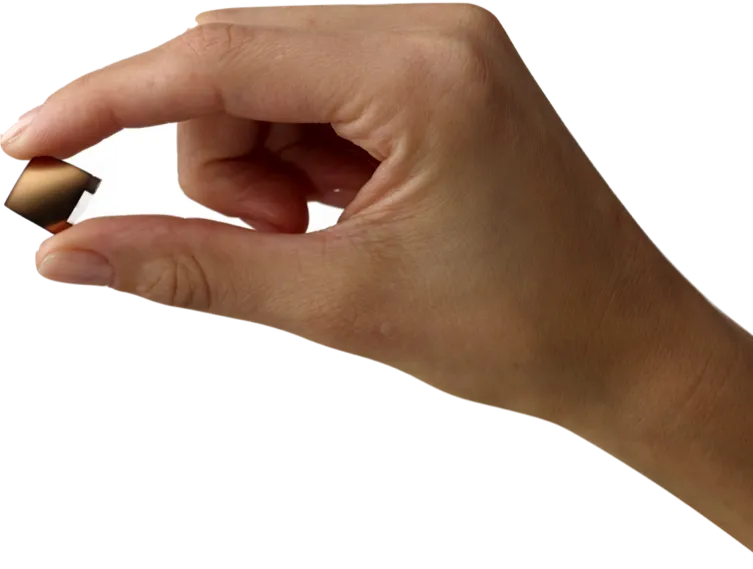
Francois Jeanneau, president and CEO of Novasentis, has spent the last two decades building strategic relationships, increasing revenues and catapulting growth at leading consumer OEMs and ODMs. Jeanneau will present the world’s thinnest haptic actuator technology at the upcoming FLEX and MEMS Sensors Technical Congress 2019, February 18-21 in Monterey, Calif. SEMI’s Maria Vetrano interviewed Jeanneau to give FLEX and MSTC attendees a preview of this new technology that will enable rich, customizable haptic experiences with virtual reality (VR), hand-held game controllers and flexible wearable devices such as wristbands.SEMI: What do consumers want from haptic feedback? How can the technology industry improve the user experience with haptics?JEANNEAU: In many applications such as VR and gaming, our visual and auditory senses are satisfied by high-resolution displays and good-quality speakers, but they lack the sensation of realistic touch. That’s because haptic technology has lagged the technological advancements that we have made in displays, microphones and speakers. It’s also fallen far behind what is possible on the software side. At the same time, consumers are demanding more from their VR and gaming experiences.Through improvements in haptics, prospective home-buyers touring a home via VR headset will be able to “feel” those granite countertops in the kitchen, assess whether their couch will fit in the living room and check out the view from the back porch, all from the comfort of their own home. Virtual travelers will be able to touch the marble walls of the Taj Mahal, and sports enthusiasts will feel the impact of a tennis ball when they use their haptics 2.0-enabled controller.Haptics will dramatically improve what’s possible in wearable devices as well. From their smartwatches, consumers will discern hundreds of different sensations, from a mild heartbeat to a sharp reminder that they are steering a car through an intersection. This is all possible through new haptic actuator technologies that can accept hundreds of inputs to generate an entire haptic language of outputs.SEMI: What are some major obstacles to realizing improvements in haptics for flexible devices such as wrist-worn devices?JEANNEAU: The best wrist-worn devices today offer a rudimentary haptic output that merely says, “hey, pay attention to me.” To comprehend the alert, the user must look at the display, press a few buttons and then interact with the device. This distracts the user while riding/driving, creating potentially dangerous situations. It’s also frowned upon, particularly in the middle of a meeting!The legacy haptic technologies – eccentric rotating mass (ERM) motors and linear resonant actuators (LRAs) – that are currently used in today’s devices are problematic on multiple levels. They are bulky, sometimes occupying a third of the real estate in a smartwatch. As they are generally made of metal, they are also heavy and too thick for many devices. Their output tends to be slow, lagging the output in the display, making the whole experience clunky. They tend to be power-hungry as well.SEMI: How is Novasentis approaching these technical challenges?JEANNEAU: Novasentis has created an extremely thin (150 um), flexible and low-power polymer film actuator that is small enough to be easily embedded into the next generation of smarter wearable devices and garments; the actuator can provide hundreds of different types of vibrating feedback to the wearer for improved notification and/or suggested actions. The film actuator (that can replace a mechanical motor vibrator found in smartphones and smartwatches) is made by stacking layers of electroactive polymer and metal to create the piezoelectric structure. Upon power-up via a modulated waveform, the molecules move to align themselves in response, which elongates and relaxes the polymer. This causes the attached substrate (wristband in a watch, for example) to bend and relax, thus, causing the vibration effect, or haptic and audio feedback (which is unique to our material).SEMI: How will you demonstrate your technical approach at FLEX 2019?JEANNEAU: We will bring examples of designs incorporating our technology as we share live demos of wearables, game controllers and other applications. We will also bring actual haptic actuator materials for show and tell.Francois Jeanneau will present Flexible Actuators for Sensational Haptics at Flex and MSTC on Wednesday, February 20 at 8:00 am. Register today to connect with him at the event. To learn more, click here. MSTC Flex 2019 is organized by the MEMS Sensors Industry Group (MSIG) and FlexTech. Maria Vetrano is a public relations consultant at SEMI.
Read More
We are living in a digital world where semiconductors are taken for granted, AI is bringing semiconductors back into the deserved spotlight, and now we are witnessing the dawn of the Cognitive Era enabled by semiconductors,” SEMI president and CEO Ajit Manocha said to an audience of more than 500 during his presentation – Rebirth of the Semiconductor Industry – at the First Global IC Entrepreneur Conference.Speaking at the Shanghai event in mid-December, Manocha recalled how, when he first entered the semiconductor industry in the 1980s, semiconductors revenue topped out at about $10 billion. Now, with sales having swelled to a staggering $450 billion, the industry is on a much faster growth track. Revenue could reach $500 billion by the end of 2020 and trillions of dollars by 2030. Over the past two decades, chips have given rise to social media and e-commerce powerhouses such as Google, Facebook, and Alibaba. All rely on heavily on chips, the engines of data centers across all industries. Wave after wave of technology innovation have been powered by semiconductors – from mainframe computers in the 1970s, personal computers in the 1980s, the Internet in the 1990s, and mobile and social networking in the early 20th century, to the current shining stars of technology such as IoT, big data, new memory, virtual reality, autonomous driving and artificial intelligence, Manocha said. New applications across areas such as smart manufacturing and digital healthcare are stoking the latest round of semiconductor growth.The rise of AI, like all the technologies before it, has renewed the semiconductor industry once again with its promise to drive growth of all industries worldwide, Manocha said. Five years ago, IoT was but a gleam in a technologist’s eye, more hype than reality with doubt about its viability running deep. Today, with about 60 percent of people in the world connected to the Internet, the enormous promise and potential of IoT is flowering. Industry growth will explode as the melding of AI and IoT birth countless applications and innovations in SMART transportation (0 emissions; 0 fatalities; 0 congestion), smart sensors (agriculture, infrastructure, healthcare) and SMART “Everything” (people, devices, homes, cities, industries, and the list goes on). Indeed, AI is now widely recognized as a chief growth driver of the semiconductor industry well into the future, with semiconductor technology at the core of AI innovation, he said. Semiconductors are thrusting the fifth industrial revolution into the fast lane. China’s much-anticipated rise as an industry powerhouse over the next few years will only accelerate industry growth, turning current disruptions into future opportunities as SEMI China continues to cultivate connection, collaboration and innovation in China’s fast-growing semiconductor sector.Cherry Sun is a marketing manager at SEMI China.
Read More
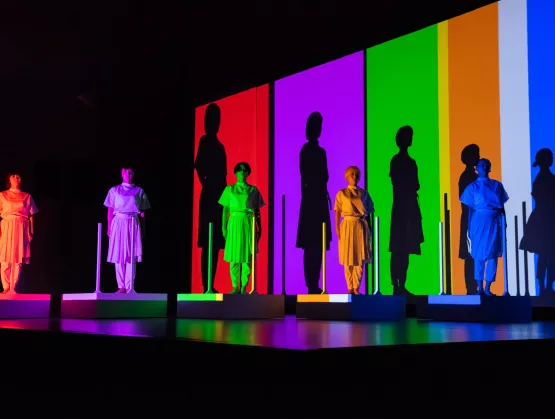
Five young dancers bathed in a striking rainbow of colors with their silhouettes cast in the background dazzled SEMICON Japan 2018 attendees at the opening ceremony in mid-December. Gone were the standard opening keynotes and ribbon cutting, replaced by live performance and media art set against a dramatic black backdrop. There was no mistaking the wide-eyed looks of wonder in the audience.In its sheer vibrance, the opening ceremony thrilled with an excitement that seemed to embody the extraordinary growth expectations for the global semiconductor supply chain over the next five years, with the industry poised to double sales from $2 trillion to a staggering $4 trillion – a phenomena SEMI president and CEO Ajit Manocha has called The Rebirth of the Semiconductor Industry. Driving this unprecedented growth will be SMART applications that are transforming industries and applications worldwide, powered by artificial intelligence (AI) and Internet of Things (IoT) technologies.The dramatic scene at SEMICON Japan 2018 was staged by Rhizomatiks, a media arts company that produced the Rio Olympic Games closing ceremony and is famous for its pop music spectacles. The company’s CTO, Motoi Ishibashi, the event’s first keynote speaker, described his team’s development of drones and vehicles guided by motion and precision-control technologies. It was some of these SMART vehicles that maneuvered the opening ceremony performers from the dance company Elevenplay onstage. Only Rhizomatiks, Ishibashi said, has this capability. In its mission to enrich people’s lives through new media arts, Rhizomatiks uses the latest virtual and mixed-reality technologies to orchestrate not only dance performances but music videos, commercials, fashion shows and festivals.Toru Nishikawa, the second keynote speaker and CEO at Preferred Networks, a leading Japan-based developer of deep learning software programs, surprised the SEMICON Japan audience with his discussion of his company’s work to develop a specialized chip for deep learning processing, joining technology giants Apple, Google, Alibaba and Microsoft in chip design. As more IT and software companies develop specialized, differentiated chips, the devices are quickly becoming the heartbeat of SMART technologies. The company’s approach has taken hold. Only four years old, Preferred Networks is enjoying rapid growth by working with global powerhouses including Toyota, NTT, Panasonic, Fanuc, NVIDIA, Intel and Microsoft. Ishibashi’s and Nishikawa’s fresh visions and the media arts extravaganza reflected the success of SEMICON Japan, held again at Tokyo Big Sight: The event’s 1,881 booths – filled by 727 exhibitors from 14 regions – was the highest count in six years. With Japan home to companies that supply about 40 percent of semiconductor equipment and materials worldwide, top suppliers historically have occupied the largest spaces on the SEMICON Japan show floor.According to IDC, personal computers and smartphones, long the largest revenue sources for the semiconductor industry, will remain top revenue drivers in the coming years. But revenue from new SMART technologies for applications such as automotive and factory automation is growing, a trend expected to continue with a 2018-2022 CAGR of 9.5 percent for automotive and 5.2 percent for manufacturing, compared to 1.1 percent for PCs and 2.9 percent for smartphones.SEMICON Japan’s new SMART Applications zone highlighted these and other new market opportunities for semiconductor growth with product and technology exhibits from companies including Bosch, IBM, Microsoft, NEC, Preferred Networks, Sony, SAS, Siemens, Tesla and Toyota. But the zone wasn’t all work and no play. The ROBOT SQUARE and SPORTS x IOT robot exhibits took visitors back to their school days, with robot anime – from Astro Boy to Gundam and Evangelion – that they could ride and control! As the World Gets Smarter, So Must SEMICON and the IndustryWe all agree the world is getting smarter at a fast pace. New cars are easier to drive – some models are almost fully autonomous on highways and streets. Your SMART speaker has gone well beyond an audio playback device and is more like a home AI platform. Almost all storefronts are equipped with video cameras. Your workplace, whether an office or a factory, is driven by automation. The reliance of these environments and devices on semiconductors is driving exponential chip and changing the world. Businesses need to adapt and so do SEMICON events. We’re doing just that as SEMICON Japan 2018 demonstrated – from an opening ceremony enabled by technology innovation to new faces of the industry to the SMART Application zone. As the SEMICON Japan presidents’ reception concluded the first day of the show, a robot from the ROBOT SQUARE suddenly appeared in the reception hall in front of about 250 executives from the global industry. Everyone at the reception was impressed and stepped forward to the stage, reflecting the overall excitement about SEMICON Japan, which for many years showcased only chip manufacturing equipment and materials. This year, to keep pace with the changing world, it was much more than that.SEMICON Japan 2019 will again take place in December at Tokyo Big Sight. However, organizers of the Tokyo Olympics will be using the East Exhibit Hall usually occupied by SEMICON Japan to prepare for the games. As a result, SEMICON Japan will be held in the West and South Halls instead. Look for more changes to the event. I hope to see you next year!Jim Hamajima is president of SEMI Japan.
Read More
Do you email your doctor when you have a tickle in your throat? Wear a fitness tracker or use an app to monitor your sugar levels, exercise or nutrition? If so, congratulations! You are a part of the rapid growth of digital medicine.Since you’re on the leading edge of this trend to enhance the efficiency of healthcare delivery, you might enjoy learning more about how the medical industry is transforming healthcare in this collection of podcast episodes and video. These are my top picks and just the tip of the proverbial iceberg in how modern medicine is taking today’s technology and applying it to best practices for remote patient monitoring, medical diagnosis, rural healthcare and more.Enjoy! And let me know if you find any others worth the listen!1. Inside Angle: 3M Health Information Systems - Telemedicine: Enhancing Access to Improve OutcomesAccess to healthcare can be a matter of life or death. For some patients, this may mean taking a day off work and driving for hours because services are not available in their hometown.Inside Angle host Dr. Gordon Moore interviews Barb Johnston, co-founder and CEO of HealthLinkNow, about the implementation of telemedicine programs. They discuss how technology impacts telemedicine adoption and related regulations and benefits clinicians and patients in the telepsychiatry and mental health industry. 2. NPR’s The Salt: What’s On Your Plate – This Chef Lost 50 Pounds and Reversed Prediabetes With A Digital ProgramThis short audio clip and article dives into lifestyle and wellness apps designed to motivate users to eat healthier, exercise more and – in some cases – save them from a preventable disease, like diabetes.Wellness apps like Omada Health rely on smartphones, e-coaching, electronic nudging and other methods to encourage users to make and, more importantly, stick to changes that can improve their health. And it’s catching on as other organizations, such as The Centers for Disease Control and Prevention, recognize the difference lifestyle-change programs designed to prevent diabetes are making. 3. Red Hot Healthcare: Episode 57 - Bluer Skies for TelemedicineLast year alone, venture capitalists poured $7 billion into telemedicine. As an emerging concept, telemedicine has a long road ahead until it’s fully integrated and adopted into modern medical practices. Nathaniel Lacktman, partner and health care lawyer with Foley Lardner LLP, discusses legal issues and hurdles surrounding telemedicine today with Red Hot Healthcare host Dr. Steve Ambrose.Lacktman pointed to healthcare providers such as Mercy Virtual Care Center, Mayo Clinic and MDLive that are likely to lead the telemedicine race. This podcast episode is a great listen for entrepreneurs and medical professionals who are interested in learning about compliance and business considerations for the implementation of telemedicine. 4. Digital Health Today: Episode 56 – Eren Bali on Building the World’s Largest Connected Care NetworkEren Bali, CEO and co-founder of Carbon Health, is out to change our fragmented traditional healthcare system with his aim to build the world’s largest connected care network.For Bali, it all started with his sister’s experience consolidating his mother’s health records – scattered over 20 different systems. And from that challenge, his idea to create a universal network that aggregates patient medical records was born.Bali and Digital Health Today host Dan Kendall discuss Bali’s launch of Carbon Health, the new medical records system’s first implementation in a San Francisco primary care clinic, and how providers and patients can get on board with this model. 5. Digital Health Today: Episode 58 – Brennan Spiegel Gets Real About Virtual RealityThis episode of Digital Health Today centers on how Virtual Reality (VR) is being used to enhance patient care. Host Dan Kendall speaks with Dr. Brennan Spiegel, Director of Health Services Research at Cedars-Sinai Health System and Professor of Medicine and Public Health at UCLA, about how immersive technology like VR and Augmented Reality (AR) can improve patients’ experience as well as alleviate pain, anxiety, depression, addiction and more. In a particularly interesting segment, Dr. Spiegel calls the hospital a biopsychosocial jail cell and underscores its importance in not just treating physical ailments but, more wholistically, also addressing the psychological and social wellbeing of patients. 6. TED2017: Raj Panjabi – No one should die because they live too far from a doctor What do you do when access to a doctor means rowing a boat for hours? Millions of people around the world lack access to health care because they live in a remote town or village.In this TED talk, Raj Panjabi, physician in the Division of Global Health Equity at Harvard Medical School, Brigham and Women’s Hospital, and co-founder of Last Mile Health, offers a solution to the problem of healthcare access in the form of the Community Health Academy, a global platform to train and connect community health workers by leveraging devices like smartphones to bring preventative healthcare to even the most far-flung regions of the world. 7. GeekWire’s Health Tech Podcast: How AI is making humans the ‘fundamental thing in the internet of things’Can AI predict which patients are at risk for chronic diseases using their old medical records? This episode of Health Tech Podcast dives deep into the future of healthcare with a look at the potential for AI -- “augmented intelligence” or “assistive intelligence” – to improve patient outcomes, the focus of Ankur Teredesai, a data scientist at the University of Washington and co-founder and CTO of health AI startup KenSci.Clare McGrane, host of GeekWire’s Health Tech Podcast, speaks with numerous experts in this field. They compare precision health to a modern car constantly monitored by microprocessors. The minute something is wrong, you get a warning to take the car to a shop to resolve the issue. The same concept can be applied to humans and deliver big healthcare impacts as research in AI and machine learning continues to evolve. 8. NPR’s Shots: Can Home Health Visits Help Keep People Out Of The ER?In Washington D.C., the city with the highest per capita 911 call volume in all of the U.S., Mary’s Center is piloting a program to provide primary care telemedicine to patients who cannot, or in some cases, do not want to visit the clinic. NPR covers the story of Medicaid patient Dennis Lebron Dolman, who is currently receiving a mix of home visits and virtual treatment.Besides providing healthcare access to rural regions, telemedicine has the potential to reduce emergency room visits in cities as well as improve the health of patients in the long run. Learn more at SEMICON West’s Smart MedTech TechXPOT on Digital Medicine and Remote Patient Monitoring. Hosted by NBMC on July 12, 2018, from 10:30 AM to 12:30 PM, the event will feature healthcare industry leaders exploring state-of-the-art healthcare practices and the future of medical technology. Registration is now open!Amy Ly is a Technical Programs Marketing Coordinator at SEMI.
Read More