downloadGroupGroupnoun_press release_995423_000000 copyGroupnoun_Feed_96767_000000Group 19noun_pictures_1817522_000000Member company iconResource item iconStore item iconGroup 19Group 19noun_Photo_2085192_000000 Copynoun_presentation_2096081_000000Group 19Group Copy 7noun_webinar_692730_000000Path
Skip to main content
Default Banner Image

microelectronics industry

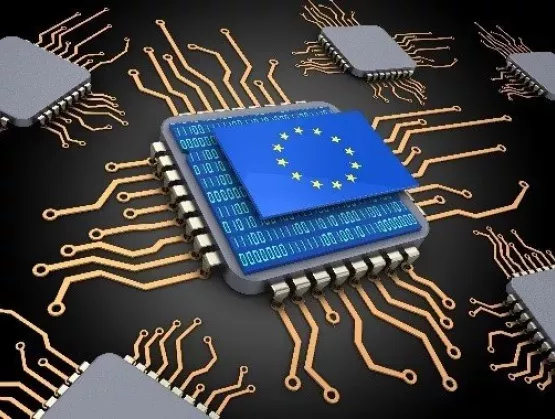
In the rapidly-evolving semiconductor industry, maintaining a competitive edge is crucial. To position Europe at the forefront of global semiconductor innovation, imec is leading the NanoIC pilot line initiative. Aligned with the European Chips Act, this initiative is a strategic move to bolster Europe's leadership in key markets like high performance computing, automotive, and healthcare.SEMI spoke with Srikanth Samavedam and Jo De Boeck from imec, Belgium, to learn more about the NanoIC pilot line and to better understand its goals, challenges, and prospects. From transitioning to gate-all-around (GAA) nanosheet devices, to developing advanced memory technologies and interconnects, this conversation highlights the cutting-edge advancements made possible through collaboration across the industry’s value chain.SEMI: How is the NanoIC pilot line working to revolutionize the semiconductor industry, and what are its main objectives?Samavedam: The NanoIC pilot line is a European initiative aimed at bridging the gap between R D and industrial innovation. The project is creating a beyond-2nm system-on-chip (SoC) pilot line, developing advanced logic, memory, and interconnect technologies. This effort supports the European Chips Act's vision for leadership and competitiveness in global semiconductor innovation, particularly in critical markets like high performance computing, communication, automotive, energy, and healthcare. However, advanced technologies come with more complexity, and addressing these complexity challenges requires more mature module baseline flows. By improving baseline flow repeatability and variability while reducing defectivity, we can accelerate the development of future technologies. The NanoIC pilot line is working to provide access to these advanced technologies and baselines to develop future compute systems. This will help ensure European competitiveness across the industry – from semiconductor materials, equipment and design to systems and applications.SEMI: Who are the core partners involved in this initiative?De Boeck: Key partners of the pilot line include CEA-Leti, Fraunhofer-Gesellschaft, VTT Technical Research Centre of Finland, Tyndall National Institute, and the Center for Surface Science and Nanotechnology of the University POLITEHNICA of Bucharest. This project is also supported by the Flemish government, other participating states, and the Chips Joint Undertaking of the EU Chips Act.These institutions and organizations bring a wealth of knowledge and resources, and imec compliments their efforts by providing access to its global partnerships with key industry leaders. The NanoIC pilot line is helping strengthen Europe’s global semiconductor industry leadership while aligning efforts with other regional Chips Acts. SEMI: Can you elaborate on the significance of transitioning from field-effect transistors (FinFETs) transistors to GAA nanosheet devices in CMOS technology?Samavedam: The transition from FinFETs to GAA nanosheet devices is a significant advancement in CMOS device technology. FinFETs have been the backbone of CMOS technology from the 22nm to the 3nm node. But starting at the 2nm node, nanosheet devices will need to be introduced. Nanosheet devices, including variants like Forksheet devices, are expected to drive scaling and performance through three generations – 2nm, A14, and A10. Complementary FET (CFET) architectures are also expected to be introduced around 2031 at the A7 node, which will represent another major inflection point in CMOS device design. This progression requires extensive research into new materials, process modules, equipment, and advanced patterning capabilities using high numerical aperture extreme ultraviolet (high NA EUV) lithography – all of which will be implemented on the NanoIC pilot line. FIGURE PROVIDED BY IMEC │ SCHEMATIC ILLUSTRATION OF A FUTURE COMPUTE SYSTEM. THE SYSTEM IS MADE OF LARGE MULTI-DIE ELECTRICAL-OPTICAL INTERPOSER PROVIDING ELECTRICAL AND OPTICAL INTERCONNECTS BETWEEN THE VARIOUS CHIPLETS (CPUS, GPUS, HBM). ALSO SHOWN ARE CONNECTIONS TO PACKAGE SUBSTRATE, AS WELL AS FIBER CONNECTORS AND AN INTEGRATED LASER SOURCE. CENTRAL PROCESSING UNIT (CPU); GRAPHICS PROCESSING UNIT (GPU); HIGH BANDWITH MEMORY (HBM); PROCESSING UNIT THAT CAN INCLUDE CPUS, GPUS, AND OTHER SPECIALIZED PROCESSORS (XPU); APPLICATION-SPECIFIC INTEGRATED CIRCUIT (ASIC); ELECTRONIC INTEGRATED CIRCUIT (EIC); FF-LEVEL: FEMTOFARAD-LEVEL; FIELD-PROGRAMMABLE GATE ARRAY (FGPA); GAAS QD: GALLIUM ARSENIDE QUANTUM DOT; INTEGRATED SILICON PHOTONICS PLATFORM 300MM (ISIPP300); REDISTRIBUTION LAYER (RDL); SILICON PHOTONICS (SIPHO); THROUGH PACKAGE VIA (TPV). SEMI: What are the key innovations necessary for advancing memory technology?Samavedam: As SRAM scaling slows, the exploration of novel, dense embedded memory concepts will become imperative. Technologies like spin orbit torque magnetic RAM (SOT-MRAM) and 2-transistor 0-capacitor (2T0C) embedded DRAM using deposited semiconductors like indium gallium zinc oxide (IGZO) are promising. These innovations address memory capacity and bandwidth challenges from new workloads in compute systems. Additionally, developing a 3D memory platform to explore future memory options will be essential for improving SRAM and DRAM. These advancements will help meet the demands of new applications like machine learning, augmented and virtual reality, and autonomous vehicles.SEMI: How do advanced interconnect technologies contribute to the future of semiconductor design?Samavedam: Advanced interconnect technologies, like chip-to-chip lateral (2.5D or interposer technologies) and vertical interconnects (3D technologies), play a crucial role in addressing memory capacity and bandwidth challenges. These technologies enable the partitioning of SoC functions into separate dies, allowing for more efficient and scalable designs. Advances like pitch scaling of micro-bumps and copper (Cu) hybrid bonding are facilitating this fine-grained partitioning of SoC functions. Additionally, optical interconnects and 3D interconnect-enabled co-packaging provide high-bandwidth and low-power connectivity at wafer scale. The rise of chiplet architectures and standardization will also increase the demand for low-cost, tight-pitch interconnect technologies like Cu/polymer redistribution layers.SEMI: How do your collaborators benefit from the NanoIC pilot line? De Boeck: One of the biggest collaborator benefits is the pilot line’s commitment to knowledge sharing through R D access and training. We invite foundries, IDMs, materials suppliers, equipment suppliers, and system companies/OEMs to jointly develop the materials, process modules, and integration flows to accelerate the development of beyond-2nm SoC technology pillars.Design pathfinding and system exploration process design kits (PDKs) will be available for start-ups, small- and medium enterprises, universities, and design and system companies to aid in prototyping and testing their designs. The NanoIC pilot line will also offer comprehensive training programs, including virtual PDK training, bootcamps for faculty, and internships and expert courses for students. To learn more, experts and key partners of the NanoIC pilot line will be presenting from 14 -16:40 at SEMICON Europa on November 12. imec’s program, ITF Chip into the Future, will highlight advancements in digital technology, capacity building through the European Chips Act, and the role of the NanoIC pilot line in accelerating beyond-2nm innovation. The conversation will also address industry requirements for pilot lines, emerging initiatives boosting Europe’s innovation and competitiveness, and perspectives on advanced materials and semiconductor equipment. Srikanth Samavedam, Senior Vice President of Semiconductor Technologies at imec, oversees programs in logic, memory, photonics, and 3D integration. Previously, he was a senior director at GlobalFoundries, leading 14nm FinFET technology into production and developing 7nm CMOS. Starting his career at Motorola, he worked on strained silicon and other advanced materials. He holds a Ph.D. in materials science and engineering from MIT and a master's degree from Purdue University. Jo De Boeck, Executive Vice President and Chief Strategy Officer at imec, oversees the company’s strategic direction and serves on its executive board. He joined imec in 1991 after earning his Ph.D. from KU Leuven and has since held various leadership roles, including head of imec’s Smart Systems and Energy Technology business unit and CTO. De Boeck is also a part-time professor at KU Leuven. Maria Daniela Perez / Communications Manager, SEMI EuropePhone: +49 160 2562977Email: [email protected]
Read More
Gone are the days when companies were said to go “beyond compliance” if they had sustainability ambitions and operated in a largely voluntary space.Corporate sustainability now sits in a tangle of business priorities, stakeholder expectations, and regulatory obligations. New landmark legislation and policies have changed the game in many markets where semiconductor value chain companies do business. Today, accuracy of information, threshold-setting, evaluation criteria, and due diligence are subject to scrutiny, fines, and litigation.A myriad of compliance risks are now linked to business actions that were historically voluntary in a sustainability context. Fueling the shift are regulations such as the EU’s Corporate Sustainability Due Diligence Directive (CSDDD) and Corporate Sustainability Reporting Directive (CSRD).Across the semiconductor value chain, it is crucial for companies to have a solid regulatory strategy for their sustainability activities. They must take into account, for example, mandatory rules that drive up risks from selectively taking action on some sustainability issues while demoting others.Semiconductor manufacturing and design firms, together with their business partners, face heightened pressure to navigate business and sustainability priorities around the climate transition, human capital management, supply chain management, and a host of other environmental, social, and governance issues that are high on regulatory agendas.The SEMI Sustainability Initiative hosts several working groups that bring to light common concerns and provide a forum for sharing response strategies. To sharpen the guidance that SEMI offers, the Sustainability Initiative is launching the webinar series, Global State of Play: Sustainability Regulations, Reporting, Incentives. This series offers semiconductor industry professionals the chance to learn from top-tier experts on the most pressing challenges in compliance, disclosure, and strategy for sustainable business.The first webinar, Developing a Regulatory Strategy for Sustainability: How to Navigate Key Sustainability Decisions, will feature Ashley Walter, Partner and Chief Sustainability Officer at Orrick Herrington Sutcliffe LLP.As the global business association for the electronics design and manufacturing value chain, SEMI is pleased to convene experts to address improving sustainability strategies for our industry. The SEMI Sustainability Initiative invites industry stakeholders to see the importance of building a regulatory strategy that coordinates across functions, from engineering to the boardroom.Learn more and register.Jordan Famularo, PhD, is Programs Manager, Sustainability at SEMI.
Read More
The Rising Stars: 20 Under 30 blog series celebrates the brightest young leaders shaping the future of the semiconductor industry. These exceptional individuals have earned the SEMI Europe 20 Under 30 Award for making a remarkable impact across the supply chain—whether in engineering, sales, marketing, or R D. The series spotlights these rising stars for their career achievements, commitment to innovation, leadership skills, and dedication to driving both business success and community growth.Follow their inspiring journeys, and discover how they are thriving and paving the way for future generations in the semiconductor world.Introducing Marieke Vermeulen: Product Quality Assurance Engineer at MelexisMarieke Vermeulen's journey into the semiconductor industry is a testament to curiosity, adaptability, and self-driven learning. With a background in classical philology, her entry into Melexis as a customer quality technician was unexpected, yet she quickly embraced the challenges of the industry. Through her commitment to growth and innovation, Marieke has risen to the role of Product Engineer, demonstrating leadership and a passion for continuous improvement. Her contributions, particularly in product ownership and driving business growth, highlight her as a dynamic force within Melexis, embodying both technical excellence and a collaborative spirit.SEMI: What inspired you to join the semiconductor industry? Vermeulen: My entry into the semiconductor industry was actually quite accidental. After completing my master’s degree in classical philology, I was still unsure about which direction I wanted my professional life to take. Then, an opportunity arose to join Melexis as a customer quality technician.I did not have anyone in my immediate circle with experience in the industry, so I entered the field without really knowing what to expect. I had only a vague idea of what a semiconductor company did. However, from those early days onwards, I have not looked back. It is my love of knowledge and the desire for a deeper understanding that continues to drive me in my role within Melexis’s quality department. During my literature studies, I was motivated by the idea that there is no absolute, uncontestable truth. Meaning will change with time and place. This perspective aligns closely with the mindset of the semiconductor industry. With new inventions and concepts constantly emerging, the industry is always evolving. We must challenge what we believe to be true yesterday and adapt to the discoveries and advancements for today.So, while there was no direct inspiration that led me to join, more of a stumble into the field, I have since developed a deep respect for how the industry operates. I In particular, I respect how people in the industry do not hesitate to question in order to keep pushing the boundaries of innovation.SEMI: How did your early experiences and education shape your career path?Vermeulen: There was no direct experience. During my school years, STEM was just beginning to earn its place in my educational framework, and we were only introduced to the basic principles. Fortunately, this has changed significantly since then. However, my background hasn’t held me back, in fact, quite the opposite.One main principle from my studies stands out: in language, nothing is set in stone. There is no single truth, no single solution and no single voice. At its heart, language is shaped by human interaction. My studies taught me to think critically and to understand that there is always more than one answer to a question. This approach directly influences the way we work in the product quality department. Our goal is to develop and produce products that meet a customer’s needs as closely as possible. But it is a continuous process and very rarely a straight line. We learn from our past experience to improve the next iteration, again and again. We regularly consult with our peers to gather different ideas, and we listen to the industry to understand where the needs are. Then, we translate those insights into an effective solution.SEMI: Can you share a professional accomplishment you’re most proud of, and explain why it’s significant to you?Vermeulen: Our products go through two main stages in their lifecycle: development and production. As a product engineer, I am responsible during the production stage. However, before we reach this point, there is a transition period where the development and production teams come together to prepare the product for the best possible launch. This period is often hectic, but it clearly demonstrates how much of a team effort our products represent. Every team member understands their role and works towards the collective goal. Being part of such a diverse team and seeing our products succeed is always a thrill for me. While the products are made with metals, silicon, and other elements, it is the human factor that truly brings them to life. The very first spark is always the idea to create. SEMI: As a young professional in the industry, what is your greatest challenge? Vermeulen: As a young woman in STEM, the most obvious answer is that I have to prove myself more than my male colleagues or more experienced peers. However, at Melexis, I have found strong support in overcoming this challenge. Our voices are heard, and we are an active and valued part of our teams. We can express our ideas freely, knowing they will be considered just as seriously as anyone else’s. I can only hope this trend continues throughout the industry.SEMI: What advice would you give to younger generations aspiring to make an impact in this industry?Vermeulen: To those who are unsure if STEM is truly for them, I would say: We need engineers, but we also need dreamers to bring the ideas to life. We need designers and coders who can make the device function, but we also need people who can communicate these concepts to the world. Moreover, we need educators who can inspire and teach the next generations. There is a place for many different minds within the industry, so I encourage you to step in this direction. I’m sure you will find a place.And for those inspired by the semiconductor world and are sure this is where they want to be: don’t be afraid to look beyond the industry. Listen to those around you and take their ideas to heart. Be the inventor for those who cannot bring ideas to life, and offer solutions to those who feel stuck.Cooperation has made our industry great, and it is essential for building a strong foundation moving forward. SEMI: How do you envision future work environments?Vermeulen: The past few years have demonstrated how advanced technology has made the world much smaller. With just a click of a button, a camera, and a microphone, we can connect to the world, ignoring the constrains of time, space and borders. This accessibility opens the door for many more people to enter the industry from all around the globe. A hybrid and flexible work environment enhances this even further, accommodating those who might face physical or logistical restrictions. We need to continue on this path. By embracing diversity, we allow new ideas to emerge at the intersection of different minds. Why exclude a brilliant mind simply because they are on the other side of the continent? Why overlook someone whose mother tongue differs from yours when we can find a common language?At Melexis, we already welcome many different cultures, and it is amazing to see how vibrant this makes our offices. New team members bring their own experiences and blend them with ours. Just as alloys often retain characteristics of their base metals, these newly melded ideas will enrich our collective innovation.SEMI: What impact has the 20 Under 30 Award had on your career? Vermeulen: The award has connected me with wonderful peers and highlighted how we all strive to improve the industry, each in our own way and from our unique areas of expertise. It also has provided me an opportunity to demonstrate that the industry is welcoming to a variety of experiences and is willing to invest in its people. The goal was to foster connections, and it has truly jumpstarted this for me. Following 20 Under 30 JourneysMarieke Vermeulen's story is an inspiring example of how passion for learning and a willingness to embrace new challenges can lead to remarkable success. From her unexpected entry into the semiconductor industry to her achievements as a Product Engineer at Melexis, she has consistently demonstrated leadership, innovation, and dedication. Her journey highlights the importance of curiosity and adaptability in driving both personal and professional growth, making her a role model for others in the industry.The Rising Stars: 20 Under 30 blog series celebrates the exceptional talent and leadership driving the future of the semiconductor industry. Each of the young innovators honored is excelling in their respective fields while shaping the landscape of technology and business with their visionary approaches and dedication. Their stories exemplify the remarkable achievements and unwavering commitment that define the next generation of industry leaders. The series is intended to inspire and motivate future professionals to pursue their passions and embrace the opportunities within this dynamic industry. Stay tuned for more stories of rising stars who are paving the way for continued growth and innovation in the semiconductor world.Learn more about the SEMI Europe 20 Under 30 Award and the recipients honored at SEMICON Europa. For more information contact Maria Daniela Perez at [email protected] Daniela Perez is Communications Manager at SEMI Europe.

Read More
The semiconductor industry, once a hidden force in technology, is now recognized as a pivotal driver of the modern economy. As the engine behind everything from smartphones to smart cities, semiconductors fuel innovation and shape how students learn, play, and engage with the world, making chips a crucial factor in shaping our collective future as the climate changes.In line with SEMI Sustainability Initiative participation at Climate Week NYC, we are preparing a groundbreaking pilot program at the intersection of youth empowerment, workforce development, and climate action. To help the semiconductor industry develop a climate-literate workforce, the SEMI Climate Equity Social Impact Working Group and the SEMI Foundation have partnered to develop a global K-12 program open to all SEMI members for participation and sponsorship. The program will share best practices and resources such as those that follow in this article.SEMI will announce the program at the 29th United Nations Climate Change Conference, more commonly known as COP29, which will be held in Baku, Azerbaijan from November 11-22, 2024. SEMI members are encouraged to become partners and help shape the program ahead of COP29. Contact us to learn more and participate in the announcement.The Opportunity for Semiconductor Industry Climate Leadership It’s not enough for students to simply be aware of climate change and the United Nations Sustainable Development Goals. Awareness alone won’t protect communities or help solve the problems we may all face in the future. We must prepare the next generation to be climate-literate — providing them with the knowledge, tools, and skills to understand complex issues, work collaboratively across the globe, and develop practical, real-world solutions. With this foundation in place, young people become proactive global citizens with the skills to solve problems.The semiconductor industry doesn’t need to reinvent the wheel or build new networks to drive partnership at the intersection of sustainability and workforce development. Companies in our value chain are already well positioned to scale equitable opportunities, promote STEM and AI skills, and empower students to tackle real-world climate challenges as we help prepare them for future careers. Global networks of sustainable schools focused on climate action are well-established in key semiconductor regions. In Taiwan alone, over 330,000 students will participate this year.Sustainable schools networks engage teachers and students with programs that are fun, motivating, and spark curiosity by providing ownership over solving real-world challenges. These mostly free programs can also help drive gender and racial equity into the tech, science and engineering fields for communities and schools that might otherwise be left behind.Examples of programs with youth-designed climate actions are all around us. Students in one New Taipei City, Taiwan school conducted their own energy audits to reduce energy consumption in their medium-income community. Students in a North Pennsylvania, U.S. school of limited resources created a community garden that sparked interest in biodiversity and STEM.Our industry has a unique opportunity to tap into existing sustainable schools networks and help them grow, while amplifying youth-led climate action. These efforts will empower the next generation to drive meaningful change in their communities and inspire young people of every demographic to see the semiconductor industry as a place where they can build impactful careers.Leading the Way: Why the Semiconductor Industry is PivotalGiven the essential role of semiconductor companies in the global electronics design and manufacturing value chain, industry leaders have a unique opportunity to lead the way in cultivating a climate-literate generation of students for the future workforce. Early education on sustainability and technology integration is crucial, positioning leading companies and their partners to shape the emerging global workforce. The long-term semiconductor workforce development effort must cultivate global citizens who understand how to apply their skills in solving challenges. Opportunities for All Schools: Making Climate Education InclusiveWhile some high-resource schools may be able to integrate advanced environmental science and technology projects, it’s important to ensure that all students have access to meaningful climate learning opportunities. For example, students at schools with fewer resources can engage in projects like programming inexpensive micro:bit sensors to measure local water quality or sample moisture levels in their community gardens. Projects such as these are affordable, scalable, and can be implemented in any school, providing students with hands-on experience in environmental science and technology.More importantly, they build critical thinking and problem-solving skills that empower students to take ownership of climate issues affecting their communities.Additional powerful examples already in existence that provide a basis for scalable teaching, learning and partnership for schools globally include:1. Global Climate Pathways (GCP) is a program where various middle schools around the world work together to solve climate problems. Schools that participate receive learning opportunities and tangible STEM learning tools, including STEM kits. These innovative tools provide learning opportunities in coding and circuits.2. EcoSchools U.S. is a global sustainability education program run by the National Wildlife Federation (NWF). This transformative program is student-led, integrating green STEM through project-based learning. It provides opportunities for students to take ownership of their learning by addressing real-world challenges, drives student and teacher engagement, and creates tangible sustainability impacts across school communities. EcoSchools US fosters the development of transferable skills highly valued by employers, such as problem-solving, critical thinking, and interpersonal skills.3. Global Classroom Project is an initiative by Fairfax County Public Schools in Virginia, USA, designed to enhance students' global awareness and cultural understanding. It typically involves integrating international perspectives and global issues into the curriculum, promoting cross-cultural exchanges, and connecting students with peers from around the world.New Jersey Institute of Technology President Teik C. Lim hosts an exchange of Taiwan educators during their visit to advance global collaboration for students.A Common Ground for All Stakeholders: Education with a PurposeA challenge in K-12 engagement is the differing perspectives on its purpose among stakeholders. Companies in the semiconductor value chain may view this student outreach as a way to develop technical talent, while green nonprofits often emphasize climate education and sustainability.Bridging these perspectives requires building a platform that any classroom or school can access if they choose. Adopting a public-private partnership approach brings together corporate, government, and nonprofit stakeholders around a shared set of values. This collaborative effort aims to create opportunities and solutions for communities globally.By investing in early education, the semiconductor industry will not only prepare young people to tackle environmental and technical challenges but also ensure they are ready for future job opportunities and educational pathways. These efforts will help attract students to become part of an industry that values their contributions and future, shaping a workforce equipped to lead and innovate in a rapidly evolving world.This is the moment for companies in the semiconductor value chain to lead by example, demonstrating their investment not just in technology but in the sustainability and health of our planet. By supporting K-12 education with a focus on climate literacy, international partnership, sustainability, and STEM, companies in our value chain can build a brighter, more sustainable future for us all—while ensuring that today’s students are prepared to address the challenges of tomorrow. Justin Harris is Senior Advisor for Climate Equity Social Impact at SEMI, Bia Hamed, Ph.D. is Program Manager, Global Education Initiatives at the SEMI Foundation, and Marley Hauser is senior coordinator for the Climate Equity Collaborative. Acknowledgements Partners We thank our first round of partners for the SEMI global K-12 climate engagement program for their contributions of time and thought leadership to this effort: SEMI members, Climate Equity Collaborative, National Wildlife Federation, ARCedTech, Fairfax County Public Schools, Kaohsiung City Education Bureau, U.S. Environmental Protection Agency, Taiwan Ministry of Environment, Sustainable Jersey for Schools, New Jersey Department of Education, Dr. Prabhakar Shrestha of New Jersey Institute of Technology (NJIT), Dr. Tim Hsu of Global Environmental Enhancement (GEE) in Taiwan, New Jersey Audubon, and the students of NJIT and Readington Middle School in Whitehouse, New Jersey. Special thanks to Shari Liss, Vice President for Workforce Development at SEMI Foundation, and Dr. Mousumi Bhat, SEMI Vice President for Sustainability.
Read More
The Rising Stars: 20 Under 30 blog series celebrates the brightest young leaders shaping the future of the semiconductor industry. These exceptional individuals have earned the SEMI Europe 20 Under 30 Award for making a remarkable impact across the supply chain—whether in engineering, sales, marketing, or R D. The series spotlights these rising stars for their career achievements, commitment to innovation, leadership skills, and dedication to driving both business success and community growth.Follow their inspiring journeys, and discover how they are thriving and paving the way for future generations in the semiconductor world.Introducing Kai Hahn: Project Manager R D at Comet, Industrial X-Ray Systems DivisionKai Hahn’s journey began when he joined the company as a bachelor’s thesis student. His early drive and exceptional contributions quickly set him apart, earning him a role as a cooperative student while simultaneously serving as a "Change Manager." In this capacity, Hahn led high-impact business excellence initiatives, overseeing cross-functional projects at the executive level. Now, as a Project Manager in R D, Hahn leads agile teams developing cutting-edge automated inspection solutions. His leadership, marked by a commitment to innovation, collaboration, and customer satisfaction, drives both personal and organizational growth, making him a standout in the semiconductor industry.SEMI: What inspired you to join the semiconductor industry? Hahn: I didn't actively choose the semiconductor industry; rather, I grew into it together with our brands Comet Yxlon Dragonfly. Beyond the pioneering spirit our X-Ray System division has, what excites me the most is our direct connection to semiconductors. From turning off your morning alarm to driving to work, staying connected with friends and family, or watching a sports game on TV — semiconductors are everywhere and shape our daily lives. Working in this industry is both exciting and challenging. Every day, I look forward tackling new projects that push the boundaries of innovation. But what inspires me the most is the transformation that our division is undergoing. We are continuously adapting our processes and procedures to meet the growing demands of the market and our customers. Being part of this dynamic evolution is rewarding and exhilarating. SEMI: How did your early experiences and education shape your career path?Hahn: With my degree in business and engineering, I chose a program that covered a wide range of subjects. While I gained knowledge from a broad field, by the end of my bachelor's degree, I realized I lacked practical experience and a clear direction for my career.Joining Comet as an intern during my final year helped me anchor my career path. I decided to pursue my master's degree while working part-time for the company. This decision allowed me to gain relevant professional experience early on and apply the knowledge from my studies directly to real-world challenges. SEMI: Can you share a professional accomplishment you’re most proud of, and explain why it’s significant to you?Hahn: Combining the strengths of Comet Yxlon’s software and Dragonfly’s AI powerhouse — I was the dedicated project manager to support the global technological cooperation of our two software environments to accelerate the 3D IC go to market challenge. My goal was to facilitate methodological collaboration to develop new software inspection workflows for the semiconductor industry.Looking back, I am proud of what we accomplished: building a cohesive team from different cultures, working across time zones, adapting to various working styles, and successfully launching our first product.SEMI: As a young professional in the industry, what is your greatest challenge? Hahn: One of the biggest challenges is the rapid pace of industry change. For development teams, this means shorter development cycles and closer collaboration with international customers. For young professionals, it's essential to maintain a continuous learning cycle to stay current and develop the ability to work effectively across diverse cultures. This ensures we understand the different customer requirements and can implement them effectively.SEMI: What advice would you give to younger generations aspiring to make an impact in this industry?Hahn: Gaining practical experience alongside your studies as early as possible is crucial. Internships or working student positions offer valuable opportunities, and sometimes, it’s beneficial to proactively reach out to companies, even if no vacancies are advertised. For me, these experiences made my studies more engaging by linking theory to real-world applications and deepening my understanding of the subjects. Beyond acquiring practical skills and expanding your network, this approach helps clarify the career path you want to pursue after graduation.SEMI: How do you envision future work environments? Hahn: Working from home has increasingly become the standard in recent years. While offering many advantages, a significant challenge for companies is maintaining a sense of community. This is easier to achieve when employees are physically present, as in-person interactions tend to be more impactful. It raises the question of how companies can foster a strong sense of community and belonging in the long term without requiring workers to be physically present in the office.SEMI: What impact has the 20 Under 30 Award had on your career? Hahn: Overall, this recognition has been both a validation of my efforts and a source of inspiration to continue pushing the boundaries in my work. Beyond the recognition of my contributions and achievements, the award provided a platform to engage with like-minded young professionals beyond my usual network.Following 20 Under 30 JourneysKai Hahn’s journey from a bachelor’s student to a leading Project Manager at Comet, Industrial X-Ray Division is a testament to his dedication, innovation, and leadership in the semiconductor industry. His achievements in integrating teams, developing cutting-edge solutions, and driving organizational transformation highlight the significant impact young professionals can make. Hahn’s story is an inspiring example of how passion and perseverance can lead to remarkable accomplishments. As he continues to push boundaries and shape the future, SEMI looks forward to seeing the continued influence of his work in the semiconductor field.The Rising Stars: 20 Under 30 blog series celebrates the exceptional talent and leadership driving the future of the semiconductor industry. Each of the young innovators honored is not only excelling in their respective fields but also shaping the landscape of technology and business with their visionary approaches and dedication. Their stories exemplify the remarkable achievements and unwavering commitment that define the next generation of industry leaders. The series is intended to inspire and motivate future professionals to pursue their passions and embrace the opportunities within this dynamic industry. Stay tuned for more stories of rising stars who are paving the way for continued growth and innovation in the semiconductor world.Learn more about the SEMI Europe 20 Under 30 Award and the recipients honored at SEMICON Europa 2023. Nominations for the 20 Under 30 program at SEMICON Europa 2024 close on September 30.Maria Daniela Perez is Communications Manager at SEMI Europe.
Read More
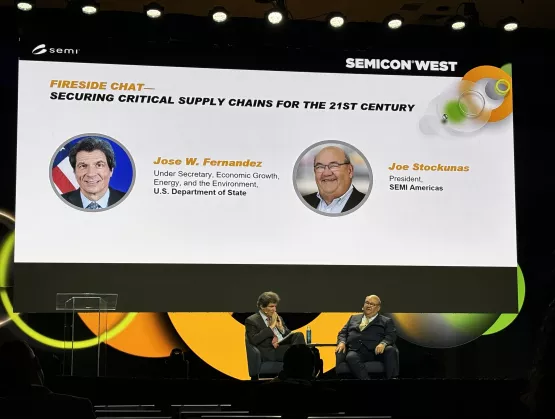
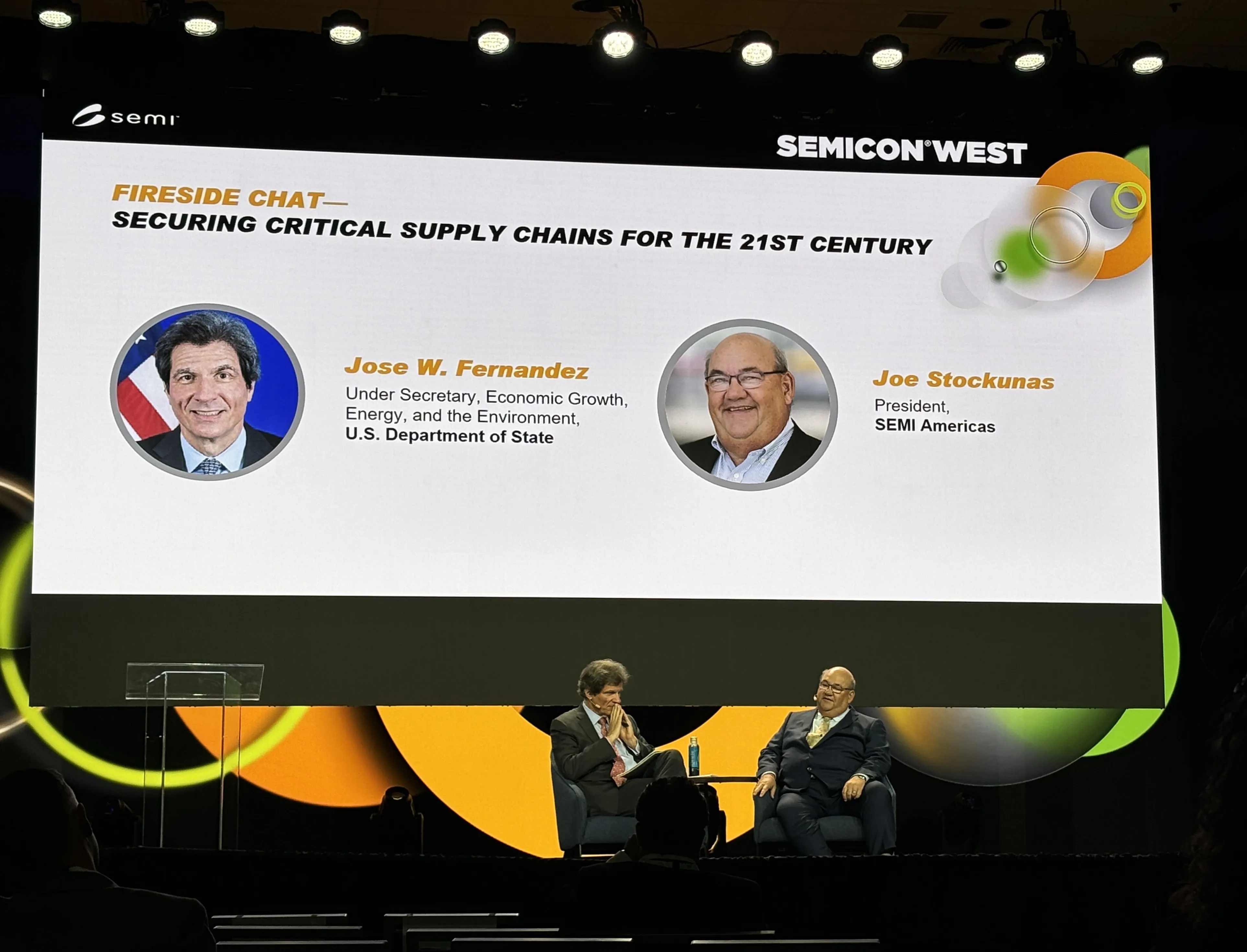
Jose Fernandez, U.S. Under Secretary of State for Economic Growth, Energy, and the Environment, sat down with Joe Stockunas, President of SEMI Americas, for a fireside chat on the CEO Summit keynote stage at SEMICON West 2024. In the Securing Critical Supply Chains for the 21st Century discussion, Fernandez emphasized the need to form partnerships to address vulnerabilities as the key to creating stable supply chains. It’s important to band together, he said, to protect our standards, values, and democracy. Diversifying the Global Mineral Supply ChainBecause chip fabricators depend on minerals like germanium, gallium, arsenic, indium, and rare earth elements, he highlighted how imperative it is for the industry to access them sustainably. To accomplish this, he stressed the importance of protection against supply chain bottlenecks in the mineral market. “According to a number of experts, we’re going to need 42x the amount of lithium by 2050, 25x the amount of manganese, and 25x the amount of cobalt,” he said. “Those minerals are basically controlled by one country, and that's a vulnerability.”To address these concerns, he shared that the State Department is working to strengthen the upstream and downstream portions of the semiconductor value chain, with the goal of supporting economic security across the globe. Foreign export controls, he said, have led to supply chain disruptions of key minerals, and bans on rare earth elements, processing equipment, and other technologies. As evidence of the State Department’s efforts to diversify, he highlighted the Minerals Security Partnership (MSP) and its work to seek mineral alternatives. Led by the U.S., it currently includes 13 other countries plus the European Union. Partnership and Investment Opportunities To further secure the industry's supply chain, Fernandez discussed the State Department’s efforts to partner with mining countries with untapped semiconductor resources. These countries, he said, also want alternate options for securing critical minerals. Fernandez highlighted Latin America as a key nearshoring focus area, pointing to the Americas Partnership for Economic Prosperity (APEP) as a solution for addressing obstacles to investment in the region. Obstacles, he said, include education levels, insecurity, and rule of law.To overcome such hurdles, he stressed the importance of fostering economic conditions that will attract investments, emphasizing the importance of workforce development initiatives and private sector involvement. “We don’t have enough trained workers in the U.S., and we certainly don’t have enough trained workers abroad,” he said. Fernandez shared that workforce development programs are being established through the U.S. Department of State International Technology Security and Innovation (ITSI) Fund, as well as private sector efforts and university partnerships. Currently, seven countries have been selected for ITSI funding, he said. “We’ve partnered with a number of universities to address the workforce gaps we see in our ITSI partners,” he said. “We’ve created workforce seminars, and we’re going to spend more time training the labor force.” These efforts supplement the work of the SEMI Foundation to develop a holistic workforce development program for the global semiconductor industry.Preventing Chips From Entering RussiaWith U.S. chips crossing into Russia through third parties, Stockunas asked Fernandez how the semiconductor industry could help address this. Despite existing sanctions against Russia, Fernandez shared that Russia still managed to import $1.7 billion worth of microchips from both the U.S. and Europe in 2023. To help slow this down, he highlighted additional due diligence for companies whose products often make their way into the country. The federal government, he said, speaks with these companies about complying beyond what the law requires.Fernandez shared that private sector cooperation with more stringent standards has been positive, noting that some companies have cut hundreds of distributors to further aid in prevention. In addition, he mentioned that sanctions have made a promising impact overall.“[Russia] has had to use outdated equipment, they’re engaging in counterfeiting, and they’re getting help from other countries,” he said. ​​Official SEMICON West Podcast In a podcast with Francoise von Trapp of 3D InCites recorded at SEMICON West, Fernandez discussed critical mineral partnerships, benefits and setbacks of regional supply chains, and chip sanctions against Russia. To learn more, check out the podcast interview with 3D InCites. SEMI Global AdvocacyDiscover how SEMI Global Advocacy Public Policy supports the microelectronics industry across trade, taxes, talent, and R D.John Cooney is Vice President of Global Advocacy and Public Policy at SEMI.
Read More
As more than 400 speakers took the stages at SEMICON West 2024, sustainability and workforce development stood out as two major focus areas. The second day of this year’s CEO Summit keynote program, themed Seizing the Global Opportunities and Challenges Ahead, featured sessions on both topics. One of the first sessions of the day was the Chief Sustainability Officer (CSO) panel discussion, titled Bracing for the Evolving Global Risk for the Semiconductor Ecosystem, moderated by Vice President of SEMI Global Sustainability Programs, Dr. Mousumi Bhat. Later that morning, Shari Liss, Vice President of SEMI Global Workforce Development Programs and Executive Director of the SEMI Foundation, moderated a fireside chat, Advocating for Real Change: Why Inclusion and Belonging Need to be Everyone’s Concern, with Sandra Mahadwar from KLA Corporation. Bhat and Liss were later interviewed for a podcast by Francoise von Trapp of 3D InCites to share additional insights on sustainability and workforce development, respectively. Bhat was also joined by Paul Kelly, COO of the New York Center for Research, Economic Advancement, Technology, Engineering, and Science (NY CREATES). Creating a More Sustainable Semiconductor Industry During their interview, both Bhat and Kelly emphasized that the industry will need to reduce its use of per and polyfluoroalkyl substances (PFAS) to sustainably innovate at today’s nanometer pace. For this reason, Kelly highlighted the importance of learning to balance current production demands with the health of climate.To achieve this balance, they discussed the efforts of the Semiconductor Climate Consortium (SCC). Much of the SCC’s efforts, they said, will focus on driving the industry toward net zero emissions. SEMI and NY CREATES announced a memorandum of understanding (MOU) at SEMICON West 2024 to promote sustainable practices within the industry, with a focus on PFAS reduction. Kelly pointed to the ability of SCC members to test new materials, gases, and chemicals at NY CREATES’ R D facilities in upstate New York to work toward replacing PFAS with more sustainable alternatives. Bhat also shared that this collaboration helps facilitate prototyping, experimentation, and tests and measurements for newer, more sustainable substances.Dr. Mousumi Bhat of SEMI and Dave Anderson of NY CREATES celebrate their organizations’ sustainability MOU at SEMICON West 2024.“The thought leadership comes from the Consortium, and the support on infrastructure comes from NY CREATES,” said Bhat. “This should become a blueprint to solve some of the challenging problems that we have in our industry.” When it comes to reducing emissions, Bhat mentioned two key objectives. The first, she said, is access to clean energy, and the second is the reduction of greenhouse gases. Bhat cited these as the issues that will take the longest for the industry to solve and pointed to the importance of industry collaboration and partnerships to support the needed experimentation. But while partnerships will bring the industry closer to net zero, both Bhat and Kelly cautioned that it won’t be reached overnight. “Much more needs to be done in the industry to reach that net zero goal,” said Kelly. “New chip technologies, new chemicals, and new processes are very much large leaps to achieving that. But right now, even some of the most advanced will only reduce [emissions] by 70%.” To help bridge this gap, Bhat encouraged others to join and participate in the SCC. “Rather than everybody doing a one-to-one experimentation in their own space and spending those resources, I would like to invite anyone that's not part of the climate consortium,” she said. “And [I invite] those that are part of the climate consortium to engage more actively, so that we are all accelerating the journey toward net zero.” Addressing the Talent Shortage This year’s SEMICON West also featured five keynote sessions dedicated to workforce development, as well as a Workforce Development Pavilion that included several talks around diversity, equity, inclusion, and belonging (DEIB). With the estimated one million jobs the industry will need to fill by 2030, Liss shared that every role is needed – from entry level all the way to Ph.D. researchers. “We need to try and bring in as many people as we can over the next few years,” said Liss. “The talent shortage is a global issue, not just a U.S. one.” Shari Liss of SEMI moderated the fireside chat at SEMICON West 2024 with Sandra Mahadwar from KLA Corporation.To begin to close the talent gap, Liss stressed the importance of educating children about the semiconductor industry. “We are just invisible to kids,” she said. “In every part of the globe, they carry chips in their hands all day every day, and they don’t know. So to me, breaking that barrier and making sure kids know about our work as an industry is going to be so critical to making this successful.” Liss also highlighted differences in workforce development programs across the world, noting that what works in one region may not translate to another. For example, apprenticeships are widely embraced in Europe, she said, but they’re a fairly new practice in the U.S. Conversely, she shared that veteran-focused programs wouldn’t work for some regions, but they’re a “powerful win” in the U.S. Each SEMICON show across the world, she shared, includes similar workforce development and DEIB programming, in addition to targeted sessions for students and HR professionals. Companies can interview for open positions at SEMICON shows as well. To learn more about SEMI’s workforce development initiatives and programming, visit semi foundation.org, or check out this overview of DEIB content at SEMICON West 2024. Samer Bahou is director of Marketing Communications at SEMI.
Read More
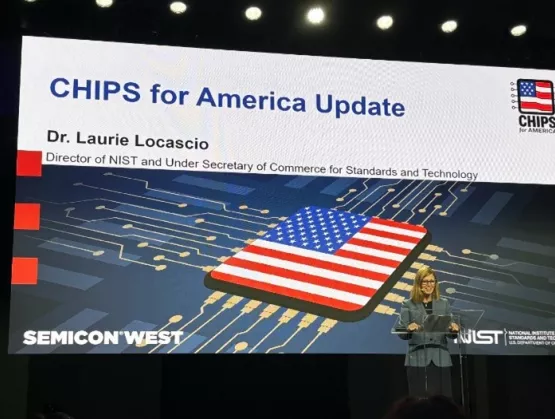
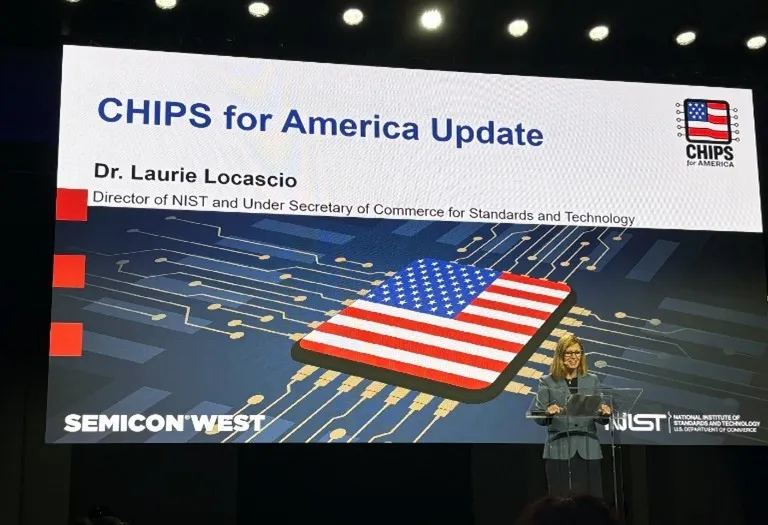
SEMI was honored to welcome U.S. Under Secretary of Commerce for Standards and Technology, Dr. Laurie E. Locascio, to the CEO Summit keynote stage at SEMICON West 2024 on Tuesday, July 9. Locascio, who also serves as the Director of the National Institute of Standards and Technology (NIST), delivered her morning CHIPS Act Update keynote address to a packed room of over 1,000 attendees at the Moscone Center in San Francisco.During her address, Locascio emphasized how far the U.S. chip industry has progressed since 2021. “Prior to 2022 and the passage of the CHIPS and Science Act, the U.S. produced 0% of the world's leading edge chips,” she said. “But now, after these proposed investments, we've changed the global landscape.”Industry Shifts from the CHIPS and Science ActDue to long delays and price increases resulting from supply chain vulnerabilities, Locascio shared that Congress began developing the CHIPS and Science Act with two key goals in mind. The first, she said, was to protect economic security, and the second, was to lower costs for American taxpayers. As part of the CHIPS and Science Act, CHIPS for America was established to advance semiconductor manufacturing in the U.S. CHIPS for America encompasses two offices: The CHIPS Research and Development Office, as well as the CHIPS Program Office - both of which are responsible for implementing CHIPS and Science Act law.CHIPS for America, said Locascio, couldn’t be another procurement program. Instead, it needed to be a purpose-driven approach to build domestic manufacturing capacity. Locascio highlighted that CHIPS for America galvanized several experts from the federal government, R D, and other core areas to work together to revitalize the U.S. semiconductor industry and increase capacity. To achieve this, Locascio pointed to CHIPS for America’s $30 billion in proposed direct funding and $25 billion in proposed direct loans.Locascio also noted diversity of technology as being essential for the American chip industry, citing how Intel, Micron, TSMC, and Samsung have recently expanded in the U.S., with SK Hynix planning to build a fab and R D facility in Indiana. No other economy in the world, she said, has more than two of these companies producing leading edge chips on its shores.“The total public and private investment from our four, leading-edge companies will equal roughly $300 billion between now and the end of the decade, far and away the most investment in new production in the history of the U.S. semiconductor industry,” said Locascio. Industry Investments on the HorizonTo further aid these efforts, Locascio mentioned CHIPS for America’s notice of intent to invest $1.6 billion in an open competition to accelerate advanced packaging domestically and encourage innovation. Funding will be directed toward five key R D areas, including equipment tools, power delivery, connector technology, chiplets, and Electronic Design Automation (EDA), she said. Additionally, Locascio shared that CHIPS for America recently announced its first preliminary memorandum of terms (PMT) to support the upstream supply chain, and shared plans to announce several more PMTs in the future. Lastly, Locascio revealed that CHIPS for America plans to release a model and process for bringing new facilities to life, in partnership with the National Semiconductor Technology Center (NSTC). NSTC members, she said, will gain access to partnership funds and state-of-the-art facilities to support the U.S. semiconductor industry. “Across all these efforts, from manufacturing incentives to research funding, to workforce development efforts, the U.S. must cultivate and build our competitive assets to protect and grow our technological leadership,” said Locascio.In a podcast with Francoise von Trapp of 3D InCites recorded at SEMICON West, Locascio discussed her career background, CHIPS Act investments and the path forward for the semiconductor industry in the U.S. To learn more, check out the podcast interview with 3D InCites. SEMI Global AdvocacyDiscover how SEMI Global Advocacy Public Policy supports the microelectronics industry across trade, taxes, talent, and R D.John Cooney is Vice President of Global Advocacy and Public Policy at SEMI.
Read More