downloadGroupGroupnoun_press release_995423_000000 copyGroupnoun_Feed_96767_000000Group 19noun_pictures_1817522_000000Member company iconResource item iconStore item iconGroup 19Group 19noun_Photo_2085192_000000 Copynoun_presentation_2096081_000000Group 19Group Copy 7noun_webinar_692730_000000Path
Skip to main content
Default Banner Image

SEMICON Taiwan

Stefano Zanella, Head of Automotive, Industrial and Location Businesses, TDK InvenSense will present at next month’s SEMICON Taiwan (September 18-20, 2019 in Taipei City, Taiwan). SEMI Taiwan’s Emmy Yi spoke with Stefano for a preview of his talk.SEMI: What macro market trends are driving automotive manufacturers to increase the variety and volume of MEMS sensors in cars?Zanella: The car world is changing. Consumers increasingly view car ownership as less desirable, yet the number of miles traveled and of hours spent in a car are rising steadily. At the same time, cars are changing profoundly, and the pace of change is rapid. To thrive in this new world, automakers are becoming transportation enablers and providers.Many vehicles today autonomously interact with humans and the world around them, operate with less or no human control, and are powered by electric batteries. MEMS sensors – which mimic and augment the five human senses – are front and center in these advancements.Unlike other types of sensors – such as cameras, radar and GNSS/GPSS – MEMS gyroscopes are functional in every environment. Gyroscopes, as well as accelerometers, can supplement those other sensors when they are not available and boost the accuracy of their outputs when they are available. Both camera stabilization and dead reckoning when GNSS is unavailable are good examples of the latter. Other prevalent sensors include MEMS microphones, used to capture voice commands, ultrasonic sensors, which can be leveraged for parking and gesture recognition, and fingerprint sensors, which can improve car security.SEMI: How can automakers stay competitive in this changing landscape?Zanella: Automakers can future-proof their relevance in the transportation market in several ways. By embracing consumer migration toward ride-sharing over car ownership, many are transforming from manufacturers to mobility providers. Carmakers that invest in ride-sharing and other modes of transportation (e.g., scooters) can sustain their profitability, even if the number of vehicles sold eventually shrinks or simply doesn’t grow as much as anticipated.Automakers will need to pursue new avenues of product differentiation. Traditionally, automakers have kept performance and aesthetics to themselves by owning the engine and the body design of the car, leaving nearly everything else to suppliers. Autonomous driving and electrification, however, are pushing automakers to own the battery pack and the autonomous driving software stack.While we are just beginning to see standardization in battery packs, automakers are likely to own the autonomous driving stack for many years to come. Automakers that offer cars with highly functional and efficient batteries and driving stacks stand to gain market share.Automotive infotainment systems will become increasingly crucial as autonomous driving turns everyone into a passenger. Audio subsystem providers such as Harman Kardon, Bose, and Bang Olufsen, for example, jockeyed for attention at the most recent Geneva Motor Show, demonstrating sophisticated surround-sound systems that rival premium-quality home audio setups.With more and more consumers using voice interfaces to interact with devices in the home, drivers are less willing to accept spotty accuracy in the car. Hence, automakers are using more higher-performing MEMS microphones to accurately capture voice commands. This will come as a relief to those of us who routinely yell at our steering wheels while using voice command to try to call home. Demand for higher quality infotainment systems has prompted some automotive OEMs to own the entire infotainment system and work directly with sensor and chipmakers, a level of intimacy that gives automakers a chance to tune sensor and chip development to their own needs. This tighter relationship also positions device suppliers to forge more direct links with drivers.SEMI: Which MEMS sensors are particularly important to tomorrow’s automobiles and why?Zanella: For many years the automotive industry has been integrating more electronics into cars to improve safety, advance the driver and passenger experience, and, more recently, power the car. As vehicles rely less on human control, automakers must replace the senses of the driver with something else. That something else is a bunch of sensors, microphones, cameras, radar and LIDAR to replace vision and hearing.Since MEMS sensors such as accelerometers, gyroscopes and pressure sensors are much more robust than other types of sensors to operate in snow, rain and darkness and other imperfect environments, automakers use them to ensure that the vehicle never gets lost when other sensors and/or the GPS/GNSS signal become unavailable in tunnels or urban canyons. Gyros help determine direction, accelerometers velocity and distance driven, and pressure sensors height, such as when taking a fork on a multi-level highway. At the same time, fingerprint sensors, ultrasonic parking sensors, and temperature sensors are improving convenience, safety and security for the car’s occupants. Automakers increasingly use inertial and environmental sensors, MEMS microphones, fingerprint sensors, and vision/imaging sensors to augment or replace the five human senses on which car drivers have relied for over 100 years. Source: TDK InvenSense SEMI: To what degree can MEMS sensors enable automotive security?Zanella: MEMS sensors are used widely to enhance security today. Some of their mechanisms are easy to understand while some are unexpected. For instance, ultrasonic fingerprint sensors can authenticate the driver of a vehicle to prevent car theft or something less onerous, like a teenage driver taking the car out without permission.Accelerometers and gyroscopes can prevent a new type of spoof on keyless entry systems. Imagine that you are very close to your vehicle. Your car senses the remote control in your pocket and automatically opens the doors when you pull the handle. Now suppose that your car is parked on the street, not far from your house. You leave the remote control home, and the car doesn’t sense the proximity of the remote control. Great! No one can enter your car, unless ... a thief has a big signal amplifier that makes your car think that the keyless entry device is next to the car. In this case, what can an automaker do? Add an accelerometer that restricts the keyless device from broadcasting the entry signal unless you are walking to the car with the device on your person.SEMI: What would you like SEMICON Taiwan attendees to take away from your presentation?Zanella: I would like them to embrace the transformations afoot in the automotive market as well as their associated design challenges since, by overcoming these hurdles, they can offer significant societal benefits such as safer and cleaner transportation. At the same time, these transformations mean significant opportunities for semiconductor industry revenue growth. And while design-to-delivery cycles in automotive are longer than in consumer and mobile, the automotive market supports higher-value devices as well as the chance to fold dozens of MEMS sensors into a single model.To paraphrase Lord Kelvin: If you can’t sense it, you can’t manage it. As suppliers of many key technologies that make intelligent transportation possible, the MEMS sensors industry is in an excellent position to help automakers manage the many challenges ahead.Stefano Zanella, Ph.D., is Head of Automotive, Industrial and Location Businesses at TDK InvenSense, where he brings MEMS sensors (including accelerometers, gyroscopes and microphones) and location solutions to the automotive and industrial markets. Zanella holds an MS and a Ph.D. in Electrical Engineering from the University of Padova, Padova, Italy as well as MBAs from both the UC Berkeley Haas School of Business and from Columbia University.He will present MEMS Sensors Enabling the Smart Car Revolution on Wednesday, September 18, 2019, at SEMICON Taiwan at 1F 4F, Taipei Nangang Exhibition Center, Taipei City, Taiwan. Register today and save 20% to learn how MEMS sensors are transforming the human experience with cars.Connect with Stefano Zanella at SEMICON Taiwan or via LinkedIn. You can also get more information on TDK’s automotive solutions and application guides online.Interested in engaging with the MEMS sensors supply chain? SEMI MEMS Sensors Industry Group is a technology community that enables professionals in the MEMS and sensors industry to innovate, address common challenges and accelerate business results.Emmy Yi is a marketing specialist at SEMI Taiwan.
Read More
Post-Conference Report: SEMI Heterogeneous Integration SummitDemand for high-performance computing (HPC) chips is exploding. These super-speedy chips are critical for data centers and cloud computing infrastructures to support new performance-hungry technologies such as artificial intelligence (AI) and 5G. The challenge is for the devices and their multi-core architectures to couple high bandwidth density with low latency and high energy efficiency. Heterogenous integration offers a potential answer as an advanced packaging technology designed to meet these skyrocketing performance demands on HPC chips and open the door to a whole new world of 3D integrated circuits (ICs).So important are 3D ICs that Intel and TSMC representatives speaking at the recent Heterogeneous Integration Summit hosted by SEMI Taiwan in Taipei declared that the packaging technology will all but dictate the future of the industry. All told, 12 speakers from government, academia and a broad range of leading international companies from sectors including advanced packaging, design, manufacturing, silicon photonics, equipment and materials shared forward-looking strategies, the latest technologies and potential heterogeneous integration market opportunities. Koushik Banerjee, vice president, TMG, Assembly, and Test Technology Integration, at Intel pointed out that using heterogeneous integration for a single SiP (system-in-package) will deliver what the industry has long wanted by enabling multiple process nodes, more diverse silicon IP (intellectual property) and chip functionality, and chips that pair low energy with high frequency. Intel plans to announce its first Forveros 3D packaging product combining a 10nm HPC chiplet with a low-energy 22nm base die and stacked with memory on top. When asked about the future of advanced packaging technology, Banerjee said it will be very much about the combination of Foveros and its very own Embedded Multi-Die Interconnect Bridge (EMIB).For its part, TSMC, will continue to upgrade its CoWoS (Chip-on-Wafer-on-Substrate), InFO (Integrated Fan-out) and other 2.5D IC production solutions while developing 3D chip stacking technology such as SoIC and WoW (wafer-on-wafer). TSMC is ushering in a new age of 3D IC packaging, said Marvin Liao, Vice President, Backend Technology and Service Division, at TSMC. The company’s SoIC is based on Chip-on-Wafer concept, with the flexibility to support one-to-many or different process nodes, whereas its WoW integrates two wafers with solid yields that could be used for products of the same size or manufactured with mature process technology.Speakers also included representatives from ATOTECH, Lam Research, SPIL, Sigurd, Cadence, Grand Process Technology, ITRI (Industrial Technology Research Institute), Industrial Development Bureau, and Lee San-Liang, Distinguished Professor, Department of Electronic and Computer Engineering at National Taiwan University of Science and Technology all shared their perspectives on equipment, materials, and testing and how different industry value chains might contribute to the development of heterogeneous integration technology.Expected to be a key driver of the next wave of semiconductors, heterogeneous integration and related technologies – including 3D IC, FOWLP (Fan-out wafer-level packaging) / FOPLP (Fan-out panel-level packaging), silicon photonics, Micro LED, compound semiconductor, automated optical inspection and SLT (system level testing) – will be a key focus at SEMICON Taiwan 2019, September 18 to 20 in Taipei. The Heterogeneous Integration Innovation Zone – along with featured international programs such as SiP Global Summit, Strategic Materials Conference, the Smart Data Summit and the Smart Automotive Summit – will gather key industry players to reveal the latest technology breakthroughs and market trends.Emmy Yi is a senior marketing specialist at SEMI Taiwan.
Read More
The automation of semiconductor factories through digitization is reshaping Smart Manufacturing to streamline the connectivity and orchestration of manufacturing processes across the entire supply chain. But the threat of cyberattacks and viruses looms. An estimated 26 billion smart and connected manufacturing devices are expected to be online by next year. Never before has the need been greater to protect the staggering volume of manufacturing data traversing increasingly intricate supply chain networks.“We are living in the time of digital manufacturing,” said Chen Chi-Hsien, Director of TSMC’s Manufacturing Technology Center. “Processes ranging from assembling equipment and upgrading hardware and software are increasing security challenges for semiconductor manufacturers. With viruses and malware constantly evolving to pose greater threats, all members of the supply chain – from manufacturing and equipment to operating system and software/firmware providers – should work together within the SEMI Smart Manufacturing platform to establish cybersecurity standards across the industry. Doing so will also enhance the development of smart manufacturing and accelerate digitalization.” Representatives from Tongfu Microelectronics, Adlink, NSHC, ABB, TSMC, ASE and Microsoft with SEMI CMO and SEMI Taiwan president Terry Tsao (left to right) Chi-Hsien offered his insights at the SEMI Smart Manufacturing and Cybersecurity Seminar, joining speakers from other leading semiconductor manufacturers including TFME and ASE to discuss the latest smart manufacturing trends and cybersecurity challenges. The April event in Hsinchu also featured representatives from ABB, Adlink, Microsoft, Rockwell, Siemens, Delta Electronics and the National Center for High-Performance Computing (NCHC) offering their views on how the semiconductor industry can speed its digital transformation using various technologies.With its 43 years’ experience in developing international standards, SEMI is committed to serving as the platform to establish universal information security standards for silicon wafer plants and semiconductor equipment, Terry Tsao, SEMI chief marketing officer and SEMI Taiwan president, said at the seminar. Tsao added that SEMI is now in discussions with leading semiconductor manufacturers to establish a communications framework for addressing potential security risks and facilitating the development of risk management and security solutions that safeguard the semiconductor supply chain.This year SEMI will debut its SMART Manufacturing EXPO to gather key supply chain players for critical discussions about security and to feature AI manufacturing and cybersecurity solutions. Co-located with SEMICON Taiwan, September 18-20, 2019, at TaiNEX 1 (Taipei Nangang Exhibition Center, Hall 1), the SMART Manufacturing EXPO will include Smart manufacturing hardware and software providers from around the world for the interdisciplinary discussions and collaboration key to developing strong Smart manufacturing security.For more information about the SEMI Smart Manufacturing Platform, contact Emmy Yi of SEMI Taiwan at [email protected] Yi is a marketing specialist at SEMI Taiwan.

Read More
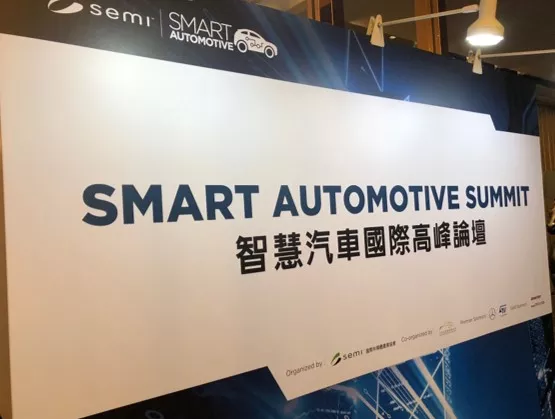
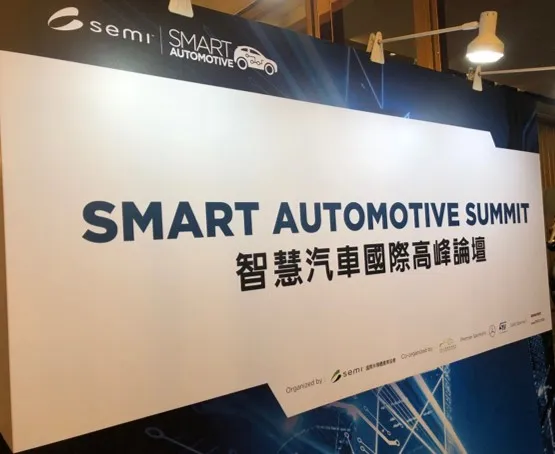
Are you ready for a shared economy where your transportation needs are no longer met by an automaker, but rather a “mobility service provider”? While smart transportation news has mostly focused on the likes of electrification (Tesla) and autonomy (Waymo), the real changes in transportation may be more fundamental than self-driving electric cars. According to presenters at this week’s Smart Automotive Summit at SEMICON Taiwan, new technologies won’t just make cars smarter: they will transform the way we see and use transportation in myriad ways.Constance Chen, public relations general manager for forum sponsor Mercedes Benz, opened with a brief overview of parent Daimler’s evolving approach to transportation, dubbed CASE, which stands for Connected, Autonomous, Shared and Services, and Electric.“The fundamental value of vehicles is changing,” Chen said, and car ownership is one of the biggest changes. Ride-sharing services like Uber and Lyft, and shared car services like ZipCar and DriveNow, are already addressing the transportation needs of a growing urban population that eschews car ownership. Traffic congestion, parking challenges, and a desire to improve air quality are key drivers (no pun intended) moving people away from car ownership to embrace shared transportation solutions.Indeed, societal considerations are as challenging as some technological hurdles facing autonomous vehicle development. Robert Brown, Taiwan operations manager for Magma Electronics, listed his top five challenges for autonomous transportation: Perception (vision, sensors) Assessment (ability of systems to analyze data) Control (need for faster-than-human response) Communication (vehicle-to-vehicle, vehicle-to-everything) Expectations—specifically people’s expectations of the value autonomous transportation should deliver As people change the way they view transportation and begin to understand what is possible when they can relinquish control of their vehicle, they’re transportation needs and expectations are likely to change. The challenges are, of course, also an opportunity to deliver a wide range of services, including information, entertainment, and retail, which opens the door for traditional carmakers to position themselves more as service providers like Mercedes Benz.For those who have grown up with traditional car ownership and the perceived freedom that owning allows one to go anywhere at anytime, the idea of giving up their car—one that they drive themselves—might seem beyond the pale. But as ride-sharing services are already showing, a growing portion of our population seems more than ready to embrace a shared and autonomous future.The SEMICON Taiwan Smart Automotive Summit is part of SEMI’s Smart Transportation initiative focusing on automotive electronics, a top priority for SEMI and its 2,000+ members. SEMI’s industry standards, technology communities, roadmap efforts, EH S/regulatory activities and other global platforms and communities bring together the automotive and semiconductor supply chains to collaborate, increase cross-industry efficiencies and shorten the time to better business results.Michael Droeger is director of marketing at SEMI.
Read More
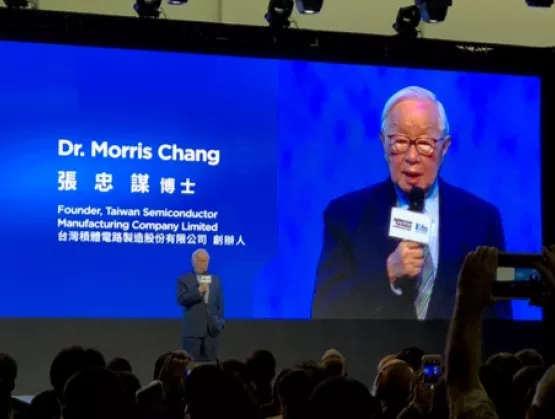
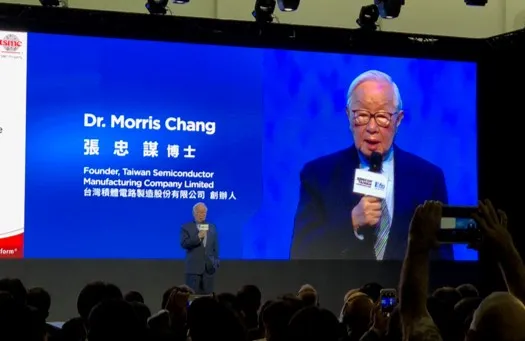
Over the past three decades, most of the world’s innovations have centered largely on business models and involved iterative advances of existing technologies, with none matching the global impact of the top 10 semiconductor industry discoveries and advances, Dr. Morris Chang, founder of TSMC and the IC foundry model, said at SEMICON Taiwan 2018 this week.Few have as clear a perspective on the transformative power of semiconductors as Dr. Chang, founder of TSMC and father of the IC foundry model. Keynoting the IC60 Master Forum celebrating the 60th anniversary of the invention of the integrated circuit (IC), Dr. Chang listed what he considers the 10 key semiconductor industry innovation milestones since 1948:1. Invention of the transistor by Shockley, Bardeen, and Brattain – 19482. Silicon transistor – 19543. Integrated circuit – 19584. Moore’s Law – 19655. MOS technology MOS FET – 1964 Silicon gate – 1967 CMOS – 1970 6. Memory DRAM – 1966 Flash – 1967 7. Outsourced assembly and test (OSAT) – 1960s8. Microprocessor – 19709. VLSI systems design – 1970-1980 IP and design tools – 1980-present 10. Foundry model – 1985 Among the most consequential semiconductor advances may be yet to come, Dr. Chang said, citing innovations including artificial intelligence (AI) and machine learning, new device architectures, Extreme Ultraviolet lithography (EUV), 2.5D/3D packaging, and new materials such as graphene and carbon nanotubes.Dr. Chang argued that because bringing an innovation into production is immensely more expensive than proving a theory in a lab, innovators are not always the ones to implement and benefit from their novel ideas. Today, innovation costs are skyrocketing, driving more consolidation across the supply chain.Michael Droeger is director of marketing at SEMI.
Read More
The march to greater precision, efficiency and safety – the lifeblood of high-technology manufacturing facilities – has taken on a new urgency as emerging applications such artificial intelligence (AI), the Internet of Things (IoT) and Industry 4.0 give new meaning to smart factories. Facing fiercer competition and ever more sophisticated fabrication processes, semiconductor fabs are under intense pressure to keep pace with new technologies as they work to upgrade. Nowhere are the stakes higher than in Taiwan, where high-tech manufacturing contributes mightily to the region’s GDP growth. To help Taiwan fabs confront the challenges and opportunities of designing smarter factories, SEMI and its High-Tech Facility Committee hosted the High-Tech Facility Workshop in June. SEMICON Taiwan 2018 High-Tech Facility Pavilion exhibitors gathered to explore how they can build smarter factories by deploying smart surveillance and disaster prevention technologies along with smart communications systems that better use manufacturing data to drive new safety and product quality efficiencies.During the workshop, SEMI High-Tech Facility Committee representatives shared strides it has made upgrading overseas facilities and developing standards to help establish smart factories in Taiwan.SEMICON Taiwan – 5-7 September at Taipei’s Nangang Exhibition Center – is also an important event for advancing smart manufacturing in Taiwan. Nearly 30 leading global manufacturers will exhibit at the SEMICON Taiwan High-Tech Facility Pavilion. The venue covers operational aspects of semiconductor manufacturing vital to becoming smarter including energy savings, nano-contamination control, facility information modeling, precision instrumentation and control, fire protection, mechatronics, and automation control. The pavilion will also feature a series of theme events offering a comprehensive overview of topics including the latest practices for integrating smart facility capabilities from the perspective of an advanced fab designer.At the TechXPOT stage, High-Tech Facility Pavilion exhibitors will also demonstrate the latest technology breakthroughs and cutting-edge smart factor solutions.The September 6th High-Tech Facility International Forum at SEMICON Taiwan will again gather factory experts and thought leaders from industry and academia to examine “Effective Ways to Make a Facility Smart.“ Experts from industry heavyweights in the fields of wafer foundry, LCD, memory and semiconductor packaging including TSMC, UMC, Innolux, ASE, Micron Taiwan, Winbond and VIS will offer insights into key areas of high-tech facilities including facility electricity, machinery, water management, vaporization and automation systems. On the same day as the forum, the High-Tech Facility Get-Together and High-Tech Facility VIP Dinner will bring together industry elites, academic professionals, and government officials to explore partnership opportunities. SEMI Taiwan and the High-Tech Facility Committee share HTF market trends information, technology updates and standards with SEMI members and exhibitors. Founded in 2013, the High-Tech Facility Committee now has 85 corporate members. Dedicated to accelerating industry collaboration through the integration of Taiwan industrial, government and academic resources, the committee each year holds several group meetings focusing on topics including energy savings, earthquake and fire protection, nano-contamination control, and precision instrumentation and control to advance critical technologies and facilitate standardization. The committee also aims to help the industry become more competitive faster by promoting technology standards that boost productivity and reduce production costs.Please visit www.semi.org and www.semicontaiwan.org for more information about SEMI’s high-tech facility initiatives.Iris Tsou is a marketing specialist at SEMI Taiwan.

Read More