downloadGroupGroupnoun_press release_995423_000000 copyGroupnoun_Feed_96767_000000Group 19noun_pictures_1817522_000000Member company iconResource item iconStore item iconGroup 19Group 19noun_Photo_2085192_000000 Copynoun_presentation_2096081_000000Group 19Group Copy 7noun_webinar_692730_000000Path
Skip to main content
Default Banner Image

silicon

As the semiconductor industry continues to grapple with the widespread effects of the COVID pandemic, at the SEMI Foundation we continue to build programs and initiatives that inspire the next generation of STEM workers and drive new and diverse talent to all of our member companies.Our work to build out the semiconductor workforce centers on creating more diversity, equity, and inclusion within the industry. We want everyone to win. We want students and workers to benefit from these excellent jobs. We want our industry to diversify to increase our productivity, innovation, and our bottom lines. And we want to fulfill the extraordinary potential of electronics to help people around the world in the way they work and live. COVID-19 is hitting certain populations – women, veterans, and Black, Indigenous and other people of color – particularly hard, so our work has never been more timely or important for local communities and the global economy.To that end, we’re going big by generating funding and designing initiatives that will benefit the industry over the long term. The SEMI Foundation’s SEMI VetWorks Program, currently in development, will help U.S. veterans better understand our industry, the careers available to them, and how their skills will transfer to working in microelectronics. The program also provides training portals and mentorship support to smooth their transition to the industry.We’re also working to fund our Women In Industry Network, a major new initiative designed with national partners to significantly increase the representation of women, who today account for just 10-25% of the semiconductor workforce across all roles and functions. What’s more, the SEMI Foundation’s global industry image and awareness campaign is inspiring more young people to enter high-school and university STEM programs and ultimately pursue careers in microelectronics while encouraging current workers to re-skill or up-skill and join the tech workforce.Meanwhile, your High Tech U team continues to connect semiconductor companies with students all over the globe. While we’re eager to get back on the road to meet and inspire students in person, we are excited to provide updates about two of our programs:HTU in the ClassroomWith the transition to online and hybrid learning classrooms, we seized the opportunity to combine STEM activities from SEMI High Tech U with discussion sessions and other projects to help students explore and deepen their understanding of the semiconductor manufacturing process. The 16-week pilot program, called HTU in the Classroom, will launch late next year to introduce high-school students to four key areas of chip production: patterning and layering, the chemistry involved in photolithography, logic gate systems, and computational thinking. These interviews with SEMI member companies will give students a chance to share their new knowledge gained from the class and to ask questions about what life is really like as an engineer, HR professional, or manager in industry.From Sand to SiliconWith silicon the lifeblood of our industry, it is impossible to understand what makes the semiconductor/microelectronics industry tick without knowing more about the companies, processes and technologies that all make it possible. That’s why we are developing a self-guided online journey through the chip manufacturing process for students and educators. This will go beyond reading like a Wikipedia site. Instead, the learning and exploration will feature interactive elements including company videos and links to resources such as fact sheets as well as university and company websites. At each stage, students will get details about the companies and individuals who do the work and the paths the professionals followed to these roles. The big-picture look will show how all the production stages come together to build working devices that power everything from smartphones to data centers.The SEMI Foundation is grateful for your support and partnership as we all work through these unprecedented times and roll out new programs to help build the talent pipeline. To learn more about or support our workforce development programs, please contact Shari Liss, SEMI Foundation’s Executive Director, at [email protected].
Read More
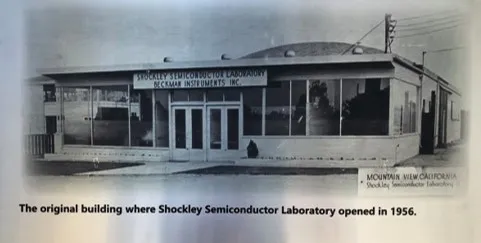
Adapted from the Computer History Museum’s “Celebrating the Birthplace of Silicon Valley” invitation. Work that sowed the seeds of the digital, hyper-connected world we know today all started in a squat, unremarkable building in Mountain View, California. Long before the structure’s foundation was laid, Santa Clara County flourished with orchards, not chips. Between the 1880s and 1940s, eight million fruit trees carpeted Silicon Valley. By 1939, San Jose, with a population of 57,651, was the largest canning and dried-fruit packing center in the world, with 18 canneries, 13 dried-fruit packing houses, and 12 fresh-fruit and vegetable shipping firms*.In 1956, silicon sprouted from new fertile ground.That’s when startup Shockley Semiconductor Laboratory, employing some of the most brilliant young minds in the business, produced Northern California’s first silicon transistor prototypes and formed the technological and cultural bedrock for today’s Silicon Valley.Fed up with William Shockley’s hard-nosed management style, eight Shockley employees – including Gordon Moore, Robert Noyce, Julius Blank, Victor Grinich, Jean Hoerni, Eugene Kleiner, Jay Last, and Sheldon Roberts – resigned in September 1957 and founded Fairchild Semiconductor Corporation. Fairchild was the seedling from which companies valued at over $2 trillion have grown and the source of the integrated circuit “computer chip” that has revolutionized our world.Now, more than 60 years later, the site of Shockley Labs, already an IEEE Historical Milestone, is being formally recognized by the IEEE and the City of Mountain View for its historical significance in a special dedication ceremony on August 15. Thanks to the efforts of many, especially developer Merlone Geier Partners, newly commissioned public sculptures – in the likeness of two early semiconductor devices and a mammoth silicon crystal monument that symbolize the work to come out of the lab – now permanently mark the site, along with various plaques that describe and commemorate the site’s history. The event’s featured speaker is Professor James F. Gibbons, former dean of engineering at Stanford University. Professor Gibbons’ first task at Stanford in 1957 was to work with Shockley and his team to transfer their knowledge of silicon fabrication to Stanford, which could in turn train future engineers for the coming boom in the semiconductor industry. He will share his personal experiences and memories of those early days. Join early semiconductor pioneers, the president of the IEEE, SEMI president and CEO Ajit Manocha and local officials on August 15 to commemorate this legendary Silicon Valley landmark. Guests are invited to enjoy a series of presentations and exhibits and view the stunning sculptures and plaques.The event is free to attend and open to the public. Space is limited so please sign up here to guarantee a seat.Location: 391 San Antonio Road, Palo Alto, California (Phase II of San Antonio Village). Parking is free.*National Park Service, Santa Clara County: California’s Historic Silicon ValleyAriana Raftopoulos is a marketing manager at SEMI.
Read More