downloadGroupGroupnoun_press release_995423_000000 copyGroupnoun_Feed_96767_000000Group 19noun_pictures_1817522_000000Member company iconResource item iconStore item iconGroup 19Group 19noun_Photo_2085192_000000 Copynoun_presentation_2096081_000000Group 19Group Copy 7noun_webinar_692730_000000Path
Skip to main content
Default Banner Image

sensor fusion

Areas packed with dense foliage. Mile-deep mines and tunnels. Urban canyons. Indoor environments. Global Positioning System (GPS) technology has long been a boon to location tracking of aerial, terrestrial and aquatic vehicles — as well as to people in motion — but in many cases it can’t function with a high degree of reliability, either because the GPS signal is somehow obstructed, or worse, is jammed or spoofed. Delivering higher precision and higher reliability in GPS-denied environments — as well as immunity to jamming and spoofing — positioning, navigation and timing (PNT) represents the next evolutionary step in location positioning and tracking. With PNT so critical to a range of defense, commercial and industrial applications — and with sensors the building blocks of PNT solutions —the MEMS Sensors Industry Group, a SEMI Technology Community, is ensuring that our members play a transformative role in PNT innovations. We’ve secured $14.9 million in research dollars for PNT R D over the past 18 months, marking Phase I of a project funded through a public-private consortium with the U.S. Army Research Laboratory (ARL). With the typical funding structured as a 50/50 cost share with the industry participant, the research dollars go farther, and the level of commitment that each recipient makes is more pronounced. As we look ahead to Phase II of the MSIG PNT R D project, the details of which we’ll announce later this year, we’d like to reflect on the companies and research labs that won bids through a competitive process supported by the SEMI-MSIG PNT Technical Advisory Council and the SEMI-MSIG PNT Governing Council. Winners submitted proposals that both met our criteria for advancing PNT technologies relative to mobility, size and weight, and that laid a path toward greater cost efficiency and lower product price. “PNT doesn’t displace GPS,” said Tim Brosnihan, executive director of SEMI-MSIG. “Rather, getting the two technologies to work together improves position and tracking. While current PNT solutions use inertial measurement units, or IMUs, to effectively maintain positioning accuracy in the absence of a GPS signal, it’s also true that accumulated bias and noise-related errors in the IMUs make positional determination unreliable. Like most great pairings, GPS and PNT can work together. We can use IMUs when GPS is unavailable, and when GPS returns, it can be used to reset the IMU errors. So when the GPS signal is lost again, the IMU can maintain navigation and location. “We’re focusing this PNT project on technologies that will allow accurate positional determination in the absence of a reliable GPS signal for prolonged periods,” added Brosnihan. Here are snapshots of the 10 companies and research institutions that won awards for their PNT-focused developments. Analog Devices is developing an optimal size, weight, power, and cost (SWaP-C) solution for applications requiring high-accuracy navigation and uncompromised reliability. The company’s mode-matched navigation-grade gyroscope with system ID leverages an innovative sensor and its associated process design, a robust high-volume manufacturing flow, and system-control algorithms to achieve very high-performance (0.01 degree/hour bias instability and 0.005 degree/√hr angle random walk). Carnegie Mellon University (CMU) is developing a CMOS MEMS high-stability accelerometer through machine learning (ML). If embedded in footwear, these ML-optimized accelerometers could be used in personal navigation. If embedded in a golf ball, baseball or hockey puck, the accelerometer could extract the trajectory of the object in motion by measuring its shock (force). The CMU device validates state-of-the-art performance of the university’s high-dynamic-range accelerometer systems-on-chip. It also validates and tests ML models by measuring the accelerometer and auxiliary sensor output over long time periods (e.g., 1 hour, 10 hours, days) to collect independent long-duration time-series data. By modeling drift from environmental influences — along with possible overall system changes from extreme events, such as high-temperature excursions and shock — designers can dramatically reduce navigation errors to support more accurate navigation over longer time periods. GE Research is developing a novel MEMS gyrocompass that will enable high-end north-finding systems, traditionally unaffordable for automotive and consumer applications. The device will be available in mass-market applications such as robotics and autonomous vehicle navigation in GPS-denied environments. The MEMS gyrocompass enables a 10x reduction in SWAP-C with high accuracy. An additional benefit of this work is that GE will offer a foundry service process development kit (PDK) for its Polaris MEMS process, speeding the development and manufacture of MEMS devices in an advanced processing facility. Georgia Institute of Technology is developing high-aspect-ratio monocrystalline silicon carbide-on-Insulator (SiCOI) MEMS devices that will reduce navigation angle errors, potentially making widescale pedestrian navigation available in mass-market applications such as smartwatches and smartphones. The platform for ultra-high-performance bulk acoustic wave (BAW) gyroscopes and timing resonators will feature material properties that allow a much better structural symmetry and a higher-resonant quality factor (Q) than silicon MEMS (Si MEMS). Honeywell is working to enhance the navigation accuracy of commercial and military vehicles in GPS-denied environments through an innovation that dramatically improves the performance of a MEMS IMU by both refining candidate ML algorithms, including recurrent neural networks (RNNs), and by combining deep neural network (DNN)-based calibration and sensor fusion algorithms. PARC is developing a new materials platform for photonic integrated circuits (PIC). Aluminum gallium nitride (AlGaN), an ultra-wide bandgap semiconductor, is epitaxially grown to produce single-crystal layers for fabrication of optical components, such as waveguides and micro-ring resonators for optical signal processing. The project includes design and fabrication of specialized laser diodes at wavelengths needed to probe qubits based on atomic ions (e.g., strontium and ytterbium). The new platform offers several benefits: low optical loss from the ultraviolet (UV) to infrared spectral bands excellent non-linear optical properties for efficient frequency-generation processes (e.g., optical frequency combs); and enabling technology to realize compact, field-deployable quantum systems for PNT applications, such as ultra-fast distance measurements, microcombs for optical atomic clocks, photonic radar, optical coherence tomography, and coherent communications — all applications that benefit from the lower cost and small chip size of these integrated photonic circuits By expanding its proprietary EpiSeal encapsulation process to include new materials and topologies, SiTime is developing low-impedance and low-noise MEMS resonators with an ultra-stable wafer-level package. Because these novel MEMS resonators are highly reliable and very compact — while using less power and providing lower RF noise — they’re ideal for 5G RF timing applications, IoT devices, and smart vehicles. Teledyne Scientific Imaging (CSAC project) is conducting a study to identify paths to reduce the cost of battery-operated chip scale atomic clocks (CSAC) that provide affordable precision timing for denied environments. The project goal is to identify viable paths of reducing cost by an order of magnitude, without sacrificing performance. In addition to exploring design and manufacturability solutions, project researchers are performing short loop experiments as proof-of-concept validation. Through a second award, Teledyne Scientific (IMU project) is advancing packaging and integration for compact, navigation-grade six degrees of freedom (DOF) MEMS IMUs. Featuring reduced bias instabilities associated with packaging stresses and ambient temperature influences, the Teledyne Scientific IMUs promote environmentally robust low-stress packaging of wafer-level vacuum packaged (WLVP) MEMS gyro resonators, facilitating a lower-cost, smaller and more accurate IMU for performance-driven PNT applications. Twinleaf is developing a new light source module ideally suited for integration directly into quantum sensors. This project integrates a bright, tunable distributed Bragg reflector (DBR) near infrared (IR) 795nm wavelength laser made by the project’s subcontractor (Photodigm) into a package that locks the laser to an atomic reference line in a microfabricated vapor cell. The laser module’s high-output intensity and low magnetic signature will enable breakthrough performance levels for Twinleaf’s magnetometer and other quantum sensors requiring the light source integrated into the sensor module. Request for Proposal for Phase II of SEMI-MSIG PNT Program Opens Q4 2021 SEMI-MSIG will accept request for proposal (RFP) submissions for Phase II of its PNT program starting in Q4 2021. This year, in addition to funding IMU and timing device projects, MSIG will also consider proposals on imaging-based navigation solutions. If you’d like to submit for Phase II, sign up to receive more information on the RFP by visiting SEMI’s R D Programs page. You can also connect with Paul Carey by email, [email protected] or LinkedIn. Paul Carey, Ph.D., is the director of the MEMS Sensors Industry Group. With deep domain expertise in X-ray imaging backplane platforms — and their supply-chain technologies such as flexible substrates, laser annealing for semiconductors and silicides, thin film transistors (TFT) for flexible OLED displays, and polysilicon-on-plastic TFT technology — Carey has held technical leadership positions at dpiX, Applied Materials, and Lawrence Livermore National Laboratory. He received a double-major B.S. from UC Berkeley in Electronical Engineering and Computer Science (EECS), and Materials Science and Engineering (MSE). Carey holds an M.S. in EECS from UC Berkeley and a Ph.D. in MSE from Stanford University.
Read More
Software for sensors has evolved from simply reading out and evaluating sensor data to making intelligent decisions based on that data, a transformation enabled by new software synthesis and artificial intelligence (AI) technologies. Together, they make consumer devices smarter, dramatically improving the user experience through greater interactivity and higher levels of automated personalization.SEMI’s Nishita Rao spoke with Stefan Finkbeiner, CEO and General Manager at Bosch Sensortec, who will explore the topic in his October 23 keynote, How Software Makes MEMS Sensors into Smart Systems, at MEMS Sensors Executive Congress (MSEC), October 22-24, 2019, at the Coronado Island Marriott Resort Spa in Coronado, Calif.Join us at MSEC to meet Bosch Sensortec and other industry influencers driving MEMS and sensors innovations. Registration is open.SEMI: What is the relationship between MEMS sensors suppliers and specialized software synthesis providers?Finkbeiner: Collaboration is a key driver for innovation in sensor software. There are already several fruitful collaborations between MEMS sensors suppliers and specialized software providers, which are mostly startups. Collaborations with providers of simulation and evaluation tools as well as with well-known universities in the field of AI are starting to show positive results.Domain expertise is also critical for developing smart sensor software, making it essential to future sensing solutions.SEMI: How does software synthesis relate to sensor fusion?Finkbeiner: Put simply, software synthesis refers to ways of automatically generating code based on domain knowledge and given constraints for specific product versions. Sensor fusion combines sensor data from different kinds of sources in order to improve the results.Software synthesis techniques enable a level of automation that creates new opportunities for more complex sensor fusion, which was formerly out of reach when using traditional approaches that involved, for example, big data and a large number of potential data sources.The traditional sensor fusion toolset can now be further extended by machine learning techniques that help to determine which sources are more reliable than others and how to combine data streams. This topic and others are still active areas of research. A wearable device with motion detection is a case in point. With unsupervised learning, the device could identify short versus long cyclically repeating motions and treat them differently from other types of motion. SEMI: How is the new software synthesis-AI approach different from previous approaches? To what degree will the new approach open up new applications?Finkbeiner: Traditionally, technology companies have used cloud computing for data storage and machine learning on aggregated user data. In that model, MEMS sensors generate large amounts of data that power-hungry hardware (such as digital signal processors) must process. In addition, machine learning generally requires lots of power-hungry cloud nodes with GPUs. This model, however, is not the best option for many users. Just think for a moment about all the scenarios in battery-powered devices where frequent battery charging frustrates users.Leveraging both software synthesis and AI techniques in MEMS sensors is therefore a very promising approach because it supports improved recognition and learning inside the sensor. This means that user-specific data isn’t transferred to the cloud. Instead, it remains private inside the sensor. This improves existing applications that learn all the time and opens up new opportunities for applications such as smart clothing, predicting a product’s lifespan, detecting whether a window or door is open or closed – all without server connectivity.SEMI: How will such software adapt to the individual user?Finkbeiner: Devices will offer much more personalized information to users. For example, optimizing a step counter to match the height, age or Body Mass Index (BMI) of a user – or to adapt to a user’s environment (is the person running on a beach, hiking up a mountain or strolling in a park?) – will provide more accurate information on calories burned. Not every step is created equal, and both pre-loaded personal data as well as real-world environmental data will prove that some steps consume a lot more energy than others.SEMI: What would you like MSEC attendees to take away from your presentation?Finkbeiner: I want to introduce the journey of software development by illustrating specific use case examples. I would also like to offer my outlook on the role of software and AI in MEMS sensors to help increase their adoption in current and new applications. Ultimately, I think it’s important to raise awareness in our industry on why we should embrace the use of software and AI.Connect with Stefan Finkbeiner at MSEC or via LinkedIn. Get more information on Bosch Sensortec products and solutions online.Stefan Finkbeiner, Ph.D., CEO and General Manager, Bosch Sensortec, was appointed CEO of Bosch Sensortec in 2012. He joined the Robert Bosch GmbH in 1995 and has been working in different positions related to the research, development, manufacturing, and marketing of sensors for more than 20 years. His senior positions at Bosch have included director of marketing for sensors, director of corporate research in microsystems technology, and vice president of engineering for sensors.Finkbeiner received his Diploma in Physics from the University of Karlsruhe in 1992 before studying at the Max-Planck-Institute in Stuttgart, where he earned his Ph.D. in Physics in 1995. In 2015, Finkbeiner received the prestigious lifetime achievement award from the MEMS Sensors Industry Group (MSIG), a SEMI technology community.Bosch Sensortec is a member of MEMS Sensors Industry Group, the industry association representing the global MEMS and sensors supply chain. To learn more about how MSIG enables professionals in the MEMS and sensors industry to innovate, address common challenges and accelerate business results, visit us today.Nishita Rao is marketing manager for technology communities at SEMI.
Read More
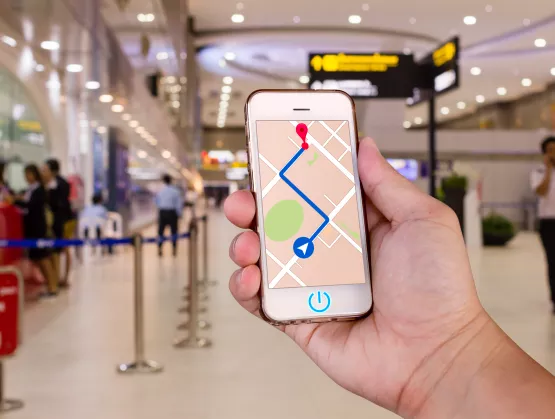
Tracking and localization technologies typically integrate with Wi-Fi and Bluetooth signals to pinpoint the location of people and objects. But what if a venue can’t install beacons or routers, or afford to deploy Wi-Fi or Bluetooth networks? Thanks to a combination of proprietary algorithms, advanced sensor fusion and the natural geomagnetic field, GipStech, a spin-off of Università della Calabria, built an indoor localization and navigation technology platform for accurate localization in the absence of an adequate GPS signal.Ahead of the SEMI MEMS Imaging Sensors Summit, 25 to 27 September 2019 in Grenoble France, Serena Brischetto of SEMI spoke with Gaetano D'Aquila, co-founder and CEO of GiPStech, about sensor fusion, augmented GPS applications and the future of indoor localization. Join us in Grenoble to learn more about GiPStech and meet other MEMS, imaging and sensors experts. Registration is open online.SEMI: Early this year GiPStech completed a test deployment of the first high-precision, infrastructure-free navigation system at Tokyo Shinjuku metro station in Japan. This is the busiest transportation hub globally! What were the main challenges you faced and how did your technology enable such a highly complex indoor localization?D'Aquila: As you mentioned, Shinjuku station in Tokyo has been registered in Guinness World Records as the busiest transportation hub globally. With 36 platforms, 200 exits and countless corridors and connections, it is easy to get lost there, especially for foreigners and tourists. On the other hand, this scale and complexity makes it unfeasible and expensive to install Bluetooth or similar infrastructure for standard indoor localization.For this reason, we needed to provide a cost-effective indoor localization technology without installing any kind of artificial supporting infrastructure. Thanks to our GiPStech patented multi-sensor-fusion localization stack and the high density of public Wi-FI networks, it’s possible to determine when passengers are inside the station. The public Wi-Fi networks signals were fused as an additional source in GiPStech's sensor-fusion platform to complement the inertial and geomagnetic engine and deliver very accurate results across the entire station. The tests performed in the station also demonstrated that the localization system can even detect the floors where travelers are walking. Now we are ready to roll out the same setup in other stations and environments.SEMI: You are not the first to pursue infrastructure-free indoor localization, but your technology platform seems to be very accurate in bringing precision, stability and consistency to the user experience. What lead to those advancements and incredible results?D'Aquila: Our key differentiating factors are built in the approach we created after years of research and development. One differentiation, of course, is related to our expertise and know-how about how the geomagnetic field can be used as a driving signal for the localization process.During R D we constructed and patented a modular multi-sensor-fusion software stack to solve any kind of localization problem, mainly in indoor environments. We started from a single-signal approach based on the employment of the geomagnetic field as a localization signal. But, mainly due to the very inaccurate devices chosen to measure the geomagnetic field, such as the smartphones that everyone carries in their pockets, we noticed that this single-signal approach is accurate but not reliable because it is strongly affected by a key weakness – the quality of sensor in the device.SEMI: How long did it take for you to solve this issue?D'Aquila: We started to integrate other signals within a few months after the first field tests related to the employment of the geomagnetic field alone. We also began to develop a software platform that could fuse any signal source (natural or artificial) available in the environment to preserve the reliability and accuracy of the localization system when some of these signals are temporarily affected by poor measurement quality. This is our differentiating factor today. We can re-configure our software platform to provide the best reliability and accuracy with the lowest artificial infrastructure in almost any context – from outdoor in a seamless way to indoor and vice versa.SEMI: GiPStech’s inertial engine is one of your cutting-edge technologies that completes your advanced indoor navigation and localization software stack. How do you see the technology evolving?D'Aquila: The inertial engine was one of our first technology modules mainly developed to enhance reliability, smooth the signals and reduce the computational power requirement of our geomagnetic localization approach.After a while, together with a third party that evaluated the performances of our module, we noticed that this module not only can be used as a self-standing localization technique, but it can also deliver high accuracy mainly in PDR (pedestrian dead reckoning) applications.Today our PDR is itself a black box with embedded subsystems. Besides some filtering modules, it includes a state-of-the-art step detector that detect steps even when the person changes the smartphone position and location (not only in the hands but also in backpacks or pockets) and an advanced step validation module that identifies and rejects fake steps.If you’ve ever used a commercial fitness tracker attached to your wrist, you know that in most cases if you move your arm the device will counts some steps that, of course, are not real. Our step validator solves this problem by detecting only real steps – a very important capability that allows our PDR to be employed as a self-standing inertial navigation system. We developed the PDR with strong attention to maintaining low requirements for the computational power and memory footprint. These additional characteristics makes the PDR very interesting even for a direct integration of the software at the silicon level in modern MEMS sensors.In a nutshell, the ability of MEMS sensors to run directly an embedded software module will drive technology enhancements that will allow some of the functionalities now available through an external application processor, such as those in smartphones, to move to a lower level (in the silicon). This, of course, reduces power consumption while even increasing the number of value-added services, including localization services, that could be built directly on top of the MEMS without requiring external software and/or application processor.SEMI: Do you think indoor localization will be more applicable in the next 10 years in areas such as Smart manufacturing, travel, healthcare, entertainment and retail?D'Aquila: Several market reports and our business development experience lead us to assess which sectors are of greatest interest for the application of indoor positioning technologies. They include the following. Industry (manufacturing logistics) Healthcare (tracking of assets, patients and doctors) Big installations (visit experience for museums, fairs) Airports stations (both for travelers and for resource and operation management) Large distribution (user profiling and influencing of the purchasing behavior) Indoor localization is a key enabling technology. Adoption, mainly in these sectors, was limited by the unfavorable tradeoff between cost and benefits. Our indoor localization technology aims to overcome those tradeoffs to make its adoption much more cost-effective while providing the best possible reliability and accuracy.SEMI: What are your expectations regarding the summit in Grenoble, and for the future of the sensors technology ahead? Where are we heading?D'Aquila: Many sectors would benefit from indoor localization technologies. MEMS, imaging and sensors are driving innovation and explosive demand for transportation, medical, mobile, industrial and other IoT applications. But these devices also constitute the basic building blocks for the development of reliable and affordable localization technologies.In outdoor environments we are pretty covered by the GPS. Indoors, where we spend more than of 80 percent of our time, similar types of services are coming to the market now and becoming more reliable over time.This Summit facilitates the direct interaction between different stakeholders to act at different points in the MEMS sensors value chain. Indoor localization was an emerging technology unrelated to the sensors ecosystem until now. Today, indoor localization must leverage MEMS sensors to be effective and reliable. In the future, localization technologies will be embedded directly in silicon to deliver the best performance at a lower cost to increase their adoption for more applications.Gaetano D'Aquila served as research fellow from 2002 to 2004 at the CNR and as an assistant teacher at the University of Calabria. From 2003 to 2014, he worked in the industry first as a security consultant for Telcos and Banking in Value Team S.p.A. and then as project manager at Infomobility S.p.A., where he coordinated research and development and strategic activities in the automotive and auto insurance industries. In 2014 he co-founded GiPStech and is its current CEO. He has published several papers in scientific journals and has filed for seven patents, three of which have been granted in the U.S. and Europe. Gaetano has a MSc in Computer Engineering and a Ph.D. in Science and Engineering of the Environment, Buildings and Energy from the University of Calabria, Italy.Serena Brischetto is a marketing and communications manager at SEMI Europe.
Read More
Marcellino Gemelli, director of global business development at Bosch Sensortec, will present at the upcoming MEMS Sensors Executive Congress on October 29-30, 2018 in Napa, Calif. SEMI’s Maria Vetrano caught up with Gemelli to give MSEC attendees a preview of Gemelli’s feature presentation.Sensor fusion — the integration of different types of sensors through software algorithms to increase overall system performance and/or reduce power consumption— has come a long way since its inception. In those early days, sensor fusion generally involved MEMS inertial sensors only. The advent of new sensor varieties, including environmental sensors, is making new use cases a reality. Gemelli will explore the ways in which the next generation of sensor fusion is improving autonomous mobility devices. SEMI: Why are environmental sensors important to autonomous mobility devices?Gemelli: When most of us think of autonomous systems, we think that they are driven by motion sensors and proximity sensors (e.g., radar, Lidar). When vertical location comes into play, however, in applications such as drones or asset tracking, pressure sensors become an integral part of flight control, navigation and positioning in GPS-challenged areas.While not commonly considered an electronically enabled sense, the ability to “smell” the environment opens new opportunities. The quality of a user’s experience with personal cleaning robots and robo-taxis are good examples of where we might want to enable scent detection.SEMI: I’ve never thought much about using sensors to detect smell. How would a robo-taxi or a cleaning robot benefit from scent detection?Gemelli: Fully autonomous cars will inevitably give rise to robo-taxis. In fact, last month Volvo announced its fully electric robo-taxi, and in March 2018 Waymo announced that Jaguar Land Rover’s SUV would join Fiat Chrysler’s Chrysler Pacifica minivans in its planned fleet of robo-taxis, so we may see robo-taxis in the U.S. within the next five years.With robo-taxis fast-approaching, we need technologies that provide the same level of oversight that a taxi driver once fulfilled. Gas sensors would function like an electronic nose (e-nose) in a robo-taxi to inform the taxi’s owner of prohibited passenger behavior, such as eating, drinking or smoking in the vehicle, which could potentially damage the vehicle’s interior. Camera sensors could record the act as proof of the offense.Cleaning robots would be more sophisticated than they are today. In addition to leveraging image and range-finding sensors to more accurately map the rooms in your house, they could also detect scents from spilled red wine, pet urine or other foreign materials. When the cleaning robot, such as a vacuum, detects the foreign substance, it would navigate around the substance instead of going through it and spreading it all over the carpet.In addition to robo-taxis and cleaning robots, I will also discuss asset tracking and drones.SEMI: What role does sensor fusion play in autonomous mobility devices?Gemelli: Combining sensor fusion with artificial intelligence (AI) will generate new use cases and therefore new markets for sensor suppliers.There is another major benefit as well. With so many connected devices in our lives — including those with cameras, location awareness and always-listening capabilities — we are seeing growing concern about user privacy. Sensor fusion and AI can help to alleviate this concern: By supporting more local processing, they allow for greater control of data, safeguarding personal privacy.SEMI: Who is responsible for the AI part of the sensor-fusion equation?Gemelli: AI is a new frontier for MEMS and sensors suppliers. It benefits us and our customers to embrace AI algorithms through in-house development and/or partnerships.SEMI: What would you like MEMS Sensors Executive Congress attendees to take away from your presentation?Gemelli: I plan to issue a call to action to increase research in hybrid sensor-fusion software architectures, including AI, as suppliers’ collaboration will benefit the industry at large.Marcellino Gemelli is currently based in Palo Alto (CA) responsible for business development of Bosch Sensortec's MEMS product portfolio. He received the ‘Laurea’ degree in Electronic Engineering at the University of Pavia, Italy while in the Italian Army and an MBA from MIP, the Milano (Italy) Polytechnic business school. He previously held various engineering and product management positions at STMicroelectronics from 1995 to 2011 in the fields of MEMS, electronic design automation and data storage. He was contract professor for the Microelectronics course at the Milano (Italy) Polytechnic from 2000 to 2002.Marcellino Gemelli will present Environmental Sensors Systems Enabling Autonomous Mobility on Tuesday, October 30 at MEMS Sensors Executive Congress in Napa Valley, Calif.Register today to learn more about the connection between sensor fusion, AI and next-generation autonomous mobility devices.Maria Vetrano is a public relations consultant at SEMI.
Read More