downloadGroupGroupnoun_press release_995423_000000 copyGroupnoun_Feed_96767_000000Group 19noun_pictures_1817522_000000Member company iconResource item iconStore item iconGroup 19Group 19noun_Photo_2085192_000000 Copynoun_presentation_2096081_000000Group 19Group Copy 7noun_webinar_692730_000000Path
Skip to main content
Default Banner Image

autonomous driving

U.S. consumers are flush with cash, the American economy is hurtling back from the depths of the COVID-19 pandemic, and the semiconductor industry is flying high on skyrocketing chip demand, with chip equities soaring since the initial outbreak in early 2020 as virus outbreaks worldwide supercharged demand for the digitization of everything from factories to home offices. “Wow, what a difference a year makes,” said Jennie Raubacher, Global Head of Semiconductor Electronics Investment Banking at Wells Fargo, speaking at a recent SEMI webinar. The two rounds of government stimulus payments in 2020 and 2021 gave many U.S. households the safety net to withstand the heaviest blows dealt by the COVID-19 pandemic and stoked consumer spending that has helped lift a hobbled economy. Durable goods spending in the U.S. has also seen a sharp rebound, surging more than 60% from its April 2020 trough, Raubacher said. The twin forces have driven a blistering U.S. economic recovery after GDP shrunk about 10% by the second quarter of 2020 only to bounce back in the first quarter of this year to roughly $19 trillion, regaining the lost ground to match the GDP charted at the end of 2019. With the U.S. economy continuing to gain steam, inflation has, as expected, edged higher, with price increases particularly acute in used vehicle and lumber markets. Despite surging prices, Wells Fargo sees inflation moderating as durable goods demand slows, easing pressure on interest rates, Raubacher said. Equity Valuations at Record Highs Heady semiconductor stock prices are not new. Over the past 15 years, equity prices of chip companies in the S P 500 have grown more than 460%, outpacing the 230% jump in value of the S P 500 index overall, Raubacher said. And chip stocks continue to shine. Since early 2020, when the spread of COVID-19 hit its rapid clip, the recognition of the growing importance of chips to economies around the world has exploded. That dynamic joined secular technology trends including autonomous driving development, industrial and factory automation, 5G infrastructure buildouts, data center expansions, and smart city and smart home innovation fueled by the Internet of Things (IoT) as key drivers of semiconductor stock valuations. With its price/earnings (PE) ratio now at more than 21x, the S P 500 is well above its historical average of 15x PE. “The S P 500 valuation is at record high any way you look at it, and valuation multiples across the board, currently at 3x Next Twelve Months revenue, have increased dramatically from historical averages,” Raubacher said. Semiconductor stock valuations are on similar trajectory, with the SOXX index now at 15x Next Twelve Months EBITDA (earnings before interest, taxes, depreciation and amortization). “While semiconductor stocks may seem highly valued compared to historical levels, the chip industry has grown faster and expanded profitability by a wider margin than S P 500 companies,” Raubacher said. With that differential, “semiconductor equities are not as expensive as they may seem at first glance.” Earnings expansion and valuation multiple increases for the chip industry over the past 15 years have translated into a more than 500% jump in market capitalization, compared to a 300% increase for the S P 500 excluding chip companies, she said. Chip company revenue growth in the first quarter of 2021 was predictably low due to seasonality, dipping 2.4%, though dropped less than the historical average, Raubacher said. Second-quarter revenue growth for the industry is expected to hew to the historical average of 6%. Semiconductor growth forecasts by market analysts for 2021 range widely from 6% to 17% year-over-year, she added. Chip Companies Raise Capital at Record Pace In 2020 and 2021, semiconductor companies have raised an unprecedented $82 billion in capital to finance maturing debt and acquisitions, a wave that will “likely catalyze further consolidation in the sector,” Raubacher said. None of the financing has stemmed from liquidity crunches. Since Raubacher joined Wells Fargo 10 years ago to lead its semiconductor practice, the group has executed more than 175 transactions including $40 billion in mergers and acquisitions and $360 billion of financing for its semiconductor industry clients. “With a strong macroeconomic backdrop and demand environment, relatively low interest rates, semiconductor companies showing strong business fundamentals and robust valuations, we expect a pickup in M A activity,” she said. Growth Forecast Across Most Semiconductor Applications The next four years will see the chip industry grow across most applications including wireless communications, consumer electronics, transportation and medical. Automotive and industrial/aerospace will lead the way, expanding at an expected compounded annual growth rate of 14% and 10%, respectively, from 2020 to 2025 to “drive a significant portion of the TAM expansion during that period,” Raubacher said. Across all applications, the semiconductor industry is expected to grow at a 6.8% CAGR from 2020 through 2025, adding $183 billion in revenue by the end of the forecast period, she said. ESG Rises in Importance For their part, investors now focus on more than pure business performance when valuing individual companies. The ability of businesses to reduce their carbon footprint, promote workplace diversity and take other steps to serve the greater good as part of Environmental, Social and Governance (ESG) programs are carrying more weight in valuation models. “Investors are paying more and more attention to ESG initiatives and targets,” Raubacher said. “On the debt side, we’re seeing things like green bonds and interest rate reductions tied to ESG targets. Only a few semiconductor companies have incorporated ESG measures into their financing, so it’s still early days. It really comes down to the metrics you can track in your companies and the goals and targets you can commit to. It will be a very company-specific approach rather than an industry standard.” In the chip industry, Raubacher noted that ESG targets are geared not only to manufacturing equipment and processes in fabs and other semiconductor facilities throughout the supply chain, but increasingly also to chips themselves. As technology innovation continues to spur the development of chips to power more electronics for consumers and businesses, their proliferation comes at a cost: greater energy consumption. The upshot is that semiconductor makers are becoming more focused than ever on power-efficient designs to bolster their ESG initiatives, Raubacher said. Many semiconductor players across the supply chain are reducing their carbon footprint by switching to energy-saving equipment and reducing water waste, Raubacher said. At the same time, more semiconductor executives are recognizing the rising importance of highlighting corporate achievements across all aspects of ESG. More Governments See Vital Importance of Semiconductors As shelter-in-place orders took hold in countries worldwide after the initial COVID-19 outbreak, work-from-home offices, online shopping, virtual classes and remote doctor’s visits became the norm. The electronics at the heart of this connectivity – born of both necessity and convenience – and the chips that power them took on outsized importance around the world. Geopolitical skirmishes intensified and supply chains across the semiconductor industry were reimagined and redrawn. Governments jockeyed for advantage in the race to build new semiconductor manufacturing facilities and upped their chip investments. An acute chip shortage that started in the automotive industry and quickly spread to other sectors magnified just how pervasive and vital semiconductors had become in making the world go round. “There’s no question that the semiconductor industry is vitally important to global and national economies as governments around the world now recognize its strategic importance,” Raubacher said. That puts the industry in an even stronger position to help lay the regulatory groundwork for its own future. “There’s a unique opportunity for semiconductor industry executives to shape the public policies that could impact the direction of the industry for the next 30 years,” she said. More than 750 people attended the June 2nd webinar, Surging Chip Demand, Digital Transformation, and the Pandemic – What’s Next?, sponsored by SEMI members Brooks Automation, Hitachi, JECT, KLA and TEL. Sven Smit of McKinsey Company also delivered his talk Leading in COVID-19 Exit at the event.
Read More
In my role as lead for the Smart Mobility initiative at SEMI, I recently spoke with Automotive Logistics Magazine about the growing importance of the semiconductor supply chain’s connection with the automotive industry and the semiconductor shortage hampering global automotive production. Following are excerpts from the interview. Automotive Logistics: Why is there a bottleneck in the global supply of semiconductors at the moment and how long is it likely to last? Weiss: The current automotive chip shortage resulted from the sharp, Covid-19-induced decrease in demand for automotive semiconductors in the second quarter of last year when vehicle production came to a near standstill. The automotive market picked up significantly in the fourth quarter and this caused the supply chain constraints we are seeing today. At the same time as the automotive standstill, the pandemic spurred an increase in demand for home computing and networking equipment, and semiconductor manufacturing plants (fabs) had to pivot to these other markets in order to maximize fab utilization and successfully navigate economic headwinds. Every minute a semiconductor fab is idle or has lines down adds up quickly to missed revenue, so their capacity is booked weeks and even months in advance. With this background, I don’t believe this is a structural shortage and expect a gradual recovery over the next two quarters, barring any major shifts in geopolitics or macroeconomics. Automotive Logistics: What needs to be done to remedy the current shortfall for the automotive industry? Weiss: The automotive industry needs to continue to strengthen its connections to the semiconductor manufacturing supply chain. In past years, auto manufacturers used to rely mainly on their tier one suppliers to interface with the semiconductor supply chain. This has changed significantly. Not only are more chips being used in vehicles (roughly 10% of all devices produced globally end up in cars), but the strategic importance of the chips as enablers for ADAS [advanced driver-assistance systems], electrification, safety, connectivity and other consumer-driven features has increased considerably. With this dynamic in play, carmakers have recognized the value of interacting and collaborating more closely with the semiconductor supply chain. This provides vehicle OEMs with access to innovation, the ability to influence technology direction and pace, along with greater visibility into global supply chain developments. The SEMI Smart Mobility initiative is evidence of this transition, with the likes of Audi, BMW, Ford, Uber, Volkswagen and other vehicle OEMs, along with tier one suppliers such as Continental and Bosch, now actively involved in our automotive electronics and mobility activities to do exactly that – influence, partner, accelerate and guide the global electronics design and manufacturing supply chain that SEMI represents. Automotive Logistics: What percentage of semiconductors manufactured for use by US-based companies are for automotive applications and how has this grown in recent years? Weiss: A little over 10% of semiconductors produced worldwide are sold into the automotive segment, but this number is expected to grow at an accelerated pace in the next few years as electrification, connectivity and autonomous driving become more prevalent. Automotive Logistics: How is SEMI working to help the automotive industry get a clearer view of sub-component supply and better manage supply chain risk? Weiss: The SEMI Smart Mobility initiative is designed to engage automotive OEMs, tier ones, semiconductor device makers, design houses, and equipment and materials companies to drive alignment across the supply chain and address shared challenges collectively. To facilitate this engagement, we created the Global Automotive Advisory Council (GAAC), which has active chapters in Europe, US, China, Japan and Taiwan. The GAAC provides an open platform for creating solutions, fostering collaboration and partnering with other industry bodies to accelerate and harmonize industry efforts that benefit the entire ecosystem. Volkswagen and Audi are already SEMI members – both are founding members of the GAAC Europe chapter – and have become vocal champions and critical contributors to our efforts. When all stakeholders work together, I have no doubt that the future of automotive and mobility will continue to be bright. Interested in learning more about this topic? Read the full interview in Automotive Logistics Magazine, A Fab Future for the Automotive Sector. Please contact me at [email protected] for more information about SEMI’s Smart Mobility Initiative, the Global Automotive Advisory Council, and how SEMI can help your organization navigate electronics in the automotive industry to drive innovation in the mobility space. Bettina Weiss is Chief of Staff and Global Smart Mobility Lead at SEMI.
Read More
Connectivity. Electrification. Shared Mobility. Autonomous Driving. McKinsey Company cites these four disruptive trends behind future mobility — dynamics that could help to transform quality of life for hundreds of millions of people.McKinsey Company predicts that by 2030, mobility innovation could dynamically alter everything from safety in human locomotion to air quality, public spaces and power systems. Much the same way that tiny plankton in our oceans sustain aquatic animals, MEMS and sensors, while small, are crucial building blocks of integrated mobility.As partner at McKinsey Company, Andreas Breiter will explore this connection during his MSEC 2020 presentation, Future Mobility Enabled by Sensorization. SEMI recently caught up with Breiter to preview his October 7 talk at SEMI’s first virtual MEMS Sensors Executive Congress, October 6-8 and 13-15, 2020.Register now for MSEC 2020 and explore this topic with Breiter during the live Q A portion of his presentation.SEMI: You play a dual role at McKinsey Company, advising clients in advanced industries on capital investments and serving on the leadership team of the McKinsey Center for Future Mobility (MCFM). What is the relationship between them?Breiter: Mobility has become so much more than the auto sector. Today when we say future mobility, we’re talking about the convergence of many exciting developments influencing the ways that people and goods move around. Cars have become computers, and we now have to contemplate new frontiers, such as air taxis and electric vehicle infrastructure.Mobility is changing so quickly that it’s inspiring decision-makers from other market sectors to explore what implications it will have for them. We’re helping mining companies think about their haulers, retailers think about their footprints, and insurance companies plan for autonomous vehicles. The MCFM exists as a global think tank to focus on these frontier topics, helping to ensure we are ready for the future. During my MSEC presentation, I’ll explore how those future topics are influencing automotive mobility in the short- and long-term. The MCFM is even more forward-looking, so we’re just starting to build scenarios for what might come in 2040 and beyond.SEMI: How are changes in the mobility ecosystem affecting the automotive value chain?Breiter: In the past, the automotive value chain was clearly structured. We had sensor companies selling to Tier 1 suppliers, who would in turn sell to OEMs, who would sell directly to end customers.The value chain has grown more complex, however. In the future, we might see fleets of robotaxis, which will be owned by companies instead of by individual consumers. Already today, rideshare companies are game-changers because consumers can travel by car without owning one.Plus we see companies offer parts of the user experience such as user interfaces for automotive infotainment. In the past, everything in the car was branded by the OEM, but now we have third-party platforms that let us control some of our automotive infotainment options.SEMI: How are MEMS and sensors suppliers participating in this new value chain?Breiter: The pervasive use of sensors in cars has driven automotive OEMs and Tier 1 suppliers to work directly with suppliers, whose close involvement eases the complexity of integration. Just think about the sensors used in autonomous driving. Getting that right is safety-critical.We’re also seeing suppliers go beyond the individual component level to provide complete systems-level solutions. Advanced driver-assistance systems (ADAS) are a good example.SEMI: Automotive applications tends to have some of the longest design-to-delivery cycles in industry. Will this ever change?Breiter: The automotive product lifecycle was typically five-plus years, with a few years of development before that and continued service after the end of the lifecycle. That gives MEMS and sensors suppliers a 10+ year timeline on one model.With so much innovation taking place, this slow cycle won’t work forever. Over-the-air (OTA) updates, for example, enable new features when they become ready for deployment. I expect we’ll see OTA updates from many end manufacturers in coming years. SEMI: What changes do you foresee in ADAS and autonomous driving?Breiter: ADAS and autonomous features will become much more common. We’ve already witnessed this progression, with introductions first in premier models and later rolling out in more affordable vehicles. Lane-change assist and rear camera followed this path and are now pretty standard. Collision avoidance, as a safety-critical feature, is likely next in line for more widespread adoption.As for fully autonomous driving, consumers will accept that only when it becomes safer than a human driving a car.SEMI: Where is the greatest opportunity in the next five years?Breiter: Electrification of vehicles is number one. When it comes to engines, we’re moving from internal combustion to hybrid and then to electric. Since OEMs are adding sensors for the battery system, for battery management, and for electric motors, this progression represents growth opportunity for sensors suppliers – in particular for hybrid vehicles that contain both powertrain technologies.But that’s not all when it comes to sensors. Outside of powertrains, new sensors are added to enable a variety of functions, including, for example, ADAS and autonomy, as well as increased interior content, such as mood lighting.SEMI: Is there anything surprising coming, sensor-wise, in mobility?Breiter: To enable intelligent traffic systems, you need to make infrastructure smarter — which brings us to sensors. We’re going to see roads and other assets in infrastructure sense the state of traffic, sense what traffic participants are doing, and support connectivity between, for example, the infrastructure, vehicles on the ground, pedestrians on walkways and drones in the air.SEMI: What would you like MSEC attendees to take away from your presentation?Breiter: We’re living in a transformative era for the mobility industry. During the last 100 years of mobility, the ecosystem barely changed. In recent years, however, we’ve seen massive technological gains, largely enabled by semiconductors, MEMS and sensors. Instead of serving as just one of many suppliers, I’d encourage MSEC attendees to anticipate future mobility challenges so they can offer solutions to OEMs and Tier 1 suppliers accordingly.For more information, visit McKinsey Center for Future Mobility. MEMS Sensors Industry Group® (MSIG), a SEMI technology community that connects the MEMS and sensors supply network in established and emerging markets, enables members to grow and prosper. Visit us today.Andreas Breiter leads McKinsey’s capital-investment work for advanced industries in North America as well as its Center for Future Mobility on the West Coast. In his advisory work, Breiter serves a broad range of companies in the automotive sector, including car and truck manufacturers and their suppliers, as well as companies in the utilities and renewables space. He helps executives make strategic choices around product development and helps companies stay ahead of emerging trends, such as autonomous driving, connectivity, electric vehicles, and shared mobility.Andreas holds a Ph.D. in Operations Management and studied in Germany, France, the U.S. and Canada.Nishita Rao is product marketing manager at SEMI.
Read More
MEMS sensors have come a long way over the past few decades. The late 1990’s brought us the mass production of both MEMS accelerometers for automotive air bag crash sensors and MEMS gyros for rollover detection and anti-locking braking systems (ABS). In the early 2000’s, MEMS sensors made the jump from automotive to mobile and consumer electronics, first with a MEMS microphone in the wildly successful Motorola RAZR phone and then with a MEMS accelerometer in the first Nintendo Wii remote.Following this initial period of MEMS’ commercialization, the timetable for the mass proliferation of both MEMS and non-MEMS sensors accelerated dramatically. Just take Apple iPhone. Released in 2007, the first iPhone had one MEMS accelerometer and one proximity sensor. Released 10 years later, iPhone X included four MEMS microphones, a barometer, three-axis gyro, MEMS accelerometer and proximity sensor, an ambient light sensor and an infrared (IR) sensor, a magnetometer, and multiple image sensors. For perspective’s sake, well over two billion iPhones have been sold since 2007, making iPhone a major growth-driver in MEMS. According to Yole Développement[i] (Yole), MEMS will generate $10.9 billion in revenue in 2020 alone (non-MEMS sensor revenue will be even higher), spanning automotive, consumer and mobile, Internet of Things (IoT), medical and healthcare, aerospace, industrial and other markets.With so much growth behind us, what’s ahead? Jens Fabrowsky, executive vice president of Automotive Electronics at Robert Bosch GmbH, will share his insights on the future of MEMS during his MSEC 2020 keynote, The Next 10 Years of MEMS: An Outlook on Opportunities and Challenges. I recently spoke with Fabrowsky to preview his October 15 presentation at SEMI’s first virtual MEMS Sensors Executive Congress, October 6-8 and 13-15, 2020. Register now for MSEC 2020 and explore this topic with Fabrowsky by participating in the Q A segment of his presentation.SEMI: What are some of the primary challenges facing the MEMS industry?Fabrowsky: Development costs for new generations of MEMS sensors are increasing, leading to several major shifts. To compensate for rising development costs and reduce risk, MEMS sensors suppliers are pursuing wider, diverse markets instead of just targeting high-volume applications. At the same time, end-device manufacturers are demanding greater product differentiation, but they don’t want to pay a premium for it or wait for new hardware iterations. To stay competitive, sensor suppliers are providing software solutions that support new features and functionality. That approach is more cost-effective and speeds design-to-production cycles. SEMI: What factors are increasing development costs for new MEMS sensors, and what can companies do to mitigate their R D risk? Fabrowsky: As with most electronic components, MEMS’ costs are driven by development and capital expenditures. The increasing complexity of the content, especially in interface ASICs and software, makes MEMS development a multidisciplinary feat, requiring several competencies across multiple design centers to meet ever-demanding timelines.Manufacturing also plays a role. We often see dedicated manufacturing lines built for new MEMS products, which stresses both investments and capacity planning. Working together as an industry, we can reduce risk and costs by applying the same manufacturing process to more than one generation of product, which will speed time to market, increase volumes and improve ROI. SEMI: To what degree will the COVID-19 pandemic continue to affect sensors suppliers?Fabrowsky: MEMS manufacturing flows have been affected by disruptions in the supply chain. While the benefits of multiple sourcing and more direct ownership of the flow itself (on-shoring, vertical integration) have helped us, no one in the industry can claim they are out of danger, especially if a new wave of contagion occurs. Our industry relies heavily on just-in-time manufacturing and logistics, and we are all watching for influences that could alter flow. The pandemic has reminded us all that an important competitive advantage is a predictable, secure supply — which also comes at a cost that the end customer must value. SEMI: Why and how are traditional hardware companies like Robert Bosch differentiating their platforms for end-device manufacturers? Fabrowsky: On-shoring was already a trend before the pandemic. We’ve always believed in and are still investing in our own manufacturing facilities. That includes the 12-inch ASIC fab in Dresden, Germany, where we expect to manufacture future generations of power and control electronics to satisfy the growing appetite for silicon that vehicle electrification demands.We think that one of our biggest differentiators is that our portfolio includes more than just components: Close collaboration with our internal partner divisions gives us comprehensive system know-how across the automotive supply chain. On the consumer-electronics side, we have extensive partnerships with makers of application processors, wireless systems, and sensor processing software. With this expertise behind us, we can provide flexible system-integration options to our end customers — who also benefit from a mature supply chain that supports high volumes and field-tested quality.SEMI: What does customer demand for software solutions mean for sensor suppliers and how will suppliers evolve to meet this need? Fabrowsky: In some silicon product business units, the R D effort to develop software is higher than the effort to design the hardware! Software is not only what’s needed on the application layer. It also runs the interface to the processors – the drivers. In addition, increasingly complex testing software ensures high yield and minimizes defects. On the application layer, we are increasingly using and promoting open-source platforms to encourage better collaboration throughout the ecosystem. In contrast, companies that charge fees to access their own proprietary software environments are missing the opportunity to remain competitive in the long run. SEMI: Why are end-device manufacturers looking for plug-and-play solutions instead of standalone devices? Fabrowsky: Consumers of electronic devices always want products with more features and lower prices. Their requirements produce a trickle-down effect that reaches all the way to component suppliers such as ourselves. This requires us to manage a healthy innovation pipeline, and to choose products and technologies that promise growth and high volumes. This isn’t always simple, however, and many times the component itself is not enough. Think of our Light Drive projector for Bosch Smartglasses. The only way we can hope to win designs in this market is by realizing a fully integrated module, with our own scanning mirrors and driver chips, as well as our integration of laser modules and the display system. This lets us offer an individually tested and calibrated end product ready for assembly.SEMI: What would you like MSEC 2020 attendees to take away from your presentation?Fabrowsky: We’ll be looking at what’s driving the next decade of MEMS applications. For example, the embedded computing inside the sensors, together with enhancements in integration, materials and packaging, will increase the pervasiveness of MEMS sensors and actuators as touchpoints between electronics and the physical world. This will create a new form of intimacy between us and the machines, which we call Artificial Empathy.To learn more about Bosch Smartglasses Light Drive and other MEMS advancements, register now for MSEC 2020.Robert Bosch GmbH is a longtime member of MEMS Sensors Industry Group® (MSIG), a SEMI technology community that connects the MEMS and sensors supply network in established and emerging markets, enabling members to grow and prosper. Visit us today.Jens Fabrowsky began his more than 20-year career at Bosch Group as department head responsible for hydraulic units in the Blaichach plant, Germany Chassis Systems division, in 1999. He soon moved onto technical plant manager and later to plant manager within the company’s Germany Gasoline systems division. He has held the role of executive vice president, Automotive Electronics at Robert Bosch GmbH, since April 2012. Fabrowsky studied mechanical engineering and industrial engineering at the University of Stuttgart (Germany) and the Technical University of Munich (Germany). [i] Status of the MEMS Industry report, Yole Développement, 2020.Nishita Rao is product marketing manager at SEMI.
Read More
METIS, a Sector Skills Alliance project co-funded by the European Commission’s Erasmus+ Program and coordinated by SEMI, recently launched an online questionnaire aimed at gauging the skills and expertise the industry needs to drive continued growth over the next five years. The survey, which will stay online until 15 October 2020, is a part of the METIS project’s efforts to involve a broad range of stakeholders in the microelectronics industry to assess workforce, future technology and economic trends influencing talent development and the skills needed most today and in the next five years. The survey aims to highlight the skill mismatches in specific job profiles that are of increasing importance to the microelectronics industry. It elaborates on the upskilling and reskilling needs for design engineers. Given that semiconductor design is becoming increasingly crucial for Europe’s competitiveness and technological sovereignty, the new skills required from design engineers are a priority area for the METIS project. Other examples are the manufacturing and maintenance technicians, two job profiles that are currently experiencing significant shifts in their skillsets, as COVID-19 has thoroughly transformed their way of work.While the microelectronics industry has been very aware of the importance of the high level of investment in R D, it is equally crucial to ensure that the workforce of the industry is equipped with knowledge and skills for the rapid technological developments. Maintaining high levels of investment in workforce including attracting talent, updating their knowledge and skills with the latest technological development, and supporting them to lead innovations, is essential for this industry. There is a growing demand for specific requirements for this sector to support innovation in many other sectors such as automotive, energy, healthcare, and government, to foster benefits from emerging digital technologies such as Cloud Services, Internet of Things (IoT), Artificial Intelligence (AI), Digital Reality, and Blockchain.In addition to the online questionnaire, the METIS project consortium is interviewing top experts from leading microelectronics companies, education representatives from universities and training academies, and experts from government agencies and industry associations. The interview outcomes provide inputs on what kind of employee profiles are the most difficult to find, what skills this sector is looking for in a candidate, and what kind of training and policy frameworks are needed to improve employers’ skills. Those inputs are essential to develop the skill strategy and form recommendations on training modules.Furthermore, the METIS project consortium is organizing 10 focus groups. Each of the focus groups is dedicated to a key topic, such as SC design, SC materials, semiconductor manufacturing equipment, etc. For example, one of the METIS focus groups is dedicated to Edge AI, a top priority for the microelectronics industry. Strengthening the AI talent pipeline is essential to harness the potential of Edge AI in Europe and to facilitate the shift from the Cloud to the Edge when possible in order to meet specific demands (e.g. for autonomous driving), reduce energy consumption for data communications, and to increase efficiency. The EU’s White Paper “Artificial Intelligence - A European approach to excellence and trust”[1] , published this February, also emphasizes the importance of upskilling and reskilling to position Europe among the global leaders in AI. Hence, the focus group will work towards pinpointing the skills necessary for the semiconductor workforce to capture the potential of the trend.The results of the survey, interviews and focus groups will be used to form the Microelectronics Skills Strategy. Based on this strategy, the METIS project will design 43 training modules for 1,100 hours learning in four key areas of the microelectronics sector:Component designSystem designBasic of manufacturingKey competencies and innovative thinkingThe METIS project is planning to recruit 2,000 learners in companies and education and training institutes to participate in the trainings and validate the impact. The METIS project will also work with companies, education and training providers to ensure continuity of the initiative and foster cooperation.During the METIS project course (2019 – 2023), the Skills Strategy will be updated yearly to reflect the latest technology and market trends. To enable the Skills Strategy to continue serving the industry, METIS is working on forming a permanent instrument, named Observatory and Skills Council, to continue developing the skills strategy, update the training and facilitate cooperation between industry and education and training providers.Laith Altimime, president of SEMI Europe, and 50 members of the Microelectronics Training, Industry and Skills (METIS) consortium The METIS consortium invites companies and associations involved in microelectronics training and education provision, human resources and career services professionals, technology strategists and policy makers to complete the online questionnaire. Stakeholders are also welcome to subscribe to the METIS newsletter for the latest on METIS programs. For more details, please contact Yanying Li at [email protected].[1] EU’s White Paper on Artificial Intelligence available at: https://ec.europa.eu/info/sites/info/files/commission-white-paper-artificial-intelligence-feb2020_en.pdfDr. Yanying Li is senior manager of Collaborative Projects at SEMI Europe.
Read More
As the amount of electronics in automobiles continues to increase, it is becoming more common to hear a vehicle referred to as a “computer on wheels.” To that end, innovation occurs at the intersection of automotive and microelectronics so that leveraging synergies and contemplating joint initiatives becomes crucial in shaping the future of both fields. In this two-part article, we will discuss the current trends in the automotive industry, which are to a large extent driven by microelectronics, and will reflect on the transition from “just the vehicle” to “the mobility ecosystem.”SEMI encourages its members to partner in seizing opportunities in safe, efficient, and convenient mobility solutions. Before diving into specific opportunities that the automotive industry offers to electronics companies, we will start by taking a closer look at this sector and the current trends.Automotive or Mobility? Shaping the New EcosystemThe automotive industry and its supply chain of vehicle manufacturers and component suppliers has been evolving for decades around the sales of vehicles. The customer groups used to be fairly well established with individual consumers and commercial entities, the latter often as fleets. The automotive industry has grown in depth by vertically integrating design, manufacturing, sales, service, accessories, etc. More recently, the traditional players have also begun to venture into mobility services such as car sharing, showing their ambitions to become “mobility providers.”The term “mobility” has been used increasingly instead of “automotive” for about a decade now. This reflects the more recent transition to creating businesses and functionalities around the sales of miles. In line with this, the industry’s perspective is also shifting toward use-cases and experience rather than just focusing on the vehicle or plain transportation. Much of this transition from “vehicles to miles” is driven by key trends that require massive use of microelectronics, in particular autonomous driving and electric vehicles.One of the key questions to raise for SEMI members is: at which stages should the supply chains for the microelectronics and mobility industries interact with one another to shape the evolving ecosystem? In order to answer this question, we will examine the four main trends shaping the future of mobility represented in the acronym “ACES”: Autonomous, Connected, Electric, Shared.ACES – Autonomous, Connected, Electric, SharedThese four trends, together with the broader transition from “vehicle to miles,” also include newcomers “disrupting” the industry and changing it for good. Basically, every mobility player, traditional or new, is taking ACES (or CASE) into consideration at the moment.Autonomy: computers are taking over the task of driving from humans, first through advanced driver assistance systems (ADAS) and then at some point with complete self-driving. Following the levels of automation from zero to five, as defined by SAE International[1], the current market frontier is SAE Level 2, which means the vehicle can under certain situations (e.g. highway) drive itself but has to be monitored by the driver at all times. Many industry experts assume that artificial intelligence and computing power hold the key to higher levels of automation.Connectivity: vehicles are increasingly exchanging data with a central hub and with one another through cellular, WiFi, satellite, etc. At present, there are mostly entertainment and convenience offerings on the market, but maintenance and safety functionalities are emerging. One key differentiation between solutions is whether connectivity is “built-in” with embedded OEM solutions, “brought-in” (e.g. smartphone apps independent of vehicle or dashboard navigation systems), or “tethered” (e.g. smartphone used as communication gateway).Electrification: traditional mechanical and fossil-fuel-powered vehicle driveline components are increasingly being replaced by electrical components. The spectrum includes hybrid electric vehicles (HEV), plug-in HEV (PHEV), battery-based electric vehicles (EV), and hydrogen fuel-cell vehicles (FCV). The transition from traditional to electrified driveline technology requires more and more diverse electronics, such as more control systems, sensors and high-voltage systems. Ultimately though, the transition requires fewer systems, i.e. ignition, injection and multiple other systems being replaced by high-voltage power electronics and battery monitoring.Sharing: a growing number of consumers are seeking convenient access to mobility to get “from A to B” while viewing vehicle ownership as a burden rather than a benefit. Typical forms of this trend include car-sharing, ride-sharing, ride-hailing, micro-mobility, and micro-transit. Mobile computing enables much of the convenience that shared mobility offers, such as instant access, competitive and convenient payments, and flexible work opportunities (i.e. “gig economy”). Therefore, electronics, connectivity, and computing all play an important role in this trend.SEMI as the Natural Convener for Industry Exchange and ProgressClearly, for all four of the ACES trends, microelectronics play a crucial role in driving mobility innovation and making future solutions safe, efficient, and convenient. Based on this, mobility represents one of the largest opportunities for semiconductors: by 2025[2], a projected 14% of all integrated circuits produced globally will go into vehicles. As the trade association representing the complete microelectronics manufacturing and design supply chain, SEMI is positioned as a natural convener of experts for cross-industry and pre-competitive exchanges with the automotive supply chain. This positioning led to the foundation of the Smart Mobility initiative at SEMI, in part, to facilitate collaboration across these increasingly interdependent supply chains. The second part of this blog will present opportunities for electronics based on the ACES trends in the automotive industry, along with an overview of the Smart Mobility initiative.[1] © SAE International from SAE J3016™ Taxonomy and Definitions for Terms Related to Driving Automation Systems for On-Road Motor Vehicles (2018-06-05), https://www.sae.org/standards/content/j3016_201806/ (retrieved 05/5/2020)[2] Source: IC InsightsMicroelectronics Power the Future of Mobility – Part 2: Opportunities for ElectronicsBettina Weiss is Chief of Staff and Global Smart Mobility Lead at SEMI. Sven Beiker is Smart Mobility Consultant at SEMI.
Read More
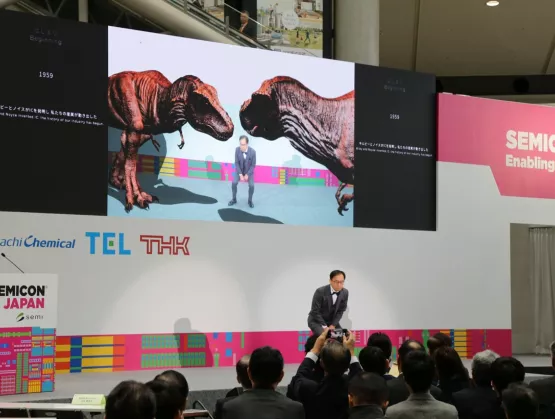
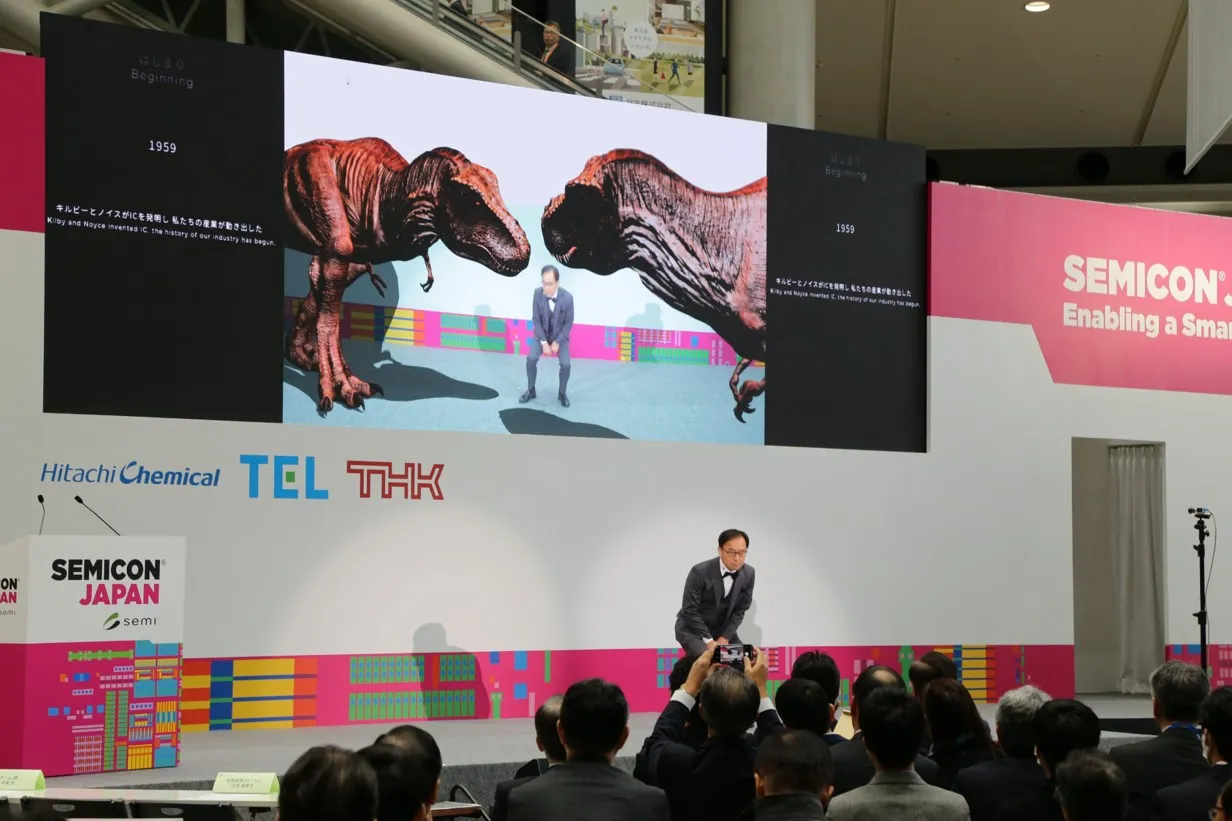
Augmented reality (AR) tyrannosauruses towered on-screen as I interacted with the creatures in a mix of prehistoric and cutting edge. Or, rather, my AR double was doing the playacting. Minutes later, virtual doppelgangers of a small lineup of chip industry executives cut the ceremonial ribbon. Seemingly sweeping away the winter chill, the opening of SEMICON Japan 2019 dazzled with smart technology and the promise of lives, cities and workplaces transformed, with uber-intelligent applications in full display at Tokyo Big Sight. But what resources does the industry need to harness to drive the next era of innovation? The semiconductor industry’s unwavering passion and young talent are key, said Hiroshi Imano, Chairperson of the SEMICON Japan Initiatives Committee, in his opening keynote. And hardly any region of the world is in a better position to help realize that future than Japan, Imano said. The region supplies one third of the equipment and more than half of all materials to the global semiconductor manufacturing industry.Talent was also top of mind for SEMICON Japan 2019 keynote speaker Makiko Eda, Japan's Chief Representative Officer at the World Economic Forum (WEF). Serving as a platform for public-private partnerships, the organization's mandate is to tackle global issues such as climate change and geopolitical strife in making world more resilient to risk and, by extension, more sustainable.Spanning ecology, economy, technology, society, geopolitics and industry, that mission includes reskilling and upskilling a billion people over the next decade, a high priority for WEF, which hosts a conference every January in Davos, Switzerland. The theme of this month's conference – Stakeholders for a Cohesive and Sustainable World – reflects the vital importance of building the international partnerships and global consensus necessary to achieving WEF's goals.One key to that sustainability will be technology and Arm, a global chip design company, will play a key role, with the company’s chips touching over 70 percent of the world’s population, Arm president Yuzuru Utsumi said in his keynote. Today, Arm is driving toward an ambitious goal: Ship 100 billion chips from 2017 to 2021 – the same number produced over the previous quarter century – by powering advances in mobile computing, server and networking infrastructures, and automotive applications.Arm’s innovation ecosystem of more than 1,000 partners will deliver these chips as they continue to work together to develop differentiated technology. Arm plans to increase investments not only in its primary processor business to accelerate market share gains but in the company’s new IoT business to create new revenue streams. The goal: Deliver long-term sustainable growth, Utsumi said. SEMICON Japan 2019 showcases SMART manufacturing and transportation Billed as a showcase of smart technologies, SEMICON Japan 2019 delivered with an array of eye-grabbing exhibitions in the popular SMART Applications Zone. In the SMART Transportation area, the automatic operation pavilion featured a car equipped with open-source software for autonomous driving. The exhibitor, Tier IV, aims to help lead the early commercialization of self-driving vehicles through the adoption of its software, Autoware, which makes it easier to develop self-driving vehicle prototypes using low-power platforms.Sony Semiconductor Solutions demonstrated a vision sensing processor designed to guide autonomous drones. Using two cameras, the processor measured the changing distance between visitors moving about the exhibit and stationary objects in real time, indicating proximity in hues of red (nearby) and blue (at a distance). Many visitors were wowed, describing the multichromatic display as futuristic.Others rode a simple wooden swing hanging by two ropes, but from dizzying heights thanks to Solidray’s Duo-Sight, a virtual reality (VR) system that projects 3D images stretching from wall to floor for immersive experiences. One visitor thrilled at how riding the swing, suspended only a few feet from the floor, felt like soaring on a flying trapeze. Target applications for the technology include virtual rides at amusement parks and presenting interior design options to homeowners.In the SMART Manufacturing area, one highlight was the demonstration by the National Institute of Advanced Industrial Science and Technology (AIST) of a remote-controlled Minimal Fab System designed for low-volume, high-mix chip production with little staffing. Designed to increase production efficiency, the system allows a circuit designer to manufacture a semiconductor by singlehandedly operating equipment up and down the production line. Controlling nearly 50 pieces of equipment, the Minimal Fab System on display manufactured chips that were verified for functional operation and exhibited afterwards.On the SMART Applications stage, exhibitors DENSO and Toyota Motor Corporation announced a new joint venture to conduct research and advanced development of the next-generation in-vehicle semiconductors critical to electric and autonomous vehicle innovation. The venture, operating as MIRISE Technologies, will combine Toyota’s mobility expertise with DENSO’s in-vehicle component prowess. The goal is to build a rapid, competitive development system by 2030, said Yoshifumi Kato, executive director of the DENSO Research and Development Center, and president and representative director of the venture. On track to begin work this year, MIRISE will span three fields of technology development: power electronics, sensing and SoC (System-on-a-Chip). The name MIRISE combines word the Japanese word "mirai" (future) with "rise."Business Continuity PlanningNatural disasters and other emergencies are an ongoing threat to uninterrupted business operations across the semiconductor manufacturing supply chain and particularly in earthquake-prone Japan. To better prepare for business disruptions and restore normal operations as soon as possible after disaster strikes, more companies are teaming on Business Continuity Planning (BCP).THK's Seismic Isolation Experience Car demonstrated one technology designed to help – a seismic isolation device. The car shakes like an earthquake to give people inside a taste of how a building heaves and sways during a quake with and without the device deployed. Visitors were struck by how much the isolator dampens tremors to prevent or minimize damage. In the BCP seminar, representatives from Sony Semiconductor Manufacturing, THK, DISCO and Team Engineering Consulting shared lessons learned from actual disasters and discussed the critical importance of daily disaster drills. Yukihide Keigo, Executive Engineer in charge of Products and Development at Sony Semiconductor Manufacturing, recounted how the company’s Kumamoto Prefecture plant struggled for 96 days to restore full operations after the facility sustained heavy damage in the 2016 earthquake. Keigo said the plant lacked the structural reinforcements necessary to withstand the impact and fell prey to poor planning and accountability. The Kumamoto plant has since implemented measures – structural and procedural improvements – that more accurately account for seismic risks to ensure full recovery within 56 days. The plant’s new procedures include emergency drills for staff including night-shift workers.Innovation abounds at six SuperTHEATER forumsSEMICON Japan 2019 was held in the West and South Halls of Tokyo Big Sight as organizers of the Tokyo Olympics occupied the East Hall, the exhibition's usual home at the venue, to prepare for the 2020 games. For the first time, the main stage, SuperTHEATER, was set up in the cavernous arena near the main entrance. The SuperTHEATER featured six forums over three days. Semiconductor Executive Forum – View by Top Two in the Era of Digitalization with thought leaders from IHS Markit and Sony Semiconductor Solutions SMART Connectivity Forum – Infinite World Brought by 5G Innovation with experts from Softbank and Nokia Solutions Networks SMART Transportation Forum I – Front-line of Automated Driving featuring speakers from Intel and DENSO SMART Transportation Forum II – Revolution of Sky Transportation, supported by the U.S. Commercial Service in Japan, with presenters from Ministry of Economy, Trade and Industry (METI), Subaru and Bell Helicopter Manufacturing Innovation Summit – Issues and Innovation: What will Drive Growth to 2030 featuring thought leaders from VLSI Research, Applied Materials, KLA, Nikon and Tokyo Electron Mirai Vision Forum – Future Relation of Technology and Body 2.0 with speakers from Leave a Nest, Ory Lab and Autonomous Control Systems Laboratory The Mirai Vision Forum highlighted advanced technologies that could lead to societal improvements. One presenter, Kentaro Yoshifuji, CEO at Ory Lab, recalled how, as a child, he once stayed home from school while recovering from an illness. His imagination in full flight, the youngster imagined having a clone that could attend school and be with his classmates. The experience eventually inspired him to develop OriHime, a robot that gives socially isolated people a way to communicate with friends or colleagues remotely. Originally developed for physically impaired people, OriHime today is used to help the able-bodied. The robot is situated with the companion and the user operates OriHime remotely. A camera and monitor in OriHime’s face provide the visual and audio connection and the user controls the device with a smartphone or tablet or, for those who are paralyzed, through eye movement. One potential application: With OriHime stationed at a business office, working mothers could use OriHime to telecommute to better balance their careers with their parenting responsibilities at home. The robot would be a mother’s go-between, enabling her to communicate directly with colleagues.The next generation of innovators also took the stage as five teams presented innovative business ideas in friendly competition. The top prize in The TECH CAMP Hackathon went to the group that hatched an ingenious plan to develop a jacket that trains users to move their bodies in preprogrammed ways. For example, legendary Japanese professional baseball player Shigeo Nagashima could wear the gear while batting to program the device, then give the jacket to someone who’s never swung a baseball bat. The jacket would help the user replicate Nagashima’s swing. Now comes the real work of any innovator – executing on the vision.And then came two soccer-playing artificial intelligence (AI) robots that squared off and ... Scored! The demonstration by the Toyota National College of Technology started as a research project by Toyota National College students in 2002. The young innovators designed and developed all the robotic hardware and software from scratch. Looking ahead to SEMICON Japan 2020!SEMICON Japan 2019 not only gathered leading Japanese semiconductor materials and manufacturing equipment providers to demonstrate their latest innovations. The premiere regional event also provided insights on key trends critical to the entire electronics manufacturing supply chain. This year’s event drew more than 51,000 visitors and 695 exhibitors from 15 regions filling more than 1,700 booths.SEMICON Japan 2020 returns to East Hall at Tokyo Big Sight in December 2020. I look forward to seeing you there!Jim Hamajima is president of SEMI Japan.
Read More
It’s official.The first autonomous vehicle has been verified for operation on the open road in Asia with no traffic restrictions. And this is no corner case, flash-in-the-pan technology. The white 4-door minivan’s modular software can be integrated into all manner of vehicles including cars, trucks and buses. More promising still, the minivan – proven roadworthy after more than 1,300 miles of testing – will lead not only to an upgrade of Taiwan’s automobile electronics industry but to groundbreaking smart transportation service models.Imagine, for example, hopping a driverless shuttle to the hottest attractions in Hsinchu City, Taiwan such as Big City, Hsinchu Cheng Huang Temple, 19 Hectares Grassland, 17KM Coastline Scenic Area and Siangshan Wetland. The autonomous ride could become another transportation option sooner than you think.“We have every intent to make available self-driving sightseeing shuttle services soon,” said Chih-Chien Lin, mayor of Hsinchu City. “The services will be our first step to substantially improving the traffic flow, highlighting the unlimited applications associated with autonomous vehicles.”Bearing the license plate number Taiwan No.0001 – the first issued for an autonomous vehicle in Taiwan – the minivan is an early but important advance in the region’s autonomous-driving technologies under a new initiative led by the Industrial Technology Research Institute (ITRI), which developed the test vehicle’s software, and the Hsinchu City government. SEMI president and CEO Ajit Manocha joined Hsinchu City mayor Chih-Chien Lin and ITRI vice president Pei-Zen Chang to promote the initiative at SEMICON Taiwan 2019 in the run-up to its launch during an October 22nd press conference in Hsinchu City. Taiwan luminaries attending the press conference were (L-R in photo below) Terry Tsao, SEMI Chief Marketing Officer and SEMI Taiwan President; Jwu-Sheng Hu, Vice President and General Director, ITRI Mechanical and Mechatronics Systems Research Laboratories; Der-Sheng Lin, Deputy Director General, MOEA Department of Industrial Technology; Chih-Chien Lin, Mayor of Hsinchu City; Pei-Zen Chang, Vice President, ITRI. ITRI and Hsinchu City government officials kick off the next phase of Taiwan’s smart transportation initiative in an October press conference near Nanliao Fishing Harbor, Hsinchu City. “This milestone in self-driving technology is a shining example of public-private partnerships in action to advance smart mobility and dovetails with SEMI's work building communities consisting of the automotive and microelectronics industries, government, and academia for collaborative innovation,” said Terry Tsao, SEMI chief marketing officer and SEMI Taiwan President. “We are thrilled to have joined ITRI and the Taiwan government in promoting the extraordinary power of technology to make automobiles and cities smarter.”Emmy Yi is a marketing specialist at SEMI Taiwan.
Read More
Famous for its warmth and hospitality, Japan always welcomes visitors from around the world with a gracious embrace. But when is the best season to visit? It depends on the interest of each visitor of course. For Instagrammers, the April cherry blossoms or November autumn leaves – a masterpiece of art with their rainbow gold, red and yellow hues – are ideal for snapping memorable pictures. For foodies, winter delights with tuna, toro sushi and other seafood at their tastiest. Wagyu peaks in richness, too, when the cold weather sets in. For anime and manga enthusiasts, August is definitely the time to visit. That’s when COMIKET, the world’s largest comic market – drawing more than a half million people – takes place in Tokyo. But for people in the electronics value chain, the perfect time to pack their bags and hop a flight to Tokyo is December, when SEMICON Japan – December 11-13 at Tokyo Big Sight – opens its doors with its own form of hospitality.Why should you attend? Here are the five top reasons.Reason 1: Japan is home to leading electronics industry suppliersAccording to VLSI Technology, seven of the top 15 semiconductor equipment suppliers in 2018 are headquartered in Japan, and many Japanese companies also lead backend equipment segments. For decades, Japanese companies have supplied about one third of the equipment for the global semiconductor equipment industry, according to SEMI and the Semiconductor Equipment Association of Japan (SEAJ). Most of these companies typically set up a booth on the SEMICON Japan show floor to welcome your visit.True, many Japanese suppliers also exhibit at SEMICON shows outside of Japan to meet with customers. But you will find many more engineers, managers and executives of equipment suppliers on their home ground at SEMICON Japan, where suppliers typically debut new equipment. Their booths are also ideal locations for visitors to meet with suppliers to ask questions, exchange opinions and negotiate new business deals.Japanese materials suppliers enjoy an even larger market share, providing about half the materials for the global semiconductor industry. These suppliers dominate in silicon wafers, photomasks, photoresists, sputtering targets, packaging substrates, bonding wires, leadframes, mold compounds and wafer level packaging dielectrics. Unlike equipment suppliers, not all materials companies exhibit. Instead, many participate as speakers and attend to connect with customers.Reason 2: Get ready for the next semiconductor industry upturnA year ago, in late 2018, we expected chip inventory to stabilize by mid-2019, yet the industry still struggles with high inventory overall and low average selling price for memory. The SEMI 2019 equipment billing forecast was lowered accordingly from -4.0 percent growth (2018 year-end forecast) to -18.4 percent (2019 mid-year forecast). However, the two forecasts still predict positive growth in 2020. As SEMICON Japan 2019 is underway, we should be at the beginning of the next upturn.The chart below shows that more wafer process fabs will start construction in 2020 than this year. (Please see article: Nearly $50 Billion in Fabs to Start Construction in 2020.) Custer Consulting Group also pointed to “a resumption in semiconductor chip and capital equipment growth in late 2019 or early 2020.” (Please see article: Semiconductor Industry Upturn by Early 2020?.)With better times ahead, SEMICON Japan 2019 will be an opportune time to exchange opinions with key players across the supply chain and start negotiations for the coming robust recovery of the equipment, components and materials markets.Reason 3: Glimpse the future at SuperTHEATERSEMICON Japan SuperTHEATER will feature industry and technology insights from global visionaries. Asako Eda, Japan’s chief representative officer of the World Economic Forum and the former president of Intel Japan, will open the SuperTHEATER with her keynote on how we live in an era where the fourth industrial revolution, climate change, disparity and geopolitical risks are affecting our lives and with the speed we have never experienced. She will explore the growing role of innovation and social responsibility and how the World Economic Forum is addressing associated challenges. The opening keynote session will also feature Nandan Nayampally, vice president and general manager of the Immersive Experience group at Arm.In all, the SuperTHEATER will host seven keynote forums over three days at SEMICON Japan including: Semiconductor Executive Forum – Terushi Shimizu, representative director and president of Sony Semiconductor Solutions, and Atsuyoshi Koike, president of Western Digital Japan, will discuss their business strategies and prospects. Manufacturing Innovation Summit – Executives from Applied Materials, KLA, Nikon and Tokyo Electron will discuss business and technology issues as well as innovations that will drive growth to 2030. All seven SuperTHEATER programs will be simultaneously translated to English for international audiences.Reason 4: Connect to application communitiesCollaboration across the value chain has never been more important to industry innovation and growth – the very reason SEMI has expanded its reach beyond the semiconductor manufacturing supply chain (equipment and materials) to include design, systems and products.The SEMICON Japan show and conferences will connect you to key application segments of the value chain. The SuperTHEATER will host two SMART transportation forums highlighting the latest developments in autonomous driving and sky transportation (flying cars). In the SMART Applications Zone on the show floor, you’ll find electronics products and technologies showcased for automotive and manufacturing automation as the autonomous driving pavilion highlights emerging technologies that are driving semiconductor innovation opportunities. Reason 5: Learn from disaster and recovery experiencesJapan has taken important disaster recovery lessons from devastating earthquakes over the past three decades, most notably the Kumamoto quake in 2016, the Tohoku temblor in 2011 and the Kobe rattler in 1995. So has the Japan electronics supply chain, including SEMI members. In the Business Continuity Plan (BCP) area at SEMICON Japan 2019, exhibitors including DISCO, Murata Machinery and THK will highlight technologies that can strengthen your preparedness for a disaster and aid in the recovery.On December 12 at the BCP seminar at Japan 2019, Sony Semiconductor Manufacturing, DISCO and Team Engineering Consulting will share their experiences and expertise in mitigating the disaster impacts. (Sony and Disco will present in Japanese.)To get the feel for the magnitude of a major earthquake and how seismic isolation protects against structural damage, be sure to take advantage of THK’s earthquake experience car. Seismic isolation installs isolators – rubber bearings, friction bearings, ball bearings, spring systems or other devices – beneath a building to buffer earthquake vibrations transmitted to structures.More reasons to attend SEMICON JapanAnd of course your visit to Tokyo for SEMICON Japan 2019 wouldn’t be complete without exploring Tokyo and other regions to experience Japan’s exotic culture, cityscapes and cuisine! Here are some resources to give you even more reasons to book a flight to Tokyo: Japan National Tourism Organization Go Tokyo Kyoto Tourism I look forward to seeing you at SEMICON Japan in December!Jim Hamajima is president of SEMI Japan.

Read More