downloadGroupGroupnoun_press release_995423_000000 copyGroupnoun_Feed_96767_000000Group 19noun_pictures_1817522_000000Member company iconResource item iconStore item iconGroup 19Group 19noun_Photo_2085192_000000 Copynoun_presentation_2096081_000000Group 19Group Copy 7noun_webinar_692730_000000Path
Skip to main content
Default Banner Image

FlexTech

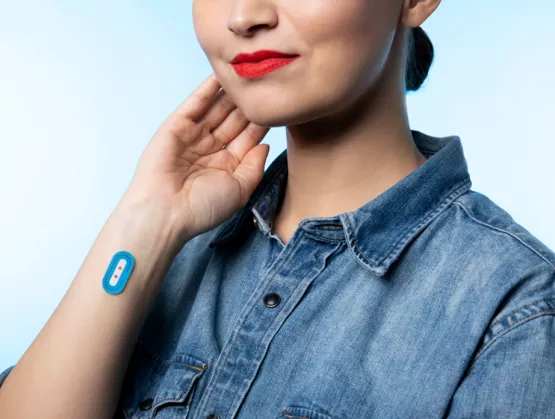
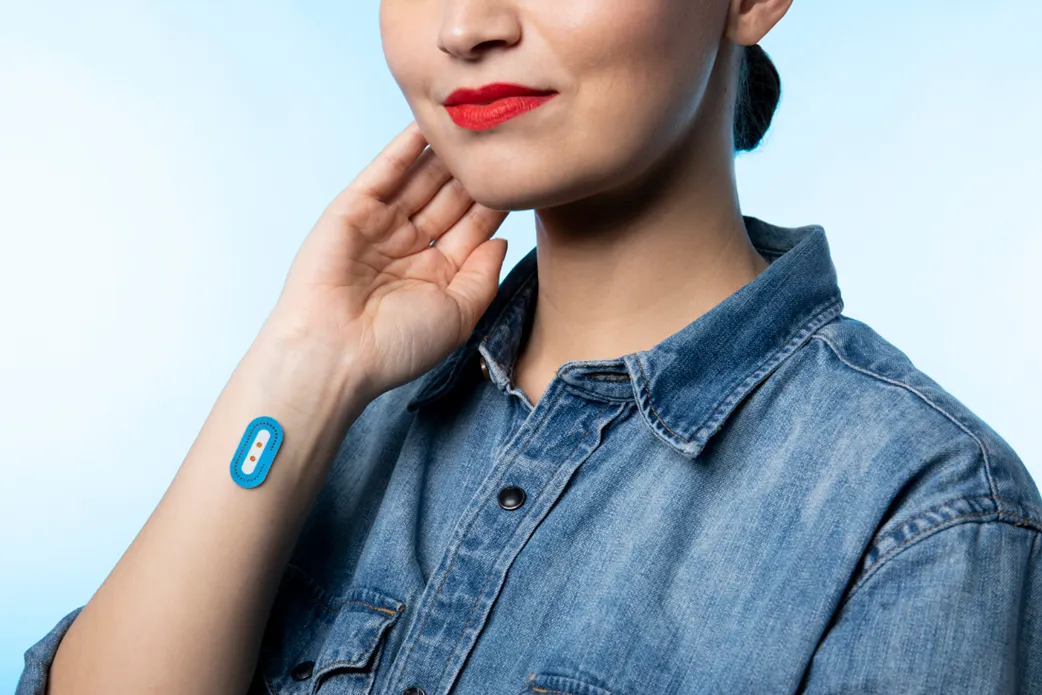
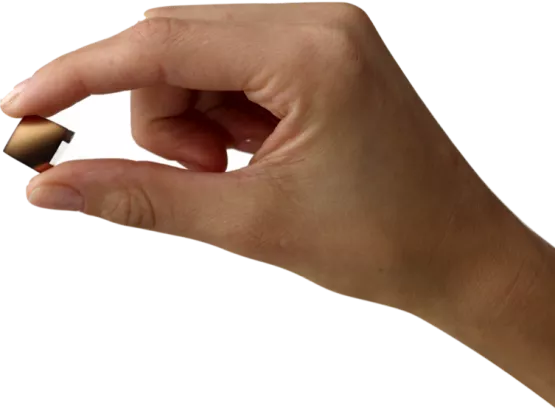
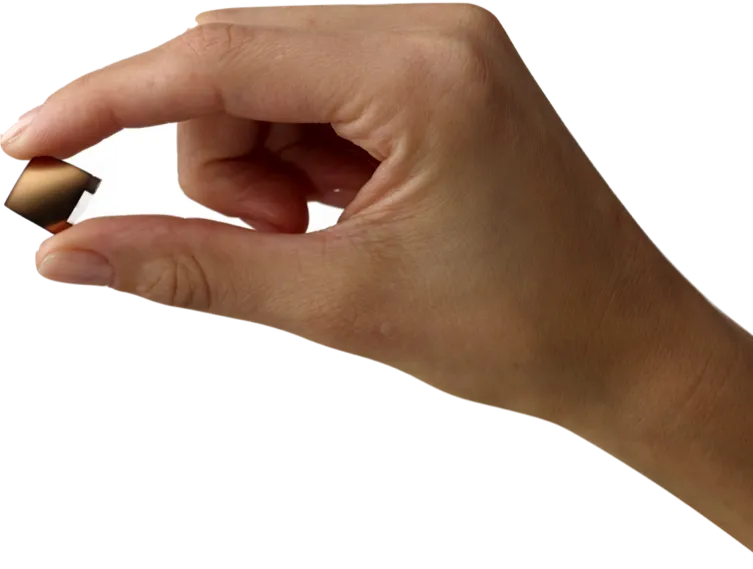
Photo on left: My Skin Track pH by L'Oréal Group’s La Roche-Posay – the first wearable sensor and companion app to easily measure personal skin pH levels – leverages two decades of microfluidic and soft materials research in Professor John Rogers’ laboratory at the Center for Bio-Integrated Electronics and the Simpson Querrey Institute. As director of the Center for Bio-Integrated Electronics at Northwestern University, Professor John A. Rogers explores soft materials for conformal electronics, nanophotonic structures, microfluidic devices and MEMS, all with an emphasis on bio-inspired and bio-integrated technologies. During his keynote at FLEX and MEMS Sensors Technical Congress 2019, February 18-21 in Monterey, Calif., Rogers will present examples of the diverse, novel classes of biocompatible electronic and microfluidic systems with skin-like physical properties that stem from his work in materials science, mechanical engineering, electrical engineering and advanced manufacturing. SEMI’s Maria Vetrano caught up with Rogers to discuss his research, which has already been commercialized by companies such as L'Oréal Group.SEMI: What is the concept behind skin-interfaced electronic and microfluidic devices?ROGERS: Biological systems are mechanically soft, with complex, time-dependent 3D curvilinear shapes. Modern electronic and microfluidic technologies are rigid, with simple, static 2D layouts. We believe that eliminating this profound mismatch in physical properties will create vast opportunities in microsystems technologies (electronics, optoelectronics, microfluidics and microelectromechanical devices) that can intimately integrate with the human body for diagnostic, therapeutic or surgical functions. Skin-like devices that assess blood-glucose levels in real-time or continuously monitor the vital signs of infants in neonatal intensive care are just two examples of non-invasive, wirelessly connected biocompatible devices with the potential to dramatically improve quality of life.SEMI: What are some examples of commercially available biocompatible/microfluidic wearables that have leveraged your research?ROGERS: We’ve been fortunate in that we have been able to translate some of our ideas into commercial products for broad deployment in both life-enhancing and potentially life-saving applications. In sports and fitness, our skin-interfaced microfluidic systems form the basis of soft devices that capture, store and perform in-situ chemical analysis of sweat. These devices have been launched as products in two different categories – cosmetics and athletics – with two global brands. As an example of the former, L’Oréal Group just unveiled at CES 2019 My Skin Track pH, a thin, flexible version of this technology, designed to determine skin pH from measurement of sweat pH. Once armed with this information, L’Oréal customers can choose skincare products matched to their personal body chemistry. See the video on this device. Notably, a globally recognized consumer brand will reveal a product for athletics around the time of the 2019 Super Bowl on Sunday, February 3. A look inside My Skin Track pH, which uses Rogers Research Group technology from the Center for Bio-Integrated Electronics at Northwestern University Our technologies also have applications in clinical medicine and rehabilitation, including soft, skin-interfaced wireless sensors used to assess patient progress in stroke rehabilitation. In contrast with conventional, wired sensors that tether the patient to external boxes of electronics (a design that makes such devices impractical for in-home use), or conventional wearables that are confined to the wrist, our systems apply to the skin like a BAND-AID, and are described as “imperceptible” by stroke patients who are using them during rehab. These platforms measure speech, swallowing capability, movement of limbs, sleep quality, walking and balancing. Healthcare professionals can use the information collected to continue to monitor patients when they leave medical facilities, to understand how patients function in the real world. See video.SEMI: What work are you doing beyond flexible devices?ROGERS: We are pursuing devices that are unique not due to their soft mechanics, but due to their extremely small sizes. A good example is My Skin Track UV, which we recently commercialized with L’Oréal’s La Roche-Posay. This millimeter-scale, wireless, battery-free platform for digital UV dosimetry measures UV exposure dose continuously in real time and provides user access to this information via a smartphone app. My Skin Track UV is now available at all Apple stores across the U.S. and through the Apple website. See video. L’Oréal’s La Roche-Posay My Skin Track UVOther biocompatible/microfluidic devices based on our technology provide functionality that can save lives. Hydrocephalus patients suffer from a condition that, if unchecked, leads to excessive buildup of fluid in the brain. If left untreated, the resulting pressures can prove fatal.Hydrocephalus is treated with shunts, which drain accumulated fluid away from the intracranial space to a distal part of the body, often the abdomen. Unfortunately, however, shunts have a nearly 100 percent fail rate over a 10-year period, and testing them typically requires an MRI, CT scan or even surgery. Our technology serves as the basis of a bandage-sized, skin-like sensor that applies to the surface of the skin on the neck. Within five minutes of placement on the skin, the sensor can test non-invasively to determine if fluid is flowing through the shunt. The net result uniquely supports the rapid evaluation of shunts from home or other non-medical settings. The devices free patients from the constraints of hospitals, giving them a greater sense of security and independence. See video. SEMI: What would you like FLEX and MSTC attendees to take away from your presentation?ROGERS: I would like attendees to know that biocompatible microfluidic and electronic wearables that are flexible and conformal to the human body are no longer risky futuristic technologies that exist only in academic labs: They are emerging right now as key products in commercial markets for flexible hybrid electronics (FHE) and MEMS/sensors. Our group alone is anticipating deployment at the scale of tens to hundreds of millions of units in the markets in which we are seeing traction over the next five years. We believe that the broader area will become a multi-billion-dollar market opportunity in five to 10 years.John Rogers, Ph.D. will present Soft Electronic and Microfluidic Systems for the Skin at FLEX/MSTC on Tuesday, February 19 at 10:30 am.Register today to connect with him at the event. To learn more about Rogers Research Group, click here.MSTC Flex 2019 is organized by the MEMS Sensors Industry Group (MSIG) and FlexTech.Maria Vetrano is a public relations consultant at SEMI.
Read More
Francois Jeanneau, president and CEO of Novasentis, has spent the last two decades building strategic relationships, increasing revenues and catapulting growth at leading consumer OEMs and ODMs. Jeanneau will present the world’s thinnest haptic actuator technology at the upcoming FLEX and MEMS Sensors Technical Congress 2019, February 18-21 in Monterey, Calif. SEMI’s Maria Vetrano interviewed Jeanneau to give FLEX and MSTC attendees a preview of this new technology that will enable rich, customizable haptic experiences with virtual reality (VR), hand-held game controllers and flexible wearable devices such as wristbands.SEMI: What do consumers want from haptic feedback? How can the technology industry improve the user experience with haptics?JEANNEAU: In many applications such as VR and gaming, our visual and auditory senses are satisfied by high-resolution displays and good-quality speakers, but they lack the sensation of realistic touch. That’s because haptic technology has lagged the technological advancements that we have made in displays, microphones and speakers. It’s also fallen far behind what is possible on the software side. At the same time, consumers are demanding more from their VR and gaming experiences.Through improvements in haptics, prospective home-buyers touring a home via VR headset will be able to “feel” those granite countertops in the kitchen, assess whether their couch will fit in the living room and check out the view from the back porch, all from the comfort of their own home. Virtual travelers will be able to touch the marble walls of the Taj Mahal, and sports enthusiasts will feel the impact of a tennis ball when they use their haptics 2.0-enabled controller.Haptics will dramatically improve what’s possible in wearable devices as well. From their smartwatches, consumers will discern hundreds of different sensations, from a mild heartbeat to a sharp reminder that they are steering a car through an intersection. This is all possible through new haptic actuator technologies that can accept hundreds of inputs to generate an entire haptic language of outputs.SEMI: What are some major obstacles to realizing improvements in haptics for flexible devices such as wrist-worn devices?JEANNEAU: The best wrist-worn devices today offer a rudimentary haptic output that merely says, “hey, pay attention to me.” To comprehend the alert, the user must look at the display, press a few buttons and then interact with the device. This distracts the user while riding/driving, creating potentially dangerous situations. It’s also frowned upon, particularly in the middle of a meeting!The legacy haptic technologies – eccentric rotating mass (ERM) motors and linear resonant actuators (LRAs) – that are currently used in today’s devices are problematic on multiple levels. They are bulky, sometimes occupying a third of the real estate in a smartwatch. As they are generally made of metal, they are also heavy and too thick for many devices. Their output tends to be slow, lagging the output in the display, making the whole experience clunky. They tend to be power-hungry as well.SEMI: How is Novasentis approaching these technical challenges?JEANNEAU: Novasentis has created an extremely thin (150 um), flexible and low-power polymer film actuator that is small enough to be easily embedded into the next generation of smarter wearable devices and garments; the actuator can provide hundreds of different types of vibrating feedback to the wearer for improved notification and/or suggested actions. The film actuator (that can replace a mechanical motor vibrator found in smartphones and smartwatches) is made by stacking layers of electroactive polymer and metal to create the piezoelectric structure. Upon power-up via a modulated waveform, the molecules move to align themselves in response, which elongates and relaxes the polymer. This causes the attached substrate (wristband in a watch, for example) to bend and relax, thus, causing the vibration effect, or haptic and audio feedback (which is unique to our material).SEMI: How will you demonstrate your technical approach at FLEX 2019?JEANNEAU: We will bring examples of designs incorporating our technology as we share live demos of wearables, game controllers and other applications. We will also bring actual haptic actuator materials for show and tell.Francois Jeanneau will present Flexible Actuators for Sensational Haptics at Flex and MSTC on Wednesday, February 20 at 8:00 am. Register today to connect with him at the event. To learn more, click here. MSTC Flex 2019 is organized by the MEMS Sensors Industry Group (MSIG) and FlexTech. Maria Vetrano is a public relations consultant at SEMI.

Read More
Peel-and-stick simplicity isn’t just for adhesive bandages any more. IoT and flexible hybrid electronics (FHE) are bound to change hardware business models. And flexible displays will breathe life into any surface.These were among the insights foreshadowing the future of the FHE, electronic textiles, IoT, MEMS and sensors industries at the FLEX Japan and MEMS Sensors Forum Japan 2018. At the April event, organized by SEMI-FlexTech-MSIG, nearly 200 attendees shared their observations and lessons learned in the development of processes, products and applications. Presentations and discussions revealed these five takeaways.1. Expect the unexpected with FHE developmentFlexible Hybrid Electronics (FHE) continues to shrink the size and weight of products, enabling new markets and concepts. “FHE takes printed electronics and adds ICs for getting performance out of the PE structure,” said Wilfried Bair of NextFlex, adding that “peel- and-stick electronic products are one example of unexpected new markets enabled by FHE capabilities.” One potential application is large peel-and-stick safety sensors adhered to buildings to warn of structural dangers.Another surprising turn: With new insights into OLED technology originally developed for flexible displays, Cambridge Display Technology (CDT) has devised an innovative medical diagnostic tool for markets such as biomedical and agricultural monitoring. The tool features an atmosphere-processable OLED component with a simplified OLED structure encapsulated in aluminum foil.2. IoT and FHE devices should change hardware business modelsThis is the standard business model for many new FHE products: develop a product, manufacture it, find customers and sell. FHE and IOT device developers were encouraged by Jam Kahn of Gemalto to consider flipping the script: During FHE product development, explore building an after-market revenue stream by controlling and mining the data for trends it reveals. Because of its data harvesting potential, IoT is an excellent emerging technology for this strategy.The “Experience Economy” could create 200 connectable items per person, generating strong revenue streams from the collection and analysis of massive amounts of sensor-generated data. The key is for the data to be actionable. That means hardware suppliers must extend their focus to software development. “A recent study of California investors found that by 2025, 60 percent of global business profits will be from data,“ noted Harri Kopola of VTT, who advised hardware producers to examine business models that produce continuous value by leveraging software. “With FHE, we are creating the path to digitization for non-digital industries, and these industries need complete solutions,” he said.Hardware provider Xenoma, for example, sells an electronic shirt with sensors for measuring muscle movements, heart rate and other health-related data. Xenoma’s Ichiro Amimori said the company offers its open-source software development kit for free under one condition: The developer must share the collection data with Xenoma. The idea is that the more data collected, the greater Xenoma’s ability to improve human health over the long term and achieve its long-term vision of alleviating disease.3. Roll-to-roll and sheet-to-sheet manufacturing will meet in the middleOne of the big advantages of flexible and printed electronics was its promise to enable the manufacturing of electronics on a roll-to-roll (R2R) process in atmospheric (or close) conditions, like newspaper, rather than one sheet at a time, as with displays or wafers. But as development of inks and interconnects progressed, along with the placement of discrete and thinned-die components and basic flexible substrates on a moving web, most research and development (R D) and limited-production runs moved to sheet-fed systems to control material costs for experiments and low-volume production. R D on printing electronics processes split into two camps: the simple printed components camp on R2R, and the camp backing more flexible hybrid electronics development on a sheet-by-sheet basis. But progress didn’t stop.Harri Kopola of VTT highlighted new R2R inspection and test capabilities in the VTT pilot line in Finland. R2R processing advances incorporate ideas from biology, chemistry, optics, optoelectronics, advanced inspection and test capability, illustrating the multidisciplinary nature of FHE. While accurate, high-speed, pick and place of thinned, bare die remains the domain of sheet-to-sheet manufacturing, look for more improvements in accuracy and speed.Another new manufacturing concept that turns business models on their heads – “minimal fabs” – focuses on creating limited-run equipment and processes that use 3D printing and do not require cleanrooms. With a relatively low cost of entry, the approach enables electronics to be produced affordably anywhere.4. Powering the IoT is a grand challengeThe requirement for edge devices to function without intervention for long periods raises hard questions about how to power the devices. Using organic photovoltaics (OPV) in textiles to harvest energy from light could be one solution, according to Kasimaesttro Sugino of the Suminoe Textile Technical Center. ULVAC’s answer to the IoT power issue are requirements for edge device micro-batteries to be environmentally benign, safe, flexible and compatible with semiconductor processing less than .1 mm in height. The micro-batteries must also feature a long life and support continuous power output, high power density, low self-discharge (over 10 years) and mass production, said Shunsuke Sasaki of ULVAC. The batteries are being built on silicon, glass and stainless steel with dry, thin-film vacuum processing. 5. Flexible displays bring any surface to lifeWith their durability, flexibility, low-cost processing and programmability, flexible displays can transform any surface into a content-rich display with messages that make lives healthier, simpler and safer.One example is FlexEnable’s organic thin-film transistor (OTFT), a device made possible not only by recent advances such as the ability to build organic material transistors on plastic and the increasing clarity of new film materials but by continuous manufacturing process improvements. These advances are improving switching times and the color and video capabilities of thin-film transistors while retaining their flexibility, low power consumption and communication capabilities. Simon Jone of FlexEnable gave the examples of wrapping a display around the blind spots of automobiles or replacing side-view mirrors with interior monitors showing feeds from an external camera, approaches that would improve safety while reducing wind drag and increasing fuel efficiency.E Ink’s reflective technology and flexible products are coming to market with a wider color spectrum. The company’s Michael McCreary said its designers are specifying the panels for innovative projects such as the exterior walls of the San Diego International Airport parking garage. Used to communicate with airport visitors, the installation is weather-proof, programmable and self-powered.
Read More
We fold our clothing. Our bath towels. Our sheets. And for the more artistically inspired among us, our origami. So why not our smartphones and tablets – those marvelously expansive if physically rigid windows to the world?Turns out we’re tantalizingly close to seeing flexible OLED displays, the only barrier to foldable smartphones, a full session on flexible displays at 2018FLEX, Feb. 12-15 in Monterey, California, revealed. With prototype flexible displays in play and the basic technology available, all that’s left before adoption are efficient processing and product development. Ross Young, founder and CEO of Display Supply Chain Consultants (DSCC) put it this way at the mid-February gathering of flexible hybrid electronics (FHE) industry players in Monterey, California: “If panel manufacturers can produce foldable OLEDs at sufficient yields to bring down costs and prices, and brands can develop products that unleash the form factor advantages of OLEDs and better communicate the performance and power benefits of OLEDs, the whole OLED supply chain will benefit.” Of course, prototype development is a key step in proving out designs of OLED displays and other FHE products. Now developers now have help with a process design kit from Hewlett Packard and NextFlex’s open-source Arduino kit for rapid prototype creation and testing, formally unveiled at 2018FLEX, the 17th annual event organized by SEMI-FlexTech, the Nano-Bio Manufacturing Consortium (NBMC) and NextFlex. The conference, which co-located with the 16th annual MEMS Sensors Technical Congress (MSTC), promotes FHE as one way to enable healthier, safer, simpler and smarter electronics products. Typical of a fledgling industry, a slew of flexible display innovators are working to identify viable markets as they develop prototypes. But some designs have vaulted to product development as they edge closer to commercialization or have already hit the market. The list includes FHE printed antennas, smart tags for asset monitoring, a host of consumer health monitors with wireless communication capabilities, and thrilling large-area display installations like E Ink’s Dazzle® -- wrapped around one side of a new car rental center at San Diego International Airport. Dazzle by E Ink Indeed, sensors for wireless medical applications drew some of the strongest interest at the event. Applications included deep brain stimulation to treat conditions including Parkinson’s, epilepsy, OCD and chronic pain (Cortera Neurotechnologies); human hydration monitoring (GE Research); patch-based wearable monitoring to enable better patient outcomes (Graftworx), and measuring blood oxygen levels using oximeters (University of California Berkeley). UMass Lowell presentation summary on printing textiles In the area of manufacturing – long a focus of FLEX – low-cost, low step-count roll-to-roll processes are advancing rapidly as industrial applications adopt these capabilities. At the same time, NextFlex continues to lead the charge in improving FHE manufacturability by providing public/private funds and leading collaboration initiatives. Manufacturing has been at the heart of many FlexTech technical projects and led to FlexTech’s formation of NextFlex, America’s Manufacturing Innovation Institute for flexible hybrid electronics. Paul Gagnon, IHS Markit, keynotes on the progress of flexible displays “2018FLEX splendidly met its objectives,” said conference chair, Bob Praino, CEO of Chasm Technology. “With the keynotes, we explored the breadth of applications enabled by FHE. With the sessions, we dove into the depths of materials, processing, and components demanded by the end-applications. And the exhibit provided the hands-on opportunity to explore new industry collaborations. FHE has clearly moved beyond conceptual and, best of all, many participants found answers to product needs here at the conference.” Beyond technology, the future brainpower for FHE was also on prominent display at 2018FLEX with college students participating in the Student Poster Session, judged by industry experts. The top three entries: First place: Jonathan Ting from UC Berkeley with a poster titled “Fully Screen-Printed NiO thermistor Arrays” Second place: Talha Agcayazi from North Carolina State University with a poster titled “Multi-Modal Array Sensing with Textiles” Third place: Levent E. Aygun from Princeton University with a poster titled “Sound Identification Using Physically-Expansive Sensing System” Outstanding industry achievements and contributions were also recognized at 2018FLEX with the FLEXI Awards. For a copy of the 2018FLEX proceedings, contact Amy Ly at [email protected]. Heidi Hoffman is senior director of FHE, MEMS and Sensors Marketing, SEMI.
Read More
Long promised by science fiction stories, we're now at the threshold of a real revolution where sensors, flexible electronics and printed batteries could finally be playing a key role in the way people mediate their social image through fashion. As an industry veteran, I trust that fashion—not industrial designers—will be in charge of designing successful form factors (plus, it won't be long before IBM Watson helps quantify the "cool" index", the "chic" index, the "comfy" index of any given product).The global apparel market is valued at US$3 trillion, accounting for two percent of the world's GDP. Premium and luxury segments are doing well. In fact, The McKinsey Global Fashion Index forecasts industry sales growth to nearly triple between 2016 and 2018, from 1.5 percent to between 3.5 to 4.5 percent. Yes, some still regard fashion as a frivolous topic, instead of the social identity tool it has always been. It is especially powerful with Millennials, for whom it belongs to pop culture, like social media, music, TV series, sports or gaming.Photo: The author's display on the intersection of fashion and tech at Collette, a luxury retail store in ParisThis in fact might have been the missing key of success for the first generations of "wearables". Although they started by targeting the fashion market, they somehow missed seducing the prestige market. No doubt that their current re-marketing shift into the health sector—especially obvious during the recent CES—will make these devices more relevant and sought-after tools.But as they're stepping into their smart age, fashion brands will have to be more proactive in understanding and integrating electronics. Most of the luxury groupsin Europe and the US have opened some sort of tech pathway. But what about the indie designers, usually the most creative and copied talent of the fashion industry? How can they even dream of getting to the Silicon Valley designers and integrators, with their $500K to $1M prototype price tags?This is why I am excited to be leading the messaging to these brands on the electronics developments and their implications. I am participating at technology industry events (including the upcoming 2018FLEX in Monterrey, California) to gather my own data. Some of the things I am excited about: In a couple of years, mixed reality goggles will miniaturized enough to become a chic accessory on my nose, branded by Saint Laurent or Dior, powered by ODG or Ostendo Technologies. My fashion friends won't be troubled any longer by the "douchetooth" look coming from their Apple Airpods: Cartier Smart Jewelry will work its magic on chic hybrids, gold earrings/airbuds. Instead of lighting Lady Gaga's dresses, designers will finally turn the LEDs inside our garments for a discreet pro-collagen treatment. The NBA Nike jerseys will collect sweat, via fabrics powered by bacteria and movements. Those athletes' biometrics data will be a bounty for coaches and doctors eager to prevent health issues. At home, the NFC tag of my coat will remind me that it could use laundry. All my electronics will power on-the-go thanks to induction charging hidden (printed? woven? embroidered?) in my pockets. Which of these trends can you help start? Send me an invite to meet with you at 2018FLEX! Download the 2018FLEX app to request meetings with any attendees!
Read More