downloadGroupGroupnoun_press release_995423_000000 copyGroupnoun_Feed_96767_000000Group 19noun_pictures_1817522_000000Member company iconResource item iconStore item iconGroup 19Group 19noun_Photo_2085192_000000 Copynoun_presentation_2096081_000000Group 19Group Copy 7noun_webinar_692730_000000Path
Skip to main content
Default Banner Image

deep learning

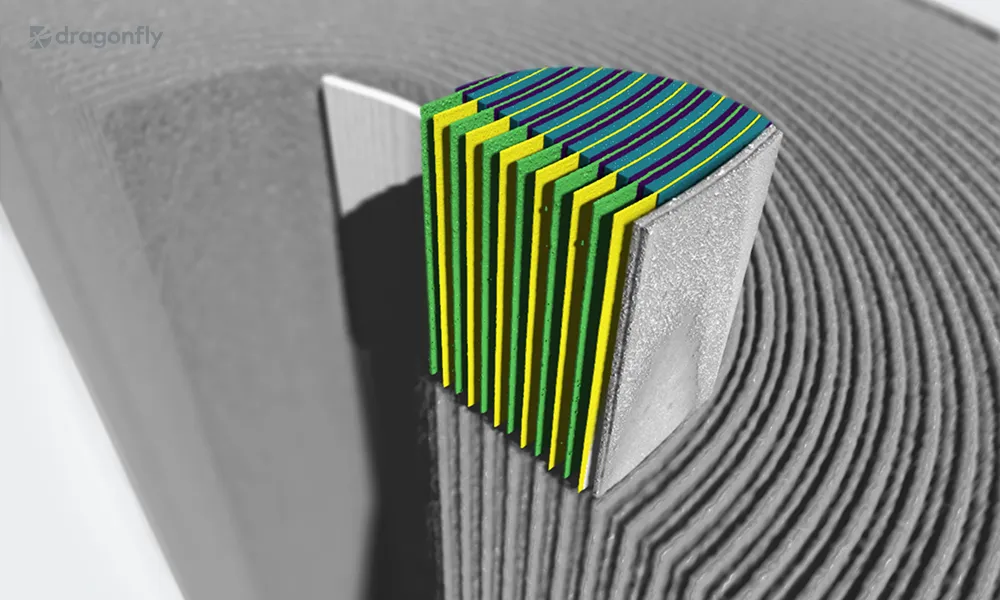
In today’s rapidly evolving semiconductor industry, ensuring both precision and efficiency in manufacturing has become an increasing challenge, particularly as advanced technologies like MEMS and AI chips push the boundaries of design and production. Inspection methods that were once sufficient are now falling short, making room for cutting-edge solutions powered by artificial intelligence (AI). The introduction of AI-driven 3D X-ray inspection technologies is transforming the landscape, offering manufacturers a sophisticated tool to ensure quality control, while driving sustainable production strategies.SEMI spoke with, Joscha Malin, Product Manager, and Daniel Stickler, R D Expert for X-ray Imaging at Comet AG, Industrial X-Ray System Division, to explore how AI-powered 3D X-ray inspection technologies are shaping manufacturing. They delve into how these technologies address critical challenges during inspections and defect analysis, using tools such as Dragonfly 3D World software for user-friendly, AI-driven insights that facilitate effective decision-making.Further insights into the application of AI-powered 3D X-ray inspection technologies and their role in advancing MEMS manufacturing will be presented by Stickler at the SEMI MEMS Imaging Sensors Summit on November 14, 2024, in Munich, Germany. Registration is now open.SEMI: Thank you both for agreeing to share your insights. To start, can you explain the importance of inspection strategies in the context of MEMS manufacturing?Malin: As MEMS devices become increasingly miniaturized and complex, effective inspection strategies are crucial. These strategies not only accelerate the wrap-up of production processes, but also significantly enhance product yield. With tighter tolerances and various materials involved, ensuring the integrity and functionality of each component is more critical than ever. A robust inspection strategy allows us to catch potential defects early, which can save time and costs associated with rework or scrap.Stickler: The evolution of MEMS technology, particularly in AI chips, demands a higher level of inspection sophistication. Traditional methods may fall short in providing the necessary detail and speed, which is why we’re focusing on advanced solutions like our AI-powered 3D X-ray inspection.SEMI: Could you elaborate on how the 3D X-ray technology differs from conventional inspection methods? Stickler: The 3D X-ray technology we utilize acts as a bridge between traditional optical methods and standard 2D X-ray inspection. It offers high-resolution, three-dimensional images without damaging the samples. 3D X-ray technology emphasizes three main benefits: clarity, efficiency, and actionable insights. This means we can obtain detailed images that help us analyze components more effectively, allowing for real-time decision-making.Malin: Moreover, the clarity and detail provided by the 3D X-ray images are critical when it comes to defect analysis in MEMS devices. They allow us to assess mechanical, electrical, and assembly errors in ways that conventional methods simply cannot. This leads to a more reliable production process.SEMI: What specific MEMS defects can be effectively analyzed using this technology?Stickler: There are several types of defects we can analyze. For instance, we can detect mechanical defects such as stiction or fractures, as well as electrical failures like short circuits. The 3D X-ray inspection allows us to visualize these defects in detail. Additionally, we can monitor assembly errors, which are particularly important in complex MEMS devices where misalignments can lead to significant issues.Malin: I’d like to add that early detection of these defects is paramount. The faster we identify issues, the quicker we can implement corrective actions, thereby improving overall yield and reducing production costs.SEMI: You mentioned yield improvement earlier. Can you explain how your technology contributes to that?Malin: Our approach supports process optimization by providing information on product characteristics and, for example, allows us to identify trends early on that may lead to yield issues later. We also aim to accelerate new product introduction in the early phase by rapid feedback, saving time and cost. This is crucial because many defects may not be apparent until later stages of production. With our technology, we can monitor samples in real-time, allowing us to react promptly to emerging challenges.Stickler: By integrating this feedback loop, we can significantly shorten the time to market for new products. This is particularly beneficial in industries where speed and efficiency are essential.SEMI: Can you tell us about Dragonfly 3D World software and its role in this process?Malin: Dragonfly 3D World is a user-friendly software that leverages AI and, specifically, deep learning for image processing. It enables users to efficiently perform bump metrology and defect identification, for example, without needing extensive expertise in the field. The software makes complex processes manageable, even for operators who may not be specialists in image processing.Stickler: Beside MEMS and advanced packaging in GPU production, this software is indeed an “AI-for-AI” application. By utilizing deep learning, users can train models that adapt to various imaging tasks, making the entire inspection process more efficient. The insights generated from the 3D X-ray images are automated, enhancing usability and streamlining workflows.SEMI: In conclusion, what are the key takeaways you’d like to share?Malin: The key takeaways are that AI-driven 3D X-ray inspection is transformative for the MEMS manufacturing process, enhancing inspection strategies and defect detection significantly. By integrating advanced technologies, we can ensure higher product quality and efficiency.Stickler: Yes, and I would emphasize the importance of powerful monitoring and non-destructive test tools. Our innovative solutions not only improve yield, but also pave the way for sustainable practices in manufacturing, ultimately benefiting the industry. Dr. Daniel SticklerDirector X-ray Technology Components at Comet AG, Industrial X-Ray System Division. Based in Hamburg, Germany, he holds a PhD in Physics from the University of Hamburg and has extensive experience in X-ray imaging, semiconductor X-ray applications and product innovations. Joscha MalinDirector Product Marketing Software Products at Comet AG, Industrial X-Ray System Division. Based in Hamburg, Germany, he holds a degree in Electrical Engineering with specialization in Semiconductors and profound experience in the industry. For over a decade, he has focused on developing X-ray inspection and metrology solutions, especially for the Semiconductor industry. SEMI ContactSitong He / Communications Manager, SEMI EuropeEmail: [email protected]: +49 151 5546 2638
Read More
The costs of production are typically based on labor and materials and define manufacturing expenses. But is this approach accurate enough? What about the cost of poor quality and lack of efficiency in production? How is the pandemic impacting semiconductor manufacturing and what can we expect from the future?SEMI recently spoke with Dr. Eyal Kaufman, founder and CEO of QualityLine, a Kiryat Gat, Israel-based provider of smart manufacturing analytics solution, about manufacturing controls and how to select the best data source to improve product quality and yield. Kaufmann provided a snapshot of current best practices used by the company to improve manufacturing efficiencies and product quality while reducing costs. He also discussed the COVID-19 pandemic’s impact on semiconductor smart manufacturing and how artificial intelligence (AI) can help keep factory workers safe.For additional insights on smart manufacturing, join the virtual SEMI Global Smart Manufacturing Conference, October 20 - 22, 2020. Registration is open.SEMI: Real manufacturing costs are calculated based on different aspects such as failures in production, repairs, products returned, scrap of components or late deliveries. Lack of quality and efficiency in manufacturing can undermine a business. How are you helping businesses overcome these challenges?Kaufman: To increase profit margins, it is essential to identify inefficiencies and what improvements to prioritize. Once manufacturing quality and efficiency deficiencies have been measured, the next step is to continuously collect manufacturing data in order to run the final cost analysis and use the analytics to improve the manufacturing process.Smart manufacturing makes it possible to detect anomalies in automated factories, improve production performance and increase profitability. Today, automated data are collected from every machine and piece of test equipment in the factory. Still, manufacturing data collection in many industries remains manual and expensive because of the time and human resources involved. A real-time analytics system can automatically collect all data sources and select the relevant data for analysis, which today is the most accurate and effective way of measuring and resolving quality and efficiency deficiencies.Data-driven decisions made by smart manufacturing reduce costs and improve manufacturing strategies, enabling factory operators to increase product quality, drive higher production capacity and enhance product design for manufacturability. Analytics solutions monitor shop floor operations accessing vendors and subcontractors’ products criterion to run root cause analysis. All those data will reduce the return rate of faulty products and accelerate return on investment. This is why we definitely need smart manufacturing technologies!SEMI: Data accumulated during the manufacturing process includes vital information about failures, anomalies and machine usability. What data are necessary to create the best analytics solution?Kaufman: Many companies today run data mapping and automatic creation of data capture. They often wonder if they need to use testing data, sensors data or product design data, or whether they should collect feedback from their customers and vendors. The best way to create an effective manufacturing analytics system is to use data sources such as: Feedback from customers (returned units, customers complaints, etc..) Testing data from automated test equipment and manual test activities Feedback from technicians repairing faulty units Analysis of testing processes done by vendors Sensors data Data from our ERP/MES systems Artificial intelligence enables any type and size of data structure, even accumulated data, to be automatically integrated and interpreted. AI-based analytics can also establish correlations between each manufacturing stage to help factory operators quickly conduct deep diagnostic and root cause analysis for problem solving and prevention – all while leaving intact a factory’s existing process, machinery and data output. Machine learning evaluates how a factory runs its database and puts all the information generated into an analytics solution that provides the know-how to continuously improve factory efficiency.SEMI: How do you select the best data source to improve manufacturing quality and yield? Kaufman: The accuracy and integrity of data accumulated in our manufacturing process is key to controlling and improving yield and quality while reducing manufacturing costs. Smart manufacturing is a technology-driven approach that uses digital and remote connected machinery to monitor the production process. The goal is to identify anomalies in manufacturing processes and leverage analytics to improve process yield and product quality.To select the relevant data, we collect each type and source of data that can improve the efficiency of a real manufacturing cell: Test data from Automated Testing Equipment Test data from Manual Testing Processes Analyses of repairing processes (failed units during the manufacturing process and units that were returned from customers) Once the data structure is collected, the next step is to turn it into actionable information in the manufacturing process. QualityLine smart manufacturing solutions provide a complete one-stop solution to interpret any manufacturing data structure. Our advanced manufacturing analytics solution detects quality and yield anomalies to reveal production line inefficiencies and opportunities to improve manufacturing quality and efficiency.SEMI: How would you describe your approach?Kaufman: Industry 4.0 in manufacturing claims to be the fourth generation of the industrial revolution. Advanced technologies like manufacturing intelligence and machine learning can efficiently achieve zero defects on manufacturing lines. Digital factories leverage technologies and methodologies including: Big data Self-optimization Self-configuration Self-diagnosis Cognitive and machine learning Smart manufacturing technologies enhance the manufacturing process by continuously collecting and analyzing data in real-time to achieve and maintain high quality performance. The goal is to achieve a significant increase in efficiency and yield while reducing waste and inefficiency.Until now, there has been no viable way to integrate all saved manufacturing data into a unified database. QualityLine advanced manufacturing analytics make it possible for any factory to become digital without installing new hardware, which can be expensive and require not only the extensive integration of existing data but investments in training. Our user-friendly solution integrates manufacturing data for industries with zero automation by first collecting and analyzing data from any type of manual test procedure and then integrated it into manufacturing analytics to improve efficiency.SEMI: Why are Pass/Fail criteria insufficient for controlling manufacturing yield and quality?Kaufman: Managing a mass manufacturing process is always a challenge because hundreds of tasks must be successfully completed before products can ship to customers. At QualityLine, we establish a test process for each stage of the production flow, from the incoming raw material to the final stage prior to the delivery of finished goods to the client. To prevent unexpected downtime incidents, waste and defective products, we collect and interpret every type of relevant data and turn it into meaningful information, setting up the following capabilities: Collection and interpretation of test and process data of each single unit and from each process and plant Automatic detection of quality and yield problems Accurate and quick root cause analysis process Automatic alerts to abnormal issues Prediction process potential and level of failures Measurement of key performance indicators Many manufacturers base their test criteria of each parameter on one key indicator – Pass or Fail. If the test result shows a Pass, then the unit is ready to move on to the next manufacturing stage. If the test result shows Fail, then the unit is sent to a technician for further analysis.A simple Pass or Fail criteria for product quality is far from sufficient since it provides little or no information about edge cases, where one or more of the technical parameters of the unit under test is only within its allowed tolerance. Edge cases may lead to unit failure during operation such as in extreme environments (cold, heat, humidity, electrical overload, impact, etc.). In fact, when running a mass manufacturing line, it is impossible to continuously digest all the detailed information collected from testing stations. Data is analyzed in detail only when a critical quality problem emerges and further analysis is required to understand the root cause.Information overload and the disregard of important parameters makes it hard to control the process and improve quality and yield. New technologies make fast and scalable data integration possible so data can be collected in real time to detect quality issues early, identify complex process disruptions to avoid delivery delays and ensure the best possible product for customers. Only by accurately analyzing data as actionable information can factory operators control the manufacturing quality process.SEMI: How has COVID-19 impacted the smart manufacturing market? How has your technology helped factories remain online?Kaufman: Smart manufacturing is playing a significant role by helping manufacturers overcome COVID-19 challenges such as workforce reductions, social distancing, drops in sales for some specific products and extreme pressure to cut operational costs.Manufacturing leaders turned to us for a solution to the challenges of maintaining efficient factory operations with a limited workforce and reduced number of operating hours. Filling factory orders with fewer people on the floor is a struggle. Digital factory technologies enable remote monitoring of operations to increase efficiency and capacity. We are helping our clients improve efficiency while reducing costs. Our remote monitoring technology can provide the operational visibility to floor managers and engineering teams who cannot go physically to the factories due to safety restrictions. With our advanced manufacturing analytics, they have full end-to-end visibility and can remotely diagnose and solve production line issues. During this critical time, we are proud to be improving remote monitoring solutions to help the industry withstand the pandemic. Some of our clients would have closed their factories otherwise. We’ve been working to integrate manufacturing data in factories that were previously unautomated to drive high automation levels. Integrating processes with existing factory data, regardless of customer’s protocols or automation level, is our great technology advantage.SEMI: How will manufacturing and its supply chains look after COVID-19?Kaufman: Smart manufacturing is currently a necessity. We collect and analyze data not only to improve quality but to reduce client returns of faulty products by 50% and reduce waste by 22%, both critical points. Manufacturing challenges will continue to accelerate advancements in technology and improve efficiency, safety and productivity as more factory operators incorporate real-time data analytics and artificial intelligence (AI). SEMI: Will suppliers continue to explore new avenues for smart manufacturing technologies and what are their growth opportunities?Kaufman: Yes, definitely. The sector has already changed, with COVID-19 bringing both opportunities and challenges. Industry leaders are facing new pressure, with sudden materials shortages, drops in demand and worker unavailability. The growth opportunities for manufacturing are likely to be digital, as already evident in the immediate response to the crisis. Industry 4.0 solutions will be crucial to increase end-to-end supply-chain transparency, automation and data integration. QualityLine manufacturing analytics have improved key manufacturing performance metrics. For example, based on customer feedback, we’ve increased production yield by 30%, saving some of our customers millions of dollars. Improvements like this can help suppliers withstand pandemics.Dr. Eyal Kaufman, Founder and CEO at QualityLine, has senior management experience and over 25 years of expertise in business development, marketing, finance, operations, engineering and quality management at leading industrial companies. Prior to QualityLine, he served as VP of Mobileye, Cardo Systems, and Medisim Ltd., as well as CEO of OnTheGo Systems. Eyal holds a Ph.D. from California Intercontinental University, an MBA from City University of New York and a BSc. from the Technion in Israel.The SEMI SMART Manufacturing Initiative is a global effort to promote awareness and interest about smart manufacturing with focus on delivering industry-recognized best-in-class programs and services to enable members to maximize product quality, productivity and cost improvements through smart manufacturing. Activities are focused on building out core capabilities to enable smart manufacturing across the microelectronics supply chain.MADEin4 is a consortium of 47 partners from 10 countries connecting the full range of supply chain: from semiconductor equipment manufacturers and system-integrating metrology companies to RTOS and key applications such as the automotive industry. The MADEin4 Project develops next generation metrology tools, machine learning methods and applications in support of Industry 4.0 high volume manufacturing in the semiconductor manufacturing industry.Serena Brischetto is a senior manager of marketing and communications at SEMI Europe.
Read More
At SEMICON West 2020, the Honorable Al Gore, former U.S. Vice President and recipient of the Nobel Peace Prize for environmental activism, commented on the world being in the midst of a “sustainability revolution.” Just what did he mean by that, and why bring that message to us? The answer is that he believes the digital transformation wields the magnitude of the agricultural and industrial revolutions, but with the exponential speed that the semiconductor industry created and enabled. Ok, that would put him in the right place… SEMICON West.Among a rich lineup of speakers to mark the 50th anniversary of the event – and 50 years of the semiconductor industry facilitating the innovation of the Information Age -- Gore joined other icons in their fields who graced the virtual stage for our featured keynotes. Each analyzed how microchip advances are critical to solving some of the world’s greatest challenges.As host of the conference, I had the privilege of introducing Gore; Gary Dickerson, President and CEO of Applied Materials; and, Dr. John Kelly III, Executive Vice President and Director of IBM Research, along with other renowned speakers. Their insights seemed especially timely for how our global supply chain can help to build a more sustainable future. Following are a few of the highlights from their discussions. Al Gore – The Planet Faces Existential CrisisIn his keynote conversation with Greenbiz editorial director Heather Clancy kicking off SEMICON West 2020, Gore emphasized that digital technology advances – and in particular microchip innovation – provide the greatest opportunities to overcome the world’s most epic challenges. Chip breakthroughs will be the cutting edge of what he called the rapidly growing sustainability revolution to improve energy efficiency, reduce our reliance on fossil fuels, and optimize the performance of renewable energy generated by solar, wind, and electric battery sources.“We face an inflection point as we rely more on data and communications technology, particularly in areas like cloud computing and artificial intelligence,” Gore said. “Industry is aware of this and working on it, but this meeting (SEMICON West 2020) with your present leadership marks a real turning point. It’s something to be proud of, something to be celebrated. It’s what gives me hope.”Citing Moore’s Law and enormous strides made in chip efficiency and effectiveness, Gore said that within two years smart chips will make everything from solar panels and batteries to renewable energy plants and electric vehicles to be both cost- and performance-competitive with traditional energy sources. Afterwards, renewable energy will be more attractive. Gore urged the energy-intensive semiconductor industry to shift to more renewable power sources for manufacturing. To meet this challenge, Gore encouraged the industry to embrace strategies for “step changes”: First, collaborate and share best practices more transparently across the entire microelectronics value chain. Examples already abound where “cutting-edge apps, AI, and deep learning reduced data server energy use significantly without hardware changes,” he said. Second, reduce electricity required to manufacture smarter and smaller semiconductors. Gore encouraged “all of the equipment manufacturers to work together to reduce the amount of carbon dioxide emissions in manufacturing these advanced semiconductors.” Third, follow the lead of a growing number of companies that “continue decarbonizing the power supply on which data centers operate,” he said. Fourth, work with government through the Science Based Target Initiative, which sets decarbonization limits that keep global temperatures no more than two degrees Celsius above preindustrial levels. Finally, rely on “diversity of thought” and “collective thinking” when innovating for the digital future. Research and experience prove that different points of view lead to better decisions. The technology industry has made progress in workforce diversity, but more can be done, Gore said. This last point plays to our collaborative strengths as SEMI members and an industry. “It is just unbearable to imagine a future generation living with the kinds of consequences scientists tell us would ensue if we don’t heed their warnings and solve this crisis,” Gore said, drawing parallels to the COVID-19 pandemic. “We have to accept the situation and make sure we do everything we can. I am inspired by this industry’s leadership, innovation, and spirit to rise to the challenge and make a difference.”Gary Dickerson – Making Possible A Better FutureTo ensure another 50 years of accelerating growth and innovation, today’s semiconductor leaders must share a deep commitment to a more sustainable and just supply chain industrywide.“The first thing we need to do is decouple our growth from environmental impacts,” Dickerson said in his keynote. “Our responsibility as leaders is to leave the world a better place.”Dickerson said that while he firmly believes the explosion of processing and storage data has “the potential to change the world,” the downside is that it also has the potential to rapidly expand our industry’s carbon footprint. Without dramatic change, electrical usage will continue to rise as machines generate and consume more data, compute performance progresses, and workloads from the edge to the cloud grow.“It will be impossible to create neural networks (using AI) with the rate of today’s power consumption,” Dickerson said, noting that more improvements must be made in the performance and efficiency of semiconductor devices, architectures, structures, materials, and advanced packaging.Dickerson urged the electronics ecosystem to “permanently think and act differently” by breaking down communication barriers among systems integrators, equipment suppliers, design and manufacturing service providers, and other industry players. Sharing learnings and best practices will be vital to this change, he said. Dickerson unveiled SuCCESS2030 (Supply Chain Certification for Environmental and Social Sustainability) – Applied Materials’ 10-year roadmap for creating a more sustainable supply chain – during his talk. Under the SuCCESS2030 initiative, Applied Materials will hold its suppliers to the company’s own high standards for committing to renewable energy and workforce diversity by setting targets such as: Reducing supply chain carbon emissions 15 percent in four years by relying more on intermodal shipping than air freight Transitioning the supply chain to recycled content packaging, with a target of 80 percent by the end of 2023 Eliminating phosphate-based, pre-treatment of metal surfaces by 2024 Working with trade associations like SEMI to develop diversity and inclusion strategies to increase underrepresented minorities in the workplace Dickerson said that deeper and more open partnerships between Applied Materials and its customers and suppliers have led to a number of promising outcomes. Examples include hardware and software upgrades, product and service optimizations, and improvements in chip architectures that increased throughput density for higher system performance while decreasing power and chemical consumption, costs, and space requirements. What’s more, Applied Materials recently introduced its Selective Tungsten Process Technology, which uses new materials, atomic-level designs, and ultra-clean rooms to improve the performance of interconnected transistors while lowering power consumption.Dickerson said the COVID-19 pandemic has awakened the world to the power of digital technologies that make it possible to communicate, collaborate, and share data across the globe while sheltering in place. “When I think of the world’s grand challenges, it’s clear the semiconductor industry has a critical role to play,” Dickerson said. “I strongly believe we’re in a position to shape the future and leave the world a better place.”John E. Kelly III – 50 Years That Changed The World … And We’re Just Getting Started During the past half century, semiconductors have given rise to essentially every major technology advance, Kelly said in his keynote. Microchip innovation has played a central role in rocketing humans to the moon, simulating nuclear weapons on a supercomputer, connecting people to nearly everything via mobile devices, and keeping people alive with pacemakers and other electronic medical devices.The strides in innovation have been staggering. In 1970, a semiconductor chip featured a few thousand components. Today, that number stands at 50 billion. Breakthroughs in everything from materials and chemicals to polishing, processes and interconnectivity have driven gains in power-efficiency and performance while reducing chip size.Moore’s Law is far from dead. Paraphrasing Winston Churchill, Kelly said, semiconductor innovation today is not at “the beginning of the end, but at the end of the beginning, and the best is yet to come – driven by extreme collaboration and extreme innovation to solve the world’s biggest challenges.”Kelly said he believes technology is the only answer to the onslaught of grand challenges confronting societies and people today, including air and water pollution, climate change, diminishing natural resources, storm-related disasters, food supply shortages, and the COVID-19 pandemic.Kelly lamented that the world’s response to COVID-19 illustrates that “not much has changed” since the Spanish Flu crisis a century ago. The same technology – masks – remains the primary defense. “I think if we had used digital technologies and computer modeling earlier on, we could have detected the spread of this flu” to minimize its impact, Kelly said.Today’s computer modeling and analytics capabilities aren’t quite ready yet to tackle such complex problems as pandemics, global warming, or water contamination. However, Kelly said, several game-changing technologies – all powered by semiconductors – are emerging as promising answers to our most daunting challenges.“It’s all about the data, and artificial intelligence is the way forward – it’s analytics on steroids, and many new devices will be required to drive AI at the scale of these problems,” Kelly said. “The second technology revolves around not just cloud computing but edge computing and cloud at the edge. Data will be generated in enormous amounts at the edge, which is where we will need to store and compute the data. The next is Quantum Computing. Frankly, we do not have enough computing power yet to look at some of the biggest challenges we have.”All these advances will present new challenges for the semiconductor industry, such as developing new materials, new chip architectures and new mapping structures for AI-embedded devices to reach their full potential.With many of these disruptive innovations too large for any company to solve singlehandedly, Kelly advised industry players to form more “radical partnerships.”“Extreme collaboration and extreme innovation will drive solutions to all these world challenges,” Kelly said. “The best is yet to come.”Radical partnerships… Sustainable revolutions… Extreme innovation… It’s been 50 years of SEMICON West, but it sounds like we’re just getting the real magic started. Like John Kelly said and the other keynoters emphasized, the best is yet to come.Dave Anderson is president of SEMI Americas.
Read More
The world’s most advanced manufacturing factories are leading the way in driving efficiency and sustainability.In advance of its 2020 meeting, the World Economic Forum welcomed Micron into its Global Lighthouse Network, a group of advanced manufacturers “that are showing leadership in applying the technologies of the Fourth Industrial Revolution to drive operational and environmental impact.”For years, Micron has been helping clients integrate artificial intelligence (AI), big data analytics and the industrial internet of things (IIoT) into their factories. And now Micron’s factory is one of the first facilities in Singapore, along with Infineon, to be recognized by the Global Lighthouse Network.In a recent interview with Channel News Asia, Manish Bhatia, executive VP of Global Operations, explained how Micron has been practicing what it preaches: “Our products enable new technology trends such as IoT, 5G, cloud computing and autonomous driving. Applying these technologies in our own manufacturing facilities demonstrates the enormous potential in driving business value. Industrial IoT and artificial intelligence are part of the biggest revolution since the advent of robotic manufacturing productivity 50 years ago.”For Micron, this journey started with the need to “keep pace with the technological advancement of our semiconductor processes,” Manish said. “We wanted to provide higher-capacity, higher-performance, lower-cost and lower-power chips.”This meant embarking on the same journey they guide clients through: “We started by focusing in 2014 on simple statistical analysis to improve our production processes,” Manish said. “Following that, we developed more complex deep learning and AI capabilities to draw insights from our data. Most recently, we introduced IoT sensors — like cameras and acoustic sensors — to gather even more data that allows us to further improve our production processes.”The Singapore factory plays a critical role in developing leading-edge NAND. Micron’s Singapore presence, composed of two wafer-fabrication facilities and one assembly and test facility, serves as the base for worldwide operations. With over 500,000 square feet of cleanroom space, the location is also a designated NAND Center of Excellence, driving the implementation of the company’s leading-edge 3D NAND production for use in mobile phones, solid-state drives, digital cameras and more. Micron employs approximately 8,000 people in Singapore.The World Economic Forum says the results of the Singapore transformation have been spectacular: Micron’s “semiconductor fabrication facility has integrated big data infrastructure and IIoT to implement artificial intelligence and data science solutions, raising product quality standards and doubling the speed at which new products are ramped.”Below are notable achievements that Micron was recognized for: Automation of production and maintenance produced a 4% tool availability improvement. The IIoT-enabled smart factory led to a 22% scrap and product downgrade reduction. Advanced analytics for process optimization with OEMs reduced time to ramp new products by 50%. Deep learning optical-defect detection created a 2% yield improvement. The integrated deviation management platform reduced time to resolve quality issues by 50%. Micron was a natural choice for the Global Lighthouse Network, an organization whose creation is timely. The World Economic Forum points out that “global production industry is lagging in its adoption of Fourth Industrial Revolution manufacturing technologies, with more than 70% of companies stuck in pilot-phases … [There is] a need for a neutral learning platform to showcase top-use cases, roadmaps and organizational approaches to adopting and scaling technologies from which other companies globally could benefit.”As part of the Global Lighthouse Network, Micron will be able to share knowledge and best practices with peers, support new partnerships and help other manufacturers deploy technology, adopt sustainable practices and transform their workforces. We can all build on this community of like-minded organizations, levering technology to improve efficiencies and promote sustainability.This recognition from the World Economic Forum is a win-win. We look forward to joining the club of lighthouse factories around the world and to helping propel the entire global manufacturing industry into the Fourth Industrial Revolution. At Micron, we are at the forefront of this transformation and welcome the opportunity to serve as a lighthouse.Koen De Backer is responsible for driving Micron’s smart manufacturing initiatives and digital operations including capabilities with IoT, artificial intelligence, advanced analytics, cognitive computing and machine learning to enhance Micron’s business, global operations and product development. Prior to joining Micron, Mr. De Backer led large-scale operations projects for more than a decade to help clients reduce inefficiencies and achieve excellence in manufacturing, procurement, supply chain and support functions.Most recently, De Backer was a partner at McKinsey Company, where he steered the semiconductor consulting practice in Southeast Asia and was one of the firm’s leading experts on applying artificial intelligence and automation techniques across operations and support functions such as finance, human resources and procurement. Additionally, Mr. De Backer consulted with high-tech global clients while working at Deloitte Consulting, Altran Europe and CSC. Mr. De Backer holds a master’s degree in business administration from INSEAD and a master’s degrees in both industrial management and electromechanical engineering from Katholieke Universiteit Leuven.De Backer is also chairman of the SEMI Southeast Asia Smart Manufacturing Chapter. For information on participating in the chapter, contact Shannen Koh at [email protected].
Read More
Part of 1 of 2-part series on MSEC 2019 highlights. Read Part 2. MEMS and sensors are proliferating across consumer, automotive, biomedical/healthcare, robotics, industrial and agriculture applications to harvest sensory data in a hyper-connected world and meet demand from consumers and organizations alike as they clamor for more intelligence in electronics.Take the ubiquitous iPhone. Shipped in 2007, Apple’s first iPhone sported five sensors. By contrast, the most feature-packed smartphones will embed up to 20 sensors by 2021, according to Yole Développement’s Jérôme Azémar. He estimates that the devices will feature four MEMS microphones, four CMOS image sensors (CIS), a RGB color sensor, a laser rangefinder, an infrared sensor, a gas sensor, a heart rate monitor and a fingerprint sensor, not to mention the MEMS inertial sensors that device users have come to know and trust.The MEMS market is expected to reach $18.5 billion in 2024 [1], up a whopping 60 percent from $11.6 billion in 2018, according to Azémar, who presented at MEMS Sensors Industry Group’s 15th annual MEMS Sensors Executive Congress (MSEC) in late October in Coronado, Calif. Add other types of sensors to the mix – CIS, environmental sensors, LiDARs, radars, ultrasonics, and fingerprint sensors – and the market will mushroom to $93 billion by 2024, said Azémar.Since MEMS Sensors Industry Group (MSIG) joined SEMI as a Strategic Association Partner three years ago, SEMI has expanded its MEMS and sensors programs to Europe and Asia while continuing to grow its U.S. conferences. “SEMI is continually investing in MEMS and sensors innovation across the supply chain,” said Dave Anderson, president of SEMI Americas and host of MSEC. “For example, MSIG is contributing to the development of the Heterogeneous Integration Roadmap, an initiative designed to drive heterogeneous integration technology development and accelerate electronics innovation. The roadmap spans device design, test and fabrication, ecosystem development, R D, equipment and materials. “At MSEC, executives and other speakers explored how AI and blockchain are remaking the food supply chain, air transportation and other sectors as MEMS and sensors improve the quality of our lives,” said Anderson.Sensing at the EdgeThe concept of artificial intelligence (AI), that a machine can harness intelligence that rivals or outperforms humans – and act without human intervention – has been a feature of the human imagination since at least the 1968 film 2001: A Space Odyssey. MEMS and sensors facilitate intelligence in a wide range of electronics such as smartphones, healthcare wearables, robots, industrial predictive maintenance systems, and cars. AI is sure to augment that functionality.MEMS and sensors are now in their third wave of evolution, a focus on edge AI, Bosch Sensortec CEO and General Manager Stefan Finkbeiner told MSEC attendees. For its part, Bosch is working to add AI to MEMS devices. The first wave integrated software with MEMS sensors, and the second, sensor fusion, enabled designers to allocate performance and power strategically to tune MEMS for resource-constrained devices. The third wave is “an active-learning phase in which MEMS facilitates real-time learning at the edge to promote greater personalization, environmental feedback, privacy of user data and improved battery life,” said Finkbeiner.Small sensor nodes with edge AI exemplify third-wave applications. Integrating low-power environmental sensors (e.g., gas, temperature, pressure, humidity and air-flow sensors), the nodes could be deployed in fire-prone forests to assess fire risk and support early detection. Access to this real-time environmental information could prove invaluable to residents and public-safety personnel alike.Google takes another tack, applying machine learning to resource-constrained devices, said Nick Kreeger, a senior software engineer at the Internet giant. The company’s Google Brain creates machine learning models that can run on inexpensive, low-power microcontrollers using Google’s TensorFlow Lite, an open-source machine learning tool that’s been deployed on a multitude of mobile devices. Inferencing is done at the device’s edge, rather than transmitted to the cloud.Meeting the power constraints of battery-powered sensing devices is another matter that starts with minimizing energy and data waste. “Deep learning is compute-bound and runs well on existing microcontrollers,” Kreeger said. “Because it’s all arithmetic, it’s low-power compared to storage access.”Already Google has worked with Plant Village, a research unit at Penn State University, and the International Institute of Tropical Agriculture (IITA) to help farmers improve food production by using machine learning and cheap sensors to spot and manage planet diseases in developing countries. And that production chain is in dire need of a boost, according to Rajendra Rao, general manager of IBM Food Trust, an enterprise-class blockchain solution.“We are on the cusp of complete failure of the food system,” Rao said. “One out of 10 people gets sick each year from foodborne illness, 420,000 die from this annually, 80 percent of companies in the food supply chain have not digitized, one-third of all fresh food in the US is thrown away, and one in five seafood samples worldwide is mislabeled.”IBM Food Trust’s work with Sucafina, which manages a global green coffee supply chain, shows how sensors can trace food from the farm to the processing plant to the consumer. With the IBM Food Trust platform, Sucafina can track the origin of the beans used in a cup of coffee – a competitive differentiator to coffee drinkers eager to support fair-trade coffee roasters.ripe.io, one of Forbes’ 25 most innovative AgTech startups, is also tackling the challenges and complexities of the food supply chain.“Our secure blockchain platform creates a digital twin of food items, transparently aggregating foods’ journey in real-time, to provide a harmonized trustworthy platform for multiple stakeholders,” said Rachel Gabato, the company’s COO. The ripe.io blockchain-based platform collects data from various sensors – temperature, pressure, light, humidity and inertial MEMS sensors. Growers, distributors and end customers including sweetgreen – a U.S. restaurant chain that depends on fresh produce – use the information to trace the origin and quality of food.MSEC 2020Mark your calendar for next year’s MSEC, October 12-14, at Coronado Island Marriott Resort Spa in Coronado, Calif. Get updates from MSIG on MSEC and other upcoming events including MSTC 2020.Stay in Touch with MSIGMEMS Sensors Industry Group (MSIG), a SEMI Strategic Association Partner, is the industry association representing the global MEMS and sensors supply chain. To learn how MSIG enables professionals in the MEMS and sensors industry to innovate, address common challenges and accelerate business results, visit us today.Connect with MSIG on Twitter and LinkedIn. Subscribe to SEMI Blog: Technology and Trends.[1] Source: Status of the MEMS Industry report, Yole Développement, 2019Maria Vetrano is a public relations consultant at SEMI.
Read More
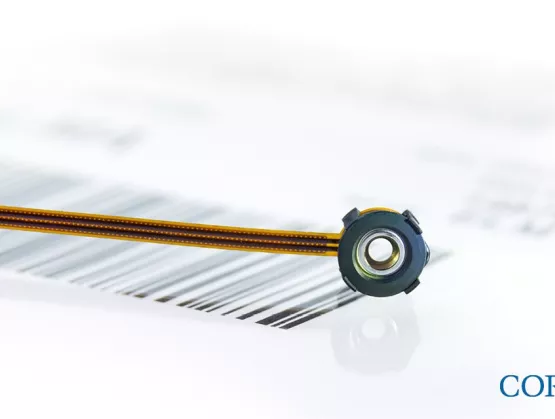
The evolution of industrial and non-industrial automation, smart manufacturing, and Industry 4.0 technologies have increased demand for vision systems that support robust, reliable imaging industrial applications. What factors are driving growth in the machine vision market today?SEMI spoke with Frederic Laune, Business Manager, European Technology, Corning, about how Corning® Varioptic® Lenses are vital to advancing the speed, efficiency, and integration of products using computer imaging. Laune shared his views ahead of his presentation at SEMI MEMS Imaging Sensors Summit, 25-27 September, 2019, at the WTC in Grenoble, France. Join us at the event to meet Corning and many other key industry influencing players. Registration is open.SEMI: Corning's markets include optical communications, mobile consumer electronics, display technology, automotive, and life sciences vessels. Back in June 2019, Corning Incorporated announced that it had delivered its 2 millionth Corning® Varioptic® Lens for industrial applications. What drove this great milestone?Laune: This milestone was met thanks to the fact that Corning Varioptic’s solution solves several problems generated by classical motorized solutions used in industrial applications: limited number of actuation cycles, poor vibration and shock resistance, size (meaning bulky), and high-power consumption. Before Varioptic, there was no variable focus solution that worked well.In addition, the explosion of the CMOS sensor technology helped drive down the cost of imaging solutions for industrial devices, increasing the number of applications and shipping volumes.SEMI: What inspired Corning Varioptic Lenses?Laune: Varioptic was started in 2002 by Dr. Bruno Berge, a French physicist turned entrepreneur. Inspired by the work of Gabriel Lippmann, the 1908 Nobel Prize winner for the invention of color photography, Dr. Berge explored the shape-altering effects of an electric charge when applied to two liquids, a phenomenon referred to as electrowetting. His research ultimately led to the creation of liquid lenses.Fast forward to 2017, when Varioptic became a part of Corning through an acquisition that included Varioptic and Invenios technologies. We believe the synergies from this acquisition will lead to exciting new liquid lens application opportunities that align with Corning’s growth strategy and core capabilities. Corning is one of the world’s leading innovators in materials science. For more than 165 years, Corning has applied its unparalleled expertise in glass science, ceramic science, and optical physics to develop products that transform industries and enhance people’s lives.SEMI: What differentiates traditional camera systems from adjustable lens solutions?Laune: Traditional industrial cameras are usually fixed focus, meaning that the image is sharp only in a limited distance range. Unlike consumer camera applications, there were no good solutions for variable or auto focus cameras in the industrial space. This is due to the intrinsic limitations of motorized technologies.Therefore, customers were using, for example, several cameras to focus at several distances. This compromises the optical quality by closing the objective in order to increase the depth of field, therefore limiting resolution and leading to a need for more light.The cameras using Corning Varioptic’s technology offer more functionality with their ability to focus, whatever the distance, in a fast, reliable, and accurate fashion, and with lower power consumption than traditional mechanical solutions. The upshot is that the product that can withstand heat, vibration, mechanical shocks, and high numbers of focus cycles in tough industrial environments. SEMI: And how is electrowetting enabling industrial devices to capture images and process information quickly and clearly? Laune: In two words: fast and accurate.Electrowetting has unique features – with our two-liquid solution, we combine fast focus with high vibration and shock resistance, and the added benefit of low power consumption.What’s more, our programmable lens can be reconfigured on demand. The lens adapts rapidly and continuously from diverging to converging and can be modeled to support demanding variable focus applications. Our lenses can change their focus in milliseconds, similar to the human eye, and capture fast-moving objects at varying distances. The use of liquid, over mechanical solutions, allows us to create a small form factor, saving precious space and reducing power consumption.SEMI: What industrial applications are taking advantage of this technology? Can you name one example?Laune: 2D barcode readers and industrial vision are our main markets. There is also a strong adoption of our technology in medical applications.SEMI: What does the rise of machine vision mean for manufacturers? Give us one prediction about the opportunities offered by advanced imaging applications.Laune: A great example is the use of 2D barcode readers and liquid lenses to track your ecommerce order, point to point. Another example is full product traceability by implementing a 2D barcode on every component of a given product globally to improve product quality. The varying and adjustable focus abilities of our liquid lens technology make it possible for barcode scanners to track products of different heights, allowing manufactures to improve their processes and logistics.Beyond these examples, tracking and analyzing are booming, thanks to the combination of low-cost CMOS sensor technology, increasing processing power, innovative algorithms (deep learning, AI, neuromorphic processors, etc.), and better image quality due to the progress of lens technology, Varioptic being one.We see an opportunity to improve people’s lives, such as enabling better analysis of medical images and improving the use of cameras in biomedical technologies.SEMI: Quality inspection and automation, adoption of Industrial 4.0 technologies, government initiatives. If you were to choose one, what main factor will drive growth in the machine vision market?Laune: It is difficult to pick just one. I believe that full traceability (monitoring individual parts throughout the production process) has interesting implications as compliance and regulatory efforts ramp up and stronger security of goods becomes more important, particularly as consumers become engaged in food safety and tracing products throughout the supply chain.SEMI: What are your expectations for the SEMI MEMS Imaging Sensors Summit and why would you invite your peers to attend? Laune: I strongly believe in the power of human interactions in technology and science! Ideas come from discussions and physical interactions. The SEMI MEMS Imaging Sensors Summit is a great place to network, meet people, and think about the future! Frederic Laune is the business manager leading the Corning® Varioptic® Lenses business. Laune joined Varioptic as an R D engineer in 2003 after spending the first eight years of his career developing novel active components for the optical telecom industry. At the time, Varioptic was a newly created start-up aiming to develop liquid lens technology for industrial applications. After designing the first two Varioptic commercial products, the Arctic 320 and Artic 416, Laune stepped up as head of Varioptic’s R D department to focus on product and performance improvements. In 2010, he was appointed sales and marketing lead for the company. Varioptic was acquired by Corning Incorporated in early 2017. Laune received a master’s degree in physics and optics from University Pierre and Marie Curie (Paris) in 1995.Serena Brischetto is a marketing and communications manager at SEMI Europe.
Read More
Constant coverage of an invigorating topic like machine intelligence in the media often urges us to consider its use in EDA technology. As is often the case, there are many myths and falsehoods that consume our time and effort when trying to apply machine intelligence to EDA. This article aims to uncover the myths and to provide helpful advice on applying machine intelligence to your EDA project or product.Value PropositionFirst, there needs to be a clear value proposition for adding machine intelligence to an EDA product. Using machine intelligence to create a me-too product adds no value. EDA customers are too busy to understand or care about an EDA tool’s underlying technology. They just want to use the tool and get results. If the tool delivers value, if it delivers tangible benefits, then they’ll use it. Otherwise, they won’t.Currently, EDA tool developers are already experimenting with AI and machine intelligence without considering this fundamental truth – without a higher-end objective. AI must deliver something better or new, whether a speed advantage, a performance advantage, new features, new insights, or perhaps even something pleasantly surprising. Before you write a single line of AI-enhanced code, you need to clearly understand how AI will enhance the product. What is the value proposition?Use ModelThere’s a major barrier to customer adoption of AI and machine intelligence technology for EDA tools: EDA users are averse to make decisions based on probabilistic results. Instead, half a century of EDA tool use has conditioned them to expect deterministic outcomes from their tools.Back in 2003, a prominent visionary and EDA investor was quoted in an interview, saying: “If I open my eyes five years from now, all static analysis in VLSI will be statistical.” Many EDA luminaries have been proven wrong over time for betting that EDA users will accept statistical results. As enthusiastic as I am about using machine intelligence to improve EDA tools, I must urge caution based on the history of EDA failures that employed a probabilistic use model. Decision-makers and EDA tool users want to see deterministic answers to questions about yield or slack, not probabilistic ones.Our experiences at Paripath in developing the PASER (Paripath Accelerated Simulation Environment) tool also bear this out. We discovered that delivering results 50x faster but with 92% accuracy was simply not good enough for end users. EDA users only started to use PASER when its answers became 98+% accurate. To be adopted in the production flow, the tool had to deliver 99% accuracy.Data EngineeringThere are specific ways to achieve these accuracy goals. The first is data engineering. Machine intelligence is a new approach to EDA tool development and it needs to be trained on a data set. If the data is poor or incomplete, training will create an inaccurate model. Fundamental software-development rules still apply. Garbage in, garbage out.Without good training data, there’s no way for you to build good neural-network models. If you train a model with garbage data, you’ll get a garbage model. You must cleanse the data before you use it for training. Otherwise, the model will draw inaccurate conclusions and customers will not use your tool. The model is not to blame here. The model’s not wrong. The problem lies in poor data engineering, poor data cleansing, and a lack of discipline to prepare input data.High DimensionalityNext, machine intelligence has a unique ability to quickly solve problems of high dimensionality. Pure EDA problems often have high dimensionality. Over the years, EDA developers have perfected the art of segmenting the problems into sequencing solutions with lower dimension. Machine intelligence technology can handle problems with thousands of dimensions, but you need to be careful when tackling problems that have high dimensionality. Too many dimensions can produce confused or inaccurate results with AI and deep-learning technology.It helps to visualize the problem and to analyze the data set before using the data to train an AI-enhanced EDA tool. Several visualization methods can help. For example, t-SNE (t-Distributed Stochastic Neighbor Embedding) lets you reduce a data set’s dimensionality from a very large number to a much lower number. Figure 1 shows a high-dimension dataset with a dimensionality of 2000, which has been reduced to a low dimensionality of 3. Figure 1: Visualizing the Data Set with Lower Dimensionality Reducing the dimensionality of a data set to 3 using t-SNE and visualization allows you to quickly see whether the data set defines an easy or a difficult problem. If the problem is difficult, you’ll likely need to lower the problem’s and the data set’s dimensionality before using the data to train a neural network.Technology SelectionOne factor that determines whether it will be easy or difficult to incorporate machine intelligence into your EDA tool is your choice of AI development tools. AI researchers have developed a long list of frameworks, libraries, and languages that they use to develop AI and machine-learning software. Frameworks and libraries such as TensorFlow, Caffe and MXNet are most popular for developing deep-learning models.However, these tools are not yet popular with the EDA development community. The languages of choice in the EDA community are traditionally C and C++ for development and Tcl for prototyping and creating user interfaces. The rest of the software world has moved on to newer development languages such as Python, Java, R, and such. Moreover, machine-learning development segments into two distinct processes: training (i.e. generating the model) and inference (i.e. using the model).Another question to consider is where to generate the model – at the vendor site or the customer site?Consequently, fitting AI and deep-learning development into EDA development environments can feel like fitting a square peg into a round hole. You may need to create corners in your hole.EDA is a very small player in the overall software market. Relatively few software developers are familiar with writing EDA tools. It’s best to select AI and deep-learning development tools that can provide some sort of interface that’s compatible with EDA’s development tools of choice. Some AI frameworks have lower-level C and C++ interface layers that provide a familiar entry point for experienced EDA developers.At Paripath, we chose TensorFlow for exactly this reason. TensorFlow has a lower-level C/C++ interface. Although the resulting development path becomes a longer one using this approach, it’s a more familiar path for EDA developers and therefore it’s a path that can ultimately lead your EDA development team to success. An elaborate study of comparing these frameworks has been published in the book Machine Intelligence in Design Automation.Integration into Legacy SystemsWhen you understand the value that you expect machine intelligence to add to your new EDA tool, when you’ve cleansed and then analyzed the data set, and when you have selected an appropriate set of development tools, you’re finally ready to add machine intelligence to your EDA development. There are two use models for AI-enhanced EDA tools. The first uses a trained model to guide the EDA tool’s decision-making. In this use case, the trained neural network doesn’t change. The software’s accuracy doesn’t improve with use unless the company that developed the EDA tool retrains the underlying neural network. This use case follows the familiar, existing use case associated with EDA tools developed using deterministic algorithms.For the second use case, the end user is able to retrain the underlying neural network, which allows the EDA tool to produce better, more accurate results over time. This use case produces a win/win situation because end users are able to hone their tools and improve them over time, without help from the EDA tool vendor’s application engineers. If the retrained models are also sent back to the EDA developer for incorporation into newer versions of the tool, all users benefit from other users’ training data.It’s not clear how you’d support this second use case in the current EDA business environment where most data sets are proprietary and are carefully guarded. Most large EDA tool customers want to keep their data in house under tight control. Even with this somewhat restrictive situation, however, EDA tools benefit from the incorporation of machine intelligence because each EDA tool customer can customize the tool and improve its results.Machine intelligence has much to add to EDA tools’ capabilities. Only time will tell if the customers want and will accept these new capabilities. Rohit Sharma, founder and CEO of Paripath Inc., is an engineer, author and entrepreneur. He has published many papers in international conferences and journals. He has contributed to electronic design automation domain for over 20 years learning, improvising and designing solutions. He is passionate about many technical topics including machine learning, analysis, characterization, and modeling. It led him to architect guna - an advanced characterization software for modern nodes. Sharma has written a book titled “Machine Intelligence for Design Automation.” You can download code examples and other information here.Note from SEMI-ESD Alliance: ESD Alliance’s Interoperability Committee brings together the industry to discuss interoperability. By focusing the efforts of the electronic system design community onto key compute operating systems, the Interoperability Committee seeks to define a stable, interoperable environment for tools and streamline the resources required to support these environments. The EDA Industry OS Roadmap presents guidelines to EDA vendors and customers for compute platforms to target for design starts. Learn more and view the OS Roadmap overview at our website.
Read More
Artificial intelligence (AI) is on the verge of transforming entire industries as it gears up to power semiconductor industry innovation and growth, thrusting the technology to front and center at SEMICON Japan 2019, December 12-14 at the Tokyo Big Sight (Tokyo International Exhibition Center).The SMART Technology Forum at SEMICON Japan will highlight the latest AI developments and trends. Supported by U.S. Commercial Service in Japan, the forum will feature Yutaka Matsuo of the University of Tokyo. An authority on AI, Matuso will give an overview of both AI business and technology. His presentation will be followed by an AI outlook from Microsoft Japan, Amazon Web Services and DefinedCrowd.A number of Japanese startups are on leading edge of AI innovation in machine and deep learning. One is Preferred Networks Inc., a company that applies cutting-edge deep learning technology to Internet of Things (IoT) applications across transportation, manufacturing and healthcare.In his opening day keynote at SEMICON Japan, Toru Nishikawa, president and CEO of Preferred Networks, Inc., will highlight the latest developments and promise of using deep learning for industrial applications. Nishikawa will unpack how AI companies jockeying for competitive advantage will win by harnessing technologies to process massive amounts of data efficiently and quickly.Following is look at Preferred Networks, Inc. and five other Japanese startups that are driving AI innovation. Within Japan's world of AI, machine learning, and deep dearning, Preferred Networks is likely the most well-known Japanese company. The parent company, Preferred Infrastructure, was founded in March 2006 by Toru Nishikawa and Daisuke Okanohara, who focused on search engine development before turning to machine learning and establishing Preferred Networks to commercialize the technology.Preferred Networks established itself as one of the world’s top providers of machine learning technology with the development of Chainer – an open source deep learning framework that has been offered free of charge since June 2015 and was released before TensorFlow, Google’s renowned Deep Learning framework. Established in 2012, ABEJA is thought to be Japan’s first venture company to specialize in deep learning. ABEJA's core technology is its AI platform ABEJA Platform. Based on this platform, the company offers various solutions to more than 100 client companies. ABEJA also offers ABEJA Insight, a specialized package service for the retail and distribution, manufacturing, and infrastructure industries. Data analytics provider BrainPad Inc. was the first Japanese AI venture listed on the Tokyo Stock Exchange. Established in 2004, before the advent of big data, BrainPad Inc. cultivated a vision of analyzing vast amounts of data in increase the competitiveness of Japanese companies. LeapMind Inc. aims to offer deep learning technology that uses fewer computing resources and draws less power. Both are important capabilities since deep learning requires considerable computing resources to perform image and speech recognition. The company’s answer to this deep learning challenge is a small form factor FPGA with low power consumption.In April 2018, LeapMind started offering the tool DeLTA-Lite to support model construction for Deep Learning. The tool simplifies the development of deep learning design models, eliminating the need for model design, hardware, and software expertise. Hacarus Inc.’s HACARUS-X AI technology, which combines sparse modeling and machine learning technology, features low power consumption and small devices such as FPGAs. In collaboration with semiconductor trading company PALTEK, Hacarus is integrating HACARUS-X algorithms with Xilinx's FPGA Zynq UltraScale + MPSoC. Both companies area also implementing HACARUS-X algorithms in a box computer.Sparse modeling is gaining attention as a modeling method by which humans can understand the judgment process of AI by extracting features from a small amount of learning data. With expertise in life science fields such as medical and biology and image processing technology, LPixel, Inc. develops image analysis systems with original algorithms and machine learning techniques. It has developed a cloud-based AI image analysis platform and an AI medical image diagnosis support technology that streamlines the review of large amounts of research data and detects image fraud in research papers and other documents for the medical and biology fields, freeing researchers to devote more time to their core work. Yoichiro Ando is a marketing director at SEMI Japan.
Read More