

Newly Published Standard for Measurement of Particle Precursors in Ultrapure Water
By Bonnie Marion (FTD Solutions), Gary Van Schooneveld (CT Associates), Lindsey Sullivan (FTD Solutions) – Ultrapure Water Task Force Leaders
As device geometries continue to shrink and device complexity increases, quality requirements for ultrapure water (UPW) used in semiconductor manufacturing are becoming increasingly stringent. The killer particle size has become smaller than the capability of advanced measurement techniques, and as a result, the industry requires proactive measures to prevent contamination and risk to yield.
SEMI F121, Guide for Evaluating Metrology for Particle Precursors in Ultrapure Water, was developed by the UPW Task Force of the Liquid Chemicals North America Technical Committee Chapter, and recently approved at SEMICON West and subsequently published in September 2023. This standard provides a testing methodology to evaluate analytical instruments for measuring particle precursors in UPW.
Why is this Standard Needed?
The IRDS roadmap has identified 3 nm as the critical particle size for the next generation of semiconductor devices. Recent studies have shown that particles in this size range and larger can be formed from dissolved contaminants and have also revealed that these particles can adhere to the wafer surface during processing (Figure 1). This led to defining a class of contaminants, particle precursors, or dissolved compounds that can form particles when dried on a wafer surface. Particle precursors can originate from UPW system components and pose a risk because UPW systems were not designed to treat or prevent their release. Particle contamination can result in defects by blocking vias and cause damage during the etch process.
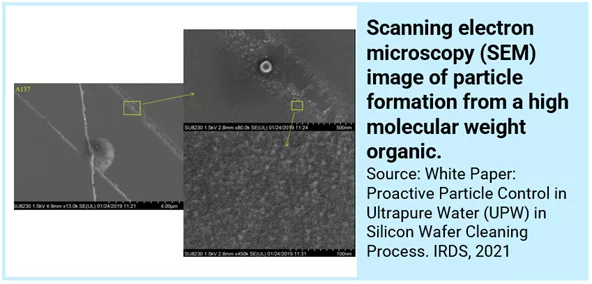
Figure 1. Formation of particles from a dissolved organic compound deposited on a wafer surface.
The dominant particle counting metrology used today, light-scattering-based optical particle counting has limited capabilities to measure particles below 20 nm and is unable to detect organic particles smaller than 10 nm or particle precursors in UPW. Alternative particle metrologies have matured to the point where they may be suitable for measurement of particle precursors, but no guidance existed on applying particle measurement techniques to this class of dissolved contaminants that can form particles after drying. Therefore, SEMI F121 was developed to address the gap in metrology for particle precursors.
How the New Standard Addresses These Challenges
This standard provides a performance-based definition of acceptable metrology for particle precursors, rather than defining a specific analytical instrument. Performance criteria include accuracy in particle sizing, repeatability in particle sizing and concentration, dynamic range, and noise. The criteria are evaluating using three steps (Figure 2), which allows for demonstration of performance with a traceable size reference material, a dissolved standard that can be tested at a range of known concentrations, and a real-world example of a particle precursor (extract from a mixed bed ion exchange resin).
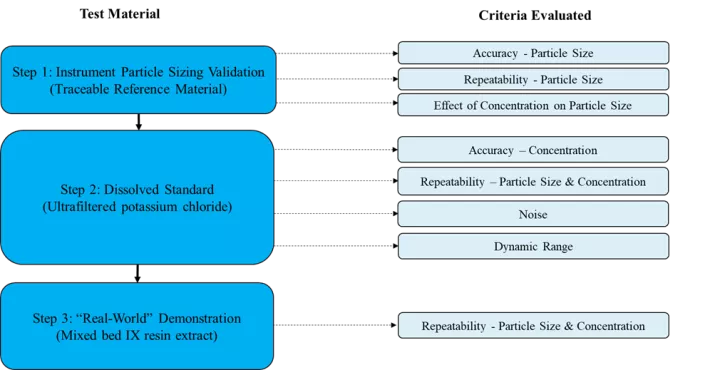
Figure 2. Particle Precursor Measurement Performance Criteria
The focus of this Guide is on measurement of high molecular weight organic particle precursors that can leach from ion exchange resin. Future revisions may address the risk of other types of particle precursors, such as silicic acid.
The UPW Task Force believes that use of SEMI F121 will help standardize performance criteria for particle precursor measurement, which will support proactive contamination control and further enable the ability to detect and remove the critical particles that are a major source of defects limiting device yields.
Get Involved
SEMI Standards development activities take place throughout the year in all major manufacturing regions. To get involved, join the SEMI International Standards Program at: www.semi.org/standardsmembership.
For more information, please visit our main Web site and current events page. If you have any questions regarding SEMI Standards activities, please contact your local SEMI Standards staff.
Standards Watch
SEMI
www.semi.org
September 14, 2023