

Revision to SEMI S23 Approved
By Kevin Nguyen, SEMI HQ
Semiconductor fabrication equipment generates significant amount of heat. Water is generally used for cooling. Heated water is then removed through a heat exchanger by refrigeration and pumped back to the facility for reuse.
SEMI S23, Guide for Conservation of Energy, Utilities and Materials Used by Semiconductor Manufacturing Equipment, initially published in 2005, provides concepts related to energy, utilities, and materials use efficiency of semiconductor manufacturing equipment (SME). Over the years, this standard was revised several times for improvement to adapt with the technology trend by the SEMI S23 Revision Global Task Force.
The current version of SEMI S23-1216 only provides guidance for chiller-cooled process cooling water (PCW-C), which is the traditional facility-supplied cooling water available in semiconductor manufacturing facilities. However, PCW-C requires significant of energy as it relies solely on electricity.
Greater emphasis is being placed on global sustainability and reduction of carbon footprint, and in April of 2019, a major effort was proposed by Applied Materials. SEMI Draft Document 6515 was proposed to further improve SEMI S23. Unlike previous revisions, this proposal is to introduce tower-cooled cooling water (PCW-T) where heat is removed through a cooling tower system. By not using a refrigeration system, energy consumption is very minimal, which translates to reduction of utility cost.
In locations with warm climates, the cooling water temperatures traditionally used in semiconductor manufacturing equipment cannot be achieved year-round with PCW-T. In other locations, utilization of the PCW-T concept is not ideal.
To address all locations with different scenarios, the proposed SEMI S23 revision also introduces the concept of dual-cooled process cooling water (PCW-D). Heat is removed from PCW-D through a cooling tower system (to the extent permitted by weather) and a chilled water system (to the extent, if any, needed to achieve the supply temperature).
Proper bypass control in such a system maximizes the use of low-energy tower cooling while providing the less weather-dependent temperature control of refrigeration.
No two manufacturing locations are identical. Depending on the location of the fab, Figure 1 below demonstrates the reduction in annualized equivalent energy that can be achieved by the using appropriate selection.
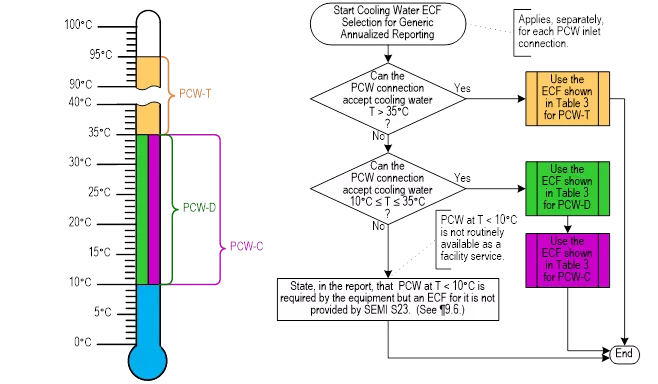
Figure 1 - Selection of Cooling Water Energy Conversion Factor (ECF)
Various stakeholders from equipment suppliers including ASML, Applied Materials, Nikon Precision, KLA, LAM Research, Tokyo Electron, and many more were involved in the activity.
Ballot 6515 was finalized in March and issued in Cycle 3-2021. It was reviewed and approved at the EH&S North America TC Chapter meeting held May 6, 2021. The ballot subsequently passed procedural review and will be published under the S volume. Semiconductor equipment manufacturers and users should consider utilizing the new version of SEMI S23 for guidance for implementing process cooling water systems that will have a mutual benefit.
Get Involved
SEMI Standards development activities take place throughout the year in all major manufacturing regions. To get involved, join the SEMI International Standards Program at: www.semi.org/standardsmembership.
For more information, please visit our main Web site and current events page. If you have any questions regarding SEMI Standards activities, please contact your local SEMI Standards staff.
Standards Watch
SEMI
www.semi.org
June 3, 2021