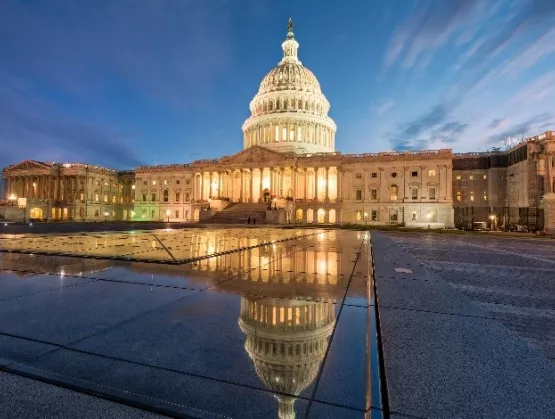
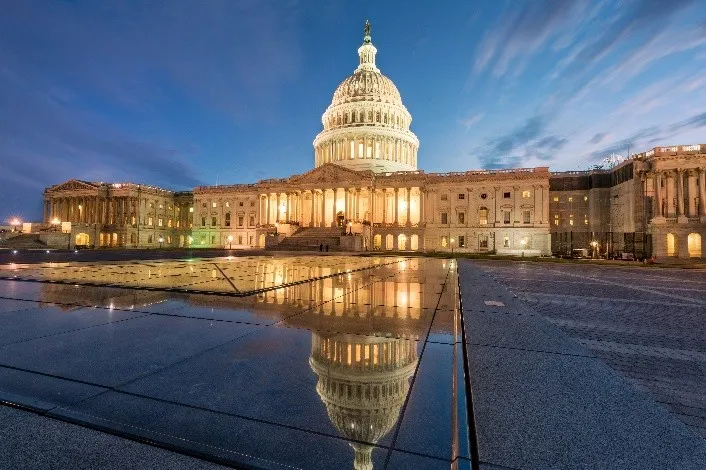
On April 8-9, 2025, bees on cherry blossoms lining the streets of Washington D.C. were not the only things buzzing. The word “tariffs” floated in the air from TVs and conversations throughout Capitol Hill, as people eagerly awaited the implementation and response to United States President Donald Trump’s latest round of far-reaching trade policy. This was the backdrop for this year’s SEMI Washington Fly-In, hosted annually by the SEMI North America Advisory Board (NAAB), which gathered representatives from member companies to meet with government officials and advocate for policy changes vital to the semiconductor industry’s continued growth and innovation.SEMI executives and more than 50 representatives from member companies across the end-to-end semiconductor supply chain participated in the Fly-In. SEMI President and CEO Ajit Manocha, SEMI Americas President Joe Stockunas, and SEMI Vice President of Global Advocacy and Public Policy John Cooney met with Trump administration officials from the Department of Commerce. Reflecting the global reach of SEMI, Manocha traveled from Washington to Brussels for meetings with the European Commission. On April 8, Stockunas presided over a NAAB meeting, followed by a dinner and prep session for meetings with Congressional members and their staff the following day. Building on the priorities outlined in the briefing book prepared by Cooney’s Advocacy team in Washington, participants discussed priority messages to convey tailored to the specific officials.Focus topics included:Tariffs and Trade – Address the buzz of the day’s news cycle by spotlighting the challenges of multiple layers of tariffs facing U.S. operations due to the industry’s global supply chain.Export Control Policy – Revise export control rules to be narrow and focused with increased transparency to minimize uncertainty for companies contributing to the world’s most complex manufacturing processes.Tax Policy and Investment Incentives – Extend tax credits set to expire and expand them to include semiconductor material suppliers and packaging facilities to bolster the full semiconductor ecosystem.CHIPS Act Implementation – Streamline implementation and ensure that the full intended scope of the CHIPS Act is maintained to meet the goals of the bipartisan legislation.Workforce Development and Immigration – Highlight the need for multi-layered programs – from education to apprenticeships through career development – required to provide the skilled workforce that will underpin domestic industry expansion.Energy and Environment – Showcase the need for strong R D programs, industry-led standards, and permitting reforms to help the semiconductor industry address booming energy requirements to power Artificial Intelligence and meet the resource needs of the growing domestic chipmaking ecosystem.PFAS Regulation and R D Needs – Prioritize regulatory actions that take a risk-based approach to PFAS and other chemicals critical to semiconductor manufacturing, as well as R D to improve environmental controls and identify potential alternative substances.SEMI organized four groups by U.S. region – East, Midwest/South, Southwest and West – comprised of representatives from member companies with operations in the respective states of the Senate and House of Representative offices scheduled for meetings at Capitol Hill. On April 9, the groups met with Members of Congress and their staff from 20 of the nation’s states, including Arizona, Arkansas, California, Colorado, Delaware, Idaho, Kentucky, Louisiana, Massachusetts, Michigan, Minnesota, New Mexico, North Carolina, Ohio, Oregon, Texas, Utah, Virgina, Washington and West Virginia. The groups shared powerful perspectives, data and anecdotes on the impact of policies on their companies’ operations. While the groups for the SEMI Washington Fly-In included representatives from companies that are fierce business rivals, the focus of the discussions successfully presented a unified industry voice highlighting shared challenges, policy recommendations, and request for support – in true SEMI “Stronger Together” spirit.News of a 90-day pause on most tariffs broke while the groups were conducting their meetings. The intense difficulties of tracking changes on tariffs and other policies permeated throughout the conversations on the impact on business decision-making. While influencing policy changes will not occur instantaneously, the SEMI Washington Fly-In bolstered the SEMI Global Advocacy team’s ongoing efforts to educate officials on the nuances and critical importance of the complete semiconductor supply chain. Additionally, the discussions emphasized the policy modifications that will have the greatest impact in helping the industry continue its lasting legacy of innovation that improves the quality of life for people in the U.S. and around the world.On April 11, the Customs and Border Patrol issued an addendum to the tariff exemption list that did not result in a complete exemption for the semiconductor supply chain. President Trump posted afterward on social media: "We are taking a look at Semiconductors and the WHOLE ELECTRONICS SUPPLY CHAIN in the upcoming National Security Tariff Investigations."Traditionally, such investigations have been conducted over a prolonged period of time for the government to collect data directly from companies and solicit feedback from industry. If past precedent remains, this will represent the first formal opportunity for industry to engage on the Administration's tariffs. The President has stated that his plans for tariffs on semiconductors will be unveiled this week.Visit SEMI Global Advocacy to learn more about public policy efforts and developments, and SEMI Workforce Development for more information on efforts to address the microelectronics industry’s talent needs.Samer Bahou is Director of Marketing Communications at SEMI.