downloadGroupGroupnoun_press release_995423_000000 copyGroupnoun_Feed_96767_000000Group 19noun_pictures_1817522_000000Member company iconResource item iconStore item iconGroup 19Group 19noun_Photo_2085192_000000 Copynoun_presentation_2096081_000000Group 19Group Copy 7noun_webinar_692730_000000Path
Skip to main content
Default Banner Image

United States

In my role as lead for the Smart Mobility initiative at SEMI, I recently spoke with Automotive Logistics Magazine about the growing importance of the semiconductor supply chain’s connection with the automotive industry and the semiconductor shortage hampering global automotive production. Following are excerpts from the interview. Automotive Logistics: Why is there a bottleneck in the global supply of semiconductors at the moment and how long is it likely to last? Weiss: The current automotive chip shortage resulted from the sharp, Covid-19-induced decrease in demand for automotive semiconductors in the second quarter of last year when vehicle production came to a near standstill. The automotive market picked up significantly in the fourth quarter and this caused the supply chain constraints we are seeing today. At the same time as the automotive standstill, the pandemic spurred an increase in demand for home computing and networking equipment, and semiconductor manufacturing plants (fabs) had to pivot to these other markets in order to maximize fab utilization and successfully navigate economic headwinds. Every minute a semiconductor fab is idle or has lines down adds up quickly to missed revenue, so their capacity is booked weeks and even months in advance. With this background, I don’t believe this is a structural shortage and expect a gradual recovery over the next two quarters, barring any major shifts in geopolitics or macroeconomics. Automotive Logistics: What needs to be done to remedy the current shortfall for the automotive industry? Weiss: The automotive industry needs to continue to strengthen its connections to the semiconductor manufacturing supply chain. In past years, auto manufacturers used to rely mainly on their tier one suppliers to interface with the semiconductor supply chain. This has changed significantly. Not only are more chips being used in vehicles (roughly 10% of all devices produced globally end up in cars), but the strategic importance of the chips as enablers for ADAS [advanced driver-assistance systems], electrification, safety, connectivity and other consumer-driven features has increased considerably. With this dynamic in play, carmakers have recognized the value of interacting and collaborating more closely with the semiconductor supply chain. This provides vehicle OEMs with access to innovation, the ability to influence technology direction and pace, along with greater visibility into global supply chain developments. The SEMI Smart Mobility initiative is evidence of this transition, with the likes of Audi, BMW, Ford, Uber, Volkswagen and other vehicle OEMs, along with tier one suppliers such as Continental and Bosch, now actively involved in our automotive electronics and mobility activities to do exactly that – influence, partner, accelerate and guide the global electronics design and manufacturing supply chain that SEMI represents. Automotive Logistics: What percentage of semiconductors manufactured for use by US-based companies are for automotive applications and how has this grown in recent years? Weiss: A little over 10% of semiconductors produced worldwide are sold into the automotive segment, but this number is expected to grow at an accelerated pace in the next few years as electrification, connectivity and autonomous driving become more prevalent. Automotive Logistics: How is SEMI working to help the automotive industry get a clearer view of sub-component supply and better manage supply chain risk? Weiss: The SEMI Smart Mobility initiative is designed to engage automotive OEMs, tier ones, semiconductor device makers, design houses, and equipment and materials companies to drive alignment across the supply chain and address shared challenges collectively. To facilitate this engagement, we created the Global Automotive Advisory Council (GAAC), which has active chapters in Europe, US, China, Japan and Taiwan. The GAAC provides an open platform for creating solutions, fostering collaboration and partnering with other industry bodies to accelerate and harmonize industry efforts that benefit the entire ecosystem. Volkswagen and Audi are already SEMI members – both are founding members of the GAAC Europe chapter – and have become vocal champions and critical contributors to our efforts. When all stakeholders work together, I have no doubt that the future of automotive and mobility will continue to be bright. Interested in learning more about this topic? Read the full interview in Automotive Logistics Magazine, A Fab Future for the Automotive Sector. Please contact me at [email protected] for more information about SEMI’s Smart Mobility Initiative, the Global Automotive Advisory Council, and how SEMI can help your organization navigate electronics in the automotive industry to drive innovation in the mobility space. Bettina Weiss is Chief of Staff and Global Smart Mobility Lead at SEMI.
Read More
As the United States government has expanded semiconductor-related export controls, companies in the global electronics manufacturing and design supply chain have had to spend considerable time and effort navigating restrictions and managing significant new uncertainties emanating from recent policies. On November 9, SEMI submitted comments to the Department of Commerce’s Bureau of Industry and Security (BIS) urging the agency to proceed cautiously and adopt regulatory best practices and microelectronics industry recommendations to ensure that its identification of foundational technologies does not restrain U.S. innovation and exports without furthering essential U.S. national security interests. The comments specifically respond to the August 27 Advance Notice of Proposed Rulemaking (ANPRM), Identification and Review of Controls for Certain Foundational Technologies. The Export Control Reform Act (ECRA) of 2018 required BIS identify certain emerging and foundational technology that is “essential” to U.S. national security and requires such technology to be controlled to China and other nations subject to a U.S. arms embargo. Congress did not provide a specific definition for emerging or foundational technology, nor the term essential, further complicating the process to identify such technology.BIS has already implemented or proposed several emerging technology controls and the ANPRM starts the process to identify potential foundational technology controls. The SEMI comments focus on the fundamental question of how to define foundational technology, and are organized into three main sections: Requirements of ECRA Guidance from ECRA Regulatory best practices and industry recommendations Applying the statutory requirements and guidance, together with best practices and recommendations, to the identification of foundational technology indicates that most semiconductor-related technology, particularly semiconductor manufacturing equipment and materials, should be outside the bounds of the foundational technology initiative. In general, most technology related to semiconductor devices, manufacturing equipment, materials and design software is not essential to U.S. national security and, in cases where such technology does present material national security issues, it is generally subject to the U.S. list review process and multilateral controls. This technology is widely available outside the United States and due to substantial foreign availability, unilateral U.S. controls on such technology are likely to be ineffective in limiting its proliferation and harm U.S. development of or threaten U.S. leadership in this technology.While the SEMI comments focus on the effort to identify foundational technology, the recommendations and best practices apply in all export control contexts. Several of the statements pertain to policy in ECRA, including its imposition of controls to further specific essential U.S. national security interests only after full consideration of their impact on the economy.Other statements derive from factors ECRA requires BIS to consider, such as not seeking to control technology that’s already available outside the U.S. and not imposing controls that would harm U.S. technological development or leadership. An additional key factor is not imposing controls before multilateral controls are agreed to, nor when it is unlikely the relevant multilateral regimes will adopt similar controls, as is likely for technology that has been decontrolled by a regime.Finally, regulatory best practices suggest that technology-based controls should not be imposed when more targeted end-use or end-user controls can address national security concerns and duplicative controls in addition to recent, significant expansions of existing controls are unnecessary.SEMI is pleased to work with the U.S. Department of Commerce and other regulatory agencies, providing industry data, trends and perspectives to ensure export controls effectively serve national security interests without undue harm to technological development and leadership in this dynamic, globally competitive industry.Ways to Stay Connected and Learn MoreSEMI is committed to serving the global electronics manufacturing and design supply chain and present the collective voice of members to governments worldwide.The SEMI Global Update weekly newsletter provides updates on advocacy issues and technology trends and is available to all.Additionally, SEMI hosts live and virtual events that offer analysis and insights of geopolitical trends by industry experts, with the next opportunity to participate coming on December 3 with the SEMI CEO Webinar: Analyzing the Impact of the U.S. Election on the Microelectronics Industry.Joe Pasetti is Vice President of Global Public Policy and Advocacy at SEMI.
Read More
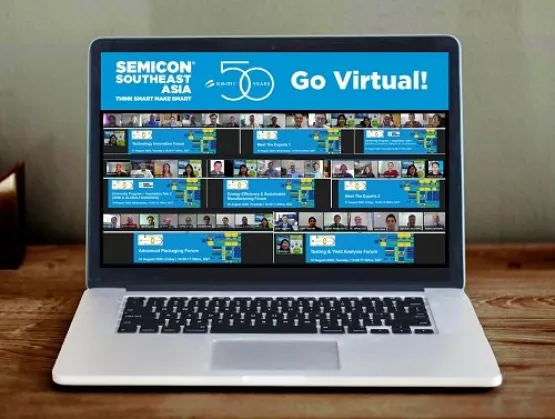
Never before had we expected that SEMICON SEA 2020 would go virtual.The COVID-19 crisis abruptly halted our ability to hold our premier Southeast Asia electronics manufacturing exposition as we typically do – in the physical realm. The pandemic tested our adaptability, challenged our willingness to experiment and, perhaps above all, accelerated not only our own but the world’s digital transformation. We had to change our way of doing business and learn to connect virtually like we had never had before. SEMI continues to believe that virtual interaction is no replacement for face-to-face engagement. But, like the rest of the world, we fast-tracked our digital education and staged the virtual event 20 July to 21 August 2020 to gather supply chain players and help fulfill the tremendous potential of our great industry. For all the suffering the COVID-19 has caused, the pandemic has underscored an important truth – that we need innovation through collaboration now more than ever to help solve the world’s greatest problems. We thank all our event sponsors as we turned what started as a grand experiment into a successful event that drew nearly 3,000 attendees to our webinars, business matching sessions and other online offerings designed to help them uncover new business opportunities. Following are other highlights. Southeast Asia Pavilion at Virtual SEMICON West 2020 In our first collaboration with SEMICON West, our Southeast Asia Pavilion at the event welcomed virtual visitors from around the globe to help them form new connections and grow their businesses. Business Matching Sessions Technical buyers from more than 15 multinational companies along with 141 pre-qualified suppliers attended more than 50 meetings across four online business matching sessions.Technical WebinarsCompany representatives from regions including Malaysia, Singapore, Vietnam, Taiwan, the United States, the UK, Israel, China and Japan shared their expertise and industry insights at SEMICON Southeast Asia 2020 webinars. In addition, experts from leading semiconductor companies such as Micron Semiconductor Asia Operations, ViTrox Corporation Berhad and A*STAR took part in our technical exchange by sharing the latest trends in the rapidly evolving semiconductor industry. Talent Development: Inspirational University Program Talks With building the talent pipeline critical to sustaining growth of Southeast Asia semiconductor manufacturing dynamics, talent champions from Lam Research and GLOBALFOUNDRIES highlighted career opportunities and pathways for young engineers while generating recruiting leads. More than 750 students from Malaysia and Singapore engaged panelists with questions during the sessions. The SEMICON Southeast Asia team extends its tremendous thanks to sponsors and attendees for their support. As we all navigate the pandemic and hope in the near future to awaken to a brighter day, we will continue to connect virtually and, whenever possible, in person as the semiconductor industry evolves and flourishes. The SEMICON SEA 2020 team In the meantime, we will all continue to pull together to support our resilient industry as it outperforms most other manufacturing sectors. Semiconductor capital equipment shipments were up 23% globally in the second quarter of 2020 versus the same period in 2019 and semiconductor chip growth remains in positive territory. Our team has already started planning for SEMICON SEA 2021, scheduled to take place at the Setia Spice Convention Centre in Penang, 18-20 May 2021.We look forward to seeing you again soon as we continue to strengthen the microelectronics ecosystem!Bee Bee Ng is president of SEMI Southeast Asia.
Read More
SEMI President and CEO Ajit Manocha has voiced his support for amendments the United States House of Representatives and Senate included in the Fiscal Year 2021 National Defense Authorization Act (NDAA) that would authorize important programs to support semiconductor manufacturing and research in the U.S.“SEMI is very pleased the House and Senate included in the NDAA provisions to support semiconductor manufacturing and research in the United States,” Manocha said. “The U.S. has not kept pace with the growth of semiconductor manufacturing abroad. The U.S. share of global semiconductor manufacturing capacity has been cut in half to just 12 percent over the past 20 years and is forecast to fall to 10 percent by 2023. We applaud the sponsors for their support, leadership and hard work to win House and Senate approval to increase federal government support for the industry. However, this is just the start of what needs to be done to reverse this 20-year decline. The CHIPS for America Act’s investment tax credit for new and expanded semiconductor manufacturing facilities is essential to provide a robust, transparent and reliable federal incentive that will be the foundation of renewed growth of U.S. fabs.”In addition to authorizing a new grant program, the House and Senate amendments would direct the Defense Department to create programs with the private sector to: Direct the Defense Department to create programs with the private sector to encourage the development of advanced, measurably secure microelectronics, Establish a Multilateral Microelectronics Security Fund the U.S., its allies and partners will use to reach agreements promoting consistency in their policies related to microelectronics, Direct the President to establish a subcommittee on semiconductor technology and innovation within the National Science and Technology Council, and Direct the Secretary of Commerce to establish a national semiconductor technology center and other important new programs. The House amendment would authorize an additional $1.2 billion for semiconductor research. Both the House and Senate are expected to complete debate and pass the NDAA bills this week.SEMI members operate semiconductor supply chain facilities across the U.S. Of the 25 states with at least one major facility, 18 boast large semiconductor manufacturing fabs and other facilities while seven offer semiconductor equipment and materials production. Operating for decades, many of these facilities are key pillars of local economies and underpin hundreds of small businesses that supply components and materials. The U.S. semiconductor supply chain accounts for about 240,000 high-skill and high-wage jobs nationwide.Joe Pasetti is Vice President of Global Public Policy and Advocacy at SEMI.
Read More