downloadGroupGroupnoun_press release_995423_000000 copyGroupnoun_Feed_96767_000000Group 19noun_pictures_1817522_000000Member company iconResource item iconStore item iconGroup 19Group 19noun_Photo_2085192_000000 Copynoun_presentation_2096081_000000Group 19Group Copy 7noun_webinar_692730_000000Path
Skip to main content
Default Banner Image

TSMC

Over the next five years the Taiwan government plans to invest NT$1.546 billion to build the workforce direly needed for future semiconductor industry research and development. The largesse is a tribute to efforts by SEMI president and CEO Ajit Manocha to enhance the competitiveness of the semiconductor industry by stressing the importance of talent development during his annual visits with the Taiwan president. He has been instrumental in bringing together Taiwan government agencies and local industry representatives – two players in developing the talent pool of the future – to discuss workforce initiatives.As the talent gaps threatens to choke the long-term growth potential of the chip industry, Manocha has emerged as a passionate champion of workforce development. In a letter to more than 2,000 semiconductor companies worldwide, he urged to executives act together to build the workforce vital to industry growth. In 2018, he met with Taiwan President Tsai Ing-wen to discuss ideas for attracting and retaining skilled workers to help ensure Taiwan remains a top investment destination for high-tech multinationals.In early 2019, SEMI Taiwan established its SEMI Taiwan Workforce Development Council to promote talent and career development. Already, the group’s work is resonating in the global semiconductor industry. In September last year, Manocha joined executives from industry heavyweights ASE, MediaTek and TSMC in a visit to President Tsai to urge the government to pursue industry sustainability through talent development. President Tsai responded by instructing her staff to review government resources available for talent development, help drive public-private dialogue and partnerships, and form talent development projects involving the government, industry, academia and research institutes.To carry out comprehensive workforce initiatives, SEMI Taiwan continues to work with the National Security Council and the Executive Yuan (the cabinet). We also launched the Semiconductor Industry Development Council in partnership with leading high-tech companies in Taiwan including ASE, TSMC, MediaTek, PSMC, VIS, MXIC, Nanya, Etron and UMC. Focused on developing semiconductor talent and technology, localizing equipment sourcing, and improving cybersecurity, the council has formed the following seven initiatives: Make existing government talent development programs more flexible to better meet the industry’s workforce needs. Recruit outstanding scholars and leading experts in scientific research, and solicit world-class scientific research teams. Extend age restrictions and other requirements for the Einstein Program (established by the Taiwan MOST, Ministry of Science and Technology) to attract outstanding foreign scholars to Taiwan. Establish a domestic semiconductor research ecosystem and provide sufficient research funding to cultivate R D talent. Strengthen female education in STEM (science, technology, engineering, mathematics) and encourage women to re-join the workforce to help meet the industry’s workforce needs. Continue to promote MOST University-Industry Collaboration Projects (Large Alliance) to connect the upstream academic and research sector with downstream industries. Encourage cooperation between science and technology universities and the chip industry to develop the talent necessary for smart manufacturing to thrive. SEMI’s advocacy efforts with the Taiwan government, the industry and academia are clearly paying off. The Executive Yuan recently announced three major talent development strategies – expanding the talent development capabilities of higher education institutions, promoting industrial-academic cooperation and encouraging businesses to strengthen recruiting efforts and increase funding for semiconductor talent development.The building momentum includes plans by the Taiwan Ministry of Education plans to establish semiconductor technology research centers at several national universities. By passing the sandbox law and loosening regulations organizational personnel, finance and education, the government is freeing up more funding to support semiconductor industry talent development. The ministry also plans to gradually expand the number of students enrolled in STEM curriculum and continues to promote talent training programs and recruiting strategies to help close the workforce gaps and reduce related industry risks. A highly skilled workforce is indispensable to the development of the semiconductor industry and among the most strategic resources in any region. It’s only through long-term partnerships between the government, industry and academia that impactful and sustainable workforce development goals and initiatives can be developed to help the chip industry realize its full potential to innovate and solve some of the world’s greatest challenges. The programs are key to the ability of Taiwan’s semiconductor industry to sharpen its competitive edge. More importantly, they are also the center of gravity in the region’s pursuit of its position as the global semiconductor hub. Jo-Ann Su is senior director and Winnie Chang is marketing and public relations specialist at SEMI Taiwan.
Read More
As the world combats climate change, the chip industry continues to build momentum in becoming a better steward of the environment. In July, Taiwan chip giant TSMC became the world’s first semiconductor company to join RE100, the global initiative to move away from a widespread reliance on fossil fuels and toward 100% renewable electricity. Applied Materials soon followed with a commitment to expand its renewable energy capacity. For the past four years, ASE Group, the largest outsourced semiconductor assembly and test (OSAT) provider, was named an industry leader in the Dow Jones Sustainability Indices (DJSI), making clear its commitment to protecting the environment. For its part, TEL was selected to be part of the FTSE4Good, a series of ethical investment stock market indices, and FTSE Blossom Japan, an index that gauges the performance of Japanese companies demonstrating strong Environmental, Social and Governance (ESG) practices.SEMI bolsters commitment to green energySEMI has also strengthened its commitment to promoting renewable energy in the semiconductor industry by adding the Green Power Pavilion at this year’s SEMICON Taiwan and continues to support the green energy movement as a co-organizer of Energy Taiwan. The largest renewable energy event in Taiwan, Energy Taiwan features international exhibitions, forums, policy initiatives and business matching events. This year the event attracted more than 12,000 visitors from 50 countries to highlight renewable energy breakthroughs and new products. The SEMI events complement RE100, which works across a wide range of industries that include financial services and retail. The initiative connects more than 260 members that count among them the world’s most influential businesses such as Apple, Google and Facebook and their suppliers through educational events.In many respects, TSMC is becoming a beacon of green energy in the chip industry. In July, the company committed to 20-year agreement to buy offshore wind power gear made by energy firm Ørsted in Taiwan, the global leader in the wind power industry. According to the purchase agreement, TSMC will offtake full production from 920-megawatt wind farms off the coast of Changhua County in western Taiwan expected to start operations in 2025 or 2026. The agreement will by far mark the world’s largest corporate green energy order in the semiconductor manufacturing and renewable energy industries and demonstrates TSMC’s long-term commitment to environmental sustainability.In addition to sourcing renewable energy, TSMC has been working closely with its downstream and upstream suppliers to help drive supply chain improvements geared toward a greener industry by offering on-site coaching, energy audits and educational resources. But the company's focus on energy efficiency is nothing new. For years, its Supply Chain Management forum has promoted industry sustainability and corporate responsibility. Moreover, TSMC worked with SEMI at this year’s SEMICON Taiwan to generate greater awareness of the importance of green energy to the industry and encourage SEMI members to become more involved in the movement.Supply chains expand eco-friendly practicesThe drive toward greener semiconductor manufacturing is also expanding to encompass entire supply chains. One notable initiative is Green Supply Chain Management (GrSCM), an effort to integrate environmental thinking into every level of the supply chain, from product concept to distribution. GrSCM involves the retooling of product design, materials sourcing, manufacturing and processes to reduce the ecological footprint of factories. So far, the results are encouraging. More companies are factoring environmental sustainability into their purchasing decisions to urge suppliers to better manage their power usage and join the green energy movement – an important step in curbing the unavoidable consequences of climate change. Terry Tsao is Global Chief Marketing Officer at SEMI and President of SEMI Taiwan.
Read More
High-tech industry clusters in the bustling northern Taiwan port city of Hsinchu look set for an upgrade. Long a world-class hub of the semiconductor and optoelectronic technology industries, Hsinchu City is laying out plans to work with SEMI to attract more international companies, generate more jobs, promote Hsinchu’s development and help grow Taiwan’s microelectronics industry. High-tech heavyweights such as TSMC, UMC, MediaTek, Realtek, and AUO are all headquartered in The Windy City. The Industrial Technology Research Institute (ITRI), a leading Taiwan research center and incubator, also calls Hsinchu home, and the city boasts one of the highest concentrations of educational institutions in the region, a roster that includes National Chiao Tung and National Tsing Hua universities. Hsinchu’s thriving relations with these industry, academic and research partners have made it a hotbed of innovation, with numerous large Taiwanese and foreign companies having opened local offices. No less than these partners, the city – like SEMI – is committed to innovation.In a recent visit to the SEMI Taiwan office in Taipei, a Hsinchu City government team led by mayor Lin Chih-Chien, met with Terry Tsao, global SEMI chief marketing officer and president of SEMI Taiwan, to explore collaboration opportunities in areas such as technology subsidies, policy, education, and infrastructure. The meeting built on a relationship between the city and SEMI Taiwan that sprouted after SEMI executives and Hsinchu officials joined ITRI to host the Autonomous Driving System Platform in Open Fields kick-off ceremony – an initiative to accelerate Taiwan’s adoption of smart transportation technologies – at SEMICON Taiwan 2019.At the meeting, Mayor Lin highlighted that Hsinchu has long attracted high-tech companies by cultivating a business-friendly climate through incentives such as subsidies for infrastructure buildouts. He hopes to work with SEMI to promote to members the benefits of setting up local offices in Hsinchu City.With both Hsinchu’s high-tech clusters and SEMI’s global members deeply reliant on skilled workers for sustaining innovation and growth, Tsao and Mayor Lin agreed that inspiring students to pursue an education and careers in science, technology, engineering and mathematics (STEM) is vital to building a high-tech talent pool. One collaboration opportunity SEMI Taiwan is eyeing is to launch Taiwan’s first SEMI High Tech U (HTU) program in Hsinchu to spark the interest of school-age children through STEM educational activities at school camps or art and cultural centers. SEMI’s STEM discovery program offers hands-on activities and experiential learning led by industry volunteers. Since 2002, HTU has reached some 8,000 high-school students in 12 U.S. states and nine countries.Emmy Yi is a marketing specialist at SEMI Taiwan.
Read More
Technologies promising huge growth such as Artificial intelligence (AI), 5G, machine learning, high-performance computing, and telematics are ratcheting up pressure on semiconductor manufacturers in the race among product makers to accelerate time to market and capture share. To support rapidly evolving end markets for these and other technologies that are key drivers of industry growth, chipmakers are boosting semiconductor performance, producing more wafer sizes and improving manufacturing efficiency.At the same time, chip manufacturers must enable unprecedented end-product reliability for exploding markets such as automotive and healthcare markets where, with lives at stake, products can’t afford even the slightest lapse in reliability. In response, chip suppliers are retooling their manufacturing processes to support 3D stacking, package-level integration and miniaturization. But they must do more. Bringing high efficiency to all phases of manufacturing including design and materials is the new imperative. The key to quality management is not in the traditional post-production testing and damage control but in prevention. Delivering the highest quality and reliability must start in the earliest stages of production with manufacturing and testing design – an approach that reduces not only the cost of downstream testing but minimizes product defects that can damage a supplier’s credibility and lead to lost business.To that end, SEMI has launched its Quality Assurance Special Interest Group (SIG) consisting of representatives from industry leaders such as Infineon, NXP, TSMC, UMC, ASE, Unimicron, and GCE. The group's goal is to establish quality requirements spanning the supply chain to meet new, higher reliability standards and help safeguard Taiwan’s competitive edge in the global microelectronics industry. Meeting for the first time earlier this month, the companies exchanged ideas for improving quality management in semiconductor manufacturing and ultimately deliver the reliability the market needs.The company representatives unanimously agreed that the first step is to ensure a QA-friendly environment with quality requirements for various stages of chipmaking ranging from design, manufacturing, packaging and testing to even PCB and CCL production. The SEMI Quality Assurance SIG this year plans to build on its current membership by enlisting companies from various fields to address critical areas of reliability including statistical process control, surface-mount-technology-based board level reliability control, and 0 dppm quality control for automotive chips. SEMI Quality Assurance Special Interest Group consists of leading companies in the industry, including Infineon, NXP, TSMC, UMC, ASE, Unimicron, and GCE. “SEMI’s comprehensive platform of exhibitions, programs, forums, trade meetings and matchmaking events is instrumental in bringing together key industry players to enhance quality management practices and meet the growing reliability requirements of the end markets we serve,” said Terry Tsao, chief marketing officer at SEMI and president of SEMI Taiwan. “The Quality Assurance Special Interest Group is a shining example of how SEMI continues to support the crucial role of Taiwan’s semiconductor industry in the international community.”For more information about the SEMI Quality Assurance Special Interest Group or to become a member, please contact Emmy Yi at [email protected] Yi is a marketing specialist at SEMI Taiwan.
Read More
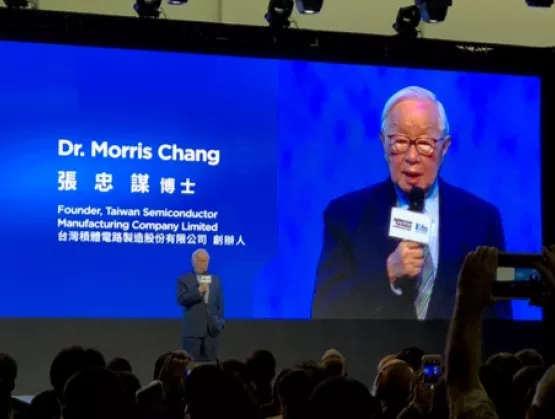
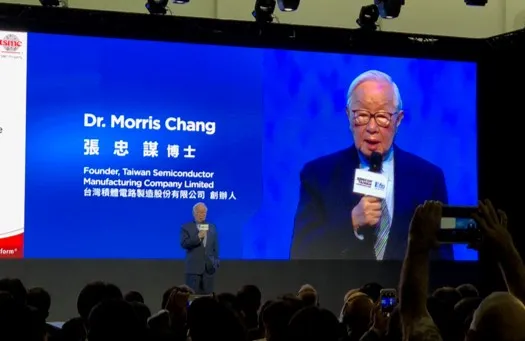
Over the past three decades, most of the world’s innovations have centered largely on business models and involved iterative advances of existing technologies, with none matching the global impact of the top 10 semiconductor industry discoveries and advances, Dr. Morris Chang, founder of TSMC and the IC foundry model, said at SEMICON Taiwan 2018 this week.Few have as clear a perspective on the transformative power of semiconductors as Dr. Chang, founder of TSMC and father of the IC foundry model. Keynoting the IC60 Master Forum celebrating the 60th anniversary of the invention of the integrated circuit (IC), Dr. Chang listed what he considers the 10 key semiconductor industry innovation milestones since 1948:1. Invention of the transistor by Shockley, Bardeen, and Brattain – 19482. Silicon transistor – 19543. Integrated circuit – 19584. Moore’s Law – 19655. MOS technology MOS FET – 1964 Silicon gate – 1967 CMOS – 1970 6. Memory DRAM – 1966 Flash – 1967 7. Outsourced assembly and test (OSAT) – 1960s8. Microprocessor – 19709. VLSI systems design – 1970-1980 IP and design tools – 1980-present 10. Foundry model – 1985 Among the most consequential semiconductor advances may be yet to come, Dr. Chang said, citing innovations including artificial intelligence (AI) and machine learning, new device architectures, Extreme Ultraviolet lithography (EUV), 2.5D/3D packaging, and new materials such as graphene and carbon nanotubes.Dr. Chang argued that because bringing an innovation into production is immensely more expensive than proving a theory in a lab, innovators are not always the ones to implement and benefit from their novel ideas. Today, innovation costs are skyrocketing, driving more consolidation across the supply chain.Michael Droeger is director of marketing at SEMI.
Read More