downloadGroupGroupnoun_press release_995423_000000 copyGroupnoun_Feed_96767_000000Group 19noun_pictures_1817522_000000Member company iconResource item iconStore item iconGroup 19Group 19noun_Photo_2085192_000000 Copynoun_presentation_2096081_000000Group 19Group Copy 7noun_webinar_692730_000000Path
Skip to main content
Default Banner Image

NXP Semiconductors

The Executive Forum at SEMICON Europa in Munich on November 16 was a welcome opportunity to demonstrate the strategic importance of our vital industry.Executives across the entire electronics and applications value chain rightly pointed out the contribution that the semiconductor supply chain made to supporting the efforts to control COVID-19, which sparked explosive demand for semiconductors and led to the chip shortage and supply chain disruptions. The pandemic has heightened the urgency to establish the manufacturing capacity needed to support the global recovery and onward rapid growth of the semiconductor industry, which is projected to exceed $1.2 trillion in revenue by 2030.Semiconductors are the heartbeat of the way we work and live, and their vital importance is now recognized by governments worldwide including European Commission officials, as well as by the wider population.So far, so good. However the rapid industry growth brings opportunities and challenges. If we continue on the path we are now on, there will simply not be enough energy in the world to feed our data appetite in the so-called 5th wave of digital expansion. Many speakers at SEMICON Europa referred to the importance of sustainability and diverse skills, and many companies have put in place comprehensive programmes that will enable industry growth and lead toward net zero carbon emissions. The semiconductor industry is central to efforts to control climate change. Collaboration and cooperation across the European microelectronics ecosystem are essential.Europe is a world leader, and many stunning advances in technology have resulted from many collaborative projects, large and small, over the years. Many of the executives at SEMICON Europa stressed that these efforts must continue, and indeed be expanded, across the entire electronics and applications value chain. However, the focus remains on ever more capable technologies to match the needs of the digital age: data management, communications, computing capability and improving important application areas such as healthcare.(Clockwise) Laith Altimime, president of SEMI Europe; Luc Van den hove, president and CEO of imec; and Lars Reger, Executive VP and CTO of NXP Semiconductors present at SEMICON Europa 2021. But where are the programmes to drastically reduce carbon emissions and air pollution, eliminating the use of scarce resources and acting as a catalyst to keep 1.5 alive? SEMI is doing its part by establishing a sustainability initiative. To help the industry building the talent pipeline crucial to its future growth, SEMI has also developed workforce diversity programs. Both initiatives are bringing together leaders from across the semiconductor supply chain to address these critical challenges. These changes require major disruptions. Time and again, our industry has demonstrated that it can overcome tremendous challenge.Of course, many chip companies are already devoting significant time and effort to help meet the moment, and projects are underway across our industry focused on these great causes. Yet, we can’t rely on individual efforts to fix these global problems. Our industry, with so much capability and history of rapid innovation, needs to take the lead in changing the way we meet these industrial and social imperatives.Contact [email protected] to learn more about the SEMI Environmental, Health, Safety Sustainability initiative and help the semiconductor industry take action today.Learn more about SEMI Diversity and Workforce Development initiatives.Peter Connock is Chair of SEMI Europe Industry Strategy Symposium Committee and Chairman of memsstar Limited.Serena Brischetto is senior manager of Marketing and Digital Engagement at SEMI Europe.
Read More
Europe is facing an acute shortage of skilled microelectronics workers that undermines the growth potential of not only the electronics industry but the European economy as a whole. Nearly 1.1 million job advertisements for electro-engineering workers were placed in the EU between mid-2018 and the end of 2019 (CEDEFOP, 2020). The shortfall looms large as a skilled and diverse workforce that can continuously innovate is the oxygen of microelectronics. In light of the critical importance of microelectronics to Europe’s ability to fulfill its growth potential, SEMI Europe participated in the high-level roundtable hosted by Commissioner Nicolas Schmit and Commissioner Thierry Breton on October 5. The discussion’s key takeaway: The skills challenge facing the microelectronics industry is too complex for one organization to tackle, and reskilling and upskilling its workforce should be a common priority for Europe. Only with a diverse, substantial and skilled microelectronics workforce can Europe achieve its R D, design and manufacturing ambitions while ensuring its sovereignty in the digital age. The roundtable highlighted the EU Pact for Skills as a key means to narrow the industry’s skills gap.An ever-growing part of our lives, microelectronics, with their ability to run billions of computations per second and store vast quantities of data, are the brains of modern technology. The digital sovereignty of nations around the world today relies on advanced microprocessors to collect, transfer, analyze and store immense amounts of data used in key end-user sectors such as mobility, telecommunications, energy, security and healthcare. Information and communication technologies (ICT) enabled by microelectronics are helping much of the world’s population to work and study from home and remain safe during the COVID-19 pandemic.According to the Smarter2030 Report, further deployment of ICT, including electronic components in critical sectors such as transportation, manufacturing, agriculture, construction and energy, could eliminate the equivalent of 12.1 billion tons of CO2 per year globally. These are some of the reasons why nations worldwide are making large-scale investments to advance a homegrown microelectronics R D, design and manufacturing base. It is no surprise, then, that semiconductors are now at the center of the so-called global techno-trade wars.Clearly, Europe urgently needs to mobilize and pool resources to develop effective lifelong learning programs for all workers and continue investing in microelectronics innovation. We need to instill the passion for creating technology among current and future workforce, in particular women and people with challenged backgrounds, and build a highly diverse talent pool. Working together, we can better demonstrate how computing technologies, including quantum, high-performance and edge AI, provide solutions to grand societal challenges and attract talented people to the fascinating world of electronic components and systems.Against this backdrop, the microelectronics industry finds the Pact for Skills very timely and crucial to advancing the talent pool underpinning Europe’s deep digital ecosystem. The Pact will play an instrumental role in improving the scope and the quality of training partnerships at regional, national and European levels, sharing best practices and helping the microelectronics industry and workforce adapt to the effects of COVID-19.The microelectronics industry is committed to building on the momentum created by the METIS Erasmus+ collaborative project and to mobilizing our ecosystem and education partners for a successful Pact for Skills in Microelectronics starting this year.The High-Level Roundtable: Skills for Microelectronics was hosted by Commissioner Thierry Breton and Commissioner Nicolas Schmit. Participants included Paul Boudre, CEO, SOITEC; Lars Reger, CEO Germany and CTO, NXP; Frits van Hout, Executive Vice-President and Chief Strategy Officer, ASML; Françoise Chombar, CEO, Melexis; Emmanuel Sabonnadiere, CEO, CEA-Leti; Luc Van den hove, President and CEO, imec; Sabine Nietzsche, Board member, Silicon Saxony and Vice President, GlobalFoundries; Laith Altimime, President, SEMI Europe (coordinator of METIS); Yolande Berbers, President, European Society for Engineering Education (SEFI); James Calleja, President, European Forum for Technical Vocational Education and Training (EFVET); Ludovic Voet, Confederal Secretary, European Trade Union Confederation (ETUC).Emir Demircan is director of Advocacy and Public Policy at SEMI Europe. To learn more about SEMI Europe advocacy, contact Emir at [email protected].
Read More
Technologies promising huge growth such as Artificial intelligence (AI), 5G, machine learning, high-performance computing, and telematics are ratcheting up pressure on semiconductor manufacturers in the race among product makers to accelerate time to market and capture share. To support rapidly evolving end markets for these and other technologies that are key drivers of industry growth, chipmakers are boosting semiconductor performance, producing more wafer sizes and improving manufacturing efficiency.At the same time, chip manufacturers must enable unprecedented end-product reliability for exploding markets such as automotive and healthcare markets where, with lives at stake, products can’t afford even the slightest lapse in reliability. In response, chip suppliers are retooling their manufacturing processes to support 3D stacking, package-level integration and miniaturization. But they must do more. Bringing high efficiency to all phases of manufacturing including design and materials is the new imperative. The key to quality management is not in the traditional post-production testing and damage control but in prevention. Delivering the highest quality and reliability must start in the earliest stages of production with manufacturing and testing design – an approach that reduces not only the cost of downstream testing but minimizes product defects that can damage a supplier’s credibility and lead to lost business.To that end, SEMI has launched its Quality Assurance Special Interest Group (SIG) consisting of representatives from industry leaders such as Infineon, NXP, TSMC, UMC, ASE, Unimicron, and GCE. The group's goal is to establish quality requirements spanning the supply chain to meet new, higher reliability standards and help safeguard Taiwan’s competitive edge in the global microelectronics industry. Meeting for the first time earlier this month, the companies exchanged ideas for improving quality management in semiconductor manufacturing and ultimately deliver the reliability the market needs.The company representatives unanimously agreed that the first step is to ensure a QA-friendly environment with quality requirements for various stages of chipmaking ranging from design, manufacturing, packaging and testing to even PCB and CCL production. The SEMI Quality Assurance SIG this year plans to build on its current membership by enlisting companies from various fields to address critical areas of reliability including statistical process control, surface-mount-technology-based board level reliability control, and 0 dppm quality control for automotive chips. SEMI Quality Assurance Special Interest Group consists of leading companies in the industry, including Infineon, NXP, TSMC, UMC, ASE, Unimicron, and GCE. “SEMI’s comprehensive platform of exhibitions, programs, forums, trade meetings and matchmaking events is instrumental in bringing together key industry players to enhance quality management practices and meet the growing reliability requirements of the end markets we serve,” said Terry Tsao, chief marketing officer at SEMI and president of SEMI Taiwan. “The Quality Assurance Special Interest Group is a shining example of how SEMI continues to support the crucial role of Taiwan’s semiconductor industry in the international community.”For more information about the SEMI Quality Assurance Special Interest Group or to become a member, please contact Emmy Yi at [email protected] Yi is a marketing specialist at SEMI Taiwan.
Read More
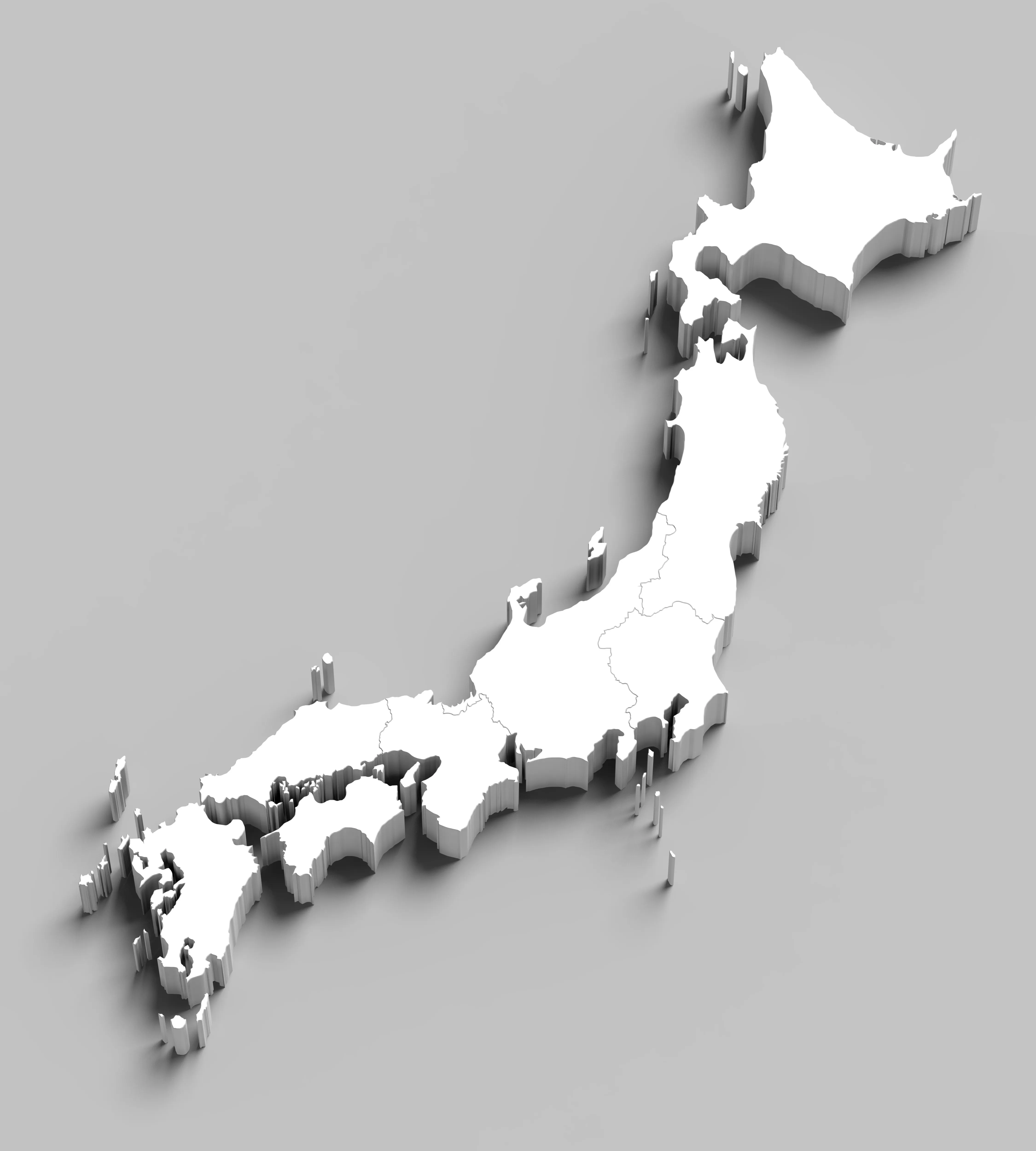
On June 1st, 2018, Toshiba sold Toshiba Memory, Toshiba’s memory business, to an investment group led by Bain Capital. Toshiba Memory was then owned by a consortium of American, Japanese and Korean companies.After the long and tough negotiations, Toshiba Memory moved forward at full throttle, holding a groundbreaking ceremony for its new 3D NAND fab (100,000 WPM) in Kitakami in July and, in September, celebrating the opening of Fab 6 Phase 1 (50,000 WPM). To be sure, NAND memory is a key feature of Japan’s semiconductor industry. But the sector’s reach extends well beyond memory with its rich and versatile product portfolio nourished by active investment.Born in the early 1950s, Japan’s semiconductor industry today boasts more than 30 companies with fabs. Many feature 200mm and smaller wafer lines with legacy technologies, form factors that account for the bulk of the world’s semiconductors and are the oxygen of Japan’s chip industry. Clearly, the world is not built only with the state-of-art 7nm processed chips on the latest generation 300mm lines. Japanese chipmakers are flourishing.Automotive SemiconductorsRenesas Electronics remains a giant in microcontrollers (MCU) and system on chip (SoC) devices for automotive applications. According to IHS Markit, Renesas automotive semiconductor revenue in 2017 reached $3.6 billion while Inineon Technologies and NXP Semiconductors revenues were $3.4 billion and $3.7 billion, respectively. The three companies dominate the global automotive MCU global market. The company recently acquired Integrated Device Technology (IDT), a U.S. fabless company specializing in analog/mixed signal chips, to strengthen its automotive semiconductor portfolio. Renesas operates four volume production fabs, according to the latest World Fab Forecast from SEMI. Renesas’s microcontrollers for automotive applications (Source: Renesas Electronics) Power SemiconductorsWith power semiconductors the chips of choice for boosting the efficiency and performance of motors and batteries used in equipment, demand for the devices is rapidly growing, especially for automotive applications. Power semiconductor companies in Japan are legion and include Denso, Fuji Electric, Fujitsu Semiconductor, Hitachi, Kyocera, Mitsubishi Electric, New Japan Radio, Origin Electric, Phenitec Semiconductor, Renesas, Rohm, Sanken Electric, Sansha Electric Manufacturing, Seiko NPC, Shindengen Electric Manufacturing, Sumitomo Electric Device Innovations, Toshiba and Toyota Industries. The companies account for 26% of global power semiconductor capacity and will spend $317 million for construction and equipping in 2018.CMOS SensorsSony dominates the CMOS image sensors market with 42% share in 2016, according to Yole Développment. To meet growing demand for high-end CMOS image sensors, Sony has acquired several legacy 300mm wafer fabs and retooled them for CMOS sensor manufacturing. What’s more, Sony’s May announcement of its mid-term corporate strategy includes a 1 trillion Japanese yen investment in CMOS image sensors targeted to automotive applications by March 2021.Sony’s 7.42 effective megapixel stacked CMOS image sensor for automotive cameras (Source: Sony Corporation) MEMSMEMS is perhaps the most wide-ranging device market: Every application requires different capabilities and functions. The latest World Fab Forecast report lists 17 MEMS companies in Japan, though three makers of fast-growing RF MEMS, typically known as surface acoustic wave (SAW) or bulk acoustic wave (BAW) filters, are coming to the attention of semiconductor manufacturers. All are familiar passive electronic components suppliers – Murata Manufacturing, Taiyo Yuden and TDK – and all acquired legacy semiconductor fabs to manufacture RF MEMS.Their high-performance radio wave filters make mobile phones usable around the world. Research companies like Yole expect the introduction of 5G cellular mobile communication systems to fuel another wave of growth of the RF MEMS market. Murata Manufacturing’s SAW filters for smart phones (source Murata Manufacturing) Japanese Supply Chain Meets All Different NeedsJapan’s semiconductor supply chain provides one third of the world’s semiconductor manufacturing equipment and more than half of the industry’s materials. But Japanese suppliers also work with small and midsize makers of highly versatile chips critical to enabling the explosion of smart applications.Meet these versatile Japanese suppliers at SEMICON Japan to find solutions to your unique needs and help the world get smarter. Themed “Dreams Start Here,” SEMICON Japan 2018 reflects the promise of AI (artificial intelligence), Internet of Things (IoT) and Smart technologies. Featuring more than 750 exhibitors from around the world, the event is the gathering place to connect the people, technologies and business across the electronics manufacturing supply chain, from semiconductor manufacturing to autonomous cars, robotics and other smart applications. For more information about SEMICON Japan, visit www.semiconjapan.org.Yoichiro Ando is a marketing director at SEMI Japan.
Read More
With Southeast Asia’s semiconductor industry expected to grow up to 12 percent this year, the stakes at SEMICON Southeast Asia were high. The challenge: to drive industry connection, collaboration and innovation across a broad range of technologies to accelerate growth in the electronics manufacturing supply chain.SEMICON Southeast Asia 2018 delivered.The region's premier gathering of the global electronics manufacturing supply chain, SEMICON Southeast Asia drew an event record of more than 7,500 visitors and over 300 exhibitors to its debut at the Malaysia International Trade and Exhibition Centre (MITEC) in Kuala Lumpur. The Market Trends Briefing, an event favourite, offered insights into the latest trends and developments on forward-thinking topics as diverse as the machine as an integral part of human society (NXP Semiconductors Singapore) and intelligent robots (Festo Robotics). Key industry topics including semiconductor fab investments (SEMI) and drivers and applications for Fan-Out Wafer-Level Packaging (TechSearch International) also highlighted the briefing. 2018 Year to Date Statistics from the Market Trends Briefing For the first time, SEMICON Southeast Asia convened policy makers and industry leaders in a panel – the CXO Speaks session – that provided insights into how the region can strengthen its manufacturing ecosystem, capture new opportunities in IoT, and build a resilient and growing electronics industry. The panelists agreed that the Southeast Asia semiconductor market will continue to grow exponentially in the digital era, and that regional players must not only collaborate to sustain this growth momentum but build a strong talent pipeline to continue to drive IoT innovation.With connection clearly critical to the industry’s growth, the event’s Business-Matching sessions and industry VIP networking brought business leaders together to find new partners and opportunities.Themed ‘Think Smart, Make Smart,’ SEMICON Southeast Asia featured few devices smarter and more innovative than Festo’s AirJelly, a radio-controlled airborne jellyfish. The first indoor flying object with peristaltic drive mimics the movement of a real jellyfish – except in the air. The device’s eight tentacles adapt to its environment, just like its 500-million-year-old sea-roaming cousin. A lithium-ion battery, an electric motor and a bit of helium are its wings, allowing it to take flight.The ‘World of IoT,’ a show-within-a-show, highlighted enabling applications and technologies for the IoT revolution. This interactive experience was helmed by seven Malaysian technology start-ups that showcased present and near-future consumer technologies such as autonomous vehicles, smart AI devices and virtual reality applications enabled by semiconductor innovations.In an effort to attract STEM talent to the industry, SEMICON Southeast Asia for the first time staged a panel with 11 experts from the public sector and seven from the private sector to discuss strategies for encouraging young graduates to pursue engineering careers and building a talent pipeline. For their part, the SEMICON Southeast Asia university programme and the Electronics Talent Career Fair focused on helping to build the global semiconductor industry as it faces a worker shortage.At SEMICON Southeast Asia’s Technology Innovation Forum, thought leaders from across the industry answered the question: What does Smart Manufacturing mean to the electronics manufacturing supply chain? While presenters from GLOBALFOUNDRIES, Amkor, PricewaterhouseCoopers, Infineon, Lam, IBM, Omron, and OSRAM looked at Smart Manufacturing from very different positions in the supply chain, they shared common issues with data sharing and data protection, and decision-making methodologies when monitoring a huge influx of sensor data. Samivel Krishnamoorthy, Director of Digital Manufacturing Industrialization at OSRAM, closed the session with a real-world look at the work necessary to transition a cluster of production lines with different systems to Smart Manufacturing capable lines following common systems and data handling techniques. OSRAM embraces SEMI Standards for use in conventional silicon front-end manufacturing in for Osram’s LED production. Krishnamoorthy detailed an exceptional analysis process to benchmark and adapt best practices to complex, multi-stakeholder technology production environments.Those looking for a highly influential audience from every segment of the global microelectronics manufacturing supply chain found it as SEMICON Southeast Asia. Technology and business leaders from segments including semiconductors, LEDs, MEMS, printed/flexible electronics, and other adjacent industries were a powerful presence at the event.Held for the first time in Kuala Lumpur, the event remained true to its mission to connect electronics industry innovators and thought leaders from business, academia and research from both region and all over the world. SEMICON Southeast Asia 2019 will once again be held at MITEC.Kai Fai Ng is President, SEMI Southeast Asia.
Read More