downloadGroupGroupnoun_press release_995423_000000 copyGroupnoun_Feed_96767_000000Group 19noun_pictures_1817522_000000Member company iconResource item iconStore item iconGroup 19Group 19noun_Photo_2085192_000000 Copynoun_presentation_2096081_000000Group 19Group Copy 7noun_webinar_692730_000000Path
Skip to main content
Default Banner Image

microelectronics

Skills are the key to the future. It is thanks to its skilled workforce that Europe will reap the benefits of the green and digital transitions and remain competitive. At the same time, upskilling and reskilling is a clear social policy because it ensures that workers can more easily navigate from one job to another.Microelectronics is at the crossroads of many sectors, such as the automotive industry, manufacturing, health, and energy. The European electronics industry is facing an acute shortage of skills in all tiers of its value chain, particularly in electronics design, both digital and analog, and in system and software engineering. A sustainable provision of qualified personnel is key to maintain competitiveness and innovation leadership. Yet, companies in this area suffer from a critical shortage of engineers with competence in microelectronics technology and design. The rapid evolution of the electronics industry calls for a continuous update of skills and knowhow.Vocational education and training has an important role to master these challenges. Modern, inclusive and dynamic vocational education and training programmes are a pre-requisite to remain competitive in the digital age. We must support agile partnerships to develop skills for smart industrial specialisation and the green and digital transitions. Everybody must be on board to shape the workforce transformation in Europe: industry, social partners, education and training organisations, as well as policymakers. The Blueprint for sectoral cooperation on skills launched in 2016 is an excellent model for strategic collaboration and will be extended.The Commission has recently proposed an update of our successful Skills Agenda for Europe. One key element is the new Pact for Skills, in order for all stakeholders to generate new concrete commitments to invest in upskilling and reskilling. It will help us to respond to the extent and speed of change in the economy and society. I warmly invite the microelectronics industry to participate in the Pact.I welcome the fact that SEMI and its 19 partners from 14 countries launched METIS – MicroElectronics Training, Industry and Skills Erasmus+ Project – in November 2019. METIS will receive 4 million EUR EU funding to implement a comprehensive strategy with a view to identify and fill skills shortages, to tackle skills mismatches, and to support upskilling and reskilling in order to address the challenges of the future of work and digitalisation.Nicolas Schmit is European Commissioner Jobs and Social Rights.
Read More
High-tech industry clusters in the bustling northern Taiwan port city of Hsinchu look set for an upgrade. Long a world-class hub of the semiconductor and optoelectronic technology industries, Hsinchu City is laying out plans to work with SEMI to attract more international companies, generate more jobs, promote Hsinchu’s development and help grow Taiwan’s microelectronics industry. High-tech heavyweights such as TSMC, UMC, MediaTek, Realtek, and AUO are all headquartered in The Windy City. The Industrial Technology Research Institute (ITRI), a leading Taiwan research center and incubator, also calls Hsinchu home, and the city boasts one of the highest concentrations of educational institutions in the region, a roster that includes National Chiao Tung and National Tsing Hua universities. Hsinchu’s thriving relations with these industry, academic and research partners have made it a hotbed of innovation, with numerous large Taiwanese and foreign companies having opened local offices. No less than these partners, the city – like SEMI – is committed to innovation.In a recent visit to the SEMI Taiwan office in Taipei, a Hsinchu City government team led by mayor Lin Chih-Chien, met with Terry Tsao, global SEMI chief marketing officer and president of SEMI Taiwan, to explore collaboration opportunities in areas such as technology subsidies, policy, education, and infrastructure. The meeting built on a relationship between the city and SEMI Taiwan that sprouted after SEMI executives and Hsinchu officials joined ITRI to host the Autonomous Driving System Platform in Open Fields kick-off ceremony – an initiative to accelerate Taiwan’s adoption of smart transportation technologies – at SEMICON Taiwan 2019.At the meeting, Mayor Lin highlighted that Hsinchu has long attracted high-tech companies by cultivating a business-friendly climate through incentives such as subsidies for infrastructure buildouts. He hopes to work with SEMI to promote to members the benefits of setting up local offices in Hsinchu City.With both Hsinchu’s high-tech clusters and SEMI’s global members deeply reliant on skilled workers for sustaining innovation and growth, Tsao and Mayor Lin agreed that inspiring students to pursue an education and careers in science, technology, engineering and mathematics (STEM) is vital to building a high-tech talent pool. One collaboration opportunity SEMI Taiwan is eyeing is to launch Taiwan’s first SEMI High Tech U (HTU) program in Hsinchu to spark the interest of school-age children through STEM educational activities at school camps or art and cultural centers. SEMI’s STEM discovery program offers hands-on activities and experiential learning led by industry volunteers. Since 2002, HTU has reached some 8,000 high-school students in 12 U.S. states and nine countries.Emmy Yi is a marketing specialist at SEMI Taiwan.
Read More
As a top semiconductor manufacturing hub, Korea is poised to lead the world in fab construction spending in 2019 and 2020, accounting for 27 percent of the total market. Little wonder that Korea’s prowess in the semiconductor industry has meant steady membership growth for SEMI Korea, with HD Cho, president of SEMI Korea, putting the average annual jump at about 7 percent.But HD Cho’s focus as he returned to COEX in Seoul, home to SEMICON Korea, in late August was not on membership growth over the years but the future. Cho hosted about 400 SEMI members gathered at SEMI Korea Members Day for insights into the state of the world economy, semiconductor industry outlooks, and perspectives on how South Korean and European microelectronics companies can form stronger ties. Setting the stage with look at macroeconomics, Byung-yeon Kim, team manager of NH Investment and Securities, predicted that, as the global economy continues to falter, 25 of the 58 major countries this year will cut interest rates in a bid to boost prospects for growth. Historically, the global composite leading indicator (CLI), a bellwether for turning points in the economy, has rebounded after 20 months of decline, he said. While the CLI downtrend is now past the 20-month mark, Kim struck a bullish note, predicting that the global economy will bounce back before long.Soo-kyoum Kim, vice president at IDC, referring to the semiconductor industry’s own soft patch, said that total revenue is expected to drop from $475 billion in 2018 to $440 billion this year but should rebound to a new high of $500 billion in 2023. The memory market will be especially hard-hit, dropping more than 29 percent in 2019 and another 14 percent next year before bottoming and then staging a recovery in the second half of 2020. The strength of the rebound will hinge on server market demand, he added.Next year will also see rebounds in semiconductor equipment and materials revenue, with growth of 12 percent and 3 percent, respectively, said Clark Tseng, director of Industry Research and Statistics at SEMI. The increases will follow a 2019 equipment market drop of 18 percent to $53 billion from the previous year while materials this year is expected to remain flat at $52 billion. The semiconductor industry will expand at a modest 2.4 percent this year, jumping to 7.6 percent in 2020, Tseng reported, citing the average growth rate based on data from Gartner, WSTC, IC Insights, VLSI Research and other industry analyst firms. Despite current weak market demand and the ongoing trade war, the long-term outlook for the semiconductor industry remains upbeat, he added.In Europe, semiconductor industry growth continues on the strength of the region’s high strategic importance in the global electronics supply chain, said Laith Altimime, president of SEMI Europe. Fab construction spending in Europe continued to grow in 2018, reaching $300 million, and is expected to hit $1.2 billion in 2019 and $1.6 billion in 2020, with equipment, parts and components driving the surges.To help build stronger ties between European and Korean chip industries, Altimime introduced the SEMI Korea members to SEMI Europe business platforms including SEMICON Europe, the 3D System Summit, ISS Europe, and the MEMS Imaging Sensor Summit. He also encouraged the formation of more business partnerships between companies in the two regions by familiarizing SEMI Korea members with European players in areas such as foundry, MEMS, sensors and wafer manufacturing.And it will be MEMS and sensors that help drive the 4th Industrial Revolution, said Sung-hyuk Kim, a team leader at LG Electronics' Sensor Solution Research Institute. In his presentation Architecting Sensor Solutions for the Next Revolution, he noted that sensors are finding their way into devices where they have never been used before. In household refrigerators, gas sensors help deodorize the inside while distance sensors detect the approach of people. Air conditioners equipped with a camera sensor can pinpoint the location of humans and steer the airflow in their direction. Of course, all these smarts will come in form of data-devouring artificial intelligence (AI), and that data will be generated in massive amounts by MEMS and sensors – placing them at the epicenter of the 4th Industrial Revolution.Jaegwan Shim is a marketing specialist at SEMI Korea.
Read More
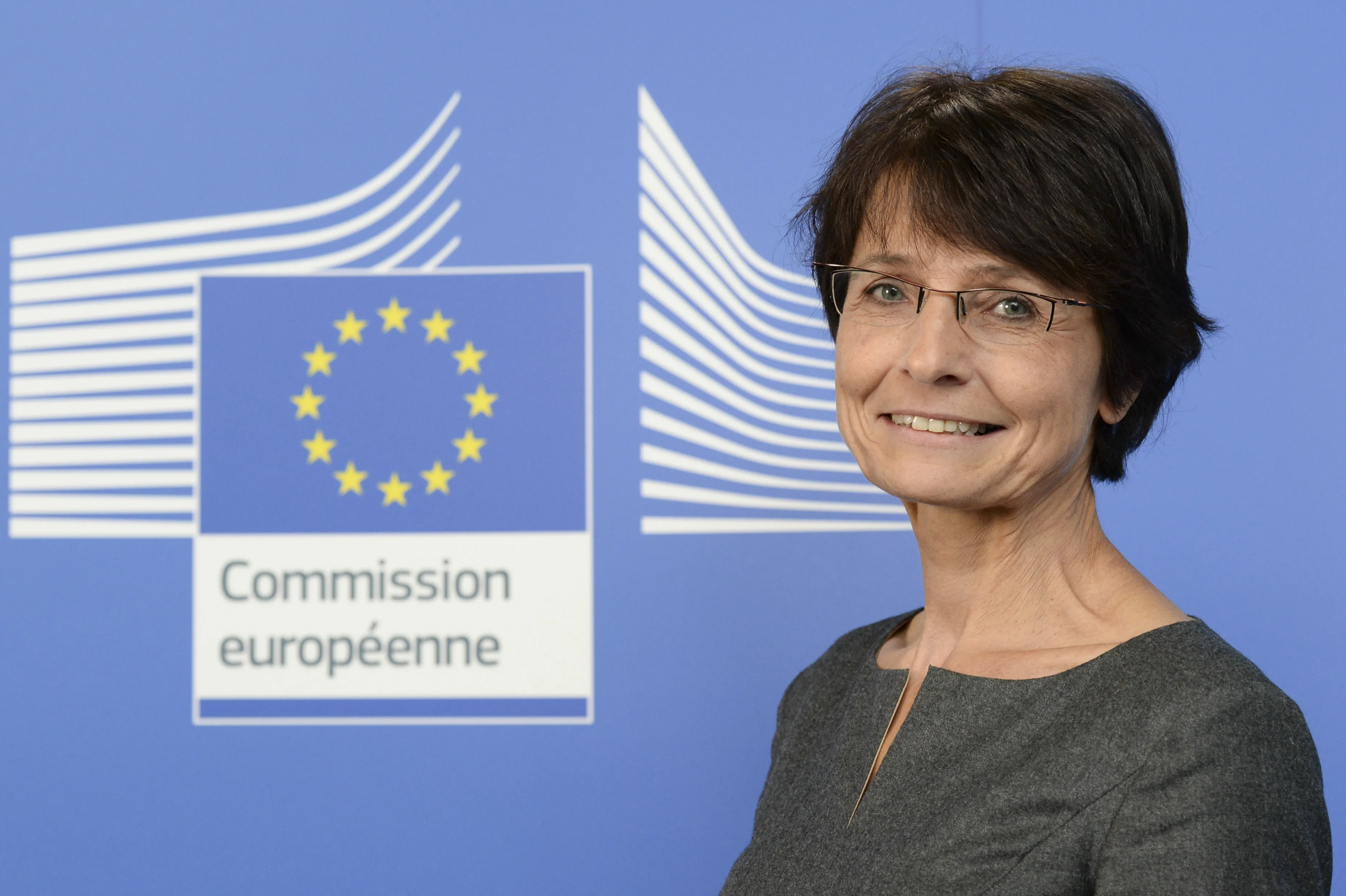
The world of work is transforming. I believe digitalization can be a force for better quality work, unleashing higher productivity and opening up new opportunities to work in different ways. For this to happen, we must set the right framework. We must set the right conditions to enable everyone to reap the benefits from the digital era.One crucial condition is that people have the right skills. That's why the European Commission launched a "Skills Agenda for Europe" in 2016. It sets out 10 actions to make the most of Europe’s human capital, which is crucial to keep Europe on a competitive edge and growing. One of its focus areas for example is better skills intelligence – understanding skills bottlenecks and anticipating needs, including through stronger business-education partnerships. Education needs to be more responsive to labour market needs.The microelectronics industry is one such area in Europe that faces an acute talent shortage. But this technology is crucial for Europe’s competitiveness. Microelectronics enable many of the key technologies and innovations required for advancing a secure, sustainable and digital economy. Data centers, online platforms, autonomous spacecrafts, blockchain algorithms and 5G infrastructure may serve different purposes but share one vital element: microelectronics. The deepening penetration of electronics in the digital economy and new applications is giving rise to industry requirements for a workforce pool with soft skills and expertise in production technologies, software and data science.This is why the European Commission encourages new collaboration models between the worlds of education and industry across all business sectors, including in microelectronics. I welcome the fact that SEMI, the industry association representing the electronics manufacturing supply chain, is fully committed to building and maintaining the needed talent pipeline in Europe. I wish you best of luck in your endeavors. Marianne Thyssen is European Commissioner for Employment, Social Affairs, Skills and Labour Mobility.
Read More
White House-led panel to address U.S. goal to lead in development of next-generation microelectronicsSEMICON West next week will host a White House-led discussion of the anticipated national leadership strategy for semiconductors, a multi-agency initiative led by top U.S. government national security and economic organizations.Next Wednesday, July 11, a panel of U.S. officials representing agencies involved in leading the strategy will address federal research and development (R D), investment and acquisition priorities aimed at ensuring the U.S. remains the global leader in the semiconductor industry.As global economic trends and technologies such as artificial intelligence evolve, and foreign governments increasingly lure microelectronics manufacturing investments overseas, the U.S. strategy for manufacturing advanced semiconductors and driving research and development (R D) in technology innovation has become an economic priority.The White House selected SEMICON West, organized by SEMI, as the site for the discussion and this urgent call to action because of the event’s central role in bringing together critical industries across the global electronics supply chain. The multi-agency panel will outline activities and new policies under development to ensure U.S. strategic leadership in microelectronics, including focused investment in innovations key to the next generation of devices for commercial and government use. The initiative also includes public-private partnerships to accelerate the capabilities of advanced semiconductors for critical applications such as artificial intelligence (AI), cyber, secure communications, the internet of things (IoT) and big data analytics.MEDIA WHO WISH TO ATTEND MUST CONTACT IN ADVANCE SCOTT STEVENS AT +1.512.288.4050 TO OBTAIN ACCESS BADGES PANEL: National Strategy for Semiconductor and Microelectronic Innovation TIME AND DATE: 10:30 to 11:30 a.m., Wednesday, July 11 LOCATION: Yerba Buena Theater, 700 Howard St., San Francisco MODERATOR: Dr. Lloyd Whitman, Principal Assistant Director, Physical Sciences and Engineering, White House Office of Science and Technology Policy PANELISTS: Dr. Sankar Basu, Program Director, Computer and Information Science and Engineering, National Science Foundation Dr. Eric W. Forsythe, Flexible Electronics Team Leader, U.S. Army Research Laboratory Dr. Jeremy Muldavin, Deputy Director of Defense Software Microelectronics Activities, Office of the Deputy Assistant Secretary of Defense for Systems Engineering Dr. Robinson Pino, Acting Research Division Director, Advanced Scientific Computing Research, Office of Science, Department of Energy SEMICON West is organized by SEMI Americas to connect more than 2,000 member companies and 1.3 million professionals worldwide to advance the technology and business of electronics manufacturing. SEMICON West is celebrating its 47th year as the flagship event for the semiconductor industry. Find more at www.semiconwest.org.MEDIA CONTACTS:Mike Hall, SEMI Global, +1.408.943.7988Scott Stevens, for SEMI Americas, +1.512.288.4050
Read More