downloadGroupGroupnoun_press release_995423_000000 copyGroupnoun_Feed_96767_000000Group 19noun_pictures_1817522_000000Member company iconResource item iconStore item iconGroup 19Group 19noun_Photo_2085192_000000 Copynoun_presentation_2096081_000000Group 19Group Copy 7noun_webinar_692730_000000Path
Skip to main content
Default Banner Image

electronics

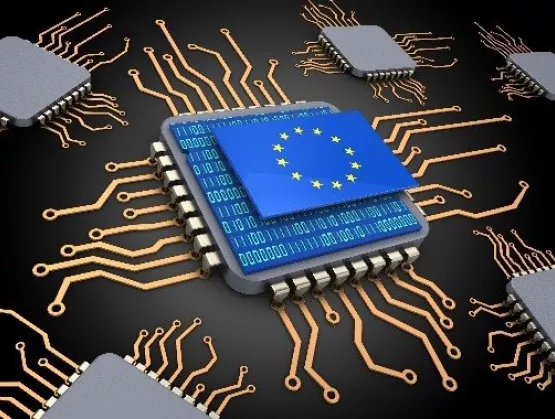
Europe is facing an acute shortage of skilled microelectronics workers that undermines the growth potential of not only the electronics industry but the European economy as a whole. Nearly 1.1 million job advertisements for electro-engineering workers were placed in the EU between mid-2018 and the end of 2019 (CEDEFOP, 2020). The shortfall looms large as a skilled and diverse workforce that can continuously innovate is the oxygen of microelectronics. In light of the critical importance of microelectronics to Europe’s ability to fulfill its growth potential, SEMI Europe participated in the high-level roundtable hosted by Commissioner Nicolas Schmit and Commissioner Thierry Breton on October 5. The discussion’s key takeaway: The skills challenge facing the microelectronics industry is too complex for one organization to tackle, and reskilling and upskilling its workforce should be a common priority for Europe. Only with a diverse, substantial and skilled microelectronics workforce can Europe achieve its R D, design and manufacturing ambitions while ensuring its sovereignty in the digital age. The roundtable highlighted the EU Pact for Skills as a key means to narrow the industry’s skills gap.An ever-growing part of our lives, microelectronics, with their ability to run billions of computations per second and store vast quantities of data, are the brains of modern technology. The digital sovereignty of nations around the world today relies on advanced microprocessors to collect, transfer, analyze and store immense amounts of data used in key end-user sectors such as mobility, telecommunications, energy, security and healthcare. Information and communication technologies (ICT) enabled by microelectronics are helping much of the world’s population to work and study from home and remain safe during the COVID-19 pandemic.According to the Smarter2030 Report, further deployment of ICT, including electronic components in critical sectors such as transportation, manufacturing, agriculture, construction and energy, could eliminate the equivalent of 12.1 billion tons of CO2 per year globally. These are some of the reasons why nations worldwide are making large-scale investments to advance a homegrown microelectronics R D, design and manufacturing base. It is no surprise, then, that semiconductors are now at the center of the so-called global techno-trade wars.Clearly, Europe urgently needs to mobilize and pool resources to develop effective lifelong learning programs for all workers and continue investing in microelectronics innovation. We need to instill the passion for creating technology among current and future workforce, in particular women and people with challenged backgrounds, and build a highly diverse talent pool. Working together, we can better demonstrate how computing technologies, including quantum, high-performance and edge AI, provide solutions to grand societal challenges and attract talented people to the fascinating world of electronic components and systems.Against this backdrop, the microelectronics industry finds the Pact for Skills very timely and crucial to advancing the talent pool underpinning Europe’s deep digital ecosystem. The Pact will play an instrumental role in improving the scope and the quality of training partnerships at regional, national and European levels, sharing best practices and helping the microelectronics industry and workforce adapt to the effects of COVID-19.The microelectronics industry is committed to building on the momentum created by the METIS Erasmus+ collaborative project and to mobilizing our ecosystem and education partners for a successful Pact for Skills in Microelectronics starting this year.The High-Level Roundtable: Skills for Microelectronics was hosted by Commissioner Thierry Breton and Commissioner Nicolas Schmit. Participants included Paul Boudre, CEO, SOITEC; Lars Reger, CEO Germany and CTO, NXP; Frits van Hout, Executive Vice-President and Chief Strategy Officer, ASML; Françoise Chombar, CEO, Melexis; Emmanuel Sabonnadiere, CEO, CEA-Leti; Luc Van den hove, President and CEO, imec; Sabine Nietzsche, Board member, Silicon Saxony and Vice President, GlobalFoundries; Laith Altimime, President, SEMI Europe (coordinator of METIS); Yolande Berbers, President, European Society for Engineering Education (SEFI); James Calleja, President, European Forum for Technical Vocational Education and Training (EFVET); Ludovic Voet, Confederal Secretary, European Trade Union Confederation (ETUC).Emir Demircan is director of Advocacy and Public Policy at SEMI Europe. To learn more about SEMI Europe advocacy, contact Emir at [email protected].
Read More
As the semiconductor industry continues to grapple with the widespread effects of the COVID pandemic, at the SEMI Foundation we continue to build programs and initiatives that inspire the next generation of STEM workers and drive new and diverse talent to all of our member companies.Our work to build out the semiconductor workforce centers on creating more diversity, equity, and inclusion within the industry. We want everyone to win. We want students and workers to benefit from these excellent jobs. We want our industry to diversify to increase our productivity, innovation, and our bottom lines. And we want to fulfill the extraordinary potential of electronics to help people around the world in the way they work and live. COVID-19 is hitting certain populations – women, veterans, and Black, Indigenous and other people of color – particularly hard, so our work has never been more timely or important for local communities and the global economy.To that end, we’re going big by generating funding and designing initiatives that will benefit the industry over the long term. The SEMI Foundation’s SEMI VetWorks Program, currently in development, will help U.S. veterans better understand our industry, the careers available to them, and how their skills will transfer to working in microelectronics. The program also provides training portals and mentorship support to smooth their transition to the industry.We’re also working to fund our Women In Industry Network, a major new initiative designed with national partners to significantly increase the representation of women, who today account for just 10-25% of the semiconductor workforce across all roles and functions. What’s more, the SEMI Foundation’s global industry image and awareness campaign is inspiring more young people to enter high-school and university STEM programs and ultimately pursue careers in microelectronics while encouraging current workers to re-skill or up-skill and join the tech workforce.Meanwhile, your High Tech U team continues to connect semiconductor companies with students all over the globe. While we’re eager to get back on the road to meet and inspire students in person, we are excited to provide updates about two of our programs:HTU in the ClassroomWith the transition to online and hybrid learning classrooms, we seized the opportunity to combine STEM activities from SEMI High Tech U with discussion sessions and other projects to help students explore and deepen their understanding of the semiconductor manufacturing process. The 16-week pilot program, called HTU in the Classroom, will launch late next year to introduce high-school students to four key areas of chip production: patterning and layering, the chemistry involved in photolithography, logic gate systems, and computational thinking. These interviews with SEMI member companies will give students a chance to share their new knowledge gained from the class and to ask questions about what life is really like as an engineer, HR professional, or manager in industry.From Sand to SiliconWith silicon the lifeblood of our industry, it is impossible to understand what makes the semiconductor/microelectronics industry tick without knowing more about the companies, processes and technologies that all make it possible. That’s why we are developing a self-guided online journey through the chip manufacturing process for students and educators. This will go beyond reading like a Wikipedia site. Instead, the learning and exploration will feature interactive elements including company videos and links to resources such as fact sheets as well as university and company websites. At each stage, students will get details about the companies and individuals who do the work and the paths the professionals followed to these roles. The big-picture look will show how all the production stages come together to build working devices that power everything from smartphones to data centers.The SEMI Foundation is grateful for your support and partnership as we all work through these unprecedented times and roll out new programs to help build the talent pipeline. To learn more about or support our workforce development programs, please contact Shari Liss, SEMI Foundation’s Executive Director, at [email protected].
Read More
Solving challenges in semiconductor manufacturing requires an ongoing collaborative effort by customers, device makers, equipment and materials suppliers, and academia. ASMC 2021 will continue efforts to help the industry overcome these hurdles. To that end, we are now soliciting abstracts from industry experts across all areas of semiconductor manufacturing for presentations at the event, May 3-6, 2021 at the Saratoga Hilton/Saratoga Springs City Center in Saratoga Springs, New York.The conference provides an unparalleled platform for semiconductor professionals to network and learn the latest information in the practical application of advanced manufacturing strategies and methodologies. ASMC 2021 will be co-chaired by Ishtiaq Ahsan, Ph.D. of IBM Research and Alexa Greer of KLA.We’re looking for presentations in topic areas including the following: Advanced Metrology Advanced Equipment Processes and Materials Contamination Free Manufacturing Big Data Management and Mining Defect Inspection and Reduction Equipment Optimization Factory Automation Industrial Engineering Smart Manufacturing Yield Methodologies Click here to submit an abstract for a technical presentation. Provide an extended abstract of no more than two pages (max. of 1000 words, MS Word or PDF) with supporting data, charts, figures embedded in the last page. See author kit for details. Summarize the topic and theme in as much detail as allowed by the word count limitation. Include title, author(s), company affiliation(s), contact information, topic and five key words describing the work. The final technical manuscript must show a complete set of data to support initial abstract. Here are key deadlines and dates for industry experts to keep in mind: Abstracts Due: October 30, 2020 Author Notification: December 15, 2020 Manuscripts Due: February 9, 2021 Final Manuscripts Due: April 6, 2021 Presentations Due: April 20, 2021 Conference Dates: May 3-6, 2021 ASMC 2021 could be held as a virtual event depending on progress in containing COVID-19. Whether the event is on-site or virtual, all abstracts accepted for presentation will be published by IEEE. Speakers should be prepared to present live or online.Speakers also may be invited to publish their papers in a special section of ASMC 2021, which will be featured in IEEE Transactions on Semiconductor Manufacturing. All technical presentations will be considered for the ASMC Best Paper Award sponsored by Entegris. Students presenting an oral paper or poster will be considered for the ASMC Best Student Paper Award sponsored by GLOBALFOUNDRIES.For a complete overview of topics and other information, please visit the ASMC 2021 Call for Papers web page.Margaret Kindling is senior manager of Programs for SEMI Americas.
Read More
At SEMICON West 2020, the Honorable Al Gore, former U.S. Vice President and recipient of the Nobel Peace Prize for environmental activism, commented on the world being in the midst of a “sustainability revolution.” Just what did he mean by that, and why bring that message to us? The answer is that he believes the digital transformation wields the magnitude of the agricultural and industrial revolutions, but with the exponential speed that the semiconductor industry created and enabled. Ok, that would put him in the right place… SEMICON West.Among a rich lineup of speakers to mark the 50th anniversary of the event – and 50 years of the semiconductor industry facilitating the innovation of the Information Age -- Gore joined other icons in their fields who graced the virtual stage for our featured keynotes. Each analyzed how microchip advances are critical to solving some of the world’s greatest challenges.As host of the conference, I had the privilege of introducing Gore; Gary Dickerson, President and CEO of Applied Materials; and, Dr. John Kelly III, Executive Vice President and Director of IBM Research, along with other renowned speakers. Their insights seemed especially timely for how our global supply chain can help to build a more sustainable future. Following are a few of the highlights from their discussions. Al Gore – The Planet Faces Existential CrisisIn his keynote conversation with Greenbiz editorial director Heather Clancy kicking off SEMICON West 2020, Gore emphasized that digital technology advances – and in particular microchip innovation – provide the greatest opportunities to overcome the world’s most epic challenges. Chip breakthroughs will be the cutting edge of what he called the rapidly growing sustainability revolution to improve energy efficiency, reduce our reliance on fossil fuels, and optimize the performance of renewable energy generated by solar, wind, and electric battery sources.“We face an inflection point as we rely more on data and communications technology, particularly in areas like cloud computing and artificial intelligence,” Gore said. “Industry is aware of this and working on it, but this meeting (SEMICON West 2020) with your present leadership marks a real turning point. It’s something to be proud of, something to be celebrated. It’s what gives me hope.”Citing Moore’s Law and enormous strides made in chip efficiency and effectiveness, Gore said that within two years smart chips will make everything from solar panels and batteries to renewable energy plants and electric vehicles to be both cost- and performance-competitive with traditional energy sources. Afterwards, renewable energy will be more attractive. Gore urged the energy-intensive semiconductor industry to shift to more renewable power sources for manufacturing. To meet this challenge, Gore encouraged the industry to embrace strategies for “step changes”: First, collaborate and share best practices more transparently across the entire microelectronics value chain. Examples already abound where “cutting-edge apps, AI, and deep learning reduced data server energy use significantly without hardware changes,” he said. Second, reduce electricity required to manufacture smarter and smaller semiconductors. Gore encouraged “all of the equipment manufacturers to work together to reduce the amount of carbon dioxide emissions in manufacturing these advanced semiconductors.” Third, follow the lead of a growing number of companies that “continue decarbonizing the power supply on which data centers operate,” he said. Fourth, work with government through the Science Based Target Initiative, which sets decarbonization limits that keep global temperatures no more than two degrees Celsius above preindustrial levels. Finally, rely on “diversity of thought” and “collective thinking” when innovating for the digital future. Research and experience prove that different points of view lead to better decisions. The technology industry has made progress in workforce diversity, but more can be done, Gore said. This last point plays to our collaborative strengths as SEMI members and an industry. “It is just unbearable to imagine a future generation living with the kinds of consequences scientists tell us would ensue if we don’t heed their warnings and solve this crisis,” Gore said, drawing parallels to the COVID-19 pandemic. “We have to accept the situation and make sure we do everything we can. I am inspired by this industry’s leadership, innovation, and spirit to rise to the challenge and make a difference.”Gary Dickerson – Making Possible A Better FutureTo ensure another 50 years of accelerating growth and innovation, today’s semiconductor leaders must share a deep commitment to a more sustainable and just supply chain industrywide.“The first thing we need to do is decouple our growth from environmental impacts,” Dickerson said in his keynote. “Our responsibility as leaders is to leave the world a better place.”Dickerson said that while he firmly believes the explosion of processing and storage data has “the potential to change the world,” the downside is that it also has the potential to rapidly expand our industry’s carbon footprint. Without dramatic change, electrical usage will continue to rise as machines generate and consume more data, compute performance progresses, and workloads from the edge to the cloud grow.“It will be impossible to create neural networks (using AI) with the rate of today’s power consumption,” Dickerson said, noting that more improvements must be made in the performance and efficiency of semiconductor devices, architectures, structures, materials, and advanced packaging.Dickerson urged the electronics ecosystem to “permanently think and act differently” by breaking down communication barriers among systems integrators, equipment suppliers, design and manufacturing service providers, and other industry players. Sharing learnings and best practices will be vital to this change, he said. Dickerson unveiled SuCCESS2030 (Supply Chain Certification for Environmental and Social Sustainability) – Applied Materials’ 10-year roadmap for creating a more sustainable supply chain – during his talk. Under the SuCCESS2030 initiative, Applied Materials will hold its suppliers to the company’s own high standards for committing to renewable energy and workforce diversity by setting targets such as: Reducing supply chain carbon emissions 15 percent in four years by relying more on intermodal shipping than air freight Transitioning the supply chain to recycled content packaging, with a target of 80 percent by the end of 2023 Eliminating phosphate-based, pre-treatment of metal surfaces by 2024 Working with trade associations like SEMI to develop diversity and inclusion strategies to increase underrepresented minorities in the workplace Dickerson said that deeper and more open partnerships between Applied Materials and its customers and suppliers have led to a number of promising outcomes. Examples include hardware and software upgrades, product and service optimizations, and improvements in chip architectures that increased throughput density for higher system performance while decreasing power and chemical consumption, costs, and space requirements. What’s more, Applied Materials recently introduced its Selective Tungsten Process Technology, which uses new materials, atomic-level designs, and ultra-clean rooms to improve the performance of interconnected transistors while lowering power consumption.Dickerson said the COVID-19 pandemic has awakened the world to the power of digital technologies that make it possible to communicate, collaborate, and share data across the globe while sheltering in place. “When I think of the world’s grand challenges, it’s clear the semiconductor industry has a critical role to play,” Dickerson said. “I strongly believe we’re in a position to shape the future and leave the world a better place.”John E. Kelly III – 50 Years That Changed The World … And We’re Just Getting Started During the past half century, semiconductors have given rise to essentially every major technology advance, Kelly said in his keynote. Microchip innovation has played a central role in rocketing humans to the moon, simulating nuclear weapons on a supercomputer, connecting people to nearly everything via mobile devices, and keeping people alive with pacemakers and other electronic medical devices.The strides in innovation have been staggering. In 1970, a semiconductor chip featured a few thousand components. Today, that number stands at 50 billion. Breakthroughs in everything from materials and chemicals to polishing, processes and interconnectivity have driven gains in power-efficiency and performance while reducing chip size.Moore’s Law is far from dead. Paraphrasing Winston Churchill, Kelly said, semiconductor innovation today is not at “the beginning of the end, but at the end of the beginning, and the best is yet to come – driven by extreme collaboration and extreme innovation to solve the world’s biggest challenges.”Kelly said he believes technology is the only answer to the onslaught of grand challenges confronting societies and people today, including air and water pollution, climate change, diminishing natural resources, storm-related disasters, food supply shortages, and the COVID-19 pandemic.Kelly lamented that the world’s response to COVID-19 illustrates that “not much has changed” since the Spanish Flu crisis a century ago. The same technology – masks – remains the primary defense. “I think if we had used digital technologies and computer modeling earlier on, we could have detected the spread of this flu” to minimize its impact, Kelly said.Today’s computer modeling and analytics capabilities aren’t quite ready yet to tackle such complex problems as pandemics, global warming, or water contamination. However, Kelly said, several game-changing technologies – all powered by semiconductors – are emerging as promising answers to our most daunting challenges.“It’s all about the data, and artificial intelligence is the way forward – it’s analytics on steroids, and many new devices will be required to drive AI at the scale of these problems,” Kelly said. “The second technology revolves around not just cloud computing but edge computing and cloud at the edge. Data will be generated in enormous amounts at the edge, which is where we will need to store and compute the data. The next is Quantum Computing. Frankly, we do not have enough computing power yet to look at some of the biggest challenges we have.”All these advances will present new challenges for the semiconductor industry, such as developing new materials, new chip architectures and new mapping structures for AI-embedded devices to reach their full potential.With many of these disruptive innovations too large for any company to solve singlehandedly, Kelly advised industry players to form more “radical partnerships.”“Extreme collaboration and extreme innovation will drive solutions to all these world challenges,” Kelly said. “The best is yet to come.”Radical partnerships… Sustainable revolutions… Extreme innovation… It’s been 50 years of SEMICON West, but it sounds like we’re just getting the real magic started. Like John Kelly said and the other keynoters emphasized, the best is yet to come.Dave Anderson is president of SEMI Americas.
Read More
On June 20, President Trump signed an executive order (EO) suspending the issuance of H-1B, H-2B, J-1 and L visas for applicants residing outside of the United States without an active work permit. The order took effect today and will be in force through the end of 2020. The suspension of H-1B and L-1 visas, in particular, likely will impact negatively the ability of U.S. companies in the semiconductor manufacturing supply chain and the broader technology community to recruit and retain global talent and to temporarily transfer international engineers and executives to support critical operations in the U.S.According to the administration, the issuance of visas for skilled temporary workers into the U.S. poses a “significant threat to employment opportunities for Americans affected by the extraordinary economic disruptions caused by the COVID-19 outbreak.” Although SEMI fully supports administration efforts to address economic disruptions and job losses caused by the pandemic, we believe blanket restrictions on high-skilled immigration will be counterproductive to government and industry initiatives supporting a broad-based economic recovery. Semiconductors are the foundation of all electronics and information technology (IT), enabling innovation and growth in countless other industries including medical devices and the IT solutions that enable remote work and the connectivity desperately needed in current economic times. Access to global engineering talent and the worldwide mobility of technology executives are central to supporting the industry’s efforts to contribute to economic recovery in fields ranging from healthcare and telecommunications to transportation infrastructure.The EO authorizes the Secretaries of State, Homeland Security and Labor to establish criteria for exceptions to the blanket ban, including employment categories that: are critical to the defense, law enforcement, diplomacy, or national security in the U.S. provide medical care to currently hospitalized COVID-19 patients provide medical research at facilities to help the U.S. combat COVID-19 are necessary to facilitate the immediate and continued U.S. economic recovery The Department of Homeland Security’s Cybersecurity and Infrastructure Security Agency (CISA) has classified workers in the semiconductor supply chain as essential to the effective operation of critical economic activity as the nation addresses the economic fallout of COVID-19. In lieu of rescinding the total ban on visa applications, SEMI urges the Secretaries to incorporate the CISA guidelines for semiconductor supply chain workers as they assess categories for application exceptions. SEMI will continue to advocate for programs and policies that enhance U.S. economic competitiveness, including immigration rules that ensure the U.S. can attract and retain the highest skilled talent from around the world without compromising employment opportunities for U.S. workers. As Senate Judiciary Chairman Lindsey Graham noted following the issuance of the EO, “Legal immigration is a positive for the American economy, and visa programs allowing American companies to secure qualified, legal labor throughout the world have benefitted economic growth in the United States.”Karl Kailing is manager of Public Policy and Advocacy at SEMI.
Read More
During the COVID-19 pandemic, the SEMI Global Advocacy team has been working tirelessly to ensure the microelectronics manufacturing and design supply chain is classified as an “essential business” in the United States and for similar designations in several other countries so that SEMI member companies can maintain operations. Their efforts have included direct lobbying and letters to the governors of 16 states in the U.S., 23 European countries and several European Union officials across the continent, as well as government officials in Japan, Mexico and Malaysia. The bedrock of these efforts, and the reason they have been highly effective, is that our industry enables both modern digital infrastructure and technology critical in the fight against the virus.SEMI takes immense pride in highlighting the role of our industry in providing the building blocks for innovations that improve social and economic prosperity the world over. It is never more apparent that necessity is the mother of invention than during a crisis, and the pandemic has created a diverse range of demands for technological advancements to address the myriad of challenges it presents. Our SEMI Tech Spotlight blog series highlights some of the many ways that our industry and member companies are enabling technology employed on the front lines of this fight – and that we strongly believe will ultimately help to win it. Our first piece in this series focuses on platforms enabled by big data and artificial intelligence.Fighting the Pandemic with Big Data-AI Enabled PlatformsThe COVID-19 pandemic is testing humanity in unprecedented ways, but it is also uniting us to fight this crisis with the best weapons we have. Big data and Artificial Intelligence (AI) technologies – built with microelectronic chips and systems that generate, transmit, store and analyze data – are making a profound contribution to our arsenal for this protracted war. Big data-AI technologies are enabling platforms such as data analytics, robotics, augmented/virtual reality (AR/VR), 3D printing, and others that are already being applied to address many facets of this crisis.Big Data and Analytics Inform Policy In the fight against COVID-19, data analytics platforms are being used first and foremost to slow the rapid spread and to inform policy decisions. This requires analysis of massive amounts of data about public health and travel, often using AI algorithms. The state of California, for example, is partnering with companies such as BlueDot, Esri and Facebook to build a software platform that uses smartphones and location intelligence to track people’s movement and predict hospital needs. Taiwan owes its considerable success in limiting the spread of the virus to the extensive use of big data analytics for identifying and tracking carriers. Google and Apple are driving a joint effort that connects Bluetooth with their popular iOS and Android platforms to trace contacts of infected people. India has developed Aarogya Setu, a mobile app based on Bluetooth and location-mapping platforms, designed to alert citizens if they have crossed paths with another app user who has tested positive for the virus. This app was launched in 11 languages, and despite being entirely voluntary, it was downloaded by 50 million people in 13 days, making it the world’s fastest-ever to reach that number. Such contact-tracing apps, now being rolled out in at least 26 countries, carry inherent privacy and security challenges due to the sensitive data they access. While mitigation strategies like strict data anonymity and opt-in protocols are being implemented, these will need to be refined over time.Robotics Protect Frontline SoldiersToday’s robust robotics platforms are enabled by huge amounts of data from sensors and guidance from predictive AI algorithms. These robots can learn on the job, adapt to the environment, and work safely with humans. In this pandemic, they are perfect for minimizing human interaction with infectious environments. Companies around the world such as Boston Dynamics, Akara Robotics, UBTECH Robotics and CloudMinds have already deployed robots on the front lines of this war to assess patient health, disinfect hospital surfaces, and help health workers with Personal Protective Equipment (PPE).Robot drones are also delivering blood and other lab samples. For example, WakeMed hospitals in North Carolina launched the first drone delivery program approved by the U.S. Federal Aviation Administration with Matternet drones operated by UPS; while Terra Drone from Japan executed similar tasks in the hard-hit Wuhan province of China.3D Printing Speeds ManufacturingBig data-AI technologies enable 3D printing platforms by providing accurate 3D models for optimized designs and defect-free manufacturing. Low-cost, fast-cycle-time 3D printing has helped to alleviate at least some of the medical equipment shortages. For example, the U.S. Food and Drug Administration (FDA) has approved the first 3D-printed “Stopgap Face Mask” for liquid barrier protection from the SARS-CoV-2 coronavirus for healthcare workers. The U.S. Veterans Health Administration has developed this in collaboration with America Makes using an open-source database – the 3D Print Exchange from the National Institutes of Health. In another example, Formlabs worked with Northwell Health, New York’s largest healthcare provider, and University of South Florida (USF) Health to develop and test a nasal swab prototype over just one weekend, and it is now producing up to 150,000 test swabs daily. Prisma Health in South Carolina received emergency FDA authorization for VESper, a 3D printed device that allows a single ventilator to support two patients, and possibly up to four.Telehealth Becomes a “New Normal”Telehealth is not a new concept but is much enhanced by today’s microelectronics platforms that can collect and transmit rich datasets with very low latency. Further, rapid data analysis is increasingly supported by AI systems. The requirement for social distancing makes telehealth a perfect solution for many healthcare consultations. U.S. government data indicates that the daily average of telehealth claims from private insurance for upper respiratory infections increased nearly 12 times over the previous month from March 14 to April 1. Similarly, Teladoc Health coordinated 100,000 patient “televisits” in the week of March 8 – a 50 percent spike over the previous week, taking pressure off the healthcare system. The next generation of telehealth is likely to use AR/VR platforms, which use even richer datasets and AI to improve the accuracy and predictive capability of their underlying models. Consequently, these platforms can provide more realistic experiences and improved outcomes. At least 11 states in the U.S. are already working with AR/VR companies such as XRHealth and AppliedVR for primary care and many medical specialties. Accelerating the Search for a Vaccine or TreatmentThe way out of this pandemic depends on swiftly finding a vaccine and a treatment, ideally by fast-tracking the traditionally slow drug development process. Big data-AI technologies are at the forefront of such efforts globally, often using the most powerful supercomputers available. For example, researchers at the University of California, San Diego (UCSD) are using the Frontera supercomputer to build a complete model of the SARS-CoV-2 coronavirus envelope – a formidable task, requiring analysis of data from 200 million atoms and interactions between them. Researchers at Argonne National Laboratory are combining AI with physics-based models to search for a molecule that might disrupt the activity of the virus, a precursor to finding a treatment. Also, several companies around the globe such as BenevolentAI (UK), Gero (Singapore), Innoplexus (Germany-India), and Insilico Medicine (US-Hong Kong) are using AI platforms to accelerate the search for a solution. ConclusionUltimately, the success of technology is not measured by the number of bits and bytes or by the speed of algorithms. It is measured by every janitor who did not have to clean a hazardous surface because a robot did, by every doctor and nurse protected by a 3D-printed mask, and by every person whose life may be saved by the accelerated discovery of a vaccine or treatment. Big data-AI technologies, and the platforms they enable, are just coming of age – they give us hope that as they evolve in the future, we can use them to build a more resilient society and economy.Note/Disclaimer: The examples cited above are purely for illustration – they are neither comprehensive, nor intended to endorse any particular product or solution.The SEMI Smart Data AI initiative helps members realize full value in the intelligent future enabled by Big Data and Artificial Intelligence – including the large revenue upside, and the transformational potential for operational and supply-chain efficiency. For more information on the initiative, contact Pushkar Apte at [email protected] Manocha is President and CEO of SEMI. Pushkar P. Apte, Ph.D., is the Strategic Technology Advisor for the Smart Data AI Initiative at SEMI.
Read More