downloadGroupGroupnoun_press release_995423_000000 copyGroupnoun_Feed_96767_000000Group 19noun_pictures_1817522_000000Member company iconResource item iconStore item iconGroup 19Group 19noun_Photo_2085192_000000 Copynoun_presentation_2096081_000000Group 19Group Copy 7noun_webinar_692730_000000Path
Skip to main content
Default Banner Image

China

As the United States government has expanded semiconductor-related export controls, companies in the global electronics manufacturing and design supply chain have had to spend considerable time and effort navigating restrictions and managing significant new uncertainties emanating from recent policies. On November 9, SEMI submitted comments to the Department of Commerce’s Bureau of Industry and Security (BIS) urging the agency to proceed cautiously and adopt regulatory best practices and microelectronics industry recommendations to ensure that its identification of foundational technologies does not restrain U.S. innovation and exports without furthering essential U.S. national security interests. The comments specifically respond to the August 27 Advance Notice of Proposed Rulemaking (ANPRM), Identification and Review of Controls for Certain Foundational Technologies. The Export Control Reform Act (ECRA) of 2018 required BIS identify certain emerging and foundational technology that is “essential” to U.S. national security and requires such technology to be controlled to China and other nations subject to a U.S. arms embargo. Congress did not provide a specific definition for emerging or foundational technology, nor the term essential, further complicating the process to identify such technology.BIS has already implemented or proposed several emerging technology controls and the ANPRM starts the process to identify potential foundational technology controls. The SEMI comments focus on the fundamental question of how to define foundational technology, and are organized into three main sections: Requirements of ECRA Guidance from ECRA Regulatory best practices and industry recommendations Applying the statutory requirements and guidance, together with best practices and recommendations, to the identification of foundational technology indicates that most semiconductor-related technology, particularly semiconductor manufacturing equipment and materials, should be outside the bounds of the foundational technology initiative. In general, most technology related to semiconductor devices, manufacturing equipment, materials and design software is not essential to U.S. national security and, in cases where such technology does present material national security issues, it is generally subject to the U.S. list review process and multilateral controls. This technology is widely available outside the United States and due to substantial foreign availability, unilateral U.S. controls on such technology are likely to be ineffective in limiting its proliferation and harm U.S. development of or threaten U.S. leadership in this technology.While the SEMI comments focus on the effort to identify foundational technology, the recommendations and best practices apply in all export control contexts. Several of the statements pertain to policy in ECRA, including its imposition of controls to further specific essential U.S. national security interests only after full consideration of their impact on the economy.Other statements derive from factors ECRA requires BIS to consider, such as not seeking to control technology that’s already available outside the U.S. and not imposing controls that would harm U.S. technological development or leadership. An additional key factor is not imposing controls before multilateral controls are agreed to, nor when it is unlikely the relevant multilateral regimes will adopt similar controls, as is likely for technology that has been decontrolled by a regime.Finally, regulatory best practices suggest that technology-based controls should not be imposed when more targeted end-use or end-user controls can address national security concerns and duplicative controls in addition to recent, significant expansions of existing controls are unnecessary.SEMI is pleased to work with the U.S. Department of Commerce and other regulatory agencies, providing industry data, trends and perspectives to ensure export controls effectively serve national security interests without undue harm to technological development and leadership in this dynamic, globally competitive industry.Ways to Stay Connected and Learn MoreSEMI is committed to serving the global electronics manufacturing and design supply chain and present the collective voice of members to governments worldwide.The SEMI Global Update weekly newsletter provides updates on advocacy issues and technology trends and is available to all.Additionally, SEMI hosts live and virtual events that offer analysis and insights of geopolitical trends by industry experts, with the next opportunity to participate coming on December 3 with the SEMI CEO Webinar: Analyzing the Impact of the U.S. Election on the Microelectronics Industry.Joe Pasetti is Vice President of Global Public Policy and Advocacy at SEMI.
Read More
SEMI is pleased to welcome Singapore-based UTAC Holdings Ltd., formed nearly 50 years ago, as a new member. UTAC is a leading independent provider of assembly and test services for a broad range of semiconductor chips, offering a full range of semiconductor assembly and test services across analog, mixed-signal and logic, and memory. Its customers are primarily fabless companies, integrated device manufacturers and wafer foundries. The company has production facilities in Singapore, Thailand, China, Indonesia and Malaysia as well as sales offices in five regions: the United States, Japan, China, Taiwan, the rest of Asia and Europe.I recently spoke with Dr. Nathapong Suthiwongsunthorn, Vice President and General Manager of UTAC Thailand, about UTAC’s smart manufacturing advances, the company’s role in the semiconductor industry’s transformation, and the industry outlook for Thailand over the next year.Ng: How does UTAC Thailand complement your other facilities?Dr. Nathapong: As one of the world’s largest producers of quad-flat-no-leads (QFN), UTAC Thailand has significant capability in assembly and test of advanced leadframe products including power products such as Cu Clip packages as well as MEMS products. We also serve top global IDMs and have the largest share of assembly and test for the automotive market among all UTAC operations. UTAC’s other facilities have expertise in wafer-level packages and system-in-a-package and serves the communication and consumer market not only for IDMs but also for the fabless and foundry companies. The Thailand factory nicely complements the other UTAC facilities both from the standpoint of operational and marketing diversity. Ng: UTAC Holdings Ltd. announced in August this year that it has completed its sale to Wise Road Capital, a global private equity firm. Will this in any way change the operation and business strategy of UTAC Thailand?Dr. Nathapong: I don’t believe it will change the way we operate. However, the acquisition is very positive for us from a financial perspective. With the benefit of significantly reduced debt and interest expenses, we will be able to expand our business to grow with and hopefully beyond the semiconductor market. Ng: To what extent has UTAC adopted smart manufacturing?Dr. Nathapong: UTAC Thailand is leading the way in terms of automation, smart manufacturing and Industry 4.0 with our in-house automation team and unique expertise. For example, we have built our own inspection equipment that is much faster and cheaper than what is commercially available. We also working on many programs such as mobile robot, AGV, auto inspection and office automation to help drive greater production efficiency. We are replicating our manufacturing advances and fanning them out to other UTAC facilities.UTAC Thailand Ng: What are some of the challenges you face in pushing for the industrial transformation in Thailand?Dr. Nathapong: I think the key challenge is to find skilled engineers who can perform hardware- and software-related tasks critical to the industrial transformation. But frankly, we have done a good job in managing this challenge by hiring very smart people, providing them with the required in-house training, and using outside training for new recruits as necessary. We have developed partnerships with capable vendors in this regard as well.Ng: What are the key differentiating elements (e.g. talent, tax, technology, trade, EHS) in Thailand that have been instrumental in supporting the E E ecosystem?Dr. Nathapong: There are two key differentiating elements for us. Firstly, UTAC has been around for over 47 years and is very well-established in Thailand with a positive reputation as an employer. This makes hiring talented people relatively easy. Secondly, and perhaps more importantly, the nature of the Thai people and also the benefits the company provides make it relatively painless to retain key employees. I also believe that we have a significant number of engineers available in Thailand. Finally, labour costs in Thailand are still very reasonable and stable. So we are able to acquire talent at a very competitive rate compared to other countries. Ng: What is the industry outlook for E E industry in Thailand over the next year?Dr. Nathapong: Surprisingly, the current sad predicament of COVID-19 has shown no negative impact for the global semiconductor industry – people seem to be buying more electronics with the lockdown. Our outlook for the Thailand’s E E industry is similarly very positive. Most semiconductor companies including UTAC see significant growth this year and I hope it will continue.Ng: With the recent semiconductor geopolitical and trade tensions, are more customers moving their business to Thailand?Dr. Nathapong: I believe so. We do see some of our key customers move manufacturing out of China and into Thailand. The relocations help them offset or avoid any potential fallout from current geopolitical tensions.Ng: In what areas do you think SEMI Southeast Asia can play a role to help our members companies in Thailand like UTAC?Dr. Nathapong: The semiconductor industry has been in Thailand for a long time. In fact, UTAC Thailand is 47 years old this year! However, I feel that Thailand never really worked with a strong establishment organization like SEMI that can connect various companies together to help drive innovation. I think SEMI Southeast Asia can truly help Thailand to move up to the next level of providing semiconductor solutions globally. We welcome SEMI Southeast Asia’s help in this regard.About Dr. Nathapong SuthiwongsunthornDr. Nathapong Suthiwongsunthorn joined UTAC in 2009 and is currently General Manager of UTAC Thailand, UTAC’s largest operation site. Before taking over the management of Thailand operations, he was Vice President of Research and Development, running UTAC’s global R D group. Dr. Nathapong has more than 20 years of experience in the semiconductor industry. He holds more than 40 international patents and publications in wafer-level and advanced packaging.Prior to joining UTAC, Dr. Nathapong held several key leadership positions in research and development at Schott, STATS ChipPAC and Infineon. Dr. Nathapong has a Ph.D. in Electronics Engineering from Oxford Brookes University, England.Bee Bee Ng is president of SEMI Southeast Asia.
Read More
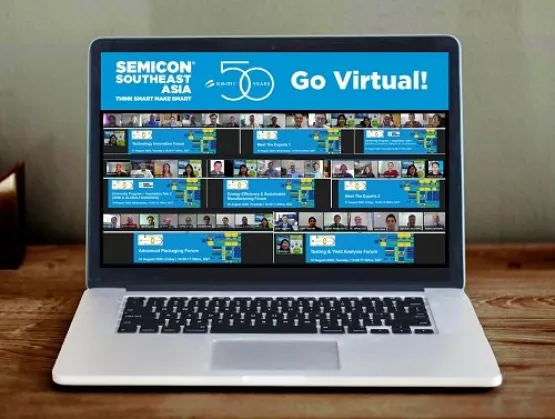
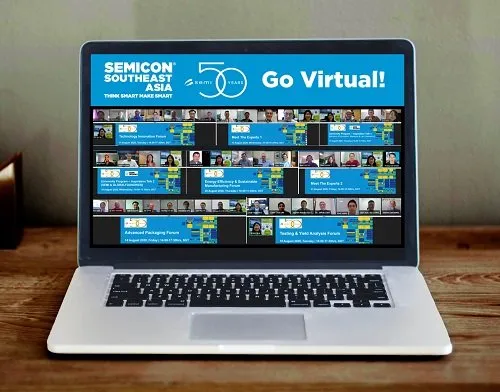
Never before had we expected that SEMICON SEA 2020 would go virtual.The COVID-19 crisis abruptly halted our ability to hold our premier Southeast Asia electronics manufacturing exposition as we typically do – in the physical realm. The pandemic tested our adaptability, challenged our willingness to experiment and, perhaps above all, accelerated not only our own but the world’s digital transformation. We had to change our way of doing business and learn to connect virtually like we had never had before. SEMI continues to believe that virtual interaction is no replacement for face-to-face engagement. But, like the rest of the world, we fast-tracked our digital education and staged the virtual event 20 July to 21 August 2020 to gather supply chain players and help fulfill the tremendous potential of our great industry. For all the suffering the COVID-19 has caused, the pandemic has underscored an important truth – that we need innovation through collaboration now more than ever to help solve the world’s greatest problems. We thank all our event sponsors as we turned what started as a grand experiment into a successful event that drew nearly 3,000 attendees to our webinars, business matching sessions and other online offerings designed to help them uncover new business opportunities. Following are other highlights. Southeast Asia Pavilion at Virtual SEMICON West 2020 In our first collaboration with SEMICON West, our Southeast Asia Pavilion at the event welcomed virtual visitors from around the globe to help them form new connections and grow their businesses. Business Matching Sessions Technical buyers from more than 15 multinational companies along with 141 pre-qualified suppliers attended more than 50 meetings across four online business matching sessions.Technical WebinarsCompany representatives from regions including Malaysia, Singapore, Vietnam, Taiwan, the United States, the UK, Israel, China and Japan shared their expertise and industry insights at SEMICON Southeast Asia 2020 webinars. In addition, experts from leading semiconductor companies such as Micron Semiconductor Asia Operations, ViTrox Corporation Berhad and A*STAR took part in our technical exchange by sharing the latest trends in the rapidly evolving semiconductor industry. Talent Development: Inspirational University Program Talks With building the talent pipeline critical to sustaining growth of Southeast Asia semiconductor manufacturing dynamics, talent champions from Lam Research and GLOBALFOUNDRIES highlighted career opportunities and pathways for young engineers while generating recruiting leads. More than 750 students from Malaysia and Singapore engaged panelists with questions during the sessions. The SEMICON Southeast Asia team extends its tremendous thanks to sponsors and attendees for their support. As we all navigate the pandemic and hope in the near future to awaken to a brighter day, we will continue to connect virtually and, whenever possible, in person as the semiconductor industry evolves and flourishes. The SEMICON SEA 2020 team In the meantime, we will all continue to pull together to support our resilient industry as it outperforms most other manufacturing sectors. Semiconductor capital equipment shipments were up 23% globally in the second quarter of 2020 versus the same period in 2019 and semiconductor chip growth remains in positive territory. Our team has already started planning for SEMICON SEA 2021, scheduled to take place at the Setia Spice Convention Centre in Penang, 18-20 May 2021.We look forward to seeing you again soon as we continue to strengthen the microelectronics ecosystem!Bee Bee Ng is president of SEMI Southeast Asia.
Read More
Data recently collected by SEMI points to only a moderate slowdown in the industry’s pursuit of talent, illustrating the growing and significant need for attracting workers at all levels of the organization. With COVID-19’s devastating impact on many sectors of the economy, the time is ripe to sharpen the industry’s focus on attracting and training a new wave of workers to meet the growing talent needs across our industry.To help illuminate the state of microelectronics industry hiring during the pandemic, following are three takeaways from recent workforce development data. Key Takeaway 1 – Emsi Hiring Data and Analytics ReviewIn a May 5 SEMI webinar on the Future of Work, presenter Andrew Crapuchettes, CEO at Emsi, a labor data analytics firm based in Moscow, Idaho, revealed that the U.S. semiconductor equipment and device manufacturing sectors posted 199,326 total jobs (32,022 unique positions) from March through June 2020 with an advertised median annual salary of $68,500 – the highest posting intensity for all other occupations and companies in the U.S. Crapuchettes noted that “although the job postings number was actually down from the previous quarter, some of the large companies have shown flat or growing postings during this period. At Emsi, we are evangelists for more accurately establishing the requirements for the job to more closely match the skills actually being sought.”He pointed to a gap between the skills employers list in job postings and those employees itemize in their resumes. Today’s use of algorithmic resume analysis, however, may reveal false gaps in hiring. Emsi is working with several Fortune 500 companies in the electronics sector to help them analyze their job postings. The goal: to better understand if they have identified the right skills for their business and the recipe for attracting top talent. Emsi supports programs such as the SEMI Works workforce development initiative that are out to more closely align job seekers and curriculum development with the skills needed for microelectronics design, development and manufacturing.During COVID-19, Crapuchettes sees companies across all industries doubling down on employee training. For many organizations, a business slowdown is an opportunity to identify and work to fill employee skill gaps and prepare companies to emerge stronger once the pandemic has passed. Key Takeaway 2 – SEMI COVID Impact SurveyIn March, April and June, SEMI surveyed members to evaluate the impact of COVID-19 and help inform SEMI’s response. Among the questions in the June survey was “How has COVID-19 impacted your hiring plans?” Of the more than 300 respondents, just 13% reported a hiring freeze and 55% said their hiring plans remain unchanged.Figure 2: Data from SEMI COVID-19 Impact Survey All SEMI regions show a similar pattern. Japan, Korea and China reported little to no slowdown in hiring as shown in Figure 2. Differences across regions were notable with more cautious approaches to hiring adopted by North America, Europe and Taiwan, with some companies slowing hiring for certain positions.Key Takeaway 3 – SEMI Survey of Workforce Development Advisory CouncilSEMI relies on members for industry insights we use to build, evolve and prioritize our programs. A June survey of SEMI America’s Workforce Development and Diversity Inclusion Advisory Council showed that, while some member companies have delayed hiring until the pandemic’s impact of the industry is clearer, most respondents see this period as an opportunity to attract talent to the electronics industry and maintain hiring programs to meet the growing demand for talent the digital revolution is fueling. The survey data, as shown in Figure 3, is consistent with Emsi’s results and a larger SEMI member survey. Our June survey also illustrated the strong desire by the Council for SEMI to support diverse communities and lead efforts to connect talent from these groups with career opportunities in electronics. All survey respondents urged SEMI to place the highest priority on promoting Diversity Inclusion in the workforce, with 57% ranking university outreach as a high priority. Visit the Workforce Development Pavilion at Virtual SEMICON West 2020 for More InformationThe microelectronics industry is making a huge impact in the COVID-19 era – from developing the tools to run algorithms for companies working on a vaccine, to keeping the internet humming for home workers and online ordering for homebound seniors. But these services will only continue to evolve at a rapid clip with the right talent. SEMI programs remain laser-focused on pursuing and developing that talent.Thank you to all members who responded to the surveys and Emsi for contributing to understanding of the workforce need in the current climate. We invite all members to connect with SEMI Workforce Development activities. We need your help to align skills to curriculum (SEMI Certs), presenting at our workforce development events and donating to the SEMI Foundation, which provides financial support for much of our work.Learn more about how you can help the industry grow its talent pipeline at the SMART WorkForce Pavilion at the virtual SEMICON West – July 21-23! Checking out the pavilion is free, but there’s a modest fee for the content. Register now for a discounted all-in pass to enjoy blister- and COVID-free access to the first virtual SEMICON West ever. Shari Liss is Executive Director of the SEMI Foundation. She oversees the development and success of all programs from K-12 through re-skilling for veterans.
Read More
On Monday, SEMI led a statement from a coalition of industry groups calling on governments worldwide to harmonize their policies to safely allow essential international travel by essential workers. Cross-border mobility in the semiconductor and microelectronics industry is vital to maintaining manufacturing critical to the production of semiconductor devices that are the foundation of our modern economy, countless economic sectors and each nation’s response to the COVID-19 pandemic. Uniform cross-border travel rules impacting essential businesses in the electronics supply chain are crucial for semiconductor business infrastructure and supply chains to maintain effective operations.To that end, SEMI is urging governments around the world to permit international travel by semiconductor supply chain engineers, technicians and executives with minimal disruption to ensure any fast-tracked procedures apply directly to the semiconductor industry and that any agreements negotiated among countries harmonize global travel procedures and processes. Global supply chains require cross-border travel by key technical personnel and business continuity decision-makers to ensure that essential industry manufacturing and business operations remain efficient, effective and uninterrupted. While the industry continues to implement safety protocols and minimize non-essential travel to stem the spread of COVID-19, highly sophisticated equipment sets and materials usage from multiple nations will at times require specialized expertise that is not present in-country.For example, technicians from a semiconductor manufacturing equipment company typically must travel to semiconductor factories in other countries to install or repair specialized tools in situations that are beyond the expertise of the local field office and too complicated to handle by video conference. Similarly, at times semiconductor-based solutions, such as cloud computing, must be implemented or optimized on-site for the equipment to achieve full capacity. After months of remote access to their overseas operations, it also is critical that executives are able to visit their facilities to evaluate and manage their ongoing operations. In the past month, several countries central to the global electronics supply chain have engaged in both formal and informal talks to ease travel restrictions on personnel from essential industries. China, for example, is negotiating fast-track travel protocols with countries throughout Asia and Europe. On May 1, China and South Korea formalized an agreement that has made significant accommodations for semiconductor industry personnel to travel between the two countries. Last week, China and Singapore reached a similar deal – planned to take effect in early June – prioritizing travel for both executives and technicians.Beyond China, several ad-hoc negotiations are underway involving countries as varied as Taiwan, Vietnam, South Korea, Thailand, Canada, Australia and New Zealand. Multilateral discussions are also afoot with the aim of setting up bubble travel zones featuring standard health and travel protocols within the country blocs. As these disparate agreements between individual countries or small blocs of countries take shape, however, they are likely to create divergent standards that may complicate efforts of global businesses to effectively service their operations and customers, even if such travel is and has been deemed essential.In March, when U.S. states and many governments around the world began implementing stay-at-home orders and closing non-essential business operations, SEMI immediately took a lead role advocating to ensure that that the entire microelectronics supply chain was deemed essential and able to continue operations. In the U.S., nearly every state followed SEMI’s recommendation to adhere to the Department of Homeland Security’s Cybersecurity and Infrastructure Security Agency (CISA) guidelines that included semiconductor manufacturing and its supply chain as essential, or specifically highlighted semiconductor supply chains as essential. Overseas, SEMI advocacy worked to ensure the semiconductor supply chain was deemed essential in every key jurisdiction.The mobility of essential workers is critical to essential business operations in the electronics supply chain. Just as SEMI led the effort to ensure that critical electronics supply chain operations were deemed essential as economies were closing down, SEMI will continue to advocate for uniform essential travel guidelines for critical infrastructure workers as economies reopen. Karl Kailing is manager of Public Policy and Advocacy at SEMI.
Read More
In an important step toward resuming business as usual in Japan, Prime Minister Shinzo Abe on May 14 lifted the state of emergency originally scheduled to expire at the end of May for 39 of Japan’s 47 prefectures, marking “the real beginning of our efforts toward a new normal in the era of the coronavirus” as new cases continue to decline. But with Tokyo, Osaka and six other prefectures still under the state of emergency, Abe urged citizens to remain cautious as the nation and world continue to confront the COVID-19 threat. Among criteria the remaining prefectures must meet for a state of emergency suspension is a reduction in new infections to no more than 0.5 cases weekly for every 100,000 citizens. The eight prefectures account for nearly half of Japan’s population and GDP, with Tokyo and Osaka the two largest urban areas in the island nation. Japan expects to contain its economic losses to 38 trillion yen, 15 percent less than the 45 trillion yen hit originally projected. The Japan government has planned a May 21 progress review[1] in the eight prefectures, a timeline that Abe said could lead to the lifting of the state of emergency before the original cutoff at the end of the month, a move that would help stem the drain on the domestic economy.Strict Immigration Controls Restricts International Travel to and from Japan by Supplier EngineersAs I reported on April 21, the Japan Foreign Ministry on March 31 raised its travel advisory to level 3 for 49 regions around the world including the U.S., prohibiting travel from Japan for any purpose. SEMI Japan is urging government officials to exempt Japanese supply chain engineers from the travel ban to allow visits to semiconductor manufacturing facilities in those regions in order to install, start up and service equipment.Starting May 14, Japan blocked immigration of foreign nationals and permanent residents from 100 countries and regions worldwide, a ban applying to anyone who spent time in their home region within 14 days of their planned arrival in Japan. The areas include China, Singapore, South Korea, and Taiwan in Asia; Canada and the U.S.; and Germany, France, Italy, Netherlands, Switzerland and the U.K. in Europe. For the complete list, see the Japan Ministry of Justice’s website.Japan’s immigration ban mirrors restrictions now in place in many other regions around the world. The immigration controls are well-intended – to restrict the spread of COVID-19 – but hamstring the global microelectronics supply chain. For example, the curbs bar engineers from international travel to install new tools and software in fabs. SEMI Japan has stressed the potential chip industry impacts of the ban in ongoing talks with the Ministry of Economy, Trade and Industry and is facilitating discussions between government representatives and SEMI members to help clear the way for travel by critical supply chain workers to Japan. SEMI Supports Members with COVID-19 ResourcesSEMI international headquarters and regional offices are here to help you, our members. For more information on our webinars, surveys, best practices and other information designed to help you meet the challenges of the pandemic, please visit the SEMI Coronavirus Updates Resources page.[1] The May 21 review found three prefectures in western area – Hyogo, Kyoto and Osaka – met the criteria to lift the state of the emergency. Four other prefectures – Chiba, Hokkaido, Saitama and Tokyo – remain under the emergency order that will be reviewed again as early as May 25.Jim Hamajima is president of SEMI Japan.
Read More
Japan’s Prime Minister Shinzo Abe declared a state of emergency for Tokyo, Osaka and five other prefectures[1] on April 7 in response to a startling increase of COVID-19 infections in the region’s cities in an uneasy moment for its domestic semiconductor industry. The declaration, effective through May 6, authorized the six prefectural governors to strengthen curbs on the spread of the virus and included guidance for citizens to stay home and restrictions on operations of non-essential businesses.With Japan supplying some 40 percent of the world’s chip production equipment and materials, the declaration stirred fears among semiconductor manufacturers that their uninterrupted operations – critical to sustaining the global industry – might be at risk. Japan Government Designates Semiconductor Industry as EssentialIn April 7 and 11 revisions to its Basic Policies for Novel Coronavirus Disease Control, the Japanese government allayed those concerns by designating semiconductor manufacturers essential businesses – a stark acknowledgment of the chipmakers’ vital role in combatting the novel coronavirus. The policy stated:“Among medical and manufacturing industries, we request the continuation of the following business operators in consideration of infection prevention: operators who are difficult to stop production line due to the characteristics of the equipment (such as blast furnaces and semiconductor factories); and operators who produce essentials (including important items in supply chains) for protection of the people who need medical care and support, as well as for maintenance of social infrastructure. We also request the continuation of the business operators who sustain medical care, the lives of the people, and maintenance of the national economy.”[2]SEMI Japan Reaches Out to Prefectures to Urge Essential Business Designation Equipment and materials shortages can halt production of an entire fab line and ripple through intricately connected global supply chains to stifle the production of end devices including the electronics critical to COVID-19 treatments. Electronic devices also play a central role in containing the virus’s spread by enabling artificial intelligence (AI), data analytics, digital communications, telemedicine, robotics, remote health monitoring, telecommuting, online shopping and other digital services.The essential business designation was explicit recognition that Japan’s semiconductor supply chain is integral to the global chip production ecosystem and worthy of the same protections the government has implemented for semiconductor companies. With SEMI members operating in Japan’s 47 prefectures, I sent letters to all prefectural governors three days after the second policy revision, urging them to apply the same designation, and the SEMI Japan team is following up to secure their support.SEMI Japan Encourages Government to Exempt Members from Travel Restrictions The Japan Foreign Ministry on March 31 raised to level 3 its travel advisory for 49 regions including the U.S., China, Taiwan and South Korea, encouraging Japanese citizens to avoid travel regardless of purpose to blunt the international spread of the coronavirus. SEMI Japan is working with the Semiconductor Equipment Association of Japan to urge the government to exempt semiconductor supply chain companies from the level 3 travel restrictions if they implement measures to prevent domestic infections and contagion in the visited regions. The exemptions would allow supply chain companies to install and service equipment at fabs – one key to maintaining smooth, uninterrupted operations.SEMI Supports Members with COVID-19 ResourcesSEMI international headquarters and regional offices are here to help you, our members. For more information on our webinars, surveys, best practices and other information designed to help you meet the challenges of the pandemic, please visit the SEMI Coronavirus Updates Resources page.[1] The six prefectures are Tokyo, Kanagawa, Chiba, Saitama, Osaka, Hyogo and Fukuoka.[2] Provisional translation by Ministry of Health, Labour and Welfare. Full document is available at https://www.mhlw.go.jp/content/10900000/000620733.pdf.Jim Hamajima is president of SEMI Japan.
Read More
SEMI is excited to recognize Amy Leong, Chief Marketing Officer and Senior Vice President, Mergers and Acquisitions at FormFactor, as the SEMI Spotlight on Women Honoree for Q1 2020!Spotlight on SEMI Women celebrates the many accomplished women who work in the global microelectronics industry. Nominees in the quarterly spotlight include women who are beacons of knowledge, leaders of organizations and initiatives, hidden heroes and innovators in our industry. They are volunteers, protectors, intellectual disruptors and activists. Learn how you can nominate a woman for Spotlight on SEMI Women.An accomplished technology executive, Amy Leong has been an invaluable leader and role model at FormFactor for over a decade. During her tenure at Formfactor, Amy has led numerous successful new‐technology adoption and customer‐penetration initiatives that have helped drive FormFactor’s market share and profitability gains. Recently, she assumed oversight of the company’s M A strategy and execution.Amy is on the advisory board of the China International Semiconductor Executive Summit (CISES) and is a committee member for both the Semiconductor Wafer Test Workshop (SWTW) and the SEMI Industry Strategy Symposium (ISS) organizing group. Amy is an accomplished, engaging speaker and has presented at industry conferences and events. As a leader and role model, she shares her experiences and lessons as a successful technology executive, coaching peers and mentoring younger women to help overcome the challenges of building their careers in the semiconductor industry. Recently, Amy broadened these efforts by spearheading the formation of FormFactor’s b3.wn Women’s Network, a group of more than 120 FormFactor employees designed to gather and solidify the community of women at FormFactor.SEMI sat down with Amy to get some insights into her success.SEMI: Tell me about your background?Leong: I was born and raised in Tianjin, China and came to United States with my family when I was 16 years old. I always liked math and science growing up, which led me to pursue an undergraduate degree in chemical engineering at UC Berkeley and then enter the semiconductor industry. My work inspired me and, with the support of my employer, I earned my masters in Material Science and Engineering at Stanford University.SEMI: How did you get into the industry?Leong: At the time of my graduation, I had been considering several career paths and industries that were open to me because of my degree. Several of my peers had already joined the semiconductor industry and told me about the amazing technology they were helping to build. Once I entered the industry, the more I worked, the more fascinated I became with the fast pace of technology and innovation. Every year there were new opportunities to innovate that came with their own exciting challenges and problems to solve. I’ve now been in the industry for 22 years and I still love what I do.SEMI: Tell me about an accomplishment you are proud of?Leong: I have been at FormFactor twice now for cumulatively over 15 years. During my current tenure of about 10 years I have worked under Mike Slessor, our CEO. What I am most proud of is my commitment to professional growth by taking on new challenges. During my time at FormFactor I have jumped on opportunities to help solve challenges in different areas of the organization. Because I pushed myself into these new challenges and experiences, I have become a versatile leader with expertise in multiple areas within the business. I remember I started in product marketing, but when a sales account manager left a need in the business, I stepped in to help the customer and found my hidden talent of customer engagement and relationship building. When we urgently needed a new supplier for product development, I drove the supplier qualification and ramp up, and learned many aspects in operations. Of course without Mike allowing and encouraging me to stretch my skills in different directions, I would not be who I am today.SEMI: Is this strategy how you ended up in the M A space for FormFactor?Leong: My role now happened through a combination of organic and planned career opportunities. M A is a key component of the FormFactor growth strategy. When Mike needed help in the new space, I was able to volunteer, and relied on the knowledge and support of our board members and our executive team in order to meaningfully contribute to our M A strategies and executionMy mentality is to always get out of my own comfort zones. If you try and fail, so what? You learn, and you improve from your setbacks. But unless you try you will never know.SEMI: You have done so much for women in the industry and at FormFactor. What drives you to do this work?Leong: There are two primary driving moments in recent years that pushed me to step up.When Ajit Manocha joined SEMI, he started raising awareness of the importance of female leaders in tackling the industry’s challenges. While I had industry visibility, I wasn’t aware that the number of women in technology shrinks alarmingly the higher up the chain of command you look. My optimistic view is that we have a nearly balanced talent pipeline at the entry-levels, and there is great opportunity for the industry to take action and change the disheartening decline in female representation by mid-career.The second moment was a personal experience. In 2015, Formfactor hired our first woman board of director Kelley Steven-Waiss. (We now have three women board members.) Having Kelley on the board and leaning on her experience when I needed guidance showed me the power of having a mentor and a role model. Having somebody there as a sounding board was extremely helpful, and this triggered me to learn more about women leadership in technology and led me to want to do more for other women who were earlier in their career.SEMI’s influence was one of the major turning points in our industry and created a clarity that was not present by putting data in front of leaders for a powerful impact.SEMI: Tell be about the process of building the network of women at FormFactor?Leong: FormFactor’s women network grew mostly through a grassroots approach. A year ago, during a QBR (Quarterly Business Review) week, I had an opportunity to get together with a group of FormFactor female sales leaders. We had a wonderful evening together, shared our experiences and learned from each other. Our conversation left an impression on us, and we decided to start a women’s networking group at FormFactor so that more women can join the conversation. We named it b3.wn – Beautiful (be confident in ourselves and kind to others) Brilliant (make smart decisions) Bold (be fearless) Women Network. These three B words are the empowering characteristics of modern women to achieve our highest happiness potential at work, home and society. We had a modest goal for the group: Provide an informal venue for employees to engage, support and learn from each other. Little did we anticipate how quickly it would gather steam. Before long, we took the initiative on the road and hosted several events at our California and Oregon sites, featuring themes that ranged from women leadership panel discussion, to FormFactor executive chats on strategies to improve work and life balance and master effective business communications. One year later we now have over 120 members.This year we are going to expand the program into Asia and Germany as well! Global expansion is an exciting step and we are getting strong support from global sites. I think people are seeing the benefits of knowing there are colleagues or friends out there that share the same sets of work life challenges and you can seek support and help from each other.We need to be the change we want to see. I hope more of us can help support women in tech and create a more inclusive work environment at your company.SEMI: What advice would you give to people looking to grow their careers?Leong: Fearlessly step out of your comfort zone. When you are far outside your element, you can discover the new skills and strengths that you didn’t know existed before. It’s a super fun adventure, but you need to expect and embrace the failures that may come along the way, learn from them, and keep going. By continuously pushing the boundaries of our comfort zone, we can expand our horizon beyond what we once thought was possible.Cristina Sandoval is manager of Workforce Development at SEMI.
Read More
The microelectronics industry entered 2020 with high hopes after a mixed 2019 that saw global semiconductor revenue fall 11 percent while innovators continued to drive impressive advances in 5G, IoT, artificial intelligence, quantum computing and other leading-edge technologies. Equipment sales were rebounding as the industry started to regain momentum. And then COVID-19 sent disruptions rippling throughout the global supply chain. Semiconductor manufacturing facilities scaled back operations. Parts shortages became a problem. Logistical challenges emerged. And, all the while, many workers retreated to their homes under lockdown.The virus forced the industry, en masse, to pivot like never before to ride out the pandemic. This is the most challenging situation that I have experienced in my nearly 40-year career. All of us in the microelectronics industry have dedicated ourselves to rise to the occasion and help others. Among our efforts, we are providing resources to support SEMI members and the industry. Today, we can take heart that manufacturing firms in China are restoring normal operations. SEMI hosted a webinar on March 26 where our colleagues at McKinsey Company shared insights on China as it begins its recovery as well as the broader impact of the pandemic on the microelectronics manufacturing and design supply chain. You can read about McKinsey’s insights in a recent SEMI blog.In my closing remarks at last month’s webinar, I asked the industry to donate masks, gloves and additional personal protective equipment (PPE) to support our overwhelmed healthcare systems. The battle against the virus rages on around the globe. These donations will help people, businesses and whole economies to heal and recover.I am proud of how generously the microelectronics industry has donated these supplies that, in ordinary times, contribute to the meticulously controlled environments of our industry’s manufacturing facilities, but today can help save lives and bring the pandemic to heel. I ask companies across the supply chain to please explore how you can contribute to this effort. Donation information is available on our Coronavirus Resources webpage under Medical Needs Supply Matching Sites. It’s great to see SEMI members help combat COVID-19, and we are highlighting some of their efforts in news stories and blogs on our Coronavirus News and Blog webpage. We encourage you to submit your story.We know our members are hungry for more COVID-19 insights to help guide their way as uncertainty persists. SEMI is offering a follow-up webinar with McKinsey Company – The Way Forward from COVID-19 – on Thursday, April 23rd from 7:30am to 8:45am Pacific Time. Then, on Thursday, April 30th from 8:30am to 10:30am Pacific Time, the SEMI Americas team will host the virtual forum Semiconductor Outlook—Navigating through Turbulent Times. Bank of America Merrill Lynch will provide an update on semiconductor stocks, IHS Markit a market outlook, and VLSI Research the latest on COVID-19’s impact on the semiconductor industry. The goal of these events is to help you, our members, make more informed business decisions. We look forward to your participation and ask that you please submit questions so that the events are more meaningful for you.We have also added more resources to our SEMI Responds webpage, which lists best practices for company policies, public communications and telecommuting from our Environment, Health and Safety (EHS) and Information Technology Leadership (ITL) groups. The page now includes member survey insights from our Fab Owners Alliance (FOA) and Electronic Materials Group (EMG) on COVID-19 impacts to those communities, along with steps members are taking to maintain business continuity and ensure that their facilities remain safe. A big thanks to members of these groups for participating and sharing learnings with the industry at large. Sustaining operations across the industry has been the focus of work by the SEMI Global Advocacy team the past few weeks. It has continued to lobby for the microelectronics industry to be classified as an essential business in the United States and for similar designations in other countries. Those efforts included a SEMI Americas request for the government of Mexico to designate the semiconductor manufacturing supply chain an essential business, consistent with U.S. guidelines, to help avoid disruptions to the North American semiconductor industry. SEMI Europe sent 22 letters to officials across the continent, three of them to the European Commission, urging governments to allow continuous operations of the semiconductor industry. SEMI Japan has been closely engaged with the central government and sent letters to many Japanese prefectures stressing the critical importance of continuing operations.I am truly proud of how the SEMI team has stepped up around the globe to proactively communicate and support our members with relevant information and best practices related to the pandemic. The outcome of our letters to governments around the globe to seek essential business status has generally been very positive.SEMI also continues to oppose unilateral U.S. export controls that will compromise the ability of the U.S. to export semiconductor manufacturing equipment and materials, as highlighted in a recent Reuters article.SEMI advocacy efforts epitomize our overarching approach to the pandemic: We remain squarely focused on supporting our members during these turbulent times while continuing to lay the groundwork for the industry’s prosperity. Ajit Manocha is President and CEO of SEMI.
Read More