downloadGroupGroupnoun_press release_995423_000000 copyGroupnoun_Feed_96767_000000Group 19noun_pictures_1817522_000000Member company iconResource item iconStore item iconGroup 19Group 19noun_Photo_2085192_000000 Copynoun_presentation_2096081_000000Group 19Group Copy 7noun_webinar_692730_000000Path
Skip to main content
Default Banner Image

Heidi Hoffman

SEMI’s Environment, Health Safety (EHS) Advocacy program has been helping the semiconductor manufacturing supply chain collectively address common challenges for over 20 years. Now, as national and regional governments worldwide increasingly weigh legislation that could impact the industry, SEMI continues to ensure that microelectronics industry understands the potential impact and provides an effective platform for taking collective member-led action.Olivier Corvez recently joined SEMI to focus exclusively on shaping SEMI’s EHS Advocacy program to meet escalating demands on the industry. He recently sat down with SEMI’s communications team to discuss SEMI's evolving EHS Advocacy program. SEMI Communications: As senior manager of EHS Advocacy, based at SEMI’s Milpitas, California, headquarters, what do you see as the major issues impacting EHS Advocacy for electronics manufacturing worldwide?Corvez: EHS is a vast topic that cuts across many different types of issues such as regulatory compliance obligations, management systems performances, as well as sustainability related public disclosures. SEMI’s global members are engaged on all these fronts, while creating advanced materials, sophisticated tools and managing a complicated and extensive supply chain.On the regulatory side, there has been exponential growth in the number of EHS laws considered and adopted by legislatures worldwide. Often these new regulations generate shockwaves across the globe as member companies are required to adapt to new requirements that spread across the entire manufacturing supply chain.Many new regulations are originating from Europe and demand much of my attention. We are paying especially close attention to the Stockholm Convention on eliminating persistent organic pollutants. A chemical called PFOA has been a subject of much effort at SEMI for years now and we are heartened by the reception of our position by the European Commission.SEMI Communications: What do you find most interesting about operating the EHS Advocacy program at SEMI?Corvez: The first word that comes to mind is “variety.” This role involves a blend of strategy, regulatory interpretation skills, project management, communication and even accounting. There is always something new to learn and positions and strategies to develop.SEMI, as a member-driven, collaborative platform, needs a high level of knowledge sharing and communications. I am working to establish a workspace where members can share previously-created analyses and minimize “recreating the wheel.” We have ambitious plans to deploy additional tools and a redesigned website that will improve our knowledge-sharing capabilities and best serve our members.We also plan to renew collaboration with other industry associations such as SIA and SESHA. Partnering with other associations means our voice is stronger, our messaging is reinforced, and our efforts are coordinated. Last but not least, I believe that maintaining a sense of geographical proximity for SEMI’s worldwide efforts is important. SEMI’s local advocacy efforts are facilitated by SEMI regional staff and I look forward to collaborating with them as they maintain ongoing dialogue with our local members and their local, state and national governments. SEMI Communications: What is the most challenging part of your role?Corvez: The most challenging aspect will be to reinvigorate participation in all of our EHS activities and find ways to create a state of fruitful collaboration among members worldwide. Secondly, establishing a new EHS governance structure is a significant challenge, but it is incredibly important to have a strong leadership group and decision-making mechanism that will efficiently help define our vision and priorities.Our new direction will require members to lead our activities at all levels. We believe there is a strong ROI for companies to dedicate resources to address the issues or topics we need to pursue to keep them and their products, accepted, profitable and the industry to grow. While SEMI provides the platform for collaboration, we must supplement our efforts with members providing the manpower to ensure our activities are a success.SEMI Communications: Tell us about your background. Corvez: I bring 20 years of diverse experience as a consultant, auditor and corporate EHS program management across most economic sectors on a global scale. Recently, I managed an EHS team distributed across 10 countries, dedicated to providing EHS compliance support to Cisco facilities worldwide.In addition to compliance experience, I have worked on implementing EHS Management systems at ABB or Total while in France (primarily) in the late 1990s. While at KPMG in Paris I was involved in over 400 due diligence projects for transactions services for electronics, chemicals, auto industry, aeronautics, etc. On the sustainability reporting side, I was lucky to be involved with large corporations and spent five years verifying EHS and social performances disclosed in sustainability annual reports. I received my formal training and received a Masters of Science in Environmental Sciences from Universite de Rouen, France, and my Bachelors of Science in Environmental Geology from Northeastern University in Boston. I also trained as an ISO 14001 auditor at DNV Sweden.All of these experiences have led me to this current position at SEMI, where I look forward to making effective and meaningful impact.Have questions or suggestions for Olivier? He can be reached at [email protected] or at +1.408.943.6957. To learn more about the EHS advocacy program at SEMI, please click here.Heidi Hoffman is senior director of Technology Communities Marketing at SEMI.
Read More
From measurement equipment and components to medical devices, SEMI will showcase SMART technologies at its Smart Starts Here Pavilion, booth 40761, in the Smart Home section at CES, the world’s largest consumer electronics event. Do you want to discuss new technology directions and the latest developments in sensors, displays and electronics manufacturing? Hear about the new SEMI program that promotes “cool” careers in semiconductor manufacturing? Get the outlook for the manufacturing supply chain in 2019 and beyond?Stop by our booth or connect with any of our co-exhibitors in the Smart Starts Here Pavilion at booth 40731 in the Sands Expo Hall A. Co-exhibitors include:Advantest – A world-class technology company, Advantest is a premier manufacturer of measuring instruments used in the design and production of electronic instruments and systems. The company also focuses on research and development (R D) for emerging markets that benefit from advancements in nanotech and terahertz technologies and has introduced multi-vision metrology scanning electron microscopes essential to photomask manufacturing, as well as a groundbreaking 3D imaging and analysis tool.Altergy – Alertgy’s Glucose Monitor is a biosensor-based wristband device that provides non-invasive, real-time blood glucose monitoring for diabetics. The device gives both patients and healthcare professionals on-demand access to blood glucose levels via a smartphone application. C2MI – C2MI is the largest microelectronic innovation centre in Canada. Offering state-of-the-art equipment dedicated mainly to advanced packaging and microelectromechanical systems (MEMS), the centre hosts more than 250 R D scientists. Collaboration and synergy among our partners promote rapid commercialization of advanced prototypes.CHASM – CHASM Advanced Materials is a leading developer and manufacturer of printed electronics materials and battery materials based on proprietary carbon nanotube and ink/coating technologies.Kent Displays – Kent Displays is a global leader in unique eWriter display technology, with expertise in research, development, roll-to-roll manufacturing, and consumer packaged goods design and assembly using the eWriter technology. Kent displays also commercializes and sells the eWriter technology under its brand Boogie Board in a number of global retail markets. mCube – mCube makes the smallest motion sensors in the world. As a technology leader, mCube aspires to be the enabler for the Internet of Moving Things by putting a MEMS motion sensor on anything that moves. With over 500M units shipped, mCube continues to provide the world’s most advanced inertial sensors.Mitsui Chemical – Mitsui Chemical provides chemicals and gases for solutions in energy, agri-system, medical, IoT, and related fields. Mitsui specializes in advanced materials for automotive, ophthalmic lenses, dental, nonwovens, agrochemicals, and packaging. N5 Sensors – N5 Sensors manufactures chip-scale gas sensors that provides reliable gas detection in small-footprint packages. N5’s patented gas sensor technology represents a new era in low-power, microscale gas and chemical sensing that aims to replace conventional gas sensors. N5 is currently offering sensors and modules for integration. Its platform technology enables development of sensors for different gases ranging from toxics such as chlorine, nitrogen dioxide, to explosives such as hydrogen and methane, to environmental gases such as carbon dioxide.OMRON – OMRON Corporation is a global leader in the field of automation based on its core technology of "Sensing Control + Think." OMRON's business fields cover a broad spectrum, ranging from industrial automation and electronic components to automotive electronic components, social infrastructure systems, healthcare, and environmental solutions. Established in 1933, OMRON has over 36,000 employees worldwide providing products and services in 117 countries. In the field of industrial automation, OMRON supports manufacturing innovation by providing advanced automation technologies and products, as well as through extensive customer support, to help create a better society. PlayNitride – PlayNitride’s PixeLEDTM display can be used in addition to traditional displays. Focused on GaN-based MicroLEDs, PlayNitride, a fabless company, offers an innovative mass transfer process and SMAR.TechTM pixel repair technology. PlayNitride also provides a broad range of products and services including research and development in the field of compound semiconductors.Si-Ware - Si-Ware Systems' NeoSpectra specializes in the design and manufacturing of Microelectromechanical Systems (MEMS) powered miniature Fourier Transform InfraRed (FT-IR) spectrometers, or spectral sensors. Its sensors are affordable, robust, and easily adapted for a diverse range of industries.TEL - A leading global provider of semiconductor and flat panel display (FPD) production equipment, Tokyo Electron Limited (TEL) develops, manufactures and sales a wide range of products. All of TEL's semiconductor and FPD production equipment product lines maintain high market shares in their respective global segments. TEL provides outstanding products and services to customers through a global network of approximately 75 locations in 16 countries in the U.S., Europe, and Asia.ULVAC - ULVAC is a leading supplier of production equipment for the semiconductor, FPD and solar cell industries. Semiconductor products include MEMS release equipment, the ENTRON metallization system with PVD/CVD/ALD capability, etching systems for various applications including solutions for LED, power device and non-volatile memory. The systems and components are designed with innovative production technology for cost-effective device fabrication.Uneo - UneoTM offers high-quality sensor manufacturing services and product module design and consultation support to shorten product design cycles.Heidi Hoffman is senior director of Technology Communities Marketing at SEMI.
Read More
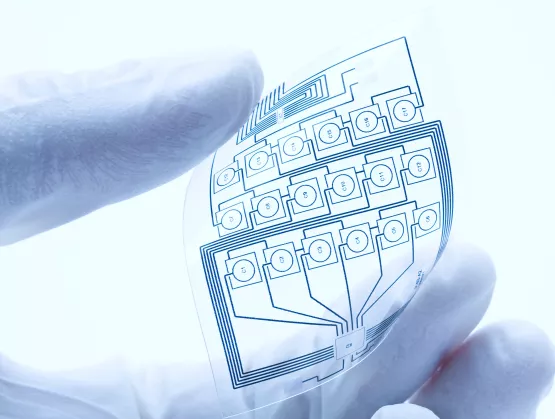
We fold our clothing. Our bath towels. Our sheets. And for the more artistically inspired among us, our origami. So why not our smartphones and tablets – those marvelously expansive if physically rigid windows to the world?Turns out we’re tantalizingly close to seeing flexible OLED displays, the only barrier to foldable smartphones, a full session on flexible displays at 2018FLEX, Feb. 12-15 in Monterey, California, revealed. With prototype flexible displays in play and the basic technology available, all that’s left before adoption are efficient processing and product development. Ross Young, founder and CEO of Display Supply Chain Consultants (DSCC) put it this way at the mid-February gathering of flexible hybrid electronics (FHE) industry players in Monterey, California: “If panel manufacturers can produce foldable OLEDs at sufficient yields to bring down costs and prices, and brands can develop products that unleash the form factor advantages of OLEDs and better communicate the performance and power benefits of OLEDs, the whole OLED supply chain will benefit.” Of course, prototype development is a key step in proving out designs of OLED displays and other FHE products. Now developers now have help with a process design kit from Hewlett Packard and NextFlex’s open-source Arduino kit for rapid prototype creation and testing, formally unveiled at 2018FLEX, the 17th annual event organized by SEMI-FlexTech, the Nano-Bio Manufacturing Consortium (NBMC) and NextFlex. The conference, which co-located with the 16th annual MEMS Sensors Technical Congress (MSTC), promotes FHE as one way to enable healthier, safer, simpler and smarter electronics products. Typical of a fledgling industry, a slew of flexible display innovators are working to identify viable markets as they develop prototypes. But some designs have vaulted to product development as they edge closer to commercialization or have already hit the market. The list includes FHE printed antennas, smart tags for asset monitoring, a host of consumer health monitors with wireless communication capabilities, and thrilling large-area display installations like E Ink’s Dazzle® -- wrapped around one side of a new car rental center at San Diego International Airport. Dazzle by E Ink Indeed, sensors for wireless medical applications drew some of the strongest interest at the event. Applications included deep brain stimulation to treat conditions including Parkinson’s, epilepsy, OCD and chronic pain (Cortera Neurotechnologies); human hydration monitoring (GE Research); patch-based wearable monitoring to enable better patient outcomes (Graftworx), and measuring blood oxygen levels using oximeters (University of California Berkeley). UMass Lowell presentation summary on printing textiles In the area of manufacturing – long a focus of FLEX – low-cost, low step-count roll-to-roll processes are advancing rapidly as industrial applications adopt these capabilities. At the same time, NextFlex continues to lead the charge in improving FHE manufacturability by providing public/private funds and leading collaboration initiatives. Manufacturing has been at the heart of many FlexTech technical projects and led to FlexTech’s formation of NextFlex, America’s Manufacturing Innovation Institute for flexible hybrid electronics. Paul Gagnon, IHS Markit, keynotes on the progress of flexible displays “2018FLEX splendidly met its objectives,” said conference chair, Bob Praino, CEO of Chasm Technology. “With the keynotes, we explored the breadth of applications enabled by FHE. With the sessions, we dove into the depths of materials, processing, and components demanded by the end-applications. And the exhibit provided the hands-on opportunity to explore new industry collaborations. FHE has clearly moved beyond conceptual and, best of all, many participants found answers to product needs here at the conference.” Beyond technology, the future brainpower for FHE was also on prominent display at 2018FLEX with college students participating in the Student Poster Session, judged by industry experts. The top three entries: First place: Jonathan Ting from UC Berkeley with a poster titled “Fully Screen-Printed NiO thermistor Arrays” Second place: Talha Agcayazi from North Carolina State University with a poster titled “Multi-Modal Array Sensing with Textiles” Third place: Levent E. Aygun from Princeton University with a poster titled “Sound Identification Using Physically-Expansive Sensing System” Outstanding industry achievements and contributions were also recognized at 2018FLEX with the FLEXI Awards. For a copy of the 2018FLEX proceedings, contact Amy Ly at [email protected]. Heidi Hoffman is senior director of FHE, MEMS and Sensors Marketing, SEMI.
Read More