downloadGroupGroupnoun_press release_995423_000000 copyGroupnoun_Feed_96767_000000Group 19noun_pictures_1817522_000000Member company iconResource item iconStore item iconGroup 19Group 19noun_Photo_2085192_000000 Copynoun_presentation_2096081_000000Group 19Group Copy 7noun_webinar_692730_000000Path
Skip to main content
Default Banner Image

Vietnam

AEM Holdings Ltd, a Singapore-based multinational corporation, is listed in Forbes Asia’s 200 Best Under A Billion 2019 and 2020 spotlighting small and midsized companies in the Asia-Pacific region with sales under $1 billion. AEM clinched the Singapore Business Review Technology Excellence Award 2020 for Analytics-Semiconductor and the Singapore Business Awards Enterprise Award 2019/2020. These achievements are testament to AEM’s vision and innovation and the company’s contributions to the increasingly complex testing of chips in a rapidly evolving technological world. I spoke with AEM CEO Chandran Nair, a new Regional Advisory Board (RAB) member of SEMI Southeast Asia, about the company’s intelligent test and handling solutions, its role in digital transformation, the company’s key role in the smart manufacturing movement and the growth prospects for Singapore’s electronics sector. SEMI: AEM’s application-specific, intelligent system test and handling solutions for semiconductor and electronics companies serve the advanced computing, 5G and AI markets. How do you differentiate your solutions from those offered by competitors? Nair: A key differentiation for AEM is that we work closely with our customers to develop application-specific integrated test and handling solutions that meet their needs in a scalable manner from lab to production. We offer our customers customized, full-stack test and handling solutions that give them the agility to accelerate their delivery cycles and enhance product quality. Over the years, AEM has developed and acquired world-class technologies in instrumentation, test, automation, robotics, optical inspection, high-end thermal control, and software. These technology pillars, along with our deep know-how to customize test and handling solutions using the technology pillars as a platform, enable AEM to meet the fast-changing needs of our customers faced with the challenges of testing heterogeneous and complex devices. In addition to investing in technology, AEM has also invested in delivering application-specific solutions to meet customer demand. Our recently announced acquisition of CEI with its manufacturing capabilities in Vietnam and its specialization in low-volume, high-mix manufacturing increases our geographical reach and our ability to quickly turn application-specific test and handling solutions to be deployed. We have a unique and differentiated approach that enables our customers to test high-performance computing devices, automotive devices, and mobility devices with maximum test coverage, cost-effectively, in a manufacturing environment. Our experience in serving the high-performance computing market that traditionally drives advancements in thermal control also puts us at the forefront of delivering comprehensive thermal management, vision, and deep automation and test solutions for the computing, automotive, and mobility markets. AEM also has a strong instrumentation portfolio, including high-density digital instruments and mixed-signal and protocol-aware instrumentation that is well-suited for ATE solutions for SoC, high-power devices, and CMOS image sensors. Over the last few years, we have also established leadership positions in developing and deploying application-specific test solutions for MEMS devices and offering wafer and frame probing stations suitable for R D, wafer sort, and final test. We form strong partnerships with our customers, provide them with end-to-end support in product development, and take them through the entire life cycle process from concept to mass production. Chandran Nair and Goh Meng Klang, vice president of operations, at the AEM manufacturing site in Singapore. (Photo credit: AEM) SEMI: Digital transformation is powering strong growth of advanced computing, 5G and AI. Will AEM be expanding its AEM manufacturing plants in China, Malaysia and Singapore to meet rising demand for these technologies in the coming years? Nair: In regards to manufacturing, AEM currently has manufacturing facilities in Singapore, Malaysia, the U.S., Finland, and China. With our recently announced acquisition of CEI, we will add manufacturing capability in Vietnam and Indonesia. AEM will continue to expand manufacturing appropriately to give our customers cost-effective solutions while maintaining our proven track record of delivering on time and scaling rapidly in times of crises like the pandemic or geopolitical disruptions. As for advanced technologies, the three key factors that will bring the full potential of 5G to fruition are 1) cost-effective, high-powered processing devices at the edge, 2) easy access to high-bandwidth communications, and 3) cost-effective sensor technology. Semiconductors are the primary drivers of these three key success factors. As devices become more complex and our reliance on semiconductor-powered devices in all aspects of our lives deepens exponentially to include mission-critical applications, AEM’s role is to ensure that our customers' electronic and semiconductor devices are shipped thoroughly tested, safe to use, and highly reliable. It is imperative that, as a testing company, we find innovative ways to help our customers test their products with maximum coverage and minimum cost. To do this, we are focusing our R D efforts and investments to continue building on our key technology pillars to ensure that we stay ahead of the curve when it comes to test and handling solutions. We prepare our customers to test increasingly complex devices manufactured on the latest process node. SEMI: During your career you’ve driven projects in test and automation and more recently robotics solutions for ports, logistics warehouses and transport. With robotics and automation a key part of Industry 4.0, what role do AEM solutions play in powering the smart manufacturing movement? Nair: The smart manufacturing movement is powered by semiconductors, software and increasingly by artificial intelligence (AI). Test is at the heart of the process of ensuring that semiconductor and electronics devices reach the consumer well-tested for reliability. With our vision of enabling A Zero Failure World, AEM addresses the necessity for safe, highly reliable devices. The semiconductor companies themselves are adopting smart manufacturing methods. AEM’s tools are Industry 4.0-ready, and we continue to invest in machine learning and data analytics, which are integral to the future of test. Our tools are automated and feature embedded sensors to provide our customers with data about tool usage, the state of a machine’s health, and more. Our tools are connected to our customers’ manufacturing automation platforms. Additionally, we continue to invest in our ability to better slice and dice test data to understand trends and patterns to help our customers analyze data and make decisions faster. SEMI: You also have experience heading autonomous vehicle projects. With the COVID-19 pandemic hastening digital transformation, do you see an acceleration in the development of fully autonomous vehicles and smart manufacturing? Research and development efforts for autonomous vehicles (AV) continue at a fast pace worldwide. With shutdowns and restricted movement rules globally, the pandemic has hastened digital transformation in many ways. The delivery of goods and services is transforming, and AV will surely play a part, especially in secure environments for autonomous transport. The pandemic has accelerated the development of autonomous vehicles and smart manufacturing technology in automation-friendly environments like factories and ports. SEMI: At the recent Global Technology Summit hosted by SEMI, you spoke about testing innovations to meet the demands of highly complex devices. Please elaborate on innovative testing solutions versus traditional testing? Nair: AEM offers a disruptive and differentiated solution, one that is driving a paradigm shift to asynchronous, modular, highly parallel, smart testing solutions. ​ The traditional approach of ATEs to test increasingly complex devices on advanced nodes has reached a point of diminishing returns as it gets exponentially more expensive to increase test coverage to acceptable levels. Additionally, as devices get more complex and companies are rapidly adopting heterogeneous packaging technologies, the realization that System Level Test (SLT) is necessary is forcing a rethink of the entire test process. AEM’s provides asynchronous, modular, highly parallel test cell solutions that enable each test cell to run SLT, final test, or burn-in all in one system and its ability to handle hundreds of test cells independently with each test cell testing multiple devices. Our solutions suddenly make comprehensive testing of every complex device cost-effective. Freeing us from legacy ATE allows AEM to provide these innovative solutions to our customers. AEM engineering and manufacturing teams in Singapore at work on semiconductor test and handling systems for global deployment at world-class semiconductor facilities. (Photo credit: AEM) SEMI: Singapore seems to be in the sweet spot of digital transformation. Singapore’s industrial production grew 8.6% year-over-year in January 2021, an expansion driven mainly by a surge in sectors including electronics, and more growth is seen in the year ahead. Digital technologies such as 5G technology and cloud computing together with continued demand for work-from-home equipment is behind this growth. What are the growth prospects for the region’s electronics sector? Nair: Singapore is well-poised to benefit from the current digital transformation accelerated by the adoption of these technologies during the pandemic. Being a safe, well-governed country with strong IP protection, excellent infrastructure, and the rule of law, Singapore is in a great position to play a central role in cloud-based services, 5G, and the semiconductor industry. Singapore’s semiconductor sector output is at a record high, and the prospects for renewed growth in the region are very good. SEMI: As a new Regional Advisory Board member of SEMI Southeast Asia, how is your industry experience relevant to the scope of this role? What opportunities lie ahead for the region? Nair: I am honored to represent AEM in the SEMI’s Southeast Asia RAB. The SEMI RAB can influence policymakers with ideas and information on the current and future needs of the industry. I also believe that SEMI Southeast Asia can cultivate a strong innovative semiconductor ecosystem that helps regional and global growth. I look forward to working with other very experienced and accomplished board members. Bee Bee Ng is president of SEMI Southeast Asia.
Read More
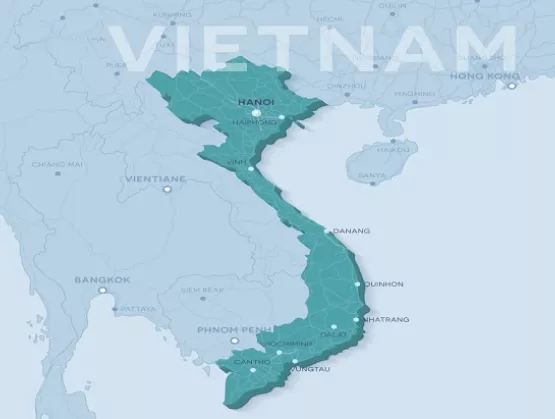
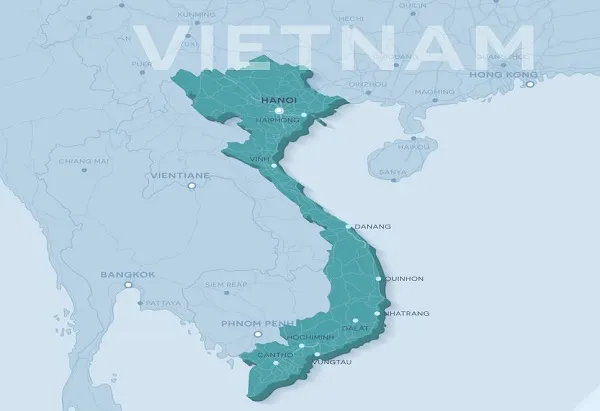
If you look at your clothes or shoes, there is a growing chance you will see the words Made in Vietnam printed on the tag. Since the United States lifted its trade embargo against Vietnam in 1994, the country has become the second largest exporter of apparel and shoes to the U.S. What may be less evident is the source of that new electronic gadget you received for Christmas, with its numerous parts, chips, and intricate supply chain. While light manufacturing has dominated Vietnam’s economic growth since the Đổi Mới economic reforms implemented in the 1980s, over the last decade the country has been repositioning itself to become a dominant player in the global microelectronics industry, a trend that has gained momentum in the wake of the U.S.-China trade war. In 2019, Vietnam ranked as the fourth largest exporter of electrical goods and components to the U.S. With exports doubling over the last four years and now exceeding $19 billion, surpassing Taiwan, Japan, and Korea (based on goods exported under chapter 85 of the Harmonized Tariff Schedule). Vietnam’s global electronics industry now accounts for about 40% of its exports, and the country seems to be just getting started. Early Entrants Though Vietnam owes its growing success in attracting foreign direct investment (FDI) in the semiconductor and microelectronics industries to the advent of China plus one – the business strategy to diversify business investments geographically – it was the few early entrants that gambled on this emerging market a decade ago that put Vietnam on the global stage. Of these early players, no other firm comes close to having the impact that Samsung has. It’s initial $670 million mobile phone manufacturing plant in the northern province of Bac Ninh in 2008 grew to a country-wide investment of $17.3 billion within a decade. Samsung is now Vietnam’s largest FDI contributor and accounts for more than 25 percent of its exports. Because of Samsung, Vietnam has become the second largest exporter of smartphones in the world. Around the same time, Intel opened its $1 billion semiconductor assembly and testing facility in Ho Chi Minh City, putting Vietnam firmly on the global technology map. More investors, like LG, Panasonic and Foxconn soon followed. Within a few years of these initial investments the industry was taking notice, illustrated by SEMI’s role in co-organizing the Vietnam Semiconductor Strategy Summits in 2013 and 2014. With SEMI SEA’s increased efforts to promote Vietnam as an important ecosystem in the electronics supply chain, more will be done to positively influence the growth and prosperity of its member companies in Vietnam. These early investors found Vietnam attractive for several reasons. Key among these are the country’s low wage rates combined with its favorable demographic structure – what the UN refers to as the golden population structure, which provides “Vietnam with a unique socio-economic development opportunity.” Companies are also attracted to the growing number of Free Trade Agreements (FTAs) that Vietnam belongs to, including the ASEAN Free Trade Area, CPTPP, the EU-Vietnam FTA, and, most recently, RCEP. Though the U.S. has yet to ink a trade agreement, the Singapore AmCham’s annual regional survey has consistently identified Vietnam as the most attractive country in ASEAN for a potential bilateral FTA partner with the U.S. Leveraging the Trade War If the plus one strategy was the catalyst that started this wave of electronics manufacturing in Vietnam, then the U.S.-China trade war was the enzyme that supercharged it. A common quip in Southeast Asia is that the U.S.-China trade war is over and Vietnam is the winner, and this is apparent in both trade and investment trends. According to the Asia Development Bank (ADB), the riff between the U.S. and China has caused a redirection in trade, as U.S. imports from the PRC fell by 12% in the first six months of 2019 while U.S. imports from Vietnam increased by 33%, with electronics and machinery accounting for the bulk of this jump. The ADB further reported that in a prolonged and intensified trade conflict, the worse-case scenario would result in Vietnam, Malaysia, and Thailand being the biggest winners, “in that order.” On the investment side, a March 2020 Gartner, Inc. survey of global supply chain leaders revealed that 33% had “moved sourcing and manufacturing activities out of China or plan to do so in the next two to three years.” While this survey did not mention specific winners, the ADB reported that “newly registered FDI in Vietnam from the PRC and Hong Kong rose by 200% year on year in the first seven months of 2019,” indicating the move of Chinese suppliers to Vietnam. Additionally, a review of recent press reports indicate firms like Apple, Nintendo and Dell are encouraging suppliers to move parts of their supply chains to Vietnam. These suppliers are complying, with Compal Electronics, GoerTek, HZO, Inventec, Luxshare Precision Industry, Pegatron, USI and Wistron all reportedly announcing plans for new investments in Vietnam. Manufacturing Hubs Within Vietnam, microelectronic facilities have concentrated in a few geographic hubs. In the south, the Saigon High Tech Park in Ho Chi Minh City attracted early entrants Intel and Samsung, with firms like Nidec and Jabil soon following. The largest investment capital, however, developed in the northern provinces that ring Hanoi. Bắc Ninh, an hour’s drive from Hanoi, was the site of Samsung’s first investment and has since attracted Foxconn and Canon. More recently, firms have been drawn to the port city of Hải Phòng, the country’s third largest city, which is already home to Samsung and LG. The city’s close proximity to other manufacturing clusters, its new deep-water port, and its expressway that provides a 12-hour trucking route to China’s electronics epicenter in Shenzhen are helping make the city Vietnam’s new high-tech production center. In 2019, LG Electronics moved its entire smartphone production line from South Korea to Hải Phòng, and in 2020 Pegatron reportedly chose the city for its $1 billion investment plan. Local phone manufacturer VinSmart is also producing the country’s first 5G smartphones in Hải Phòng. In November, USI, a subsidiary of Taiwan-based ASE Holding, broke ground on its first production base in Southeast Asia, a $200 million phase-one investment in the production and assembly of chips for wearable electronic devices. USI’s investment, which is moving into the internationally managed DEEP C Industrial Zones in Hải Phòng, is “intended to move us closer to our overseas customers and accommodate their ever-increasing demand,” according to Mr. Kuei Chun Chi, the firm’s Manufacturing Service Director. “North Vietnam, with its strategic geographical position and an extended infrastructure in place, offers USI an optimal way to facilitate fast and flexible response to customers' orders.” Though the Covid-19 pandemic has dampened the pace of new investments in Vietnam’s microelectronics industry, it has also amplified the country’s attractiveness to investors. Vietnam was successful in containing the outbreak through aggressive quarantine and contact tracing measures, and as a result its economy has the brightest outlook in the region. The ADB forecasts the country will be one of the fastest-growing economies in SEA in 2021, with GDP estimated at 6.8%. The Ministry of Industry and Trade is also reporting that several of the world's largest technology corporations plan to shift their production chains to Vietnam post-Covid-19, an indication that technology firms will accelerate relocation plans in 2021. Vietnam’s successful response to the pandemic, combined with its strategic location, low wage rates and foreign trade agreements, will ensure that the region continues to benefit from the shift in supply chains in Asia, making it the new destination for electronics manufacturing. About the Author Stuart Schaag is Principal at E-Ward Trade Consulting LLC, which assists firms that are expanding their presence in the global marketplace by creating strategies combining market analysis, business development, commercial diplomacy, and relationship building. He previously spent 25 years in various domestic and overseas positions in the U.S. Department of Commerce’s International Trade Administration. Stuart served as the Commercial Counselor at the U.S. Embassy in Hanoi from 2014-2018 and resided in Vietnam until 2020.
Read More
The COVID-19 pandemic has inflicted major impacts on manufacturing operations worldwide including in the semiconductor industry. The virus has left millions of people confined to their homes, resulting in a massive shift to virtual work and online engagement. In Singapore, where AEM is headquartered, our management team took proactive measures to protect our workers by implementing best practices ahead of the Singapore Circuit Breakers.AEM is globally deemed an essential service, requiring us to maintain operations and minimize impact to our customers. Business continuity plans that include work-from-home and safe-distancing guidelines are in place. As of the time of this writing, we are very fortunate that all of our employees are safe and that we’ve seen only minimal impacts to our customer commitments. AEM has confined this impact by spreading operational risks across our facilities in Asia, Europe, the U.S. and divisions in Singapore, Malaysia, China, North America, Central America, Finland, France and Vietnam. All told, these facilities employ more than 550 people (Figure 1).Figure 1 – AEM Global Presence As a global leader, AEM offers application-specific intelligent system-level test and handling solutions for semiconductor and electronics companies that serve the advanced computing, 5G communications and artificial intelligence (AI) markets.Leveraging our decade of experience, the latest AMPS solutions provide asynchronous, modular, massively parallel and smart system-level testing to meet the new test challenges of complex ICs. The modularity and scalability of these systems enables customers to scale their existing engineering device validation solutions into high-volume, massively parallel production solutions that increase faults coverage, reduces time to market, and decreases cost of test and ownership (Figure 2).Figure 2 – AMPS System-Level Test Solution In meeting 5G infrastructure test needs, AEM developed a field-deployable fiber optics tester. Called WideOptix SR4, the system was initially developed in collaboration with a world leader to support the 5G fiber infrastructure deployment in China and has now been adopted for some Ethernet standards testing. With our WideOptix SR4 development, we cultivated Silicon Photonics (SiPh) testing expertise that complements our AMPS system-level test capability. As part of our business continuation and risk diversifications plan, we had also set up factories in Penang (5,200m2) and Suzhou (3,600m2). Penang’s rising influence in the Southeast Asia semiconductor industry has prompted AMM (AEM Malaysia) to expand its scope to include value-added services with a Center of SSD Excellence and Center of Photonic Excellence.ASZ (AEM Suzhou) will continue to focus on the domestic market in China for further expansion and penetration with products ranging from cost-sensitive testers to state-of-the-art test measurement instruments. In Europe, AEM is focused on wafer-level test and cost-effective ATE test solutions. Finland-based AFORE specializes in MEMS and application-specific wafer testing with the ability to add physical stimulus. The company's state-of-the-art instruments enable the testing of devices such as diced IMU’s (Inertia and Motion Units) in continuous rotation on a wafer mounting ring. Our process increased test throughput by 3X compared to the traditional pick-and-place methods (Figure 3).Figure 3 – Wafer-Level Test Throughput Advantage A specialist in application-specific wafer handling, AFORE developed its latest design to support quantum computing in collaboration with its partner BLUE FORS. The company’s probing equipment features a handling solution with temperature tolerances to 2K (-270’C) to support cryogenic testing (Figure 4).Figure 4 – Cryogenic Quantum Computing Probing Solution AFORE also gained critical insights into creating total darkness, enabling us to further explore opportunities for dark matter testing. AFORE is currently in talks with a member of the LUX Photonics Consortium funded by the National Research Foundation (Singapore) to provide a dark body testing environment and handling for its IR detectors.In Europe, our acquisition of Mu-TEST in France helps diversify our product and service offerings while spreading our business continuity risks. Mu-TEST enjoys collective test-development experience of more than 320 man-years thanks to various ATE suppliers including Schlumberger and Credence. To help combat rising costs of traditional ATE, Mu-TEST developed cost-effective solutions using FPGA-based instruments supported by a full suite of test development, debug and production test software with links to EDA and standard interfaces. This provides Mu-TEST an agile platform that can be easily re-configured for different customer needs.This Mu-Test acquisition expands AEM’s system-level testing capability to include Functional Test, allowing BIST, SCAN, JTAG to test structural failures and perform other application-level test that interface directly with the DUT using the EVM (Electronics Validation) boards to increase fault coverage within the same test environment. Mu-TEST has also enabled AEM to form the recent partnership with UTAC to develop a cost-effective CIS test solution that addresses UTAC’s test needs and complements its CIS advanced packaging solutions. Our U.S. headquarters based in Chandler, Arizona has expanded its capabilities to provide application engineering.In summary, AEM has been expanding its global footprint while managing risk and has been fortunate to be positioned to manage the recent COVID-19 excursions. While each geographical location specializes in core technologies, all sites have access to one another’s manufacturing facilities in times of need and a pool of IP available to address new opportunities. We believe this risk diversification positions us well to serve the needs and interests of our customers worldwide.Lo Wee Tick is Director, Business Development, and Stuart Pearce is Senior Director, Field Marketing, at AEM Holdings Ltd.
Read More