downloadGroupGroupnoun_press release_995423_000000 copyGroupnoun_Feed_96767_000000Group 19noun_pictures_1817522_000000Member company iconResource item iconStore item iconGroup 19Group 19noun_Photo_2085192_000000 Copynoun_presentation_2096081_000000Group 19Group Copy 7noun_webinar_692730_000000Path
Skip to main content
Default Banner Image

Taiwan

Even though microchips continue to get smarter, vital security gaps continue to be exposed through such hack attacks as Meltdown, Spectre, and in recent weeks, Plundervolt. Researchers continue to discover open doors in chip architectures for malicious players to steal increasingly sensitive data, hide the identity of counterfeits, or tamper with electronics systems most anywhere along the global microelectronics supply chain. Today, it’s impossible to have full visibility of the distributed chip making process – from design and fabrication to packaging, testing and delivery. That’s why our industry’s future hinges to a large degree on establishing a hardware root of trust throughout the silicon’s operational lifecycle. Trust but verify! It’s easy to say, but how do we do it?To gain insights, SEMI interviewed Dr. Mark Tehranipoor, currently the Intel Charles E. Young Preeminence Endowed Chair Professor in Cybersecurity at the University of Florida’s Electrical and Computer Engineering Department. A foremost authority on microelectronics security and trust, counterfeit electronics detection, and supply chain risk management, Dr. Tehranipoor will be a keynote speaker at the SEMICON Taiwan Security on Chip Summit, Friday, September 25, where a full program of industry leaders will address key security challenges and solutions involving IoT, systems on a chip (SoCs), integrated circuits, physical unclonable function (PUF) technology, future design, certifications, managed services, and more.For additional insights and to hear Dr. Tehranipoor’s full presentation, register for SEMICON Taiwan 2020, which SEMI is holding as a hybrid event with both a virtual format and an in-show program September 23-25.SEMI: What are the major uncertainties in providing the hardware root of trust within the cyber domain?Tehranipoor: One of the most critical issues we’re dealing with now is loss of control over the process of designing and fabricating integrated circuits and systems. This has happened along with globalization and the movement of supply chain operations overseas to lower costs of nearly all goods, including electronics products and semiconductors. As skill sets, talent, design and fabrication have all shifted offshore, concerns have also risen about security controls across the many different segments of the microelectronics supply chain.For example, when you think about the security of military, space, transportation, power grids, financial or other networks, it becomes a major concern if you cannot trust the underlying electronics system that runs them. New SoCs are also holding more sensitive data around encryption keys, biometrics, personal information or banking data. And as reports escalate about cybersecurity gaps at the electronics part level, it’s increasingly important to establish a hardware root of trust. Today, it’s not enough for a buyer to just call up the design house and verify the electronic ID of an asset. The ID might match, but the device could have been tampered with or replaced with a counterfeit somewhere along its end-to-end journey. Unlike software or networks where problems can be automatically identified, upgraded and fixed, verifying electronic hardware is a costly and time-consuming process, especially when they’re as complex as microchips. It can take months to deconstruct, reverse engineer, inspect, and authenticate a chip. By then, discovery of any security breaches is too late.When addressing the security of electronics systems, there are three important features to keep in mind. First, there’s confidentiality. The device shouldn’t leak information to an unauthorized user. Second, there’s integrity. Unauthorized users should not be able to manipulate an SoC’s sensitive data. The third feature is availability, which can be a result of Denial of Service (DoS) attacks. If the device is under attack and can’t access your online service or network, you must still have security measures for your electronics system to be available in a safe mode while you simultaneously identify the problem, recover from it, and return to normal functions.SEMI: What framework should be followed to establish greater trust and confidence across the entire microelectronics supply chain?Tehranipoor: In the United States, we recognize it may not be possible to bring all manufacturing, design, and delivery teams back to this country and have them certified by the U.S. Department of Defense. You could do some of it, but it would be very costly and complex to bring back all the design, fab, testing, and packaging operations involved with electronics systems and still have complete control.The most practical approach is to make sure we design electronic systems with security and trust in mind from the start. We need to provide security features up front throughout the extended supply chain – into the design flow, fab flow, and out into the field to make it easier and faster for anyone at any point to verify the authenticity of an electronic system as well as identify and mitigate a problem. Finally, we have to remember that we are all in this together – designers, developers, packaging facilities and fabs. We can’t just blame semiconductor manufacturers or any other single entity. As a result, we must be cooperative and collaborative by focusing on this issue as a consortium. Everyone in this ecosystem must come to the table, share best practices, establish standards, and initiate best practices for device to system authentication.SEMI: How can SEMI and the SEMI Electronic System Design (ESD) Alliance help the industry meet these challenges?Tehranipoor: It’s certainly of utmost importance for members of organizations like SEMI and its ESD Alliance committees to jointly develop and adhere to standards or guidelines that establish hardware root of trust across all participants in the global supply chain. At the same time, such alliances should make it a high priority to protect each company’s intellectual property (IP). Collectively, we need resolutions that allow us to develop unique IPs and more easily trace, identify, and verify the authenticity of electronics systems as they flow throughout the end-to-end electronic supply chain. Great efforts are under way and progress is being made. But it’s not enough. Clearly, more needs to be done to establish root of trust standards at the chip level.I can’t emphasize enough the importance of consortia like the SEMI ESD Alliance to create an environment where industry, government, and academia can come together, share best practices and even case studies on how they handled security vulnerabilities and breaches. We understand that not everyone wants to share their security problems, vulnerabilities, or attack surfaces, but learning from each other’s experiences can have a tremendous impact on industrywide progress. If you don’t know what you need to address, you won’t be able to address it when it happens.I also encourage organizations like SEMI to create standards or guidelines that reduce the complexity of microchip designs for security purposes. Realtors often say there are three things to consider in finding a home that will appreciate in value: Location, location, location. To build more secure electronics systems, my mantra is: Automation, automation, automation. Complexity is the enemy of security. By using automation to simplify security mechanisms and detect inconsistencies, it will be easier to find and fix security problems, not to mention lower costs at the same time. SEMI: What will an attendee take away from your talk at SEMICON Taiwan?Tehranipoor: I have a large team of researchers who day and night spot vulnerabilities by attacking and assessing data from different electronic systems set up in our labs. Attendees will see real-world examples and lab animations that show how electronics systems can be hacked most anywhere across the supply chain. They will also learn about step-by-step security solutions we have developed at the microchip level. We need to do a better job of protecting the security of our semiconductor assets and the electronic solutions or services they power. My call to action will be that we need to invest more in research and foster an environment of more open trust and cooperation. We can do this by bringing together different countries, companies, and organizations in the microelectronics ecosystem to overcome this major challenge.Dr. Mark Tehranipoor is currently the Intel Charles E. Young Preeminence Endowed Chair Professor in Cybersecurity at the ECE Department, University of Florida. He is currently serving as Director for Florida Institute for Cybersecurity Research (FICS), National Microelectronics Security Training Center (MEST), CYAN Center of Excellence, and ECI Transition Center. He also serves as Program Director of Cybersecurity for UF Herbert Wertheim College of Engineering. His current research interests include IoT security, hardware security and trust, and reliable circuit design.Samer Bahou is senior manager of corporate communications at SEMI.
Read More
Companies around the world are increasingly turning to mergers and acquisitions, research and development, and corporate venture capital (CVC) investment to sustain growth. For many years, global semiconductor companies including Intel, Qualcomm and Samsung have been active CVC investors. However, the economic fallout from the COVID-19 pandemic has forced many venture capital (VC) and CVC investors to rethink their investment strategies as they look to an uncertain future. To help provide SEMI members with the latest market trend information, SEMI Taiwan held the webinar Challenges and Opportunities in Corporate Venturing during the Global Pandemic Crisis on April 28th. Featured speaker James Mawson, founder and editor in chief of Global Corporate Venturing, provided an analysis of the pandemic’s impact on deal flow, capital movement, sentiment and strategies among CVCs. CVC takes larger role in past decadeCorporations have been increasingly active direct and indirect venture investors over the past decade. From 2011-2019, more than US$1.3 trillion of venture capital was invested globally, with corporations accounting for more than half that total, according to data from Pitchbook/GCV Analytics.Semiconductor companies that have been active in corporate venturing include Intel, Samsung, Nvidia, ARM, AMD, SK Hynix, Broadcom and Qualcomm. Pure-play semiconductor and chip companies tend to make few investments in their start-up counterparts because sector saturation of powerful incumbents leaves little opportunity for growth, James said. “While it is hard to find entrepreneurs wanting to be engaged in pure play S C, once they do, they can be very valuable and often be able to bring disruptive forces to the whole ecosystem,” James said.S C corporate investors focus on chip applicationsSemiconductor companies looking beyond pure-play S C start-ups for investment opportunities often target applications or developers that require the additional data, processing power, and memory their chips provide. “There is lots of interest by the big chip companies such as Intel, Qualcomm, and Samsung in developing some of those chip applications, getting them used more and creating a whole ecosystem,” James said.For example, Intel Capital, based on its data-centric theme, has focused on areas like autonomous vehicles, data centers and artificial intelligence (AI) because of the sheer amount of data and processing power they require. In another notable trend, non-traditional S C players such as Apple and Alibaba are leveraging investments in start-ups to develop their own chips for competitive advantage, James said.March deal flow down 20% With COVID-19 slowing the global economy, James expects semiconductor and chip companies to scale back direct investments this year due to rising pressure on their balance sheets. Deal flow in March was down roughly 20% from February.James is hopeful corporates will focus on investing in innovation over the long term rather than target share buybacks to boost near-term earnings. James pointed out that investors can uncover opportunities by identifying future problems to be solved in areas such as quantum computing, biotech, energy, healthcare, communications and ICT. Still, in the near term, where there is a crisis, there is opportunity. While the pandemic hit some sectors hard, it benefits start-ups in industries including gaming, education and telemedicine. This time is different?James said corporates need to rethink the investment model they want to follow. One option is the approach taken by General Electric, which divested its investment team and sold all its portfolio companies last year. Another is to focus on the long term. For example, Intel Capital has been dedicated to investments in innovation for nearly 30 years and continues to invest during downturns.Compared with the internet bubble and global financial crisis, today there are more experienced and mature CVCs that better know how to negotiate a crisis. James also pointed out investors are interested in backing CVCs with sector investing experience. There are now more than 600 CVCs with a 10-year-plus track record.James expects a variety of funding models to emerge over the next decade as pressure on corporate balance sheets encourages corporate investors to consider models that allow third-party capital to effectively leverage their CVC units. Corporate investors are also open to other ways to efficiently deliver financial returns.For more information about the SEMI Taiwan Corporate Growth and Innovation Community, please contact Irene Lin at [email protected]. For GCV’s latest news and event, visit its website.Jo-Ann Su is senior director of the Corporate Growth and Innovation Community at SEMI Taiwan.
Read More
It’s official.The first autonomous vehicle has been verified for operation on the open road in Asia with no traffic restrictions. And this is no corner case, flash-in-the-pan technology. The white 4-door minivan’s modular software can be integrated into all manner of vehicles including cars, trucks and buses. More promising still, the minivan – proven roadworthy after more than 1,300 miles of testing – will lead not only to an upgrade of Taiwan’s automobile electronics industry but to groundbreaking smart transportation service models.Imagine, for example, hopping a driverless shuttle to the hottest attractions in Hsinchu City, Taiwan such as Big City, Hsinchu Cheng Huang Temple, 19 Hectares Grassland, 17KM Coastline Scenic Area and Siangshan Wetland. The autonomous ride could become another transportation option sooner than you think.“We have every intent to make available self-driving sightseeing shuttle services soon,” said Chih-Chien Lin, mayor of Hsinchu City. “The services will be our first step to substantially improving the traffic flow, highlighting the unlimited applications associated with autonomous vehicles.”Bearing the license plate number Taiwan No.0001 – the first issued for an autonomous vehicle in Taiwan – the minivan is an early but important advance in the region’s autonomous-driving technologies under a new initiative led by the Industrial Technology Research Institute (ITRI), which developed the test vehicle’s software, and the Hsinchu City government. SEMI president and CEO Ajit Manocha joined Hsinchu City mayor Chih-Chien Lin and ITRI vice president Pei-Zen Chang to promote the initiative at SEMICON Taiwan 2019 in the run-up to its launch during an October 22nd press conference in Hsinchu City. Taiwan luminaries attending the press conference were (L-R in photo below) Terry Tsao, SEMI Chief Marketing Officer and SEMI Taiwan President; Jwu-Sheng Hu, Vice President and General Director, ITRI Mechanical and Mechatronics Systems Research Laboratories; Der-Sheng Lin, Deputy Director General, MOEA Department of Industrial Technology; Chih-Chien Lin, Mayor of Hsinchu City; Pei-Zen Chang, Vice President, ITRI. ITRI and Hsinchu City government officials kick off the next phase of Taiwan’s smart transportation initiative in an October press conference near Nanliao Fishing Harbor, Hsinchu City. “This milestone in self-driving technology is a shining example of public-private partnerships in action to advance smart mobility and dovetails with SEMI's work building communities consisting of the automotive and microelectronics industries, government, and academia for collaborative innovation,” said Terry Tsao, SEMI chief marketing officer and SEMI Taiwan President. “We are thrilled to have joined ITRI and the Taiwan government in promoting the extraordinary power of technology to make automobiles and cities smarter.”Emmy Yi is a marketing specialist at SEMI Taiwan.
Read More
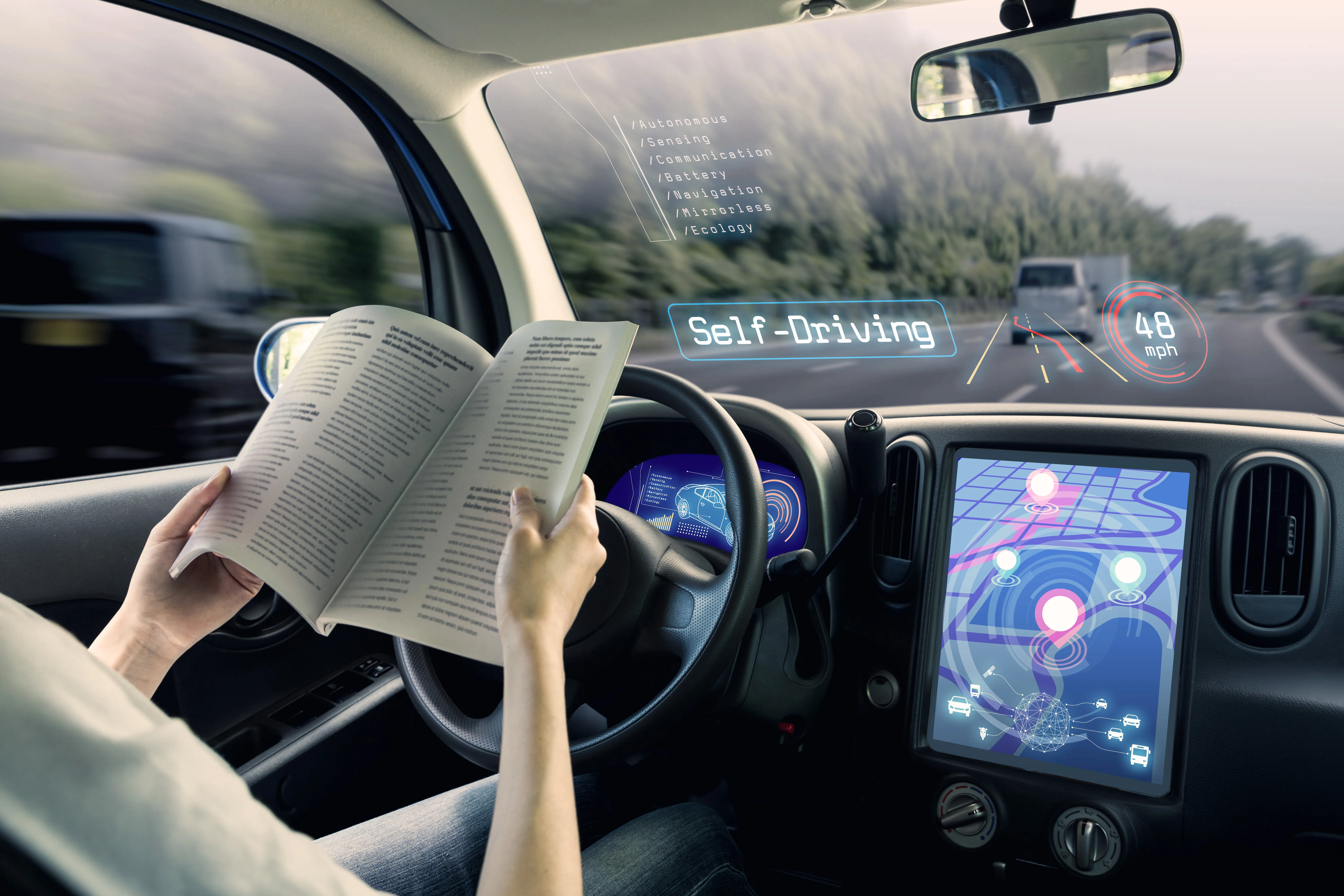
In 2000, the average car sported 30 to 50 semiconductors. By 2025, the number of chips and sensors in an automobile will soar to an eye-popping 70,000 as it comes uber-connected and immeasurably smarter, powered by machine learning, artificial intelligence (AI), Internet of Things (IoT), visual sensing, high-precision mapping and other advanced capabilities.Today, the proliferation of semiconductors in cars is remaking the automotive industry as four major forces – electrification, connectivity, autonomous driving and diverse mobility – take hold, according to the consultancy firm McKinsey in its report Automotive Revolution – Perspective towards 2030 report. The chip industry saw auto-related sales jump from US$7 billion in 1995 to US$30 billion in 2015, a trajectory that has steepened over the past two years as major chip suppliers have rolled out products for precision mapping, navigation, in-car entertainment, and communications. With semiconductors fast becoming a major aspect of automotive design, traditional automakers are quickly moving to build strong partnerships with the semiconductor sector.Audi, a leading German car brand, took a big step to just that when it became the first automotive OEM to join SEMI as a member in June 2019 and strengthen the automaker’s ties to the semiconductor industry. With a massive market potential to tap, are Taiwan's auto electronics firms well-positioned to work even more closely with first-tier car brands like Audi?At the Smart Transportation Forum on September 18 at SEMICON Taiwan, Andre Blum, project manager at AUDI AG, will join Ian Chan, CTO of Cyntec, to offer insights into how automakers can team up with Taiwanese auto electronics companies. TechOrange, a Taiwanese tech news online media, spoke Blum ahead of the event about Audi's smart car efforts and the carmaker’s work to integrate new technologies into its automotive designs as it forms new partnerships with the semiconductor industry.Blum joined Audi in 2004 and since 2016 has led manifold projects within the group driving Audi’s work with semiconductor companies (Progressive Semiconductor Program). He has seen the automotive industry rapidly accelerate the integration of high technology in vehicles, an area where Audi excels. “The industry is changing how it works and new partners are joining the ecosystems," Blum said.Audi Wants to be the Next Apple in the Car SectorAudi's business developments in recent years echo Apple's early push to integrate the Internet and a panoply of applications into mobile phones. The difference now is Audi is working to integrate a wide range of smart applications into its automobiles for – ala Apple – the best user experience.For example, Audi has recently launched cars designed with Traffic Jam Pilot, Parking Pilot, and Garage Pilot three smart driver-assisting systems. With Traffic Jam Pilot, drivers no longer need to be on standby when stuck in the traffic. Instead, they can kill time with an infotainment system. While out shopping or making other stops, Parking Pilot helps drivers find a parking spot and park automatically. Garage Pilot provides a more comfortable parking-at-home experience – the driver waits maneuvers the car into the garage using handheld remote control. Audi stepped up its efforts in 2019 and revealed its latest concept car at the Shanghai Auto Show. Dubbed Audi AI:ME, the vehicle is equipped with a dizzying array of high tech: level-four self-driving technology, technology that allows the driver to control features with eye movements, LED units in headlights and taillights that change brightness accordingly at night and in bad weather, and VR goggles for onboard infotainment. Innovation and Tech Both Key to the New Driving ExperienceAutomotive technology is rapidly advancing in areas such as electric vehicles, autonomous driving and smart auto electronics. Cars of the future must have more computing power and connectivity to deliver a great user experience that includes high battery efficiency to extend the duration between recharges, in-car entertainment, and intelligent voice assistants – all capabilities made possible by semiconductors.Unburdened by the tasks of driving, passengers will enjoy a more intimate relationship with their vehicles. "The in-car entertainment system will allow passengers to have a teleconference or enjoy a movie in a theater-like setting,” Blum said. Switch on the self-driving system and you can drive through the night from Munich to Hamburg, covering a distance of 800 kilometers in the comfort of a home-like environment. The trip is even possible on one charge, meeting high energy-saving standards.These capabilities are technologically feasible now, but government regulations and policies still need to catch up. In the meantime, Blum says that Audi is focusing on creating a top-notch experience for car users today."The minute you step into a car, all the features, including the seat, radio channels, and the entertainment system will have already been adjusted to your liking and seamlessly connected to your mobile or other hand-held devices," he said.What does the Future Hold for Taiwan in the Next Blue Ocean Market?Semiconductors are the heart of these features, and Blum believes Taiwan is uniquely positioned to drive advances in automotive chips. Taiwan is home to semiconductor powerhouses TSMC and ASE as well as auto electronics companies, and its sophisticated mobile phone supply chain has endowed it with deep experience in integrating semiconductors with electronic modules – advantages that give Taiwan a head start in the automotive semiconductor market.Audi, too, is in a strong position to thrive in the new age of automotive electronics as it looks to its membership with SEMI to collaborate with companies across the microelectronics supply chain.“With rapid advances in automotive electronics technology, semiconductors now play a critical role in innovation and product differentiation,” said Dr. Klaus Buettner, executive vice president of Development Electrics/Electronics, CarIT, Audi.“To fulfill the promise of sustainable, connected-to-everything, highly automated mobility up to autonomous driving, we need to also align automotive requirements across the entire semiconductor value chain,” he said. “With its global platform, SEMI is the right association to bring together supply chain stakeholders for the close collaboration critical to driving technology innovation.”Emmy Yi is a marketing specialist at SEMI Taiwan.
Read More
Smart car technology is on the fast track. According to a forecast by the Consumer Technology Association, revenue for North American technology will reach $398 billion in 2019, with sales of emerging technologies related to automotive electronics alone expected to hit $17 billion, a 9 percent increase over 2018. Growth of automotive electronics in the semiconductor application market is on pace to exceed 10 percent for the first time, with a 11.9 percent annual compound growth rate from 2017 to 2022, said Peng Maorong, research manager of ITRI Industrial International. Today, automotive electronics trails only personal computers and mobile devices in driving semiconductor market revenue. For its part, Automotive World 2019, the world's largest exhibition for advanced automotive technologies, has drawn even more attention in recent years. The event consists of six exhibitions, including automotive electronics technology, auto parts, drive systems, lightweight materials, autopilot technology and car networking, and featured demonstrations of compelling technologies including an AI deep learning module (Xilinx) and high-speed car intranet technology (Israeli manufacturer Valens). Toyota is also on the cutting edge of automotive electronics with the rapid maturity of its semiconductors, AI technology and materials, and complete network technology. The carmaker is no longer just a pure-play automotive manufacturer. Instead, the automotive giant is positioning itself as a car service provider (mobility service provider) and plans to team with ride-sharing providers such as UBER and Didi and other automotive technology providers in the future.Taiwan, with its strong semiconductor industry chain and a complete ecosystem of information communication, will be a key force in the automotive market as the region looks to cross-industry and cross-border cooperation to help power the market. To help the automotive electronics industry seize the market promise of smart cars, SEMI established the Global Automotive Electronics Advisory Committee (GAAC), with members including Audi, Bosch, Denso, Ford, Honda, Nissan, Volkswagen, Amkor, Infineon, NXP, Synopsys and Wanghong. More than 30 international companies, spanning Europe, the United States, Japan and other regions are represented on the committee. The committee met for the first time this month in Taiwan to help leverage the prowess of Taiwan's microelectronics supply chain in advancing international automotive electronics, better link Taiwan to international trends, and give Taiwan a bigger voice in the emerging smart car market, and create more opportunities for resource integration across borders. To learn more about GAAC, contact Helen Chen Chen Huiyu | Email: [email protected] | Phone: (03) 560-1777 #112.Extended reading: smart car Baihua Qi will be the next wave of killer applications (on)Emmy Yi is a marketing specialist at SEMI Taiwan.
Read More