downloadGroupGroupnoun_press release_995423_000000 copyGroupnoun_Feed_96767_000000Group 19noun_pictures_1817522_000000Member company iconResource item iconStore item iconGroup 19Group 19noun_Photo_2085192_000000 Copynoun_presentation_2096081_000000Group 19Group Copy 7noun_webinar_692730_000000Path
Skip to main content
Default Banner Image

Semiconductor Equipment

As we move through Q2 of 2021, it seems that the world is finally approaching normalcy. But I don’t believe our lives and businesses will ever be the same. Travel is unlikely to return to the same level as pre-COVID-19 for many years. I’m sure many companies will establish tighter travel policies and budgets as virtual conferencing has proven to be beneficial and cost-effective. Patients and doctors who were skeptical of telemedicine are embracing it, and although it’s not perfect, it has filled a needed gap. Online learning essentially happened over a weekend and will now be part of many curriculums and programs. All of these elements have spurred our semiconductor industry into a super cycle. Demand for chips is leading to an increased demand for semiconductor equipment. Semiconductor capital equipment expenditures in 2020 surpassed $63 billion and are forecast to top $70 billion in 2021. The secondary equipment market typically makes up about 5% to 10% of that. Our inquiries have definitely increased this year. With this in mind, I’d like to share some thoughts for the remainder of the year. Storage of Chipmaking Equipment Not New The semiconductor industry has been experiencing an equipment shortage for some time. It is difficult for original equipment manufacturers (OEMs) to support such a large variety of products and technologies. Some companies use equipment for manufacturing 150mm, 200mm and 300mm wafers. Fabs still run 30-year-old technology on 150mm wafers while the latest technology is manufactured on 300mm wafers. We’ve also seen new technologies like silicon carbide (SiC) being developed on these smaller wafer sizes. Unfortunately, some OEMs stopped making 150mm and 200mm some time ago and have only recently jumped back into the market. These OEMs have had to balance technological advances, pricing, and manufacturing capacity to meet this demand since their primary focus is on 300mm equipment. Third-party refurbished equipment suppliers have also experienced an increase in demand over the last several years. We see it increasing at all technology levels over the next three to five years. This translates to increased equipment pricing for both new and used equipment, as well as increased lead times. Growing Demand for Legacy Tools Many electronic products we use and are familiar with don't require state-of-the-art technology. For instance, cellphones, electric vehicles, wearables, monitors and industrial products still contain many chips manufactured on 200mm wafers using 200mm equipment. There are still approximately 200 200mm fabs worldwide and this makes up about 25% of all wafer capacity regardless of wafer size. These fabs manufacture analog devices, MEMS products, power management ICs, RF devices, discrete devices and sensors. We have also seen an increase in lead times for 200mm equipment. Typical lead times of three to six months have increased in some cases to one year or more. This situation has created a dramatic increase in chip making equipment prices and we do not expect much relief there. Many OEMs transitioned to 300mm equipment prior to 2010. Revenue and profit margins are much higher for them on 300mm equipment. 200mm manufacturing was supported by many third parties for a while. However, in 2016 we saw a resurgence in 200mm equipment, and at that time many OEMs began jump-starting their supply chains. It took some time for them to develop new supply chains, upgrade technology and in some cases hire newly trained engineers to support these new tool sets. All this costs money, which is why we will continue to see an increase in new legacy equipment pricing. Because manufacturers and products may not be able to support these prices, we expect the robust third-party ecosystem to continue. SurplusGLOBAL's Response to this Demand One of the advantages we bring to the secondary equipment market is our ability to recycle technology. We continuously search for opportunities to purchase large packages of tools from companies that are transitioning technology nodes, moving from 200mm to 300mm wafer size or changing product lines. We spend approximately $65 million to $100 million each year on purchasing equipment and in some cases storing it for the right customer. For instance, a memory company may be changing technology nodes and no longer needs its equipment. This use to happen on a predictable schedule. Instead of scrapping that equipment, SurplusGLOBAL purchases and stores it. Sometimes we only need to store it for one month before relocating it. However, in many cases, we store it for one year or more. We may power it on at a later date if it is in good condition. In some cases, we work with an OEM or third party to have it refurbished and ready for a new customer. In response to the need for more secondary market equipment, we have opened up additional offices in Japan and Singapore to stay close to and better support our customers in those regions. Finally, our biggest and most recent endeavor is building our Semiconductor Equipment Cluster, which opens in July 2021. Learn more about the SurplusGLOBAL Semiconductor Equipment Cluster. Emerald Greig is executive vice president Americas at SurplusGLOBAL.
Read More
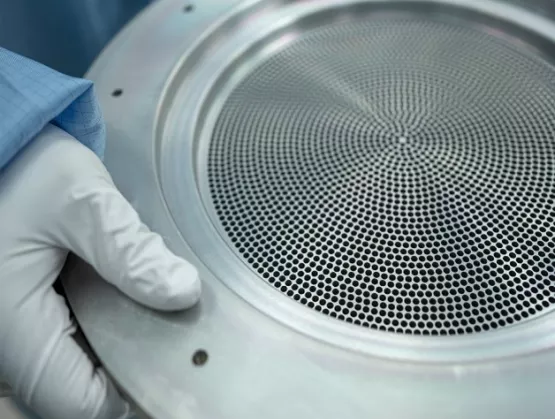
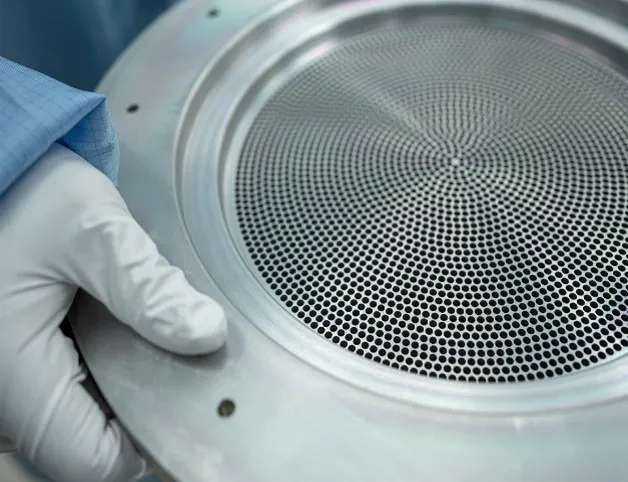
With each transition to a new technology node, fab requirements for metal and particle contamination become more stringent, posing challenges for existing coating methods such as anodization or plasma spray that may not provide complete protection against contamination especially on critical chamber components with complex geometry. SEMI spoke with Beneq business executive Sami Sneck about common metal and particle contamination issues with critical chamber components, coating methods to protect against corrosion, and properties to look for when selecting the optimal protective coating solution. Sneck discussed the unique benefits of atomic layer deposition (ALD)anti-corrosion coatings with Aluminiumoxide (Al2O3) and Yttrium Oxide (Y2O3) and offered recommendations on how to work with original equipment manufacturer (OEM) partners to design, test and implement an ALD coating solution for semiconductor equipment. To learn more, visit Beneq at its digital booth at SEMI Technology Unites Global Summit, available on-demand until March 26, 2021. Registration is open. SEMI: How does ALD compare with other coating methods such as anodization and plasma spray? Sneck: ALD enables conformal dense and pinhole-free coatings on complex shapes. We can deposit various ALD coating materials on parts made of various materials. All other coating techniques have limitations. For instance, anodization is conformal, but porous and is suitable for Al2O3 used for aluminum parts. Plasma Spray is a line-of-sight method and not conformal on complex shapes, such as holes in showerhead parts. SEMI: Which substrate materials work for ALD coatings? Sneck: In general, parts made of common metal materials, such as aluminum, stainless steel or titanium, all work well with ALD coatings. Commonly used ceramic materials work well with ALD too. Plastic materials need to be coated generally at a lower temperature, which limits the coating material selection, but materials such as Al2O3 can be applied as well. SEMI: What is the maximum coating thickness you can reach with ALD? Does this depend on the material? Sneck: Yes, indeed. The maximum coating thickness does depend on the material of the part that we are coating. Polymer materials for example, have a very large coefficient of thermal expansion, which limits the practical coating thickness to the 100-nanometer level. On metal and ceramic parts, coatings of several micrometers are possible too. Typically, ALD coating thickness on chamber components range from a few hundred nanometers to one micrometer. SEMI: Which aspect ratio can you coat with ALD? Sneck: Basically, ALD can coat aspect ratios of 1000:1, but this would be extremely slow. In practice, some of the most complex parts are showerhead parts with small holes. Typically, these have an aspect ratio of around 100:1, which is perfectly commercially feasible for ALD. An extreme example would be gas lines: In this case, the aspect ratio may be also around 100:1, but the physical distance from one end to the middle may be half a meter. In this respect, it is not practical to wait for gas diffusion to reach such a depth level. Instead, the gas lines can be coated by forcing the ALD precursor gas flow into the gas line parts. This works well but needs part-specific manifolds to guide the gases. SEMI: What is the lifetime of ALD coating compared to other coatings? Sneck: ALD coatings differ from other coatings a couple of ways. First of all, ALD coatings generate less particle contamination since they are non-porous. Secondly, and most importantly, ALD coatings can cover areas that other coatings cannot. What is considered the lifetime of a certain part depends on various factors. Ultimately, the lifetime needs to be confirmed by testing parts in actual process chambers by running a lot of wafers through the chamber and monitoring critical parameters such as particle level and yield. SEMI: If you have multiple shelves with parts in the reaction chamber, how does the shelf position affect the coating uniformity? Is center shelf better than top and bottom shelf? Sneck: Uniformity depends on many parameters, including the part geometry, part holder geometry, batch size and coating material. When the shelves supporting the parts are optimally designed and the gas flow is well-distributed to all shelves, all shelves from top to bottom show similar uniformity. SEMI: Is there any risk of cross-contamination? Sneck: Cross-contamination could potentially be caused by the parts themselves or by different coating materials. The batch setup is fixed in production use, which means the parts are the same in every batch. The only variation is that the batch may not be full in some cases, but then we do not fill the empty part of the batch with other parts that could cause contamination in order to prevent contamination from one part type to another. Cross-contamination from one coating material to another is not a usual concern but can be prevented by using dedicated reaction chambers for different coating materials. This is very easy to do with Beneq P800. Sami Sneck manages Beneq’s semiconductor part coating business. He joined Beneq in 2005 and since then has held various professional and management positions including product manager, application manager, director of ALD group, head of sales, and head of Asia. He earned his MSc degree in Chemical Engineering in 2001 from Helsinki University of Technology. Sneck has special expertise in Atomic Layer Deposition technology and business development. He has played a vital role in introducing various ALD production concepts and solutions to several industries ranging from jewelry to photovoltaics, electronics and semiconductors. Access the free webinar recording and discover the latest anti-corrosion coating solutions and the unique benefits of ALD (atomic layer deposition). This webinar is particularly helpful for process engineers, equipment engineers and others responsible for contamination control and equipment yield. Serena Brischetto is senior manager of Marketing and Digital Engagement at SEMI Europe.
Read More
SEMI spoke with Eyal Shekel, senior vice president of Service Strategy and Excellence at Tokyo Electron Limited, about the impact of artificial intelligence (AI) on smart manufacturing and how other fab solutions for smarter process tools are advancing semiconductor manufacturing.Eyal shared his views ahead of his presentation at the SEMI Fab Management Forum, 17 February, as part of the SEMI Technology Unites Global Summit, 15-19 February 2021, an online event. Join us to meet experts from Tokyo Electron and other key industry influencers. Registration is open. SEMI: AI technology is considered a key enabler for smart manufacturing. What are the latest trends? Shekel: The advent of advanced nodes and extreme complex 3D semiconductor geometry has lengthened time to market and increased costs in areas ranging from equipment development and large-scale metrology usage to monitoring yield inhibitors.AI is becoming a critical tool in the area of material informatics to determine suitable materials and processing techniques in order to meet the needs of future devices. Together with new materials and processes, the development and implementation of virtual metrology will enable accurate and almost absolute real-time monitoring of our customers’ device wafers at each stage of the manufacturing process.SEMI: What are the benefits of data analysis in the process from R D and Ramp-Up to High-Volume Manufacturing? Shekel: The new research field of materials informatics enabled by AI provides tools to guide the highly efficient discovery and optimization of production processes. For example, TEL has developed methodologies for co-optimizing processes and materials for etch rates.To monitor and manage the yield of semiconductor fabrication processes, direct metrology measurements are important. However, it is difficult to monitor all production wafers due to the time and cost involved. With deep learning AI, it is now becoming possible to predict every wafer’s metrology measurements based on production equipment data and previously processed wafer metrology variables. This enables total quality management and run-to-run control, while simultaneously reducing production costs and cycle time.SEMI: Can you tell us more about TEL Service Advantage?Shekel: TEL Service Advantage is a TEL global support organization that allows customers to select a service plan that fits their needs. Through TEL Service Advantage, we can quickly respond to customer requests and technical advancements. TEL Service Advantage provides various plans to maximize equipment maintenance efficiency for customers and productivity from equipment manufactured by TEL. TEL Service Advantage plans can be combined to meet customer needs and achieve maximum results.A key enabling element of TEL Service Advantage is TELeMetrics™. TEL analyzes equipment data from various sensors using a remote connection and, based on that analysis, provides solutions to customer-specific problems around equipment throughput and predictive maintenance.SEMI: How is AI helping during the pandemic? Can you share a success story? Shekel: The pandemic forced severe travel restrictions worldwide, making it very difficult or even impossible in many cases to visit our customers, as it is still the case today. Standard communication devices like smartphones and email helped at the beginning when TEL intensified the remote support by our Total Support Centre (TSC).TEL continued to develop its Service Advantage program quickly, and started using additional advanced tools and methodologies such as the following: Deployed AR (Augmented Reality) to remotely assist our customer and TEL engineers Secured remote connections into TEL tools to investigate parameters and logs, or to change set-up Used remote training courses that connects trainers via video conferencing systems and training tools in the factories to skill up engineers located in a different parts of the world Used AR glasses for tool start-up and troubleshooting Expanded TEL database global technology with multi-tool on languages search capabilities A key project at a customer site in Europe offers an excellent success story. Using all the approaches above, we collaborated with the local team to put a tool into production with no major delays. This was highly appreciated by the customer and very important for us.SEMI: What do you predict for the future? Shekel: Global technology infrastructure continues to develop and expand rapidly. Elements like 5G networks, IoT and advanced sensing capabilities will lead to what we call General AI, which will be based on neuro-like infrastructure. The auto learning will spread across domains and rely on internal logic and reasoning to automate many tasks that are manual today. In our industry in particular, General AI will enable workers to focus more on data analytics and future advanced R D rather than ongoing operations.SEMI: How can technology unite us? What do you expect from your participation at SEMI Technology Unites Global Summit?Shekel: Technology united us in the last 150 years. The connectivity started with telegraph and telephone and was used to exchange information over wider distances. Nowadays, video conference capabilities, AR and improving communications technology makes it much easier to unite people who are geographically dispersed. This becomes obvious and valuable especially during this pandemic period. As a fact, we are able to continue to perform all our key activities – our tool support, training and customer relationships – even if we cannot be present in person.The SEMI Technology Unites Global Summit is a great chance to stay connected to people and customers that I would normally meet at the SEMICON exhibitions.It also offers the opportunity to network with many more people who I would not be able to meet otherwise. Moreover, I can watch speeches and presentations at any time! Normally I would miss some programs since exhibitions and events took place at the same time.Eyal Shekel, senior vice president of Service Strategy and Excellence at Tokyo Electron Europe Limited, is a 27-year semiconductor industry veteran. Upon his graduation as a Mechanical Engineer from the Technion (Israel leading technical institute), he joined Applied Materials. In 1997 he moved on to Tokyo Electron (TEL) in Europe, served as the Regional Service Manager of Israel and, soon after, was appointed the company’s General Manager. Since 2005 Eyal has been part of TEL Europe senior management. He oversaw the Service and Support Operations for TEL Europe as a senior vice president until 2019. In his current role, he co-leads TEL’s Global Service Committee in Japan.The SEMI SMART Manufacturing Initiative is a global effort to promote awareness of and interest in smart manufacturing with a focus on delivering industry-recognized best-in-class programs and services to enable members to maximize product quality and productivity while reducing costs. Activities are focused on building out core capabilities to enable smart manufacturing across the microelectronics supply chain. MADEin4 is a consortium of 47 partners from 10 countries connecting the full range of supply chain – from semiconductor equipment manufacturers and system-integrating metrology companies to RTOS and key applications such as the automotive industry. The MADEin4 Project develops next generation metrology tools, machine learning methods and applications in support of Industry 4.0 high-volume manufacturing in the semiconductor manufacturing industry. Serena Brischetto is senior manager of Marketing and Communications at SEMI Europe.
Read More
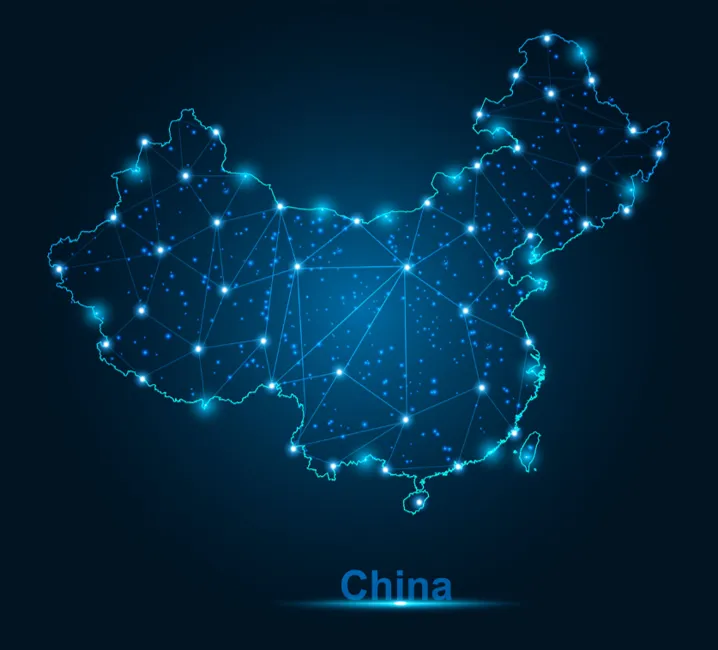
Shenyang is on an unwavering path to maturing its integrated circuit (IC) equipment manufacturing industry over the next few decades in response to the Made in China 2025 Strategy. Since the strategy’s introduction in 2015, the city, long a transportation and commercial hub of China's northeast, has built out a complete integrated circuit industrial chain integrating technical research and innovation, components and parts processing, and equipment manufacturing. Its ambition is to compete on the world stage.Shenyang has implemented policies and provided funding to support the development of its IC equipment and related industries to buttress the development of emerging industries. Speaking at the SEMI China Members Day 2019 in Shenyang, Zheng Guangwen, secretary-general of ICMTIA and Shenyang IC Equipment Industry Technology Innovation Strategic Alliance, said that the city, as a key IC equipment industry base in the upstream of China’s industrial chain, hopes to enter the international community in part by leveraging SEMI’s global platform. Zheng Guangwen, Secretary General, ICMTIA and Shenyang IC Equipment Industry Technology Innovation Strategic Alliance More than 150 representatives from member companies gathered at SEMI China Members Day 2019 to discuss China’s semiconductor industry investment and capital dynamics and semiconductor market trends. The event sought to promote stronger communication and interaction between the upstream and downstream of the semiconductor industry chain. The forum was co-sponsored by SEMI China and Shenyang Science and Technology Bureau and co-hosted by ICMTIA and Shenyang IC Equipment Industry Technology Innovation Strategic Alliance. Lung Chu, President of SEMI China Opening the event, Lung Chu, president of SEMI China, set stage for the discussion by noting that global semiconductor industry has been booming since 1957, reaching another record high of $470 billion in sales last year as it faced a critical juncture, with industry growth slowing in the first half of 2019. The slowdown was predictable and is temporary, a natural stage in the industry’s cyclicality. From a macro point of view, the development of advanced technology requires huge investment. There was an obvious gap in investment between enterprises, which often leads to the stronger become much stronger. Under these circumstances, it is very important for China to master key technologies and products during the process of catching up and surpassing. Each region should focus on its strengths.Enterprises should do their own business in a low-key way and keep a prudent and optimistic attitude. The number of SEMI China members has reached a new high. SEMI China is committed to becoming the best partner to realize China's semiconductor dreams. In promoting the development of global semiconductor industry and China's semiconductor industry, SEMI has continuously gathered strength and actively organized rich activities to promote the sustainable growth of Chinese semiconductor enterprises through international cooperation. Zhao Rigang, Director of SCTB, Shenyang Science and Technology Bureau Zhao Rigang, director of SCTB at Shenyang Science and Technology Bureau, pointed to the importance of SEMI’s pivotal role and global influence in cultivating cooperation between international and domestic industries including Shenyang’s IC sector. Speaking at the SEMI China Members Day 2019 in early June, Rigang said the growing importance of chips in China is a key catalyst for Shenyang’s rise as semiconductor sectors domestically and abroad invest heavily in a new generation of information technologies such as mobile Internet, cloud computing, big data, Internet of Things. Kang Jin, General Manager, SMIC Beijing For China’s semiconductor industry to flourish, the region must improve its IC supply capacity just as it has brought its PV industry to full maturation, said Kang Jin, general manager of SMIC Beijing. The key to developing China's integrated circuit industry, he said, lies in building a robust semiconductor supply chain. Zong Runfu, Chairman and General Manager, KINGSEMI Semiconductor Equipment Supply Chain DevelopmentLocalization has enabled KINGSEMI to optimize its technology design capabilities to produce high cost-performance equipment for greater competitive advantage, saidZong Runfu, chairman and general manager of KINGSEMI. While the localization rate of supply chain construction was over 50 percent, the localization rate for front-end equipment is still low. Zong Runfu said localization is imperative not only to lowering costs, but also to ameliorating the supply-guarantee rate, maintaining quality and shortening the delivery cycle. Russell Li, VP of Marketing and Business Development, WLCSP Packaging Solutions for 3D Active Sensing DevicesInternet of Things (IoT), artificial intelligence (AI), 5G and other technologies are starting to become a part of daily life as more sensors find their way into new retail stores and smartphones, a trend that will continue as autonomous transportation begins to take hold, said Russell Liu, VP of marketing and business development at WLCSP. The move to bring more human-like capabilities to technology is driving the implementation of perception function in devices, with passive sensors giving way to active sensors and machines translating the physical world into a 3D view through the eyes of a 3D camera. What’s more, the next generation of IoT devices will feature more integrated processors including signal processors, caches, sensors, photons, RF and MEMS, bringing the challenges of miniaturization to system integration. Liu said miniaturization will only be possible by developing advanced packaging technologies that enable highly integrated processors for mobile devices and intelligent automobiles. Wang Ronghua, VP of Technology, Dalian Xinguan Technology Getting Ready for GaN Power Electronics EraGaN offers excellent performance in optoelectronics, RF and power electronics and will coexist with and complement silicon devices for years to come, said Wang Ronghua, VP of Technology at Dalian Xinguan Technology. However, the industrialization of GaN power devices still faces technical challenges in application, reliability, packaging, epitaxy, device and process – all barriers to market adoption. To overcome these hurdles, GaN power devices must meet the reliability and cost-performance requirements of applications to which they are best suited.Ronghau said that GaN power devices, such as cascade and p-GaN enhanced devices, now support end products, proof that the era of gallium nitride has arrived. “Gallium nitride is quite different from silicon in epitaxy, device design and key technology, which requires close integration of upstream and downstream industry chains for effective promotion,” he said. Billy Feng, Executive Director, J.P. Morgan Is the Semiconductor Industry Still Cyclical? Since 2008, the semiconductor cycle has waned, disrupting the traditional thinking of investors, equipment suppliers and logistics channel providers as investors’ appetite for the chip industry investments has grown, said Billy Feng, executive director at J.P. Morgan. The long-term prospects for the semiconductor industry remain bright. But after reaching historic revenue highs in 2017 and 2018, the industry – and investor expectations – will enter a period of adjustment. Dr. Adam He, Executive Director, CGP Tech Fund The unique gene of the semiconductor industry consists of the blend of its lofty requirements for quality, reliability and consistency; cooperation between upstream and downstream sectors; internationalization; and a powerful ambition to innovate, said Dr. Adam He, Executive Director of CGP Tech Fund. He described Chinese chip enterprises he often encounters as falling into one of two entrepreneurial categories – IC experts and cross-border business people. Both want the answer to "how to make money and how to establish a solid competitive position?” He said. Adam believes that accessing the genes of the semiconductor industry is the answer to both questions and crucial to the maturation of China’s chip industry. The genes must be used to strengthen the Chinese manufacturing and materials sectors. Du Shanshan, Senior Analyst, SEMI China SEMI Market Outlook: Fab Investment, Equipment and Materials Market ForecastsEmerging technologies have sparked explosive semiconductor industry growth, said Du Shanshan, a senior analyst at SEMI China. While the industry will see a slight recession in 2019 due to memory market softness, trade wars and other factors, it is on stable footing for the long run. At the same time, China continues to optimize its IC industry chain, and semiconductor design and manufacturing companies have gradually grown in number. Over the next decade, the average growth rate of China's production capacity is expected to exceed 10 percent. Richard Feldman, VP of Global Expositions and Events, SEMI Richard Feldman, vice president of Global Expositions and Events of SEMI headquarters, presented the new SEMI Asia semiconductor business development plan to members and called on companies in mainland China, Taiwan and Malaysia to participate in SEMICON Europe to strengthen the influence of globalization.After the meeting, participants visited KINGSEMI Co., Ltd., Shenyang Piotech Co., Ltd, Shenyang SIASUN Robot and Automation Co., Ltd., Shenyang Fortune Precision Equipment Co., Ltd. and SKY Technology Development Co., Ltd. The event facilitated communications between upstream and downstream companies. SEMI China Member Day 2019 Group Photo Cherry Sun is a marketing manager at SEMI China.
Read More
IntroductionStarting July 4, 2022, PFOA (Perfluorooctanoic acid) levels in semiconductor manufacturing and related equipment (SMRE), including replacement parts, entering the European Union (EU) will be restricted to 25 ppb per component (or any part thereof). Semiconductor equipment components (and the parts thereof) of particular concern include fluid tubing and fittings, pipe/seal tape, wire and cable insulation, filters, valves, tanks, panels, reaction vessels and o-rings; if they are made from fluoropolymers or fluoroelastomers.When PFOA is used as an aid to the manufacture fluoropolymers such as PTFE, PFA, PVDF or fluoroelastomers such as FKM and FFKM (collectively referred to as fluoromaterials), an unintended PFOA residue can be trapped within the fluoromaterial. Buyers of components used in SMRE are usually unaware of the processing method used for any fluoromaterials they may contain, and, as a consequence, the potential for PFOA residue. This lack of information about potential PFOA residues could result in regulatory enforcement actions and restricted market access, particularly in the EU.The impact of restrictions on fluoromaterials used in SMRE has been introduced in previous SEMI articles ‘Fluorinated Compound Restrictions May Trigger Costly Equipment Changes’ and ‘Fluorinated Substance Restrictions Triggers Costly Equipment Changes.’PFOA and its related compounds, such as the ammonium salt APFO (collectively called PFOA in this article), are recognized internationally as hazardous chemicals and are now targeted for regulatory restriction in the U.S., Taiwan, Canada and the EU. The UN Stockholm Convention on Persistent Organic Pollutants (POPs) is also considering listing PFOA, which could lead to additional international restrictions.The SEMI EHS Division PFOA Compliance Working Group has been working to understand: The likelihood of PFOA residue entering the supply chain of new components The residual level of PFOA in fluoromaterials produced prior to the phase out of PFOA by some manufacturers The impact of PFOA residue on the secondary equipment market This SEMI resource page, ‘Elimination of PFOA from the Equipment Supply Chain,’ and the supporting FAQ contain the Working Group’s key findings and conclusions.PFOA in the Fluoromaterial Supply ChainSignatories to the U.S. EPA Stewardship Program, which include FluoroCouncil members, eliminated PFOA from their manufacturing processes by 2013. However, other fluoromaterial manufactures – particularly in China, Russia and India – might still use PFOA and pose a significant risk to the worldwide supply chain.China, the world’s largest fluoromaterial producer, accounts for 53 percent of global production of PTFE and 38 percent of worldwide production of PVDF, FEP and FKM. An estimated 75 percent to 85 percent of fluoromaterials are manufactured using PFOA in China. Fully 25 percent of these fluoromaterials are exported, primarily to the U.S, Japan, EU and India. What’s more, finished goods made from or containing fluoromaterials that might be used as components in SMRE are exported from China.Documentation that traces fluoromaterials through the supply chain back to the original fluoromaterial manufacturer is key to meeting the PFOA regulatory requirements. This traceability can be straightforward in cases when an SMRE manufacturer directly specifies the use of a fluoromaterial in a custom-fabricated fluoromaterial component. However, for off-the-shelf components (e.g., cable ties, wiring insulation, tubing) or the components assembled from these components (e.g., controllers), the complexity and dynamics of the supply chain makes traceability back to the original fluoromaterial producer almost impossible.Residual PFOA Levels If, or how much, PFOA/APFO residue is contained in a fluoromaterial depends on the manufacturing process. Details of the manufacturing processes are proprietary and vary widely. Post manufacturing thermal treatments, such as sintering, extrusion, and molding, can result in the rapid thermal decomposition of APFO above 250C, but PFOA is significantly more stable. The temperature and time of thermal treatments is also proprietary and varies depending on the type of fluoromaterial and what is being made.This variability makes it impossible to estimate the likely level of trapped PFOA or APFO in a finished component or a part thereof. It is unwise to use data on the level of residue made known for one case to extrapolate the level of residue across the fluoromaterial industry. However, an industry-wide range on the order of 1ppm-10ppm (nearly 1000 times the EU limit) is suspected. Testing for the presence of PFOA/APFO at 25ppb in components is also problematic as there is no standard test method, and results among the custom methods developed in each test lab may vary.Given this uncertainty in test methods, a system of supplier declarations warrants consideration.Impact on Secondary (Used) EquipmentThe EU REACH restrictions apply to SMRE and replacement parts placed on the market at any time (not just initial placement – known as “first placing on the market”). For fluoromaterial components manufactured prior to 2013, there is a higher likelihood of residual PFOA/APFO levels exceeding the 25ppb limit of EU REACH. In principle all the SMRE components containing fluoromaterials should be investigated, and those containing PFOA above 25ppb must be replaced before the SMRE can be legally placed again on the EU market. Companies (e.g., semiconductor manufacturers) in the EU who wish to sell used equipment within the EU will be required to demonstrate the used equipment is in compliance. Selling older used equipment would likely be unprofitable after necessary investigations and component replacements are completed.Next StepsWhile the EU semiconductor manufacturing industry heavily depends on the secondary (used) equipment market, EU regulators may be unaware of the PFOA restriction’s damaging impact to this market. The EHS Division PFOA Working Group, in conjunction with SEMI Europe, is now considering how to bring this concern to the attention of regulators and to collaborate and lobby for effective changes including possible modifications to the EU Persistent Organic Pollutants (POPs) regulation.
Read More
Large semiconductor fabs can devour electricity at clip of 100 megawatts per hour -- enough to power 50,000 homes1 and, according to a McKinsey study, more than automobile plants and oil refineries consume. So ravenous is their electricity consumption that some fabs have resorted to building their own captive power plants. Oversize fabs, depending on their location and local rates, can run up utility bills as high as $25 million each year, with electricity accounting for up to 30 percent of operating costs.Fabs use electricity to power HVAC, run cooling water, and for basic infrastructure. But the vast majority of electricity is gobbled up by semiconductor manufacturing process tools and their sub-fab support equipment such as vacuum pumps and abatement systems. In a typical fab, as much as 44 percent of the electricity is consumed by the processing equipment2. It’s not so hard to imagine. Etch and deposition tools need power to strike and sustain plasma, with multiple 1,000+ Watt RF power supply feeds per chamber and four, six or more chambers per tool, and vacuum pumps spinning and abatement running. The power load adds up quickly. Watts and WattsThe good news is that process tools aren’t processing wafers all the time. The bad news is that, in the past, there was no good way for the fab to know when process tools and support equipment weren’t running processes. Turning equipment off, or reducing power when not processing, wasn’t coordinated and standby states weren’t defined for readiness for a seamless power-up and return to processing. So what to do? Take action. That just what industry volunteers did when they met within SEMI’s Standards program and defined an equipment “idle mode” (SEMI E167 and SEMI S233). More recently, a SEMI Standard (SEMI E1754) was developed to define energy saving modes – how process tools communicate with sub-fab equipment, to reduce utility consumption when wafers are not being processed by the tool. Importantly, it also provides guidance on the standby state to return to full performance when the tool is needed to process wafers.5Good to be IdleThe semiconductor industry is now increasingly adopting a “smart idle” approach using these SEMI Standards. Fabs implementing these standards to take advantage of process tool idle periods can save more than 4.3 million € annually, according to AIS Automation modeling.6 This study also points to a savings of more than 16,000 tons of CO2 per year, the equivalent of taking more than 10,000 cars off the road.Who knew that recognizing when to be idle could bring such big rewards? If only I could apply that to my own life, but, for now, I will have to leave it to the fabs. SEMI International Standards volunteers make a huge difference to our industry every day. If you want to join the over 5,000 SEMI Standards volunteers (or join SEMI’s Sustainable Manufacturing eForum), with representation from over 2,000 companies, it’s free! Don’t be idle for this one, click here to join! http://www.semi.org/en/standards/P041367 1Bringing Energy Efficiency to the Fab, McKinsey 20132http://semiengineering.com/saving-energy-in-the-fab/3SEMI E167-1213 - Specification for Equipment Energy Saving Mode Communications (EESM)http://ams.semi.org/ebusiness/standards/SEMIStandardDetail.aspx?ProductID=211 DownloadID=32573SEMI S23-0813 - Guide for Conservation of Energy, Utilities and Materials Used by Semiconductor Manufacturing Equipmenthttp://ams.semi.org/ebusiness/standards/SEMIStandardDetail.aspx?ProductID=211 DownloadID=31094SEMI E175-1116 - Specification for Subsystem Energy Saving Mode Communication (SESMC)http://ams.semi.org/ebusiness/standards/SEMIStandardDetail.aspx?ProductID=211 DownloadID=38765http://electroiq.com/blog/2017/06/how-semi-standard-e175-is-saving-energ...6SEMI Standards a Potential Help for Saving Energy, Bert Mueller, AIS Automation 2016
Read More