downloadGroupGroupnoun_press release_995423_000000 copyGroupnoun_Feed_96767_000000Group 19noun_pictures_1817522_000000Member company iconResource item iconStore item iconGroup 19Group 19noun_Photo_2085192_000000 Copynoun_presentation_2096081_000000Group 19Group Copy 7noun_webinar_692730_000000Path
Skip to main content
Default Banner Image

Munich

MEMS and image sensors are shining stars in the chip industry as technology companies worldwide accelerate innovation in the fight against COVID-19. The tiny devices are behind advances in areas of electronics ranging from thermal imaging and faster point-of-care testing to microfluidics-based polymerase chain reaction (PCR) tools and techniques to detect SARS-CoV-2.SEMI recently spoke with Yole Développement analysts Dimitrios Damianos and Chenmeijing Liang about MEMS and imaging sensors market trends and how microelectronics-enhanced technologies are supporting the worldwide push to contain the spread of COVID-19.For additional insights on the technologies, join the SEMI MEMS Imaging Sensors Summit, held for the first time at SEMICON Europa, 12-13 November 2020 in Munich, Germany. Registration is open.SEMI: Despite the global pandemic, the MEMS and sensors market is still growing and is one of the healthiest industries, not only in Europe, but globally. What is driving this growth?Damianos: MEMS have been continuously evolving from the first sensors that were measuring pressure and acceleration to rotation sensing and visible light management followed by light sensing beyond visible and the expansion to ultrasound and multi-spectral. Now we are heading towards an era where we want to sense every aspect of our environment, with more processing and eventually analytics bringing more quality to the data.COVID-19 has impacted various global markets in very different ways. While automotive, mobility and civil aviation have suffered, the impact on telecommunications and medical has been positive. The effects on the consumer, mobile and industrial markets have been moderate. Moreover, COVID-19 is changing the perception of the current global supply chain in manufacturing, potentially leading to more localized value chains and further regionalization in order to minimize similar risks posed by the pandemic and the first lockdown.SEMI: Who are the main MEMS players based on your research? Damianos: For MEMS players, the picture in 2019 was not the same as 10 years ago, when Texas Instruments (TI) and Hewlett-Packard (HP) were leading the scene, with Bosch and ST Microelectronics following, all at comparable revenue levels. Now, Broadcom and Bosch lead with almost $1.4 billion in revenue each, and the rest of the MEMS key stakeholders compete in the $400 million to $600 million league. Microphone players profited from the voice interface adoption trend, while players active in MEMS for mobility and smartphones suffered slightly due to weak end-system demand.SEMI: What scenarios can we expect for each market with regard to the impact of COVID-19 on MEMS for 2020? Damianos: For 2020, at Yole Développement we expect the consumer market to contract slightly by 2.6%, with the automotive market to dip by 27.5%, and defense and aerospace by 20.5%. For the defense market, no major effect is expected, as all major programs still run for the year. The market may experience some slight delays in deliveries due to supply chain and logistics problems. However, sensors integrated in commercial/civil aerospace applications will suffer due to the general paralysis of the air travel industry. On the positive side, telecommunications could increase by 4.7%, medical applications by 10.6%, and industrial by 11.5%.Due to the global pandemic, some types of MEMS have spiked in demand this year. For example, demand for thermopiles and microbolometers used in temperature guns and thermal cameras has increased because of the need for contactless monitoring of people’s temperatures. Moreover, microfluidics for DNA sequencing and real-time polymerase chain reaction (PCR) diagnostic tests for detecting COVID-19 are gaining market relevance, with the latter serving as a premier method of detecting a bacteria or virus on the molecular level with high degrees of accuracy. Furthermore, pressure and flowmeters in ventilators will grow because of huge demand by hospital intensive care units (ICUs).SEMI: What growth trends do you predict for the long haul?Damianos: In the longer term, we expect global MEMS volumes to almost double, from 24.4 billion units in 2019 to 50.8 billion units in 2025, with a 13% CAGR during the same period. The global MEMS market could reach $17.7 billion in revenue by 2025.We see a trend to more wearable devices integrating a lot of sensors but also a move to a more consumer-oriented healthcare. Moreover, everything related to voice interfaces and voice/virtual-personal assistants (VPAs) will continue to see strong growth, increasing demand for MEMS mics with better quality and high-fidelity voice capture. MEMS devices are shifting to higher accuracy, ultra-low power, embedded intelligence and possibly some bio-compatibility for medical applications.MEMS players will try to escape the commoditization cycle and deliver more value by increasing the value of the data, either grouping many sensors to create sensor hubs or by adding processing, algorithms and software. Industry players are employing strategies such as adding extra processing close to the sensor (e.g. Knowles) or ameliorating the use cases of their applications of their clients (e.g. Bosch or ST). AI on the edge seems very alluring for extra value acquisition, with many startups already working on it. Some examples include always-on-sensing (Aspinity in collaboration with Infineon, Syntiant), echolocation (IMERAI) and predictive maintenance using inertial sensors (Cartesiam). This will be the next pit stop for MEMS technology for sure. SEMI: The CMOS Image Sensor (CIS) is a cornerstone technology in the development of devices powered by machine sensing and artificial intelligence (AI) for applications such as advanced driver assistance system (ADAS). CIS powers many of the ongoing revolutions in new technical products and use cases. What is the status of the image sensors industry? Liang: Last year was exceptional with a combination of high demand and high prices due to capacity limitations. Q4 2019 went way above the forecast, and, in the end, the CIS industry reached $19.3 billion for the full year. This year, we think it will return to normal, and, despite the pandemic impact, we expect significant growth in the range of 7% to 12%. Last year’s 25% year-over-year (YOY) growth was the highest we’ve seen over the past decade. Mobile still dominates the marketplace for CIS with 69% market share. Two markets, computing (8%) and consumer (5%), are adjacent to the mobile market but progressively losing ground due to the smartphone disruption.Security, at 6% market share, will probably be the second largest CIS market in the future. Although this is an area of excellence for the emerging Chinese players, unfortunately, they could be hit by the current trade war. The automotive market did very well from 2018 to 2019 because of the numerous applications recently developed for ADAS, viewing, and in-cabin applications. Lastly, the industrial camera applications benefited from large investments in automation, especially in the semiconductor and automotive industries, but here again many uncertainties remain as these markets will reshuffle in the post COVID-19 world. SEMI: Which CIS markets are most susceptible to seasonality and the impact of COVID-19?Liang: According to our quarterly CIS monitor, automotive and security were both negatively impacted by the pandemic beyond what we expected in terms of seasonality. For computing, the situation improved just prior the lockdown. Q1 got a positive impact with high sales results for laptops and tablets, but no significant impact was seen for security equipment. For automotive, the demand for cameras was very high in Q1, which is seasonally normal, despite the decrease of car shipments that followed later. The automotive CIS market in 2020 should remain relatively flat compared to 2019 due to the higher attachment rates of cameras despite the lower number of cars produced. Consumer and industrial segments dropped in Q1, which is typical early in the year.The next five years might be a bit slow, and although we forecast growth for the next year, in the future the market share will be lower in mobile. In fact, mobile CIS growth will fall below the CIS growth average, but we will see an increase of market share for the security, automotive and industrial segments. The CIS market could reach $28 billion in 2025.At first, COVID-19 had a limited impact on the production side, as factories in China are usually closed for the New Year holiday, when the pandemic started. While supply is currently recovering, we still consider the limited impact on demand. Smartphone production for 2020 will be down 6%, but camera shipments for mobile should increase about 10% this year. Another positive trend for the mobile market is optical fingerprint implementation. Currently, high-end Android phones use this kind of technology. For 2023, we estimate optical fingerprint technology revenue to be over $1 billion.The roadmap for the automotive market is driven by camera proliferation. We’ll see 10 cameras per car and more for some high-end vehicles. Increasing demand for safety and convenience will mean more cameras per car in the future. With a strong attachment rate, the market average in automotive is around 2.0 cameras per car nowadays, and we expect the market average to reach 3.5 cameras per car in 2025. In security, Charge Coupled Device (CCD)-based cameras are nearly out of the market, as CMOS-based IP cameras are most important now.SEMI: What are current key technology trends?Liang: 3D semiconductor technology is the hot topic. CIS wafer staking technology is indeed at the center of the CIS technology race. Future applications could be AI analytics or recently developed applications on new types of CIS. So far, we have seen the introduction of variants of the CIS pixel. Global shutter (GS) and indirect Time of Flight (iToF) were recently introduced, and now direct time-of-flight (dTOF) pixels are being used in high volume. 3D semiconductor technology is a bonanza for the industry, as it allows to pack more value in a single chip. While the surface of silicon is still increasing, additional silicon is added through stacking.With COVID-19 still a problem, the endpoint for smartphones in 2020 remains uncertain. The short-term impact for CIS will be slower growth with respect to the 25% YoY of last year. The downturn in car production will be mitigated by an increased attachment rate for automotive cameras. The security market will also help maintain CIS growth.For more insights, see the following reports: Status of the MEMS Industry 2020 3D Imaging and Sensing 2020 CIS Market Monitor Q2 2020 Dimitrios Damianos is a technology and market analysts at Yole Développement covering MEMS, Sensors, Photonics and Imaging. Chenmeijing Liang is a technology and market analysts at Yole Développement covering Imaging. Serena Brischetto is senior manager of Marketing and Communications at SEMI Europe.
Read More
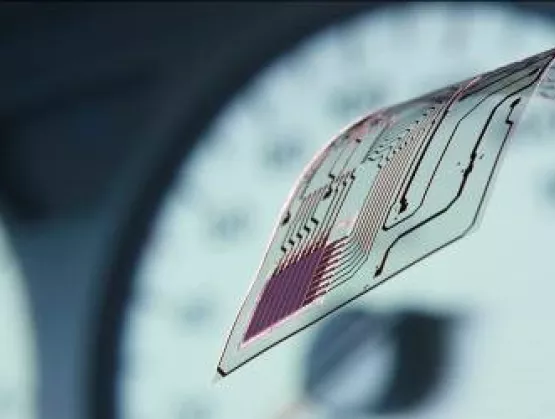
The combination of state-of-the-art semiconductor devices and upcoming manufacturing technologies for cost-effective processing of flexible film substrates has paved the way for a large variety of new applications in the emerging Flexible Hybrid Electronics (FHE).SEMI spoke with Professor Christoph Kutter, executive director, Fraunhofer EMFT, about current FHE technologies and market opportunities ahead of the Get Started with Flexible Hybrid Electronics workshop organized by Fraunhofer EMFT and supported by SEMI, 15 October, 2019, in Munich, Germany. To register for the event, click here.SEMI: Recent developments in thin semiconductors, new materials and cost-effective processing techniques have opened the door to a plurality of new applications and future products. What are the most innovative integration approaches?Kutter: Most interesting is the hybrid integration approach – the combination of most modern printing technologies and lithographically defined semi-additive copper wiring systems with state-of-the-art semiconductor components. Combining these best-of-breed technologies enables low-cost and high-volume printing but also ultra-low power electronics, which is important for every wireless device without or with limited power supply.SEMI: Integrating sensors, integrated circuits (IC), displays, antennas and communication devices on film substrates enables extremely thin and bendable form factors for applications where existing board-level technologies fall short. What are the key enabler technologies?Kutter: Key enabling technologies are fabrication of high-performance wiring patterns, integration of ultra-thin bare dies/components and ongoing advancements in roll-to-roll processing of film substrates. Besides the manufacturing technologies, materials such as electronic inks, substrates, isolation and passivation layers play a key role.SEMI: Are you currently working and experimenting on something particularly exciting?Kutter: We are in the process of developing an adaptive roll-to-roll direct imaging system that analyzes the position of the components manufactured before adaptive lithography steps are carried out in real time. We think that this concept will open up completely new processing possibilities for us. The technical infrastructure making this development possible is funded within the framework of the Research Fab Microelectronics Germany (FMD), the largest cross-site R D cooperation for microelectronics and nanoelectronics in Europe.SEMI: Can you share some details about the Fraunhofer EMFT roadmap?Kutter: Fraunhofer will push the hybrid integration – for example, combining printing technologies with high-performance CMOS – since we are convinced that hybrid integration is the only way to offer low-power systems for IoT with the highest performance and at the lowest cost. For this purpose, we are currently setting up a roll-to-roll die bond and component assembly machine.SEMI: What are your expectations for the future of flexible electronics and why would you recommend attending the workshop in Munich?Kutter: Flexible hybrid integration is becoming more important and offers the best of both worlds: mass volume printing technologies integrated with high performance ultra-low power electronics. You will see many examples of hybrid integration approaches during the workshop. This is a very important opportunity to highlight the latest developments in the semiconductor industry. Researchers, market analysts, material and product developers, and equipment suppliers will gather to provide insights into the latest flexible hybrid electronics innovations. We are particularly proud to organize this platform with SEMI and FlexTech Alliance.Agenda - Get Started with Flexible Hybrid ElectronicsLocation: Fraunhofer EMFT, Hansastrasse 27d, 80686 Munich, GermanyConference Chair: Prof. Dr. Christoph KutterENTRANCE Fees: 150 € VAT excl.Contact: [email protected] Prof. Dr. Christoph Kutter is the director of the Fraunhofer EMFT, focusing on sensing technologies based on silicon electronics and flexible hybrid integration technologies.Kutter completed his physics studies at TU Munich. In 1995, he earned his doctorate in physics at the University of Konstanz. Serena Brischetto is a marketing and communications manager at SEMI Europe.
Read More
SEMI spoke with Antoine Amade, Regional Senior Director EMEA at Entegris, about the challenges set by the car industry, and the concept of “zero defect” and the need for a collaborative approach ahead of his presentation at the Strategic Materials Conference at SEMICON Europa 2018, 13-16, November 2018, in Munich, Germany. To register for the event, click here.SEMI: The automotive industry is setting new challenges. This is very exciting source of growth for the global supply chain, but what are in your opinion the automotive requirements of the future?Amade: By 2030, 50% of the car cost will be electronics related. With the autonomous cars, there will be no tolerance for any type of chip defects because it will have a direct impact on human safety. With that in mind, higher reliability, increased efficiency and control across the supply chain will be the main requirements of the automotive industry.SEMI: Is the New Collaborative Approach the solution to overcome the challenges related to the automotive requirements of the future such as defects and contamination? What can you tell us about this approach?Amade: The automotive industry presents a great challenge to all of us, reaching the ppb level in terms of defectivity. In other words, this zero defects objective requires a collective awareness and understanding: Within an aging and more complex manufacturing environment, we all need to challenge the status quo and go for a new collaborative approach.SEMI: What does Entegris propose?Amade: We trust that contamination control has a major role to play to reach the zero defects. We are now in the 3rd generation of contamination control. After the focus on the cleanroom environment and equipment, materials are now at the center of the attention. With Entegris offering the broadest portfolio in terms of advanced chemicals, filtration and purification, and materials handling, we’re uniquely positioned to address precision, purity, integrity, and safety challenges.SEMI: How could this support fab managers in their daily challenges and mid-term future objectives?Amade: The new collaborative approach is a journey. It is a consultative process to provide a fresh set of eyes and expertise on the key areas of concerns in the fabs. It is a multidisciplinary approach with zero defectivity as the main goal. It is focused on base line improvement, better process control, more uniformity and prevention of excursions.SEMI: What do you expect from SEMICON Europa Strategic Materials Conference?Amade: It's the perfect platform to deliver our message in front of the whole ecosystem. It obviously concerns the fabs, but also material suppliers, and even carmakers. We expect this new view of collaboration will create an engagement from all parties. It is not a coincidence that this is called New Collaborative Approach. Antoine Amade joined Entegris in 1995 as an application engineer in its semiconductor business. In his current role as EMEA Sr. Regional Director, Mr. Amade manages a sales, customer service and marketing team responsible for growing the semiconductor business in Europe and Middle East.Mr. Amade held leadership positions at Entegris including gas microcontamination market management, strategical account management and regional sales management. He has a degree in Chemical Engineering from ENS Chimie Lille and is a member of Semi Electronic Materials Group for Europe. Serena Brischetto is a marketing and communications manager at SEMI Europe.
Read More
SEMI spoke with Udo Gómez, senior vice president at Robert Bosch GmbH, about MEMS technology requirements relative to standard IC design and manufacturing. Gómez highlighted solutions to challenges of MEMS technology development and manufacturing ahead of his presentation at the 22nd Fab Management Forum at SEMICON Europa 2018, 13-16, November 2018, in Munich, Germany. To register for the event, click here.SEMI: Regarding standard processes for MEMS, the situation used to be known as the MEMS law: "one product, one process." Today, the variety of MEMS sensors and their application requirements have drastically increased. What is the status of process standardization today?Gómez: Today, standardization in MEMS is certainly not as advanced as it is for conventional semiconductor processes and model environments. However, MEMS technology has developed very much in recent years. The understanding of the numerous interactions between mechanical, chemical and electrical parameters has grown enormously. Improved process tolerances and optimized simulation tools already allow the design of standard components and their manufacture using largely standardized processes and systems.This also enables standardized MEMS process platforms in foundries for fabless suppliers, since adapting process parameters to standard designs no longer means maximum effort. But the situation changes significantly if you want to implement more powerful MEMS components for demanding applications. In this case, much effort is still required in technology development to bring new and innovative designs to mass production readiness.SEMI: How does this situation interfere with the need for a fast, market-driven product development and production ramp-up?Gómez: The constant advancement of (MEMS) technology to new limits requires enormous efforts and time. Thus, fast product cycles in consumer electronics (CE) pose particular challenges. Close interaction between product and technology development is a key success factor here, as well as a deep understanding of the cause-effect relationships. This is the only way to identify and minimize process risks at an early stage.However, the steep product ramp-ups usually required in CE also offer advantages, since learning curves are run through at much shorter time-intervals than, for example, the comparatively slow ramp-ups in the automotive industry. In this way, automotive products benefit directly from the results of CE components. Conversely, CE products benefit from the higher requirements in the automotive sector, whose technologies can be developed and tested on longer time scales.SEMI: What are the critical and different design and manufacturing requirements for MEMS products versus standard IC products, which typically run in highly standardized processes?Gómez: A very special feature of MEMS devices is their multi-physics character – mechanical, electrical, magnetic, fluidic, and even chemical and/or optical effects may play a role. This is very different from standard semiconductors. Depending on the type of sensor or actuator, dedicated and often quite sophisticated models need to be developed to ensure proper function of the device – and not least to ensure full functionality after misuse. For example, shocks or drop events are usually not relevant for standard ICs but they may be extremely relevant for MEMS devices with their fragile mechanical structures.Similarly, the influence of packaging effects like bending or thermomechanical stress may be much more significant in MEMS devices than for standard semiconductors. And last but not least, a physical/magnetic/chemical/optical … stimulus usually needs to be applied when testing MEMS devices. All of this adds complexity to the manufacturing flow and requires dedicated know-how both during the engineering stage and in mass production.SEMI: BOSCH is working to extend the process platform to include complex 3D structures. What are the advantages and benefits of using 3D structures compared to standard 2D structures? Are there 3D structured products already in mass production?Gómez: We have recently extended our well-established surface micromachining process for MEMS inertial sensors (which basically uses one functional silicon layer for the movable MEMS device) to an advanced process using a second functional micromechanical layer. This opens up a large variety of design options and allows the realization of entirely new sensor topologies. For example, our most recent z-axis accelerometers for automotive and CE applications have 3D-like structures for the movable mass.This has several advantages: Firstly, the sensors can be further miniaturized as they now have fixed electrodes for capacitive readout above and below the movable mass, i.e. a larger capacitance per area. Secondly, due to their improved symmetry, these sensors have greatly improved immunity against several parasitic effects, e.g. mechanical stress from soldering or bending on a PCB. Overall, this technology enables us to offer better performance at still very competitive product size and cost. Both automotive and CE sensors are in high volume production for different applications and customers. SEMI: What do you expect from SEMICON Europa 2018 and why do you recommend attending the Fab Management Forum?Gómez: After our very positive impressions of SEMICON Europa 2017, we are convinced that SEMICON 2018 will again meet with widespread interest within the semiconductor industry. SEMICON is an excellent opportunity for us to meet our customers and partners. The Fab Management Forum, which ideally takes place parallel to SEMICON, is a highly valuable addition for us to exchange ideas with leading industry partners and to gain new insights into current trends and technical progress. Within that context, the Forum will make a valuable contribution toward strengthening the European position in semiconductor and MEMS manufacturing. As senior vice president of Robert Bosch GmbH, Dr. Gómez heads Sensor Engineering at Bosch Automotive Electronics (AE/NE-SE) in Reutlingen, Germany, the world’s largest MEMS supplier serving the Automotive, Consumer Electronics and IoT industry. Dr. Gómez started his career at Robert Bosch GmbH in 1999 at Corporate Sector Research and Advanced Engineering (MEMS technology) after completing his doctorate in physics. Before joining Bosch Automotive Electronics in April 2018, he worked in various management positions at Bosch and also held the position of Chief Expert for MEMS sensor technology. From 2013 to March 2018, he was Chief Technical Officer of Bosch Sensortec GmbH - a fully-owned subsidiary of Robert Bosch GmbH, responsible for research and development of micro-electro-mechanical sensors (MEMS) for consumer electronics, smartphones, security systems, industrial technology and logistics.Dr. Gómez has served as Deputy Chairman of the Board of VDE/VDI-Society Microelectronics, Microsystems and Precision Engineering (GMM) since 2014 has been a member of the GSA (Global Semiconductor Alliance) EMEA Leadership Council since 2015.Serena Brischetto is a marketing and communications manager at SEMI Europe.
Read More
SEMI spoke with Balaji Nandhivaram Muthuraman, Package and Material Simulation engineer at Dialog Semiconductor, about the state of reliability testing for wafer-level chip scale packages ahead of his presentation at the Advanced Packaging Conference at SEMICON Europa 2018, 13-16, November 2018, in Munich, Germany. To register for the event, click here. SEMI: Since the beginning of package development reliability testing has played a key role in Wafer Level Chips Scale package (WLCSP) investigation. Lately, the role of simulation and predictive reliability significantly contributed in reducing package development time. To what extend can we predict potential failures for WLCSP packages in an early design phase by simulation?Muthuraman: Reliability testing is essential and crucial for the electronic packages. It is during the package development phase that several design iterations need to be considered and, in some cases, many feasibility studies for the package are executed. This means we require significant reliability test measurements, which could influence product-development time. For example, Temperature Cycling on Board (TCoB) reliability testing would take approximately 65-75 days for testing the package reliability subjected to 1500 temperature cycles. Each cycle involves exposing the device at hot and cold temperatures with a specified temperature profile. Executing such Board Level Reliability (BLR) tests for all feasible package designs is a tedious process that could lead to an increase in package development time. This is the stage where numerical simulation methodology helps us to foresee potential failures in Board Level Reliability. Predicting delamination or cracking of passivation/metal interface layers based on the WLCSP design layout and estimating the characteristic life of smart device subjected to temperature load are some classic examples of predicting WLCSP package behavior in an early design phase by simulation methodology.SEMI: We can definitely say that predictions occurring during the early stage are key to success. But how exactly can numerical simulation help estimating?Muthuraman: From a thermal reliability point of view, determination of the optimum material combination – bill of materials for device – is used to predict whether a heat sink is required for the device to meet thermal performance. This is not all. At an early design stage, the simulation methodology can be used to estimate device performance under varying thermomechanical loads. Numerical simulation at early package development phase helps the researchers by predicting the possible temperature contour field and stress contour field of the smart device under a given loading condition. The estimation accuracy of potential issues through numerical simulation depends on the material models implemented and consideration of realistic load condition under which the package operate in real life situation. For example, engineering judgements can be made using numerical simulation of Solder Joint Reliability (SJR) analysis to decide whether an Underfill material is required between the Package and the Printed Circuit Board (PCB).SEMI: Are all conditions tested during the reliability investigations specific to fit a certain type of applications or do these vary?Muthuraman: Reliability investigations are based on the end application of the electronic devices. For example, handheld device applications will be exposed to a reliability condition up to a maximum of +85oC, whereas smart devices designed for an automotive application would be tested with a typical temperature of +125 oC or up to +150 oC. In some cases, the testing conditions are customized based on specific customer requirements. Moreover, reliability conditions can also be customized to study some specific failure mechanism. SEMI: Can you describe for which one?Muthuraman: Thermal cycling profile is based on device application and/or specific requirement from our customer. For example, handheld devices use a typical temperature range of +85°C to -40°C with 20°C/min ramp time and 20 minutes of dwell time. There is possibility of adjusting the ramp and dwell time of the Temperature Cycling qualification test, provided such accelerated test does not lead to other failure modes.SEMI: What failure mechanism was the subject of the study in this specific case?Muthuraman: Electronic package reliability behavior without and with underfilled devices is explained in this study with the help of temperature cycling on board (TCoB) measurements and validated with numerical simulation. In the paper to be presented at SEMICON Europa, failure occurring at the interface of the solder and Under-Bump Metallization (UBM) structure is discussed. Behavior of such failure mechanism is illustrated with different WLCSP package sizes subjected to varying thermal load condition. One of the key aspects of the subject is the board-level reliability (BLR) measurement and simulation validation showing how the failure mode could be shifted from solder joint to the metal interface layers between UBM and interconnection to Silicon Chip, depending on the WLCSP design layout. The reasons for such shifts in Failure phenomenon are explained and necessary design optimization is suggested for improvement. Another key aspect of this study is determination of Fatigue Life Model for WLCSP family using the SACQ solder. SEMI: Are you currently working and experimenting on something particularly exciting?Muthuraman: Recently, we concluded our engineering analysis of thermomechanical reliability of Large Wafer Level Chip Scale packages. In September 2018, I presented this research work in an International Conference held in Dresden, Germany. Dialog Semiconductor GmbH was awarded the “Best Paper Presentation for the year 2018” for this work. This success is attributed to the entire team of Package and Material simulation experts at Dialog Semiconductor GmbH lead by Mr. Baltazar Canete and IC Package-Design Simulation group managed by Mr. Rajesh Aiyandra. We have started our investigation on the influence of Board Level Reliability of WLCSPs due to varying metal concentration of inter-metallic layer. We, at Dialog, are also working on possibility of thinner WLCSP. All these activities would include extensive Temperature Cycling on Board (TCoB) measurements, Statistical Analysis of measurement Data and would then be validated by Numerical Simulation. SEMI: What are your expectations for the future and why would you recommend attending SEMICON Europa Advance Packaging Conference?Muthuraman: SEMICON Europa is an important platform for Dialog Semiconductor GmbH to showcase the latest developments in the semiconductor industry. It is an opportunity to meet other industry experts, partners, and customers, and exchange various innovative ideas and to get new insights. Many semiconductor companies are based around the Munich area as well world-class universities. We are particularly interested in innovation, workforce and talent development themes. SEMICON Europa gives us a platform for greater interaction with the academicians and research scientists. This way, we bridge the gap between industry and University researches, thereby moving forward in innovative technologies. We, as Dialog Semiconductor GmbH, have also a development center near Munich (Germering). Our expectations for the future are very positive and vibrant. We are always ready to take up the industry challenges and demands and provide the best-in-class solutions to our product users. Dialog Semiconductor GmbH is certainly poised for higher growth in coming years. Balaji Nandhivaram Muthuraman BioBalaji Nandhivaram Muthuraman is a Packaging and Material Simulation engineer at Dialog Semiconductor GmbH, Germany. He has authored/co-authored conference publications including in the area of molecular dynamics simulation on assembly of carbon nanostructures; Analysis of thermoset material used in smart devices and reliability of wafer level packages. Recently, he has been awarded with the “Best Paper Presentation for year 2018” in the area of Board Level Reliability of Wafer Level Chip Scale Packages, in a recently held international semiconductor conference. His current areas of working interest include reliability investigation of electronic packages and developing fatigue models for reliability assessment of Dialogs products. He obtained his Bachelor’s degree in Aeronautical Engineering from Anna University, India and Master’s degree in Computational Mechanics of Materials and Structures from University of Stuttgart, Germany. Serena Brischetto is a marketing and communications manager at SEMI Europe.
Read More
SEMI met with Gerald Beyer, program manager at imec, to discuss the co-existence of various 3D interconnect technologies and their need for new materials and integration solutions. The two talked in the runup to his presentation at the Advanced Packaging Conference at SEMICON Europa 2018, 13-16, November 2018, in Munich, Germany. To register for the event, click here. SEMI: Can you confirm this trend towards heterogeneous integration and do you think it will be a long-term development trend?Beyer: We consider heterogeneous integration as a scaling booster for functional partitioning and as a fashion method to create systems, which would not be possible or economical on such as a single chip. As you can apply it to numerous systems, we expect it to stay for the long term.SEMI: What are the new critical challenges for the combination of different technologies into one package?Beyer: When you create a complex system, there is usually more than just one challenge. On one side, you need to be able to design such a system. If you disintegrate a large chip, you need to decide how to reconstruct it, i.e. which function goes into which strata. You would like to do that not manually but with a set of tools supporting the designer. Only recently EDA (Electronic Design Automation) and design houses have started to support this idea.On the technology side, interconnections between some strata of such a reconstructed chip will require small pitch interconnects of the order of 1µm pitch and less. Today, wafer-to-wafer bonding technologies have sufficient overlay margins for 1µm pitch. Wafer-to-wafer bonding technologies, however, have a number of constraints such as equal die size and the necessity to realize chip stacking rather in a fab environment than in a traditional packaging house. Die-to-wafer assembly technologies still need to bridge the gap to deep sub 10µm pitch in terms of alignment and cleanliness.SEMI: What kind of new materials or integration solutions do you expect to be developed? Are you working on it already?Beyer: As explained above, die partitioning requires sub 1µm pitch interconnects. We are investigating fine pitch wafer-to-wafer and die-to-wafer (direct) bonding. For the latter, not only new alignment capabilities but also die cleaning and thin die handling technologies need to be developed. To build a complete system with data processing, memories etc., novel integration schemes such as Flip Chip – Fan Out Wafer Level Packaging with high density 2D and 3D interconnect capabilities are being investigated. These new systems differentiate from current ones by high density Through Package Vias (TPV), Si bridges and sub 2µm line/spacing RDL. The new integration approaches push the materials such Temporary Bond Materials (TBM), Wafer Level UnderFill’s (WLUF), photo patternable polymers for fine Line/Spacings to name a few, to the limits. Hence, development of new materials is a key aspect.SEMI: What trends and developments do you expect in the near future and why would you recommend attending the Advanced Packaging Conference?Beyer: The development and commercialization of products using heterogeneous integration is a big effort drawing on resources from EDA vendors, materials and packaging tool suppliers, OSATs, foundries, memory suppliers and IEDMs and academia alike. The agenda of the Advanced Packaging Conference at SEMICON Europa reflects this diversity and I am looking forward to interesting discussions with all participants. Gerald Beyer has been working in the field of 3D Technologies since 2012 as the technology program manager of the 3D System Integration Program of imec. Prior to this role, he was the interconnect program manager and group leader of BEOL integration. He received a PhD in materials science from Imperial College, London and a MSc from Thames Polytechnic, London.Serena Brischetto is a marketing and communications manager at SEMI Europe.
Read More