downloadGroupGroupnoun_press release_995423_000000 copyGroupnoun_Feed_96767_000000Group 19noun_pictures_1817522_000000Member company iconResource item iconStore item iconGroup 19Group 19noun_Photo_2085192_000000 Copynoun_presentation_2096081_000000Group 19Group Copy 7noun_webinar_692730_000000Path
Skip to main content
Default Banner Image

resilience

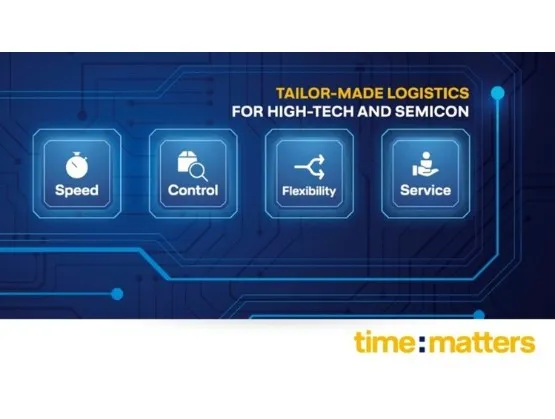
The New Reality of Semiconductor Supply ChainsThe semiconductor industry is one of the most globally connected and time-sensitive sectors in existence. From design and wafer fabrication to testing, assembly, and delivery, every step depends on flawless coordination across borders, suppliers, and time zones. More than 1 trillion chips move through global supply chains each year[1], connecting suppliers, foundries, and fabs across continents.But as the world becomes more complex and unpredictable – with trade tensions, capacity shortages, shifting technology cycles, and driven by increasing AI and energy demand – that coordination is increasingly under pressure. Even a minor delay in one place can halt production in another. A single missed component, delayed shipment, or grounded flight can trigger line-down costs that can exceed $4 million per hour in advanced fabs[2].That’s why logistics is no longer a background process; it’s a strategic function that directly influences performance, reputation, and profitability.Figure 1 - We live in a complex and unpredictable world where global events have significant impacts. When Every Hour MattersFew industries feel the impact of delays as directly as semiconductors. One missing component, a grounded flight, or a customs delay can trigger a chain reaction that stops production lines, delays product launches or breaks contractual commitments.Time-critical logistics plays a distinct role in safeguarding supply chain performance, staying in control and enabling companies to recover in hours instead of days. It serves as the system’s shock absorbers when conventional routes are disrupted, timelines collapse, or customer commitments are at risk.The ROI of UrgencyTime-critical shipments are costly—but in the semiconductor world, not acting fast is far more expensive and pose significant consequences. A single line-down event can cost millions of euros per day, depending on the process stage and the customer involved. Compared to that, the premium for a same-day or next-flight shipment is minimal.When companies integrate time-critical logistics as a planned capability, the ROI becomes tangible.Avoided downtime: Faster recovery after supply interruptions directly protects production yield and customer commitments.Reduced inventory buffers: If rapid response capacity is available, less working capital is tied up in safety stock.Customer retention: Reliable continuity strengthens trust and long-term business relationships.In this sense, time-critical logistics isn’t just an operational expense – it’s a continuity investment. It protects revenue streams and reputation and gives manufacturers the agility to respond to whatever the next disruption brings.Example scenarios include:A single fab tool delay can idle an entire production line, costing millions per hour. During the 2024 Taiwan earthquake, a single supplier delay triggered hundreds of millions in global production losses.A next-flight-out or onboard courier shipment typically represents less than 1% of that downtime cost.Rapid recovery also prevents ripple effects such as delayed customer deliveries.The companies that embed time-critical logistics as a strategic capability gain not only cost protection, but competitive agility.From Efficiency to AgilityTraditional supply chains were built for stability and scale: move high volumes, keep costs low, and plan far ahead. But in the semiconductor industry, speed and adaptability now define competitiveness.Agility means having the systems, partners, and mindset in place to act decisively when the unexpected happens. Leading companies are now integrating dedicated control towers, predictive data insights, and predefined emergency logistics playbooks – turning reaction time into a measurable performance indicator. However, agility is not only a matter of infrastructure – it depends on data-driven visibility and cross-industry collaboration.Collaboration as the Real DifferentiatorNo company can face disruption alone. Semiconductor supply chains depend on the combined coordination of equipment makers, material suppliers, foundries, logistics providers, and government agencies.Collaboration is therefore the new competitive edge. Shared standards, visibility tools, and coordinated crisis response frameworks – like those developed under the SEMI Supply Chain Management Initiative – are helping the industry build collective resilience. These cross-functional efforts are where innovation scales.Looking AheadThe semiconductor industry will continue to expand into new regions and technologies. Each step adds complexity and, with it, vulnerability. The next decade will test not just how fast companies can produce, but how fast they can recover. Future disruptions – whether geopolitical, environmental, or digital – are inevitable. The question is not how to avoid them, but how to respond faster and smarter when they occur.That’s where time-critical logistics will continue to make its mark. It is more than just a transport solution. It gives companies the ability to act decisively in moments that matter most – transforming time from a constraint into a competitive advantage that ensures business continuity.Key TakeawaysSemiconductor supply chains are uniquely time-sensitive — a single delay can halt multimillion-dollar production lines.Integrating time-critical logistics improves responsiveness, reduces inventory needs, and safeguards business continuity.Agility, not efficiency, will define the next decade of semiconductor competitiveness.Collaborative industry frameworks like the SEMI Supply Chain Management Initiative are key to building resilience.How ready is your supply chain?Learn more about time:matters’ tailored logistics solutions at SEMICON Europa 2025 (Hall C2, Booth 433), November 18-21 in Munich and attend the company’s presentation on the TechARENA stage on November 19. For more information or to schedule a meeting at SEMICON Europa, click here to contact Remy Schoenzetter.Remy Schoenzetter is Global Head of Business Unit High Tech Semicon at time:matters.[1] Statista: Global semiconductor unit shipments 2021; SIA/WSTS Annual Reports[2] McKinsey: "Need to boost semiconductor fab efficiency?" (2023); LinkedIn Air Monitor analysis (2025); Critical Manufacturing Industry Blog (2024)
Read More
Political leaders worldwide are investing hundreds of billions to reduce semiconductor dependencies and secure their positions in this nearly $630 billion market, according to the World Semiconductor Trade Statistics (WSTS). Yet the extreme specialization and geographic concentration of the semiconductor supply chain makes complete self-sufficiency economically impractical and strategically questionable.After decades building an intricate global production network optimized for cost and innovation, the industry now faces pressure to splinter into regional blocks. But this raises important questions: Can any nation truly achieve chip self-sufficiency? And would disconnecting from the global ecosystem ultimately hurt competitiveness more than help security?The Independence IllusionThe global semiconductor industry has carved itself into specialized kingdoms. The United States dominates chip design and certain equipment categories, representing about 50% of global revenue. Taiwan controls roughly 67% of global foundry capacity through TSMC—so much so that semiconductors represent one-sixth of Taiwan's total GDP. Europe's strength lies in ASML's advanced EUV lithography technologies, the machines everyone needs but only one company currently makes.China plays an interesting double role too: it's both the largest semiconductor consumer at 50% of the global market and an important producer, holding 31% of total global foundry capacity in 2023.So far, every "independence" initiative has deepened interdependence. The US needs the Netherlands for lithography equipment. Europe needs Asia for high-end chip production. China develops much of its own equipment but remains dependent in key areas. The House of Cards ProblemFor decades, the semiconductor industry perfected making incredibly complex products cheaper every year through extreme specialization. Each company focused on one slice of the supply chain and became world-class at it. But nobody talked about what we built: a house of cards. The entire global economy now depends on a supply chain so specialized that losing even one supplier can shut down entire industries.The COVID pandemic exposed what industry insiders had warned about for years: the chip supply chain works brilliantly until it doesn't. When it fails, it fails spectacularly. The automotive industry alone lost $210 billion in 2021, and some manufacturers still haven't fully recovered.This 2021 chip shortage wasn't just a pandemic problem. Currently, rising geopolitical tensions are changing a supply crisis into a strategic nightmare, forcing countries to rethink their entire approach to semiconductors and their production.The Barriers to IndependenceThe semiconductor industry faces serious barriers that make true independence incredibly difficult for any single nation.First, the supply chain depends on chokepoints controlled by just a few companies in specific regions. Electronic Design Automation tools—essential software for designing any chip—come mostly from three US companies: Synopsys (~31%), Cadence Design Systems (~30%), and Siemens EDA (~13%). Without these design tools, you simply cannot create modern semiconductors. Manufacturing equipment presents an even tighter bottleneck, with ASML holding 100% control of EUV lithography machines needed for advanced chips. Second, the talent shortage makes building new capabilities nearly impossible. By 2030, semiconductor companies will need 1 million additional skilled workers. Developing semiconductor expertise takes a decade of hands-on experience, and most skilled professionals already work in established industry clusters like Taiwan, South Korea, and Silicon Valley. You can't simply relocate these engineers or train new ones quickly enough to staff multiple new regional semiconductor industries.Third and finally, resource requirements exceed what most countries can realistically provide. Building advanced semiconductor chip plants costs $20-30 billion each and they take years to construct before producing a single chip. These facilities consume up to 15 million litres of ultra-pure water daily and large facilities require up to 100 megawatt-hours of power per hour. Beyond the physical infrastructure, technical complexity has made first-time silicon success rates drop to just 14%, while 40% of semiconductor demand still comes from older process nodes, requiring completely separate supply chains for different chip generations.The Trillion-Dollar Investment RaceConcerns about supply chain security have triggered government interventions worldwide. The United States committed $52.7 billion through the CHIPS Act plus additional tax credits. While President Trump initially called for eliminating the program in March 2025, he instead signed an executive order on March 31, 2025, creating the "United States Investment Accelerator" to take over CHIPS Act implementation. TSMC also announced a new $100 billion investment to build five additional chip facilities in the US.Countries across the globe are racing to establish or strengthen their semiconductor capabilities. India has entered the semiconductor competition with its $10 billion Semiconductor Mission and secured investment from Micron Technology, which is constructing a $2.75 billion assembly and test facility. Japan has intensified its semiconductor strategy by establishing Rapidus Corporation with a government support package that is estimated to reach $11.46 billion aimed at revitalizing its domestic chip industry. Meanwhile, the European Union has established a €43 billion Chips Act through 2030, China launched its third "Big Fund" phase in May 2024 with $47.5 billion, and South Korea has developed a $450 billion K-Semiconductor strategy through 2030.These initiatives are changing the semiconductor industry on a global scale. However, complete self-sufficiency would require significant additional global investment and result in 35-65% semiconductor price increases due to suboptimal scale and inefficiencies.What Comes NextThe quest for chip self-sufficiency has become a trillion-dollar global endeavor, with countries placing enormous bets on facilities that may not pay off for years. Complete semiconductor independence remains financially prohibitive for any country, but strategic resilience is achievable.The winners will be those who build the most resilient networks and manage interdependence best. Rather than chasing impossible independence, nations should focus on strengthening their existing advantages while addressing their most vulnerable dependencies. Full independence remains a fantasy, but smart interdependence offers a realistic approach to semiconductor security.Click here to read the full white paper.About the AuthorsJan-Bart Smits is a Managing Partner at Stanton Chase Amsterdam. He began his career in executive search in 1990. At Stanton Chase, he has held several leadership roles, including Chair of the Board, Global Sector Leader for Technology, and Global Sector Leader for Professional Services. He currently serves as Stanton Chase’s Global Subsector Leader for the Semiconductor industry. He holds an M.Sc. in Astrophysics from Leiden University in the Netherlands. David Harap is a Managing Director at Stanton Chase Austin, bringing over 25 years of executive search experience to his role. He has successfully placed hundreds of senior executives and functional leaders across various industries. A Cornell University graduate and Father Kelly Scholar, Harap lectures at the University of Texas at Austin. He is a certified Ambassador for Hofstede Insights, bringing unique insights on organizational culture to his work.
Read More
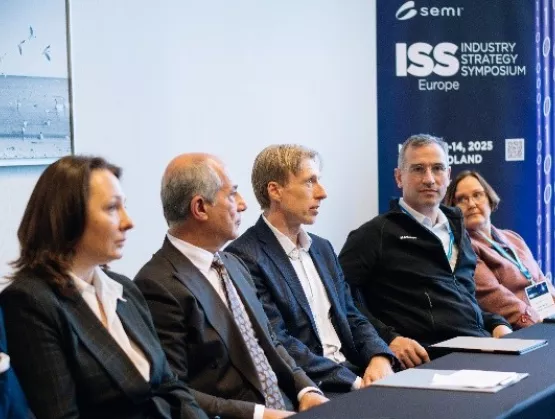
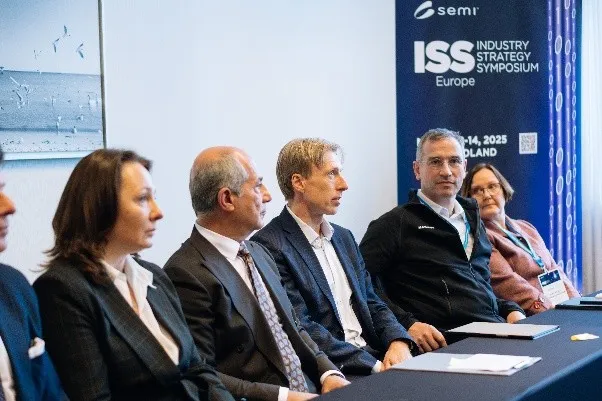
Insights from the ISS Europe 2025 Press Briefing in SopotAt the SEMI Industry Strategy Symposium Europe (ISS Europe) 2025, held in Sopot, Poland, senior leaders from government, industry, and the investment community came together to share insights on Europe’s evolving semiconductor landscape. During a dedicated press briefing, they addressed Poland’s growing role in the ecosystem, the significance of international collaboration, and the strategic levers needed to bolster Europe’s competitiveness in semiconductors.Against the backdrop of accelerating investment through the EU Chips Act, speakers emphasized that building Europe’s semiconductor future will require more than funding. It will demand cross-border collaboration, cohesive public-private strategies, and a long-term vision to ensure talent pipelines and supply chain resilience.The briefing featured remarks and commentary from:Laith Altimime, President, SEMI EuropeAgnieszka Sygitowicz, President, The Polish-Taiwanese Chamber of Commerce and IndustryPawel Pudlowski, Ph.D., Deputy CEO, Polish Investment and Trade Agency (PAIH)Monika Morali-Majkut, Chairwoman of the Supervisory Board, Atlas WardBenedikt Ernst, Senior Vice President and Head of Strategy Transformation, Merck KGaA, Darmstadt, GermanyDionys van de Ven, President, Comet YxlonAnna-Riikka Vuorikari-Antikainen, Chief Commercial Officer, Okmetic From left to right: Agnieszka Sygitowicz, President, The Polish-Taiwanese Chamber of Commerce and Industry; Pawel Pudlowski, Ph.D., Deputy CEO, Polish Investment and Trade Agency; Monika Morali-Majkut, Chairwoman of the Supervisory Board, Atlas Ward; Laith Altimime, President, SEMI Europe; Benedikt Ernst, Senior Vice President and Head of Strategy Transformation, Merck KGaA, Darmstadt, Germany; Dionys van de Ven, President, Comet Yxlon; Anna-Riikka Vuorikari-Antikainen, Chief Commercial Officer, OkmeticSEMI: How are the private sector and international partners contributing to Poland’s ecosystem development?Morali-Majkut: The private sector is essential to building Poland’s semiconductor ecosystem. At Atlas Ward, together with like-minded companies, we’ve launched SEMICON Supply Poland to help develop a strong, scalable supply chain. We’re working to ensure that essential infrastructure is ready: land, utilities, materials, and specialized service providers that can meet the needs of incoming semiconductor investments. But this isn’t just a national effort. We’re closely aligned with ecosystem-building in Dresden, Prague, and across Central Europe. Collaboration across borders is essential.Sygitowicz: We believe strongly in the philosophy of “building bridges.” In our work with Taiwan and other partners, we focus on five “bridges”: knowledge, people, business, development, and shared success. These connections are critical for Poland to become an integral part of the global semiconductor supply chain. Poland is not trying to replicate what others have done, but to learn from it—particularly in ecosystem development. The long game is not just investment attraction; it’s ecosystem maturity. SEMI: Talent shortages remain a major concern across the industry. What steps are being taken to prepare the future-ready workforce?Morali-Majkut: We are working closely with academia to build the talent pipeline Poland will need as its semiconductor sector grows. Together with industry partners, we’re developing vocational training programs and university-level collaborations aimed at aligning skills with industry needs. There are already several R D-focused projects underway at Polish technical universities, and Poland’s strong foundation in technical education positions us well to support workforce growth as the industry scales up.The semiconductor industry has one of the most complex supply chains in the world. Investing in this industry creates ripple effects across a wide range of skill areas. When we invest in semiconductor education, the spillover benefits for the broader economy will be immense.Altimime: While the talent shortage is certainly a challenge, it also presents a massive opportunity. At SEMI, we’re committed to making Europe’s semiconductor investment a long-term success. Through strong collaboration with the European Commission and a broad network of consortium partners across Europe, including Poland and other Eastern European countries, we’re pushing forward both public and private sector engagement to ensure the continuity of growth and innovation.Europe is projected to face a shortage of 271,000 skilled workers in the semiconductor sector by 2030 if current trends persist. To address this challenge, SEMI is leading a range of initiatives focused on reskilling, upskilling, and cross-sector knowledge development. We’ve established an Educational Leaders Board with 18 consortium members and are organizing events to reach out to students and educational institutions – including the recent SEMI On Campus with the University of Gdańsk — all to foster stronger connections between academia and industry. SEMI: How can Europe strengthen its semiconductor supply chain resilience in the face of geopolitical challenges?Ernst: Resilience starts with recognizing and building on Europe’s existing strengths. While much attention is often given to gaps, Europe already has world-class players, technologies, and a strong consumer market. These are key strategic assets. What’s needed now is coordination—government and industry must work together to align efforts, avoid fragmentation, and ensure that political initiatives channel support in a unified direction.Van de Ven: For industry, true resilience means the freedom to operate globally. Trade controls and IP restrictions can create bottlenecks, so policies must support open access to markets across regions—including the U.S., Europe, and Asia. Companies also need to co-create with fabs and universities, embedding themselves where talent is trained and where innovation happens. This creates a robust, future-ready ecosystem. Location decisions are increasingly influenced by proximity to both production facilities and research institutions.Sygitowicz: Poland is well-positioned to support investment through a combination of ready-to-develop land, financial incentives (such as grants and tax exemptions), and ecosystem services. Beyond infrastructure, there is growing government support for talent development and innovation. Startups, accelerators, and academic partnerships are playing a larger role in building the technology pipeline—creating a more comprehensive, innovation-friendly environment for foreign investors.Vuorikari-Antikainen: Speed is an often overlooked but critical factor in competitiveness. Europe has historically moved slowly, but if countries like Poland can create fast-track pathways for permitting, investment, and project execution, they can set themselves apart. Pairing this agility with strong education and startup ecosystems will help deliver long-term resilience and responsiveness to market needs.Altimime: We must avoid country-centric thinking. Europe’s strength lies in its diversity with different regions excel in different areas, and the challenge is to bring those strengths together. Initiatives like the pilot lines are a great example of this in action, connecting capabilities in photonics, advanced packaging, and quantum technologies across the continent. With strong leadership from Europe’s research and technology organizations (RTOs), such as the Technical Research Centre of Finland (VTT), we’re seeing renewed momentum in areas where Europe has historically been strong, like communications and photonics.To truly accelerate Europe’s position in the global semiconductor landscape, we need to focus on integration—connecting the dots between regions, institutions, and industries. From left to right: Laith Altimime, President, SEMI Europe; Benedikt Ernst, Senior Vice President and Head of Strategy Transformation, Merck KGaA, Darmstadt, Germany; Dionys van de Ven, President, Comet Yxlon; Anna-Riikka Vuorikari-Antikainen, Chief Commercial Officer, OkmeticSEMI: With the European Commission discussing a potential second Chips Act, what lessons should we carry forward from the first—and how can Poland play a stronger role?Van de Ven: The primary objective of the Chips Act should be to enable investment and industrial action. In some cases, we’ve seen frameworks become overly complex, attempting to define platforms or outcomes in ways that don’t always align with business needs. From an industry standpoint, what’s most helpful is straightforward support—mechanisms that empower companies to invest where it makes sense and move quickly. Ultimately, the private sector will determine how to build and scale the necessary infrastructure and innovation.Pudlowski: It’s true that Poland did not benefit from the first Chips Act to the extent that its assets and potential might suggest. We offer a combination of engineering talent, geographic advantage, and industrial readiness—yet, in terms of EU-level influence and visibility, we’ve been underrepresented. That is beginning to change.Poland now has a national semiconductor strategy backed by the government, and this, combined with growing engagement from organizations like SEMI, positions us for stronger inclusion going forward. At the same time, we need more bottom-up visibility. Companies in Poland should proactively present their capabilities and publish their work more widely. We have a great deal to offer, and now is the time to ensure that’s recognized in Brussels and across Europe.Altimime: Poland’s recent release of its national chip strategy is both timely and critical. From SEMI’s perspective, this is a proven model: a clear strategic roadmap, strong government backing, and industry alignment create the right environment for success. The first Chips Act delivered real progress and global attention, and with Poland’s new strategy in place, we expect to see even greater integration into the European semiconductor value chain in the next phase of the initiative.Morali-Majkut: During recent conversations with international partners, particularly in Asia, it became clear that while countries like Germany and the Czech Republic are well known within the semiconductor ecosystem, Poland has not always been equally visible—despite being geographically and industrially well-positioned. That perception is starting to shift.Poland has long played a vital role in Europe’s industrial supply chain, particularly in collaboration with Germany. We bring a strong foundation in engineering, education, cost-efficiency, and industrial land availability. These assets are highly relevant to semiconductor expansion. Rather than seeing countries in isolation, we should frame this as a collaborative regional model—linking Germany, the Czech Republic, and Poland as an integrated supply chain hub. SEMI ContactSitong He, Communications ManagerEmail: [email protected]
Read More