downloadGroupGroupnoun_press release_995423_000000 copyGroupnoun_Feed_96767_000000Group 19noun_pictures_1817522_000000Member company iconResource item iconStore item iconGroup 19Group 19noun_Photo_2085192_000000 Copynoun_presentation_2096081_000000Group 19Group Copy 7noun_webinar_692730_000000Path
Skip to main content
Default Banner Image

SITRI

The SOI Consortium’s Japan Symposium this past fall covered a wide array of topics over two days. The first day was devoted to IP and products for RF and ultra-low-power (ULP) on SOI. The second day covered high voltage and photonics. It will take several posts to summarize all the presentations. In this post, we’ll cover presentations related to 5G. In the next posts we’ll cover IoT/ultra-low-power/automotive and photonics. (BTW, if your company is a member of the SOI Consortium, you can now access most of these presentations on our website.) The Japan SOI Symposium was organized for the 4th time at the Yokohama Landmark Tower (from which there was a fabulous view of Mount Fuji). It was a great success, with both days well attended. The event followed the day after (and in the same location as) Silvaco’s SURGE user event, so there were plenty of opportunities for synergy there. (Samsung Foundry talked about their partnership with Silvaco, for example, and their work together on RF and eMRAM on 28nm FD-SOI.) STMicroelectronics [caption id="attachment_27068" align="alignnone" width="589"] From “5G Deployment Driving RF and SOI Technology Opportunity” (Courtesy: ST SOI Consortium)[/caption] As noted in the ST presentation, 5G standards are getting a big push in the Asia-Pacific region, and by China in particular, which is leaping ahead especially in sub-6GHz. It’s a complex standard, noted John Carey, the company’s director of Digital RF for the A-P region, and it’s disruptive, demanding new silicon architectures and technologies. Next year’s premium phones, he said, will include over $30 in RF components, 40mm2 of which will be based on SOI. ST has been working on RF-SOI for over two decades, and offers a range of technologies and foundry services supported by three high-volume fabs. The key benefits with RF-SOI, he explained, stem from RF FEM integration of switches, LNAs and PAs. RF-SOI technologies are here now and are successful in the markets: ST has a long-term technology roadmap and is making continued strategic investments, he concluded. Toshiba [caption id="attachment_27069" align="alignnone" width="410"] From “RF-SOI Switch LNA for Mobile Applications” (Courtesy: Toshiba SOI Consortium)[/caption] Another long-time RF-SOI user is Toshiba, although this marked their first participation in a recent Consortium event. As Group Manager Kazuyuki Uchida talked about RF techology trends, there was lots of note- and picture-taking in the audience. He pointed out that the character and size of the switch LNA modules are particularly important in the move to 5G. They’ve been leveraging their TaRFSOI(tm) process, which he said achieves the industry's lowest insertion loss, for about a decade now. The latest version, TaRF11 will be launching in Q1 of 2020. TaRF10 integrated the LNA with the switch and control circuitry in a single chip. TaRF11 will feature performance improved by about 25%. Incize [caption id="attachment_27065" align="alignnone" width="405"] From “RF Characterization” (Courtesy: Incize and SOI Consortium)[/caption] During the Incize presentation, the company’s CEO Mostafa Emam affirmed that RF-SOI is a very good business opportunity. Incize works with the complete supply chain. For foundries and wafer suppliers, they measure harmonics and output with very high precision, which is especially critical for switches. For the wafer suppliers, it’s predictive. For the foundries, it’s measuring noise for models and PDKs. While RF may be an art, second tier foundries using Incize services are now able to compete with the first tier players, he noted. He sees trap-rich RF-SOI wafers as being especially important for 5G. GlobalFoundries [caption id="attachment_27064" align="alignnone" width="599"] From “RF Reliability for SOI CMOS Si-based Power Amplifier for 5G applications” (Courtesy: GlobalFoundries SOI Consortium)[/caption] The focus of the GlobalFoundries talk was reliability in RF processes. In 5G, you need technologies that are viable for both mmWave and sub-6GHz across handsets, wifi and automotive, noted Purushothaman Srinivasan (who goes by SP and is a senior member of the company’s technical staff). In SOI, you can stack FETs (which you can’t do in bulk) for PAs, which is a big advantage in mmWave. However, delivering scalable, linear, efficient and reliable RF power technology is more challenging than digital, and requires a holistic, collaborative approach that includes the foundry, the customers and the test equipment suppliers. GF has used its RelXpert simulation tool on aging simulations and lifetime predictions for both their 22FDX and 45RFSOI processes. They have observed good RF model-to-hardware correlation, and have built Safe Operating Maps that provide guidance to RF designs. This first-in-industry RF reliability evaluation provides “highly differentiated” solutions for GF. Silvaco [caption id="attachment_27066" align="alignnone" width="606"] From “RFSOI TCAD Solution” (Courtesy: Silvaco and SOI Consortium)[/caption] Silvaco is a leading EDA provider of software tools used for process and device development and for analog/mixed-signal, power IC and memory design. Their presentation began with a review of recent updates to their TCAD simulation framework, including the TCAD design flow, Victory ProcessTM simulation for speeding up 2D/3D process simulations, and Victory DeviceTM simulation. Under Silvaco’s DTCO – Design Technology Co-Optimization – semiconductor physics are connected to circuit design, recognizing that each technology has specific requirements that need to be taken into account at every stage of the flow. Applications Engineer Sun Tao then continued by showing useful TCAD simulations and analysis of SOI for RF applications. In trap-rich substrate simulations, for example, the Silvaco tools can predict the harmonic balance from the active device, device biasing and substrate, all of which can be co-optimized using Victory Process and Device. SITRI [caption id="attachment_27067" align="alignnone" width="305"] From “NB IoT FEM based on SOI” (Courtesy: SITRI SOI Consortium)[/caption] Shanghai Industrial μTechnology Research Institute – aka SITRI – is an international innovation center, focused on globally accelerating the innovation and commercialization of “More than Moore” technologies to power IoT. SITRI Director Wenwei Yang’s talk focused on their narrowband front-end module for IoT (NB IoT FEM). NB-IoT is especially meant to handle small amounts of data from remote places over long periods. There are a lot of players in this market, so taking a “good-enough” approach to performance wherein cost is primordial is key. SITRI’s low-cost NB-IoT FEM integrates everything on a single chip, including the power amplifier (PA) and integrated passive devices (IPD), so packaging costs are low. Putting it on SOI (either trap-rich or high-resistivity) gives them better isolation and simplifies integration. ~ ~ ~ Our next post will continue our coverage of the Japan Symposium. Note: 2019 marks a decade of SOI Consortium events – yes, our first one was in 2009! Because a lot of the presentations in the past were so forward-looking, many of them are still of great interest today. Currently the presentations from 2015 through to the beginning of 2019 are available freely to everyone – and are well worth perusing.
Read More
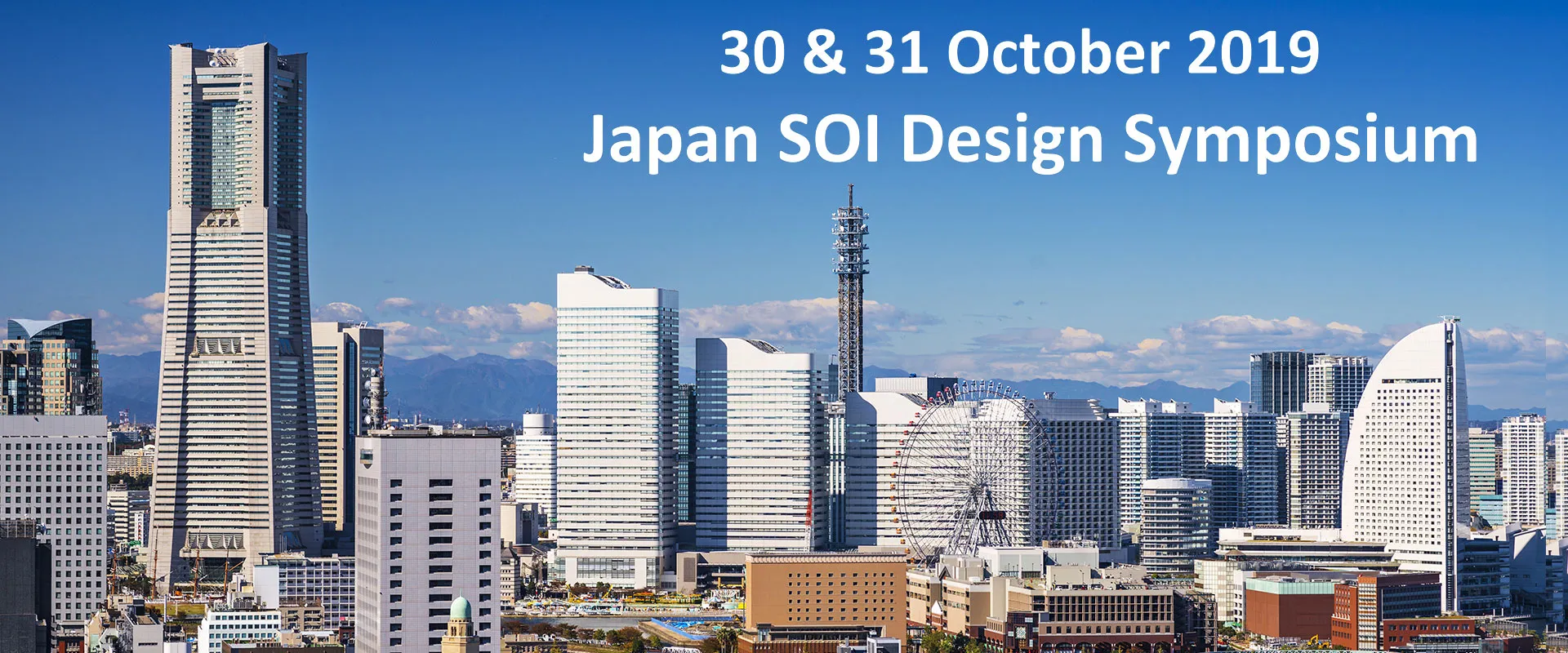
The SOI Consortium’s next annual event in Japan takes place on the 30th and 31st of October in Yokohama. Both days of the SOI Design Symposium will take place in the Yokohama Landmark Tower. The event is complimentary, however pre-registration is required – just follow the link here. Rest assured that in addition to the excellent program, the agenda provides ample time for networking.Wednesday, October 30 -- RF and ULP on SOI: IP ProductsOctober 30th showcases industry leaders with ULP IoT applications by NXP, and opportunities in the RF space by STMicroelectronics and Toshiba. The strong development of the design and EDA platform is discussed by ARM, Silvaco, Attopsemi and Dolphin. GlobalFoundries will present on their predictive reliability platform for RF, while Incize discusses the criticality of RF characterization and Secure-IC addresses to important topic of IC security.The day finishes with an overview of the SOI ecosystem by the SOI Industry Consortium. (See the full agenda here.)Thursday, October 31st -- SOI Enabling Photonics and Power InnovationWe start the day with two keynotes on High Voltage SOI electronics for automotive by NXP followed by Soitec on engineered substrate solutions. The Silvaco overview on RF modeling and SOI NB-IoT by SITRI promises to be very interesting. Then the day will offer a deep dive into Photonics touching applications with Cisco, foundry offerings with TowerJazz and GlobalFoundries, EDA with Cadence, and advanced SOI Photonic solutions by Leti-CEA. An ecosystem and market outlook by Soitec wraps-up the day. (See the full agenda here.)We look forward to seeing you there!
Read More
The SOI Consortium and member companies had a significant presence at two important events in China recently: the World Semiconductor Congress (WCS) in Nanjing and the SOI Academy, including an FD-SOI Training Day in Shanghai. Nanjing is especially known as a leading RF chip design hub in China, but WCS went well beyond RF. The three-day 2019 event was held at the Nanjing International Expo Center. It attracted over 30,000 visitors, 5000 of whom attended the various summit forums. Presenting at WCS '19 in Nanjing (clockwise from top left): Wayne Dai, CEO/Founder, VeriSilicon; Carlos Mazure, Executive Director, SOI Consortium; Giorgio Cesana, Director, STMicroelectronics; Christophe Tretz, Design Expert, SOI Consortium. (Photos courtesy: WCS)The SOI Consortium organized the SOI Forum, which was part of an afternoon Innovation Summit. Presentations were given by members of the SOI Consortium team, and by leaders from our membership, including Simgui, NXP, Incize, ST, IBM, Cadence and Xpeedic. Some of those presentations are now available from our website -- click here to get them.Earlier in the day, SOI Consortium member VeriSilicon participated in a morning session on AI and IoT Wireless Communications. They presented their low-power Bluetooth design platform for GlobalFoundries 22FDX, and CEO Wayne Dai moderated a lively round-table discussion.Following hard on the heels of the Nanjing event, the SOI Consortium team and members headed to Shanghai for the SOI Academy 2019, hosted for the second year in a row by member SIMIT (Shanghai Institute of Microsystem and IT under the Chinese Academy of Sciences). The two-day event attracted more than 250 professionals from more than 100 domestic and foreign IC companies and research institutes. Keynotes by SOI Consortium Executive Director Carlos Mazure, SITRI CEO Mark Ding and Jean-Eric Michallet, Head of the Microelectronics Components Department at Leti and bizdev director for the SOI Consortium focused on the SOI ecosystem. The SITRI and Leti talks also gave updates on their research and industrialization alliance. Further talks were given by leaders from Soitec, GlobalFoundries, VeriSilicon, IBM and Xpeedic. These addressed the growing FD-SOI ecosystem, applications in automotive electronics, 22 nm and 10 nm FD-SOI devices, advanced SOI substrate technology, China’s FD-SOI development, the FD-SOI manufacturing process, product design, EDA tools and all aspects of industry’s software and modeling value chain.Several speakers noted that more and more local Chinese customers are actively adopting FD-SOI for low-power, high-performance chips. SOI Academy, Shanghai, 2019, FD-SOI Training Day attendees.(Photo credit: SIMIT)The second day was devoted to hands-on professional training, given by experts from Leti using an actual PDK and punctuated by in-depth discussions. This helped the IC designers to fully understand the advantages and flexibility of FD-SOI in low-power logic, analog/mixed-signal and RF. All in all, “It was a great success,” concluded Jean-Eric MICHALLET, Head of the Microelectronics Components Department at Leti and bizdev director for the SOI Consortium. Plans for the next SOI Academy are already underway, with plans to extend the topics to include more on photonics, RF, power and MEMS.
Read More
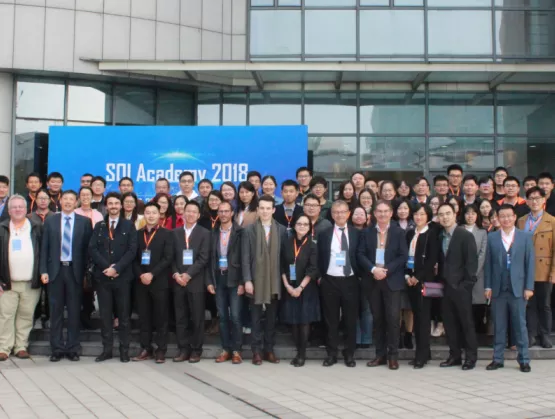
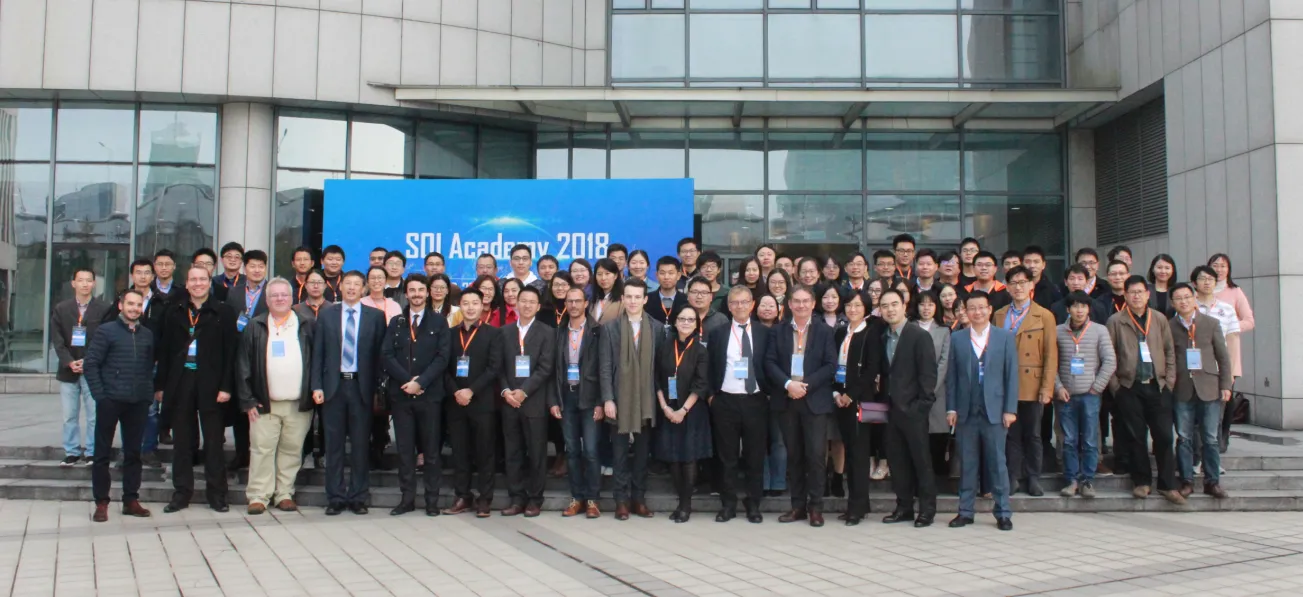
There were over 220 participants at the recent SOI Academy FD-SOI Training event organized in Shanghai. The event extended over two days, with the first day covering a basic introduction to the technology as well as the ecosystem worldwide and in China. The second day was hands-on professional training. Attendees got a comprehensive understanding of how to leverage the benefits and flexibility of FD-SOI design techniques for low-power chips including logic, mixed-signal/RF and analog blocks. They had a great line-up of experts from whom to learn – check out the agenda here. There was also a follow-up press release (in Chinese) from SITRI here. There will be more of these SOI Academy events in cities across China in the year to come – we'll keep you posted (and of course, keep checking back for news on the Consortium's Events page). [caption id="attachment_12981" align="aligncenter" width="1000"] SOI Academy '18 keynotes by: Dr. Mark Ding, CEO, SITRI; Dr. Carlos Mazure, EVP Soitec and Chairman/Executive Director SOI Consortium. Dr. Julien Arcamone, EVP Leti. (Images courtesy: SITRI). Lower right: the hands-on FD-SOI training.[/caption] The two-day seminar and hands-on FD-SOI design training was (superbly!) co-organized by SITRI and Leti, with the support of the SOI Industry Consortium at the Jiading SIMIT campus outside of Shanghai. Just to put this in perspective, SIMIT and SITRI are absolutely key players in China's chip ecosystem. SIMIT is the Shanghai Institute of Microsystem and Information Technology, one of the most venerable institutes in the Chinese Academy of Science (CAS) and one of the world's earliest pioneers in SOI. SITRI is the Shanghai Industrial μTechnology Research Institute, an international innovation center focused on globally accelerating innovation and commercialization of More-than-Moore for IoT. Both institutions are under the aegis of Dr. Xi Wang, Chairman of SITRI, Director General of SIMIT, Academician of CAS, and champion of all things SOI in China. At this Shanghai event, the participants came from industry (including big companies, SMEs and startups) and technical institutions. In fact as well as attendees from Shanghai people voyaged from other cities such as Shenzhen and Chengdu. The designers participating to the FD-SOI training day were all experienced in design and highly motivated in learning FD-SOI design, notes Carlos Mazure, Chairman Executive Director of the SOI Industry Consortium, and Executive VP of Soitec. “This made it possible to dive into the specificities of FD-SOI,” he said, adding that, “The focus on RF was very timely.” Day 1: Intro to FD-SOI The first afternoon opening keynotes were made by SITRI CEO Dr. Mark Ding and Leti EVP Dr. Julien Arcamone. These were followed by overview talks by execs from Soitec, Verisilicon and GlobalFoundries. After a lively networking break, three talks delved into FD-SOI technology. The first was by Professor Sorin Cristoloveanu, Laureate of the IEEE Andrew Grove Award and Director at the CNRS (the French National Center for Scientific Research – the largest governmental research organization in France and the largest fundamental science agency in Europe). He covered device physics and characterization techniques. This was followed by talks on the technology by Soitec Fellow Bich-Yen Nguygen, and by Dr. Christophe Tretz, IBM Sr. Engineer on product design methodology. The day ended with a dinner, where Professor Cristoloveanu says enthusiastic technical discussions continued unabated (and continued even further in follow-up emails), lots of business cards were exchanged, and opportunities for further education were explored. Day 2: Hands-on Training The second day, designers got hands-on training from Leti experts using FD-SOI PDKs, first in the morning on digital, then in the afternoon on RF. Everyone loved the lively discussion and in-depth exchanges between the experts and the designers. They agreed that FD-SOI has important applications and differentiated competitive advantages for IoT, 5G, automotive, AI and other fields. At the end of the training, Leti and SITRI jointly issued SOI Academy certificates of completion to the designers. Feedback from participants was very good. Some asked for further education and for hands-on testimonials from companies that are already designing and manufacturing products on FD-SOI. “The participants were focused, motivated, involved, with good knowledge, which helped make the three hours of Digital training effective,” said Dr. Alexandre Valentian, Leti Sr. Expert, Digital Design. “The IT team was very helpful in setting up the training, the students accounts and the hardware infrastructure.” “The training on Basics of FD-SOI RF circuit was a great success thanks to the efficiency of our Chinese partners and also thanks to the enthusiasm and the good level of our trainees. As senior Expert of CEA Leti I was really impressed by the professionalism of the organization team. For all these reasons, I’m very glad to have had the opportunity to contribute to the 2018 SOI Academy,” said Dr. Baudouin Martineau, Leti Sr. Expert, RFIC Design Technologies. “The professionalism, efficiency and enthusiasm of our Chinese partners and the level and technical relevance of all trainees made the training on Basics of FD-SOI RF circuit a great success and fruitful experience,” added Frédéric Hameau, Sr. RF Research Engineer, Leti Project Leader, Architecture, IC Design Embedded Software Division, RF Architectures and ICs Laboratory. “It was a pleasure to get the opportunity to be part of this first edition of SOI academy 2018.” The organizers would like to thank the sponsors, including: the SOI Consortium and its members Soitec, VeriSilicon, GlobalFoundries, Simgui and Cadence, as well as Mentor, ProPlus and other companies and institutions in China and worldwide. Dr. Mazure notes that special recognition must go to Dr. Julien Arcamone, EVP, Leti-CEA and to Qing Wang-Bousquet, SITRI representative, for the perfect and smooth organization, and to the Leti instructors, who are international experts and highly committed. “As one of the main initiators and organizers of the 2018 SOI Academy, I wanted to personally thank all of you for your respective contribution to this first edition of the SOI Academy,” concludes Dr. Arcamone. “Undoubtedly, it was a great success, very well organized and fluid and we can be proud of that.”
Read More