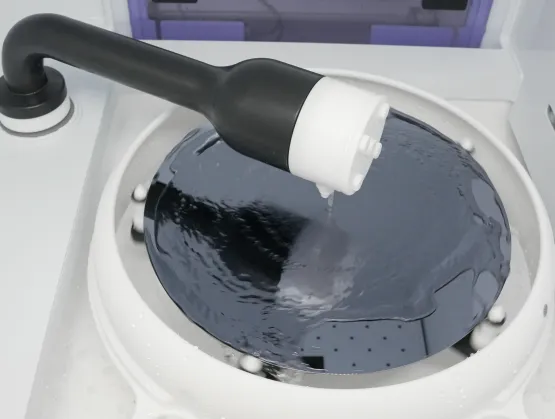
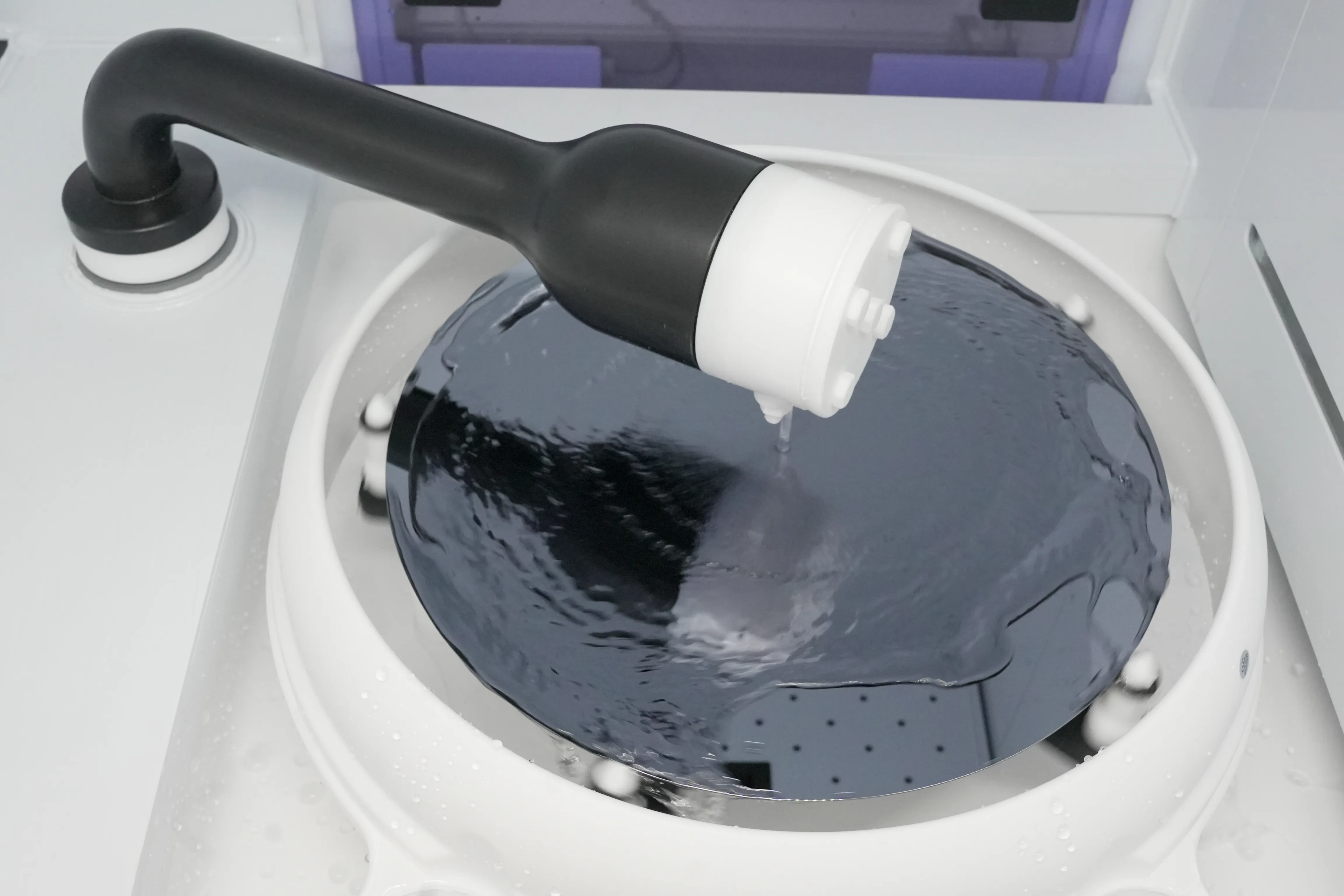
As artificial intelligence (AI) workloads surge and hyperscale data centers expand, the semiconductor industry is confronting fundamental limits in electrical interconnects. Co-packaged optics (CPO) is emerging as a pivotal architectural shift, bringing optical connectivity closer to compute to deliver the bandwidth, latency, and energy efficiency required for next-generation systems. However, while the strategic value of integrated photonics is widely recognized, the transition from research to scalable manufacturing remains one of the industry’s most pressing challenges.At the heart of this transition are a range of process considerations that, while familiar, are fundamentally different for photonics than for traditional semiconductor manufacturing. In many cases, the underlying requirements mirror those of CMOS manufacturing—cleanliness, uniformity, and defect control—though often at a different scale and level of maturity. However, the introduction of heterogeneous materials, new device structures, and optical performance sensitivities adds layers of complexity that must be addressed to achieve consistent, high-yield production.The expanding role of wet processingWet processing plays a critical role in several key stages of photonic device fabrication, including cleaning, etching, and drying. These steps directly impact surface quality, defectivity, and, ultimately, optical performance.Critical considerations include:Etch uniformity, essential for maintaining consistent optical pathways and minimizing signal loss;Particle control, as even small contaminants can scatter light and degrade performance; and Drying processes, where residues, watermarking, or contact-related defects can impact yield and reliability.Drying, in particular, has emerged as a significant challenge. Techniques such as nitrogen blow-off or chemical vapor drying are being refined to address issues like residual marks or contamination. In some cases, additional process enhancements—such as sonic energy—are being explored to further improve particle removal and surface integrity.Increasingly, tighter control of process chemistries and concentrations is required to minimize residues and improve particle performance. As these requirements tighten, the industry is recognizing that wet processing is not just a supporting step, but a critical determinant of device performance.At the same time, photonics manufacturing introduces variability that is less common in high-volume CMOS environments. Differences in wafer size, material composition, and process flows demand a higher degree of flexibility. In many cases, both batch-style wet benches and single-wafer processing approaches are used, depending on the application. Equipment and processes must often be adapted—through changes in wafer handling, fluid delivery, or process parameters—to accommodate these variations. In some cases, hybrid approaches that combine immersion and spin-based processing are being adopted to support a broader range of process steps within a single workflow.Scaling for yield and manufacturabilityThroughput, while important, is not yet the primary constraint. The industry’s immediate focus is on achieving stable, repeatable processes that support high yield and consistent performance. Over time, as designs mature and volumes increase, throughput expectations will increase significantly, with industry targets moving toward several hundred wafers per hour.Another important consideration is how photonics capabilities are integrated into existing fabrication environments. Contrary to some expectations, this integration does not always require wholesale changes to fab infrastructure. In practice, integration challenges are often less significant than anticipated and are typically addressed through targeted engineering adjustments rather than fundamental infrastructure changes. This approach minimizes disruption while enabling manufacturers to extend their capabilities into new application domains.Yield remains a central concern throughout this transition. As with any emerging technology, variability in early-stage manufacturing can create cost and reliability challenges. Reprocessing is particularly undesirable in photonics, where complex material systems and tight performance requirements make defects difficult and expensive to correct. Achieving high yield, therefore, depends on precise control across all process steps, from chemical concentration management to particle mitigation and surface preparation.At the same time, the cost of ownership must be carefully managed. While photonics manufacturing may not yet demand the extreme throughput of advanced logic production, it must still be economically viable at scale. This creates a dual imperative: to optimize processes for yield and performance while maintaining the flexibility needed to adapt to evolving designs and standards.Sustainability and the path to adoptionSustainability is also becoming an increasingly important dimension of photonics manufacturing. Although optoelectronic technologies can deliver system-level energy efficiency benefits, their fabrication still relies on water, chemicals, and energy-intensive processes. As a result, the industry is beginning to apply lessons learned from CMOS manufacturing to improve environmental performance. This includes exploring alternative chemistries, particularly as regulatory pressures drive the reduction or elimination of substances such as per- and polyfluoroalkyl substances (PFAS), and aligning with established environmental, health, and safety frameworks.More broadly, the evolution of co-packaged optics highlights a familiar pattern in semiconductor innovation: the need to bridge the gap between laboratory breakthroughs and high-volume manufacturing. Standards are still maturing, design approaches continue to evolve, and early implementations may give way to new architectures. In this environment, flexibility and adaptability are critical—not only in device design, but across the manufacturing ecosystem.Demand signals, however, are unmistakable. AI-driven data center growth is accelerating the need for more efficient interconnect technologies, and photonics is widely expected to play a central role in meeting this demand. As more fabs invest in photonics capabilities, the focus will increasingly shift from feasibility to scalability—from demonstrating what is possible to delivering it reliably and cost-effectively.Wet processing, though often viewed as a supporting function, is deeply embedded in this transition. Its influence on cleanliness, uniformity, and defect control makes it a key enabler of photonic device performance and manufacturability. As the industry continues to refine processes and align standards, advances in wet processing will help define how quickly and effectively co-packaged optics moves into the mainstream.For SEMI members navigating this shift, the implications are clear. Success in photonics manufacturing will depend not only on innovation at the device level, but on the ability to translate that innovation into robust, scalable processes. In that effort, the fundamentals—precision, control, and adaptability—remain as important as ever.Dr. Ismail Kashkoush is Chief Technology Officer for JST, based in Meridian, Idaho. With more than 30 years of expertise in the semiconductor industry, he leads JST’s engineering, technology, and product lines teams to develop the next generation of sustainable surface preparation products and processes. Dr. Kashkoush earned his Ph.D. in engineering science from Clarkson University. Prior to joining JST, he served as CTO at Akrion Technologies Inc. He has a large patent portfolio and continues to contribute technical publications and seminars on wafer surface preparation technology for the IC, MEMS, flat panel display, and photovoltaics sectors.