downloadGroupGroupnoun_press release_995423_000000 copyGroupnoun_Feed_96767_000000Group 19noun_pictures_1817522_000000Member company iconResource item iconStore item iconGroup 19Group 19noun_Photo_2085192_000000 Copynoun_presentation_2096081_000000Group 19Group Copy 7noun_webinar_692730_000000Path
Skip to main content
Default Banner Image

verification

In an era where technology permeates every aspect of our lives, the semiconductor industry serves as the backbone of innovation. From IoT devices to data centers, every piece of technology relies on integrated circuits (ICs) such as intellectual property (IP) cores and system on chips (SoCs). As these technologies become increasingly pervasive, the importance of hardware security assurance in the design and development of IP and SoCs cannot be overstated. Evolving cyber threats and sophisticated attacks make it essential for vendors to integrate advanced security measures into their workflows.Market Pressures Driving Demand for Enhanced Hardware Security The semiconductor market is projected to reach $1 trillion by 2030. At the same time, semiconductor devices and system designs are becoming increasingly complex. With that complexity comes the added difficulty and effort required to conduct thorough security analyses. Additionally, competitive pressure to reduce time-to-market means that vulnerabilities can be more easily overlooked or exploited, making it crucial for the industry to adopt automated security solutions. As more products are deployed in critical systems, from consumer electronics to national infrastructure, the stakes become even higher, underscoring the necessity for robust security measures.According to the SEMI Electronic Design Market Data (EDMD) report, in 2023, the electronic design automation (EDA), semiconductor IP, and related services market reached $17.1 billion, fueled by the increasing complexity of semiconductor designs and the growing emphasis on security. While the overall EDA market is growing at a 7.4% compound annual growth rate (CAGR), the semiconductor IP segment is expanding at 9.7%, and in comparison, the logic verification tools market alone is surging ahead at 24.2%. Deeper verification processes and tools are needed to not only handle the rising complexity of semiconductor designs, but also to support the growing emphasis on secure-by-design principles to ensure robust and reliable products in an evolving technological, security, and threat landscape. As a result, the market for logic verification tools — a key component of the EDA market — is surging. The Rising Cost of Cyber Threats from Data Breaches and Architectural Flaws Pavani Jella, Silicon AssuranceThe average cost of a data breach is $4.88 million1, encompassing lost business, regulatory fines, legal fees, and damage to brand reputation. As the semiconductor market grows, the potential financial impact of security breaches due to hardware vulnerabilities also escalates. Companies must invest in robust security measures to mitigate these risks and protect their financial health.Cyber threats from the exploitation of architectural flaws are another threat. Plundervolt is one example of an architectural flaw that could lead to hardware exploitation. Discovered by ethical hackers, Plundervolt is the name of an attack that exploited voltage fault injection to compromise the security of Intel processors. By manipulating the voltage supplied to the CPU cores, attackers could induce errors in the SGX enclave, allowing them to leak sensitive data or even bypass security protections intended by the enclave. This flaw was particularly concerning because it operated at the hardware level, making traditional software security measures ineffective. The attack leveraged the SoCs’ power management features, specifically dynamic voltage and frequency scaling (DVFS), to achieve its malicious objectives.Exploiting such a vulnerability could lead to the exposure of sensitive data, such as cryptographic keys and proprietary information, compromising the confidentiality of secure enclaves. This breach could erode trust in an IP or SoC provider’s security features, particularly in environments that rely on using the IP or SoC for protecting critical data. In cloud environments, a successful exploit could result in multi-tenant data breaches, impacting numerous users.The vulnerability also poses risks to secure applications, potentially leading to manipulated outcomes and decrypted communications. Businesses could face significant financial losses, operational disruptions, and regulatory consequences due to such an attack. It is a stark reminder of how architectural flaws in SoCs can be exploited, leading to severe security breaches that are challenging to mitigate without hardware-level fixes.Industry Believes Hardware Security Assurance Is a Key Priority A majority of security professionals from a diverse group across industry, defense, government, and academia rate hardware Trojan detection, IP piracy protection, and SoC vulnerability assessment as high priorities. This prioritization reflects the industry's awareness of the critical importance of security measures in maintaining the integrity and reliability of semiconductor products.As a result of this awareness, investments in cybersecurity are expected to reach $345.4 billion by 2026, growing at a CAGR of 9.7%2. This substantial investment demonstrates the global commitment to enhancing security measures across all industries, including semiconductors, to combat the escalating threat landscape.New EDA Tools and Investments Needed to Combat Cyber Threats The adoption of new EDA solutions is essential, despite the initial costs. Costs can range from $100,000 to $1 million per license for general EDA design and verification tools, depending on the complexity and capabilities of the software. Pre-silicon security EDA tools can detect vulnerabilities early in the design phase, significantly reducing the risk of exploitation and the need for costly post-production fixes while enhancing product reliability. Secure-by-design principles ensure that security measures are integrated throughout the development process, rather than added as afterthoughts.Integrating these new tools also requires investment in training and potential adjustments to existing workflows. However, the improved security and efficiency provided by these tools can offset these initial costs.While the costs of acquiring advanced EDA tools and deploying them in the workflow is significant, the investment is justified by the long-term benefits of enhanced security and reduced risk of costly breaches. Secure-by-design practices can prevent significant financial losses from security breaches, offering substantial long-term savings. Companies that invest in robust security measures are better positioned to demonstrate market leadership and build customer trust and loyalty, while avoiding the reputational and financial damage associated with breaches.ConclusionThe semiconductor industry is at a critical juncture where the application of advanced EDA solutions for hardware security is not just beneficial, but essential. The time to act is now.The increasing sophistication of cyber threats and the financial repercussions of security breaches make it imperative for IP and SoC vendors to adopt advanced EDA security assurance solutions to secure their designs. By investing in cutting-edge EDA tools and prioritizing security from the earliest stages of design, vendors can safeguard their products, maintain market competitiveness, and protect against the ever-evolving landscape of cyber threats.References1. IBM Cost of a Data Breach Report 20242. KPMG 2024 Global Semiconductor Industry OutlookPavani Jella is the Vice President of Business Development at Silicon Assurance, a member of the Electronic System Design Alliance (ESDA) a SEMI Technology Community. Silicon Assurance specializes in hardware security assurance solutions. With a strong background in the semiconductor and EDA industries, Pavani plays a pivotal role in driving strategic growth and fostering innovative partnerships. Passionate about the intersection of technology and security, she helps organizations adopt state-of-the-art solutions that ensure the resilience and trustworthiness of their hardware systems.
Read More
Executive Advisor Jeff Lewis held the position of Vice President of Marketing and Business Development for Artisan Components, one of the early companies developing blocks of intellectual property. Lewis, who worked at Artisan from 1996-2000, and his colleagues were members of an elite group who built the mega-successful IP market, estimated today at $7.48 billion. Arm acquired Artisan Components in 2004 for $913 million.In my role as Executive Director of ESD Alliance and publisher of the quarterly Electronic Design Market Data (EDMD) report that includes IP, I recently talked with Lewis about what he remembers from the early days of IP.Smith: You were part of the IP revolution. What were the high points and low points that you most remember? Lewis: The high point was starting with a relatively blank slate and innovating. Some things worked, some didn't. We kept trying different things and seeing what would work with plenty of failed tries, successes, and repeats. We got a chance to be on the ground floor of a new industry. Another high point was watching this nascent industry emerge into a powerhouse. In the ‘90s, EDAC (Electronic Design Automation Consortium, the predecessor to the ESD Alliance) wasn't interested in tracking IP. As the IP market started growing, EDAC was all over it because it helped pump up the size of the electronic design automation (EDA) industry. Suddenly, IP had become a big enough industry that people were starting to care. And of course, there were successful public companies like Arm, Rambus, Artisan, and others licensing IP. It was fun being part of that.The low points were the hard part. While everything was new for us, it was also new for customers. They had intense resistance to licensing IP that many viewed as product development. They would want the IP company to develop something under a consulting or NRE contract, and then they would own the product and all the IP around it. They wanted to own everything. Many companies had that mentality in the early days and were resistant to licensing or paying royalties.As a side note, Gary Smith, former analyst for Dataquest, now Gartner Group, who died in 2015, and I had an ongoing debate. We went to lunch quite frequently and he would say, “IP is great, but you aren't IP. You are a standard cell, and it is not IP.” It was one of his standard statements.He would make various presentations, and I would argue: “You can't think of it as a cell, think of it as an entire library. It's an entire library with all the design views, layouts, test and qualification data, and everything else. That’s intellectual property. Plenty of intellectual property goes into developing it.”He eventually changed his mind and agreed when he saw the revenue and the value –– IP companies do it better and cheaper than in-house development.A final high point was getting the idea and value of IP across to customers. Smith: At what point did people start to believe IP was a real market and they could trust a vendor? Lewis: I don't know if there was an inflection point. More and more people started getting used to the idea that IP was an industry. Arm was probably the major catalyst. Artisan had two different engagement models. One was the integrated device manufacturer (IDM) model. Mark Templeton, co-founder and CEO of Artisan who died in 2016, and Lucio Lanza, Managing Partner of Lanza techVentures and Artisan’s Chairman, are credited with developing the royalty model and the intellectual property category. They drove it with the IDM model. Executive Advisor Jeff LewisCustomers knew they were paying for a license, understood the terms and became both the licenser and the user of this technology. It was different when Artisan went to the foundry model, which extended the IDM model to the rapidly growing foundry space. In this model, Artisan had the ability to widely disseminate its IP to all the foundry customers for free. However, calling it a “free library” is a misnomer, because often overlooked in this process is that the foundry paid up front for every one of those libraries, and it also paid a royalty on each design that used them. Artisan was profitable from day one by building a library or memory compiler. The engagement model was one where Artisan could proliferate these to the foundry’s users. They would get the library, and the royalty would come from the foundry. Users were beneficiaries – they had a simple license agreement, but unless they needed some customization, they weren't writing checks to Artisan.From the user’s perspective, it was great. They got free libraries and IP. That helped open people’s eyes to the model that could be a good thing. Artisan had 1,000 users at one point, and it helped drive the proliferation of IP use in the industry.Smith: Is that foundry model still in place? Lewis: Largely, yes, with some exceptions because foundries have a standard library that can be used. They have some specialized IP that customers license. While there are variations, foundries provide libraries to their customers. TSMC has engineers developing libraries for its own processes. For a long time, Artisan was the standard IP provider for most of the foundries. Smith: How did companies overcome verifying and testing IP? Were engineers skeptical about buying from an unknown/unproven company? Lewis: This is an important and critical question. Engineers were skeptical about buying from an unknown or unproven company. Artisan’s library quality was our biggest selling point, and it was the same with Arm and Rambus. Size and reputation were a huge advantage.The key was to have a major win that demonstrated your bona fides, and our biggest early win was our work on the Sony PlayStation. At that time, LSI Logic was developing the chips for the PlayStation, but was looking to outsource some of the critical blocks, such as the embedded SRAMs. Sony engineers were nervous and wanted to meet the IP companies to see what they were doing, because the fate of their chip was resting on these little companies. Artisan developed high-performance embedded SRAMs that replaced the existing LSI SRAMs. Our memories were about half the size of the LSI SRAMs, higher performance, and worked the first time.What’s instructive is how Artisan later got the foundry relationships going and sold libraries. Enabling first-time success is a quality argument, because the design would work the first time. At that time, almost every foundry library had bugs in them that caused silicon failures after tape-out. Our primary argument to engage foundries was our impeccable QA story. We had customer testimonials confirming that the foundries would not have library-related failures. When foundries scheduled a volume like a PlayStation ramp, they couldn’t afford a production “bubble” or “hole” in their production schedule from a library bug causing a chip not to work and requiring a re-spin.That's why the argument on quality and first-time success was critical to TSMC.One more thing on quality, and this ties specifically to Artisan and almost all IP companies. Any company that focuses on a mass proliferation model must ensure their product has no quality problems. Mass proliferation needs to be as low touch as possible, so engineers can use it without constantly calling for support. Quality is an absolute fundamental before mass distribution, because the fastest way to go bankrupt is to massively proliferate a faulty product. Smith: According to the EDMD report two years ago, IP surpassed front-end EDA tools as the highest category. Are we now shifting into a world where IP in the form of chiplets may become the dominant player? Lewis: I think the shift is coming. These are different incarnations of Moore's Law and the Carver Mead-structured VLSI. Sometimes the structure may be a chiplet, or the structure may be embedded.Is it virtual or is it actual? Engineers will make tradeoffs with pros and cons of embedding it or keeping it separate. The deciding factor is which silicon process is best and how it will be implemented. The SEMI EDMD report’s tracking of the Semiconductor Intellectual Property (SIP) and its rise to one of the market’s leading category. Smith: You worked for several IP companies that were offering process-related IP. That's a completely different type of market selling cycle, correct? Lewis: It is, because I focused on technology licenses for manufacturing processes, as opposed to the much more understood design IP that was developed for the existing manufacturing processes. Getting inserted into a company’s manufacturing process is much more difficult and challenging.If a company is licensing a technology that modifies the front-end process, then the process parameters will change, presumably for the better. The re-optimization can be like whack-a-mole. While some parameters get better, some may get worse, and further re-optimization can be required. This can go through several cycles until the process converges. This also means that all existing IP must be recharacterized and/or redesigned, which is why it is best to insert a new technology at the beginning of the node development rather than as a retrofit.Adding new process technologies is inherently difficult unless it’s a separable piece. For example, many new memories such as ReRAM or MRAM are licensed technology and separable, because they are set up separately in the metal stack. They don't touch the transistors.For a long time now, companies have been able to pick and choose whether to do in-house development or procure design IP from a third party. We're now starting to see the same thing in process development, because they are getting so complex, and no one can be an expert in all areas. I see process IP as paralleling the early days of design IP, but with a 30-year delay. Back then, most customers were reluctant to procure design IP because they felt: “We can do it all in-house.” Almost no one says that today, and I think this gradual acceptance will apply to process IP as well.Smith: Should Mark Templeton be considered the innovator and creator of the IP industry? Lewis: I’m not sure there’s anything I can say about him that hasn’t been said already. He was a great guy and an important thinker. I credit him for doing an excellent job crafting a successful company. And, of course, Lucio Lanza was absolutely instrumental as well. He pushed Artisan to do royalties, and Mark helped drive it to fruition.About Jeff LewisJeff Lewis is one of the pioneers of the semiconductor IP industry, participating since its inception in the mid-1990s. Lewis is currently Executive Advisor for senior management and investors for semiconductor and AI companies. He was previously an operating executive serving as Senior Vice President of Business Development and Marketing at Atomera Incorporated, Spin Transfer Technologies, SuVolta Inc., and Innovative Silicon Technologies, and held operating roles at Synopsys, VLSI Technology, and HP. Lewis earned an MBA from the UC Berkeley Haas School of Business, and has a bachelor’s degree in electrical engineering, and a bachelor’s degree in economics from UC Berkeley.Robert (Bob) Smith is Executive Director of the ESD Alliance, a SEMI Technology Community.
Read More
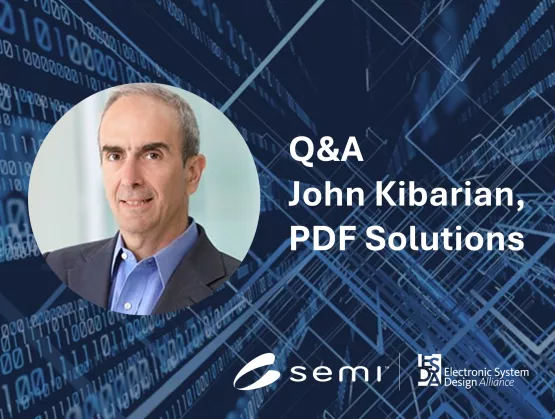
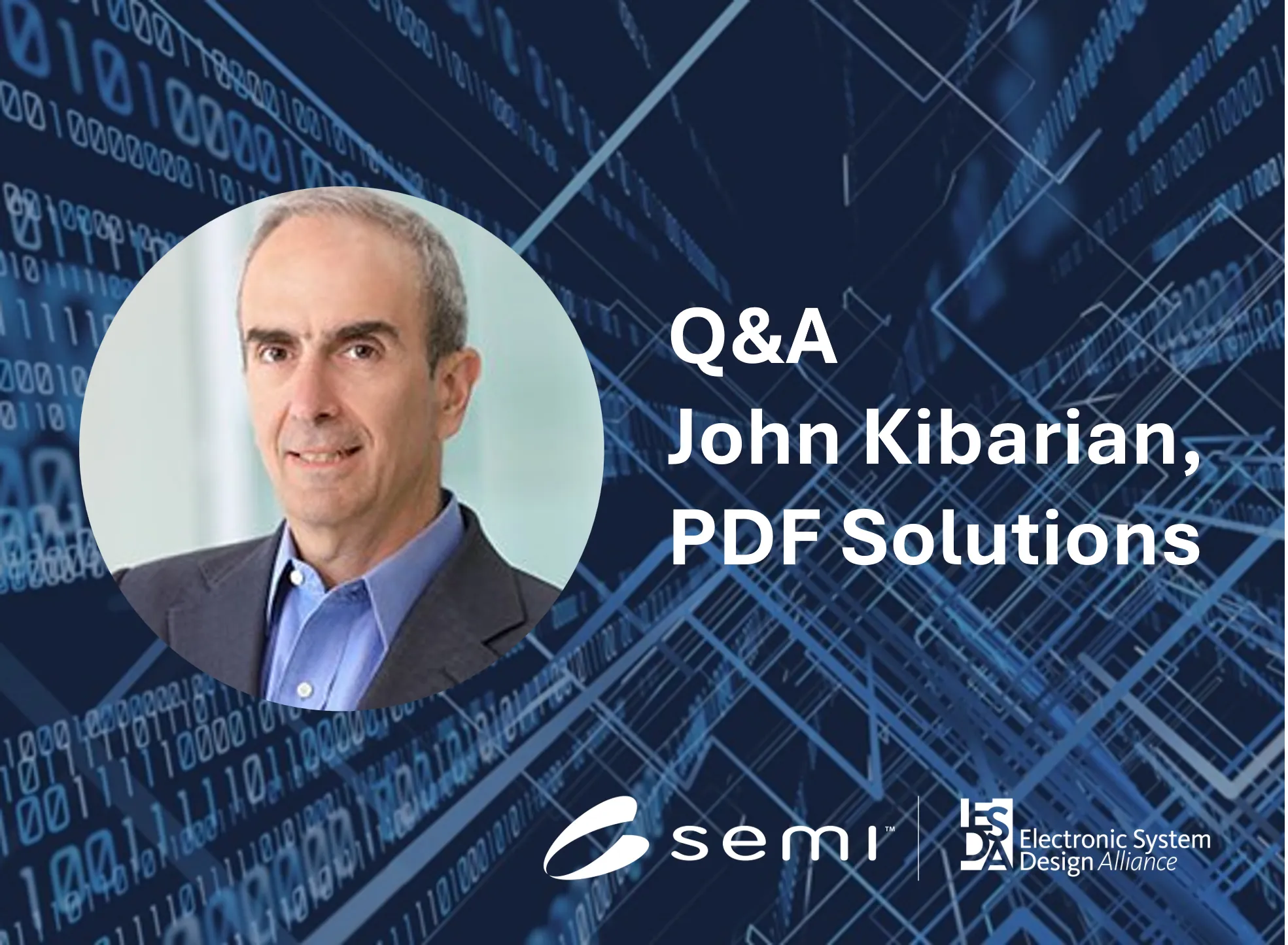
John Kibarian, CEO and founder of PDF Solutions and a member of the ESD Alliance (ESDA) Governing Council, is a keen observer of the semiconductor ecosystem. Since PDF Solutions sits between design and manufacturing, Kibarian shared unique perspectives on both in a recent discussion.Smith: What trends are you seeing in the semiconductor industry. Are there any that surprise you? Kibarian: We see several trends that have been going on for quite a while.As much as we hear Moore’s Law is dead, there's still a strong drive to get to advanced nodes. The benefits are harder to achieve and require more than geometry scaling, but demand for these advanced nodes continues to grow. Another emerging trend is the need for insatiable compute power in data centers to support the explosion in AI applications. In recent history, the mobile phone market has been the key driver of the push to new advanced nodes, but that is changing as the performance needs of data centers and AI applications are now driving the shift.Next, as companies are still learning from the disruptions in the supply chain due to the pandemic, there’s a tremendous amount of movement to make the supply chain more resilient by expanding sourcing options for critical products or test applications. This is happening in conjunction with significant investment in high-performance compute from many countries that want to bring silicon to their shores.The next trend is that electronics companies are looking to limit investing solely in China or the U.S. Their China Plus One or U.S. Plus One strategies results in adding significant additional infrastructure and overhead. If it's not done right, it will cost the industry more money. It will be hard to sustain the cost benefits and economies of scale of the current single source model just by brute force and adding human capital. A new approach is required to manage cost effectively smaller and globally distributed manufacturing facilities.The final trend is the general electrification of the economy. Cars are moving from internal combustion engines to electric. That means more and more of our energy needs are met with electricity, putting a premium on solar and batteries. Batteries require power conversion.Silicon such as high bandwidth semiconductors on silicon carbide and gallium nitride have a tremendous amount of capacity. What is interesting is how fast and aggressive China is in that part of the market; they could be a major producer of the technologies needed to support electrification. With our exposure to the China market as well as the European and U.S. markets, Chinese manufacturers have come up quickly, and we may see a world with more viable suppliers than originally anticipated.Smith: You mentioned data centers and AI. AI is everywhere and revolutionizing the semiconductor industry. EDA companies are talking about incorporating AI. What are you observing? Kibarian: AI is used for chips that are manufactured for use in data centers. For example, our customers use PDF analytics or the Exensio platform via the cloud to analyze large amount of manufacturing data and product or test engineering data. Without this type of automated solution, only a small proportion of these data sets would actually be utilized.Companies staff their product design and test engineering using a budget based on a percentage of revenue. If a company has billions of dollars of revenue, it will put so much more into product and test engineering. But how productive can these people be? Without AI, they can only use some simple reports and graphics to analyze the subset of data they are looking at. AI solutions such as PDF’s Guided Analytics capability apply sophisticated machine learning tools to analyze entire large data sets. AI is enabling engineers to be more productive by allowing them to work with large data sets that ultimately deliver better results in the products.The amount of compute keeps going up at a rate that outpaced the rate of geometric scaling. More compute power makes it cost effective to go through large data sets and identify what is relevant.Additionally, AI is helping semiconductor companies build products. A conventional compute system is chips assembled on boards. AI is making system-in-package take off.The production flow is more complex, as fabless companies are becoming system companies. Conversely, system companies are becoming fabless companies and manufacturers. In the past, they ordered parts from their foundry of choice. Essentially, the foundry was the system manufacturer, supplying package and test yields of 99%.Now companies are building systems in more complex packages potentially with foundry partners, but this requires getting known good die. High bandwidth memory or other components from other suppliers means the company must make sure these products are available at the right time. In essence, they are becoming manufacturers and changing the way customers manage the problem of product test. They're adding more test insertion points and using machine learning and AI to be more productive.Smith: Let’s talk about digital twins or creating virtual models of everything from chips to the whole system. How do you see the impact or effectiveness of digital twins in manufacturing? Kibarian: From a manufacturing perspective, digital twins had been models for chamber behavior on a processing tool like an etch tool or TCAD simulation of devices and structures.The problem is that purely physics-based digital twins don't exist, and we must utilize empirical data. The joke was that the modeling for tomorrow’s systems was based on yesterday's technology. Trying to have the physics catch up with the materials, device structures and behaviors is why it’s so expensive to develop new technology.Principles-based models will never catch up with production. We can model 90-nanometer technology, but it doesn’t work for one or two nanometer wafers. AI and machine learning – and ways of building models using more sophisticated algorithms – can help close that chasm, and that’s starting to happen at the R D level.In production, no one has yet achieved a good merger of the physics-based and AI-modeling worlds to create a virtual model. Virtual modeling is a big opportunity.The rate of change and improvement in algorithms in large language models moves fast because machine learning can scrape the Internet for data to build huge training sets. In the semiconductor world, however, data sources are typically siloed within organizations and often not shared with vendors. This limits the rate at which the industry can take full advantage of existing data and create tangible economic benefit.By and large, there is a lot of wasted capacity in semiconductor manufacturing. The operational effectiveness of factory equipment is up to 90-95%. The reality is that most factories today process product wafers 40-60% of the time – maybe 70-75% of the time on a test floor. It is critical for the industry to start leveraging new types of AI models to increase the productivity of its manufacturing capacity.The industry needs to look at how companies can share data to take advantage of more sophisticated AI and create a new kind of operational digital twins. If the industry doesn't make a change; it will only be the largest facilities with the largest datasets able to take advantage, leaving one or two winners, with the others not being competitive.Smith: Is it possible for the industry to come up with a standard or some way of sharing information to build better models without giving away the underlying proprietary data? Kibarian: We can look at computer science with technology like homomorphic encryption. The relationships between parameters remain, but the underlying numbers or raw data is not visible after encryption. Pharma and the medical industry have ways to add noise to the data while preserving the information, as required by the Health Insurance Portability and Accountability Act (HIPAA).Our industry has a knee jerk reaction when it comes to looking at how to take full advantage of data and prefers to solve it as if information and data is more proprietary than medical data or financial data. And I don't think that’s true.Bob Smith: Is the open-source movement destined to bring change to the industry? Kibarian: PDF is a big believer in open source when it comes to OS-level virtualization and Kubernetes versus proprietary alternatives. We also use open-source database technology like Cassandra but are skeptical of the value of open-source solutions for end-market verticals. Having an underlying open and available IT layer has tremendous value, because it means a more rapid rate of innovation and greater ability to adjust security vulnerabilities and patches versus proprietary systems.Smith: PDF sits right between manufacturing and design. On the EDA side, more collaboration is going on between designers and manufacturing. How would you bring these two domains closer together? Kibarian: That's a good question. My first instinct is to look at the largest design organizations and manufacturers. They often invest heavily to figure out how to get jobs done right. This results in the concentration of the industry on a smaller number of players and leads to less innovation. However, in the world of chiplets and advanced packaging, there are more opportunities to become a chiplet supplier, because the whole system doesn’t need to be built by a single company. A supplier of chiplets could sell it into many systemsFrom a system view, connecting the pieces together through software, data sharing and analytics could drive more productivity gains that will offset some of the natural headwinds. This needs to be addressed in a way that changes the paradigm with software and systems used to bring manufacturing and design closer together.About John KibarianJohn K. Kibarian is President, Chief Executive Officer and Co-Founder of PDF Solutions. He has served as President since 1991 and CEO since 2000. Dr. Kibarian received a Bachelor of Science degree in Electrical Engineering, a Master of Science and PhD degrees in Engineering Computer Science from Carnegie Mellon University.Robert (Bob) Smith is Executive Director of the ESD Alliance, a SEMI Technology Community.

Read More
Machine learning (ML) and artificial intelligence (AI) have ushered in tremendous opportunities for faster growth, problem-solving and technological development in the electronic system design ecosystem. Cadence Design Systems, Inc., a member of the ESD Alliance, a SEMI Technology Community, is at the technological forefront in incorporating ML techniques in its chip design products. I spoke with Chin-Chi Teng, Senior Vice President and General Manager of Cadence’s Digital Signoff Group, about how ML is reshaping EDA and the semiconductor industry, the cloud’s role in the evolution of ML in design and its impact on Moore’s Law. Teng also offers advice on how engineering students can calibrate their education to prepare to work with this transformative technology and urges them to have fun in the process. Smith: How is ML changing the EDA industry? Teng: ML is changing EDA for the better in many ways. It’s more difficult than ever to design chips, and ML is helping by overcoming the complexity, size and technology interdependencies. At the same time, ML is helping our own engineers solve certain classes of EDA algorithm, tool, and flow/solution challenges so that we can deliver even better EDA tools to our user base. The benefits can include reducing runtime, increasing quality of results, and being better equipped to manage vast complexity and data. Also, and maybe even more significant, is the potential boost to user and team productivity, where engineers have more time to focus on high-value problems because they no longer need to spend time on managing overwhelming volumes of data and details that can be easily automated. Smith: What is the potential impact ML can have on semiconductor design? Teng: ML technology can be leveraged in several ways to improve EDA tool performance and engineering team productivity. For example, we initially applied ML to applications such as formal verification, simulation regressions, analog circuit design, and PCB design. We targeted ML toward specific algorithms that processed lots of data to sharpen and speed decision-making. Then we started to look at digital implementation flows that combine multiple steps with multiple decisions in a recipe, especially for chip implementation where the more efficient use of engineering knowledge can make a substantial difference in the chip’s resulting power, performance and area (PPA). These flows present more challenges and require different ML and optimization techniques since the data points are expensive to create and the volume of data is huge. But flow optimization offers the largest rewards for companies investing in data collection and analysis to improve their operations and product quality. By using ML to improve the implementation flow, our users are seeing up to 20% better PPA and 10x improved productivity in developing data center CPUs and AI engines, automotive sensor processing SoCs, and mobile devices. Smith: What is the cloud’s role in the evolution of ML in EDA? Teng: More ML usage means there will be an inevitable surge in compute demand resources, and engineers need the ability to scale in parallel. The cloud provides engineers with the best opportunity to scale computing resources without facing procurement limitations. The cloud also allows engineers to use task-specific compute and ML accelerators and capitalize on distributed computing innovations that leverage the cloud for greater design flexibility and availability. Smith: You have written that you see Moore’s Law accelerating. How does ML fit into this? Teng: We see the rapid adoption of new process technologies as the biggest trend surrounding Moore’s Law right now. ML technology in EDA will help speed tool certification processes, process design kit (PDK) development and other deliverables aimed at creating and improving customer support through all stages of the process lifecycle. This is a virtuous circle, and it’s expanding beyond hardware design and optimization to also include software. Today’s ML functionality works on the abstraction of register transfer level (RTL), optimizing the implementation and verification flows. ML will soon enable use of a higher abstraction of describing the target systems, exploring architectural options and optimizing across hardware and software partitioning. Smith: What advice would you give engineering students who are studying ML with the goal of becoming an electrical engineer? Teng: With the rapid pace of technology development, things are changing constantly. I’d absolutely encourage students to look at ML because ML isn’t going away — its growth is only going to accelerate from here. I’d also suggest that students look more broadly at computational mathematics because that’s foundational for ML. There are many, many opportunities to apply ML to real-world applications that will make a significant impact when it comes to optimizing computational software. Most important, students should explore and have fun while doing it. About Chin-Chi Teng Chin-Chi Teng has served as Senior Vice President and General Manager of the Digital and Signoff Group (DSG) since 2018. Prior to this role, Teng held senior leadership positions in research and development in digital implementation. Teng joined Cadence in 2002 via the acquisition of Silicon Perspective Corporation and subsequently led various research and development groups. He brought deep technical knowledge and more than 20 years of industry and academic experience to his role as leader of the IC Digital group. Teng holds a BS in electrical engineering from the National Taiwan University and an MS and Ph.D. in electrical and computer engineering from the University of Illinois at Urbana-Champaign. He holds seven patents and has written many EDA papers, several deep learning papers, and the book Electrothermal Analysis of VLSI Systems. Robert (Bob) Smith is executive director of the ESD Alliance, a SEMI Technology Community.

Read More
Alameda, Calif.-based Verific Design Automation, a member of the ESD Alliance, made its name in the electronic system design and semiconductor industry supporting companies ranging from startups to billion-dollar industry leaders such as Synopsys, Cadence, Siemens EDA, Xilinx, Microchip, NVidia, Infineon, Qualcomm, Renesas and Samsung. Its software is used as the front end to design automation tools such as synthesis, simulation, debug, and formal verification. I spoke with Verific president and COO Michiel Ligthart about homegrown and open-source EDA tools and other recent trends in chip design. Smith: What trends are you seeing in chip design? Ligthart: Semiconductor companies are starting to build a portfolio of intellectual property, including homegrown electronic design automation (EDA) tools, that they want to keep secure and differentiated from their competitors. The increased interest in internally developed and supported EDA tools is a trend we started to see about two years ago. It’s not simulation, synthesis or place and route (P R). Instead, it’s pieces of a chip design flow optimized for a company’s specific needs. In the past, a semiconductor company would either standardize on one EDA company’s chip design flow or mix and match best-in-class tools from different vendors. The common denominator was that they used off-the-shelf products. If they had a specific requirement, they went to the EDA provider for assistance. In today’s competitive landscape, semiconductor companies are figuring out ways to diversify themselves and their design flow became a way to do so. They may not build their own P R tool, but they will look at building their own power domain approach, for example. Is this a widespread trend? It could be. We hear about it within end-user applications ranging from 5G and AI to data center processors and there are probably others we don’t hear about. Power optimization is an example of the kind of specific internal need being addressed. Smith: What are your thoughts about open-source EDA tools? Ligthart: Our industry supports open source already with language reference manuals (LRMs) for VHDL, SystemVerilog, Unified Power Format (UPF) and the RISC-V Instruction Set. The LRMs and the instruction set are free. Moving to the development of actual tools becomes a question of who will implement, support and maintain the tools. Implementation is expensive. The Big Three (Cadence, Siemens EDA and Synopsys) invest about 35 to 40% of top-line revenue into R D. For smaller EDA companies, this number is even higher. The industry may come up with a business model that will have open-source components as well as a way to fairly reimburse companies that make these tools freely available. I have not seen it yet. Smith: Business Insider reports that Verilog HDL is among the top 10 tech skills that companies are desperate for their employees to learn right. Does Verific get asked about Verilog training? Ligthart: No. Our customers are experienced users. Nonetheless, it was great to read that article and it suggests the semiconductor industry is healthy, growing and hiring talented engineers. Smith: If an entrepreneur asked you for advice about starting an EDA or IP company, what advice would you provide? Ligthart: I would tell the entrepreneur to focus on the problem the startup is solving. Stick to the company’s core competency and try not to build in-house what can be purchased from a reputable supplier. In the end, it will save time and jump-start the development effort, and the engineering budget can be allocated to the startup’s core competency. The external supplier presumably has years of product validation, which brings a major QA gain. About Michiel Ligthart Michiel Ligthart, president and COO of Verific Design Automation, has an extensive background in engineering, product marketing and general management. Prior to joining Verific, Ligthart was vice president and general manager of West Coast operations for Theseus Logic, a startup in asynchronous logic. Before that, he spent eight years with Exemplar Logic in engineering and marketing roles. Ligthart started his career with Philips Research Labs in California and was a visiting scholar at the Center for Integrated Systems at Stanford University. He has a Master of Science degree in Electrical Engineering from Delft University of Technology, the Netherlands. Robert (Bob) Smith is executive director of the ESD Alliance, a SEMI Technology Community.

Read More